Author: Janvier Jones

  • What I Learned During My Two Months Teaching English in Russia

    What I Learned During My Two Months Teaching English in Russia

    My recent opportunity to travel abroad to Russia and teach English as a part of the Greenheart Travel Homestay program was incredible, and it is hard to believe that it is already over. Perhaps time works differently in Russia, but it seemed to me that my two-month stay was more like two weeks.

    Yet, the experience that I gained will have a long-term influence on my life. For me, living with a family abroad has shifted my perspective in a way that could not have been possible in a different situation. Living abroad exposed me to a new way of life, and this exposure allowed me to learn both about myself and others.

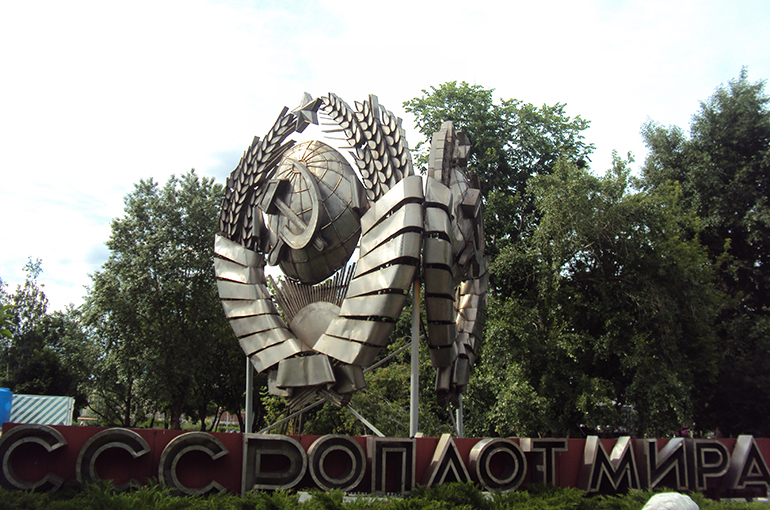
    In the Kremlin at Izmailovo, Moscow
    In the Kremlin at Izmailovo, Moscow

    Much of what I learned can be found in my previous blog posts, so I want to use this post to reflect about the overall picture. I will not go into great detail, but rather give a sample of what I discovered.

    Here’s what I experienced, and what you could possibly discover, while living abroad:

    • I learned the value of knowing a foreign language. It opens doors of communication that give insight into another people and culture like nothing else. I want to continue to improve my Russian as a result.
    • I learned that the most delicious breads, mayonnaise, and juices are found in Russia. At least the ones that I have tried thus far.
    • I learned that I know very little about Russian history. Before being exposed to Russian museums, I did not realize how brief the history of the United States is in comparison to the breadth of Russian history. I have gained a new desire to learn more about the mighty, rich history of the Russian people.
    • I learned that freedom does not have the same meaning for everyone.
    WWII Remembrance Mural in Russia
    WWII Remembrance Mural in Russia.
    • I learned that I do not like art museums, regardless of the country. I have nothing against art lovers, but even the inspiring brush strokes of Russian paintings have yet to inspire me. Perhaps I still have room for improvement.
    • I learned more about what I desire for my future family and how I want to raise my children. This insight came from living with another family, which exposed me to a home life different from my own upbringing.
    • I learned that I really like public transportation. Taking electric trains and the metro is much more enjoyable to me than sitting in traffic and paying for car expenses.
    Ornate ceiling architecture inside Moscow's metro.
    Inside the ornate metro of Moscow, Russia.
    • I learned that my love of nature is something that I have in common with most Russian people. Picking berries in the forest and cooking shashlik in the country have become some of my new favorite pastimes.
    • I learned that peace is much more important to normal, everyday people than establishing national might. For the most part, neither American nor Russian citizens desire any sort of conflict or enmity between our two nations.
    Worker and Kolkhoz Woman Statue in Moscow, Russia.
    Worker and Kolkhoz Woman Statue in Moscow, Russia.

    I am so grateful for the opportunity that I had to spend two months in Russia, and especially that I was able to live with a family I now consider close friends. When I chose this program for my summer, I did not know what to expect. I was just following a good feeling.

    Now, reflecting on my experience, I am glad that I followed this feeling. I cannot imagine a more enjoyable or worthwhile way to have spent this past summer.

    Moscow State University, Russia.
    Moscow State University, Russia.

    About the Author: Samuel Tew

    I am a student at Florida State University studying International Affairs. I am a vocal musician and hiking enthusiast. I lived in Russia previously as a volunteer missionary for the Church of Jesus Christ of Latter-day Saints, and I am looking forward to learning more now as I live with a Russian family.


    Ready to discover a place full of rich culture, history and hospitable people?

  • 4 Sites to Explore in and around Moscow During Your Homestay

    4 Sites to Explore in and around Moscow During Your Homestay

    As an English tutor in Russia, I had the privilege of being placed with a host family that lives in Podmosckovye, or the region that is directly outside of Russia’s capital, Moscow. Accordingly, I have had the opportunity to visit Moscow several times, and I have gained a deep appreciation and love for this great city.

    From fascinating historical structures and locations to modern skyscrapers and shopping centers, from the bustle of busy streets and metro stations, to the quiet of its several parks and forests, Moscow has something to offer everyone.

    Here are some of the places in Moscow and its surroundings that I have enjoyed thus far.

    Red Square and the Kremlin

    Entrance to the Kremlin.

    Before my homestay program in Russia began, the first thing that came to mind when I thought of Moscow was the Kremlin. So of course, it was at the top of my list of places to visit, and it is certainly worth the trip. Kremlin is the Russian word for “fortress,” and within its walls are several Russian Orthodox cathedrals, historical artifacts and exhibits, an armoury, a large collection of diamond-covered items, and the residence of the president of the Russian Federation. 

    There is even an underground exhibit that allows visitors to look down into the layers of the Kremlin’s past – standing on the glass covering of the exhibit I was able to see a foundation dating back to the 14th century.

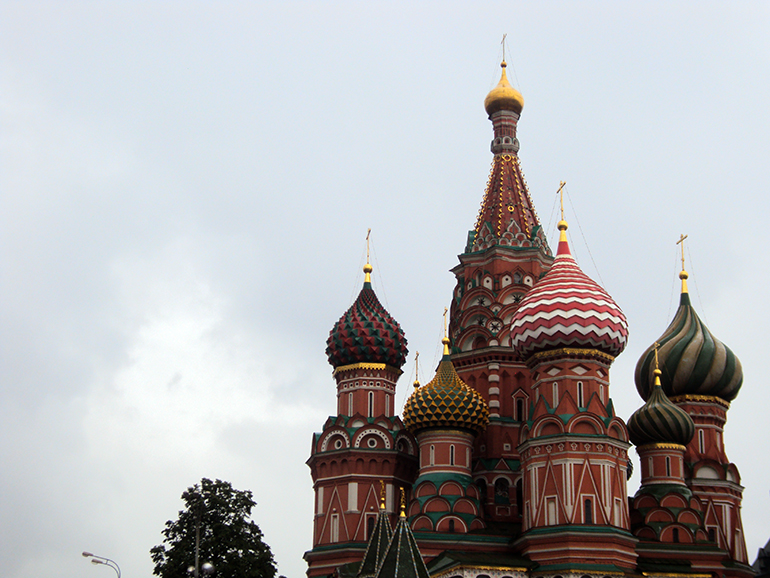
    Outside the Kremlin walls are the impressive Alexander Gardens filled with historical monuments, the Tomb of the Unknown Soldier with an hourly changing of guard, and of course Red Square and St. Basil’s Cathedral.

    The Tomb of the Unknown Soldier at the Kremlin.

    Across the Red Square from the Kremlin is the large shopping center GUM, where Maksim and I enjoyed some blini, or Russian pancakes.

    Moscow River Waterfront

    The Moscow River flows right through the center of Moscow, and in the southwestern portion of the city it is surrounded by various parks and cultural centers. Not too far from the Kremlin is the Cathedral of Christ the Savior, a beautiful Russian Orthodox cathedral that was restored after the fall of the Soviet Union.

    Cathedral of Christ the Savior.

    A pedestrian bridge leads across the river to the south side, where a large monument to Peter the Great resides. From there, a large chain of parks follows the river for almost five miles.

    The first park, Muzeon, is filled with sculptures, and even has a section of Soviet relics. It also contains a part of the Tretyakovskaya Gallery which houses art from the 20th and 21st centuries, including Malevich’s famous “Black Square” painting.

    Maksim and I on a Paddle Boat in Gorki Park.

    The next park down the river is Gorki Park – this park has fountains, ponds, sports centers, cafes, a skate park, a modern art museum, and more. When Maksim and I visited, we rented some roller blades and skated around, and then we rented a paddle boat at one of the larger ponds. Afterwards we spent some time on the small beach of the pond, watched a music and light show at the central fountain, and enjoyed some cinnamon gelato.

    Russian Forests

    While the forest in not exactly a typical tourist attraction, as a hiking enthusiast, I have been very impressed by the extent of forest preserves within Russian cities. In Moscow, I had the opportunity to explore Vorobyovy Gory (or Sparrow Hills). This area is full of walking trails, ponds, creeks, and small nature exhibits.

    Hiking to the Grotto in Vorobyovy Gory.

    Situated on the steep bank of the Moscow River, this area is perfect for anyone who likes to hike through forests (like me). This type of forest park seems relatively common in Russia. Near my host family’s home is another such park, albeit much flatter.

    Forest Path in Ramenskoye.

    My host family likes to take walks through the forest, and sometimes they set aside time to pick berries and mushrooms. I have also seen many others there camping, fishing, grilling shashlik, and tanning in the sun.

    Local Festivals

    A few festivals have been held in and around Ramenskoye since I arrived in June, and I have had the opportunity to visit two of them. The first was the Ramenskoye City Day celebration.

    At the entrance to the central park there were concerts featuring traditional Russian music, as well as displays of local art made out of clay. Further into the park was a historical village exhibition. It featured volunteer actors playing the roles of blacksmith, village doctor, medieval soldier, and many others. There were also boat tours on a replica of a 10th-century wooden longship.

    Sites from the MAKS Airshow during my time in Russia.

    The second festival that I was able to see was called MAKS, or the International Aviation and Space Expo. While I did not go into the expo itself, I was able to see the air shows with my host family in a field near the expo. The shows featured pilots and military planes from several countries. I was quite impressed by the skills of the various aerobatic teams.

    During my adventures in and around Moscow I have learned much about a new culture, a fascinating and inspiring culture that is gradually becoming a part of who I am. I certainly cherish the wonderful opportunity I have to live in Russia for this short while.

    About the Author: Samuel Tew

    I am a student at Florida State University studying International Affairs. I am a vocal musician and hiking enthusiast. I lived in Russia previously as a volunteer missionary for the Church of Jesus Christ of Latter-day Saints, and I am looking forward to learning more now as I live with a Russian family.

  • 5 Characteristics of Russian Culture I Have Learned from My Host Family While Teaching English

    5 Characteristics of Russian Culture I Have Learned from My Host Family While Teaching English

    One of the amazing aspects about living abroad is the opportunity that one has to experience a new culture. In my experience, teaching English in a homestay in Russia has been quite different from my home environment. Russia seems to me to be a place where the pervasiveness of globalization is evident, yet at the same time, Russian culture contains so much that is remarkably and uniquely its own.

    For those who are possibly interested in living abroad in Russia, or for those who are simply curious about an American’s view on the Russian way of life, below are a few characteristics of Russian culture that have stood out to me.

    Here are 5 Characteristics of Russian Culture I Have Learned from my Host Family:

    1: The Russian Smile

    Sitting on an electric train on the way to Moscow, I took a good look around, and practically every single person had a straight face, with some people looking down-right upset. Some may think that this is because Russians are serious, unhappy people; however, living with a Russian family, I have found the exact opposite to be true.

    My family loves to have fun and laugh together, and they smile quite often. It is simply a part of their culture that in public, Russians do not show much emotion. If they are at home or with those they know well, then they are much more open with their feelings. Once you get to know them, they are quite friendly and kind.

    The electric train in Russia.
    Electrichka train in Russia.

    2: Tea

    Russians absolutely love their tea. In the morning, in the middle of the day, right before bed – every time is a good time for tea. Green tea, black tea, herbal tea, fruit tea: they have it all.

    They also use “tea time” to socialize with one another. The other day, my host family had some friends over in the late afternoon. Within minutes we were sitting at a table in the yard with boiling water, a few different types of tea, a small cake, and a bowl of candy. The best way to drink tea, my host family has informed me, is to not add sugar, and then eat some chocolate as you sip your tea and converse with family or friends.

    The garden at a countryside home in Russia.
    The garden at a countryside home in Russia.

    3: Garden Life

    My host family is in the minority of people who actually own a home in the countryside. Many other people with homes near us live in apartments in the city, and then come out on the weekends to their dacha, or country home. No matter the living arrangements, most Russians have their own garden.

    My host family grows potato, cabbage, tomato, cucumber, carrot, and many types of berries, including strawberries and three types of currant. That tea I mentioned above: it was made from the leaves of plants grown in their own garden. Russians as a whole love nature, and they especially love to garden.

    WWII monument to soldiers who died in Russia.
    WWII monument to soldiers who died in Russia.

    4: Russian Pride

    Patriotism holds an important place in Russian culture. They are proud of their history and of their contributions to the world. One of the ways this has been very evident to me is the vast number of monuments and statues in cities and towns. Even in less densely populated areas, such as where I live, there are many such memorials.

    On the way to the train station, which is not very far from my host family’s house, I pass three monuments, two of which are directly associated with World War II. As I mentioned in a previous post, remembering World War II is very important to Russians, and so too is history in general.

    A child hanging off a statue of an old man.
    Maksim, host sibling, with a statue from the Old Man and the Sea.

    5: Literature

    I was amazed when I learned that Russian children memorize the poems of well-known Russian poets, such as Pushkin, in elementary school. Not only this, but they also grow up hearing and reading fairy tales of all types, from Russian folktales to the Brothers Grimm. This passion for literature continues on into adulthood – not only have the parents of my host family read most Russian classic novels, but they have also read more English classics than I have.

    After a conversation about books, they provided me with a whole stack of books that they recommended I should read. From “The Tale of the Fisherman and the Fish” to “Crime and Punishment,” there is a strong link between Russian life and literature. 

    These are just a few of the aspects of Russian culture that I have noticed during my time here. Living with my host family is a fantastic opportunity to experience life outside of my little bubble that I call home. This experience is helping me to learn and grow, and ultimately change as a result of my new perspective on life.


    About the Author: Samuel Tew

    I am a student at Florida State University studying International Affairs. I am a vocal musician and hiking enthusiast. I lived in Russia previously as a volunteer missionary for the Church of Jesus Christ of Latter-day Saints, and I am looking forward to learning more now as I live with a Russian family.


    Are you interested in learning more about the Russian way of life?

  • My Life in Ramenskoye, Russia; Learning about the Culture, Churches and Host Community

    My Life in Ramenskoye, Russia; Learning about the Culture, Churches and Host Community

    I arrived in Russia only two weeks ago to teach English to a host family, but it feels like I have been here for much longer than that. Not because I’m bored, but because each and every day is full of different experiences, experiences that I would have never had staying home in the United States. A different language, a different culture, a different people – simply a different way of life.

    Despite having travelled to Russia before, living with a Russian family teaches me something new each day. How to not get lost in Moscow, how to eat блины (blini) properly, how to play checkers the Russian way – these are just a sampling of the things that I have learned.

    I currently am staying with a family that lives very close to a town named Ramenskoye, which is located about thirty miles southeast of Moscow. To give a better understanding how far that is from Russia’s capital, it takes about forty-five minutes on an электричка (elektrichka), or electric train, to get to the edge of Moscow. Then another thirty-minute metro ride gets you right to the center of Moscow in Red Square.

    The members of my host family are Gosha (the father), Irina (the mother), Maksim (11-year-old son), Darinka (13-month-old daughter), and Nadya (the babushka, or grandmother). Gosha is not home very often during the week because he works in Moscow and has to commute every day, but I’ve been able to spend lots of time with the other members of the family, especially with Maksim. Maksim has taken a liking to me, and introduces me to others as his “brother from America.” This is excellent, seeing as he and his friend Sasha are my main English students.

    Since I’ve been with my host family, I’ve been able to visit many places in Ramenskoye and nearby areas. My first full day in Russia (June 1) was International Children’s Day, so, fighting against the jet lag, I went with my host family to Ramenskoye’s central park.

    An attraction from a park near Ramenskoye.

    While there, I stopped by the World War II memorial. Next to the names of fallen soldiers and in front of the eternal flame is the inscription “No one is forgotten. Nothing is forgotten.” The memory of the tens of millions who died during World War II is very important to the Russian people, so monuments like this can be found in almost any city.

    WWII monument in Ramenskoye

    Another important part of Russia’s history is the Russian Orthodox church. While many consider themselves to be nonreligious in Russia today, the country is full of historical Russian Orthodox churches, temples, and cathedrals. I have encountered several of these beautiful sanctuaries in Ramenskoye, Moscow, and Ryazan (a city about three hours southeast of Ramenskoye).

    Ryazanskiy Kremlin Cathedral of Assumption
    Kazan Cathedral in Moscow
    Russian Orthodox Church in Ramenskoye

    This is just a small portion of the opportunities I have had since coming to Russia two weeks ago. Despite the unusually cold and wet summer weather, I have thus far thoroughly enjoyed my time in Ramenskoye learning from my host family and from local historical sites.

    About the Author: Samuel Tew

    I am a student at Florida State University studying International Affairs. I am a vocal musician and hiking enthusiast. I lived in Russia previously as a volunteer missionary for the Church of Jesus Christ of Latter-day Saints, and I am looking forward to learning more now as I live with a Russian family.