Author: Aden Jibril

  • Hey there, laowai: Traveling as a Black Woman in China

    Hey there, laowai: Traveling as a Black Woman in China


    (Disclaimer: My experience was in the summer of 2013 and it’s possible that things have changed a bit in the three years since.)

    No matter who you are, a good word to know before you go to China is “老外/lǎowài.” It’s a general word for “foreigner” and is often used to refer to anyone who appears to be “not from around here.” My friends and I heard it virtually every day, especially travelling in packs as our study abroad program tended to do.

    However, in my program’s pre-departure orientation materials there was a specific (though small) section for minorities traveling abroad. From what I remember, it was pretty vague—simply a warning that we might be treated differently and that we should be on the lookout—but the threat of potential racism was enough for me to start worrying.

    I wasn’t sure what to expect. What did “potential racism” mean? Hostility? Gawking? Pointed rudeness? Refused service? I had no idea. Personally, I grew up in a town that was around 90% white and only 2% black, so I was no stranger to being a minority or looking different from those around me. However, I was worried that I might actively be putting myself in a position to experience “real” racism for the first time (whatever that meant).

    shanelle and friends in China

    Is the woman behind me looking at me or simply reacting to the camera? Constant dilemma.


    One thing’s for sure: it was impossible to keep a low profile. People stared at me literally everywhere I went. I assure you that it wasn’t just in my head: my friends thought it was hilarious. Honestly, it got to the point that if ever I was out on the street and people didn’t stare, I wondered what was “wrong.”

    (For the record, a similar level of curiosity was directed towards a very tall, blond guy and a redheaded girl on my program. Any significantly distinctive feature was enough to turn you into a spectacle.)

    Additionally, people took photos of me everywhere and at all times. One of my first times on the Beijing subway, I looked to the side and found myself face to face with a DSLR camera. The act was so brazen that I initially assumed that the woman must have been taking a picture of something else (she wasn’t).

    Sometimes people would stop me and ask me to take a photo with them or their small children, but often they just went right ahead and did it—a few times I even caught people taking surreptitious “selfies” with me in the background.

    taking photos in china

    This photo of my friend is a pretty accurate depiction of what walking through Beijing sometimes felt like.


    Another strange thing I encountered was the widespread assumption that I must be from Africa. One time, one of my friends’ language partners asked me where I was from, and I told him New York. Surprised, he asked again: “Really? You’re not from Africa?” It was like the reverse of that scene in Mean Girls: If you’re from America, why are you black?

    This guy was actually a student at Peking University, one of the best universities in China, but he was pretty surprised by the idea that people from America might be any race, or that not all black people come from Africa. Similarly, another day at the Summer Palace a large tour group walked by me and my friends, and a curious man separated from the crowd to yell (in Chinese), “Are you from Africa? Is she from Africa?”

    china sites

    I’m not sure why people bothered taking photos of me with scenes like this as an alternative.


    Don’t get me wrong: being stared at incessantly and having constant photos taken of me was not my favorite part of being in China. In fact, as someone who is in general not a big fan of attention, and even less so at the time, it made me distinctly uncomfortable for the first week. But over time, I got used to it and just decided to think of it as a learning/growing opportunity on both ends.

    I’m not going to tell you how to feel. In my own research prior to my program, I saw a few blogs by people who felt highly offended by people wanting to take photos of them; some likened it to being treated like animals in a zoo. I won’t say that feeling like that is invalid or incorrect. However, personally, I’d attribute most of my experiences to honest, unabashed curiosity on their parts. A lot of people in China had never seen a black person in real life before meeting me, as they told me themselves.


    chinese locals

    Tourists at the Forbidden City from another part of China; they were so excited to meet their first “laowai,” I was so excited to have a real conversation with locals.


    Growing up in the suburbs of New York City, it’s hard for me to fathom reaching an adult age without ever seeing someone of another race. But once I learned that this really was the lived experience of many people in China, it was easy to see how it might lead to the extreme reactions I received. So once I made a kind of paradigm shift, I no longer felt all that bothered by the attention.

    In fact, I gradually began to see the humor in the situation. Some people would do the most absurd things that I felt hard-pressed to react any other way. When you’re waiting in the mass of people by the elevator in the Shanghai Space Needle and the woman in front of you tries her best to take a sly selfie with you in the background, you basically have three options: engage, ignore, or move away. My reaction was to step forward, smile, and put up the characteristic peace sign. And when the woman noticed me and laughed, my internal monologue shifted from an incredulous “Really?” to simply finding it funny.

    confidence in china

    Don’t let the stares keep you down.


    In hindsight, I actually really appreciate all these experiences and attribute them to helping me break out of my shell. I was really shy up to this point, and even though I’d started opening up even before this program, I think the constant, intense exposure ended up being the best thing for me.

    In China, I was often in situations where all eyes really were on me, and where I had no idea what people might be thinking (especially because they were speaking in a language I didn’t fully understand). However, after making it out alive, I can say that it actually really helped reduce my anxiety in general, and helped me realize that it often really doesn’t matter what people are thinking about you—unexpectedly, I think it was a great way for me to shed a lot of self-consciousness and insecurity.

    The one thing I did find a little disconcerting was having to defend my American-ness, because it wasn’t something I’d ever expected to do. But I have hope that over time Americans of all different backgrounds will be better represented in general, and I like to think that my time in China was a small part of that change (a later study abroad program I went on specifically instructed all their participants to act as “ambassadors of goodwill,” and I think that’s a good way to think of it).

    In fact, I think more people going abroad is one of the best ways for that to happen, so I’d definitely encourage anyone to do so—as long as they’re willing to keep an open mind. I loved my time in China, all the ups and even the few downs, and I hope that race won’t deter anyone from having a potentially transformative experience.

  • Even a Little Bit of the Language Will Help While Exploring China

    Even a Little Bit of the Language Will Help While Exploring China

    Even if you can’t read the characters, sometimes context clues will help you out

    你会说中文吗 ?Nǐ huì shuō Zhōngwén ma? (Do you speak Chinese?)

    As a native English speaker born and raised in the United States, I have to admit that I was never too fazed by foreign travelers speaking to me in English; I was always more interested in hearing their own languages.

    So imagine my surprise when I traveled to China and found that simply the ability to say to say “你好 ni hao”—the standard, formal version of “hello” in Mandarin Chinese—was sometimes more than enough to dazzle Chinese locals.

    My friend loves to tell the story of the time he used his two weeks’ worth of Chinese to tell a shopkeeper that he was “a student at Peking University”—I don’t know how to translate her excitement into words, but know that it was a full-body motion. Had I known beforehand that that was all it took to impress, maybe I would’ve studied less.

    Just kidding. One of my main motivations for going to China, after all, was for the opportunity to learn Chinese in its native context.

    graffiti-china

    This graffiti in Beijing’s 798 Art District felt like it was made for novice Chinese learners.

    Even though I went there straight after studying it for a year at college, I felt anxious about putting my language skills to the test. In hindsight, I can say that my concerns were simultaneously justified and excessive. Yes, it’s best to have some basic Chinese ability, but it might be more attainable than you think.

    Overall, I would say that the average English proficiency level in China is fairly low (and therefore not something you should rely on). Of course, it depends on where you are and who you’re speaking with. When I visited Shanghai, for example, people typically spoke to me in English before I even got the chance to try my Chinese. In Beijing and Hangzhou, on the other hand, things went more smoothly when someone reasonably proficient in Chinese was around.

    Regardless of where you end up, however, if you have any plans of getting out of the most tourist-y areas in China (and hopefully you do), trying to get a grasp on the language is good not only for your own benefit, but also as a way of reaching out and engaging with the host culture.

    Learn the Basic Phrases Before You Go

     language buddies in china copy

    Language partners (like mine on the far right) can be both great friends and resources.

    The basic phrases that you need to survive in China are more or less the same you’d need anywhere:

    • “Hello, my name is…”
    • “I am [nationality].”
    • “How much does this cost?”
    • Please, thank you, excuse me, sorry
    • Your occupation/reason for being in China
    • Numbers 1-1000, useful for making purchases (and simple once you’ve memorized 1-10)
    • The words for basic food items/characteristics, and how the written characters both look and sound (e.g., chicken, vegetable, rice, noodles, spicy/hot, sweet, “I don’t eat meat,” etc.)
    • If worse comes to worst: “Sorry, my Chinese isn’t very good. Do you speak English?”

    The above phrases were enough to get me through almost all my everyday interactions. (The exception would be riding in a taxi, which can require a bit more finesse; if you’re not confident in your skills, I’d recommend either bringing someone who is and/or writing your destination down.)

    There are certain nuances you’ll want to learn—such as the art of bargaining—but those mostly come with real life experience.

    A Little Bit of Effort in Speaking the Language Goes a Long Way

    language translation-china copy

    Certain vocabulary words probably won’t show up in your average textbook, in which case English translations are much appreciated (like at this Peking opera performance).

    However, more important than any specific vocabulary word is the fact that, in my experience, people in China will typically appreciate any honest attempt to speak their language. In fact, they’re often even flattered by your apparent interest in their culture (you came all this way, after all). So people are generally pretty forgiving if you pronounce things incorrectly, or if your tones are a little off.

    In fact, one of my biggest regrets is that I took way too many excuses to not have to struggle to speak Chinese myself, such as the fact that I was with friends with better Chinese than me, or that whoever I was speaking to seemed to speak enough English for me not to bother. Sure, I guess it did make life easier and saved me from any feared embarrassment, but in the end all I really did was miss out on a lot of great opportunities to improve myself.

    Truly attempting to learn another language is one of the best avenues out there for receiving a more authentic experience and expanding your perspective. If you take anything from all that I’ve written here, I hope that it’s the motivation to try at least a little every day.

    What language tips do you have for those getting ready to teach abroad in China? Share them below!

  • An American Consumer in China: From Jianbing to Gucci-Lamborghini Jeans

    An American Consumer in China: From Jianbing to Gucci-Lamborghini Jeans

    Some Chinese product designers really know how to innovate.


    Beyond all my very real concerns about the Chinese language, culture, and people’s perceptions of me, there’s one last thing I want to share about my China experience: the things I bought every day.

    I actually think that making purchases with foreign currency, especially buying things that you never could at home, really heightens your awareness of being in another culture. Even three years later, I still remember that my first purchase in China was an umbrella because it was raining when I got there.

    shanelle-in-china

    There it is hanging off my right arm, a fashionable companion in the Forbidden City.


    Now I know that probably sounds boring and innocuous, but I learned something new about China right then and there: they are pretty into umbrellas. They come in a variety of styles and patterns that you’d only be able to find for a premium in the U.S., but the nice plaid number I picked up was only about $5.

    I think it comes from the fact that people have umbrellas out on the street all the time (they’re used to protect from both the rain and the sun) so they prefer that that they look nice.

    Shortly after my umbrella purchase, I went to eat my first meal in China with the rest of my program (pictured below). It was there I realized that my chopsticks skills were abysmal—vegetables and tofu can be a bit slippery for amateurs—and I was inspired to improve ASAP. Once I got that down, I was able to start appreciating the food.

    table of chinese food

    You’ll have two choices: 1) Become a chopsticks expert. 2) Starve.

    In my experience, meat and eggs feature quite prominently in Beijing cuisine, and are prepared very differently than what you’d usually encounter in America. As well, white rice and/or a noodle-based dish were present at virtually every meal (actually, I can’t think of a single time when they weren’t present but I try not to speak in absolutes).

    Designated dessert foods were uncommon; if anything, waiters would bring a plate of fresh fruit at the end of the meal. Overall, I’d say sweet foods are stressed less in China and savory foods more.

    And just for the record, American Chinese food and authentic Chinese food are very different, there’s no getting around that.

    pic3-fried-insects

    A food stand where they sold fried starfish, seahorses, and scorpions. Not what you’d find on a standard Chinese dinner table, but the opportunity’s there if you’re feeling adventurous.


    Chinese Foods I’d Recommend Trying:

    • Jianbing (a kind of savory, stuffed crepe that you can pick up at a street cart)
    • Peking duck (the classic)
    • Chinese pastries (I loved visiting the little bakeries)
    • Baozi (a steamed bun filled with meat and/or other foods)
    • Soup dumplings (also known as “xiaolongbao” = “little dragon buns”)
    • Eggplant-based dishes (a crowd favorite on my program)
    • Ramen (not traditionally Chinese, but good if you’ve only had cup ramen before)


    I loved all the different types of Chinese cuisine I tried, and before I left I knew it was one of the things that I’d miss most.  However, there were a few points when I started craving food from home.

    peanut butter in china

    My sad attempt to enjoy a comfort from home.

    The photo above documents my attempt to make a peanut butter sandwich. I think I paid at least $5 dollars for that tiny 6 oz. jar, the most appropriate bread I could find at a bakery ended up being super sweet, and when I got home I realized that I didn’t have a knife and had to get creative with a chopstick.

    Moral of the story: Don’t go to China planning to enjoy typical American foods all the time.


    One small warning: going back through my Facebook album of this trip, I found this photo captioned, “Never before had I been so happy to receive a meal with vegetables until this day.”

    pic5-food in china

    This photo is obviously not to demonstrate how good Chinese food looks, but check out those vegetables.

    Much as I enjoyed virtually every meal I had in China, I found that meals with vegetables could be few and far between, especially when eating out as frequently as I did. One of my vegetarian friends temporarily started eating meat again during her time there, and two others, who couldn’t do the same for personal reasons, ended up losing a bit of weight.

    It’s not impossible to find vegetables/be a vegetarian in China—you certainly won’t go hungry—but be aware that it can be a challenge. Sometimes vegetable dishes even unexpectedly came with a bit of meat mixed in, so be on the lookout.

    Of course, your options will vary depending on where exactly you find yourself. (And on the flip side, this situation is great for all the meat-lovers out there.)

    Shopping Adventures in China

    Now on to non-food-related shopping. In general, I’m not a big shopper at home—I spend my money on food, books, tea, and not much else. In China I got a little more into it because everything felt new and exciting (like the umbrellas), however this part will be a little more brief.

    One thing of note is that there is a much stronger “cute” aesthetic in China. There’s a lot more cartoon-ish branding, from the pack of napkins in the photo below, to the graphic tees you can pick up in the markets.

    pic6-shanelle-shopping

    I got a real kick out of the cute branding styles.

    Speaking of the markets, I would say that I found those to be one of the biggest cultural differences between China and the U.S. Markets are essentially clusters of tiny shops that sell pretty much everything, and they can be found found anywhere from large shopping mall structures to out-of-the-way side streets (which are called “hutongs”). I’ve never seen anything like them in the U.S.

    pic7-shopping in china

    Different markets across Beijing were filled with these hundreds of tiny shops selling anything you can think of at whatever price you can bargain them down to accepting.

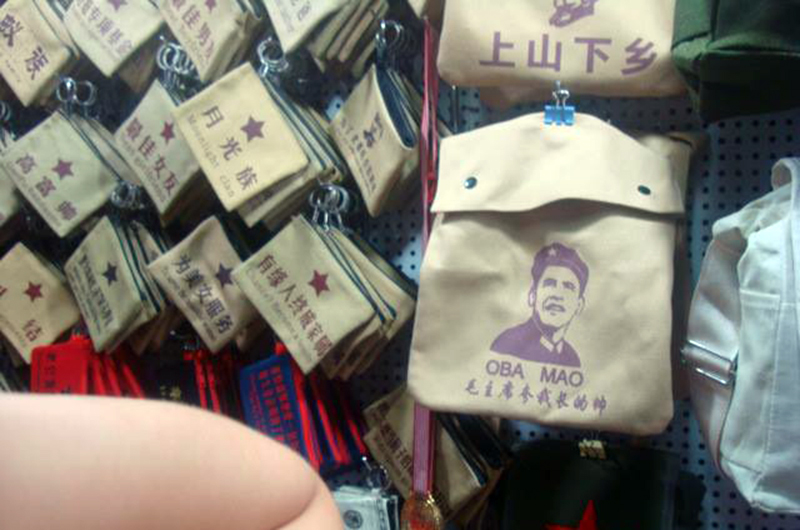
    In addition to idiosyncratic Chinese products (both traditional and modern) such as qipaos and paper fans, you’ll also find many knock-offs of Western brands. My personal favorite was the time my friends and I stopped at a stand on the way to dinner and found a pair of jeans branded both “Gucci” and “Lamborghini.”

    Maybe they have a partnership I’ve never heard about, but either way my friends and I thought it was so funny that we snuck a quick photo of them.

    pic8-gucci-jeans

    The famed “Gucci-Lamborghini” jeans (also dubbed the “Old Face Shanelle photo” by my friends). They were a steal at around $10 USD, but unfortunately didn’t come in my size.


    One more thing: at markets, you can almost always bargain down the prices because they aren’t formal stores with set prices or tax. And if you look like a tourist, they’ll probably give you an initial charge that’s higher than they’d try otherwise.

    What you need to bargain is a strong sense of the numbers in Chinese, and maybe a strong sense of self so you can stand your ground. Give up too easily and you might get taken advantage of, push too hard and they might get insulted and decide not to sell to you at all.

    Personally, I rarely tried it myself. Either my friends (who were heritage speakers of Chinese) would do it for me, or I would just give in without a fight. As it happens, even the heightened “tourist prices” were pretty inexpensive—one of my most complimented dresses from China only cost me $3—so I didn’t mind them making a little extra money off of me. So you can go either way, but it’s good to at least witness for the experience (and the thrill).


    pic9-dolls in china

    These pens are topped with traditional Peking opera figurines—little things like these are easy to find and great to pick up as souvenirs!


    Do you have any shopping or eating tips from your travels to China? Share them below!

  • Meet Shanelle, Our New Greenheart Travel Intern and Expert on China

    Meet Shanelle, Our New Greenheart Travel Intern and Expert on China

    At the Lin Family Mansion and Garden in New Taipei City, Taiwan

    Hello!

    My name is Shanelle Glanville and I’m the new Marketing and Outreach Intern at Greenheart Travel.

    I’m currently a senior at Northwestern University majoring in Asian Studies, and over my time there I’ve studied abroad three times: in China, Taiwan, and South Korea.

    shanelle and great wall of china

    Climbing the Great Wall of China at Mutianyu

    Looking back, I wouldn’t change a thing about my past four years of college, but I have to say that things turned out much different than I had originally planned. I came to college intending to be a Cognitive Science major, specializing in linguistics and artificial intelligence. However, since I’ve always loved languages, (first trying—and failing—to teach myself Japanese in 7th grade, and then going on to study Spanish and Latin in middle and high school), I decided to start taking Chinese on a whim.

    teaching english

    We received a crash-course in teaching English and then taught for a day at a Buddhist high school in Hualien, Taiwan (note: teaching is hard)

    I ended up falling for it harder than I expected, and during the summer after my freshman year I studied abroad on a green energy technology and policy program in China. It was my first time in a non-English-speaking country, and halfway across the world at that. I could only understand about 20% of the words spoken around me, in certain places people stared at me as if I were an alien, and within 48 hours of my arrival, I was faced with two choices: become a chopsticks expert, or starve.

    I loved it.

    trick photo

    Playing with perspective at the Trick Eye Museum in Seoul, South Korea

    Before I even left China, I knew that I was hooked: I told my friends there that I was coming back next year. Soon after I got back to the U.S., I decided on a summer program in Tainan, Taiwan, and then to fly from there to Seoul, South Korea for the fall semester.

    shanelle and friend

    My language partner/best friend in Taiwan, who surprised me with a scrapbook at the end of our program (one of my most prized possessions)

    My study abroad experiences have been perhaps my most formative, and I now believe that intercultural exchange is not just valuable but in fact integral to our modern global community. As the world becomes increasingly interconnected, I think that the ability to reach mutual understanding becomes increasingly important as well; in the future, I hope to work towards that in some capacity, though I don’t know exactly how yet. I’m really looking forward to learning as much as I can in my time at Greenheart Travel!