Author: Jessica Hovermale

  • Looking Back on My Wondrous Life in Spain

    Looking Back on My Wondrous Life in Spain

    I still remember watching my Spanish friends walk down the street for the last time, the light from the streetlamps bouncing off their backs until they finally turned the corner. It all came to such a perfect end. I loved every day of my three magical months in Spain.

    Now that I have returned to the United States, my appreciation of the people and my experiences have deepened. In such a short time, I became a student in a Spanish high school, a member of a family and a friend to many. I have grown personally, my language skills have improved and I know much more about the world.

    I have learned more than I ever thought was possible about myself.

    Greenheart Traveler, Martin Tomlinson, with his host family in Spain.
    Martin Tomlinson with his Spanish host family.

    When I Arrived in Spain

    It wasn’t long ago that my kind host family greeted me at the train station in Villarrobledo. I still miss conversations during our long lunches, playing with the kids, Paella Sundays and our daily bread from the 200-year-old bakery down the cobblestone road. They gave me just the right amount of independence and support.

    Sometimes on weekends my family went to Madrid. This allowed me to meet their family there and explore the city. I went to the Prado three times and would happily go back again. My family also helped arrange my participation to go on a week-long field trip with students from my school to Basque country. I was so incredibly lucky to have such a loving family. They were truly invested in my welfare.

    The Spaniards have a refreshing directness while showing great compassion for others. I saw a natural and an expected respect for elders. Many times an older person walking out of a grocery store would ask me or even tell me to help them with their bags. It was just understood that you are part of a community and the community helps one another. I happily helped because I knew their request for help with their grocery bags meant I had become a member of the community.

    Religious statues in Spain.
    Religious statues inside churches near where Martin Tomlinson lived in Spain.

    What I’ve Learned from My Experience in Spain

    I guess the most obvious way I’ve grown from my experience in Spain is academically. I learned to push myself hard and realized I am capable of much more than I thought. In the beginning, I struggled every day with my classes and my lessons. I was in a new culture in a new school trying to comprehend new concepts. All of this made things incredibly difficult.

    I quickly realized the only way to succeed was to push myself more than ever before. I spent hours studying in the local library and many nights with little sleep. Before I knew it, I was comfortable with the language and school life.

    During my three months in Villarrobledo, I only met one other native English speaker. We met in a coffee shop and talked for three hours. It was great, but it wasn’t something I was looking for or seeking out. I really liked the full immersion in the Spanish culture and school life. This program worked well for me because of the welcoming people of Villarrobledo.

    Greenheart Traveler, Martin Tomlinson, with classmates in Spain as well as a sign in Spanish while on a trip.
    Martin Tomlinson with classmates in Spain as well as a sign in Spanish while on a trip.

    By the End of My Time in Spain

    I was able to finish my assignments and understand nearly everything going on in the classroom. I actively participated in class discussions. The week before I left, many teachers came up to me and commented on how much of a change they had noticed since I first stepped into their classrooms. I wasn’t really sure if I would ever be good at learning Spanish.

    This experience taught me I can learn another language. Now, I am more determined to keep studying Spanish and learn more languages.

    Living 4,788 miles away from your hometown changes you.

    I came back to the United States with a different perspective of myself and my place in the world. I am a more independent, confident and accepting person. Spending months alone so far from home, I discovered things about myself. I was forced to rely on my own skills, but self-sufficiency brings happiness. There’s a joy in finding out just how capable you are. I also placed my confidence in others in a more powerful way than I ever thought possible. I am so grateful to the townspeople, teachers, classmates and my host family, all of whom helped me navigate my life in Spain.

    There are many things I wish I knew before I went to Spain, but the most important thing is that I made the decision to go.

    Once there, I searched out every opportunity to immerse myself in the language and learn about the culture. I made some of my closest friends by accepting an invitation to a party.

    Living abroad led to meeting great people, in addition to my exposure to a culture much older than ours here in the United States. It has made me a more understanding person in every way. I’m still in contact with many Spanish friends and my host family. These lasting friendships are what I treasure most from my time in Spain.

    Greenheart Traveler, Martin Tomlinson, traveling around Basque country in Spain.
    Martin Tomlinson traveling around Basque country in Spain.

    Returning home from Studying High School in Spain

    After I returned home, I also came to realize many people made my trip so wonderful. I truly appreciate all of the amazing people who contributed to giving me this great opportunity. Thanks to my Spanish teacher in the USA for showing me the beauty of the Spanish language. After meeting her, I knew I would become fluent in Spanish one day.

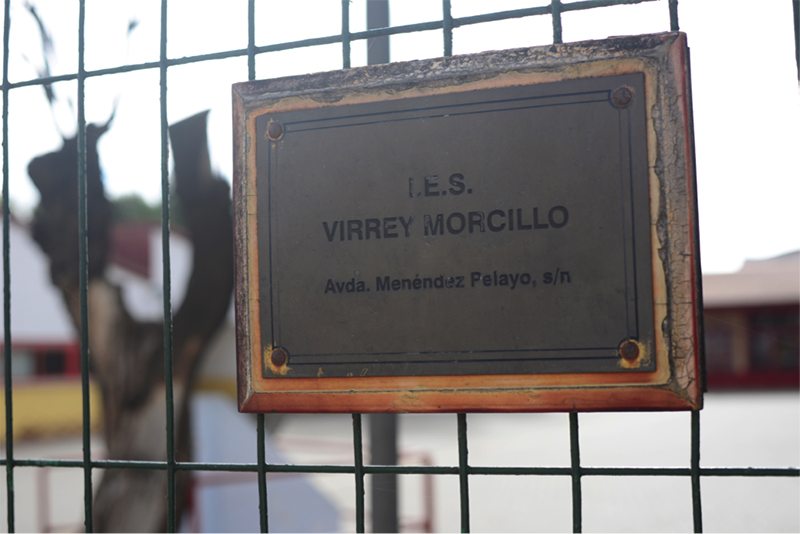
    Thanks, too, to Greenheart Travel, their partners in Spain, my wonderful host family, the welcoming town of Villarrobledo, the students and teachers at my school – IES Virrey Moricillo – and the people I befriended in Spain for making my stay a wondrous adventure.


    About the Author:

    Martin Tomlinson is 16 years old and lives in Overland Park, Kansas. His was inspired to study abroad in Spain because he feels “it is important to be a global citizen. Experiencing a different culture not only helps me understand it, but also helps me examine my culture and examine my views in deeper and more meaningful way. I want to become the most understanding person that I can possibly be.” Follow Martin’s adventures on our blog! 

  • The Importance of Speaking Like a Local in Spain

    The Importance of Speaking Like a Local in Spain

    I’ve been looking forward to writing an article about the language in Spain for a while. In my town of Villarrobledo, I hang around with a colorful cast of characters from punks to underground rappers. Of course, because these people are colorful characters, they have a colorful vocabulary.

    One thing I’ve gained while studying in Spain is that learning Spanish slang is very important. It has a lot of cultural relevance and will help you meld more into the place that has become your home. For example, I have a list in my phone of about 100 colloquialisms, including swear words, local slang and so on. These phrases and words are very hard to learn on your own, because they are rarely included in dictionaries. When they are, it’s often not the same as the local use of these words. I’m going to try to introduce you to some of the terms in this article.

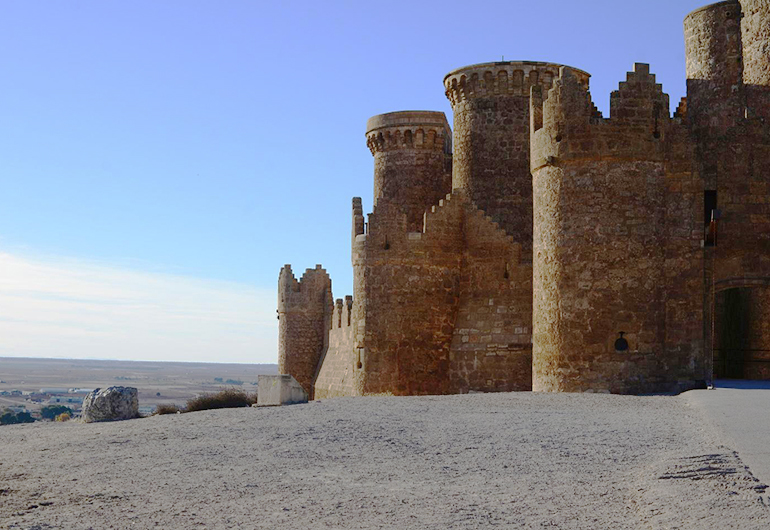
    A 400-year-old Castle in Spain
    The Castle Belmonte, a 400-year-old castle that I visited with my host family last weekend.

    When reading this, please keep in mind that these words are all words that I have learned by living in Villarrobledo in Castilla-La Mancha. Some of these words are only used in my town and some are only used in Castilla-La Mancha. Yet, others are used in all of the Spanish-speaking world. When reading this, also keep in mind my frame of reference and know that these words and phrases might not work in the part of Spain where you are going to live and study.

    My Top 5 Spanish Slang Expressions

    1.Vale

    Vale, pronounced “bale,” is one of the most frequently used words in Spain. It means “okay” and is used in exactly the same way. The first time I came to Spain last year I was completely lost by the use of the word. It took me about two weeks to figure it out. Another rendition of this word that you’ll hear a lot among my peers is “va”, which is an abbreviated version of ‘vale’. It’s one of the most common phrases in freestyle rap here where the intro to many of the verses are, Uno, Dos, Tres, Teimpo, Va, Va, Va, Venga.

    Martin's local friend gets her makeup fixed.
    My friend Vicky has her makeup fixed before a night on the town.

    2. Chapa, Hostia, Colegia

    These words, which each mean completely different things, may seem like an unlikely set to need to learn together, but in my town knowing these words has been very important. They each signify a different kind of slap. In English you only have one word for slap and that can be a slap anywhere, but in my part of Spain there seems to be a countless number of words for different types of slaps. The three I’ve listed here are the most commonly used.

    •  Chapa: A slap to the forehead
    •  Hostia: A slap to the cheek
    •  Colegia: A slap to the back of the neck

    Right now, you’re probably wondering why you need to know these words and worrying that you are going to be slapped. Well, most likely you will be. People here tend to be more physical and slapping isn’t really seen as an aggressive thing among friends. For example, it’s a custom for boys after getting a haircut to have the back of their neck slapped by everyone in their class. These words come up a lot in everyday conversation making them important words to know.

    3. Local

    This is one word I was absolutely lost on until I went to one. A “local” is an empty storefront or garage rented by local students during the winter months when it’s too cold to congregate in the park. Since the storefronts rent for anywhere from 300€ to 500€ per month, groups of students get together and pay a monthly membership “fee” of about 10€.

    The locals are communal spaces where anyone with a membership can come and go and bring guest as they please. For me this was a difficult concept to grasp as I’ve never heard of anything like it in the USA. If there’s one thing I can recommend as being an important thing to do during your stay, it’s to make sure that during the fall you find yourself a ‘local’ to join. People are very inclusive here in general, but you have to be proactive in finding opportunities.

    Martin's friends on the opening night of a local.
    My friends Vasily, Yuri and Luisimi, on the opening night of the local.

    4. Claro

    “Claro” means ‘clearly’ in English but has a completely different connotation here. In English, when you use the term ‘clearly’, it tends to take on a negative connotation, often belittling the person you are responding to. Here in Spain it is used as a way to verify that you understand what someone is telling you. For example, a situation where you might use this phrase is as follows.

    “You know him, right?”

    “Clearly.”

    “Yesterday I went down to Sevilla with my family…”

    “Claro.”

    5. Campo

    This definitely isn’t a word that you’ll need in any of the larger cities in Spain, but in my relatively small farming community it’s a very important word. “Campo” is the word used for a family’s country estate. This is very common among families in Villarrobledo, as almost all middle-class families who have lived in the area for more than a generation (believe me, there are a lot) have one.

    These country estates are often used to grow grapes or just as summer vacation houses. The most common use of these houses during the fall is birthday parties and other private parties. I spent the first two months of my visit here thinking that ‘campo’ was a location, not a word for a country estate. So, I was rather embarrassed when I asked someone, “Where is the campo?”

    Martin attended a rally to fight violence against women
    Taken during a rally on the International Day to Fight Violence Against Women.

    Learning Slang Has Taught Me the Culture of Spain

    I know a lot of these word and phrases might seem like things that would never possibly have any practical application. They may not for you, granted, but for me they’ve had a profound impact on my interactions here. I didn’t share basic Spanish words with you because I don’t find them to be indicative of the culture.

    These are words I will always remember and will carry with me wherever I go.

    These are the words that deck the pages of my journal entries about Spain.

    They reflect the cultural values of my town. And embracing new vocabulary is a way of showing respect to your Spanish hosts by respecting their language and all of its intricacies.


    If you’re ready to learn Spanish, but find verb charts and grammar textbooks to be a bore – you’re not alone. Learn more about our immersive language programs or study abroad opportunities that can help you speak like a native in no time!

  • Trying to Communicate, in both Spanish and English, the Emotions of Living Abroad

    Trying to Communicate, in both Spanish and English, the Emotions of Living Abroad

    Eating sunflower seeds with my friend Yuri in one of the local parks

    A Complicated Journey Studying in Spain

    Studying abroad is often portrayed as empowering. An American student goes abroad and gains a new confidence in themselves and their abilities. The students in the community love the student and he becomes instantly popular and a fixture of the school and community in general.

    While all that has been true for me in some way, my journey studying abroad in Spain has been much more complicated than that. It’s an intense mixture of emotions ranging from loneliness to moments of happiness and feelings of powerful connections. I’m glad for everything I’ve felt and experienced here.

    Students who want to compete in the evening rap battles on “The Bridge” submit their names before the competition begins. This has been just one of many experiences I have had during my time living in Spain.

    Words Escape Me in Trying to Explain this Life-Changing Experience

    Everyday, I encounter something new and exciting. Simple things often present a challenge. I love that. I love being forced to think, forced to make everything deliberate. At home in the United States, I could just run on autopilot, but as an exchange student, that’s not possible. Everything is vibrant, bright and complex. How do you explain that to someone who hasn’t experienced it? The words for this feeling escape me in English and even more so in Spanish.

    Although I have traveled abroad before, and even lived a month studying Spanish in Seville, this trip is much different. It is full immersion in language and culture. I am lucky to be in a small town that isn’t full of tourists. As far as I know, I am the only native English-speaking foreigner living here. I can’t say I’ve ever felt this challenged or loved a challenge more.

    A tractor interrupts our weekly Friday night gathering at “The Bridge” in my host town in Spain.

    One of the challenges is losing some of my independence. I am used to being a pretty self-reliant person. Sometimes here I have to to rely on others here to get around or just to understand something.

    My Spanish has improved and I can navigate my daily life well. I understand my teachers at school, grasp most of my class assignments and have meaningful conversations daily. My friends and I converse about many topics and often end up telling jokes and laughing for hours.

    My friends Esther and Philip in front of one our favorite local cafés.

    The one thing I can’t seem to be able to communicate is the thing I really want to – my feelings. I just want to sit down and talk and let it all spill out but I know that won’t happen, now. The emotions I feel here are things I’m not sure I can even express in English.

    I am sure some people see me as a curiosity and source of entertainment. That being said, I have made some of the best friends in my life. I managed to find people who care deeply about me. They share their lives with me and make sure to include me in activities.

    An acquaintance of mine sets up for an exhibit in Madrid.
    A community run space in Madrid where I went to take a free dance class.

    They make an effort to educate me without demeaning my intelligence. At the same time, they aren’t afraid to throw me into the deep end when I need to be thrown into it. It was a trial and error process to finding a social circle. The process was well worth it because we have developed friendships that will last a lifetime.

    Some students from my school joined students from other schools on a trip to Basque Country.


    About the Author:

    Martin Tomlinson is 16 years old and lives in Overland Park, Kansas. His was inspired to study abroad in Spain because he feels “it is important to be a global citizen. Experiencing a different culture not only helps me understand it, but also helps me examine my culture and examine my views in deeper and more meaningful way. I want to become the most understanding person that I can possibly be.” Follow Martin’s adventures on our blog! 

  • What to Know About Studying in a Bachillerato Program in Spain as an Exchange Student

    What to Know About Studying in a Bachillerato Program in Spain as an Exchange Student

    High school in Spain in many ways represents the culture of Spain. The same as school in the United States. School in Spain is effective and minimalistic. It accomplishes what needs to be done in a manner that is much less grandiose; it’s an accurate representation of Spanish efficacy.

    It’s a little tricky to navigate at first, especially for exchange students but I believe that ultimately, it’s a very positive educational experience. There are some key differences you should be aware of, and I’m going to try to outline them for you here.

    I think knowing a little bit about the school system will help anyone who’s going to be studying in Spain feel more comfortable in their new home.

    outside-spanish-school
    The front of my high school in Spain, a one story simplistic building.

    Academic Differences Between Spain and the U.S.

    Attending school after a student turns 16 years old is not mandatory in Spain. At this age, it’s common to enter into technical programs or simply stop with their education. So, when you are either in 1st or 2nd bachillerato (equal to junior and senior year in the U.S.) it is assumed you have interest in your own education as no one is making you attend classes.

    For example, attendance isn’t mandatory if you want to pass your classes you go to school. The classes are presented in a similar style to university classes. The teachers come into the class and lecture for an hour, assigns homework, then leaves. The student is responsible for taking notes, finishing homework and studying for exams.

    It requires a lot more initiative on the part of the student than in the U.S. The exams are difficult and the students are expected to prepare on their own. It’s a little more minimalistic and to the point than school in the U.S. but I think this system is equally good, if not better.

    spanish-students-cantina
    Student buy snacks in the Cantina during the first break of the day.

    Lunch and Breaks in a Spanish High School

    School in Spain is only six and a half hours, and because of this, lunch isn’t eat at school. School finishes at 2:30 p.m. and families usually eat at about 3 p.m. There are two breaks during the school day, one at about 10:30 a.m. for about 20 minutes, and another at about 1:15 p.m. for 10 minutes. Everyone brings a sandwich for a snack which is eaten during the first break of the day. The school has a cantina which sells sandwiches, candies and soda.

    During both of the breaks students are allowed to leave the school campus. Often, we leave to go talk with students from the other nearby school or to go to the nearby restaurant.

    De-Mystifying Bachillerato

    The Bachillerato program is what Greenheart Travel students will be entering into when studying in Spain. The 1st Bachillerato is the equivalent of being a junior in the United States. And 2nd Bachillerato is the equivalent of being a senior in the U.S.

    Before Bachillerato is 1st-4th ESO which is equivalent to 7th through 10th grade. ESO is obligatory, Bachillerato is not.

    When you enter into the Bachillerato program there are two options in my school, humanities and sciences. Some of the other schools in my town offer different programs such as fine arts, but mine only offers these two. I’m in the humanities program. The program that you choose for Bachillerato limits what you can go on to study in a Spanish college.

    In short, school in Spain is a unique experience that in many ways is similar to school in the U.S. It’s something that I’m am confident anyone can catch onto easily. Going to school in Spain is a very important part of the education experience. It has furthered my knowledge of Spanish and the culture of Spain in a way I never thought possible.


    About the Author:

    Martin Tomlinson is 16 years old and lives in Overland Park, Kansas. His was inspired to study abroad in Spain because he feels “it is important to be a global citizen. Experiencing a different culture not only helps me understand it, but also helps me examine my culture and examine my views in deeper and more meaningful way. I want to become the most understanding person that I can possibly be.” Follow Martin’s adventures on our blog! 

    Ready for your own academic experience in a Spanish high school?!

  • My Life in Spain; Embracing a Second Home, the Grape Harvest, and an Underground Rap Community

    My Life in Spain; Embracing a Second Home, the Grape Harvest, and an Underground Rap Community

    Spain has been nothing like I anticipated. I was honestly terrified of coming here to study abroad, to be totally independent of my life in the States. I thought I would be hopelessly alone and misunderstood. Before coming, I managed to assuage my anxiety around this trip by painting myself as an Ernest Hemmingway-esque figure sitting in a café with my Moleskin journal, fountain pen and an espresso writing my great novel that would be under-appreciated by America, but loved by the French.

    The reality of living here has turned out so much better than I could have ever fantasized about. In studying abroad in Spain, I have found a second home. I am more content here than I could have dreamed possible, and feel more at home than I did in the United States.

    My friends Esther and Beatriz during a late-night walk.

    Even though I’ve only been in Spain about two weeks I can already tell that this experience has changed me. If you have any desire to come here at all I urge you to act on it. I know that if I hadn’t come here it would’ve been my biggest regret in life. For me, this has been a truly human experience.

    What studying abroad is really about is opening yourself up and exposing your vulnerabilities. It’s about losing control and loving it, and accepting the help of others with open arms. From the guides during orientation in Madrid to the teachers at my school, there are so many times I would have been completely lost without the help of others. I am learning to be vulnerable. I am confident in my confusion. I am learning to accept kindness. I’m in love with this place, these people and these emotions.

    A church in Madrid. Photo taken during my in-country arrival orientation.

    For the next 3 months, Villarrobledo, a farming community about 30,000 strong, will be my home. This region produces the most grapes for wine in Spain. Now the harvest is in full swing; the air filled with the putrid scent of fermentation from the five wine factories, as they operate almost 24 hours a day, trying to process the grape harvest before it rots.

    A main road of Villarrobledo during siesta hours.

    The streets are filled with antiquated John Deere tractors pulling behind them trailers full of grapes ready to be sold to the wineries. Every weekend many of the students head to the fields to help their families with the harvest working 12-hour days in the raging end of summer sun.

    The skyline of the city is decked with the whites and yellowish-beige colors found in so many parts of Spain. It’s a gorgeous place. Part of the route of Don Quixote and still filled with his sense of gentle wonder.

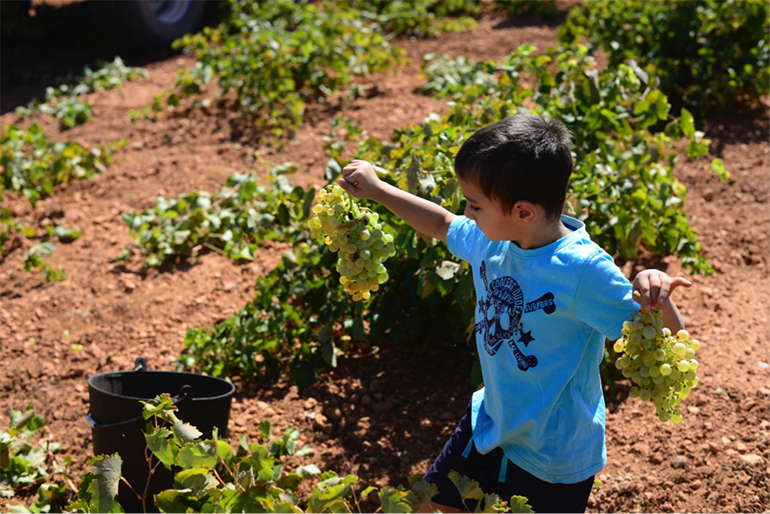
    The first weekend I was here my host family took me to a grape field about 10 km away from town. There I spent three hours picking grapes. I walked down the endless rows with bucket in hand, grabbing bunches of grapes and dropping them into the bucket. I watched as beads of sweat fell from my forehead and turned portions of the red silt into miniature mud pools.

    There’s an odd beauty in the grape harvest. A sense of pride in family tradition and community obligation. The blood of the grapes is the life-force of this community. The fields are happy places filled with jokes, music and lighthearted conversation. They are a holy place.

    I have picked vegetables and fruits all over the United States, and I have never experienced anything that can even come close to the spiritual fulfillment of the grape harvest of Villarrobledo.

    A grape field about 10 km from Villarrobledo.

    There’s a burgeoning underground rap community here. It’s within this group of students that I’ve found a lot of my friends. The way this group of freestyle rappers was originally explained to me was, “You know Eminem’s Green Mile. It’s like that but we do it all weekend.” I’ve found this statement to be a very accurate representation.

    Every weekend night a large group of students go to the bridge at the edge of town and rap battle. It’s a simple, uncomplicated thing to watch. There’s something enchanting about the amount of talent a lot of these boys have. It’s real and direct, while equally cocky and fantastic at the same time.

    One of the best of the local rapper boys. It was in the midst of this verse that won the round.

    It reminds of my own late weekend nights when I lived in a small Kansas town; we’d all go to the local Sonic and lie about how much money we had, what we had done the night before, and who we’d be in the future. It’s the mentality of everyone from a small town. Something reassuring to find even here, thousands of miles away from the near ghost towns of the Kansas plains.

    A Friday night at the local bridge.

    It’s been easy to find friends here. Everyone is warm and welcoming and seems eager to accept me. There’s a sense of compassion that everyone has who I’ve met so far. They make sure to include me and make sure I understand everything that’s going on. There’s nothing more I could ask for. In coming here, I expected to be the weird foreign exchange student who never has any idea of what’s going on and is always somewhat disconnected from the group.

    Again, Spain pleasantly surprised me, I have been able to have meaningful conversations with people. I’ve learned so much from everyone that I’ve met here and I hope they’ve learned something from me. I am so grateful for people being willing and eager to make the time to talk to me, something I never dreamed that anyone would be willing to do.

    Just before sunset at the bridge.

    This country is a wonderful, wild and beautiful place. As Ernest Hemmingway once said, “There is not a night life in Spain. They stay up late but they get up late. That is not night life. That is delaying the day.”

    The nights here are electric. Filled with dancing music, late night walks and the sounds of the laughter from every alley and doorway. The night life here is life, and there’s no life I’d rather have here.

    To end this, I guess what I have to say is that I’m in love with this community, the people, the countryside and all of this country. For me coming to another country has been a humbling experience. For me, what I’ve been learning is that no one is unique. That’s not a bad thing. It’s an important part of the human experience. In realizing that we are all equally important and unimportant. I have been able to fully embrace this experience.

    My advice to other exchange students in their first few weeks in another county would be to always say, “Yes!” I try my best to always to open myself up to any experience offered to me. It’s brought me to so many amazing places in this country. I can’t wait to see what other experiences it provides me with.

    I’ll end this with one last quote from George Orwell, “I would sooner be a foreigner in Spain than in most countries. How easy it is to make friends in Spain!”


    About the Author:

    Martin Tomlinson is 16 years old and lives in Overland Park, Kansas. His was inspired to study abroad in Spain because he feels “it is important to be a global citizen. Experiencing a different culture not only helps me understand it, but also helps me examine my culture and examine my views in deeper and more meaningful way. I want to become the most understanding person that I can possibly be.” Follow Martin’s adventures on our blog! 

    A vibrant, welcoming community in Spain awaits you!

  • Student Spotlight on Martin Tomlinson; Greenheart’s Newest Travel Correspondent in Spain

    Student Spotlight on Martin Tomlinson; Greenheart’s Newest Travel Correspondent in Spain

    Greenheart Travel is excited to send a group of amazing travelers to study and volunteer abroad as part of our 2017 Travel Correspondent and Global Explorer Scholarship awards. To help introduce our inspiring writers, we are doing a series of spotlight interviews to help you get to know a little more about who they are, where they will be headed and what inspired them to travel abroad.

    Read on to meet 16-year-old, Martin Tomlinson, our Greenheart Travel Global Explorer Scholarship winner from Overland Park, Kansas, who’ll be studying abroad this fall in Spain!

    Favorite thing to do in your free time?

    My favorite thing to do in my free time is to take photographs. I am very passionate about photography because it allows me to materialize the world around me. I also enjoy playing the guitar, hiking, cycling reading and exploring the outdoors.


    Have you traveled abroad before?

    I spent one month on scholarship in Seville, Spain on a language and culture program. Also, my community service project was a finalist for AFS Project Change. I was awarded a scholarship to do a community service project in India. I spent two weeks in New Delhi learning about working with students and learning about the Indian culture.  

    What got you interested in learning a new language and studying abroad?

    There have been many times with my community service that speaking Spanish would have been helpful. The two weeks I spent on the Arizona and Mexico border working on immigrant issues made me realize just how important it was to learn Spanish.

    I had an inspiring teacher at Conserve School that made Spanish come alive and showed me the true beauty of the language. She made me feel becoming fluent was a real possibility. I am now working on becoming fluent so I can return to the border and really make an impact. I believe studying abroad and immersion in the Spanish culture will be the most enjoyable and fastest way of learning the language well.


    What are you most excited about experiencing or seeing during your high school abroad program?

    I am very excited about experiencing high school life and living with a homestay family because I will be able to make real connections with the Spanish people. I am also excited about the little things and the unexpected things that will come up. The spontaneous moments tend to be the best parts of a trip.   

    Why do you feel it’s important to travel to a new place and experience a different culture?

    World travel is important to create understanding between different cultures. Going to new places reinforces the idea that we are all the same.  It is important to be a global citizen. Experiencing a different culture not only helps me understand it, but also helps me examine my culture and examine my views in deeper and more meaningful way. I want to become the most understanding person that I can possibly be.   

    What are you nervous about?

    I am nervous about being able to effectively communicate in Spanish. Doing the same work as the Spanish students will be very challenging. I am also concerned that I won’t be to accurately represent my personality in a second language. I like to use humor a lot and I think that could be difficult. I don’t want to accidentally offend anyone.

    How have you prepared for your time living and studying abroad?

     I have taken Spanish classes and this summer I am studying on my own to prepare for my trip. I am also trying to expose myself to as much of the Spanish culture as I can through movies, art, literature and music. My dad is a librarian so it is only natural that the first place I looked was the local library. I have checked out just about every book I could find about Spain.


    How do you think you will change the most during your time abroad?

    I think I will become a more confident, independent and flexible person and traveler with a better understanding of my identity.  Also, I think I will be much closer fluency in Spanish.