

Tag: chinese culture

  • Alumni Spotlight on Shannon Brayshaw: A Summer Adventure Teaching in a Homestay in Beijing

    Alumni Spotlight on Shannon Brayshaw: A Summer Adventure Teaching in a Homestay in Beijing

    We recently caught up with Greenheart Travel alumna, Shannon Brayshaw, to hear about her homestay experience in China, what motivated her to travel across the world and what she has learned form her time as an English tutor abroad.

    Read on to learn more about Shannon’s adventure teaching in a homestay program in China.

    What first inspired you to travel to China and tutor a host family?

    The short answer to this is that I am a middle school art teacher and I sought a way to spend my summer break wisely. I enjoy travel that allows me to give back somehow, so teaching English for Greenheart Travel was a no brainer.

    I was also easily convinced to experience China some years earlier after a summer camp staff friend told me about the wondrous times she had in Southern China (including the best noodles of her life), all made possible through Greenheart Travel. I was sold then and four years later it became a reality as I found myself Beijing-bound, primed for adventure and some culture shock.

    Often, the biggest question we get is what it’s like to tutor English to a host family. Can you share a bit about your experience and advice for future homestay teachers?

    My host family was both caring and very accommodating. Despite language barriers, we bonded very easily and I was made to feel like one of the family. My student Bobby, my host parent’s only child, was clever, mischievous, hilarious and very bright, so teaching him English was a pure joy. (Ironically he spoke better English than the host parents).

    Since Bobby was extremely energetic and imaginative, I taught English through playing games. I brought a card game with me called, “Spot It”, which I highly recommend. I also made use of Bobby’s toys to play out scenarios and help him better understand English terms we were learning in his English Language workbook.

    Bobby was my consistent site-seeing companion. We were able to practice conversing in English during these trips as well as play games and get to know each other better.

    Furthermore, Bobby and I were able to converse in English while exploring and taking in Beijing’s incredible sites, such as the Forbidden City, Great Wall of China, Temple of Heaven, historic hutongs, and the Summer Palace just to name a few.

    Where in China were you living, and did you do much traveling outside of your host community?

    I was privileged to spend a whole month in the heart of Beijing where the Forbidden City was only a couple quick, easy subway changes away. In fact, the subway system sort of became my best friend and I enjoyed how easy it was to read the map and get around that way. Beijing’s public transportation system definitely still has me craving equally efficient public transportation in the United States. With it’s rich history, incredible architecture, peaceful parks and gardens, and enticing variety of Chinese cuisine on every corner, Beijing was a real gem to live in and explore.

    My host family and I also took a 6 hour road trip into the Hebei Province where my host dad keeps his horse and where we went horseback riding for the weekend. Seeing some of the northern countryside of China on horseback was a real treat and unforgettable. Passing segments of the Great Wall high above our car along the mountainside and seeing Buddhist temples tucked against sheer rock faces were surreal sites to see on a road trip.

    What are a few of your favorite experiences that stand out from your time as a homestay teacher in China?

    I enjoyed the historic sites of Beijing and was consistently in awe at the mere fact that I was getting to traverse areas where once only the emperor and his courts were allowed. One memory that stands out is the day Bobby and I visited the Forbidden City. It was both our first times and I think we both were excited and a little overwhelmed by the sheer size of the place and the crowds within.

    To keep Bobby’s energy up, we played “spy mission” imaginary games, jumping from ancient stone tile to stone tile in the vast series of court yards to avoid “booby traps” until ducking into exhibition halls to marvel at Ming and Qing Dynasty art. In this fashion, we navigated and explored the Forbidden City until exhausted and content by all we could possibly see in 4 hours which probably only covered a quarter of the entire area.

    Taking silly selfies within the courtyards of the Forbidden City.

    Another favorite memory was horseback riding with my host family in the Hebei Province, which was one of the last things I thought I would be doing on my China adventure (but then, I did not think I would get to experience an American monster truck jam in the Olympic Bird’s Nest either, which happened as well!).

    Spending a few days away from the Beijing metropolis and crowds in exchange for galloping along rolling countryside on horseback, friendly new faces, home-cooked banquets, and releasing paper lanterns into a sparkling night sky could not have been more refreshing experiences. I especially enjoyed the fragrant floral tea offered in glass tea pots inside the rustic tea tent posts we would rest the horses at in between rides. It was a relaxing way to spend time in between the excitement of galloping with the group.

    Tower of Buddhist Incense on top of Longevity Mountain in the Summer Palace.

    Has this experience changed any of your personal and professional priorities or goals since your program?

    This experience has developed a deeper respect for the Chinese culture, which I will pass down to my students. I was enthralled the entire trip by the gorgeous architecture and the amount of intricacy in their art- it was an art teacher’s paradise and I will definitely be teaching a China-inspired art lesson to my middle school students.

    It has also instilled in me a stronger desire and confidence to travel to more countries, give back any way I can, and create more human connections through cultural understanding. I developed a very warm friendship with my host family which I still cherish and I hope to visit them again in the future.

    Do you have any advice for proper cultural etiquette new travelers should be aware of before they arrive in China?

    Beijing is a very international city so I did not feel too out of place. Some cultural differences I took note of was the incredibly high level of patience most Beijing people displayed. Despite sardine-like conditions in the subway system during rush hour times, or the great number of public bikes and scooters sharing the streets and pedestrian walkways, I never saw anyone show outward frustration or complain.

    I found it fascinating that Chinese in Beijing rarely say “sorry” but frequently say “thank you”Xièxiè – the first word I learned to say with ease. Squat potties are a thing but nothing to be feared so long as you bring your own toilet paper with you; I was relieved to learn how easy it was to find a public restroom to use. I highly recommend downloading the WeChat app- all the friends I met, including my host family, have one, plus I learned most people in Beijing use WeChat as a way to pay for things as well (most businesses except the QR code off WeChat).

    Enjoying a hot pot experience with my host family.

    My last word of advice is to be open in trying new food. Food in China was a major highlight for me and I was able to savor and enjoy new things such as lotus root, Sichuan dishes, hot pot, and fresh dragon fruit and lychee.

    If you were talking with someone that wasn’t sure about teaching in a homestay, what would you tell them?

    If you have even the slightest desire to travel abroad, but are facing some fear, it is probably a sure sign you should take a chance and go. I was very nervous prior to leaving for Beijing since it was my first major trip traveling alone and being so many miles away from home. Getting over that fear of the unknown, being flexible and going with the flow of a new culture and lifestyle was one of the most empowering and humbling things I have done in my life.

    A view while hiking a portion of the Great Wall.

    Teaching can naturally make anyone feel a bit vulnerable and intimidated, but if your heart is in it, it is one of the most rewarding challenges you can have the pleasure of experiencing. There are so many teaching resources and support you can access to aid your teaching experience, and finding ways to infuse a little creativity and play in your teaching only makes the experience more fun for your student(s) as well as yourself.

    Do you have quote that inspires you to get out of your comfort zone that helped you during your travels?

    “I must not fear. Fear is the mind-killer.” -Frank Herbert, Dune

    Any other additional thoughts you have for anyone wanting to travel and teach in a homestay in China?

    Overall, China should be a high priority on anyone’s bucket list. I can not write enough about how much I enjoyed meeting and making new friends (Beijing’s KTV karaoke is legendary and fun to do in a group!), trying all the amazing Chinese cuisine (Sichuan cuisine was my favorite), experiencing famous historical sites (the Great Wall and Temple of Heaven are surreal, amazing places), and having fun interacting with and teaching my student and host family and learning from them in return. My host family taught me to enjoy learning Chinese and experiencing their culture in its entirety, and the memories I accumulated I will hold the rest of my life.

    Inspired to live and teach in China?

  • Observations on Transportation and Bathrooms in Beijing, China

    Observations on Transportation and Bathrooms in Beijing, China

    by Afia Yeboah, Greenheart Travel Homestay Teacher in China

    你好.
    Nǐmen hǎo!  Hello, Everyone.

    Today is Day 5 in Beijing! I think time is flying!! Today I tutored the boys in English. I tutor them five times a week for three hours a day. I also got some of my TEFL (Teaching English as a Foreign Language) coursework done. This certification that I am obtaining online will allow me to teach abroad in almost any country, including China, on a teacher’s contract for a year or so.

    I decided to use this day mostly as a day of rest, and because it was more on the uneventful side, I can talk about more of the cultural things that I’ve noticed here that I haven’t touched upon yet:

    The Bathroom Culture

    Many of the bathrooms in Beijing have squatters for toilets. What that means for women in particular is that you have to squat over the toilet into a suction hole. There is no actual toilet base and seat.

    squat-toilet-china

    I was pretty shocked to see this at first and I’ve noticed bathrooms with toilets like this in a lot of public places like restaurants and parks, but never in a home. I haven’t brought myself to try out the squatter, because frankly I don’t trust my squatting abilities, so luckily I’ve had the option of using the more common toilet.

    When it comes to public restrooms, it is encouraged to carry your own tissue with you at all times, because some bathrooms will not have toilet paper. The bathrooms that do carry toilet paper normally carry it outside of the stall where you typically wash and dry your hands.

    What about the babies? And while we’re on still on the subject, the way that babies use the bathroom here is unique as well! There are no changing stations in the restrooms here. On any given day it’s pretty common to see the babies using the rest room in public, right on the street. You’ve read that right!

    In fact, many of the babies wear pants that have a hole in the back, for the use of easy access for squatting and doing their business in public. Basically, whenever the babies “have to go”, the parents let them squat and go in public on the side of whatever street they are on. Someone shared with me that this is an alternative for parents who can’t afford pampers. I’m still not too sold on the “hole in the butt for babies” bottoms, but hey, to each his own!

    baby-china

    The Transportation Culture

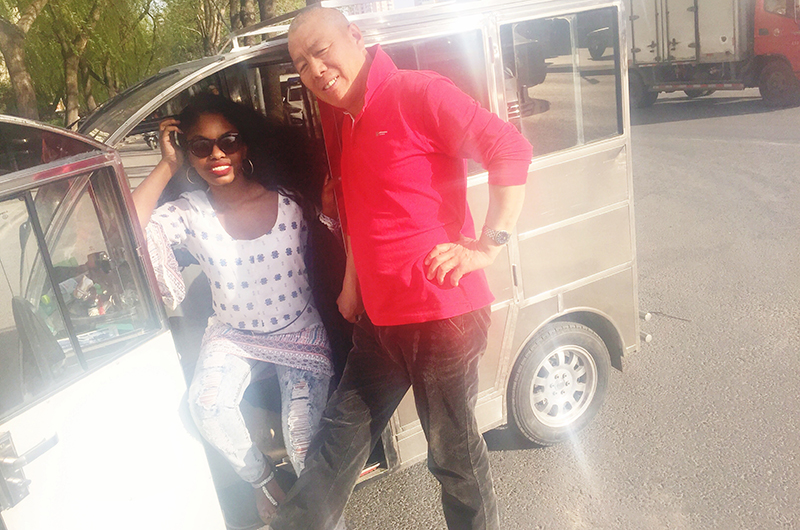
    I literally can’t even watch the road here. Whenever I’m in a taxi or another type of public transportation called a rickshaw, (a pretty cool method of transportation that’s a mini car cart with one wheel in the front, two wheels in the back), I find myself cringing at least once during the ride through the city.

    rickshaw-china

    The driving here is crazy! It looks as if people are making up the rules as they go, turning on red, whoever was there first goes, delayed signaling and a lot of honking. If I am to watch the road, I clinch very often because I’m afraid that every other second I am about to witness a collision. So I just don’t. I don’t watch and I pray to myself that I will make it to my destination safely.

    It’s been working out for me! Haha. Also a lot of adults in Beijing don’t have their driver’s license because the traffic is heavy and the subway is such a popular mode. The rickshaws tend to be more of a negotiated price, by distance. The taxis are typically a little less expensive than a rickshaw, and fairly inexpensive in general.

    The Beijing Subway

    I touched on this a little in my last post, so today I can expound a little more. It’s a pretty extensive system made up of 16 color-coordinated lines, almost expanding out to the entire Beijing. It’s a fairly inexpensive mode of transportation. It’s not too hard to navigate because almost everything is translated into English. All of the announcements on the metro are read aloud in English, after the Chinese reading first.

    metro-map-china

    Furthermore, if you know the name of your destination, you can read which line you’re on and also read the pinyin of the destination, the written lettered form of Chinese, for easy distinction. It’s a pretty good system that’s made transferring to different lines simple and easy.

    Be aware however that the stations get really crowded and pretty often on the metro all of the seats are taken and there are people packed like sardines, all standing up. This is the norm during rush hour after work. Also if you’re a foreigner like me, don’t be surprised if people take random pictures of you. I get that a lot here ☺

    photos-on-train-china

    There are a lot more cultural distinctions to be discussed so stay tuned for more.
    In the meantime, Zaijian! Which means, goodbye, in Chinese.

    Fi 飞