Tag: Greenheart Travel Scholarship Winner

  • Making Friends, Becoming More Confident and Feeling at Home in Ireland

    Making Friends, Becoming More Confident and Feeling at Home in Ireland

    If you had told me how fast time was going to go by before I came to study in Ireland, I would have called you crazy. I was convinced that it was going to feel like centuries going by, not months. Obviously, I was very wrong. Four months have gone by! I only have five months left here in Ireland. And sure, sometimes that seems ridiculously long, but mostly I feel like it’s going to go by in the blink of an eye. 

    Since I’m almost halfway finished with my stay here in Ireland, I thought I’d do a little assessment of my time here.

    When I began thinking about studying abroad, the main draw was the incredible opportunity to be immersed in another culture. However, I was also excited to meet new people and develop new relationships. But, I failed to anticipate the effect these relationships would have on me.


    Forming Bonds from the Beginning

    I typically take a long time to develop relationships with people, but here my options were to make good friends fast or have no friends. By forcing myself into an environment where I knew nobody, and nobody knew me, I really had to put myself out there and make friends.

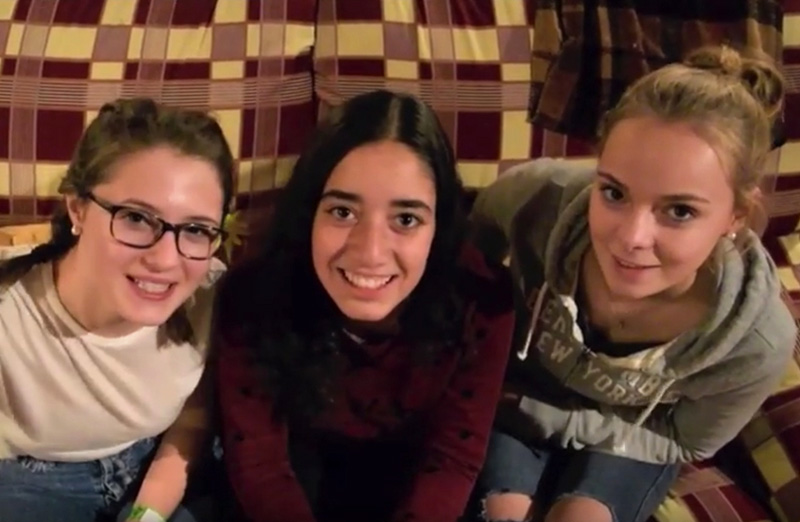
    Making-friends-in-Ireland
    Making friends in Ireland. Photo by Kayla Trowbridge

    My first friends here were with other foreign students because no matter what our personalities were like, we all bonded over being in this similar situation. We were all able to talk about the little goals we were achieving, which no one else would understand, and the troubles we were having, which would have been difficult to explain to other people. This created stronger bonds than we might have had had we not met here.

    At the beginning, we couldn’t even imagine being here without the others, but now three have gone home for good, and another is leaving at the end of December. It’s strange how hard it was to say goodbye to people I’d only know for a few months, but it was almost more difficult than saying goodbye to my friends back home. This was because, while I knew I’d be seeing my friends in Indiana in nine months, there is no telling when I’m going to see the friends I made here again.

    Becoming a More Confident Person While Studying Abroad

    Another draw to studying abroad was the idea that I’d grow to become a more confident person. I’ve struggled with my confidence for a long time, but now I feel that every day I become a bit more confident. I talk regularly in class, I talk to people I don’t know well without being nervous, and I’m more outgoing and willing to try new things.

    Feeling more confident in the classroom these days. Photo by Kayla Trowbridge

    I’m amazed that, first of all, I actually notice these changes, and, secondly, that I’ve changed this much in just four months. I feel braver and more determined to step out of my comfort zone in order to achieve my goals and I’m happy with that.

    Feeling at Home in Ireland

    I was really worried before I came that I’d never really feel like I belong here, and that I wouldn’t be comfortable here. But, in fact, it’s been quite the opposite. I’ve made a good group of friends, and I don’t feel out of place in any of my classes. Of course, there are some days when I’m homesick or hit with culture shock again that I feel completely separate from the rest of my peers. But, thankfully those are far and few between. I also feel very at home with my host family, and I feel like they are also happy to have me here.

    In summary, I think that I’ve had an amazing four months, and I can’t wait to see what the next five bring!


    Kayla Trowbridge is 16 years old and lives in Zionsville, Indiana. Her goal during her study abroad program is to “create relationships that will continue throughout my life and develop a new understanding of the Irish culture.” Follow Kayla’s adventure in Ireland on her blog post updates throughout her program.

    What personal goals inspire you to study abroad? Tell us below!

  • Communicating Through Different Cultures and Languages in Spain

    Communicating Through Different Cultures and Languages in Spain

    A group of German students came to my town for an exchange through my high school in Spain last week. One of the girls stayed with my host family, too. We called our house the international hotel. It was amazing! We toured Merida and Cáceres together with all of the German students, and each night we hung out in the “local.”

    You may ask how did we communicate? The German students were staying with Spaniards who are in the bilingual program to learn English, so we all spoke in English because that was the only language we had in common.

    “Living with two other people from completely different backgrounds, leading completely different lifestyles was amazing and eye opening. It’s an experience with great importance, especially at this point in time.”

    Check out our video to get a glimpse into how we overcame our language barriers:

    Featured in the video are Lina Färber from Germany, Maria Benitez from Spain, and Louise Plever from the USA.


    Louise Plever is 15 years old and lives in Asheville, North Carolina. Her goal during her study abroad program in Spain is “to become fluent in Spanish and make friends that will last a lifetime.” Follow Louise’s adventure in Spain on her blog post updates throughout the year.

    Are you ready for a cross-cultural and language experience of your own?

  • Irish Phrases to Know Before You Go

    Irish Phrases to Know Before You Go

    When choosing to study abroad, language is an important factor. For what seems like a majority of people, studying abroad is a lot about improving their language skills. I, on the other hand, specifically choose not to study in a non-English speaking country for a multitude of reasons.

    I hadn’t taken enough years of another language to qualify, I didn’t want the added stress of trying to communicate in a new language, and so on and so forth.

    However, what I failed to take into account, when choosing to study in Ireland, was how incredibly important Irish is. Irish, or Gaelic, although I hardly ever hear that term, is everywhere:

    • Irish is an exam subject in school.
    • Students can focus on it in college.
    • Parents can choose for their kids to attend schools that only speak and teach in Irish.
    • Irish is written next to English on road signs.
    • There are TV programs that are in Irish.
    • The news also comes on in Irish every evening.

    And those are just a few examples!

    gaelic-copy

    Irish is everywhere, and its important to the Irish people. Some people are fluent, others only know a few words and phrases. Some Irish words have become part of the everyday slang-like “craic” (pronounced ‘crack’), which means something along the lines of good fun. So while I’m not learning a new language, I’m still surrounded by one.

    Another thing I didn’t really think about was Irish phrases. I’ve learned a whole new vocabulary since I’ve been here, and I’ve begun to notice myself occasionally using it in my everyday life.

    Here are a 10 Irish words and phrases I’ve learned since I’ve arrived:

    1. Grand – used like you’d use great, fine, okay or alright.
    2. Craic – I mentioned this one earlier. “What’s the craic?” “How’s the craic?” “Just for the craic.”
    3. Swot – kind of like nerd. Basically, someone who studies a lot and does a lot of schoolwork.
    4. Banjaxed – broken, messed up
    5. Lads – I’ve heard this one used by everybody. Any group of people can be referred to as ‘lads’.
    6. Doss or dosser – to skip class or one who skips class. I’ve heard it used as “This class is a right doss,” or “Having a doss class.”
    7. Your man – that guy
    8. Your one  same as ‘your man’. “And your man said…”
    9. Fair play – well done
    10. Ye  similar to ‘you’


    Kayla Trowbridge is 16 years old and lives in Zionsville, Indiana. Her goal during her study abroad program is to “create relationships that will continue throughout my life and develop a new understanding of the Irish culture.” Follow Kayla’s adventure in Ireland on her blog post updates throughout her program.

    Does studying abroad in a country like Ireland sound grand to you?

  • My New Family and Friends Who Have Supported Me in Germany

    My New Family and Friends Who Have Supported Me in Germany

    I’ve been studying abroad in Germany for about two and a half months now. I’ve made a lot of new friends, and I’ve started to think of this place as a second home. Below is a list of the people I consider to be very important to my life here during my high school exchange program.

    My Host Sister, Vicky

    morgan-and-friend-1

    Vicky is my host sister. She is twelve years old, and has taught me how to be an older sister. She’s also taught me most of the German language that I know.

    My Host Mom, Susanne and Host Dad, Michael

    morgan-host-family-2-3

    Susanne is my host mother. She has made sure that I feel like I am a part of the family, and I’m very grateful for that. She always asks me questions about my day which I think is really nice.

    Michael is my host father. He also has helped me feel like I really belong here by asking me questions about my days, but also about my family and friends back in the U.S.

    My New German Friends 

    morgan-friend-4

    Lara is a friend from school. She helps me a lot by translating things for me and keeping me company. She was one of my first friends here, and I do think school would be quite boring without her.

    morgan-and-friends

    Paula, Judith, Maren were three of my first friends. They all keep me company and go shopping with me, which is always fun.

    morgan-and-host-brothers-6

    Valentin and Frederik are brothers who live really close to my host family. These two are very important to me, and without them I wouldn’t have much to do outside of school. Often, both Vicky and I hang out with them and it’s always interesting.

    My Classmates in Germany and Fellow Exchange Students

    My entire class is very important because they’ve all been so kind and very patient with me. I’m very lucky I got put into 10b.

    morgan-friend-9

    The other exchange students that are a part of the study abroad program have kept me from feeling alone. Sometimes, it’s hard to talk to people who aren’t also an exchange student about the problems I have or how lonely I can feel at times. Lately though, I haven’t had any problems and I don’t feel lonely at all. I still talk to my international friends all the time because they’re all so funny and outgoing (you have to be to be an exchange student).

    morgan-class-8

    All of these people have made me feel welcome here in Germany. Without them, I imagine I would be very lonely. I know they will all always hold a special place in my heart. I know leaving them will be so hard, but I also know I’ll come back to see them when I can. As for seeing my other friends who are exchange students, I now have a lot of new countries to visit.

    Morgan Tucker is 16 years old and lives in Greenfield, Indiana. Her goal during her study abroad program is to “make friends that I will keep for the rest of my life. I also hope to learn about the Germans, and in turn, learn about my heritage.” Follow Morgan’s adventure in Germany on her blog post updates throughout her program.

  • Learning to Appreciate the Little Things While Studying in Ireland

    Learning to Appreciate the Little Things While Studying in Ireland

    November is here, and with it comes colder weather, darker days and apparently more rain! I don’t mind, I like rain. Last week was mid-term break at my high school in Ireland, and it was very nice and relaxing. Both Halloween and the local horse fair fell during the break this year, which was fun. On Halloween, my host family took me to Bunratty, which is a castle and park. It was set up for Halloween, with decorations, games, and scares. The usual Halloween sort of thing! It wasn’t particularly scary, but the grounds were beautiful. We didn’t get to see much of the castle itself, but what we did see was pretty neat.

    bunratty-ireland-photo-by-kayla-trowbridge rural-ireland-photo-by-kayla-trowbridge

    The horse fair here is an annual affair, and was really cool to see. The whole main street was filled with horses. I’ve never seen so many horses in one place!

    horse-fair-in-ireland-photo-by-kayla-trowbridge

    I also got to go the city of Cork with some friends again, which was extremely fun. Everyone is getting ready for Christmas. Many shops had their Christmas things out, and on the street there were Christmas lights and trees being put up.

    street-scene-in-cork-ireland-photo-by-kayla-trowbridge

    My midterm break was actually extended by two days this week, due to strikes. The teacher union at my school was on strike for a number reasons, but it seems that the problems are getting solved since we are back in school. During my extra time off, I was able to go to a local beach and see the sunset with some friends, which was incredible.

    sunset-in-ireland-photo-by-kayla-trowbridge

    While I am still truly enjoying my time here, I have noticed a bad habit I’ve been developing – romanticizing. Mostly with my school. I tend to idealize my school back in USA because it is bigger, has more class options, etc. When things are far away, we tend to develop our own idea of them. It’s like when you think about somewhere you’d gone as a child – you remember it as much grander than it actually is. I’m afraid that’s what I’ve been doing with some things back home.

    Learning to Appreciate the Little Things

    On the other hand, I think I’ve also developed an appreciation for things I used to take for granted. The little things I didn’t notice about my day-to-day life are often the things I find myself missing. My hope is that I will remember how much I missed these things when I go back, and will be thankful for them. I am also trying to appreciate the little things here in Ireland I’ll probably miss when I return. Things like my walk to school, and having a fire every cold evening (which is about every evening now).

    Tomorrow I am going with my school to visit a local college, which should be interesting. I am trying to take the advice previous study abroad students have given me and say ‘yes’ to everything. I’m glad I have so far, as it has led to many little adventures.


    Kayla Trowbridge is 16 years old and lives in Zionsville, Indiana. Her goal during her study abroad program is to “create relationships that will continue throughout my life and develop a new understanding of the Irish culture.” Follow Kayla’s adventure in Ireland on her blog post updates throughout her program.

    Does having many little adventures abroad sound good to you?

  • 6 Ways to Excel at Learning Spanish or Any Second Language

    6 Ways to Excel at Learning Spanish or Any Second Language

    Louise Plever, one of our High School in Spain students, has been working hard to expand her Spanish language skills. Below are six ways she’s been able to excel at learning Spanish, which could also be applied to learning any second language.

    Read books in Spanish. I’ve been reading the book Wonder by R.J Palacio, which I’ve read before in English. Even though I don’t understand every word, it is a great way to learn new vocabulary and see words I’ve heard written down. I also have two books with Spanish on one page and the English translation on the other. Those books are super helpful because if there’s a word I don’t understand, the translation is right there.

    Go out. I try to go out with my friends as often as I can. I have a host sister my age, so we usually go out together. My host mom and I have been going on walks, and I’ll point out things we see and ask her how to say that in Spanish. Today we walked  El Camino Verde, which is pretty desert-like but considered the countryside. Going out will only help you hear, see, and speak Spanish.

    wall-art-in-spain
    Wall art in Spain.

    I take my pocket dictionary to school each day. For tests or when I have to write essays or when I don’t understand a word, I can use my dictionary. I also write down important grammar points in my dictionary. I’ve learned that here in Spain with ‘c’ you only make the ‘z’ sound (in English it would be the “th” sound)  when ‘e’ or ‘i’ comes after the ‘c’.

    For example,“ejercicio” makes the ‘z’ sound for each ‘c’ because an ‘i’ comes after it. The word “quimica” makes a hard ‘c’ sound because an ‘a’ follows the ‘c’.

    Keep a dictionary around so you can look up words you hear but don’t know. I personally think it’s helpful to see the word written down, so having a dictionary is super helpful.

    Watch TV and movies in Spanish. My host family watches a lot of TV which has been a great way to hear new vocabulary. We’ve watched American shows, like Modern Family, in Spanish which is hilarious because the voices are so different. We’ve also watched some classic Spanish shows. Movies and TV are really helpful because I can see what is happening even though I don’t understand what I’m hearing.

    Ask for help and accept that your ability is limited. I came to Spain with a very basic level of Spanish. I couldn’t understand anything during my first few days, partially because I hadn’t settled down and wasn’t used to anything, and partially because my Spanish was at a classroom level. I constantly had to ask people to speak slower and clearer, I still do. It’s so important to ask when you don’t understand something. How will you learn if you don’t ask? I’ve had to accept that my abilities are very limited. It’s frustrating at times, but I know I’ll get better. It’s only been a month and a half and I can already see I’ve improved. I have a long way to go and I have time to get there. Learning a language is hard, but fun if you can laugh at yourself when you mess up and just go for it.

    louise-plever-in-spain

    Make a vocabulary list. During class my teachers usually talk the whole time, very different from school in the United States. I try to pick out as many words as I can to write down and translate. English class is actually so helpful for me because the English is translated into Spanish, which is just what I need to learn new vocab. I have a list of words from English class, a list from my Spanish class, and a list that I’ve made myself. I’m a very visual person, so writing down words and being able to see them is really helpful.

    Learning a new language is one of the hardest things I’ve done, and very frustrating because it just takes time and I can’t say everything I want to say. Living with my host family, being in Spain, and only being able to communicate in Spanish is all the motivation I need. It’s a long process, but it’ll be so worth it in the end. With patience and practice, fluency will come.


    Louise Plever is 15 years old and lives in Asheville, North Carolina. Her goal during her study abroad program in Spain is “to become fluent in Spanish and make friends that will last a lifetime.” Follow Louise’s adventure in Spain on her blog post updates throughout the year.

  • Adventures Abound While Studying Abroad in Ireland

    Adventures Abound While Studying Abroad in Ireland

    Time goes on, and living and studying in Ireland still continues to amaze me. In the last two weeks, I’ve gone to the Cliffs of Moher, Newgrange, and the city of Cork. I was given the opportunity to go to the Cliffs of Moher with a group of other exchange students in same program. It was absolutely breathtaking.

    I’m trying and failing to find words that appropriately describe the Cliffs. We got a beautiful day to see the cliffs – blue sea and blue sky. Getting to see the cliffs was one of the many things that reminded me once again of what an incredible opportunity I have, to spend a year in Ireland and be able to see things like this. I was reminded again when I went on a school trip to Newgrange.

    newgrange-ireland

    For those who don’t know, Newgrange was a structure built in the stone age. It is an astonishing thing for anyone to see, but for a history nerd (like myself) it was beyond great.

    newgrange-wall-ireland

    Cork was great fun. Cork is the first real “city” I’ve been too in Ireland, and I was far from disappointed. It was a lovely city, with lots of neat stores and shops. It also contained the first really “touristy” shop I’ve seen. I was thrilled to see the tourist shop, and got my family back home plenty of touristy trinkets and whatnot.

    cork-city-streets-ireland
    A street in Cork, Ireland.

    Getting Through the Tough Stuff

    All in all, a busy two weeks! But, I had a lot of fun. These past two weeks, I’ve continued to struggle with culture shock and homesickness. I won’t say it’s getting better, but I am certainly learning and working to see the bright-side of everything and stay positive. I’ve found a good way to get through particularly rough moments is to set small goals for myself. I started doing this when I first arrived in Ireland.

    The first few days were not easy, as everything was new and overwhelming. It was also difficult because it felt like I suddenly completely comprehended what I was doing. And it was kind of scary. So I told myself to work for three months – and if I could work to make this a good experience for three months I knew I would be able to do it for nine.

    This goal is at the back of mind whenever I hit a rough patch. Sometimes even three months seems like too long, and so I set a smaller goal – like the end of the week or even just the end of the day. Accomplishing this little, seemingly insignificant goal makes a huge difference to me. It’s a reminder that I can do anything; I just have to take it one day at a time. This whole experience is teaching me to focus on the now, and I am so thankful for that.


    Kayla Trowbridge is 16 years old and lives in Zionsville, Indiana. Her goal during her study abroad program is to “create relationships that will continue throughout my life and develop a new understanding of the Irish culture.” Follow Kayla’s adventure in Ireland on her blog post updates throughout her program.

  • Eating Pig’s Ear, Spanish Pronunciation and Other Experiences from Spain

    Eating Pig’s Ear, Spanish Pronunciation and Other Experiences from Spain

    I have been going to high school in Spain for a month now and it already feels like normal life. Obviously different than “normal” life back in the states, but I have a routine and feel settled.

    Last weekend we went to Madrid for the uncles birthday and my birthday too! We had a surprise party for the uncle at a restaurant and didn’t get home until 3:30am! At the party we all ate pig ear, and in fact it wasn’t too bad. One of the cousins explained to me that they eat every part of the pig, literally.

    cake-in-spain

    The next day we went to Plaza Mayor and Plaza del Sol. Spain is so beautiful. We walked all around Madrid and took the Metro, which happens to be very clean. We spent the whole weekend with all of the cousins and aunts and uncles. I love these big family get togethers!

    spain-host-family

    One of the big differences I have noticed is the clothing style! Most people wear t shirts with english words (that don’t always make sense, hehe) or a nice formal shirt, a lot of the boys wear skinny jeans or jean shorts, and almost everyone wears shoes that make a statement! Shoes are the star of the show. Usually people save their nice clothes for going out on the weekends.

    louise-in-spain

    The other main thing I have noticed is that the spanish pronunciation is different in Extremadura than Madrid, or anywhere else in Spain. For example, they say “adio” instead of adios, and “gracia” instead of gracias. It isn’t consistent because sometimes people will pronounce the “s”.

    There is also a word that is only used in my town, “hacho”, if you say it in any other town, no one understands. It means man or guy but can be used in a lot of  scenarios.

    friends-in-spain

    Of course, Spain has its differences, it would be weird if it was the exact same as my home in the US. There are differences I probably haven’t even noticed because literally everything is different. The streets are smaller and paved differently, the houses are all connected like condos, there are LEMON trees(!!!!), it is all so different and so great. Change was hard at first, but now that I have gotten settled and am ready to be here for a change and to experience life in a new perspective, what’s not to love??


    Louise Plever is 15 years old and lives in Asheville, North Carolina. Her goal during her study abroad program in Spain is “to become fluent in Spanish and make friends that will last a lifetime.” Follow Louise’s adventure in Spain on her blog post updates throughout the year.

  • 8 Tips to Help You Get Over Homesickness While Studying Abroad

    8 Tips to Help You Get Over Homesickness While Studying Abroad

    Morgan Tucker, a Greenheart Travel Scholarship winner, is currently studying abroad at a high school in Germany. Check out her following insightful tips about getting over homesickness while living overseas!

    1. Try not to talk to your friends and family back home everyday. This is probably one of the hardest things, but it helps a lot. Talking to your loved ones makes it difficult to settle in, especially when you tell each other how much you miss one another. It’s obvious that they will miss you and you them. Instead, take the time talking to your host family/new friends.

    2. If you are feeling homesick, find something that takes your mind off of it. Overthinking is the worst thing you could do. Sometimes it’s best to talk to someone about your homesickness. Others find solace in physical activity. Personally, I’ve been able to feel better by reading or listening to music. Find something that makes you feel better and do it.

    morgan-tucker-with-friend-in-germany
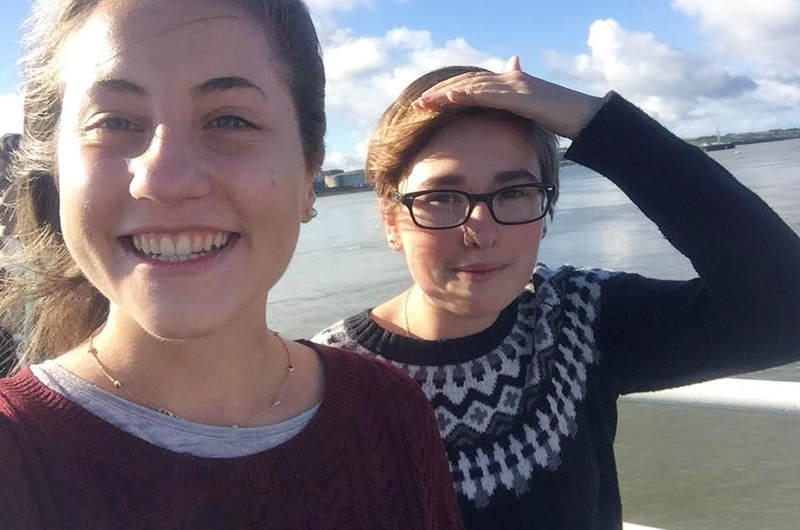
    Morgan with some of her new friend in Germany.

    3. Make friends! This is the most important. Of course, you were already planning on making tons of friends by going to your new country, but sometimes it’s harder than you think. They will speak a different language and even if you have studied their language, it will be challenging. But you can’t give up. Find a way to communicate with people. Making friends and integrating into your school and host family is the number one most important thing you must do. Everything gets easier once you’ve got people to talk to and have fun with.

    neuschwanstein-castle-germany
    Neuschwanstein Castle in Germany.

    4. Be active. Physical activity is one of the best ways to stay happy. It naturally stimulates endorphins, which is a chemical in your brain that makes you happy. Go on a hike or ride a bike. Try to do something active everyday. But also remember that sometimes, a quiet day to yourself is just as needed.

    5. Do not compare your new country to your home country. Almost everything you do will be different. Remember, this is the reason you decided to be an exchange student! You wanted to experience another culture and learn how other people lived. Things are different: neither better nor worse.

    6. Remember, everyone is different! In orientation, we were told that most people would get homesick once things started to become routine. In the beginning, everything is new and exciting, so you don’t have time to think about home. For me, it was the complete opposite. In the beginning, I was a mess. I was almost always homesick and couldn’t even talk to my host family about my mom or my dog, Koda, because I missed them too much and would start crying. Once I started school and made friends, homesickness didn’t plague me as much. Of course, there are still days that are hard to get through without having the thought, “I want to go home.” But, I just remember how amazing it is that I’m here, and doing something that not a lot of people will ever get the chance to do.

    integrating-with-host-family-germany
    Morgan having fun with her host sister in Germany.

    7. Keep in mind, you are not alone! From time to time, it will feel like you are completely alone and have no one to turn to. Just remember, this could not be any further from the truth. Your host family has been told what to do to help you with your homesickness. If you feel sad, talk to them! Almost every time you do they will be able to help! You can also talk to your local coordinator. That’s exactly what they’re there for.

    8. Have fun! As mentioned before, this is an amazing opportunity you’ve been given! Not a lot of people have the chance to travel to a different country and live there. There will be many things that you will do. Enjoy these moments! Take as many pictures as you want! Make sure you don’t take your mistakes too seriously. Learn to laugh at yourself and at your mistakes and move on.

    Morgan Tucker is 16 years old and lives in Greenfield, Indiana. Her goal during her study abroad program is to “make friends that I will keep for the rest of my life. I also hope to learn about the Germans, and in turn, learn about my heritage.” Follow Morgan’s adventure in Germany on her blog post updates throughout her program.

    Now that you’ve got a great list of ways to help with homesickness, get ready to start your own classes abroad!

  • Observations Outside of the Classroom; Pets in Costa Rica

    Observations Outside of the Classroom; Pets in Costa Rica

    Are you a dog person or a cat person? Personally, I love dogs and before coming here, I was very curious about the practice of owning pets in Costa Rica. Whenever I discovered that my host family had a dog, I was overjoyed! But I still had many questions, and wondered if it was as popular as it is in the United States. I soon discovered many things about pets in Costa Rica, and now, I am able to answer the questions I previously had.

    What kinds of pets are typically owned?

    Like the United States, dogs and cats are the pets you most commonly see. But also like the United States, people do have pets like birds and fish as well, and in rural areas, some have chickens, horses, and pigs.

    How do pet owners view their pets?

    In the United States, some people have such a deep love for their pets that they describe it to be the same love they have for their children. Also, a lot of pets are very spoiled and get what they want, even if it is inconvenient for their owner sometimes. In Costa Rica, pets are of course loved and cared for, but it seems as though not as many people live to make their pets have everything they want.

    Are pets as heavily protected as they are in US?

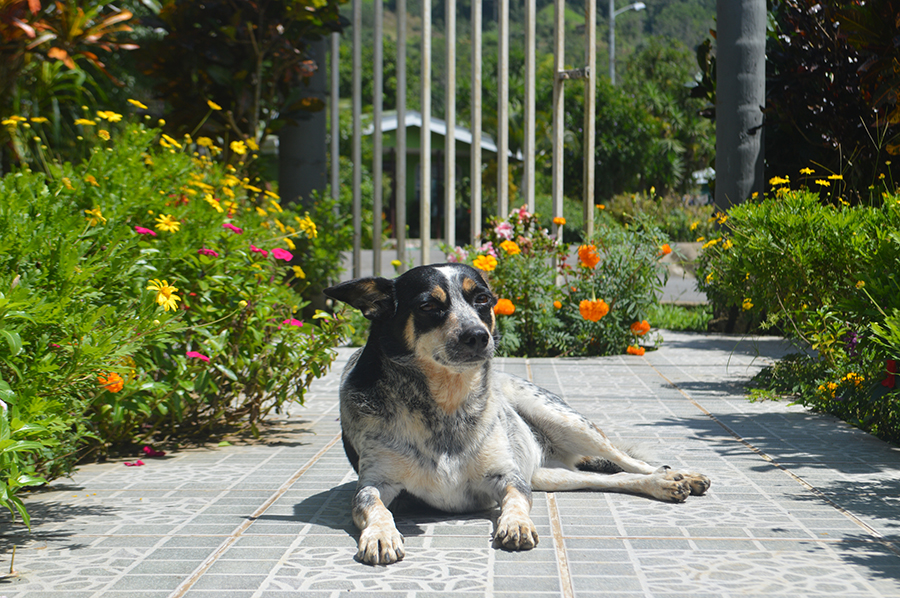
    dog-eating-meat

    In the US, there are laws and penalties regarding animal abuse and it is viewed as a very serious matter. In Costa Rica, it is basically the same. When it comes to strays, stray dogs virtually do not exist in the United States. When a stray dog is discovered, they are usually found and taken to shelters, signs are put out, or people take them in. Stray cats are more common, but usually many people take pity on stray cats as well and give them food. In Costa Rica, stray dogs are a pretty big problem. There are dogs everywhere, and they walk around a lot looking for food. There are organizations that are trying to rid Costa Rica of this issue, but it has not been completely solved.

    How are pets viewed in the community?

    As mentioned above, there are many stray dogs in Costa Rica and they are everywhere. They are basically like wild animals, and Costa Ricans are used to it. There are restrictions like in the US, for example, pets are not permitted in the supermarket. However, if a dog enters the supermarket, it is no big deal. Many people walk their dogs without leashes, and often peoples’ pets will just follow them. There have been a few times that I walked to school and my host family’s dog followed me and sat next to me in class. Even crazier than that, a dog that belongs to another family has also followed me to school, showed up at my house, and even walked over a mile with me and host mom!

    dog-at-school