Tag: Thailand Orientation

  • Embracing the Unknown: My TEFL Adventure in Thailand

    Embracing the Unknown: My TEFL Adventure in Thailand

    by Milena Schembri


    Embarking on this journey to a new country was like stepping into the unknown. As I landed in Thailand, the anticipation of a new chapter in my life had me feeling a whirlwind of emotions;
    excitement, nervousness, and an eagerness to explore.

    My introduction to Thailand began with a late-night arrival in Bangkok. What a city to make my entrance into the Thai experience! The cultural immersion hit me like a wave, full of vibrance,
    chaos, and many… many motorbikes. I found myself in awe, sitting in the car on the way to my hotel, experiencing a moment of realization. It dawned on me where I was in the world and how far away I was from home. I was so proud of myself for following my dream of teaching/living abroad and doing what I knew was right for me. I had this gut feeling that I knew I was in the right place.

    The next morning, I met everyone who was a part of the TEFL program (Teaching English as a Foreign Language) with Xploreasia who is partnered with Greenheart Travel. Meeting everyone was
    a heartening experience. As I began to talk to everyone, what surprised me was that most people had chosen to complete this program and teach abroad on their own, just like me. It was comforting to discover the motivations behind why people chose to teach abroad, and reassuring to realize that we all shared a common journey. For most of us, it was our very first solo travel adventure. We were far away from our homes, family, and friends, but now we had each other.

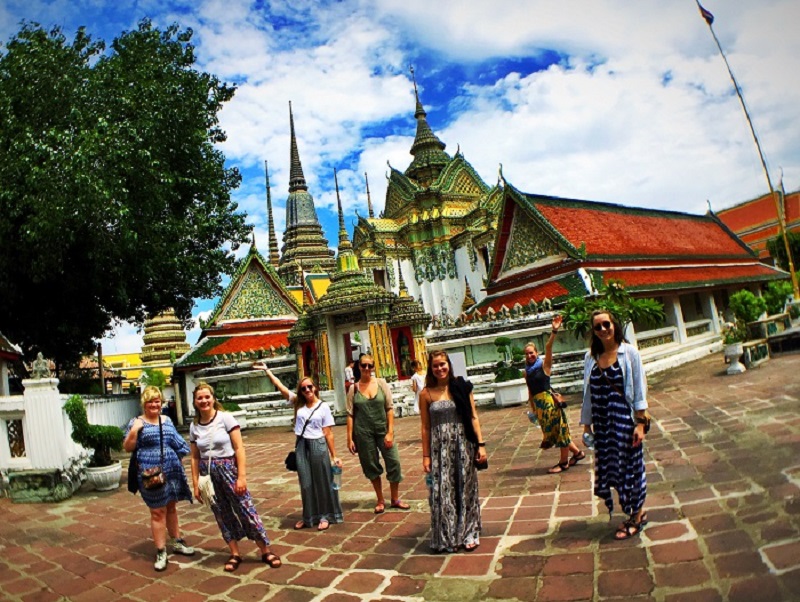
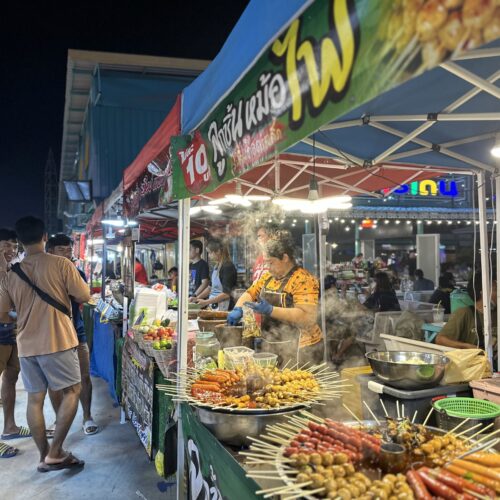
    Our next stop was Hua Hin, where we’d be spending the next month becoming TEFL certified. The TEFL course turned out to be a preparatory experience. The instructors provided valuable insights and guidance, making me feel more at ease about stepping into a foreign classroom. We had a fun introduction to Thai culture through our Thai language classes, Thai cooking classes, and a Maui Thai Boxing class. The group started to become quite close. We loved going to the local Night Market to purchase cheap food, and going out on weekend excursions to temples, caves and
    beaches.

    To fulfill the requirements of the TEFL course, a component involved immersing ourselves in a Thai government school for 2 days. Despite being a teacher in Canada, entering a Thai classroom filled me with a sense of nervous anticipation. Evident cultural differences such as; Thai teaching styles, morning assemblies, the school’s layout, and of course… the students having a low proficiency in speaking English. Despite my initial apprehension, I found myself well-prepared. Throughout the day, I conducted engaging lessons, enjoyed interacting with the students, and achieved my personal goal of stepping beyond my comfort zone.

    Thailand isn’t called “The Land of Smiles” for nothing. The Thai locals are truly the most warm, generous people I’ve ever met. They have the purest hearts and contribute selflessly to the wellbeing of the community. They radiate kindness and generosity to everyone they encounter. One distinctive gesture in Thailand is the “wai,” a traditional Thai greeting that involves pressing the palms together in a prayer-like position and bowing your head slightly. This gesture not only expresses respect but also reflects the collectivist and supportive nature of Thai society. Thai people prioritize community and harmony, which is the reason why they demonstrate immense generosity towards others. They welcome guests with open arms and go out of their way to ensure their comfort. From grab drivers, to 7/11 workers, to tour guides, I’ve always felt welcomed and cared for. There’s a unity and shared responsibility amongst Thai people. In my opinion, they set an example for how everyone should treat one another. The world would be a different place if we treated each other the way Thai people do. It’s a beautiful way of being that I look forward to practicing for the rest of my life.

    Moving onto the navigation of the hiring process, it didn’t come without its stress. My placement coordinator (shoutout to Mile!) helped me along the way to find my placement and an apartment to live in. My patience paid off when I received the news that I was placed in my top choice city- Chiang Mai. I took my time to make a decision that felt right for me. It was another lesson learned; a testament to the importance of trusting my gut.

    As the final chapters of the TEFL course unfolded, it felt bittersweet. Saying my farewells to individuals that I had formed close bonds was challenging. Fortunately, the universe was looking out for me as my roommate from Hua Hin, who had become my closest friend, was also placed at the same school in Chiang Mai. The idea of working and living in the same city together was so exciting for the both of us.

    It seemed as if everything was working out for me. While there were overwhelming moments and a sense of homesickness, I’ve come to realize that these feelings are an integral part of the journey. It has also shown me things I take for granted at home that I’ll cherish when I return. As I navigate to Chiang Mai, I can’t help but reflect on the incredible journey that brought me here. My reason for this venture was to learn more about myself, other people around the world, and life itself. I felt too comfortable at home and I knew that I’d never grow if I didn’t seek to push myself outside of my comfort zone. Learning to allow life to flow, and trusting that everything will eventually work itself out has shown me a new way to live. Becoming stressed, or fearful has no purpose. I feel as if I’ve already grown so much and I can’t wait to see what Chiang Mai has in store for me.

  • Settling into Life in Thailand Can Be Difficult: Meet the Woman Helping to Make it Easier for Teachers

    Settling into Life in Thailand Can Be Difficult: Meet the Woman Helping to Make it Easier for Teachers

    Preparing lesson plans and getting comfortable teaching English to a classroom of Thai students is challenging enough. Add on top of that the stress of banking, cell phones, navigating cultural differences and understanding a foreign language, and living abroad can be pretty uncomfortable and challenging at times.

    That’s why it’s so important to have a support network to help you get through that challenging transition. Paang is our in-country coordinator for the Teach English in Thailand program. With over 6 years experience in the industry, she’s an awesome resource for our new teachers as they learn to navigate a foreign culture and settle into their life and job in a new country.

    We reached out to Paang to get insight on how she found herself in the industry, why she is passionate about helping new English teachers and some tips on how to make the most of life in Thailand. 

    Tell us a little about yourself and how you started working with foreign English teachers in Thailand.

    My name is Panintorn Prakij but my nickname is Paang. I have been helping foreign English teachers find good teaching positions in Thailand since 2011. In 2010, a friend of ours introduced us to the industry.

    At the time, I was working in a staffing agency in Thailand placing westerners in offshore projects in Southeast Asia. Michael (the Managing Director of our organization) and his friend asked me to join and help foreign English teachers secure teaching jobs and assist these teachers in adjusting to their new working environment in Thailand.  

    What’s your favorite thing about working with new English teachers?

    My favorite part of the job is helping young people accomplish their goals and build extraordinary life skills through cross-cultural experiences. I love what I do because I know how much impact our native English speaking teachers have on the lives of Thai children through teaching English and interacting with, and inspiring, young people.

    Our teachers not only bring the English language, they also bring their stories, their backgrounds and experiences, which act as a doorway through which Thai children can experience other cultures. Teachers hold important roles in Thailand. Being a part of helping teachers to help Thai children definitely makes my job meaningful.

    A child in a Thai classroom.
    A young student in a classroom in Thailand.

    Why do you think it’s important to have someone in the country to welcome native English teachers in Thailand?

    It is important to have someone to welcome and to assist you in a country like Thailand, because it is totally different from where our teachers are from. There are so many differences: culture, language, values, the way people live their lives, and even just simple things, such as how to set up the cellphone or what to do when you get sick, or how to open a bank account, etc. There are a lot of things that teachers will learn and discover.

    Having someone or an organization to assist and guide in making the transition to Thai culture to avoid mistakes and causing hassles provides teachers with greater peace of mind and much less stress. Teachers also meet other, like-minded participants who are coming on the program, which makes them feel less stressed and gives them a wide support network.                   

    Do you think foreign teachers have an easy or difficult time adjusting to life in Thailand? Why?

    A Thai cultural dance.
    Greenheart Travel alumna, Riley, participates in a cultural dance in Thailand.

    think foreigners generally need a bit of time to adjust to life in Thailand. As mentioned, the cultural differences and the way people live their lives are not the same as in western countries. Even with the beauty of Thailand’s sceneries and the generosity of the people, there are still some difficulties adjusting to life in Thailand. Many teachers find this adjustment particularly challenging at the beginning. But that is why this kind of experience is so unique and more special than to just pure travel.

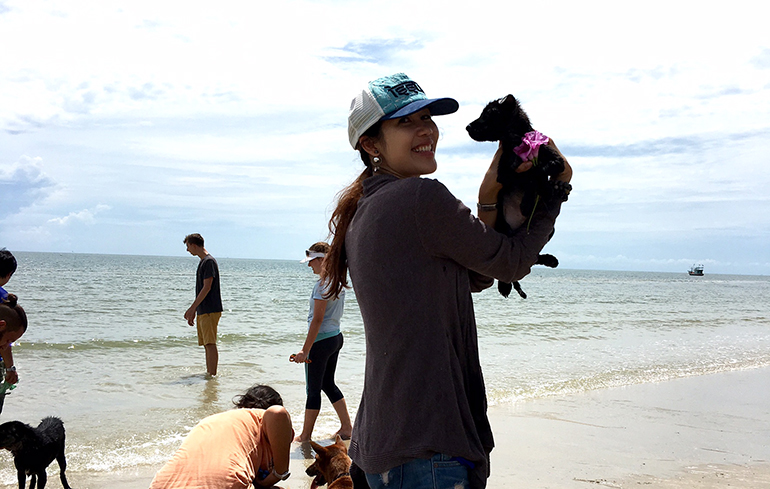
    This program turns our foreign teachers into different people: More mature and experienced, more empathetic, better able to step outside of their own shoes, and more generous and supportive of local communities in need. Many return home with strong Thai language skills, and if they are lucky they will bring a bit of Thai culture home with them. Maybe even bring a rescue dog home from our local rescue organization Rescue Paws. Some never return to their home countries, deciding to call Thailand their home!

    What advice would you give to people considering moving to Thailand to teach?

    People visiting a temple in Thailand.
    People visiting a temple in Thailand.

    Bring your enthusiasm to learn about the culture but leave your expectations at home. Bring an open mind. This will help you immerse yourself, and get much more out of the experience. Read-up about Thai culture and values (and even Thai language) before you even get here so that you have a bit of an understanding. During the cultural orientation, we will have a more in depth presentation and lecture on Thai culture and language, and with that foundation prior to departure, you will be able to ask great questions and get more out of the orientation.

    In terms of preparation, follow our suggested packing list ☺

    We provide the list of things you should bring from first-hand experience of our staff who came through this program and they add things that they brought and they wish they brought too:). It is important to stress that when it comes to packing, bring plenty of professional clothing as Thai schools are quite conservative about dress code.

    What are your favorite places to visit in Thailand?

    Panng enjoys a sunset walk on the beach.

    There are too many favorite places I love to visit to list in a single interview☺ but I will choose one place for each region. In the eastern region, I like Koh Krood, one of the islands in Trad province, where you get to enjoy beaches vibes, nature and waterfalls without feeling so crowded. Most foreign visitors don’t know about this place.

    In the central region, I like Nakorn Nayok, which is only 1-2 hours away from Bangkok. There are waterfalls, mountains and a national park that you can enjoy even if you only have a few days off from school.

    In the west, Kanchanaburi is my favorite place.  Not only because it is my father’s hometown, but also because there is plenty of natural beauty and historical sites. From the famous River Kwae, and Erawan waterfall, to the Death Railway (built by the Japanese during WW2 with forced Asian and Western POWs and laborers), there is so much to experience. You can also do rafting on the River Kwae or if you like trekking, you can go to nearby Sangkhlaburi, which borders Myanmar.

    Waterfalls in Kanchanaburi.

    In Esan, my favorite place is Khon Kaen, which it is a nice city with charming vibes. Buriram province, home to the Phanom Roong palace, is also a must-see in this region.

    In the south, there are a lot of favorite places but I would say Trang is at the top of my list. With beautiful islands nearby, and the unique combination of southern Thai and Chinese-Thai culture, Trang is an amazing place to visit.

    In the north, I like Chiang Kham town in Phayao province a lot. It is a small town but very charming. It is a place unknown to tourists, but when you go there, you can feel the traditional northern Thai Lanna culture. It might not be as cool or hip as Pai (a Western tourist favorite) but the culture in small towns in the north like Chiang Kham, is much more authentic.

    You have a lot of projects and things going on in Hua Hin, one of which is the new Café, Wagging Tales. Can you tell us about Wagging Tales and what the café is/does for Rescue Paws?

    Paang helps in Wagging Tales cafe.

    The reason behind opening this café is to raise money for Rescue Paws, our animal rescue project we founded to help dogs and cats and reduce the populations of stray animals in Thailand through sterilizations and public education.

    The café has several goals. Besides earning money to support Rescue Paws, we are trying to create awareness of the stray dog problem in Thailand and also try to promote rescued dogs and cats to make people see how sweet and loving they are and eventually to discourage people from buying dogs from puppy mills, and adopt instead.

    Anything else you’d like people to know about you, the program, or Thailand?

    What people might not know about me is that like other Thai kids, I learned English since I was five years old, but I really only learned to speak English when I was 18. Early in my schooling, I learned English mostly with Thai teachers. When I was 18 years old, I had my first experience learning English with a native speaking teacher. What I found out from that experience was that the benefit wasn’t just learning from a native speaker, but being able to learn about the background, life, and culture of the teacher too. That inspired me to want to learn English more and learn more about other cultures.

    As an English teacher in Thailand you don’t just teach a language, but you become a role model who can inspire those around you to learn and experience new things. The Teaching-in-Thailand program is the kind of experience in which you give back to the community and you get back something from your students and host communities. The kids learn the skills they need for a better future and you learn the life skills for a better you.  That is what makes this such a special journey.

    If you come here as a tourist you can experience the beaches, islands, temples, Thai food and boxing, but you will be missing out on so many benefits that come from becoming a part of the daily fabric of a Thai community. From this experience, you understand the feeling of being loved and looked up from the kids, who will cry when you leave. You will feel the warmth and learn the depths of Thai culture from being invited to attend a wedding even when you may only know that person for a week.

    You will often have the opportunity to attend events, markets, festivals and even funerals with your Thai hosts, learning even more about the Thai culture and values. You will have a one-of-a-kind experience and take away so much that will stay with you forever, and forever change you for the better.

  • 25 Photos from the First Week in Thailand Through Our Teachers’ Eyes

    25 Photos from the First Week in Thailand Through Our Teachers’ Eyes

    Featured photo by Katie Sennett

    We asked our newest batch of English teachers in Thailand to submit one photo that they took during their first week on the program – and to pick their favorite! Here are the submissions we received. Spoiler alert: cute puppies, elephants, and amazing temples ahead.

    ashleigh-burton
    Photo by Ashleigh Burton
    Processed with VSCO with c1 preset
    Photo by Chloe Jager
    DCIM100GOPROGOPR0194.
    Photo by Chiara Burns
    brittany-hughes
    Photo by Brittany Hughes
    bridget-shrode
    Photo by Bridget Shrode
    bri-serbus
    Photo by Bri Serbus
    belle
    Photo by Belle Joeckel
    bailey
    Photo by Bailey Gray
    alyssa-laten
    Photo by Alyssa Laten
    P
    Photo by Ashton Patrick
    andrew-armstrong
    Photo by Andrew Armstrong
    Processed with VSCO with f2 preset
    Photo by Chloe Jager
    jesi-friedly
    Photo by Jesi Friedly
    jennie-knight
    Photo by Jennie Knight
    DCIM101GOPRO
    Photo by Hailey Lawson
    erin-mack
    Photo by Erin Mack
    ella-pendy
    Photo by Ella Pendy
    eileen-lynch
    Photo by Eileen Lynch
    danielle-staverosky
    Photo by Danielle Staverosky
    amanda-lobo
    Photo by Amanda Lobo
    megan-laskey
    Photo by Megan Laskey
    krysta-arguin
    Photo by Krysta Arguin
    lauren-himes
    Photo by Lauren Himes
    marilla-lawson
    Photo by Marilla Lawson

    Do you picture yourself teaching in Thailand AND cuddling with puppies, bathing elephants, and exploring temples in Thailand?