Category: Teach Abroad Programs

  • Greenheart Travel and An EPIK Partnership 

    Greenheart Travel and An EPIK Partnership 

    Greenheart Travel offers Teach Abroad Programs in many different countries, including TWO in South Korea. One is a more traditional Teach Abroad program (one where a participant arrives in a country, has an orientation week, teaches in a private school and gets continuous support from Greenheart) and the other is in partnership with EPIK.  

    EPIK, standing for English Program in Korea, was created by the South Korean government to bring English teachers to their country to join a community of passionate educators, immerse themselves in a vibrant culture, and gain valuable international experience.  Since its inception, EPIK has been instrumental in recruiting and placing English teachers in public schools throughout the country, contributing significantly to the nation’s English language proficiency. 

    What exactly does that mean? 

    The South Korean government is opening jobs for English-speaking travelers with a lot of benefits! 

    Right off the bat, here are just some of the perks a Greenheart EPIK participant receives: 

    • Flight Reimbursement –   Flights are expensive and often not included in Teach Abroad programs. Participating in the EPIK program means your flight is paid for! 
    • Accommodation – This program comes with a fully-furnished apartment, meaning you can skip the stress of house hunting! 
    • Salary – EPIK English Teachers in South Korea are paid a comfortable sum along with comprehensive health insurance and paid vacation days. 

    All of that is in addition to spending a year abroad, teaching English, and participating in an incredible and unique cultural exchange. 

    Besides the tangible and financial benefits, what else does Greenheart’s partnership with EPIK mean? 

    • Enhanced Support for Teachers: Greenheart Travel’s involvement in the EPIK program brings added support and resources to teachers. From pre-departure orientation to ongoing assistance while in South Korea, Greenheart Travel ensures that educators are well-prepared for their new roles and comfortable in their new environments. This comprehensive support system helps teachers navigate cultural differences and adapt to their new surroundings with confidence. 
    • Cultural Exchange and Immersion: One of the standout features of the partnership is the emphasis on cultural exchange. Teachers are not only placed in classrooms but are also encouraged to engage with the local communities, participate in cultural events, and build lasting connections. This immersive experience enriches teachers’ understanding of Korean culture and enhances their professional growth. 
    • Professional Development Opportunities: The collaboration also opens doors to professional development opportunities. Teachers can enhance their teaching skills and expand their knowledge of educational practices. This ongoing professional development is a key component benefiting both educators and their students. 


    Where exactly does Greenheart fit into all this?  

    While government sponsored programs are amazing, let’s be honest, the application process is not. 

    Governments require a lot of documentation.  And with all the forms and fees, potential participants can get a bit overwhelmed and confused with the entire process.  

    That’s where Greenheart Travel comes in. Greenheart’s team streamlines this process, making it easier, and less costly, for participants to get started on their year abroad. Greenheart even waives the application fee if participants decide to also sign up for a TEFL course! 


    Greenheart Travel has been sending teachers to South Korea for over 15+ years. We know and understand the complexities.   We have supported thousands of people through the complicated application process as well as prepared them for life in South Korea prior to departure. By combining strengths, Greenheart and EPIK are set to provide a rewarding and impactful experience for educators seeking to teach English in South Korea. 

    If you’re interested in paid teaching positions in public schools throughout South Korea, the EPIK program is for you. 

    Now, partnered with EPIK, Greenheart can’t wait to continue creating and promoting cultural exchanges that change lives.  

  • Teach Abroad Italy: Katie’s Experience

    Teach Abroad Italy: Katie’s Experience

    Katie Bleck is currently a participant on Greenheart Travel’s Teach Abroad Italy Program. She is currently working as an assistant teacher in Turin, Italy. We asked Katie a couple of questions about her experience so far!


    What is the biggest difference you noticed between the U.S. and Italian school system?

    The three main differences I noticed between the U.S. and Italian school systems are the subjects of emphasis, teacher work hours, and the school community. The first difference I noticed between the U.S. and Italy is what subjects are emphasized by the curriculum. In American schools, math, reading, and writing are by far the most dominant subjects. (Especially in the younger grades). The Italian curriculum includes these subjects, but also introduces foreign languages at much younger grades. For example, my students were able to communicate in English, French, and German in addition to their primary Italian language. I thought their skill set was absolutely incredible! Secondly, teachers work very different hours in America and Italy. In America, you spend 40 hours a week in the classroom with students and additional hours in meetings, lesson prepping, and grading. In Italy, teachers only spend 18 hours a week in the classroom with students, about 2 hours in parent conferences, and additional hours prepping and grading. I couldn’t believe how short my school days were! Lastly, I noticed a difference in community between American and Italian schools. In both countries, the staff has close relationships with one another, but the relationships between students throughout the school is much different. In Italian schools, there are no athletics, musical theatre, clubs/organizations that are apart of the school. In my opinion, this creates a school community because students are able to interact with numerous students outside of their class and grade.

    What is your favorite part about being a volunteer assistant teacher?

    My favorite parts about being a teacher assistant is having the opportunity to share my American cultures while also forming new relationships. This position has allowed me to enhance students’ second language in a fun and engaging style. The students are always so excited to have me in their class! It is honestly so heartwarming having the students cheer my name and clap upon my appearance. I truly feel the love! The teachers I work alongside are also so kind and extremely helpful! It has been a pleasure to get to know them and learn from their teaching styles!

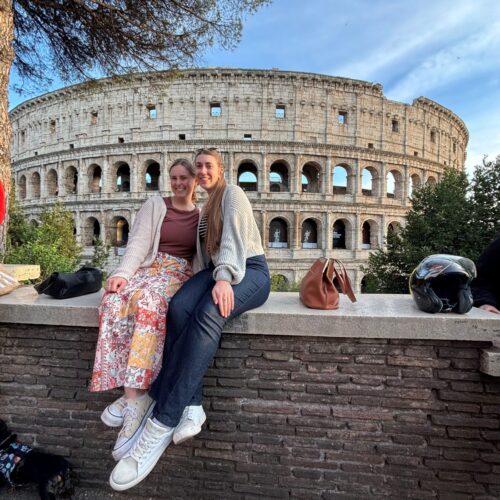
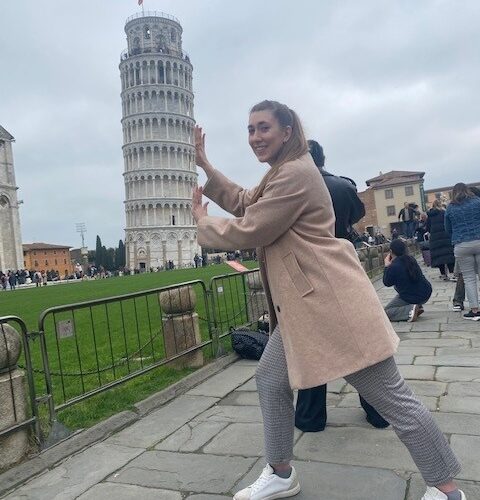
    In addition to forming relationships with my family and at school, I have also been able to meet another North American teacher assistant and have traveled around the country with her! We have been able to share our experiences and honestly became such great friends! Some cities we have traveled to include: Rome, Florence, Venice, Pisa, and Genoa!


    What did your host family do with you to help you acclimate to the community?

    My family welcomed me with such open hearts and has genuinely made me feel apart of their family! To acclimate to the community, my family introduced me to many to their family members/friends and always invited me to accompany them in their daily activities. Some of these activities include going to the park, going shopping, hanging out with their friends, etc. Participating in daily activities has made this transition feel less overwhelming and a lot like my life back home. In addition, my family also speaks English when I am around and makes me feel apart of every conversation.

    Do you travel with them outside of Italy or around Italy?

    YES! I have been so fortunate to be able to travel to some amazing places in Italy with my family! These places include skiing in the Alps, boat rides and island hopping on Lake Maggiore, the Ivrea Carnival, and several places in Turin. I have very much enjoyed exploring and learning more about these beautiful and historic places with my family.

    What do you do with your host family for fun?

    Some activities I do with my host family for fun include playing card games and cooking/baking. I’ve been able to teach my family some of my favorite card games and they have taught me theirs. There’s one specific game American they loved so much, we play it many times a week! I have also very much enjoyed learning to how bake/cook authentic Italian recipes! Some of my favorite dishes I have made include tiramisu, gnocchi, and carbonara. I have also been able to make some simple American dishes for my family that they have never tried before. Some of these include French toast, peanut butter and jelly sandwiches, and confetti cookies. It was so fun seeing their reactions to the food! In addition to sharing recipes and card games, I have also shared my American culture with my family through holidays. My time in Italy has been during Valentine’s Day, St. Patrick’s Day, and Easter. I learned that these holidays are celebrated very differently between the two countries. To share my traditions, I made valentines, St. Patrick’s cards, and hid Easter eggs around the house for them. They were very excited and appreciative of this gesture!


    Did this change how you view families in Italy/ Italian lifestyle ?

    Before this experience, I didn’t know much about the Italian lifestyle aside from the stereotype that they eat lots of pasta. Which is very much true! In fact, we ate different types of pasta everyday for lunch when I came back from school! Besides the pasta consumption, I have learned that the Italian lifestyle is much more simplistic. For example, you don’t need a hundred different outfits and life moves at a slower pace.


    Does this make you want to pursue teaching upon return?

    ABSOLUTELY! Prior this experience I already  had a profound love for teaching! Having the capability to educate and inspire the younger generation is something I find truly special! Being a teacher assistant has provided the opportunity to do so in another country and it has been remarkable! This experience has only enhanced my love for this profession and I cannot wait to share some of the Italian culture with my future students and coworkers when I return home.

    Do you want to stay in touch with your host family?

    DEFINITELY! After spending this period of time with them, I feel as if they have truly became a second family! Outside of school, I spend most of my time with my family and have formed bonds to last a lifetime! I can’t imagine not staying in touch.


    Learn more about Greenheart’s Teach Abroad Italy Program!

  • Teaching in Italy: Q and A with Maddy!

    Teaching in Italy: Q and A with Maddy!

    Maddy Schneider is a current participant on Greenheart’s Teach English in Italy Program. She is located in Acqui Terme with her host family.  We asked her a few questions about her thoughts on the program so far!

    What is the biggest difference you’ve noticed between the Italian school system and the one from your home country?

    I have noticed a lot of differences between the Canadian school system and the Italian school system. The main thing I have noticed is that Italy is still stuck in an old school way of teaching. The teacher talks at the front of the room, and the kids listen. The kids then go home and read their textbooks for hours. They memorize their textbooks for when they have a written or oral test (which occurs almost everyday), then they simply forget that information to make room for the next things they need to memorize. In Canada, we take a play-based approach in learning and the kids do a lot of playing and hands-on activities to learn the material.

    What is your favorite part about being a volunteer assistant teacher?

    My favourite part about being a teacher assistant is interacting with the kids. They all seem to seek me out and try to communicate with me, even if they don’t know any English. I enjoy talking with them and learning about them. Many teachers have told me that many of the students that don’t engage in class have taken big steps in communicating with me and participating in my lessons.

    You currently live with a host family. What did your family do with you to help you acclimate to the community?

    My family has taken me to see sights around the town, meet with their friends, and have taught me about Italian culture in general!

    Have you been able to travel with your host family?

    My family has taken me to France and a few other places in Italy.

    When you’re not traveling with them, what do you do with your host family for fun?

    For fun, my family sometimes takes drives in the country. We also sometimes watch a movie together.

    Does this experience lead you to have a different outlook on your life back in your home country?

    I have a very different outlook on life in my home country now. I never understood all the things I took for granted back home and this will change the way I live when I return home.


    Will you continue to teach once home?

    In Canada, I am already a teacher. So I am happy to return to teaching and having my own classroom again.


    Do you plan on staying in touch with your host family?

    I will absolutely stay in touch with my host family. Someday I hope to return to visit them!

    Maddy is currently on Greenheart’s Teach Abroad Italy Program. To learn more about the program, click here!

  • A Journey of Discovery: Teaching in Chiang Mai, Thailand

    A Journey of Discovery: Teaching in Chiang Mai, Thailand

    by: Milena Schembri

    Traveling to Chiang Mai felt like turning the page to a new chapter. Starting with an overnight bus from Hua Hin, the sleep may not have been the best, but as I dozed in and out, a breathtaking sunrise over the mountains was my first sight of the beautiful Chiang Mai. It hit me that this enchanting city would be my home for the next little while. On my first day, I stepped into Tonkla, the school that would soon become my professional home.

    Before being hired, I was drawn to the mission and values of this school. In the heart of Chiang Mai, Tonkla prides itself in taking a different approach to learning and teaching compared to other schools in Thailand. The founder of the school; Boonanake Maneetham, built the foundation of Tonkla with the belief that student happiness is essential. He states, “The brain works best when it’s happy, loved and cared for.” The word “Tonkla” itself means “little tree.” Just like a tree needs water and nutrients to grow; happiness is like water that brings nutrients to the children’s taproot, branch roots, and hair roots. It was exciting to soon be a part of a community that understands the importance of happiness and how it affects the human being as a whole.

    Again, it felt as if the stars were aligning and everything was falling into place. A school with values and a mission like Tonkla is one that I always pictured myself working at. It feels as if the values of happiness and taking care of oneself are the same values I had for myself. I’ve had realizations that my own happiness is what matters most. If I’m taking care of my own well-being, then this radiates to those around me and causes a rippling effect of happiness . After visiting the school for the first time, I was amazed by the design and loved how it was surrounded by nature. I was eager to meet my students and immerse myself in the community.

    One of the more challenging aspects of being away from home was missing Christmas with my family. I remember my instructor- John from Xploreasia explaining the stages of culture shock and living abroad. I definitely experienced different emotional states as time passed. I included a visual below for reference:


    I believe I experienced the “shock” stage around Christmas time. Christmas at home has always been one of my most favourite times of the year. I love seeing family and friends, cozying up on the couch, and enjoying the festivities that come along with the holiday season. This year, I was in a new city, not knowing many people yet, and figuring out my berings. Looking back, the experience of missing home taught me to appreciate what you have in the moment. When you’re constantly doing the “same old things” it feels repetitive at the time, but when you leave “the same old things” you end up realizing how much you love it all. This experience has made my appreciation for home grow and has made me look forward to my return. There were many cultural differences to adapt to such as the struggle to communicate with locals, simple tasks like buying things at a grocery store, running out of hot water, and BUGS.

    I realized that these stages of culture shock aren’t linear. Going in and out of the stages is similar to flowing with the waves of life. Situations, and emotions will arise that are uncomfortable,
    but nothing lasts forever. I’ve learned to find gratitude in my current situation and look at it as a once in a lifetime experience. I left home with a mission to make the most of my time in Asia and immerse myself into a culture that is completely different from what I’m used to. I began to move into the transition and acceptance stages of the culture shock wave. I was now eager to make Chiang Mai my new home away from home.

    As I immersed myself in my teaching role, a profound affection for my students blossomed. I got to know the unique qualities of their personalities. Tonkla hosts many events for their school community on a monthly basis. This is something I wasn’t accustomed to. The active involvement of parents adds another layer of community richness. I’m looking forward to continuing to develop my teaching skills throughout my time at Tonkla School.

    I began to explore and enjoy the amazing city. I couldn’t believe how much there was to do. From the beautiful jungle hikes and waterfalls surrounding the city, to the endless amount of coffee shops in the city square, to the breathtaking temples. I fell in love with Chiang Mai. I began to meet more people with similar interests as me! One of these interests being yoga and meditation.

    Something I didn’t realize before coming to Chiang Mai is that it’s often referred to as the “City of Meditation” due to its rich history and strong connection to Buddhism. Yoga and meditation are something that I enjoyed teaching and practicing at home. I was eager to start a healthy routine and take advantage of the spiritual practices Chiang Mai had to offer. Trying different yoga classes, meditation techniques, and speaking with Monks have been tools to help guide me on my own spiritual path. I’ve experienced profound revelations about my true essence, how important it is to observe the mind, and how precious the present moment is.

    After reflecting on my experiences, I can’t believe how much inner growth I’ve experienced. I find myself overwhelmed with gratitude for the decision I made to embark on an adventure that has led me to call Chiang Mai, my new home for the next little while. Working at Tonkla has not only been a job but a transformative experience that has enriched my life in ways I couldn’t have imagined. My students and other staff members will forever have a special place in my heart.

    Choosing to come to Thailand was not a decision taken lightly; I knew there would be ups and downs, but what I’ve come to realize is that even when things don’t seem to go as planned, that’s
    the purpose of the journey. Living in Thailand has been a journey of self-discovery. I’ve learned to identify and address bad habits and patterns, manage stress, and not overthink or plan excessively. Allowing life to unfold naturally has become a mantra, trusting that everything is happening as it should. One of my favourite quotes that I’ve repeated to myself throughout my travels is “life happens
    not to me, but for me.” Everything in life is a lesson. I’ve learned that I should treat people with kindness and respect- just like Thai locals, enjoy the unfolding of life and appreciate every single moment in the “NOW,” to accept the highs and lows of life because everything shall eventually pass, and to not take life too seriously. We’re meant to enjoy life, have fun, and learn. This land of smiles has left an incredible mark on my heart. I can’t wait to live the rest of my life rooted in gratitude, appreciation, adventure, and love. I want to thank Greenheart for allowing me to use this platform to share my experience, and I hope I encourage others to follow their dream… whatever that may be for you.


  • Embracing the Unknown: My TEFL Adventure in Thailand

    Embracing the Unknown: My TEFL Adventure in Thailand

    by Milena Schembri


    Embarking on this journey to a new country was like stepping into the unknown. As I landed in Thailand, the anticipation of a new chapter in my life had me feeling a whirlwind of emotions;
    excitement, nervousness, and an eagerness to explore.

    My introduction to Thailand began with a late-night arrival in Bangkok. What a city to make my entrance into the Thai experience! The cultural immersion hit me like a wave, full of vibrance,
    chaos, and many… many motorbikes. I found myself in awe, sitting in the car on the way to my hotel, experiencing a moment of realization. It dawned on me where I was in the world and how far away I was from home. I was so proud of myself for following my dream of teaching/living abroad and doing what I knew was right for me. I had this gut feeling that I knew I was in the right place.

    The next morning, I met everyone who was a part of the TEFL program (Teaching English as a Foreign Language) with Xploreasia who is partnered with Greenheart Travel. Meeting everyone was
    a heartening experience. As I began to talk to everyone, what surprised me was that most people had chosen to complete this program and teach abroad on their own, just like me. It was comforting to discover the motivations behind why people chose to teach abroad, and reassuring to realize that we all shared a common journey. For most of us, it was our very first solo travel adventure. We were far away from our homes, family, and friends, but now we had each other.

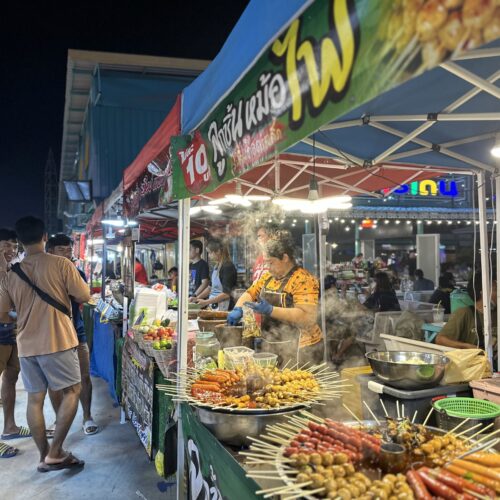
    Our next stop was Hua Hin, where we’d be spending the next month becoming TEFL certified. The TEFL course turned out to be a preparatory experience. The instructors provided valuable insights and guidance, making me feel more at ease about stepping into a foreign classroom. We had a fun introduction to Thai culture through our Thai language classes, Thai cooking classes, and a Maui Thai Boxing class. The group started to become quite close. We loved going to the local Night Market to purchase cheap food, and going out on weekend excursions to temples, caves and
    beaches.

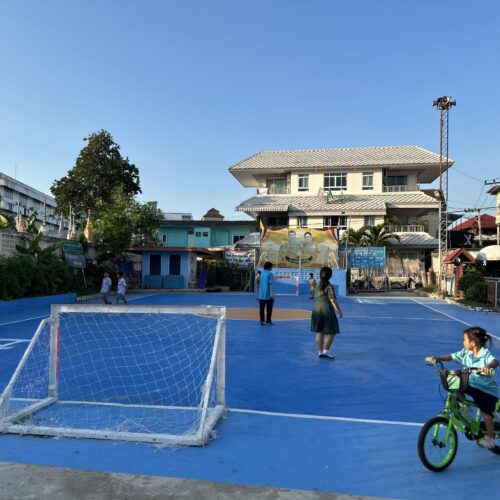
    To fulfill the requirements of the TEFL course, a component involved immersing ourselves in a Thai government school for 2 days. Despite being a teacher in Canada, entering a Thai classroom filled me with a sense of nervous anticipation. Evident cultural differences such as; Thai teaching styles, morning assemblies, the school’s layout, and of course… the students having a low proficiency in speaking English. Despite my initial apprehension, I found myself well-prepared. Throughout the day, I conducted engaging lessons, enjoyed interacting with the students, and achieved my personal goal of stepping beyond my comfort zone.

    Thailand isn’t called “The Land of Smiles” for nothing. The Thai locals are truly the most warm, generous people I’ve ever met. They have the purest hearts and contribute selflessly to the wellbeing of the community. They radiate kindness and generosity to everyone they encounter. One distinctive gesture in Thailand is the “wai,” a traditional Thai greeting that involves pressing the palms together in a prayer-like position and bowing your head slightly. This gesture not only expresses respect but also reflects the collectivist and supportive nature of Thai society. Thai people prioritize community and harmony, which is the reason why they demonstrate immense generosity towards others. They welcome guests with open arms and go out of their way to ensure their comfort. From grab drivers, to 7/11 workers, to tour guides, I’ve always felt welcomed and cared for. There’s a unity and shared responsibility amongst Thai people. In my opinion, they set an example for how everyone should treat one another. The world would be a different place if we treated each other the way Thai people do. It’s a beautiful way of being that I look forward to practicing for the rest of my life.

    Moving onto the navigation of the hiring process, it didn’t come without its stress. My placement coordinator (shoutout to Mile!) helped me along the way to find my placement and an apartment to live in. My patience paid off when I received the news that I was placed in my top choice city- Chiang Mai. I took my time to make a decision that felt right for me. It was another lesson learned; a testament to the importance of trusting my gut.

    As the final chapters of the TEFL course unfolded, it felt bittersweet. Saying my farewells to individuals that I had formed close bonds was challenging. Fortunately, the universe was looking out for me as my roommate from Hua Hin, who had become my closest friend, was also placed at the same school in Chiang Mai. The idea of working and living in the same city together was so exciting for the both of us.

    It seemed as if everything was working out for me. While there were overwhelming moments and a sense of homesickness, I’ve come to realize that these feelings are an integral part of the journey. It has also shown me things I take for granted at home that I’ll cherish when I return. As I navigate to Chiang Mai, I can’t help but reflect on the incredible journey that brought me here. My reason for this venture was to learn more about myself, other people around the world, and life itself. I felt too comfortable at home and I knew that I’d never grow if I didn’t seek to push myself outside of my comfort zone. Learning to allow life to flow, and trusting that everything will eventually work itself out has shown me a new way to live. Becoming stressed, or fearful has no purpose. I feel as if I’ve already grown so much and I can’t wait to see what Chiang Mai has in store for me.

  • Teaching in Japan: How participating with Greenheart can save you in the long run!

    Teaching in Japan: How participating with Greenheart can save you in the long run!


    When you sign up for a program like Teach Abroad Japan with a company like Greenheart, we help with a lot more of the details and organizing that you realize. For some, going about organizing everything themselves is something they want to experience. They want to find a teaching placement, search for their own accommodation, and sort out insurance on their own. But for many, figuring out how to set up these necessary elements on their own can be quite intimidating. Think of apartment hunting in your hometown, now think about it in another country where you don’t know the neighborhoods and sometimes, not even the language!

    Participating in a program with Greenheart gets you assistance with all those worrisome items on your checklist as well as some you didn’t even think of. We’ve compiled a small list of a few perks of signing up with Greenheart. Take a look at what participants can get when they teach abroad in a public school in Japan.

    Here are some elements of Teaching Abroad in Japan that you won’t get with any other company.

    1. A Free Car

    Yes, you can read that again. As long as you have a license, you can apply for a driving permit in Japan, and we will supply the car for you!

    1. Co-Workers

    You will have a co-teacher in the classroom with you while you’re teaching English! If you’re worried that finding people to connect with while in another country will be difficult, you won’t be alone! The schools will pair you with a co-teacher to help with classroom management, translations and teaching instruction, making things a lot easier and less stressful.

    1. Orientation in Nagoya!

    Greenheart provides all its participants with an orientation weekend before your program starts! You’ll have a guide to show you the ropes and get a great introduction to living in another country!

    1. Free Japanese Classes

    Even if you’re feeling secure in your language abilities isn’t it better to have a refresh? We offer our participants 4 in person language classes that are completely set around your schedule. Along with in-person practice, we also provide you with course materials as well as online course options.


    1. Accommodation Setup

    Greenheart gives assistance to their participants to set up accommodation for the duration of their teaching placement. You’ll have a choice of a studio/single occupancy apartment or a private room in a larger shared house with shared facilities which you will need to pay for. The hassle of apartment shopping will be taken off your shoulders just like that!


    So, if you’re still deciding if Teaching Abroad in Japan through Greenheart is worth it, just think, Free Car!

    Greenheart also gives participants the option to teach in a private school (the application process is a bit quicker) with different advantages than those placed in public schools. No matter where you choose to be placed, we know that you will have an incredible experience, immersing yourself in another culture and making memories that will last a lifetime!

    If you’d like to learn more about our different placements or discover more about our Teach Abroad Japan program, head to the Program Page!

  • Teach Abroad Costa Rica in an Online School – What you can do in your free time!

    Teach Abroad Costa Rica in an Online School – What you can do in your free time!

    One of the cool things about our Teach English in Costa Rica Program is that there are a variety of paid placements. There are local academies, international or bilingual schools and online schools.

    Most people think that attending a physical school to teach is the ideal situation, being in person, practicing your Spanish and English and forging connections with students. What they don’t know is that there are many benefits to teaching in an online school as well.

    The online option is perfect for participants who might need to juggle a few professions. We’ve had participants work remotely at their current job while participating in this program and taking advantage of living in another country for a short time. We’ve also had participants work online while traveling all over!

    If something like this interests you but you’re unsure of what you could do in your free time, look no further than this list!


    Swim and Walk around a Volcano!

    The Arenal Volcano and the La Fortuna Waterfall and Hot springs are some of the most popular and beautiful sites to see while in Costa Rica. Take a day trip and revel in the natural beauty!

    Pet a Sloth

    Over 20% of Costa Rica is made up of protected reserves or animal refuges which is something you should take advantage of! Go see protected animals in habitats and learn about the care and protection of them!

    Coffee/Sugar/Chocolate Tasting

    Costa Rica’s environment is perfect for the planting and growing of Cacao beans, coffee beans and sugar cane. There are many plantations that offer tours and tastings of these delicious treats! You can leave for the day and come back with a bag full of authentic goodies!


    Visit a Marketplace

    Lean into the local side of things and find and explore the markets around your city! You’ll be able to find the ingredients for your meal and try new things while practicing your Spanish to the vendors!

    Ziplining

    The activity everyone see’s photos of when they search ‘Costa Rica’. What people don’t know is that there is a canopy tour option as well so you and your friends can all zip through the trees together!

    Teaching in a online school while abroad in Costa Rica might not be the first option that participants consider but it can definitely be one of the most active and interesting! The online placements still push participants to engage not just with students, but the world around them.

    To learn more about the Teach English in Costa Rica Program, visit our informational page


  • Teaching Tips Tuesday from Greenheart Travel

    Teaching Tips Tuesday from Greenheart Travel

    Heading to a Greenheart Travel Homestay Program in Spain, France, or South Korea? Here are 3 quick teaching tips to keep in mind as you begin tutoring!

    1.Use Teacher Talk

    What is teacher talk? Teacher talk is a technique that uses focused language when talking to your student. By using deliberate and precise language with your student, it helps to ensure that they are following along with you and are not lost in the “fluff.” What is meant by fluff? You can think of fluff like filler words that distract your student from the main point you are trying to make, here is an example:

    Today we will be reviewing articles. Articles are helpful but I also think they can be confusing depending on the person. Do you remember articles? We talked about them yesterday during our lesson, anyway, please take your workbook, open it and turn to page 37.

    Vs.

    We will be reviewing articles. Please open your book to page 37.

    Adding “fluff” is something that every teacher does from time to time, and it can be difficult to realize you are doing it, especially if you are feeling nervous. Our recommendation is to be very intentional with the words you say. If you’re starting to get too wordy, pause and check in with yourself. Take a deep breath, re-center, and remember that less is more.

    2.Ask Questions

    During your tutoring sessions you want to give your student as much time to talk and practice English as possible. A great way to keep your student talking is by asking questions, questions, and more questions! Keep in mind the 5 W’s (and 1 H).

    Who?

    What?

    When?

    Where?

    Why?

    How?

    Asking questions not only helps get your student talking, it can help you, as the teacher, better understand their areas of strength and improvement, here is an example:

    Teacher: What is your favorite color?

    Student: I like purple.

    Teacher: Why do you like purple?

    Student: It is nice.

    Teacher: Where do you see purple in this room?

    Student: There.

    Teacher: What is that?

    By asking additional questions about the student’s favorite color, the teacher has now broadened the scope of the lesson. It not only just about colors, but the objects in the room, what their names are.

    3.Consider Context and Keep it Relevant

    Consider these two sentences:

    Earlier today, I walked down Addison and got on the Brown Line heading towards Kimball to go to The Perfect Cup. I’m glad I took the L because it started pouring as soon as I got on!

    Vs.

    Earlier today, I walked down the street and got on a train heading north to go to a café. I’m glad I took the train because it started raining really hard as soon as I got on!

    While these sentences are technically conveying the same information, the first one uses a lot of Chicago specific words and phrases. Words that could easily confuse someone not from Chicago. When teaching we want to consider our student and the context they might have for certain words. A good rule of thumb for this is to keep it general and limit your use of region-specific language, colloquialisms, brand names, and idioms/figures of speech.

    Examples:

    Instead of Kleenex, say facial tissue

    Instead of Chapstick, say lip balm

    Instead of feeling “under the weather”, say feeling sick/ill

    Instead of “whatever floats your boat”, say “whatever makes you happy!”

    Looking for more advice? Head to our teaching tips page!


  • Teach Abroad Cambodia: Five Things to Know about our New Program!

    Teach Abroad Cambodia: Five Things to Know about our New Program!

    We are so excited to be launching our newest Teach Abroad program in Cambodia!

    Cambodia has a rich history and a friendly population. Over the past two decades, Cambodia has grown quickly, increasing the demand for English language education. This has led to a need for English teachers into the country. With good teaching salaries and high quality of life, it is also a very safe environment for foreigners and there is a large expat population.

     Teach Abroad Cambodia captures many superlatives in the highest category when it comes to teaching!  Here are the FIVE THINGS to know about what’s great about Greenheart Travel’s Teach Abroad Cambodia program!

    1. Highest Paid Vacation. Cambodia has the highest number of paid vacation days of any country that we know of– 18 Days! That doesn’t even count public holidays which are about 20 per year. This means that the average teacher will have nearly 40 days a year to do extensive traveling throughout the region.
    2. Highest Salary for Non-degree Holders. While we put the low end of salary at USD 700 the average non-degree holder is making around USD 1,000 per month and that can go all the way up to USD 1,800. This makes Cambodia one of the highest paying countries for non-degree holders.
    3. Highest Savings Potential. With the generous wages and very low cost of living, Cambodia has some of the highest savings potential for TESOL / TEFL teachers with savings potential up to –and even exceeding– 50%.
    4. Highest Guaranteed Income Growth. In many countries, teachers’ salaries from the first to the second contract are flat or only go up by around USD 50-100 per month. Not Cambodia! There are many teaching positions and demand for teachers with Cambodia teaching experience is high, making Cambodia the teaching income growth destination for those serious about building a career in TESOL. This is especially true for non-degree holders.
    5. Easiest Country to Obtain a Work Permit. We drop the “Highest” superlative for this final reason, but it is still a major benefit. It’s super easy to get a work permit in Cambodia. Forget about legalized documents, originals of docs, transcripts, letters of recommendation, etc. None of that stuff is needed. Just a copy of your diploma and a third-party criminal check and you’re good to go!

    If you would like to discuss more about our Teach Cambodia Program, please email us at travelapplications@greenheart.org


  • 6 Reasons Why Traveling Abroad is Important for Young People

    6 Reasons Why Traveling Abroad is Important for Young People

    In high school and college it is likely that you will receive some kind of encouragement to travel, study or work abroad. It may seem like you have a lot going on so you don’t seriously consider these opportunities or maybe you write them off since you plan on traveling later in life. I would encourage traveling at any age, but the earlier you can learn the lessons travel teaches the better.

    When you are young, you are still finding yourself and preparing for your school and career. The skills and experience you gain from traveling abroad can give you life-long personal benefits as well as a leg up in the professional world.

    In high school and college you have the luxury of having flexibility since you can study anywhere in the world and have relatively long study breaks. It is a prime time to take advantage of your freedom and youth.

    Top 6 reasons to travel abroad while you are young:

    1. You’ll Get Out of Your Comfort Zone

    As young people most of us have a pretty established comfort zone. At home with mom and dad, in a community that has known you for probably a good part of your life. You have your established, friends, activities, hangouts and possibly jobs. We become comfortable in these daily roles and the idea of breaking out them can be scary and uncomfortable.

    The problem is, you learn the most in uncomfortable, unfamiliar situations. In our daily routines, you know how to act and respond to people and your surroundings. Being in a new place, with different people, who hold different values and go about life differently (or not so differently you may find) strips all that familiarity away.

    It can be scary, but once you figure out that you can connect with people despite differences, and you can navigate foreign environments, you become a smarter, more competent individual. Embrace the discomfort. Search for it, because it is helping you grow.

    Danny Scott with Host Family resized

    Greenheart Travel participant, Danny Scott, with host family in Costa Rica.

    2. Traveling Builds Confidence

    As you conquer the obstacles of figuring out how to use public transit in a foreign country, or asking for simple things in a grocery store, you are building a confidence and ability to adapt in foreign situations. I remember moving to a country where I spoke little to none of the language.

    When I returned home, I moved across the country to a state where I had no family, friends or connections. The prospect of that move may have intimidated me before living abroad, but then I thought to myself, ‘Well, if I can do it abroad in a completely foreign system, I will be just fine in a place where I at least share the language.’

    You realize that you CAN do things, despite the obstacles and suddenly the obstacles seem less obstructive and more like welcomed challenges.

    TEFL-certification-in-Leon,-Nicaragua

    Greenheart Travel TEFL student taking in the city of Leon, Nicaragua.

    3. You Will Develop Cultural Sensitivity

    Being culturally sensitive is key in our globalizing world. It is not enough to say “people from X country are like this.” It is important to look for underlying values that may explain a certain behavior in order to practice cultural sensitivity. A good example is when I was in Spain (especially in the south), where they take a 2-3 hour siesta and lunch in the middle of their work day.

    Many people view this cultural norm as the people just being lazy when it really has a lot more to do with the fact that historically Spaniards value family face time. Eating together as a family is more important to them than maximizing work time by scarfing a sandwich down at their desks.

    Being aware of cultural values and norms is not only fascinating, but can help us understand international issues and conflicts, or even relate to the cultural norms of a foreign business partner. It is an important skill to be able to shift perspectives and see where someone else is coming from.

    Cultural sensitivity will help you with your communication on both business and personal levels.

    studying-abroad-in-spain

    Greenheart Travel high school student in Spain.

    4. You Can Adapt to Globalization

    Whether you like it or not, with the internet and social media, we are globalizing quickly. It is not unlikely that you would end up with a job that has you travel for business or take part in conference calls with international business partners. In our globalizing world it is important to be culturally sensitive and it can’t hurt to know a foreign language.

    In the business world, having lived abroad can give you a competitive edge. Use the confidence and cultural sensitivity that traveling helps you develop and help it make you successful.

    volunteer-in-thailand

    Get work experience teaching English or completing an internship in Thailand.

    5. Be Immersed in a Second (or Third) Language

    Before I lived abroad I never truly understood the beauty of becoming fluent or even proficient in another language. In the United States we don’t need to know another language, or many would argue that. Once you travel abroad you realize that especially in Europe, almost everyone you meet speaks at least two languages somewhat proficiently.

    We in the States have a bit of a disadvantage since geographically we cannot country-hop as easily as Europeans can. This is why traveling, especially for us, is even more important.  I would argue that in the globalizing world it really can only benefit you to speak another language. Not to mention, it opens up a whole new world of people you can now connect with and understand that you would never have gotten the chance to get to know had you never learned their language.

    Living abroad is really the best way to learn a new language since you are forced to challenge and practice your skills on a daily basis.

    explore-france

    Greenheart Travel students perfect their French language schools at our language camp in France.

    6. Infinite Opportunities to Network

    I have studied and worked abroad and made some incredibly valuable connections. If you are interested in working internationally or even just having a couch to stay on in a country that you love, never underestimate the value of networking wherever you go.

    One thing I have learned in my time abroad is that people are generally very friendly and love to talk about their home and culture. This is not always the case, but more than often it is. Making friendships abroad can make this big world seem a little smaller and help you feel more connected wherever you go.

    The best advice I can give is to meet as many people on your travels as you can. It will definitely make your time abroad more enjoyable since the locals know best! Plus you never know when these connections will come in handy in the future whether visiting each other for fun or otherwise.

    Do you agree or have you traveled abroad as a young person? Share your experience in the comments below!