In high school and college it is likely that you will receive some kind of encouragement to travel, study or work abroad. It may seem like you have a lot going on so you don’t seriously consider these opportunities or maybe you write them off since you plan on traveling later in life. I would encourage traveling at any age, but the earlier you can learn the lessons travel teaches the better.
When you are young, you are still finding yourself and preparing for your school and career. The skills and experience you gain from traveling abroad can give you life-long personal benefits as well as a leg up in the professional world.
In high school and college you have the luxury of having flexibility since you can study anywhere in the world and have relatively long study breaks. It is a prime time to take advantage of your freedom and youth.
Top 6 reasons to travel abroad while you are young:
1. You’ll Get Out of Your Comfort Zone
As young people most of us have a pretty established comfort zone. At home with mom and dad, in a community that has known you for probably a good part of your life. You have your established, friends, activities, hangouts and possibly jobs. We become comfortable in these daily roles and the idea of breaking out them can be scary and uncomfortable.
The problem is, you learn the most in uncomfortable, unfamiliar situations. In our daily routines, you know how to act and respond to people and your surroundings. Being in a new place, with different people, who hold different values and go about life differently (or not so differently you may find) strips all that familiarity away.
It can be scary, but once you figure out that you can connect with people despite differences, and you can navigate foreign environments, you become a smarter, more competent individual. Embrace the discomfort. Search for it, because it is helping you grow.
Greenheart Travel participant, Danny Scott, with host family in Costa Rica.
2. Traveling Builds Confidence
As you conquer the obstacles of figuring out how to use public transit in a foreign country, or asking for simple things in a grocery store, you are building a confidence and ability to adapt in foreign situations. I remember moving to a country where I spoke little to none of the language.
When I returned home, I moved across the country to a state where I had no family, friends or connections. The prospect of that move may have intimidated me before living abroad, but then I thought to myself, ‘Well, if I can do it abroad in a completely foreign system, I will be just fine in a place where I at least share the language.’
You realize that you CAN do things, despite the obstacles and suddenly the obstacles seem less obstructive and more like welcomed challenges.
Greenheart Travel TEFL student taking in the city of Leon, Nicaragua.
3. You Will Develop Cultural Sensitivity
Being culturally sensitive is key in our globalizing world. It is not enough to say “people from X country are like this.” It is important to look for underlying values that may explain a certain behavior in order to practice cultural sensitivity. A good example is when I was in Spain (especially in the south), where they take a 2-3 hour siesta and lunch in the middle of their work day.
Many people view this cultural norm as the people just being lazy when it really has a lot more to do with the fact that historically Spaniards value family face time. Eating together as a family is more important to them than maximizing work time by scarfing a sandwich down at their desks.
Being aware of cultural values and norms is not only fascinating, but can help us understand international issues and conflicts, or even relate to the cultural norms of a foreign business partner. It is an important skill to be able to shift perspectives and see where someone else is coming from.
Cultural sensitivity will help you with your communication on both business and personal levels.
Whether you like it or not, with the internet and social media, we are globalizing quickly. It is not unlikely that you would end up with a job that has you travel for business or take part in conference calls with international business partners. In our globalizing world it is important to be culturally sensitive and it can’t hurt to know a foreign language.
In the business world, having lived abroad can give you a competitive edge. Use the confidence and cultural sensitivity that traveling helps you develop and help it make you successful.
Before I lived abroad I never truly understood the beauty of becoming fluent or even proficient in another language. In the United States we don’t need to know another language, or many would argue that. Once you travel abroad you realize that especially in Europe, almost everyone you meet speaks at least two languages somewhat proficiently.
We in the States have a bit of a disadvantage since geographically we cannot country-hop as easily as Europeans can. This is why traveling, especially for us, is even more important. I would argue that in the globalizing world it really can only benefit you to speak another language. Not to mention, it opens up a whole new world of people you can now connect with and understand that you would never have gotten the chance to get to know had you never learned their language.
Greenheart Travel students perfect their French language schools at our language camp in France.
6. Infinite Opportunities to Network
I have studied and worked abroad and made some incredibly valuable connections. If you are interested in working internationally or even just having a couch to stay on in a country that you love, never underestimate the value of networking wherever you go.
One thing I have learned in my time abroad is that people are generally very friendly and love to talk about their home and culture. This is not always the case, but more than often it is. Making friendships abroad can make this big world seem a little smaller and help you feel more connected wherever you go.
The best advice I can give is to meet as many people on your travels as you can. It will definitely make your time abroad more enjoyable since the locals know best! Plus you never know when these connections will come in handy in the future whether visiting each other for fun or otherwise.
Do you agree or have you traveled abroad as a young person? Share your experience in the comments below!
Congratulations, you’re a Greenheart Travel alumni!
Your adventure doesn’t stop here! We can’t wait for you to continue your journey with Greenheart Travel. Now that you’re a part of our alumni family, you have many opportunities to continue your personal and professional development.
The Greenheart Club
The Greenheart Club is our exclusive online community where civic innovators and volunteers can network, gain access to professional development tools, and measure their community impact. Customize your profile, share stories, receive badges and learn from others around the globe, all while logging your volunteer hours. You are required to have a Greenheart Club account to apply for the Odyssey Programs and Greenheart Grants.
Apply for a Greenheart Global Impact Grant (GIG) or Teach-Pair-Share Grant
A Greenheart Global Impact Grant (GIG) is a financial award of up to $1000 given to exemplary members of the Greenheart Club. It provides alumni with the opportunity to create, improve, or maintain a community-focused project abroad or at home. Find more information on the Greenheart Club.
Greenheart’s Teach-Pair-Share grant provides up to $1000 for Greenheart English Teachers to partner with a teacher from their host community on a project that benefits their students and school. For example, the grant can be used to fund a language-immersion event, launch an afterschool program, or build an educational garden. Apply here.
Become a Greenheart Travel Ambassador
The Greenheart Travel Ambassador role is a unique volunteer opportunity for alumni who want to share their international experience, encourage others to travel abroad on a cultural exchange program, and grow their personal network.
By participating as a Greenheart Travel Ambassador, you will:
Earn internship-like experience customizable to your interests
Develop advanced marketing, mentoring, and leadership skills
Expand your personal and professional networks
Connect with other highly accomplished alumni
Make connections and work directly with Greenheart Travel staff
Gain access to professional development resources and special events
What does a Greenheart Travel Ambassador do?
Well, that depends on you! Are you a writer? Get published on our blog! An education major? Present with us in schools! Into marketing? Contribute to our social media and recruiting efforts!
These are just a few of the ways our Ambassadors are involved:
Mentor new Greenheart Travel participants
Host a Greenheart Travel meetup in your area
Give a stellar presentation and inspire your peers
Join us at a fair or conference to promote travel for a change
We’re happy to answer your questions! Learn more or apply today by emailing travelalumni@greenheart.org. We look forward to hearing from you!
Apply for a Greenheart Odyssey Scholarship Program
At the heart of our mission is the Greenheart Odyssey, a series of five leadership programs providing full-ride scholarships (flights included!) to chosen alumni. All alumni can apply through their Greenheart Club portal following completion of their program abroad.
Junior Greenheart Global Leader’s Conference (Under 18)
Jr. Leaders spend five days in Chicago exploring global leadership. They engage in service, public speaking workshops, cultural exchange, and one-on-one engagement with innovative leaders.
Greenheart Global Leader’s Conference (18+)
Adult Global Leaders spend a week in Washington, D.C. learning how to be advocates for cultural exchange and community development. Business, social justice, and sustainability workshops culminate in a Department of State visit and panelist opportunity.
Greenheart Global Alumni Council
Six all-star alumni are chosen to be Greenheart board members for the year. Council members are empowered by the unique opportunity to come together in-person at the Purpose Summit in Berlin, Germany and in online spaces. They develop initiatives that have an international impact.
Become a Local Coordinator in the USA
Join our team of local coordinators throughout the USA, placing and supporting our high school exchange students and their host families. This is a part-time contract position that is open to alumni 26 years or older, with the opportunity for domestic and international travel to annual conferences.
Located in the United States?You and your family can open your home to a high school exchange student from another country. You can host a student anywhere from a few weeks to an entire academic year. Volunteer host families provide our young ambassadors a wide range of landscapes, climates, activities, and lifestyles.
There are so many different apps available to assist you in your travels, but many of them are geared towards short-term vacationers to help put together an itinerary or find the cheapest flight. While those apps will be useful when you have some time to plan a vacation, you’ll want to add a few apps to your phone that will make your day-to-day life a little easier. Below are a few of our favorite (free!) apps:
General
Maps
Downloaded Google Maps
Maps.me
City Maps 2Go
Even if you do decide to get a data plan for your phone while you’re abroad, it’s still a good idea to limit your use of it as much as possible. Downloading maps before you leave home or a wifi hotspot helps you not get lost and save some data! Everyone has their preference, but these are the three most used map apps.
Communication
Whatsapp
Facebook Messenger
Kakao Talk
Line
Another way to save on your phone plan is to find out which free messaging app is popular in your host country. WhatsApp is the most common in general, Kakao is most popular in Korea and Line is prevalent in Thailand and Japan.
Learning the Local Language
Duolingo
Memrise
Duolingo and Memrise are the two most popular language learning apps. They are free and structured so that you only have to study for 10 minutes a day. They offer a wide range of languages but aren’t 100% inclusive so you may need to seek out a language-specific app for some countries, like Thailand.
Language On the Fly
TripLingo
Scan & Translate
Google Translate
Duolingo is good for the continuation of learning a language, but sometimes you need quick translation or an easy way to lookup a word/phrase. TripLingo is truly amazing. With over 100 destinations available, the app offers basic phrases and slang terms to help you sound more like a native. There is also a live translator option that actually works well, a dictionary and a culture guide for each destination. Google Translate is a good guide if you’re stuck on a certain word, but gets messy (i.e. wrong) when you start asking for full sentences. Scan&Translate allows you to take a picture of text and translate it which comes in handy when the local language doesn’t use the Roman alphabet.
For the Classroom
Kahoot
FluentU
Words With Friends
Heads Up
Phones are generally not allowed in the classroom, but you know the kids have them anyway and are trying to sneak glances when your back is turned, so why not turn a negative into a positive? Kahoot is an app where students use their phones to answer questions in a quiz that you made which can either be taken in teams or individually. FluentU is normally used as a language learning app (like Duolingo) but they have a ton of authentic English-speaking video clips to supplement your lessons. Games that are traditionally not educational like Words with Friends and Heads Up can still be used as a fun way to incorporate English in your classroom.
VPN
NordVPN ($40/year)
PureVPN ($40/year)
Safer VPN ($6/month)
A VPN (Virtual Private Network) is an app on your phone (or software on your computer) that protects your device with less secure networks, like public wifi, by encrypting the connection and using a different IP address. VPN’s are not free, but they’re on this list for their usefulness – travelers benefit from a VPN mostly for streaming services that are unavailable outside of their home countries, like Netflix for example. The VPN is most useful for those living in China where most apps are blocked (Facebook, Instagram, Gmail, Google) but Netflix and Spotify aren’t always available in other countries and they’re nice to have, too.
Transportation
Uber
Moovit
Uber isn’t always available in every country, but most places will have their own version of Uber to make up for it. Moovit works on desktop and has an app to help you find the fastest way from Point A – Point B with whatever public transit is available. There is a wide range of countries and cities available with Moovit so it’s great to use when you’re traveling for vacation too!
Miscellaneous
Money – XE Currency
Easy way to convert multiple currencies
Safety – Smart Traveler (US Citizens)
Sign up for the STEP program before you leave home and stay up to date with safety in your host country with this app
Food – Happy Cow
Use this app to find vegetarian-friendly restaurants or dishes in your area
Country-Specific Apps
Korea
Kakao Talk
Kakao Metro
Kakao Bus
Kakao Taxi
Kakao Maps
Kakao everything!
Thailand
Learn Thai, Thai Pod 101
Language learning apps specifically for Thai that offer short, manageable lessons
Grabcab
Especially on the islands or Bangkok, this app really gives you an idea of what you should actually be paying even if you don’t use it to hail a cab
Next Station
Map of the all the Bangkok public train stops including the BTS, MRT and Airport line
Food Panda
Food delivery app similar to Seamless that can be used in big cities like Bangkok and Chiang Mai
Europe
Flixbus
Find bus routes, schedules and buy tickets around Europe
CityMapper
Navigation tool that displays public transit info, such as cost and live departure times of buses and trains. It will even tell you the best section of the train to find a seat! CityMapper mostly has European cities, but there are a few other destinations like Seoul, Istanbul and Hong Kong.
Trenitalia
Mobile ticketing for Italy
China
WeChat
Similar to Kakao, WeChat is a savior in China. You use it to text, as a social media platform, to order food for delivery and even to pay your bills or a cab fare!
VPN
Everyone has their preferred VPN, but if you want to continue using your favorite social media platforms, you’ll need to shell out the money each year for a VPN on your phone and laptop
New Zealand
Grabaseat
Find super cheap domestic flights
First Table
Discounts for participating restaurants
Grabone
Similar to Groupon
Have you used an app that was a life-saver during your time abroad? Comment the name below!
Congrats on making the decision to go abroad! You’ve picked your program and the start date that works best for you, but our website says the deadline to apply is in a couple of months, so there’s no rush. You’ll just start your application around that time.
Waiting to apply is a bad idea.
The earlier you apply to go abroad, the easier your life will be. Trust us, we’ve seen the last minute scramble hundreds of times and it’s not ideal. Let’s break down exactly what we mean, shall we?
Paperwork
This may be the most important reason to apply early. There are several documents you’ll need to get, so the sooner you start the process the more time you’ll have to work on them. Some things, like obtaining a passport or visa, require a lengthy timeframe and rely on external factors. There are some things you just can’t do at the last minute, and paperwork is one of them.
Placement Preferences
For some programs, signing up early means getting your host family or school placement earlier than others. The earlier you apply, the bigger the pool of available host families we have to match you with to make sure it’s the best fit possible. So if you really want to be placed in Torino, while teaching abroad in Italy, you better get going before someone snags your spot! You will also have more time to communicate and get to know the family before you arrive. (Please note, we cannot guarantee anything when it comes to placements).
Fundraise & Budget
If you plan on fundraising, you need time to do it. If you want to save up for this program, you need time to do it. Funding your travels is another one of those things that you can’t do last minute.
All of our programs offer a “build your own” payment plan. We’ll provide the link to pay off your program fee balance and you can make as many payments as you want towards your program until the final due date which is usually 6 weeks before you leave for your program. If you can commit to paying off a certain amount each month, applying early makes it easier to save, budget, and afford that program!
Discounts
Speaking of budgeting and money, we offer discounts for those you apply early to some of our programs. For example, high school abroad applicants get $300 off a trimester duration and $500 off the semester/academic year if documents are submitted by a certain date. This seems like a no-brainer if you know you’re going to be applying anyway. Unless you hate saving money.
Space is Limited
Each program has a certain number of spots, and once those are taken, we can’t make exceptions. For example, our July TESOL course in South Korea was so popular, it filled up way before the deadline. Fortunately, we were able to add another one in August, but if you were set on July you would have been out of luck.
Plan for the Future
It’s one thing to decide you want to go abroad, but that decision is just an idea until you have a confirmed plan of action. Think of how nice it will be to have an answer when people ask what you’re doing after graduation. “I’m going to be teaching in Thailand in June with Greenheart Travel” sounds way more impressive than, “I don’t have a job yet. I”m thinking about teaching English abroad.”
Communication
We get A LOT of phone calls near popular program start dates. We’ll prepare you ahead of time as much as possible, but travelers still tend to have some lingering questions before departure. While we try to give every single person as much attention as possible, those who start the application process late have less time to organize all of their program details. Do you know what’s nice? Having all your questions answered well in advance so that you don’t have to call at 9:00 pm on a Sunday to ask about where to exchange money at the airport the day before you leave.
Set Yourself Up For Success
Mentally and emotionally prepare for your time abroad – read blog posts, learn about the country, set goals. Basically, the more time to have to plan, the better prepared you will be. Greenheart Travel provides all of our travelers with their own copy of the Greenheart Travel Atlas. This interactive guide is full of activities to complete before you leave on your program like setting goals, reflecting on your motivations, and challenging stereotypes and assumptions about your upcoming host country. Having time to complete these thoughtfully will allow you to be sure you’re ready for the challenges ahead like culture shock.
TL;DR
Last minute applications are a lose-lose. Apply early!
Before the pamphlet even touched her hands, Leah Miller’s mind was thousands of miles away, imagining life as a high school exchange student in a foreign country.
Leah’s inspiration to study abroad was sparked by a Greenheart Travel team member who visited her high school in rural Michigan. As a junior in school at the time, Leah was seeking adventure, challenge and ways to feed the curiosity blooming inside her while still being able to graduate with her fellow classmates.
Alumna Leah Miller in traditional clothing during a holiday in Costa Rica.
Interest in Studying Abroad Increases While High Schools Slow to Show Support
International education is nothing new. For hundreds of years, people have been traveling to foreign countries to learn new languages and observe other cultures while attending school. What is new is the changing demographic of people who go abroad and their growing amounts.
Although less than in many other countries (fewer than 1 in 10 U.S. students study abroad), the last decade has seen a continuous increase in the amount of university students studying abroad from the U.S., with numbers more than doubling since 1998. As this number rises, high schoolers have not refrained from joining the trend.
Unfortunately, despite an increase in high school students interested in studying abroad, high school systems are still working to catch up to offer support. Without systems in place for transferring international class credits, a lack of understanding from teachers or guidance councilors and the threat of delayed graduation, many students find they have to wait until university for their chance to live and study abroad.
Alumna Leah Miller works on a school art project in Costa Rica.
¨I wanted to go for a year,¨ Leah explains, referring to her wishes to study Spanish and the local culture of Costa Rica during a high school exchange program. ¨I asked [my school counselors], ‘If worst comes to worst, and I can’t transfer any credits I get in Costa Rica, can I still graduate?’ That was the reason I only went for five months, [ ] so that I could still graduate.¨
Although Leah praises her teachers for their support and eagerness to help, she was only the third person in her school’s history to study abroad, and navigating academic credits between countries was uncharted territory.
Finding Solutions to Transferring International Class Credits
Leah is not the only student who has encountered issues transferring credits from her time abroad. Differing curriculums and school systems between countries make it hard for schools to know whether or not the classes taken abroad are the equivalent of what would be taken in the home country, and if the credits should therefore count at all.
Schools are typically supportive of the idea of cultural exchange. When students are able to study abroad, they return with a greater sense of independence, clearer academic goals and a better understanding of the global community. All positive traits to have as a student, but the nature of transferring credits remains the main obstacle of putting ideas into action. The possibility of having to repeat a year, or, like in Leah’s case, graduating with a different class, tends to be enough to turn students away.
My Personal Experience Studying Abroad with the Help of a Supportive School System
Rachael speaking in front of her school, in Spanish, during her study abroad program in Costa Rica.
Before leaving for my own ten-month high school program in Costa Rica, there was ambiguity and an abundance of questions regarding my ability to transfer credits. I was told that whether or not I would receive grades depended on my school in Costa Rica, and that I could only get answers once I arrived in the country.
Although my Costa Rican high school’s ability to help with class credits was based off of luck, it was reassuring to know that my hometown school, Lincoln High School in Portland, Oregon, was willing to do all they could to ensure I would graduate on time. Lincoln High School has managed to make going abroad a more accessible possibility for students. By offering and accepting a larger variety of classes that meet graduation requirements, Lincoln has worked with the Portland Public School District to simplify the process of transferring credits.
Kara Wendel, who is approaching her eighth year of teaching freshman and junior English at Lincoln High School, explains that the school views cultural exchange as ¨a way to better one’s self academically, rather than interrupting four years of high school.¨
Rachael and classmates in Costa Rica.
Outside of traditional exchange, she estimates that teachers, particularly in the language department, spearhead at least two to three trips abroad each year.
This is good news, but fails to affect the thousands of students across the United States who do not live in Portland.
It takes time for schools to change their curricular requirements, and the obstacles that interfere with smooth academic transitions after going on an exchange may seem daunting. Regardless, the benefits of engaging in other cultures are worth the challenges and frustrations. As a study abroad alum herself and having visited about 20 countries (she lost the exact count), Wendel sees the positive effects of traveling both in herself and the students she teaches.
The Benefits of Studying Abroad in High School
Greenheart Travel alumna, Olivia, poses with her friends during her high school abroad program in Spain.
¨Socially, [the students] seem to be more open to meeting people,¨ she says. ¨[They are] willing to talk to someone and not be afraid of the social risk. I also think that they are a little more in tune to world events because of the travel experience.¨ Wendel continues that students are often ¨able to see from a point of view that they couldn’t see from before.¨
I can personally attest that my social skills have improved since my time abroad, but that the changes also go beyond what is easily noticeable to those around me. I have adapted healthier methods for stress management, and have learned to use more efficient study techniques.
With more than one language under my belt and an enhanced interest in the world around me, I feel more compelled and prepared to explore new countries and learn from their cultures. For these reasons, and the beautiful relationships and memories created through travel, thousands of exchange students find the value in seeking what exists beyond our comfort zones each year.
Every moment of awkward confusion, misunderstanding, homesickness, or hoop you must jump through to engage in other cultures is worth it a million times over.
For students like Leah, who have little control over the challenges that hinder them from studying abroad, you have more options. Don’t let your first challenging obstacles or lack of support keep you from experiencing the world around you. From adjusting the length of a study abroad program, to summer exchange opportunities and local events, there are a number of ways to pursue your dreams of living and studying abroad.
Greenheart Travel alumni student, Danny, immerses in the culture while living with his host family.
Embark on a Summer or Short-Term Exchange Program
No matter the length, any time spent immersed abroad is worthwhile. Even if only for a month, the results from exposure to other cultures and languages are impossible to replicate.
Thankfully, many organizations that specialize and offer support in studying abroad, also offer shorter length academic or summer language programs. From a few weeks to a few months, you can find exchange opportunities that fit within a workable time period to help avoid conflicts with your school.
Greenheart Travel conducts trimester high school exchanges, as well as 1 -2 month programs for select countries during your summer break or school year. Both of these choices can be helpful if you must make up credits upon returning to your home country, as the workload will be more manageable. You can also look into taking online courses while abroad to stay on track.
If you choose to take a shorter length trip and your school is still hesitant about transferring credits, contact the organization you plan to go abroad with and they can likely speak with your counselors to offer example school curriculums and discuss possible credit transfers.
If you do high school abroad programs in Argentina, Costa Rica or New Zealand in June, July or August, you won’t have to worry about transferring credit!
Consider Attending a Language Camp
Students in Paris during their summer language camp.
This option has a similar format to a traditional study abroad, with participants living with a host family and experiencing complete language and cultural immersion, but is shorter in length and focuses specifically on learning the language.
Greenheart Travel offers summer language camps, which allow you to become immersed in another culture while taking about 15-20 hours of language classes per week. Depending on the country you choose to study in, there is often little to no prior knowledge of the language required. Those familiar with the language can prepare to perfect their skills in a fluent environment, while beginners can expect notable progress (paired with the notable discomfort of language barriers).
When living in Germany for a month, Wendel found that her lacking comprehension of the language played into the growth she underwent. ¨Germany was good because I didn’t speak the language, but I had to learn how to try and communicate in other ways when I couldn’t [talk].¨
Being pushed beyond your comfort zone in this manner fast-tracks your language skills, as well as your ability to connect and interact with people through ways other than just words.
Students learning Japanese in Japan.
Engage in International Service Learning Opportunities or Volunteer Abroad
Volunteer trips abroad vary in length, but are often shorter and available during summer and other seasonal breaks. Programs can be found through exchange organizations, and may be provided by local nonprofits or churches, too. Greenheart Travel offers individual teens the opportunity to volunteer in Costa Rica and Sri Lanka, and established teen groups can head together to Costa Rica, Sri Lanka, Thailand, Australia or Puerto Rico.
Volunteering is a hands-on way to not only learn about and observe another culture, but make an impact in the process. These often action-packed programs present a lot of cultural exposure in a shorter amount of time, and, like studying abroad, can open your eyes to entirely new perspectives and experiences. See here for group trip information.
Get Involved in a Student Union
Leaving the country is not always an option, but, thankfully, there are many local opportunities to experience and learn about other cultures.
¨We are starting to have more student unions around,¨ states Wendel. She adds that MEChA (Movimiento Estudiantil Chicano de Aztlan), the Hispanic and Latino student union at Lincoln, has ¨created a lot of opportunities for people to come and learn about [the] culture.¨
Although it is not the same as traveling abroad, sharing customs sparks cultural conversations and is a powerful way to build relationships. Student union meetings can present a variety of opportunities, including potlucks featuring traditional dishes, or, like in MEChA, sugar skull decorating parties.
If there are no student unions at your school or within your community, contemplate creating your own. You are likely not the only one who could benefit from bringing people together to share their values and heritages.
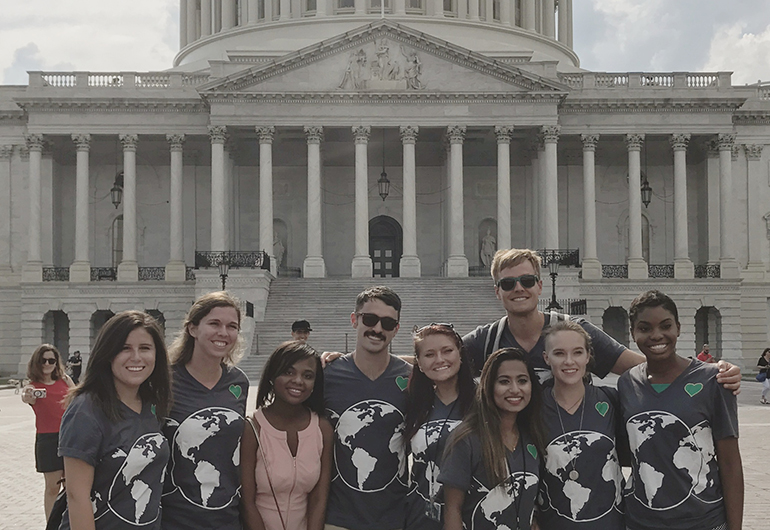
Greenheart Travelers in front of the Capitol Building in Washington D.C. during the GGLC 2017.
Seek Out Local Cultural Activities in Your Community
Depending on where you live, there may be local restaurants, theaters or markets that celebrate diverse cultures through exhibitions or events. You might be surprised by what you can find on the shelves of a French market, or what you can learn about your fellow community members at a concert featuring an Argentinian band.
Ask around or look online to see if there are any nearby showings of films in other languages or movies produced by people from other countries (this is also a great way to support international film!). You may be able to find cross-cultural restaurants, too.
As a way of meeting my Spanish teacher’s requirement to attend a certain amount of cultural events each semester, a friend and I went to a concert by a band called Son de Madera. This son jarocho band from Veracruz, Mexico brought together an astounding array of people with varying styles and languages at the single venue. The unique form of music they performed, fusions of cultures they expressed through their art, and the melting pot of people who attended were all key parts that made the experience so impactful for me and my friend.
These activities can not only expose you to new languages being spoken by native speakers, but also show you pieces of other cultures without leaving the country.
Think Globally, Volunteer Locally
Search your area to see what volunteer options pertaining to other cultures are available, and do not shy from getting creative.
After being asked about alternative methods students use to engage in other cultures, Wendel mentions the increasing popularity in helping immigrants gain their U.S. citizenship. On top of helping people study U.S. history for the citizenship test, students are learning from others with diverse backgrounds and experiences.
¨That’s cultural exchange,¨ Wendel says. ¨They’re learning about where these people have immigrated from and what challenges they’re facing, so I think that’s another way that students are engaging through volunteerism.¨
Greenheart Travel alumna, Louise, with her host family in Spain.
Cultural exchange during a study abroad trip is a two-way street, meaning that not only does the exchange student get an immersive experience in another culture, but the host family gets a taste of the student’s heritage as well.
While studying abroad in Costa Rica, I was able to create strong connections with my host family through sharing parts of my culture with them. From cooking meals commonly eaten at my home in the U.S. to showing them pictures of my city and the state I come from, all of us were able to gain insight into other lifestyles and laugh at our comical differences in customs.
When stripped down to its core, I believe the primary purposes of studying abroad are to share cultures and learn how to bond over our differing practices and values. Exploring other countries is the standard method of progressing towards achieving this, but travel is not the only option.
No matter what stands between you and an international exchange program, be it difficulty transferring credits or other issues unique to your situation, consider how other options can help you navigate through your current roadblocks. There is no one perfect way to travel abroad, and the possibilities (even the ones less thought of) are there to be taken advantage of. From short length or summer exchanges to attending local events, restaurants or markets, engaging in other cultures does not have to be a distant aspiration, but a present reality.
Our distinct histories and heritages do not stop at borders; they can be found in our communities and the people who build them. The eye-opening capabilities of studying in another country are impossible to replicate, but the value of celebrating cultures and finding ways to unite in them can be cherished no matter where you find yourself in the world.
Want to learn more about your options for exploring the world? Share your questions below or connect with us here!
An increasingly popular rite of passage for teens today, volunteering abroad is often seen as way to extend service learning to low-income communities abroad. Particularly for Americans, young people are taught that volunteering and service learning is a high-quality experience that is important for college applications, job resumes and graduate school. Throughout high school, most students volunteer their time in some capacity, whether in their home community or abroad. And while that is an admirable and often true sentiment, it is important that volunteers understand the context, history and ethicalness of volunteer abroad projects prior to signing up.
Why are There so Many Volunteer Abroad Options out There?
Volunteering abroad is a growing industry. Although it is hard to measure, it is estimated that approximately 1.6 million people volunteer abroad annually, generating approximately $2 billion globally. And you, Gen Zs, have a strong desire to volunteer for both social justice reasons and personal growth.
As you scroll through all the online offerings out there, you’ll notice trends in the types and variety of volunteer projects available. The most popular regions for volunteering abroad in 2018 were Asia, and Africa and South America, while the most popular project topics were:
Medical Volunteering
Volunteer Teaching
Wildlife and Conservation
Orphanage Volunteering
General Volunteer Abroad
With such large numbers of people interested in volunteering internationally, it should come as no surprise that there has been an explosion of providers seeking to profit. Both well-intentioned and not-so-well-intentioned companies are jumping in with the hopes of capitalizing on this travel trend. Review websites like GoAbroad and GoOverseas see the highest saturation in the volunteer abroad sector with hundreds of organizations vying for coveted participants.
A volunteer cares for a dog at our pet rescue center project in Thailand.
Compare and Contrast Voluntourism and Volunteering
When you start digging into international volunteer programs, you’ll start noticing a few styles of teen volunteer programs. There tends to be two structure types – voluntourism vs volunteerism – and there are key distinctions between the two that make them different experiences for the volunteer, but also for the community where the project is happening.
Not all organizations that offer volunteer experiences are created equal. There are perfectly ethical voluntourism programs and horribly unethical volunteerism programs. GoOverseas does a great job of breaking down key differences in their blog post on the matter. We can’t make sweeping generalizations about all projects because there are positive and negative aspects (and real-life examples) of both types of programs.
Here are a few differentiators between the two types of these volunteer experiences:
Voluntourism
Short-term
No experience required (may or may not be on-site training)
Group oriented
Typically a program fee
Operated by for-profit companies
Emphasis on your experience not impact
Volunteerism
Variable length
Training/experience required usually with on-site orientation and training available
Typically solo or small-group experience
May or may not be a program fee
Operated by non-profits
Emphasis on community impact and capacity building in addition to your personal growth
Note: It is important to understand there are key differences between both structures, but neither are inherently good OR bad. They are simply different.
Understanding the Context and Challenges of Volunteering
Volunteer programs do not happen in a void – they happen within a context – and it is imperative that you begin to unpack the context in which you’re hoping to volunteer as part of your preparation process. This will help you better understand your work, your impact, and the community challenges and successes that exist before and after your program. Even the volunteer with the best of intentions can be a disservice or disrespectful to the community if they do not understand the context in which they are volunteering and the meaning behind their work.
In addition to all the latent challenges associated with the global context, there are also unique challenges created by the industry itself.
Due to the rapid expansion of the volunteer abroad industry, there is little regulation or oversight from government agencies, leaving regulation up to the agencies themselves. Without any oversight, it is difficult to set rules about what is acceptable and ethical in a volunteer project. This can lead to a conflict of interest in which for-profit businesses are looking to make money off of volunteers looking to make a difference.
There is no shortage of stories (here, here, here) out there about issues with voluntourist organizations causing more harm than good or only seeking to profit off of tourist dollars without considering the local impact. One part of the volunteer abroad industry where this is especially prevalent is volunteering in orphanages. Consider the below abstract from a 2010 publication from the Human Sciences Resource Council on orphanage tourism in South Africa:
“The dominant global perception that sub-Saharan Africa is experiencing an ‘AIDS orphan crisis’, coupled with growing trends in international voluntourism, has fostered a potentially high-risk situation for already vulnerable young children in the region. We describe an emerging ‘AIDS orphan tourism’, and show how short-term attachments formed between children in group residential care and volunteers may worsen known impacts of institutional care.”
Deservedly, horror stories such as these have led to public distrust in volunteer abroad programs. Many people feel skeptical and concerned about signing up for volunteer opportunities, and don’t necessarily trust that they are transparent, ethical or responsible.
There is also an “opportunity cost” challenge to consider. When a volunteer enters into a space, are they displacing local labor? Or are they filling a void that would not otherwise be achieved? This is an especially important consideration for construction based infrastructure projects like building homes or schools.
Teens volunteer in Costa Rica helping to build an animal cage for rescued wild animals.
So, Why Should I Volunteer Abroad?
You may be asking yourself, “Well, why would I bother volunteering abroad?”
Volunteering abroad can have a profound impact on you – the volunteer – as well as the community you provide service to. Opening one’s eyes to the challenges faced by communities abroad is an opportunity to change the course of one’s life, or learn about a local issue that you don’t face in your home community.
Volunteers can also make an impact on the community such as spreading awareness of the issue, building new infrastructure, contribute to ongoing research, or perpetuate the day-to-day maintenance of a rescue center.
“It was an incredibly humbling and magnificent volunteer opportunity. The lifestyle of Costa Ricans is one all the world should pick up! They work hard, but also know when to take a break. Working with the staff at the sanctuary was incredible. You can see the passion and love that they have for the animals and for their center. They were practically bubbling over the brim with positive energy – how could I not have a wonderful time?!?! ” – Costa Rica Volunteer alum, Varisa Lertburapa
The reality is people wouldn’t do volunteer abroad programs if they didn’t feel a compulsion to contribute to the greater good – and that is an admirable trait we should celebrate in ourselves. It is a human instinct to want to help others, and sometimes going to a foreign country is a meaningful way to do so.
Although there are volunteer programs out there that are using the guise of humanitarian aid to make a profit for themselves, smart volunteers can find good, ethical and meaningful volunteer abroad experiences. Yes, it may take a little more research and an understanding of the context of the volunteer abroad industry, but it is possible. The responsibility falls on you to do your homework on any organization when choosing a volunteer project. But, with our tips for finding a legit volunteer project, hopefully we can help make the process a little smoother for you to pursue your passions while making a positive impact on the world.
Global development is a massive field of study, so we can only scratch the service of the topic in a blog post. But, if this is something that interests you, here is a great list of books, resources and online articles all about the topic.
So you want to embark on the travel experience of a lifetime, but don’t have a stockpile of cash lying around? No worries! We will give you tips and tools to mobilize your personal network and help make your overseas adventure a reality.
While daydreaming about your travel destination is a helpful motivator, to really achieve your travel goals requires a plan. Below is an outline of how to get started in your fundraising efforts.
Step 1: Setting Your Fundraising Goal and Plan
The first step to starting your fundraising journey is setting a fundraising goal. This goal is determined by how much money you will need to fundraise in order to make your trip a reality. Before establishing your goal, you will need to begin by assessing the amount of funding you personally can contribute to your program. Once you know the cost of the program and your personal contribution, you can calculate your fundraising goal. Don’t forget to consider the price of a flight and any additional costs like food to make sure you are financially secure during our time abroad.
ICost of Greenheart Travel Program + Additional Expenses )- Funding You Already Have = Fundraising Goal
After you have established your fundraising goal it is time to create a timeline of when you will need your travel funds. Work backwards on a timeline to achieve your fundraising goals that meet your ideal departure date.
Consider Supportive Communities in Your Network
With your timeline and goal in mind, you can start to assess what communities you can reach out to for support. It is important to remember that fundraising takes time and you will likely need to reach out to various groups at different times to meet the full fundraising amount.
A few questions you can use to discover what networks you belong to outside of friends and family are:
Do you attend a school that will allow you to fundraise for personal needs?
Are you part of a sports team or extracurricular group?
Are you part of a religious community?
Do your parents have friends or colleagues who are interested in supporting you?
Write down the groups of people you can reach out and the contact information for individuals within those groups. Start thinking about the best time to host an event, or speak to these communities.
Step 2: Making the Most of Local Resources
Now that you have outlined your fundraising goal, timeline, and supportive communities, it is time to start determining how you will raise the money needed for your travels. There are two main ways for you to have your networks support you in meeting your fundraising goal: direct solicitation and events.
Asking your communities for financial support can seem daunting, but by using the tips below it can be both a great learning experience and an opportunity to share your story and possibly inspire future travelers to meet their personal goals as well.
First Approach: Straight Up Asking For Financial Support
This fundraising approach is often called direct solicitation, and requires reaching out to people who are part of your community via email, letter, recorded video, phone call, or face-to-face interactions and asking them directly to make a donation. This approach might be more nerve-wracking than an event, and is best used for individuals that you feel especially connected to such as family members and friends.
In your individual appeal letter or conversation you will need to including the following information:
A little bit about yourself and why you are reaching out to this person
What travel program you have chosen and why you think it is impactful on your future
Your fundraising goal (be specific! If you need $2,000 by August say it!)
How the funds will be used
A direct ask of them to contribute to your goal
How they can donate to you (cash, check, GoFundMe website)
A thank you to them for being part of your community and supporting you through your life journey
You can use this sample letter to tailor your own direct solicitation.
Second Approach: Hosting a Fundraising Event
Having a fundraising event is a fun way to raise money for your Greenheart Travel program abroad. Generally, these events are informal, provide some service or good in exchange for a donation, and can involve many community members at the same time.
A few ways to easily mobilize your community are through the following events:
Car Wash
Bake Sale
Yard Sale
Community fundraising at a restaurant
Create a community cookbook and sell it
Host a field day or game night and charge a fee for people to participate
Consider thinking about what events your community would be most likely to get involved in. In addition, it is important to think about your overall goal when choosing which event to have.
For instance, if you need to raise $4,000 but are having a bake sale with 50 items at $2.00 a piece, plus additional donations, you are likely to make only $300.00. It is also important to consider the costs of hosting these events. A yard sale would require your family and friends giving up items to be sold for your cause, a car wash requires time from people willing to help you wash the cars, and a bake sale requires money to buy the baking materials.
An event doesn’t necessarily have to be in a physical location. If you have a large network spread out across the country, it might also be helpful to create an online fundraising campaign that you promote through word of mouth and social media.
The following platforms make raising money via a social media campaign easy, but be aware of the fees they charge:
The best approach to raising your funds will likely be a combination of direct solicitation, events and online outreach. Consider directly reaching out to those in your life who you know are willing to donate and have a close relationship with you, while using the events to engage the broader community in your network.
Appreciate Various Forms of Support
Keep in mind that there are many reasons people might not donate to your cause, and don’t take it personally or negatively. If someone isn’t able to support your fundraising efforts financially, perhaps they can help spread the word about your online campaign or event.
Sometimes, it is a matter of following up, especially with online fundraising. With so many emails and social media feeds that compete for our attention, a friendly reminder or check-in might be all that is needed to start seeing your fundraising efforts succeed. No matter what, always thank your community for their support of your journey, regardless of if they can provide money to finance it.
Part 3: How to Thank Your Supporters
It is very important that you thank everyone who gave money to provide you with the experience of a lifetime! In addition to saying “thank you” immediately to anyone who made a contribution to your program, it is a good idea to follow up with an additional thank you once you return from your travels as well.
Here are some creative ways to show your community you appreciate their support:
Send a postcard or an e-card with a personalized message and photo from your travels
Make a video while on your program and include a thank you at the end of it to those who donated
Give a social media shout out to those who impacted your trip
Post a group picture of fundraising events and tag those who attended
Take a photo series while abroad with a “Thank You” sign and make a gratitude collage
In an age where everything seems to be online, never underestimate the power of a hand-written thank you note. While photos, videos and travel montages are exciting, being able to say a personal and genuine “thanks” to show your appreciation is priceless.
Get Organized in How You Will Say “Thanks” Before You Leave
Plan ahead for your thank you ideas so you can be sure to get the footage or photos you need while abroad. However you choose to show gratitude, remember the impact that this experience had on you and the generous friends and family that used their time and resources to make it a reality.
Alongside personal thank you notes and gratitude collages, it is also worth considering giving a presentation once you return. By sharing what you have learned about a culture, language and yourself, you can inspire and educate your community. You can also use this opportunity to say thank you to groups or local organizations that helped you fundraise or your travels.
Showing gratitude for all the support you’ve had in reaching your goal is important, but don’t forget to give yourself a high-five as well. You are on your way to a life-changing travel adventure through your hard work and fundraising efforts!
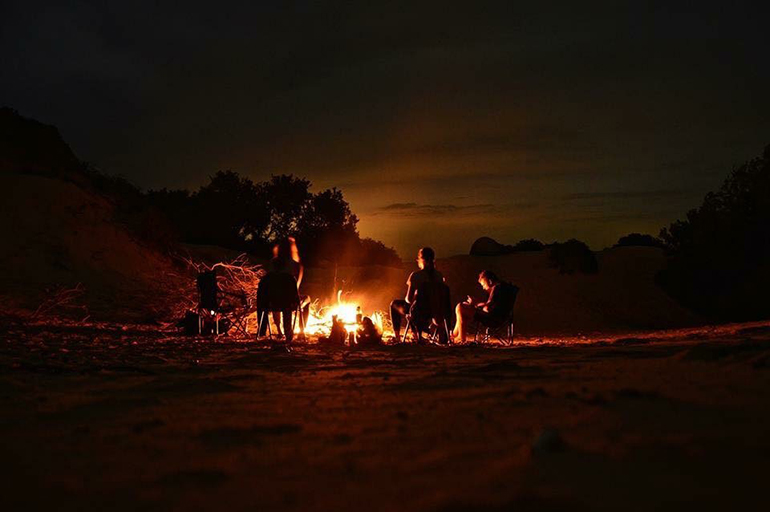
Feature Image: Allison and her friends hang out around a fire in Australia. Photo by Ryan Hubbard.
On my early morning walks in Buenos Aires, I loved watching the rising sun crawl over buildings. While working in Melbourne, I watched for ever-changing graffiti. Every day in Spain, I looked forward to my mid-morning snack of café con leche and chorizo sandwich.
These are pieces of my life abroad I wish I could still experience. But beyond missing my new routines, what I miss the most are the human connections I made in those places. There’s nothing like a good laugh over a cup of coffee, or learning about a country’s troubled past through a local’s explanation of a mural that give simple things – like a latte or street art – more meaning.
From chatting with local classmates to making friends through shared interests, meeting locals during your Greenheart Travel program can help you learn the language, culture and history of the country. (Plus, making friends is a lot of fun.)
Allison with friends she met through Couchsurfing.
If it weren’t for locals, I wouldn’t have learned what Australians mean when they say esky, why Argentines walk around sipping tea from a gourd (mate!) or the reason why people say molt be instead of muy bien in some parts of Spain.
So, how do you make connections when you’re in a new country and speaking a new language? At first, putting yourself out there might seem challenging. But, taking the initiative to make local connections has the potential to make any program – whether it’s a few weeks or a few months – more memorable.
Here are a few of our favorite ways to meet people abroad:
Language Exchanges
Language exchanges are a great way to meet locals while improving your skills and helping them hone theirs! A language exchange is an event where language learners typically spend half the allotted time in one language and the other in another. Sounds perfect, right?
Check social media sites like Facebook or ask your host family if they know of one near you. Linda Correll, a teach in Colombia alum, says she went twice a week to an exchange in her area called “Let’s Talk Pereira”. This event had an informal, conversational atmosphere and “ended up being a large part of my social life during my two years there,” she says.
Even if you can’t find a language exchange in your area, try asking a coworker or neighbor for language help. For example, Kirt Smith, a teach in Thailand alum, says after he learned basic Thai he asked co-teachers for help reading and writing. “It’s a great ice-breaker and I gained a lot of Thai friends doing this,” he continues, “I found out that taking the time to learn more about the language is a fast-track method to earning a lot of respect among Thai people.”
Use a Networking Application or Website
Besides traditional social media outlets like Facebook and Instagram, there are many networking sites to help meet locals. For example, while living in Melbourne, I attended an event through the Welcome Dinner Project, an organization that connects establish Australians with newcomers. I met people of all social backgrounds and tried homemade dishes from each part of the world represented at the dinner.
If you’re not in Australia, check for similar organizations in your destination and try the following websites:
Couchsurfing is best known for connecting travelers with free places to stay around the world, but many people don’t realize it’s also a great social tool. Just as some use the site to find locals to stay with, you can reach out to locals that you have common interests with. Many “hosts” (locals) often plan social events for locals and travelers to meet. I connected with a Japanese man in Tokyo, and we spent an afternoon exploring the Akihabara area.
Meetup.com is a site that connects people based on shared interests. Around the world, people host “meet ups” to practice capoeira, learn to cook, discuss literature with a book club – or anything else you could think of! This is a great way to continue a hobby while you’re abroad, or even start a new one.
Allison participated in a cooking class while in Siem Reap, Cambodia.
For foodies, there are two sites – Eatwith.com and Bonappetour.com – that give you the opportunity to have chefs cook for you – right from their home! Because other people join the events, you’ll meet lots of folks as interested in trying new cuisines as you.
Join Sports Teams
No matter where you are in the world, sports are an important part of life. They may differ – though soccer seems to have a stronghold throughout the globe – but people love to be active. Marissa Ruxin, a teach in Colombia alum, joined ultimate Frisbee teams in both places she taught in Colombia. She had a blast, and made friends!
Marissa Ruxin and her frisbee team in Colombia.
Besides practicing his Thai, Smith also learned the game of takraw (ตะกร้อ) by asking local men in the park to teach him. “The men were extremely welcoming and thought it was cool having a foreigner want to learn how to play. It quickly became a regular activity and we would often end up eating dinner together at the night market afterwards,” he says.
Ask Co-workers, Teachers and Host Families for Recommendations
One of the best ways to meet people is through your established networks. With Greenheart Travel programs, you’ll be with host families (and in some cases also have networks at schools) to ask for recommendations.
They will have a much more in-depth knowledge of the city and its surroundings, so whatever activity you might be interested in doing use them as a resource.
Some of Allison’s friends at Buenos Aires’s Gay Pride parade.
While I was studying in Buenos Aires, I asked my classmates if they knew anything about a conference I had heard about – the Encuentro Nacional de Mujeres, an annual women’s rights conference. As it turned out, one of my classmate’s sisters was going, and he connected me with her. Two weeks later I was on a 30-hour bus ride from Buenos Aires to Posadas, Misiones with 40 other woman. As I’m sure you can guess, I learned a lot of new Spanish and made many lasting friendships.
It never hurts to ask for connections – you never know where it might lead.
Lastly, Remember to Get out of Your Comfort Zone
Speaking with locals can be intimidating. You might be nervous about your shaky French or suddenly blank on the Japanese word for restaurant when you’re asking a classmate for a recommendation. Maybe you’d rather sleep in on a Saturday than go on a rigorous morning hike, or perhaps you’re not in the mood to try the local delicacy in your town in Myanmar with your co-teacher.
Allison traveled through the Australia outback with new friends.
Remember that starting a conversation or going to a new place for the first time might seem like a lot of effort, but the payoff of great experiences and good friends makes it worth it. I’ve had some of biggest laughs and greatest memories at events I almost didn’t attend.
Ready to put your fears aside and see what happens when you get out of your comfort zone? Contact us!
Meet Allison Yates, Greenheart Travel’s High School and Short-Term Abroad Programs Coordinator!
Allison was 16 year-old when she took her first trip abroad, where she participated in a mini-exchange with a high school in Billericay, England. She graduated from Indiana University with degrees in International Studies, Spanish and Near Eastern Languages and Cultures.
She studied for a year in Buenos Aires, Argentina; taught English and was an au pair in Ibiza, Spain; and worked in Melbourne and Darwin, Australia, which explains why she has the habit of drinking mate, eating dinner late and signing off emails with “cheers.”
She’s traveled to over 30 countries and hopes to soon visit Brazil, India and South Africa. She also writes freelance about travel, women and society and in her free time loves listening to podcasts, belting her favorite reggaeton songs, reading anything fascinating, and trying to learn social Latin dances.
Read on to learn a bit more about Allison’s favorite cuisine, aha moments while traveling and which spirit animal she resonates with most.
Q: Where did you grow up?
I grew up in Fishers, Indiana, a suburb of Indianapolis. It was a very quaint childhood, something my foreign (or even sometimes East Coast/West Coast) friends tend to laugh at – it was the stereotypical “American” high school experience.
Q: What is your favorite international city?
I feel like I’m cheating on Buenos Aires (one of my most favorite cities in the whole world) by saying this, but Istanbul is a place I was so impressed by. I only got to stay for five days, but it would take five years to see all of it! I loved the food, the river, the colors, the diversity and the goofy people I met.
Q: What is your secret talent?
Some people in the office have participated in eating competitions and aren’t aware I also have a competitive spirit when it comes to food. I once ate an entire watermelon in a matter of minutes and won a medal (it was on a cruise, but let’s say it still counts as a legit competition!).
Q: If you could eat only one country’s style of food for the rest of your life, which would it be?
Spanish food! While in Spain I lived with a host family and never tired of some of their favorites. First, the ultimate charcuterie board: dates, olives, cheese, breads and sausages (I’m a big fan of chorizo, and a special sausage from Ibiza called sobrasada). Plus, mussels in garlic sauce, tortilla española, and every version of a rice dish you could imagine. Maybe I could sneak in more avocados and then I’d be really happy.
Q: Complete the sentence: When I grow up I want to __________.
Be an expert in a certain part(s) of the world, and be sent there to write (or “report on”) about it.
Q: What is your spirit animal?
Based on my tendencies to be startled easily and jerk my head at sudden noises, I think I’m most connected to the murcat.
Q: What is your favorite travel “AHA! moment” or memory?
This is hard one to choose, but one moment I’m grateful I witnessed was a pre-wedding hammam ceremony in Fez, Morocco. I happened to visit a hammam on the same day of the ceremony. As the only non-wedding party person there, they invited to join in all the festivities. I was singing and dancing with a bunch of strangers and really had no idea what was happening – but it was amazing!
Q: What is your favorite thing about working for Greenheart Travel?
Everyone at the office has a great sense of humor. Besides that, the office itself has a warm atmosphere. It’s decorated with world maps and “wanderlusty” posters, so I feel right at home.
The votes are in and our Greenheart Travel community has shared their top choice for the recipient of our 2017 Greenheart Travel Give Back Award. We are thrilled to announce the winning project and charitable donation recipient of the Give Back Award is…
With the help of the Give Back Award donation, this important volunteer project in Puerto Rico will be able to boost their efforts in providing educational funding for students to learn more about sustainable forestry practices and their important connection with the environment.
It was a very close poll, with all three of our international volunteer projects deserving of the award and project donation. Thank you to everyone that voted and continue the support by learning how you can make a positive impact around the globe as a Greenheart Travel volunteer!