Tag: First Time Traveler

  • The Dos and Don’ts of Being a High School Exchange Student in Ireland 

    The Dos and Don’ts of Being a High School Exchange Student in Ireland 


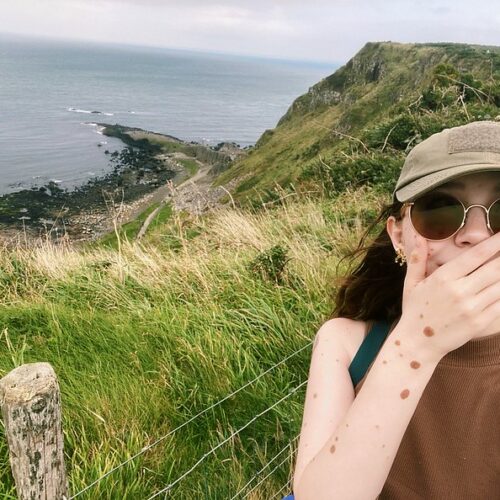
    By Madeleine Casteel, High School Abroad Ireland Fall Semester 2024 

    Being a high school exchange student in Ireland is an adventure filled with constant drizzle and warm conversations. It is a chance to step out of your comfort zone and create memories you’ll carry forever—but only if you play it right. Based on my experience, here are some dos and don’ts to make the most of it. 

    Do Say “Yes” 
    When someone invites you to join a Gaelic football match, take a weekend trip, or try black pudding for breakfast, say yes! These experiences, the spontaneous ones, are the ones that will stick with you long after you leave. I was hesitant at first because I like planning things all the way out, but pushing myself to participate opened doors to friendships and so many moments I would have never had otherwise. 

    Don’t Overcommit 
    That said, don’t feel pressured to do everything. Taking time for yourself isn’t “wasting” your experience—it’s keeping your battery charged. Some of my favorite days, and actually most of my days, were spent in my host home, drinking tea, journaling, and letting myself just be. Balance is key. 

    Do Step Outside Your Comfort Zone 
    Ireland is the perfect place to try new things in a low-pressure environment. Whether it’s striking up a conversation with someone in the shop uptown or volunteering to read aloud in class, lean into the unfamiliar. My shaky attempt at a speech in my American accent wasn’t perfect, but my debate team loved the effort, and I loved the support. Take advantage of the fact that your time is limited and you won’t see a lot of these people again! Use your free-will as much as you can. 

    Don’t Hold Grudges  
    Living in close quarters with new people can sometimes create tension. Let go of small annoyances and don’t waste your time holding onto petty drama. I learned that forgiving quickly keeps things positive and helps you make the most of your relationships.  

    Do Dress for the Weather 
    Irish weather is a character all on its own. You’ll need a solid raincoat and waterproof shoes. Forget umbrellas—they won’t survive the wind. People might tell you that the locals don’t wear raincoats but it’s completely untrue. If it’s raining, everyone has clothes for the weather. Being prepared meant I could enjoy Ireland rain or shine (but mostly rain). 

    Don’t Forget to Document the Journey 
    The days can blur together, so find a way to remember them. Journaling is a MUST and it’s a great habit to have when you get back home. A random, mundane memory about walking home in the rain or a joke about your host sibling will feel like finding gold when you look back later. 

    Do Connect with Other Exchange Students 
    Of course, getting to know locals is important, but don’t forget about the other exchange students around you. They’re going through the same ups and downs, and there’s something comforting about being able to laugh (or vent) with someone who really gets it. Those friendships can become some of the strongest bonds you’ll make. 

    The Bottom Line 
    Being an exchange student in Ireland is about more than the postcard-perfect views. It’s about all of the in-betweens and everyday choices you make. You decide what your study abroad will be. It’s not always easy, but trust me, it’s worth it! 

  • The Biggest Culture Shock of Argentina: The Schedule

    The Biggest Culture Shock of Argentina: The Schedule

    By: Naomi, High School Abroad Argentina Alumni, 2024 FTT Winner

    Hi! I’m Naomi and I spent six months in Argentina for my student exchange. Before leaving for my trip, I was most definitely expecting to experience culture shock. However, I was surprised by the parts of the culture that ended up being the hardest for me to adapt to. Today I want to share the most challenging cultural aspects for me and how I worked through those differences. 

    Longer Days

    In Argentina, the daily schedule is vastly different from what I was used to in the United States. The time you are awake is much longer and much of the “day” is spent at night. Most people wake up at around seven or eight in the morning and are awake until midnight or one in the morning. For reference, I had a schedule similar to this on weekdays:  

    • 7am to 9am wake up & eat breakfast 
    • 9am to 11am clean, exercise, prepare food, & homework 
    • 11am to 12pm lunch 
    • 1pm to 6pm school  
    • 7pm to 8pm merendar (snack) 
    • 8pm to 10pm sports  
    • 10pm to 11pm dinner 
    • 11pm to 12am family time & hygiene time 
    • 12am to 1am go to bed 

    On the weekends, the day becomes even longer, and it is common to not sleep much at all. People often will stay awake until 6 am and sleep for 3-4 hours before starting another day. Another distinction is that on the weekends people do not do much during the day. It’s only really towards the late afternoon and night that people will start hanging out with friends, going shopping, etc. 

    For me, this routine was a very hard change mostly because I was not expecting such a dramatic difference. When I finally actively realized that my schedule was going to be widely different here and that trying to keep the same routine I had in the U.S. was not the right option, I was able to adjust much more easily. It sounds like such a simple thing, but the mental switch allowed me to seek the help I needed to adjust to a new situation. While going through this process of adjustment, communicating about how I felt was crucial. It is nerve-racking to talk about how you might feel tired or uncomfortable with people who are unfamiliar to you. Despite this, it is very important to break down that barrier and share how you are feeling, especially with your host family. Once I addressed the problem with my host mom, we were able to create a plan to confront the problem I was having and resolve it, instead of me having to suffer through it on my own.  

    I was able to adjust to the new schedule fairly quickly after talking with my host mom and was able to enjoy my days a lot more. So, if you end up struggling with this new routine, don’t be afraid to talk about it with your host family. I guarantee it will help you! 

    Four Meals a Day

    Another difference in daily life is that there are typically four meals a day in Argentina: 

    • Breakfast  
    • Lunch  
    • Merendar 
    • Dinner  

    This fourth meal is added because the days are so long that you need some extra fuel to keep you going. As in the U.S., it is common to have a snack after coming home from school, merendar is the same idea.  

    Another difference in Argentina is the size of meals. Lunch is the most important meal of the day, meaning it is also the largest. It is also very common to have lunch with your whole family (similar to traditional American dinners). All the other meals trail behind lunch and tend to be relatively small and variable. For example, it was not uncommon to not eat breakfast or dinner some days.  

    These differences were not as hard to adjust to. The biggest hurdle I encountered was communicating how I felt about not eating breakfast or dinner. Communicating about food or lack of food can be hard, but communicating how you are feeling about what you are eating is always the better idea. Once I asked about what meals would typically look like, I was able to feel more comfortable about the eating schedule and also plan food I wanted to eat or make on my own time, without feeling bad about it. Again, communication here is key.   

    Conclusion  

    Overall, I found that most of the problems and cultural differences I ran into could be solved through communicating with my host family about how I was feeling. They are your support system in-country and they want you to be happy and comfortable too. So, don’t hold back when problems arise, and good luck on this new adventure! 

  • Leaving my Home Country for the First Time

    Leaving my Home Country for the First Time

    By: Kennedi-Grace

    Kennedi-Grace attended Greenheart’s Teen Summer Language Camp South Korea program during the summer of 2024 as a First Time Traveler Scholarship Winner.

    Leaving my country for the language camp South Korea program was hard, but leaving my home was difficult. As a frequent flyer, I felt confident about my ability to navigate the booking, check-in, and airport mapping process but was still nervous of all the unknowns of traveling by myself. But as I sit three to four hours early to my flight, I realize that it’s okay to be nervous because at least I was prepared. I’m still unsure what I was anxious about exactly. Whether it was because I was leaving America for a foreign country like South Korea or because I was traveling to it by myself. Maybe it’s a bit of both, but here are some things I did to ease the anxious feelings.

    Early? No, prepared.
    Living in Hawaii one thing that was a little difficult was finding a flight from this small island to halfway around the world. I eventually found a flight that met the program requirements but it was from another island through a different airline that wasn’t stationed on my island. So I booked my own flight, for the first time, and I booked the earliest flight out. I landed five hours before my direct flight to South Korea and will admit it would seem early for any normal person that has flown frequently but it didn’t feel that way to me. I felt prepared. Having the time in between helped because I no longer felt like I was rushing. I felt like I had time to make a mistake. Obviously, you hope for everything to go smoothly but sometimes you have to prepare for the worst to be grateful for the best.

    Two Weeks Ahead of Schedule

    Here’s a couple of things I did at least two weeks before my departure:
    1. I packed everything
    2. I made a to-do list
    3. I confirmed all my flight information
    4. I looked at the airport maps for the places I was going to

    As soon as the language camp South Korea program sent me the packing list I immediately checked the weather forecast and packed it according to the packing list. The packing list helped me pack smart instead of overpacking and helped ease the stress of being unprepared for the trip. Then I created my Morning-Of List this is a list that I check off before I leave the house to ensure I won’t leave anything important at home while “rushing” out the door. I did the exact opposite of rushing out the door the morning of my departure. The morning-of, I got up to my alarm, which was set 45 minutes before I planned to leave the house. Then I got ready and sat down on the kitchen table to have a cup of tea with my grandma before I left home for two weeks. Just before I left the house for the ride to the airport I did a final check through of the Morning-Of List. I felt at ease even though I was about to depart from my home to a whole new world all by myself.

    Word of advice

    To future first-time travelers – it’s okay to feel nervous and anxious, I would even encourage it because then you’d be able to create your own preparedness routine. Don’t worry about being too early because that gives you time to prepare yourself mentally. And one more thing, the morning of my departure I still somehow forgot to eat breakfast. No one is perfect, but you can be prepared

    Participants on Language Camp South Korea

  • My Daily Life as a Teen Language Summer Camp participant in Japan

    My Daily Life as a Teen Language Summer Camp participant in Japan

    My time in Japan was some of the most fun, exciting, interesting, stressful and lonely days of my life. I loved my host family, especially my host siblings, my host brother who loved playing with
    toy cars and making stuffed animals fight, and my host sister who loved making funny faces and playing games.

    Navigating Japan was a challenge, but a welcome one, Osaka and Kyoto were wonderful cities, full of interesting architecture and beautiful areas of greenery that broke the
    monotony of concrete. Using public transit for the first time in my life was a challenge, but the Japanese public transit system was clean, affordable, and (relatively) straightforward. The food
    in Japan was incredible. My host Mom Yuki san made me the best spaghetti I’ve ever had with octopus and zucchini sauce. She also made me a fried porkchop that was so tender at first I
    thought it was fish! The combini food was so good and affordable, me and all the rest of my GenkiJACS classmates ate at the 7- 11 across the street almost every day.

    Many of the things I experienced in Japan were awesome, but some of them were less then, and at times, extremely stressful. On my first day, my flight from San Francisco to Tokyo was delayed, so I had to take a new flight from Tokyo to Osaka. Because of this I was quite late to my pickup point. I remembered in the email about the pickup that my ride wouldn’t leave without me, but because of just how late I was, he had left. This left me stumbling around the airport trying to figure out what to do for over 3 hours, lugging around 50 lbs of luggage on my back (I carried my luggage in an army surplus backpack instead of a suitcase) until I was able to call my school in Japan, and they called me another taxi to come and get me. I had the cool experience of my taxi driver being a JDF F-15 Eagle fighter pilot, and when I got to the Yoshida’s house there was a meal and a bed waiting for me. My first time traveling on my own was quite the learning experience. After thanking them profusely, I went to bed.

    That morning there was no rest for the weary and I was off to school. Yuki san showed me how to ride the bus from their house to Takatsuki-shi station and from the station which stop to get off on. I was able to make it to school all right, and with some difficulty I made it back from school onto the correct train. After just barely getting off at Takatsuki-shi (I was distracted by the mountains) I realized I had no idea of which bus to take home. So after some pondering, I pulled out my screenshot of my host family’s information, and typed their neighborhood into my maps app. Unfortunately, I wasn’t able to enter their address, just the neighborhood. At the time I didn’t know that this would cause some major difficulties down the line. I began to walk to their house, down winding back roads, along deep green canals, and across busy intersections. The trek took me the better part of two hours. However, because I couldn’t actually find the Yoshida’s house I stumbled around looking for a pay phone (at the time I did not have a Japanese sim card) until Yuki san called me, then came and picked me up. It was, to say the least, an interesting start to my time in Japan!

    These experiences, while stressful, definitely gave me a hands on experience for traveling independently for the first time and while it was hard at times, I’m happy to have gone through it and to come out with amazing memories overall. So glad I traveled!

    To learn more about Greenheart’s Summer Language Camp Japan Program, check out the page here!

  • Making the most of your South Korean Adventure

    Making the most of your South Korean Adventure

    First Time Traveler, Stirling, just got back from a gap year experience with Greenheart Travel:  Teaching in a Homestay in South Korea. Here is his advice for making the most of your time in South Korea!

    ***

    I am writing this blog for those interested in coming to South Korea and wanting to get the most out of their experience. I would not change the experience I had as it has been brilliant though here are some things I learnt along the way which will hopefully help other first time solo travellers.

    When initially coming to Korea I did not have a plan, I was so focused on just working and saving money to get there that I did not put much thought into what I wanted to do when I arrived, I also didn’t know where in South Korea I would be staying. I received the details of the family I was going to be living with in Incheon a couple of days before I travelled and they wanted to be involved in how I taught / spoke English with their children so I decided I would leave myself open to the experience and plan when I got there.

    I was met at the airport by the Greenheart Korea homestay contact who organised a local SIM card for me and took me to the family’s home. This took all the stress out of arriving in a foreign country. The family was very welcoming. I had taken several small gifts for them which I recommend doing. They also gave me gifts to welcome me to their family.

    My first week was spent learning how the family I was staying with went about their days, getting to know them and understanding what they expected from me. It also took a few days to adjust to the time difference, settle into my surroundings and get the confidence to explore further afield.

    After the first week I felt ready to be more adventurous. I messaged the Korea homestay contact for their recommendations as well as searching online. Later in my trip I found this website called koreanow.london which had a Korean bucket list which I used to enrich my own list. I also visited the Tourist information centres which I found helpful.

    There is plenty to do when you are living in a new country and I created a long list of things I wanted to do which I called Seoul-searching. As well as places to visit I included foods and drinks that I wanted to try, as well as other unique experiences. I also talked to other travellers I met and asked them for recommendations.

    Starting small

    During my first week I started small, exploring the area I was living in in Incheon. I first climbed Manwolsan, which was a small mountain not too far from the house. I tried to use my map as little as possible, and got lost. As a result I found an amazing cake shop. The next day I planned to use the underground/subway as if I wanted to explore other places, including Seoul, it was important to know how the transportation worked. All these things I did at the start really helped boost my confidence. I also found that my list helped give direction to what I did each week. I would refer to it and score off the things I had done.

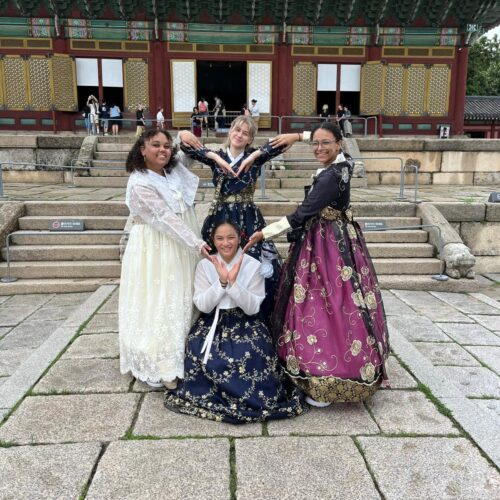
    This is at the Korean folk village in Suwon where I am wearing the traditional Hanbok.

    Here are some of my recommendations of places to visit and things to do:

    • Seoul:
      ● Baegundae Peak, Bukhansan

      ● Coex, Starfield Mall
      ● Gyeongbokgung Palace
      ● The War Memorial of Korea
    • Busan:
      ● Jalgalchi market
      ● Haedong Yonggungsa Temple
      ● Skyline Luge Busan
    • Experiences:
      ● Karaoke
      ● Kimchi making
      ● Rent Hanbok
      ● Korean folk village in Suwon
      ● Korean language class
      ● Korean sauna
      ● Temple st
      ay
      ● Hapkido lessons

    ● Festivals!

    • Food (note: Korean’s eat a lot of meat and also like spicy food)
      ● Kalbi
      ● P
      ork Belly (samgyeopsal)
      ● Tteokbokki
      ● Bulgogi
      ● Pajeon
      ● Green tea ice cream
    • Drinks (note: there is a heavy drinking culture in Korea. Don’t try and compete with the locals, there are lots of good non-alcoholic drinks as well)
      ● Green tea
      ● Milkis
      ● Chilsung cider
      ● Pine Bud drink
      ● Beer
      (maegju)
      ● Soju
      ● Rice wine
      (maggeolli)

    Final pieces of advice

    Don’t be too rigid with your schedule and remember you also need to make sure you make time to relax depending how long your stay is, you don’t want to burn out or become overwhelmed – I went to a Korean spa and also did an overnight Korean Temple stay. Be
    open to new experiences. If you’re doing the homestay program, be sure to talk to your host family about the things you want to do. I had many adventures with the family, going on outings, doing what they enjoyed and being part of the family way of life. They took me camping, surfing, paragliding
    as well as taking me out for meals, going to concerts and lots of karaoke!! They made me very welcome and I have stayed in touch with them on my return.


    These 3 apps are essential and will allow you to navigate your way through South Korea with ease.
    ● KakoaMap (like Google Maps)
    ● KakoaTalk (like WhatsAPP)
    ● Papago (translation app)

    Enjoy your trip, be safe and have fun!


    Thank you Stirling for the advice!  What an amazing experience!  If you’d like to learn more about Greenheart programs in South Korea, visit:  Teach in a Homestay – South Korea, Teach English in South Korea, and Teen Summer Language Camp in South Korea.

  • Making Friends Abroad

    Making Friends Abroad

    Earlier this year, Stirling from London, won one of our First Time Traveler awards. He is taking a gap year to work, travel, and learn new things before heading off to university.  Stirling has just returned from his Teach in a Homestay in South Korea and has sent us a bit about how he made friends during his 3 month stay. Enjoy!

    ***

    I travelled to South Korea alone with a few basic phrases but otherwise not knowing the language. I didn’t know what to expect. I needn’t have worried. I met lots of people and made good friends which made my overall experience way more fun and enriching. So here are some tips on how to make friends whilst travelling.


    A little from my experience

    Having arrived in the country I was keen to try and learn the language so I would be able to join in with the family I was living with and make the most of my experience. I reached out to my local Greenheart contact to help me find a suitable class and they were really helpful. I started attending classes in my third week and this was a great place to meet like-minded people from all over the world all wanting to learn the language. The classes gave me an immediate network of people, we would go out for lunch or for walks in Seoul most days once class had finished. One day we all went to a Korean tea house, another day we attempted to climb Mount Bukhansan together but due to the weather didn’t make it to the top.

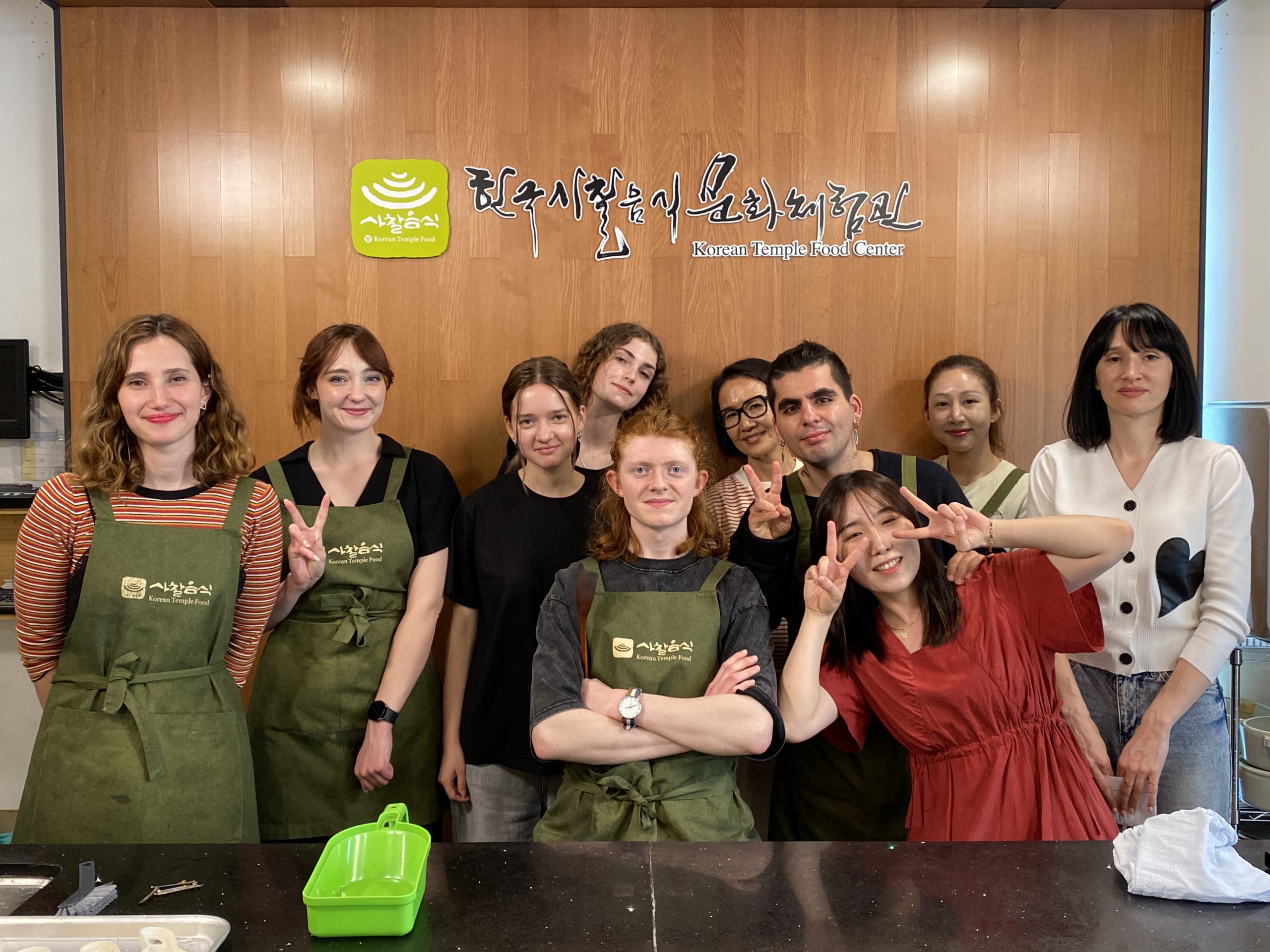
    Some of the language schools also offer workshops. This photo is from a temple food making workshop I did which was a lot of fun and the food tasted amazing!

    One of the good friends I made was completely by accident. I struck up conversation with him in a queue for a ride in Lotte World and we instantly connected. Through this friend I met more people and attended a free Saturday class, where I helped to teach some English and they helped with my Korean. After the class we all went and got lunch together, then I was shown around the Olympic Park.

    We met up a few more times and they showed me around more of Seoul. We went to Yeouido Park where we ate ramen whilst watching the sun set over Seoul. It was great to see how the city came to life in the evening.


    Here are some things you can do to enrich your experience:

    • Before you travel, ask your family friends if they have been to the country you are travelling to and if they know anyone in or from the country they can connect you with.
    • On arriving in the country, sign up to a local language school or a community class. This is where I met lots of interesting people from all over the world, all with different perspectives and stories.
    • Be interested in all the people around you and take every opportunity to engage in conversation. You never know what you might learn. If they are another foreign student, compare travel goals, you might find something you each want to do and could do together.

    If you are feeling shy here are some conversation starters that I used:

    1. ‘I just got here and was wondering if you’ve done anything so far that you would recommend.’
    2. Give them a compliment and follow up with a question.
    3. ‘I am going to grab some food. Would you like to join?’
    4. ‘Have you done ____ yet?  I was thinking about going though I wasn’t sure if it was worth it.’
    5. One I found myself using a lot was:  ‘Your English is really good. Where did you learn?’ This really opens up conversations with non-native English speakers as they get to practice their speaking skills and also talk about their favourite subject, themselves.

    I met a lot of great people during my trip and plan to stay in touch with a few, others were more passing acquaintances, which is also fine. You will find people you instantly click with, with others it takes time, either way just keep doing what you find interesting and you will have a great time.


    Final bits of advice

    My final piece of advice is relax and enjoy the experience but also be aware and respectful of your environment. You should always let the family or person you are living with know your plans and if you are going out to meet people. They will feel responsible for your safety. Also you will be expected to do things with the family you are living with so check their plans first before arranging to do things on your own to make sure it is a convenient time.

    I’ll leave you with this motto I used which helped me enjoy every moment of my journey: ‘Expect nothing and be grateful for everything’.
    Good luck with your travels and future adventures.

    THANK YOU STIRLING for sharing your experience and good traveler advice!  If you are interested in a Homestay program, or one of our Teach Abroad or Work Abroad programs, please visit our website!

  • Trains in Tokyo – A First Time Traveler’s impression

    Trains in Tokyo – A First Time Traveler’s impression

    One of the fascinating parts of travel is transportation. Once you fly in to a country, how do you get around? Do you take public transportation? Subways? Ferries? Walk? Uber?   How do you figure out where you are and how do you get where you want to go in a foreign country where you may not understand the language…or even the alphabet?!  Here’s Greenheart First Time Traveler winner, Christopher, to tell us how he navigated to his Teen Summer Language classes on trains in Tokyo.

    ***

    I recently returned from a trip to Tokyo, Japan as part of the Greenheart Travel Teen Language camp. I had to travel for over 2 hours every day as part of my commute to the language school from my homestay. In my journey, I utilized the Tokyo public transportation system to efficiently take me from point A to point B. This is my experience and advice for using public transportation in Tokyo.

    As the biggest city in the world, Tokyo has a complex network of transportation that can take you anywhere in the city. Many people who travel to Japan for the first time may find the trains intimidating, especially coming from somewhere like America where good public transportation is only really found in the biggest cities. The area I live in only has a small network of buses, so the Tokyo train system was a big change for me to adjust to. The Tokyo trains are much easier to navigate then you might think.

    A difficult part of the Tokyo public transit system is finding out which trains go where and how to get to your destination. The Tokyo metropolitan area is home to nearly 40 million people and contains over 100 different rail lines operated by multiple different rail companies. Using a cell phone with internet connection, Google maps can route you through this complex rail system to get anywhere in Tokyo and the surrounding area easily. It tells you when each train is coming, the platform that it will arrive on, and whether the train is an express or local train. It also contains the bus schedules, to help you get to destinations that might not be right next to the train station. Public internet is also available in many places including train stations, in case you don’t have a sim card or pocket wi-fi.

    The best way to pay for your travels is through an IC card, the most popular brands being Suica or Pasmo. You can either buy a physical card at a JR station or buy a digital version on your cell phone. The physical cards can be reloaded with money at the station or at convenience stores such as 7-eleven, and the digital cards can be reloaded with a credit card in the app. These cards make it simple to navigate through Tokyo, as all you need to do is tap it when you enter the station and tap it when you leave. They work on trains and buses, and sometimes may be cheaper than cash or buying a ticket.

    Another thing that may intimidate travelers is the language of Japan, Japanese. In the train stations, the signs can be found in English, along with some having arrows on the floor leading you to your destination. The stations can be difficult to get through at rush hour, but as long as you watch out where you are going to avoid bumping into people, you should be fine.

    ***

    Thank you Christopher for sharing your transportation advice!  To find out more about other Greenheart programs like Teen Summer Language Camps or High School Abroad programs, visit GreenheartTravel.org!


  • A First Time Traveler goes to Tokyo

    A First Time Traveler goes to Tokyo

    Traveling is such an amazing thing, especially for a first time traveler!  Here is a report from one of our First Time Traveler winners, Christopher, who spent a few weeks in Teen Summer Language Camp in Tokyo, Japan!

    My trip to Tokyo, Japan

    I recently returned from a trip to Tokyo, Japan as part of the Greenheart travel teen language camp. I enjoyed my time abroad and would like to share it with you.

    I left in the early morning from the Orlando airport. I had an early flight to catch, so I was up and on the way to the airport at 3:30 a.m. I checked my bag, got through security, and had some time to get breakfast before I had to board my flight at 5:30. I got on the plane, and fell asleep for most of the flight. I landed in Minneapolis around 8:30 a.m. local time, and had to wait around for about an hour until my flight to Tokyo boarded. After a long thirteen-hour flight, I had finally landed in Tokyo.

    I arrived in Japan some time before my program started, so I had some time to do sightseeing around Japan. I ended up seeing Mount Fuji and visiting Kyoto, and then on Sunday, my program began. I took the train from the hotel I was staying at to meet my homestay family. I got settled in to my accommodation, had dinner, and then went to bed. On the first night I was exhausted and fell asleep quickly. The room I stayed in had a futon, which is common in most of Japan. I woke up early the next morning, since the sun rises at 4:30 a.m. in Japan. I had breakfast, and then had to figure out how to make it to my school in downtown Tokyo. I had to take a bus to the train station, and then a train from Kawasaki to Shinjuku.

    I arrived at my school and had orientation for the first day. In the orientation, we received our books and learned the school procedures. I only had 1 class that morning, and then I went to get lunch. The other students in the school and in my class I attended were mostly adults, which was a little disappointing as I only ended up connecting with a couple people close to my age. After I had gotten lunch, I headed back to my homestay and had some time before dinner to start my homework.

    The rest of the week was mostly the same, I went to class, had lunch, and then did some shopping or exploring the local area before heading back to my homestay. On the weekend, I went to karate with the children in my homestay, and then went to see a movie in Kawasaki.

    The second week was mostly the same routine as the first week. At the end of the week, I attended the graduation ceremony at the school since it was my last day. I had evening classes that day, so after the graduation ceremony I went to my last classes before I left Japan. That weekend, I explored downtown Tokyo with a friend I met at the school. I went to Tsukiji market and Harajuku. On my last day in Japan, I packed my things, cleaned my room, and was on the way to the airport. The flight home was uneventful, and I eventually landed in Orlando where my family was there to welcome me home at the baggage claim.

    I thoroughly enjoyed my time in Japan. I got to experience an entirely different culture and learn a new language. Japan is a beautiful country and I would definitely go back.

    ***

    Thank you Christopher for sharing your experience!  Learn more about Greenheart Travel’s Teen Summer Language program in Japan, and about the First Time Traveler scholarship program

  • Using AI to Travel Abroad!

    Using AI to Travel Abroad!

    One step that seems to make a lot of participants take a brief pause when signing up for one of our programs is finding the best, low-cost flight. While Greenheart helps with a lot of other elements (like accommodation, job placement and host family paring), we leave the flight to you.

    So how do you start looking?

    Nowadays, with the emergence of AI technology, finding flights can be made easier. Less stress for you and your wallet. We’ve put together a few sites for you to show you the pro and cautions of using them to book!


    Mighty Travels Premium

    Pro: Mighty Travels Premium is a subscription-based network of airline and hotel deals! They use AI and real people to help you navigate the crazy world of booking.

    Caution: You do need to sign up for a subscription, but we recommend choosing the 1 month option to save tons of money in the future!


    GetMe.Flights

    Pro: GetMe helps travelers plan flights and itinereries! All you do is enter where you’re flying from, where youre going, and it goes through ALL the websites. Think of Kayak or Expedia but smarter!

    Caution: This site is best for those who waited until the last minute to grab a flight as it doesn’t let you search more than 30 days out from the departure date.

    OneAir

    OneAir is free to sign up for and boasts savings of up to 90% when it comes to booking flights! In addition to air travel, they also help with hotels, car rentals and excursions.

    Another element that OneAir brags about is the “vast array of pre-negotiated private and corporate discounted fares”. Not only will you be able to save money, but you might be able to do it and travel “in style”

    If you’re not into signing up or interacting with AI you can always go the tried and true methods of those awesome sites we all know and love:

    -Expedia

    -Hopper

    -Kayak

    -FlightHub

    -Skyscanner

    Don’t let the worry of purchasing a flight stop you from traveling the world and making a difference!

    For more information on our programs, visit GreenheartTravel.Org today!

  • I had the most wonderful week in Spain – A First Time Traveler at Teen Language Camp

    I had the most wonderful week in Spain – A First Time Traveler at Teen Language Camp

    Travel challenges us and helps us understand more about the world and the people in it.  That’s why, every year, Greenheart Travel offers First Time Traveler scholarships so that more people have the opportunity to travel. We recently heard from Caleb who won a scholarship to Greenheart Travel’s Teen Summer Language Camp in Spain.  Here’s a little bit about his trip!

    ***

    I had the most wonderful week in Salamanca, Spain.

    My journey started on Saturday June 11th, 2023. After a week of last minute packing and mini-panic attacks it was all finally happening!

    I took SFO (San Francisco airport) to Madrid Airport. The flight was almost 14 hours long, but my airline was surprisingly really awesome. I flew Iberia and they gave everyone on the plane a pillow and a blanket, and their utensils were all recyclable! It was a very comfortable flying experience and being able to see all the time differences we flew through was so cool. After watching 3 different movies and taking too many naps to count I finally landed in Madrid. I brought only carry-ons so I did not have to go through much airport hassle. This was a monumental moment for me as travel is a huge passion of mine, so the fact that I made it, and everything is going smoothly was a big deal for me.

    After a 6-hour wait for the rest of the students to land and get their luggage we finally boarded the bus which took us from Madrid, Spain to Salamanca, Spain. It was an almost 3-hour drive but it was well worth the wait. The bus drive allowed all of the students to get to know each other and make first impressions. I met 3 students each from a different area: Phoebe (who I later found out was to be one of my roommates), Axle (another one of my roomies), and Lucy (a very nice French girl who was staying at an apartment). Having already made bonds with my roommates it was a very easy transition from the bus to my home for the week.

    My host family was a wonderful woman named Manuella, and in no time at all we were calling each other familia. This is one of the more important aspects of my trip. As me and my host and my roommates became a real family in under 7 days (I feel like that should be a social experiment)! This level of human connection and pure love is something so beautiful to me, and I feel that it highlights my biggest reasons for wanting to travel the world and meet new people.

    My days in Salamanca were very different from my days back at home (I loved this)!  I had to adapt to a brand new schedule. Wake up at 7am, class from 9-12pm, “siesta” (nap time) and lunch 3-5pm, activity 5:45-7pm, free time 7pm-10pm, dinner 10:30pm, night activities 11-12:30am. I quite enjoyed this schedule and liked how late everything was. I was very worn out by the end of the day but slept amazing!

    My week in Salamanca was a life I would commit to again, possibly to study or to write a book. The overall environment of the town is very collegiate, and historical. So it was a perfect place to learn an entirely new language and experience an entirely new culture.

    ***

    Thank you Caleb for sharing how your week in Spain went!  If you are interested in the First Time Traveler scholarship, please read more here and follow us on Instagram and Facebook to get early warnings for the next application period!