Tag: spain

  • Money Saving Tips to use while Abroad in Spain

    Money Saving Tips to use while Abroad in Spain

    Zev Feldman is a First Time Traveler Winner and participant on Greenheart Travel’s Teen Summer Language Camp Spain Program

    Salamanca, a historic city in western Spain, is renowned for its beautiful architecture, rich cultural heritage, and vibrant student life. While traveling to such an enchanting destination can often seem costly, there are numerous ways to explore Salamanca on a budget without missing out on its many charms. Here are some money-saving tips that will help you enjoy your trip to Salamanca without breaking the bank.

    Cost-Effective Transportation

    Salamanca is a compact city, making it easy to explore on foot. Walking not only saves money but also allows you to fully appreciate the city’s historic streets and architecture. For longer distances, the local bus system is efficient and inexpensive. A single bus ticket costs only a couple of euros, making it a very budget-friendly option. Additionally, renting a bike can be a fun and cost-effective way to see more of the city. Several rental shops offer reasonable daily rates, and the flat terrain of Salamanca makes biking an enjoyable experience. With many attractions close to each other, walking or biking around Salamanca will keep your transportation costs minimal.

    Free and Discounted Attractions

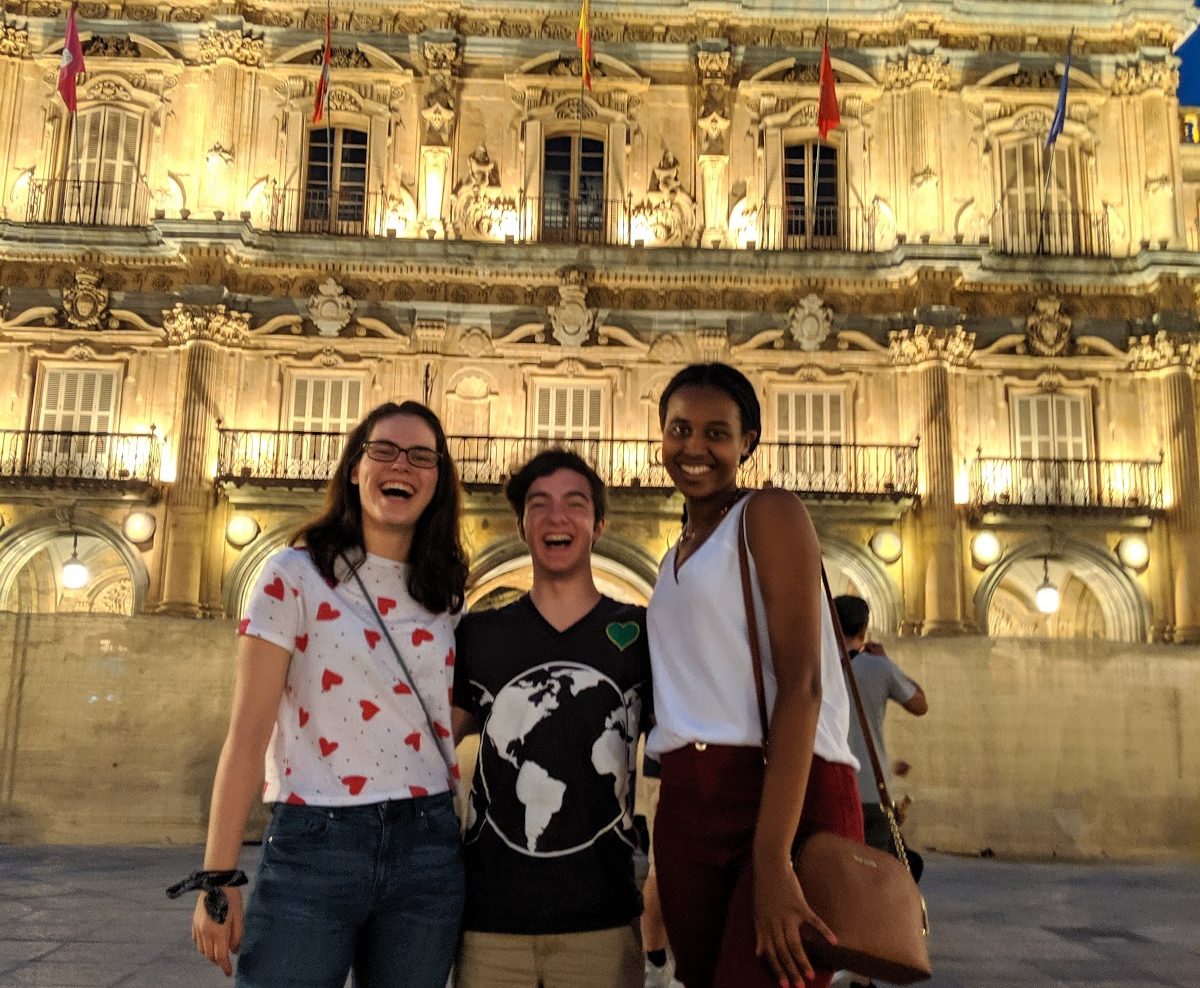
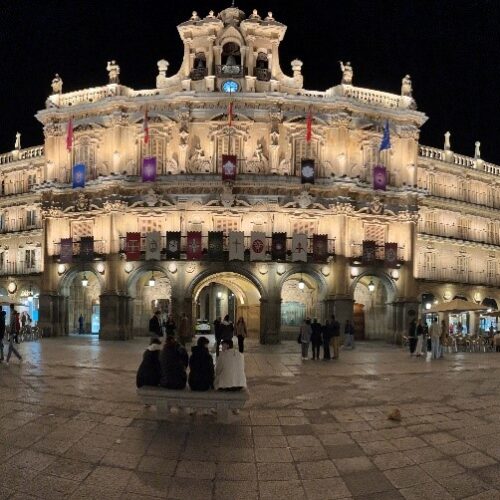
    Many of Salamanca’s iconic sights can be enjoyed for free. The Plaza Mayor, a grand square surrounded by impressive buildings, is a perfect example. It’s a great place to relax, people watch, and soak in the atmosphere. The Plaza also has lots of free concerts and spectacles The old and new cathedrals, though there is a small fee to enter, can be appreciated from the outside at no cost. The Casa de las Conchas, known for its unique façade adorned with shells, is another stunning sight that doesn’t require an entry fee. It is also the public library for the other book people out there.

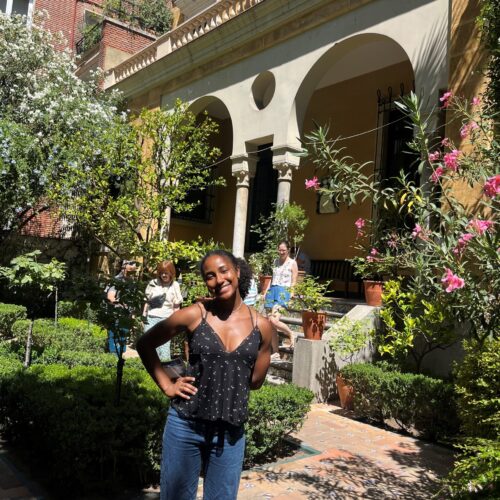
    Saving money in Salamanca, Spain with Greenheart Travel

    Salamanca also boasts several beautiful parks and public spaces, such as the Huerto de Calixto y Melibea, a romantic garden offering panoramic views of the city. Additionally, if you’re a student, carrying your student ID can provide discounts at various museums and attractions. Many institutions offer reduced prices or even free entry to students, making it easier to explore the cultural richness of Salamanca on a budget.

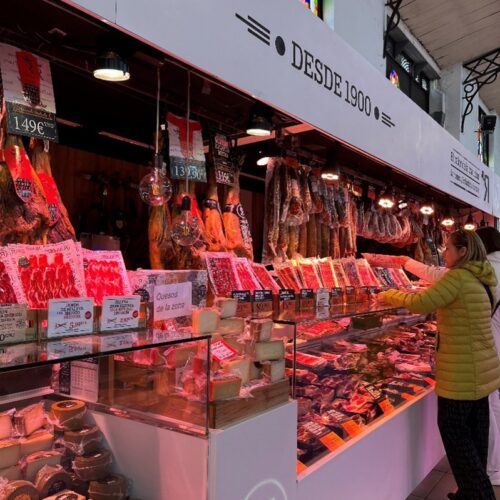
    Saving money in Salamanca, Spain with Greenheart Travel
    Another great way to explore Salamanca is by joining free walking tours. These tours, usually operated by knowledgeable locals, work on a tips-only basis. They provide insightful introductions to the city’s history, architecture, and culture, and are a fantastic way to get acquainted with Salamanca without spending much money. One of the tours that I went on is the walking Graffiti tour, here are a few of the graffiti that I saw:

    Saving money in Salamanca, Spain with Greenheart Travel

    Saving money in Salamanca, Spain with Greenheart Travel

    Saving money in Salamanca, Spain with Greenheart Travel

    General Money-Saving Strategies

    Using discount cards such as the Salamanca Tourist Card can provide savings on attractions, tours, and dining. These cards often include entrance to multiple sites and discounts at various restaurants and shops, offering excellent value for money.
    To avoid extra charges, consider using a travel credit card with no foreign transaction fees. These cards can save you a considerable amount on currency exchange fees and are widely accepted throughout Spain. It’s also wise to withdraw cash from ATMs sparingly, as frequent small withdrawals can lead to high fees.
    Planning and budgeting your trip carefully can also help you save money. Research and list the must-see attractions and look for any free events or festivals happening during your stay. This way, you can allocate your budget effectively and ensure that you don’t miss out on any key experiences.
    By implementing these money-saving tips, you can fully enjoy the wonders of Salamanca without straining your budget. Whether it’s cost-effective transportation, exploring free attractions, or utilizing general savings strategies, there are plenty of ways to experience Salamanca’s rich culture and history while keeping expenses in check. So pack your bags, plan smartly, and get ready to discover this beautiful Spanish city without breaking the bank. Happy travels!

  • My Homestay Spain Experience!

    My Homestay Spain Experience!

    My name is Casia, and I had the opportunity to travel to Madrid in the summer of 2024 on the Greenheart Travel Homestay Spain program.

    My experience was amazing and I am beyond grateful that I had the chance to travel to Spain and meet so many amazing and beautiful people. My host family was by far the highlight of my trip, and I really felt like an important member of not only their nuclear family, but also their extended family. They were kind and caring, and helped me to adapt to the city and find my way around countless museums, train stations, and everywhere throughout Madrid! 

    Everyday Life in Madrid

    Not only is the city and its people beautiful, the food is also delicious and the culture is rich! I made it a point of going to as many museums, galleries, and parks as possible because they are so accessible, with certain days being free to the public for a set amount of time. I was able to travel around with my host family and they educated me on the cultural and historical importance of certain places, which was amazing to hear from the local perspective. Not only did I grow closer to my host family by spending the time with them, but I also became closer to the culture by seeing  its meaning and how locals lived it. 

    Initially, I found the social customs to be quite different from those in the United States. Formal pleasantries, such as greetings and saying excuse me, are valued in the US and I found that was not the case in Spain. Initially I mistook it for rudeness, however the more I learned about the culture, the more I understood that the people simply have their own ways of communicating that differ from those in the United States. Once you get to know someone they can be incredibly loving however, initial interactions might be different from what you’re used to. 

    Cultural Differences

    Another aspect of my trip that I had been worried about was that I had heard that Spain could be unwelcoming to foreigners, more specifically, that there could be a lot of discrimination against people of color. As a woman of color, I was not sure what to expect, however I did not face malicious discrimination or racism the entire 5 weeks I was there. I did realize that perhaps the discrimination and racism that exists in Spain/European countries is not as active and intentional as if it is/can be in the US. The US has discrimination as a prominent and visible part of its history, but many European countries do not, so the idea of discrimination and racism isn’t so prominent and inherently fought against. Due to that, I found there to be more cultural ignorance/insensitivity but not blatant and malicious racism in the way that it is thought about in the US. 

    As someone who has dealt with ignorance, I found myself better equipped to speak with people and educate them on why what they were saying was either offensive or problematic. The people who I spoke with in this way were all respectful and kind, and we were able to converse and understand one another in a compassionate way. This isn’t to suggest that racism and uncompassionate people don’t exist in Spain, they certainly do, however, I found that the idea that the Spanish people are racist isn’t quite true in the same way it is interpreted to those living in the United States. 

    Improvement in Communication Skills

    On a different note, I felt that my non-verbal communication skills improved immensely during my 5 weeks in Spain. While I was able to understand Spanish before traveling there, there were some conversations I would enter without the necessary context, or certain terms specific to Spain that I didn’t know beforehand, and I had to learn how to still communicate, travel, and sometimes assist others without understanding every word of a conversation and by letting non-verbal cues lead me. I believe that this skill is incredibly important, especially in a world in which more and more people speak different languages and need to interact with one another. I became more and more able to understand those around me without really comprehending every word they spoke.

    Overall, the Homestay Spain program was a lovely experience that I will be forever grateful for. I could not have been luckier to be placed with such a beautiful and loving host family, with such a lovely home and space for me! I think if people have the opportunity to push themselves and travel to another country, they undoubtedly should. You learn so much about yourself and the culture around you, which is an invaluable experience that I have grown immensely from! 

    Learn more about Greenheart’s Teach English in a Homestay Spain Program!

  • The Picky Eater’s Guide to Salamanca, Spain

    The Picky Eater’s Guide to Salamanca, Spain

    By Zev, Teen Language Camp Spain-Salamanca, Summer 2024 

    Traveling to a new destination can be both exciting and daunting, especially for picky eaters concerned about finding familiar and enjoyable food options. Salamanca, Spain, renowned for its historic charm and vibrant student life, also offers a diverse culinary scene that caters to various tastes. This guide provides essential tips for picky eaters to navigate and enjoy the food while you study abroad in Spain. 

    Familiar and Comfort Foods 

    For those who prefer familiar foods, Salamanca has several international restaurants and fast-food chains. McDonald’s, Burger King, and Subway are present in the city, offering the same menus you’d find back home. Additionally, there are several Italian restaurants, such as Pizzeria A’Margellina and Ristorante Pavarotti, where you can enjoy classic dishes like pizza and pasta, which are often safe bets for picky eaters. 

    Spanish Cuisine with a Picky Eater’s Twist 

    While Spanish cuisine is a highlight for many, it can be intimidating for picky eaters. However, many Spanish dishes are simple and flavorful, with familiar ingredients. For instance, **tortilla española** (Spanish omelet) is made with eggs and potatoes and is usually a hit with everyone. **Croquetas**, typically filled with ham or chicken, are breaded and fried, offering a crispy exterior and a creamy interior that appeals to many tastes. 

    Tapas, small dishes served in bars, can be an excellent way to try new foods without committing to a large portion. Visit places like Cuzco Bodega and Casa Paca, where you can find a variety of tapas, including patatas bravas (fried potatoes with a mild tomato sauce) and pan con tomate (bread with tomato), which are simple yet delicious. By sampling tapas, you can discover new favorites without the risk of ordering a full meal you might not enjoy. 

    Markets and Supermarkets 

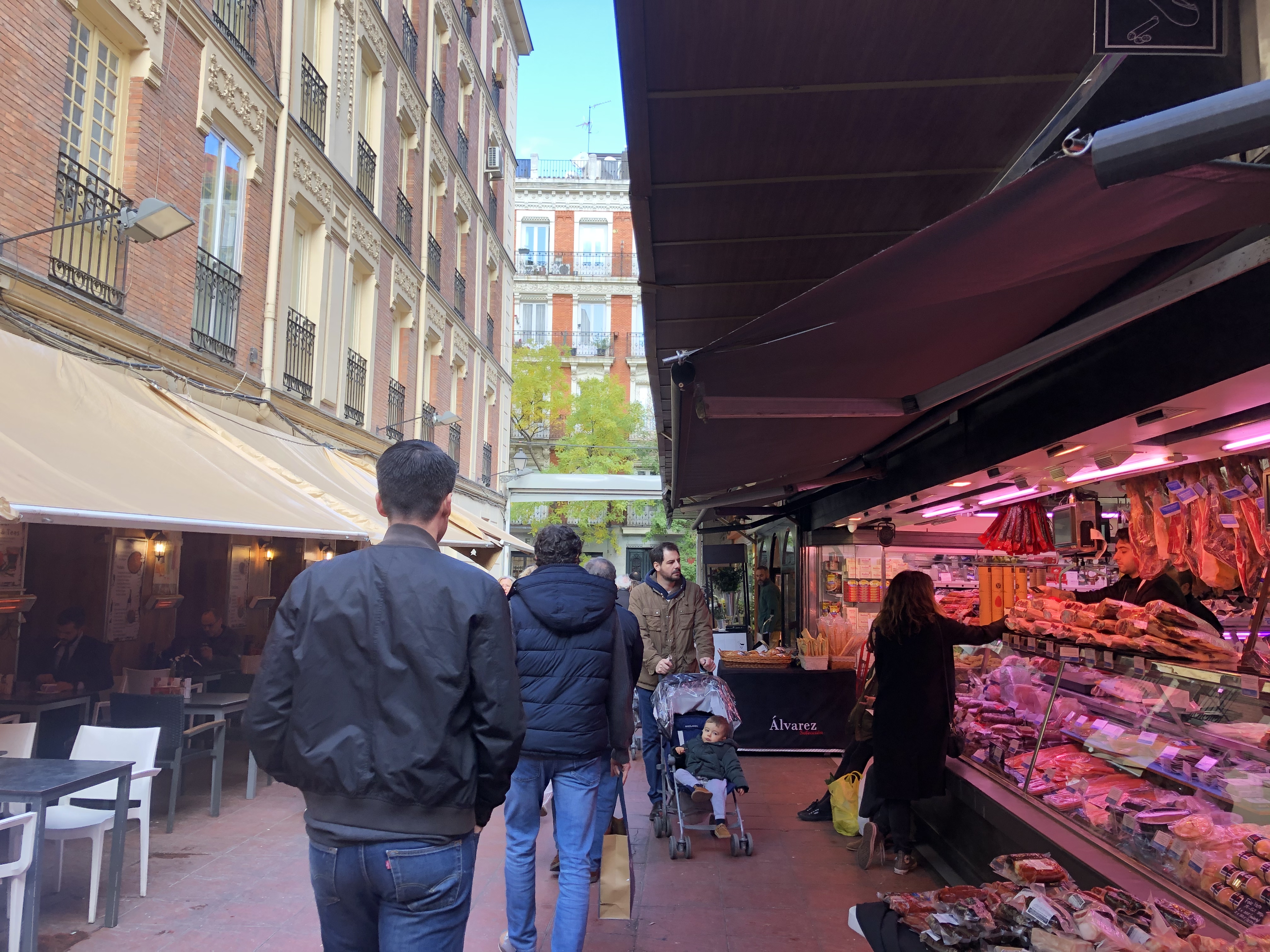
    For picky eaters who prefer preparing their meals or seeking familiar snacks, Salamanca has several supermarkets and markets. **Mercado Central** is a local market offering fresh produce, meats, and cheeses. Here, you can find ingredients to make simple meals. Supermarkets like **Carrefour** and **El Corte Inglés** have sections with international foods, including pasta, cereals, and snacks from various countries. These stores are ideal for stocking up on essentials that align with your taste preferences. 

    Vegetarian and Vegan Options 

    Salamanca also caters to vegetarians and vegans, which can be a safe haven for picky eaters who prefer plant-based foods. Restaurants like **El Laurel** offer a diverse menu with vegetarian and vegan dishes that are flavorful and satisfying. Even traditional Spanish restaurants often have vegetarian options like grilled vegetables, salads, and vegetarian paella. 

    Dessert and Coffee Shops 

    When it comes to satisfying your sweet tooth, Salamanca has plenty of options. Cafés and pastry shops are abundant, offering treats like **churros** (fried dough pastries) and **tarta de Santiago** (almond cake). **Valor Chocolate** is a famous spot where you can enjoy churros with a cup of thick, rich hot chocolate. For coffee lovers, places like **Café Novelty**, one of the oldest cafés in Salamanca, provide a cozy atmosphere to enjoy a cup of coffee with pastries or sandwiches. 

    Practical Tips 

    To make your dining experience more enjoyable, learn a few basic Spanish phrases related to food preferences, such as “**sin carne**” (without meat) or “**no picante**” (not spicy). This can help in communicating your preferences to restaurant staff. Also, don’t hesitate to ask for modifications to dishes; many restaurants are accommodating. 

    Salamanca offers a variety of food options that can cater to even the pickiest of eaters. From familiar international cuisine and simple Spanish dishes to fresh market ingredients and delightful desserts, there’s something for everyone. With a bit of exploration and open-mindedness, you’ll find plenty of meals to enjoy in this beautiful Spanish city. 

  • I had the most wonderful week in Spain – A First Time Traveler at Teen Language Camp

    I had the most wonderful week in Spain – A First Time Traveler at Teen Language Camp

    Travel challenges us and helps us understand more about the world and the people in it.  That’s why, every year, Greenheart Travel offers First Time Traveler scholarships so that more people have the opportunity to travel. We recently heard from Caleb who won a scholarship to Greenheart Travel’s Teen Summer Language Camp in Spain.  Here’s a little bit about his trip!

    ***

    I had the most wonderful week in Salamanca, Spain.

    My journey started on Saturday June 11th, 2023. After a week of last minute packing and mini-panic attacks it was all finally happening!

    I took SFO (San Francisco airport) to Madrid Airport. The flight was almost 14 hours long, but my airline was surprisingly really awesome. I flew Iberia and they gave everyone on the plane a pillow and a blanket, and their utensils were all recyclable! It was a very comfortable flying experience and being able to see all the time differences we flew through was so cool. After watching 3 different movies and taking too many naps to count I finally landed in Madrid. I brought only carry-ons so I did not have to go through much airport hassle. This was a monumental moment for me as travel is a huge passion of mine, so the fact that I made it, and everything is going smoothly was a big deal for me.

    After a 6-hour wait for the rest of the students to land and get their luggage we finally boarded the bus which took us from Madrid, Spain to Salamanca, Spain. It was an almost 3-hour drive but it was well worth the wait. The bus drive allowed all of the students to get to know each other and make first impressions. I met 3 students each from a different area: Phoebe (who I later found out was to be one of my roommates), Axle (another one of my roomies), and Lucy (a very nice French girl who was staying at an apartment). Having already made bonds with my roommates it was a very easy transition from the bus to my home for the week.

    My host family was a wonderful woman named Manuella, and in no time at all we were calling each other familia. This is one of the more important aspects of my trip. As me and my host and my roommates became a real family in under 7 days (I feel like that should be a social experiment)! This level of human connection and pure love is something so beautiful to me, and I feel that it highlights my biggest reasons for wanting to travel the world and meet new people.

    My days in Salamanca were very different from my days back at home (I loved this)!  I had to adapt to a brand new schedule. Wake up at 7am, class from 9-12pm, “siesta” (nap time) and lunch 3-5pm, activity 5:45-7pm, free time 7pm-10pm, dinner 10:30pm, night activities 11-12:30am. I quite enjoyed this schedule and liked how late everything was. I was very worn out by the end of the day but slept amazing!

    My week in Salamanca was a life I would commit to again, possibly to study or to write a book. The overall environment of the town is very collegiate, and historical. So it was a perfect place to learn an entirely new language and experience an entirely new culture.

    ***

    Thank you Caleb for sharing how your week in Spain went!  If you are interested in the First Time Traveler scholarship, please read more here and follow us on Instagram and Facebook to get early warnings for the next application period!

  • A Trip I Will Remember Forever:  Teen Summer Language Camp in Spain

    A Trip I Will Remember Forever: Teen Summer Language Camp in Spain

    Greenheart Travel believes that travel changes us for the better. It challenges us and gives us more insight and mutual understanding.  That’s why, every year, Greenheart Travel offers First Time Traveler scholarships so that more people have the opportunity to travel. We recently heard from Caleb who won a scholarship to Greenheart Travel’s Teen Summer Language Camp in Spain.  Here’s a little bit about his trip!

    A Trip I will Remember Forever

    My trip in Salamanca, Spain took me 5,662 miles from home, to a new continent, with new culture and new people. It was a trip I will remember forever, and it is a trip that truly succeeded in encouraging positive growth in me and my peers!

    When I first got to Spain I was utterly entranced by the sheer idea that I was so far and so free in an extremely beautiful new land. The serotonin from the increased independence lasted throughout the entire trip, and even shows its lasting effects on my independence here at home.

    My experience with adapting to the culture in Salamanca was not as rocky as I had anticipated. I found myself doing remarkably better at understanding Spanish rather than speaking it, and was even able to form beautiful bonds with many of the locals. I did this through a universal social tactic that relies more on my empathetic and sympathetic capabilities. Being able to communicate with these new people even through a language barrier was truly what brought me so much closer to the culture in Salamanca, Spain.

    Breaking the discomfort and immersing myself in the experience is what ultimately freed me, it enabled me to retain much of the information and culture, so not only do I have photos but I have strong, established memories that will continue to make me smile for a lifetime.

    One of my favorite aspects of the trip was the large amounts of free-time students were granted, where you were 100% independent and alone (unless you were with friends or roommates). This was extremely helpful in breaking the ice and helping students through culture shock. I personally loved walking down the beautiful alleyways and admiring the old architecture. Other than sight-seeing, the hours of independence we got allowed us to do much more, such as going to lunch as a group or watching the many street performances. These activities helped to round out the entire experience, and for me they are what made it all the more valuable.

    I believe everyone should do a program like this once in their life. The itinerary and organization of the program was what helped students to acclimate so fast, and immediately begin reaping the benefits of being in another country, rather than focusing on possible negative aspects like being home-sick. There was so much to do and so much to see, and the fact that we were actually able to do and see those things created such an exciting environment that it was hard to have time to be sad about anything (unless you were hearing one of the many historical tragedies that occurred in Salamanca).

    Overall this trip was a much deeper experience then I had first thought. Of course whenever you drastically change your surroundings other things are bound to change as well, but nothing could have prepared me for the profoundness that came out of just communicating with these people. Knowing that I have the ability to travel the world, alone, meet new people, alone, and do all of these things successfully is one of the most valuable things I have learned this year. For all this program has given me I am so grateful, and thank you Salamanca for having me!


    Thank you Caleb for sharing your experience!  If you’d like to learn more about Greenheart Travel’s scholarships, please visit our First Time Traveler section!

  • The Life of a Student in Spain

    The Life of a Student in Spain

    By: Amanda M.

    Amanda is a First Time Traveler 2021 Scholarship winner. She is doing our High School Abroad program in Spain for an academic year.

    Arriving in Spain

    It all started on Sunday, September 19 when I embarked on the journey of my life. I was extremely terrified but excited at the same time to see what my future life in Spain would bring. I arrived in Málaga fo1r my orientation on September 20, 2021. I had gone over 18 hours in flights, and I was extremely jet lagged but extremely happy that I had finally arrived in Málaga. Soon after my arrival the program was constantly picking up more students from the airport. I was amazed to meet students from all over the world! It was so exciting to meet such amazing people and create such international connections when we’re all here to do the same thing. We all travelled from abroad to spend a year or semester in a country that is not our homeland to learn a language and experience a new culture. We were choosing to live our lives and grow into different people. As time went by I became a little homesick, and I knew that missing my family would be normal. However, I was excited to start the new journey in Spain!

    Host Family Life

    At first I was a bit timid with my host family. I was extremely grateful that they had given me this opportunity to stay in this beautiful town with such wonderful people. After a few months the culture shock slowly went away and I became more comfortable with my family. I have three host brothers which was a bit shocking at the beginning. In my family back home there are more girls than boys. It was an adjustment, but they are all very sweet and I consider them all like a second family to me. I also baked my mom’s chocolate cake for them, which I made with one of my host brothers.

    Almost every Sunday we go to the campo where you can find a wide variety of fruit and vegetables grown there. We have big family lunches and stay there usually the whole afternoon. If it’s a bit cold we go inside where we are able to enjoy their warm and cozy fireplace.

    During the holidays the whole family gathers together and we usually sing karaoke or play fun games. I got a little homesick around Christmas and New Years’ since I was missing my natural family. I was reminded that this is completely normal, and I was able to be grateful for the opportunity to celebrate this years’ holidays with my host family in Spain.

    School Life

    School was extremely hard at first because I was still adjusting to both a new home and city. Especially in the beginning I had to push through jet lag to go to school every day. Sometimes school is extremely hard, such as engaging in a classics course where I struggle to understand what the teacher is saying in Spanish. I’m in humanities so along with Latin and Greek I also have history and some other classes such as Philosophy, Lengua, Aleman Touristico, French, and Ampliación de Inglés. My school starts around 8:30 and ends around 3, it is a little shorter than in the U.S which makes it seem like the time goes by faster here, though!

    Unfortunately the schools in Spain do not offer school-sponsored clubs. but you can enroll in activities out of school such as a hobby or a sport. Many students love playing sports like futbol (soccer!) on community teams.

    Cultural Differences

    One cultural difference I’ve noticed is transportation. At home I wouldn’t even think about going on a bus to the nearest city. Here, though, I can just take the bus and I arrive in a city without any issues. I was able to explore a lot of places such as Granada. While there I got to see their famous architecture and Christmas spirit for the Reyes Magos. I also visited Málaga; they have a rich and diverse culture. I was able to visit some really cool vintage stores there, and some other small cities. I can’t wait to explore more places!

    Another difference is in food – it is absolutely divine! Along with the famous paella, Spain has another dish extremely popular here called migas. It is like a Tex-Mex breakfast dish. It is so popular here that there is even a festiva in December where people make huge batches of migas and people visit from all over the world to eat it. The best part is that it’s free!

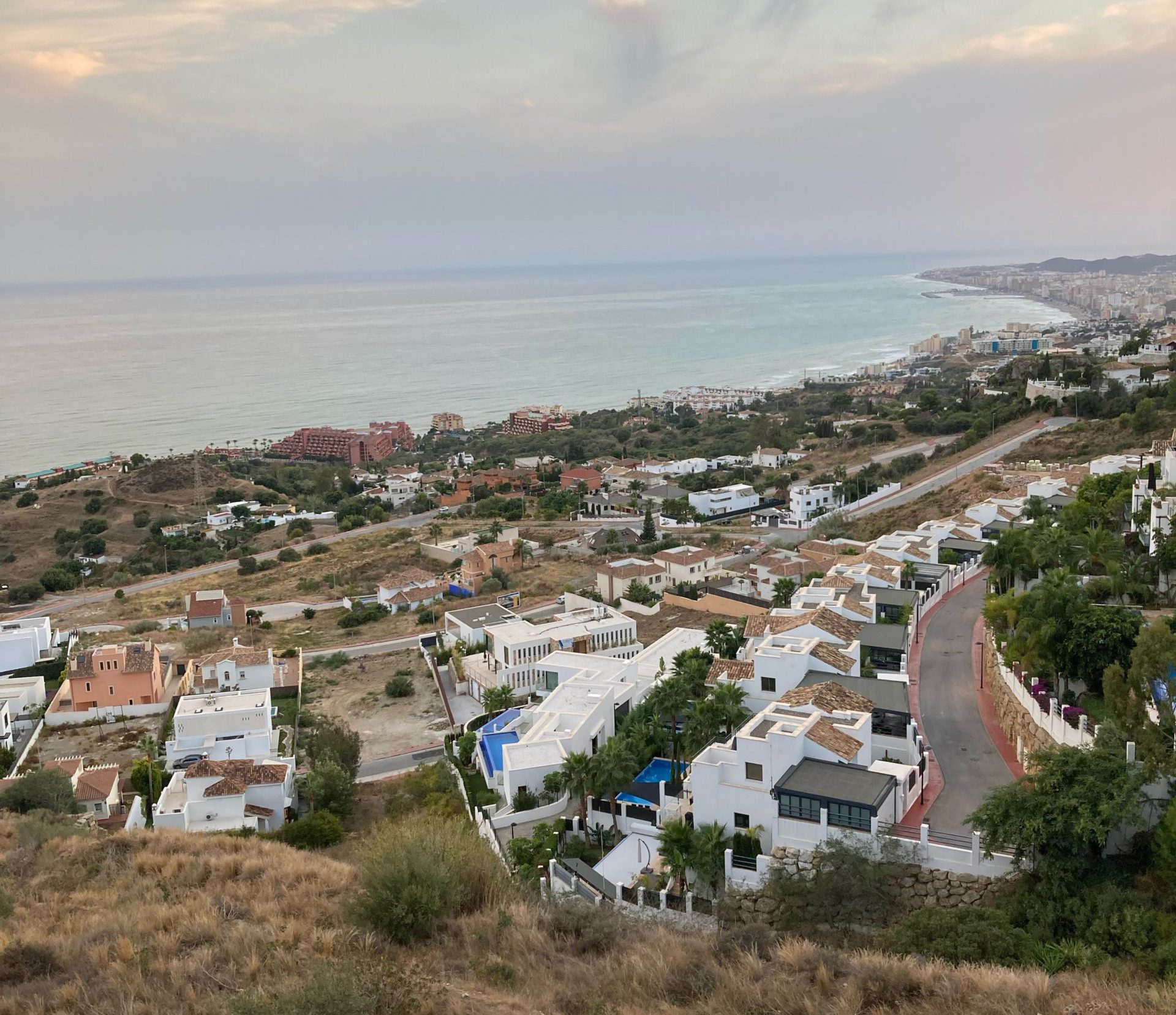
    When I visited Mijas (a small town outside of Marbella), we ate at an Argentinian restaurant and I was able to try a famous Argentinian burger which was extremely delicious. If you ever visit Nerja. you can also try the best ice cream I’ve ever had! The town has a stunning seaside view that is only made better when you get some ice cream. Unfortunately, I have not learned how to cook any Spanish food yet. However, I hope to learn before I leave!

    Another thing that shocked me was learning that in Spain they eat dinner around 9 P.M.; in the U.S I would normally eat dinner around 5 or 6 in the afternoon. It’s definitely been an adjustment!

    What I’m looking forward to the rest of my stay here!

    I’m looking forward to getting to explore new places and become more fluent in my Spanish. I also plan to spend quality time with my friends and family before I leave. With the first few months I was still acclimating to all the changes in experiencing a new culture. Now is the prime time to truly dive deeper into the Spanish culture and language since I’ve worked through some of the harder parts of culture shock.

    Over time, I began to make a lot of friends and I was able to do things more independently. Things are still hard sometimes but, I know that I can’t give up, because I’m here for a year and I want to make this experience worthwhile. I’ve already made a lot of lifelong friends, and I know that even when I leave I will remain in contact with them no matter what! I still have 4 months left with a lot to learn. I’m extremely grateful for this opportunity and hope you, too, take this journey since it’s a once in a lifetime chance!

    If you’re interested in studying abroad in Spain for a Trimester, Semester, or Academic Year, check out our program page HERE. We also offer a teen summer language camp in Salamanca, Spain for those students who can’t accommodate a program during the school year. If you have other questions or comments about studying abroad in Spain, feel free to drop a comment below, too!

  • How to Navigate Spain as a Vegetarian

    How to Navigate Spain as a Vegetarian

    You may be a bit hesitant to travel abroad if you maintain a vegetarian diet, but I assure you that you do not have to worry in Spain!

    My name is Jolie-Anne and I am a former vegetarian on the high school program in Albacete, Spain. I decided to add meat back into my diet before coming to Spain so I could experience everything the country has to offer, but that does not have to be your case. Although you may hear many comments about how good the ham is, here’s how to navigate as a vegetarian in Spain!

    Breakfast

    Breakfast is simple normally consisting of toast with jam, avocado or tomato, cereal, fruit or sweets. There is also normally juice or coffee in the mornings as well. Worried that you can’t enjoy your almond/soy milk coffees? Milk replacements are available in the supermarkets! Needless to say, I normally had a vegetarian morning!

    11 a.m.

    Spanish meal times are very different from the United States. In Spain, we eat lunch at 15:00, so during the recreo at school at 11:00 we eat a bocadillo. A bocadillo is a sandwich that is filled with any combination of ham, chicken, tomato, humus, mayonnaise, cheese, hummus and more! It’s very easy to eat a vegetarian bocadillo either with hummus, cheese, or tomatoes and olive oil! You can also go for the delicious tortilla de patata, if you eat eggs.

    A Spanish lunch! Cheese, crackers, olives, garlics, lentil beans, and more! The dish is gazpacho and this one was cooked with meat, but my host family made it in the past with a meat substitute (tofu)! After the gazpacho we had toast with hummus!

    Lunch

    You’ve had a long day at school or work and now you are ready to eat a proper Spanish lunch… This is the meal that might give you the most trouble, but don’t worry!

    In Spain, lunch is the biggest meal, so it’s usually served with meat. The great thing about Spain is that there’s never just one food serving during lunch. Normally, there is a bowl on the table with lentils, pickles, olives, and raw garlic before we start eating as my host mom is plating the food. Then, we eat the first dish while the second continues to cook on the stove. Salads, soups, pastas, rice and vegetable dishes are common as the first and second serving.

    This is a fruit named chirimoya, and as far as I know it is not common in the US. Great for a merienda or breakfast!

    Merienda

    What is merienda? The snack at 18:00. Normally this time reveals your sweet tooth as the food usually comes from a Spanish bakery. Spanish sweets are likely cooked with eggs and milk, so if you exclude these products, you can always make toast with hummus, tomato or avocado. Also, there is a lot of amazing Spanish fruit we don’t have in America!

    Dinner

    I don’t have much advice for dinner that’s not the same as lunch! Dinner is lighter than lunch and usually, if there is meat, it is fish. You will normally eat fruit after dinner too!

    I hope this guide to vegetarian Spanish food helps you. Do not be discouraged to go abroad if you are vegetarian. Supermarkets in Spain have plenty of vegetarian options (tofu, soy products, dairy replacements) if you are buying for yourself.

    Joli-Anne Brosseau, from Savannah, Georgia, is a Greenheart Travel First Time Traveler Scholarship recipientLearn more about Greenheart Travel’s scholarship opportunities to help you travel for a change!

  • What Can You Gain from One Month in Spain?

    What Can You Gain from One Month in Spain?

    In 2017, Dane Chilton’s family welcomed an exchange student named Juan through Greenheart Exchange’s School to School Exchange program. He didn’t know he was about to forge a life-changing friendship that would intertwine their families and inspire international travel. 

    After three weeks of hosting Juan, Dane knew he wanted to see Juan’s home, school, and culture – and of course, improve his Spanish.  

    So Dane – determined to make this trip happen – did all the research and planning. This began the difficult process of getting the approval from his U.S. school to study in Bilbao, Basque Country, for a one-month High School Abroad Spain program.  

    “It was the best experience of my life so far,” says Dane. “It was perfect, if not better, than what I thought it would be.”  

    We wanted to know why, so we asked for Dane’s insight on his daily life, learning the language, school in Spain, best experiences and advice for future students.  

    Life in Spain

    “Every tiny little thing was different, from the times that we ate and when we got home in the afternoon. It was an adjustment, I had difficulty sleeping because there was so much noise,” explains Dane. In the States, Dane lives in a quiet rural area, so moving to the heart of Bilbao, “smack in the middle of the city, a two-minute walk from the soccer stadium and a minute away from Guggenheim,” was a big shift.  

    Still, despite being in an urban area, Dane says that Spain “is definitely a lot slower paced. They had things happening, but not as tightly packed as it was in the States.”  

    Prior to studying in Spain, Dane “went into research mode.” Through his preparations, he had studied the area’s history from B.C. until the present, so he was well-versed in the culture. Still, there’s nothing like learning while physically in the country. “Until you go around with a local, you don’t know anything about the city. You have to get the local feel before you get a sense of what it’s all about,” he says.  


    Learning Spanish

    Dane grew up with a Spanish-speaking nanny and studied the language in school, so he already had a base level – but he wasn’t quite ready for the Spanish accent. “The first couple of days were rough because I was using Mexican slang and that wasn’t working – I called him pregnant when I mean to say he was cool,” he laughs.  

    Now, he uses Spanish slang words like “chulo” and “vale” and he says that his comprehension went from around 75% to 100% in a month. By the end of his time in Bilbao, he was dreaming and thinking in Spanish. Now that he’s back in the States, his nanny commented that his Spanish was much better. “I can hold a conversation a lot better,” he says. 

    School in Spain

    Dane studied at a private religious school called Colegio Urdaneta. He took math, history, economy, law, religion, and Basque. Since it was a religious school, they prayed several times a day.

    While it’s hard to narrow down which specific experiences are the best, Dane had a few to share. First, he says, was a soccer game. “I don’t really like soccer, but it was like how on earth can you yell this loud?! These people are insane, but in a good way!” he explains.  

    He also said he loved visiting the Guggeheim on a trip to Madrid he took with his host family, and a historical site called San Juan de Gazteluatxe.  

    Some of the most impactful moments, though, were the simple day-to-day activities. “Nothing made me happier than walking home (sometimes at like, 11:30 or midnight!), just walking on the street, and speaking Spanish. That was the best feeling ever,” he says.  

    Advice for Traveling as a Teen

    You had a lot of no’s – from parents, school administrators, etc.  before you had this trip approved. What’s your advice to other students trying to go abroad?  

    “Stay consistent,” Dane explains. “If you really want to do this type of thing you really have to do your research and know what you’re talking about. Don’t let one “no” shut you down. I had at least 14 “no’s”, but I was always one step further than “no.” And all those little steps finally got me to where I am.”  

     Regrets

    Dane studied for one month, but he admits he should have done something differently. “I will say that I should have done longer than a month. Right when a month was ending was when I really started to feel like I was settling in. I think a trimester would have been a good time.  It was a perfect amount of time though – I didn’t feel homesickness at all,” he said, Maybe I’ll go back.” 

  • High School Abroad in Spain Live Q&A

    High School Abroad in Spain Live Q&A

    In this episode of the Greenheart Travel Podcast, friends Tess Wallace and Katianna Higgins compare their experiences studying abroad in Spain at the same time.

    Here’s an excerpt:

    Katianna: The amount of Spanish that we understood/spoke going into it made a big difference on our experiences in Spain. We both had amazing experiences, but for me, not speaking or understanding a lot of Spanish going in made it harder to do a lot of things. It made it harder to make friends even because I couldn’t communicate with people. It made it harder to do school and all of that. It made it harder to bond with people at first.

    That wouldn’t necessarily be something that I would be scared though. If someone else was going into a country where they don’t really understand the language, I wouldn’t be like, ‘oh maybe I shouldn’t go.”

    There was a couple major turning points for me when it comes to the language when I was in Spain. And the first one was like a month in, where I started understanding a lot of the things people said. Everyone was nice to me the whole time but as soon as I started being able to understand, I could laugh at people’s jokes and people could see my personality.

    It took a little longer for me to have close relationships with friends at school, but it did happen. It just took a little more effort on my part to learn the language.

    You have to put effort into listening to people because it’s super easy to tune it out when you don’t understand it. It took a little longer, but by the end, you can ask Tess that every single time that we met, like from the first point in Madrid, to Seville to Madrid again in the end, she’ll tell you my Spanish was drastically different every single time. Like in the last month my Spanish improved so much.

    Tess: I went from seeing her in Seville to seeing her in Madrid, which was five or six weeks later, and she was barely putting together sentences to speaking almost fluently. I was like, how did you do that in the last six weeks, I’ve been trying to do that my whole like.

    Katianna: It has partly to do with confidence. Like not wanting to speak because you’re afraid that you’re going to be wrong, to be like nobody cares let me just do it. That’s the point that I ended in. And not being afraid to do it.

    Tess: The hardest part for me with the language was finding my personality but in Spanish. I knew how to speak, but I know how to speak what I was taught in school.

    I want to see this, but I don’t know how to say it Tess-like. Or I don’t want to sound textbook, I want to sound like me.

    Katianna: Like a human being.

    Tess: Yeah. So it took a while to find my personality.

    Katianna: Everybody is going to have a different experience. Sometimes It was hard for me that I wasn’t making as many friends, but not even as many friends as Tess but just as many friends as most people had, you know? But like, I got to that point. It just took me a little bit longer.

    Allison: How do you feel like your social life now is going to differ after you’ve had these experiences of hanging out with so many Spanish teenagers and getting in that groove of things and now being back to California.

    Katiana: People always talk about FOMO, the fear of missing out, and I really just kind of stopped caring. I was like, people are still going to be there when I get back.


  • Using What You’ve Learned Abroad Back Home

    Using What You’ve Learned Abroad Back Home

    I have seen how easy it is to lose a language or an experience quickly as soon as you’re not surrounded by it. Not only is it frustrating but it can be outright upsetting when you realize what you used to do daily has left you completely. I wanted to give a couple of tips on how to retain and use what you learned abroad so that you can keep your experience with you.

    Use the Language When You Can

    I know it’s hard enough to start a conversation in your native language, let alone a foreign one, but I encourage you to try to converse when you can. Most people are very excited when someone wants to speak in their first language with them. Just ask politely if you can talk and practice, and unless they’re busy, I’m sure they will be more than willing.

    I’ve had native Spanish speakers ask me questions because they realize I know more than Si! and Gracias! It’s scary but it’s worth it when you get to hear the language again and practice (even if you misunderstand here and there).

    My host mom helped me learn a lot. She didn’t speak English with us, but she’d work until we understood what was being said. It was very valuable.

    Help Out

    This is similar to using the language when you can, but it’s important to emphasize. If you see someone struggling to understand instructions or trying to get a message across that is being misunderstood, step in if you can.

    Try to pop your head in and ask if they would like translation help, that way you can relay information back and forth. Sometimes the conversation might be too advanced for you to handle in two languages, but maybe you can still get the gist of it across. Do your best, people will be grateful for any help you can lend.

    I was working at a summer camp and a lady wasn’t understanding how check-in worked and because I heard her speaking Spanish to her daughter earlier, I popped my head in. Within the first few words, I realized that I didn’t know how to say all the key nouns I needed, but I was able to get across that more people could help her downstairs where the rest of check-in was. I felt like I hadn’t done a very good job, but she thanked me a bunch and seemed very relieved that someone else understood her when she was pointing out which things were her daughter’s.

    I promise you that even if you realize you don’t have the words you need, you can get enough across and the other person will be grateful, plus it feels great to help others, especially while practicing another language!

    Look for Opportunities to Learn About Other Cultures Within Your Own Town

    You don’t have to search out the culture you experienced abroad because, as you learned, new cultures are awesome and super interesting. So if you ever find yourself in a position where you can learn something new about someone, embrace it.

    While I was in Spain, a bubble tea place called Zen Zoo Salamanca hosted a cultural conversation type meeting where people could come in, practice English, and learn about others’ cultures. If you have something like that in your town, check it out! If there isn’t one, maybe you can set one up! (It could even be a senior project).

    Remember that you’ve already pushed past your comfort zone a bunch by going abroad, so do your best to keep that going and work to practice the language, help people out if you have the cultural bridge needed, and keep learning!

    Elias Harold, from Astoria, Oregon, is a Greenheart Travel First Time Traveler Scholarship recipientLearn more about Greenheart Travel’s scholarship opportunities to help you travel for a change!