Tag: food

  • My Host Family in Japan Opened My Eyes to the Culture!

    My Host Family in Japan Opened My Eyes to the Culture!

    Alana is one of Greenheart Travel’s First Time Traveler Scholarship winners. Hear about her experience while on the teen summer language camp Japan program

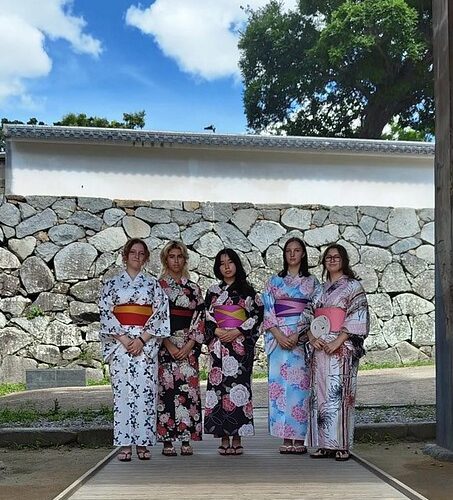
    In the beginning of my program I was a bit worried about what my relationship would be like with a family that I have never met before. Would they lead a lifestyle very different to mine? I thought it would be hard for us to connect because they would have different values or expectations. I though that our differences both in culture and lifestyle would be too big and that we would not see eye to eye. 
     
    However, these differences were exactly what brought us together. Living with my host family was honestly one of the best experiences I had in Japan. We both got to teach each other about our cultures and language, something that I had never experienced before.

    food while on teen summer language camp Japan

    Because of my host family, I was able to experience many different local dishes that they would make for breakfast or for dinner. The daily morning meal would always consist of a bowl of rice and miso soup. This was something that I was not accustomed to at all back home, as I usually settle with bread and milk for breakfast. However, in Japan, I was set on wanting to try as many traditional or home cooked meals as I could, even though my regular diet does not include much fish or meat. With my host family, I ate eel for the first time, had delicious curry that they made, omelets, yakisoba, okonomiyaki, and tried many new flavors I had never tasted before. Although it was hard to adjust to these new foods, I really enjoyed being able to eat the food my host family prepared. 


    I believe that my stay with my host family allowed me to experience firsthand what life is like in Japan, go to local festivals, as well as to enjoy many traditional home cooked meals. Because my host family also had young children, they were able to teach me a lot of everyday speech and I was constantly surrounded by the Japanese language. My host family really encouraged me with my studies and I truly think that without them I would not be as motivated to learn as I am now.

    Teen Summer Language Camp Japan

    Learn more about Greenheart Travel’s Teen Summer Language Camp Japan Program

  • The Picky Eater’s Guide to Salamanca, Spain

    The Picky Eater’s Guide to Salamanca, Spain

    By Zev, Teen Language Camp Spain-Salamanca, Summer 2024 

    Traveling to a new destination can be both exciting and daunting, especially for picky eaters concerned about finding familiar and enjoyable food options. Salamanca, Spain, renowned for its historic charm and vibrant student life, also offers a diverse culinary scene that caters to various tastes. This guide provides essential tips for picky eaters to navigate and enjoy the food while you study abroad in Spain. 

    Familiar and Comfort Foods 

    For those who prefer familiar foods, Salamanca has several international restaurants and fast-food chains. McDonald’s, Burger King, and Subway are present in the city, offering the same menus you’d find back home. Additionally, there are several Italian restaurants, such as Pizzeria A’Margellina and Ristorante Pavarotti, where you can enjoy classic dishes like pizza and pasta, which are often safe bets for picky eaters. 

    Spanish Cuisine with a Picky Eater’s Twist 

    While Spanish cuisine is a highlight for many, it can be intimidating for picky eaters. However, many Spanish dishes are simple and flavorful, with familiar ingredients. For instance, **tortilla española** (Spanish omelet) is made with eggs and potatoes and is usually a hit with everyone. **Croquetas**, typically filled with ham or chicken, are breaded and fried, offering a crispy exterior and a creamy interior that appeals to many tastes. 

    Tapas, small dishes served in bars, can be an excellent way to try new foods without committing to a large portion. Visit places like Cuzco Bodega and Casa Paca, where you can find a variety of tapas, including patatas bravas (fried potatoes with a mild tomato sauce) and pan con tomate (bread with tomato), which are simple yet delicious. By sampling tapas, you can discover new favorites without the risk of ordering a full meal you might not enjoy. 

    Markets and Supermarkets 

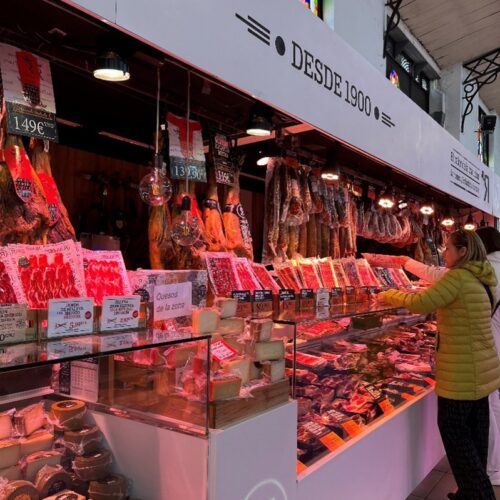
    For picky eaters who prefer preparing their meals or seeking familiar snacks, Salamanca has several supermarkets and markets. **Mercado Central** is a local market offering fresh produce, meats, and cheeses. Here, you can find ingredients to make simple meals. Supermarkets like **Carrefour** and **El Corte Inglés** have sections with international foods, including pasta, cereals, and snacks from various countries. These stores are ideal for stocking up on essentials that align with your taste preferences. 

    Vegetarian and Vegan Options 

    Salamanca also caters to vegetarians and vegans, which can be a safe haven for picky eaters who prefer plant-based foods. Restaurants like **El Laurel** offer a diverse menu with vegetarian and vegan dishes that are flavorful and satisfying. Even traditional Spanish restaurants often have vegetarian options like grilled vegetables, salads, and vegetarian paella. 

    Dessert and Coffee Shops 

    When it comes to satisfying your sweet tooth, Salamanca has plenty of options. Cafés and pastry shops are abundant, offering treats like **churros** (fried dough pastries) and **tarta de Santiago** (almond cake). **Valor Chocolate** is a famous spot where you can enjoy churros with a cup of thick, rich hot chocolate. For coffee lovers, places like **Café Novelty**, one of the oldest cafés in Salamanca, provide a cozy atmosphere to enjoy a cup of coffee with pastries or sandwiches. 

    Practical Tips 

    To make your dining experience more enjoyable, learn a few basic Spanish phrases related to food preferences, such as “**sin carne**” (without meat) or “**no picante**” (not spicy). This can help in communicating your preferences to restaurant staff. Also, don’t hesitate to ask for modifications to dishes; many restaurants are accommodating. 

    Salamanca offers a variety of food options that can cater to even the pickiest of eaters. From familiar international cuisine and simple Spanish dishes to fresh market ingredients and delightful desserts, there’s something for everyone. With a bit of exploration and open-mindedness, you’ll find plenty of meals to enjoy in this beautiful Spanish city. 

  • Eating (and teaching) your way through Prague!

    Eating (and teaching) your way through Prague!

    You’re going to Prague for 4 weeks (and possibly staying longer on a job placement with the help of Greenheart Travel) and you’re excited to see the sights! You’ve figured out where you’re staying, gotten all your course books and materials and have paid all the fees. What’s left?

    Navigating the culinary culture of course!

    With your days full of TEFL training, the last thing you want to think about is what you’re going to go eat and where to get it. Prague is known for its distinct neighborhoods, all filled to the brim with bars and restaurants and to help, we’ve compiled a list of the most common dishes that you should try while living abroad!

    Goulash

    This traditional dish is for the meat lovers out there! The Czech style of this dish is a thick, stew like dish served with dumplings. This will easily be on any menu you encounter and will fill you up!


    Grilled Sausages

    Grilled Sausages or grilovane klobasy is just what you’d expect, a grilled sausage on a bread roll. This fast dish can be found in food stalls and restaurants alike. Think of it as the on-the-go food! Be sure to try all the sauces available too!

    Dumplings

    Dumplings can be found in a number of Czech dishes (please refer back to goulash). It’s the carb of the dish and is perfect for any dipping necessities! You can also find sweet dumplings paired with jams in some eateries! Either way, anything it’s paired with is delicious.


    Trdelnik

    No meal is complete without dessert and for that, look no further than trdelnik! You can find these fried dough cakes served with ice cream and other various toppings in restaurants or in food stalls on the street.

    So now you know, in those off hours when you’re not earning your TEFL certification, you can wander down the street and indulge just like the locals do!

    Happy Traveling!

  • Q&A With High School Abroad Italy Student: Daily Life in Italy

    Q&A With High School Abroad Italy Student: Daily Life in Italy

    When you study abroad, you find out that almost always, no matter where you are in the world, we all do the same things: eat, go to school, spend time with friends, and so on. But as you move through your new home, you’ll start to notice all sorts of small differences. Sometimes these are best part — and the things you’ll soonest forget when you return back home. We wanted to know what our 2020 First-Time Traveler Scholarship Recipient Jessica Durnell had to say about daily life in Italy.

    What kind of food/snacks do you eat during school?

    There is no lunch at Italian schools, since school usually ends around the same time that other schools have lunch. Instead, there’s usually a small break that you can eat a snack. You can bring
    something from home or go to a vending machine
    although I’m not really sure if every Italian school has a vending machine, but every one I’ve been in, there has been one. Quite strange,
    since in America it was basically illegal for a student to even touch the vending machine, haha.

    What is transportation to school like?

    There is no school buses in Italy. Instead, students take the public bus or the train. It’s fun to take the public bus, since there is no basic public transport in America unless you live in a big city –
    you need a car. The downside of public transport when going to school, though, is that you have to pay for each trip to and from
    and the cost can rack up quite quickly for only a few weeks.

    Jonathan Bean via Unsplash

    How are classrooms different in Italy?

    Italian classrooms are also very different. In stead of how students move around every 45 minutes or so in America, the teachers move around instead. Where I went to school in Italy,
    sometimes we could change buildings every other day since our school wasn’t big enough to hold everyone.

    How is the school schedule different in Italy?

    School gets out extremely early. Compared to American schools (and other schools around the world), Italian school gets out just before one o’clock. It starts at around 7:45 AM in the morning
    (which I didn’t know until two months of going to school, I was perpetually late). It’s around the same time American schools start, probably later than most, my American public school started
    15 minutes earlier, after all.

    Is the relationship between the teachers and the students any different?

    Greeting teachers when they walk in the morning is also very different. In America, I will say, we are not as respectful to each other. Even the teachers aren’t (well, it depends on the teacher,
    some don’t care and others do, it’s exchangeable) too worried about saying good morning to everyone. In Italy, everyone says good morning and goodbye to the teacher when they come and
    leave. And when the teacher walks into the classroom, everyone stands up from their seats until the teacher tells you to sit down. The students in my classroom only did this for a select few, so albeit it was something you were supposed to do, it didn’t seem that strict.

    Vitalii Chernopyskyi via Unsplash.

    How much different is pizza/how do they eat pizza in Italy?

    For some reason, when I ate pizza in America, whenever someone (or I) would fold their pizza over to eat it, someone would say that Italians would make fun of you if you did that in front of
    them. When I went to Italy I was mortified when everyone folded their pizza over. Everything my friends from 5th grade had told me had been a lie (what a surprise).

    How much different is pizza/how do they eat pizza in Italy?

    Compared to America pizza, pizza is much thinner. It’s easy to eat a whole pizza, compared to the big thick stuff that is painfully American. I also got many questions about whether or not I put
    pineapple on my pizza, which Italians see as a sin. I’m being serious. Every time I answered their question with no, I would hear a sigh of relief. When in reality I have never seen so many toppings that can go on pizza while I was in Italy. There was hotdogs and fries. You can put anything on a pizza. (Except pineapple).

    What plays on Italian TV?

    Italians have their own cartoons, which is pretty obvious. I never watched TV though, I will admit. I grew up with tapes and DvDs in America instead of cable, so I’m not used to it. There is a
    lot of America shows that are dubbed in italian that play on TV which I did recognize, and it’s rather amusing to see how the characters voices transferred over.

    There’s anime on TV. Which surprised me and my American friends (and we were extremely jealous). One Piece, Detective Conan, and Dragon Ball; the only channel I know of that played
    anime in America is Adult Swim, but I didn’t have cable, so I couldn’t watch anything anyways when those shows were airing. Plus I wasn’t even born yet. A lot of people here grew up
    watching One Piece without even knowing what it was, which I think is really cool
    and something I will forever be jealous over.

  • More Than Sushi: What’s Authentic Japanese Cuisine?

    When you think of Japanese food, sushi is probably the first thing that comes to mind.

    Sushi became popular in America in the 1970’s, a time when journalists covering the topic would have to explain the concept of eating raw fish to their audience. Now, sushi has become a staple in Western culture.

    When you visit a Japanese restaurant in the United States, it probably predominantly serves sushi (specifically maki or specialty rolls) with names like, “California” or “Rainbow” roll.

    However, the general knowledge of Japanese food pretty much ends there. You may have never heard of natto, sukemono, or takoyaki.  How about a persimmon or a Japanese plum?

    Beyond food itself, the dining experience in Japan is simply different; from place settings and table manners to the how food is viewed within the culture. We cannot possibly even scratch the surface of Japanese food and its significance in a blog post, but let’s highlight a few aspects, shall we?

    You probably know a few key ingredients.  Rice, seaweed, and fish are big elements. Soy sauce and soba noodles are also common. And who could forget ramen!?

    However, Japanese people do not usually eat sushi and sashimi every day.  As in America, sushi is an expensive dish to be eaten on special occasions, such as going out or entertaining guests. Squid and octopus are also eaten, but they don’t usually enter into home cooking. If you live in a homestay, you may have curry rice, a popular Japanese dish, far more often than sushi.

    Seaweed is common.  So common, in fact, that there is not one general word for it in Japanese, but rather different names for each type.  Konbu (sea kelp), and nori (seaweed) are completely different things, like the way one would talk about corn dogs and sandwiches as separate entities.

    There are also a number of unrecognizable vegetables and fruits. In Japan. vegetables are not seen as inherently more distasteful than meat. Many vegetables are sold pickled.

    Umeboshi (Japanese plum) and kaki (persimmon) are common fruits as well.  Kaki is delicious, but umeboshi is very sour.  They often lurk inside onigiri (rice balls) waiting to surprise the unwary person. Fruit is also a common thing to give as a gift in Japan, so when businessmen or houseguests want to bring a gift alongside an important meeting or for someone hosting them, they tend to bring fruit. When you go to a Japanese department store, the aisles are lined with fancy gift boxes proclaiming to have the sweetest and most delicious fruit gift baskets. Things like melons, strawberries, and other “high end” fruits can be sold in gift boxes for over $100 each!

    Japanese food also highlights noodles and some favorites are ramen, udon, and soba. The tradition of making soba noodles dates back thousands of years. Soba noodles are made of buckwheat and are traditionally dipped in soy sauce and served with tempura vegetables. Slurping your noodles is not considered rude, so slurp as loudly as you’d like!

    Contributions from Jes Stayton, Greenheart Travel high school abroad participant.

    Want to try authentic Japanese cuisine? Click the link below to find out how you can live abroad in Japan!

  • Reflecting on a Holiday in Japan

    Reflecting on a Holiday in Japan

    During my study abroad program in Japan, I found the main difference between Christmas in The United States and in Japan is the food. My real family back in the States were kind enough to send me packages with various Christmas sweets inside, much to my delight. But I was surprised when sharing these sweets with my friends and host family in Japan.

    Mint is not a commonly-liked flavor here, and it is certainly not considered a Christmassy one. Although I was a little shocked, I was not complaining, because that leave more candy for me. The big difference between Christmas food in The U.S.A and in Japan is the main course.

    In The United States it is typical for a family to have a main course of ham, or beef, or turkey. But in Japan it is usually chicken. Kentucky Fried Chicken, to be exact. Kentucky Fried Chicken has managed to convince the entire country of Japan that their food is what westerners eat on Christmas.

    I am not joking.

    Although it is certainly a lie, I was more than happy to eat fried chicken on Christmas, even if it isn’t what I was used to. It most definitely helped that my family’s Christmas fried chicken was homemade, and therefore extremely delicious.

    Read more of Eve’s experience celebrating Christmas in Japan in her latest article.

    Program-blog-button