Tag: high school abroad argentina

  • The Biggest Culture Shock of Argentina: The Schedule

    The Biggest Culture Shock of Argentina: The Schedule

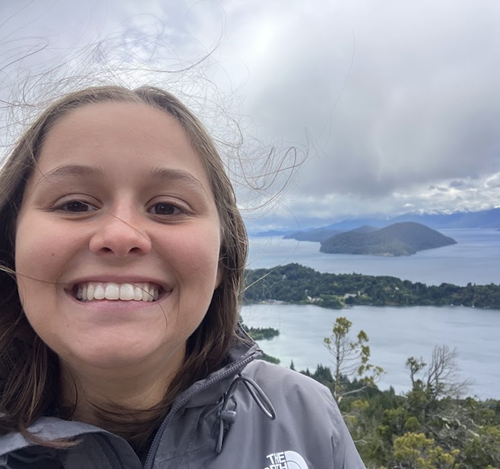
    By: Naomi, High School Abroad Argentina Alumni, 2024 FTT Winner

    Hi! I’m Naomi and I spent six months in Argentina for my student exchange. Before leaving for my trip, I was most definitely expecting to experience culture shock. However, I was surprised by the parts of the culture that ended up being the hardest for me to adapt to. Today I want to share the most challenging cultural aspects for me and how I worked through those differences. 

    Longer Days

    In Argentina, the daily schedule is vastly different from what I was used to in the United States. The time you are awake is much longer and much of the “day” is spent at night. Most people wake up at around seven or eight in the morning and are awake until midnight or one in the morning. For reference, I had a schedule similar to this on weekdays:  

    • 7am to 9am wake up & eat breakfast 
    • 9am to 11am clean, exercise, prepare food, & homework 
    • 11am to 12pm lunch 
    • 1pm to 6pm school  
    • 7pm to 8pm merendar (snack) 
    • 8pm to 10pm sports  
    • 10pm to 11pm dinner 
    • 11pm to 12am family time & hygiene time 
    • 12am to 1am go to bed 

    On the weekends, the day becomes even longer, and it is common to not sleep much at all. People often will stay awake until 6 am and sleep for 3-4 hours before starting another day. Another distinction is that on the weekends people do not do much during the day. It’s only really towards the late afternoon and night that people will start hanging out with friends, going shopping, etc. 

    For me, this routine was a very hard change mostly because I was not expecting such a dramatic difference. When I finally actively realized that my schedule was going to be widely different here and that trying to keep the same routine I had in the U.S. was not the right option, I was able to adjust much more easily. It sounds like such a simple thing, but the mental switch allowed me to seek the help I needed to adjust to a new situation. While going through this process of adjustment, communicating about how I felt was crucial. It is nerve-racking to talk about how you might feel tired or uncomfortable with people who are unfamiliar to you. Despite this, it is very important to break down that barrier and share how you are feeling, especially with your host family. Once I addressed the problem with my host mom, we were able to create a plan to confront the problem I was having and resolve it, instead of me having to suffer through it on my own.  

    I was able to adjust to the new schedule fairly quickly after talking with my host mom and was able to enjoy my days a lot more. So, if you end up struggling with this new routine, don’t be afraid to talk about it with your host family. I guarantee it will help you! 

    Four Meals a Day

    Another difference in daily life is that there are typically four meals a day in Argentina: 

    • Breakfast  
    • Lunch  
    • Merendar 
    • Dinner  

    This fourth meal is added because the days are so long that you need some extra fuel to keep you going. As in the U.S., it is common to have a snack after coming home from school, merendar is the same idea.  

    Another difference in Argentina is the size of meals. Lunch is the most important meal of the day, meaning it is also the largest. It is also very common to have lunch with your whole family (similar to traditional American dinners). All the other meals trail behind lunch and tend to be relatively small and variable. For example, it was not uncommon to not eat breakfast or dinner some days.  

    These differences were not as hard to adjust to. The biggest hurdle I encountered was communicating how I felt about not eating breakfast or dinner. Communicating about food or lack of food can be hard, but communicating how you are feeling about what you are eating is always the better idea. Once I asked about what meals would typically look like, I was able to feel more comfortable about the eating schedule and also plan food I wanted to eat or make on my own time, without feeling bad about it. Again, communication here is key.   

    Conclusion  

    Overall, I found that most of the problems and cultural differences I ran into could be solved through communicating with my host family about how I was feeling. They are your support system in-country and they want you to be happy and comfortable too. So, don’t hold back when problems arise, and good luck on this new adventure! 

  • Greenheart’s First Time Traveler Scholarship Winners for Spring 2024!

    Greenheart’s First Time Traveler Scholarship Winners for Spring 2024!

    Every year, Greenheart makes scholarships available to First Time Travelers. These scholarships are intended for those who have never traveled out of the country and want to immerse themselves in another culture. Here are just some of the winners of the 2024 First Time Traveler Scholarships and their thoughts on travel!


    Name: Clara

    Program: High School Abroad in Sweden

    Why is the opportunity to travel for the first time exciting for you?

     It opens a whole new world of experiences and opportunities, immersing myself in different cultures, trying new foods, exploring breathtaking landscapes, and meeting people from all walks of life. I’m getting a chance to break free from familiar everyday life and embrace the unknown. I’m excited to be in the shoes of a Swedish teenager and experience everything that comes with it. I’m hoping to be able to explore and soak up everything around me.


    Name: Alana

    Program: Teen Language Camp in Japan

    What does Greenheart Travel’s Mission, “Travel for a Change,” mean to you?

    “Travel for a Change” to me, means the opportunity of becoming more aware of other places and cultures in the world. It signifies the internal change that one will go through while experiencing all these ways of living life that are unlike our own. With the opportunity of traveling and visiting new places, you will learn new cultures, food, fashion, languages, and more. While you travel and come across all these experiences, you will gain a broader understanding of the world. The places you visited will leave an imprint on who you are and who you will become as a person therefore, changing you from who you used to be into someone with more comprehension of cultures and lifestyles.


    Name: Naomi

    Program: High School Abroad in Argentina

    What does Greenheart Travel’s mission, “Travel for a Change,” mean to you?

    To me, “Travel for a Change” means that travel breaks down barriers and prejudices between the traveler and those being visited. Furthermore, travel also builds bridges in the places of those barriers and prejudices. These changes that occur while traveling ultimately allow our world to be a more loving, accepting, and connected environment. As people begin to be more accepting of other cultures through travel, the world becomes a better place.


    Name: Sadie

    Program: High School Abroad in Italy

    What does Greenheart Travel’s Mission, “Travel for a Change,” mean to you?

    To me, traveling for a change also means you evolve who you are as a person and your perspective on what may be considered ‘normal’ because it provides the opportunity to see how others live! That’s why I want to actually live with a family in Italy. To live and invest in relationships with others around the world is a truly rewarding experience. Travel also forces you to grow as a person by stepping outside of your comfort zone, learning to handle responsibility, navigating different forms of transportation, learning about different currencies, language and relating to others with different backgrounds and traditions. I think travel has the capacity to help teens like me grow and gain so many more tools than what may be possible without the experience of travel.


    Name: Madeleine

    Program: High School Abroad in Ireland

    Why is the opportunity to travel for the first time exciting for you?

     Ever since I was young, my main goal has been to see the world. I’ve always recognized that there is much more to explore beyond my backyard. From the gorgeous hills of Ireland to the seaside cities in Greece so many call home, there are countless people to meet and endless astounding views. To not only get to travel outside of America for an extended period of time but to also be fully immersed in the day-to-day experience of the citizens there, is a first-time, life-changing experience. I am excited to connect to new people and to be able to return to the United States with a new outlook on my life!


    Name: Kennedi-Grace 

    Program: Teen Language Camp South Korea

    What does Greenheart Travel’s Mission, “Travel for a Change,” mean to you?

    “Travel for a Change” implies traveling with the intention of being a forever learner. To learn how to make a change in your community by learning the values of the different cultures around the world. To make a difference in the communities we are a part of, we need to be able to see ourselves from a different perspective. To learn what it means to be a community and learning to come together despite our differences.


    Name: Zev

    Program: Teen Language Camp Spain

    What does Greenheart Travel’s Mission, “Travel for a Change,” mean to you?

    For me, travel symbolizes more than just visiting new destinations; it’s a transformative odyssey that promises to shape my worldview, enrich my understanding of diverse cultures, and foster a profound sense of empathy and connection with the world. Stepping beyond the borders of familiarity, I anticipate encountering unfamiliar landscapes, immersing myself in vibrant cultures, and forging meaningful connections with people from all walks of life.


    Name: Jade 

    Program: Teen Language Camp France – Saint-Malo

    Why is the opportunity to travel for the first time on your own exciting for you?

    I have never gotten on a plane by myself to a foreign country. I’ve never needed to navigate my way to a destination, nor been forced to figure out how to find my way – no less all by myself. The idea of living in a foreign city, with a new family, and leaving my home family and friends behind is something I’ve never done before. While it is all a bit intimidating, it is at the same time exciting, interesting, and adventurous!


    Name: Anna 

    Program: Teach Abroad Thailand

    What does Greenheart Travel’s Mission, “Travel for a Change,” mean to you?

     “There is a famous quote that says, “The sky is the limit, but there are footprints on the moon.” Like the Greenheart mission, this saying means that we create our own limits. We are not constrained to one location, aspiration, or situation unless we force ourselves to do so. Traveling can be intimidating, but it can also be the most rewarding accomplishment of a lifetime if we allow ourselves to have it. We are the creators of our own destinies, so only we have the power to step outside of the boxes in which we confine ourselves.”


    Learn more about Greenheart’s First Time Traveler Scholarships

  • Camden’s Experience on a One-Month Study Abroad in Argentina

    Camden’s Experience on a One-Month Study Abroad in Argentina

    Greenheart Travel alum Camden studied in Argentina on our High School Summer Abroad Argentina program in Summer 2019. Since then, he’s continued learning Spanish, visited Argentina again, and kept in touch with his host family and friends abroad.

    Next year, Camden plans to attend Harvard University and study either Economics or Linguistics. We asked Camden about his experience in Argentina and his advice for future students.

    Camden with host brothers in Mendoza. Photo courtesy of Camden.

    Thanks so much for speaking with us, Camden. First, what were your overall thoughts about the high school abroad summer program in Argentina?

    I felt like a month was quite short and I regret not staying longer – when I started getting into the swing of things I had to go. I’m still really glad I had the opportunity to go. I still talk to my host family and friends I made there almost every week, if not more. Since my exchange I even went to visit my host family and friends a second time during my winter break from school, February 2020.

    Downtown Mendoza. Photo courtesy of Camden.

    What recommendations do you have for future students to make the most of a one-month program?

    What helped me to prepare was looking up different Argentine shows and familiarizing myself with the
    accent. Other people who were on the exchange had difficulties adapting to the accent and vocab, but I was already used to hearing it at that point. That was something that definitely gave me an advantage.

    How can students learn as much Spanish as possible in one month?

    You have to jump right in! When I first got there I was nervous and felt awkward and out of place. But then everyone gave me so much attention because I was the new kid. Everyone would come up to me and ask me questions about my interests, hobbies, and my life in the US, which in turn allowed me to practice my Spanish from the start. As I kept talking to everyone I met, I kept practicing and it gave me more confidence to have deeper and more complex conversations.

    What classes did you take in Argentina? Which were your favorites? Least favorites?

    I was in the same class as my host brother – there was biology, literature in Spanish, English, finance, math, physics, art, PE, and sometimes even yoga. My favorites were biology and English. Biology, because I knew a lot going into it so I could understand whatever we were talking about and contribute in the class discussions. English, because my teacher would allow me to talk freely on pretty much every topic and I enjoyed helping people with their English. I dreaded math, even though I am quite good at it. I didn’t understand what we were doing and the math teacher was a substitute who kept calling on me. At times, I also felt that physics and literature were challenging as I was not too familiar with the complex technical words needed for those subjects.

    What did you notice between your high school and your host school in Argentina?

    At my high school in New York we usually get 2-3 hours of homework a night, whereas at my host school in Argentina there was around 30-60 minutes of homework per day. At my high school that would be a really easy day or maybe a Friday. In the U.S., on certain days I do homework from as soon as I get out of school until night. Also, since I was an exchange student most teachers didn’t require me to do assignments, but I’d participate if I found the topic interesting.

    The court yard at school. Photo courtesy of Camden.

    What did a typical day in your life look like while you were on program, in terms of school and host family? 

    School started at 8am, so I got up at 7:20. We didn’t have breakfast (maybe milk and cereal), and went to school. In the mornings, everyone hangs out in classrooms and someone might even play music, and then we had our classes. On certain days we would line up in the courtyard for the raising of the Argentine flag. High School in Argentina is quite different than school in the U.S., where we switch classrooms, but in Argentina you stay in one classroom and the teachers rotate in and out. At school there was a “kiosco” so during free periods you could go with friends and buy snacks and we often congregated around the field where we played sports.

    I went to school until 1:30 Monday through Thursday and on those days didn’t eat lunch at school, but then on Friday I stayed for lunch at school and then had English class until 3:30pm.

    Camdens host school Colegio Rainbow. Photo courtesy of Camden.

    What were some of the foods you tried from the “kiosco”?

    I liked dulce de leche and they had ​alfajores​. The Oreo-flavored ​alfajor​ was one of my favorite snacks.

    Why did you decide to go in the summer instead of during the school year?

    I wanted to do the summer so I could have the ability to fulfill my course prerequisites and graduate on time with my class. My high school is pretty competitive and has a lot of course requirements, so studying abroad would have made it hard to catch up. Most people don’t do exchanges at my school, so that’s why I decided I’d either do a summer program or not at all.

    What was your favorite slang word from Argentina?

    Boludo​. It’s a good thing and a bad thing. It can be someone who’s an idiot or cocky, or like “bro!”

    What did you do in your free time?

    I went to the movies, malls, and soccer fields a lot. I wasn’t good at soccer but I played anyway. When I hung out with my friends we talked about people, music, and a lot of people wanted to know what life was like in the U.S., like what we do here, and how it’s different from Argentina.

    Rosario, where Camden’s on-site orientation took place. Photo courtesy of Camden.

    Was there anything you learned that surprised you?

    I learned that a lot of things in Argentina are tied to the U.S. dollar, like when our USD goes up and down things in Argentina get more expensive. They were rooting for the downfall of the USD! Lol! I also didn’t know that a lot of American brands aren’t in Argentina, like Apple products for example. To get an iPhone in Argentina it is even pricier than buying one in the US because the supply is so low. People there thought it was interesting that I had several apple products as you don’t see them in Argentina very often because of the prices. The people there who had them usually bought them when they went on vacations to the United States.

    So you’re going to Harvard – did you include this experience on your college application essays?

    Yes, on my Harvard application I wrote one essay about my program to Argentina! I wrote about my experience of being a bit nervous at first, but how I bonded with people with a shared sense of humor and how I was able to relate with the people and explore the culture. That was a strong essay that definitely gave me an edge for my application.

    Anything else you think that would be helpful for others to know before deciding to go to Argentina for one month?

    Before you go on your program, it’s a good idea to get to know your host family first. That’s something I didn’t do and I should have. We didn’t have any video call before I left, so when I got there I was kind of like, “Who are you?” But it worked out for the best and we got along well, but I felt nervous for the first couple of days. If I had done a video call I would have been able to have a good relationship from the beginning.

    It’s also good to try your best to be outgoing. I’m in the middle – somewhat introverted but also extroverted, but at the end of the day I enjoy talking to different people and above all including
    everyone in conversation. I noticed that some exchange students were a bit reserved, and many locals noticed that and assumed they were not nice when that wasn’t the case. In order to avoid that, try your best to speak Spanish all the time. If you spend your time only speaking English with other exchange students or a few Argentines who happen to speak English the majority of Argentines that you meet will feel left out.

    It is also important to expand your social circle as your host family may have plans of their own at times. My host brother played soccer almost every day, but I didn’t play soccer and at times I found watching the practices boring. Since I made other friends, I was able to hang out with them while my host-brother was at practice. So it may be ideal to have your friends or plans, like going to the gym, so say your host brother or sister has plans that don’t interest you, you have other plans you can participate in.

    Camden at a horse ranch in Argentina. Photo courtesy of Camden.