

Author: Amber Robbin

  • Four Months After Volunteering in Costa Rica, Gary Comer Students Inspire a New Group of Volunteers

    Four Months After Volunteering in Costa Rica, Gary Comer Students Inspire a New Group of Volunteers

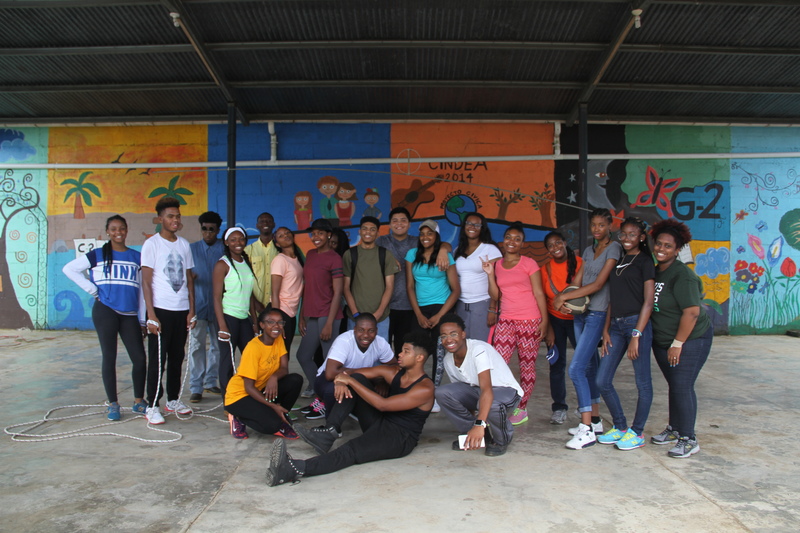
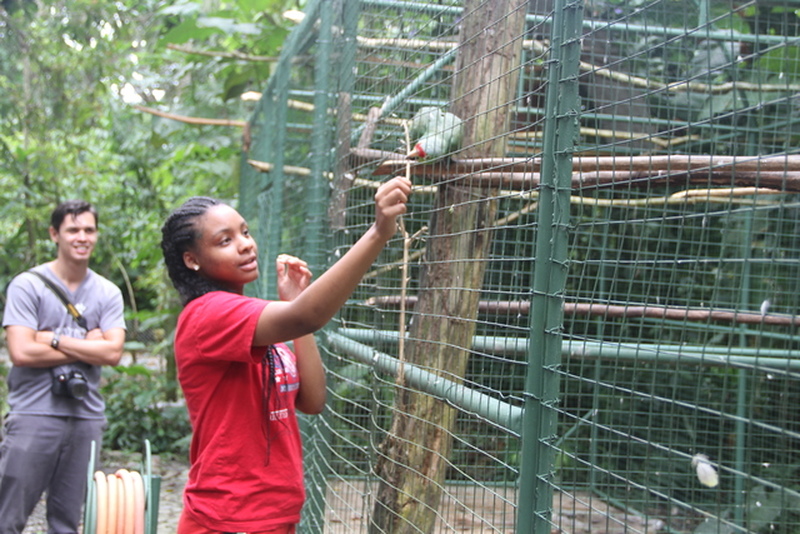
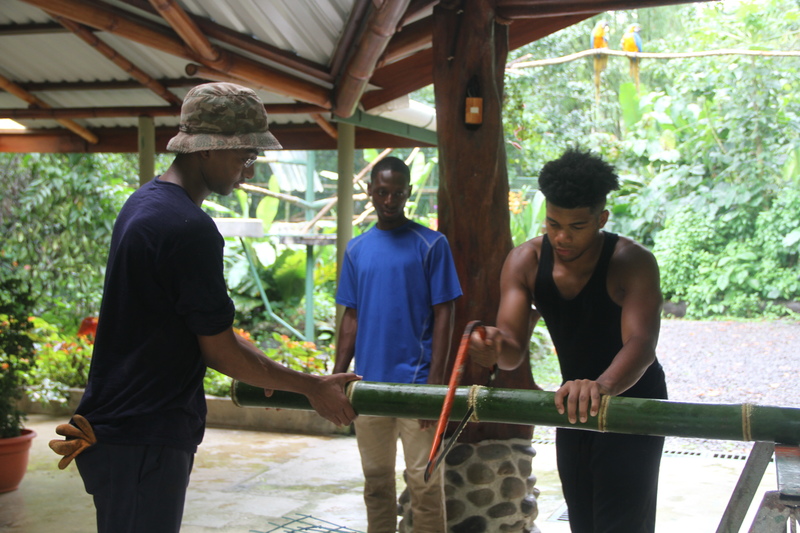
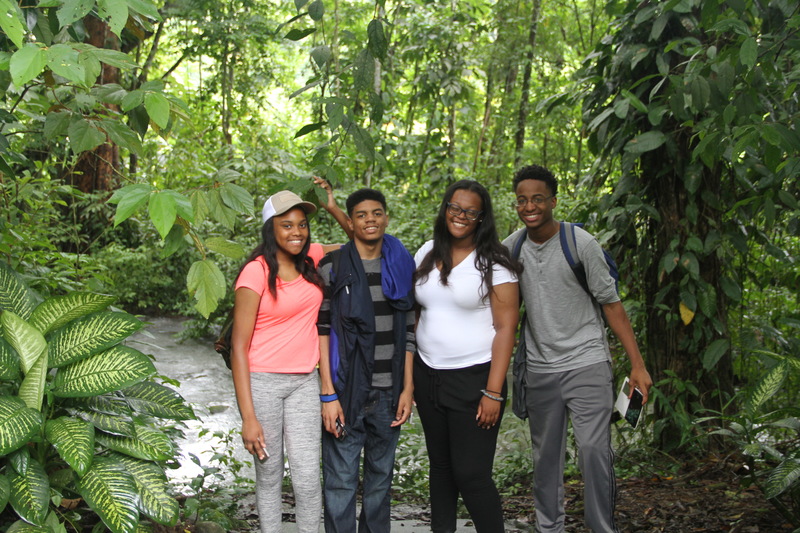
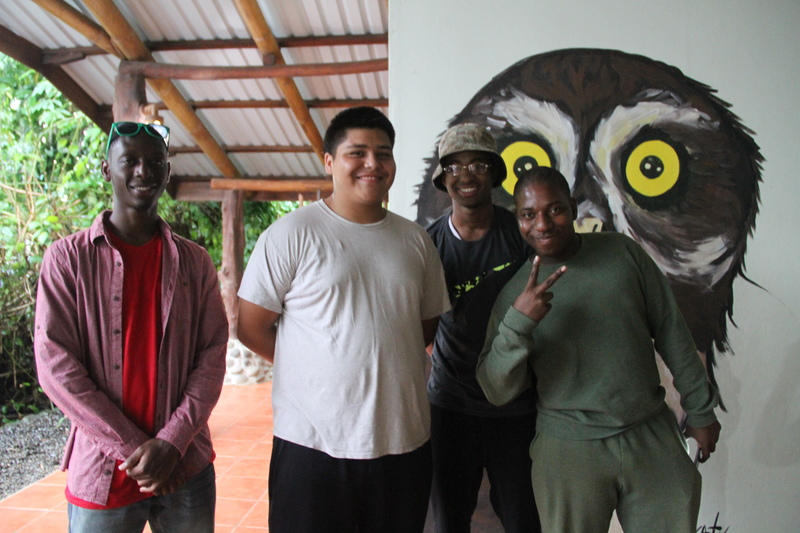
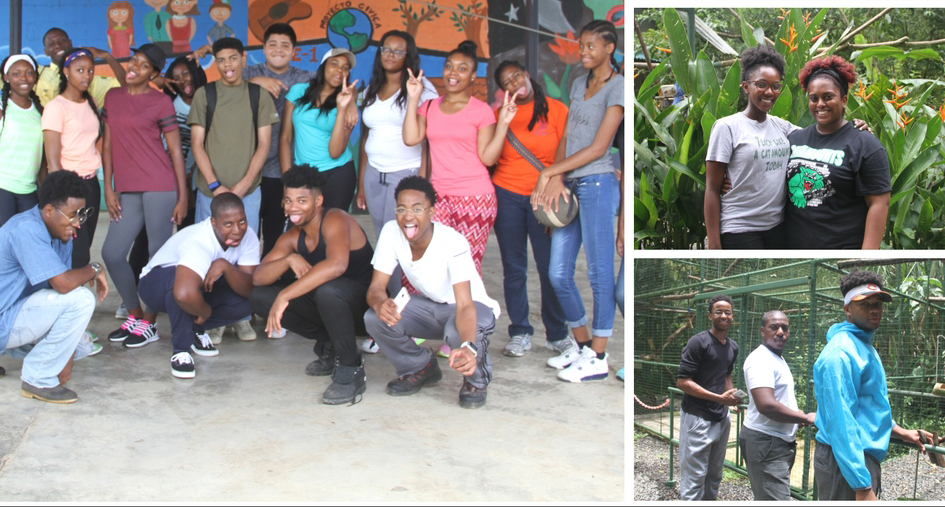
    Gary Comer College Prep volunteering at the Animal Rescue Center in Costa Rica: (clockwise from left) the whole group getting goofy at a local school; teachers Ife and Aiyeshia chaperoned the group; Darrion, Malik and Santrell cleaning enclosures.


    On Tuesday, December 6th, a journey that had started over a year earlier came full circle. Two seniors from Gary Comer College Prep, now in the throes of the college application process, presented at Foundations College Prep on a school night with a very important message:

    Going abroad changed my life, and it will change yours too.

    Sencere and Malik had volunteered for a week in August 2016, at Greenheart Travel’s Animal Rescue Center in Costa Rica, building and cleaning enclosures for rehabilitated animals that had been either sold on the black market as pets or found injured and brought to the center by locals. The students’ hard work would serve to give animals like peccaries and parrots room to roam while recuperating, in hopes that they could one day be released back into the wild.

    In support of their former Race, Class and Gender Studies teacher, Aiyeshia Wong, now the English teacher at Foundations College Prep, Sencere and Malik told a room of students and parents why the teens should commit to go abroad in the summer of 2017.

    students present about volunteering abroad
    Sencere and Malik, Aiyeshia’s former students, present to a new generation of student travellers from Foundations College Prep on what to expect on their upcoming volunteer program in Costa Rica.

    After months of fundraising thousands of dollars with the help of their teachers, Sencere and Malik spent a week in the rainforest volunteering with animals, living with local host families, and immersing themselves in a new language and culture. Their appreciation and passion for their experience served to motivate the new group of volunteers and help their parents understand why this was an opportunity their high schoolers couldn’t afford to miss.

    volunteering-in-costa-rica-1
    Busayo and Malik push wheelbarrows for moving gravel to build the foundation for a new peccary enclosure.

    Malik spoke about how the program had served as the perfect inspiration for his college application essays. “They want to see that you’ve been active, and my time in Costa Rica proved that I was involved!” He’s been accepted to 8 schools already and is waiting to hear from 6 more!

    Malik goes to work scrubbing monkey enclosures as Darrion hoses them down.

    Sencere reminisced about an excursion to a local Costa Rican school where they got to play with elementary-age students. It was a highlight of the whole experience for her, and seeing their facilities made her more appreciative of the access she’s had to good education and other resources.

    volunteering at a school in costa rica
    The Chicago teens meet their match: dozens of Costa Rican grade schoolers itching to play jump rope and basketball and get to know their American visitors.

    Sencere and Malik definitely warmed up the crowd. The parents were talkative and smiling. A couple were so excited, they asked if they could chaperone. One mother, when asked how she was feeling about sending her child abroad, humorously exclaimed, “Send ‘em!”

    The night was bittersweet. It was touching to see the Gary Comer seniors reunite with their teacher and inspire another class of students to take the leap abroad. It was also satisfying to see Aiyeshia’s incredible work come to fruition.

    Aiyeshia advises parents on how to best prepare their teens for a transformative week of volunteering and cultural exchange.

    It had been her personal goal to take student groups abroad, specifically students of color from the South Side of Chicago who might not otherwise be afforded the opportunity, and she’d accomplished every bit of it. Now, with more experience and the support of 19 former students forever changed by their experience, she was well on her way to impacting a new school and a new generation.

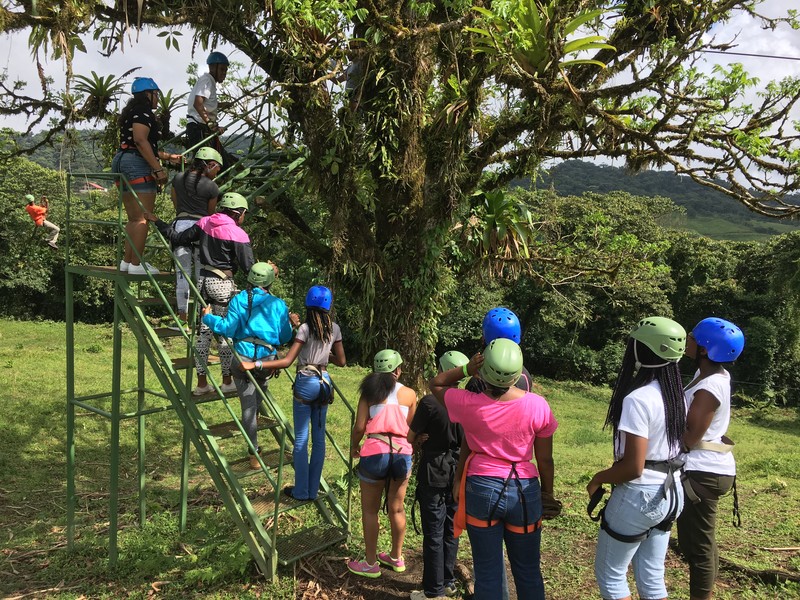
    Sencere poses in front of the misty Arenal Volcano on the way to La Fortuna for a day full of sightseeing, ziplining and hot springs.

    Has your life been transformed by travel or volunteering? Pay it forward and donate to help send Foundations College Prep students abroad!


  • Final Day in Costa Rica with Gary Comer College Prep Volunteers

    Final Day in Costa Rica with Gary Comer College Prep Volunteers

    At last, it was excursion day! We had a fun-filled, ambitious itinerary ahead of us which included zip-lining, lunch in La Fortuna, and hot springs. We had to rise early and leave by 7am to make our 8am start time. Our driver Adolfo was friendly and helpful, pointing out stunning river views and the symbol of La Fortuna, the Arenal Volcano, as we drove along. At one point, confusing signage caused him to take a wrong turn. He expertly backed up and turned around on the steep side road, nevertheless, the students squealed nervously and comically as we went in reverse, entertaining the chaperones.

    We got to the recreation center and decked ourselves out in zip-line gear. (One student, who will remain nameless, wore flip flops and had to have her shoes duct taped to her feet.) 😉 We took in some basic instructions and ascended to our first platform. The group was full of excited and nervous energy. Still, not a single student stayed behind. The course had 8 zip-lines plus something called a “Tarzan swing.” The first platform rose high above wide, open space, but once we went flying, the ground dipped far below us and we were launched deep into the rainforest. The trees passed close by on either side, leaves and vines of every shade of green imaginable whipping by, the sun breaking through the canopy in bright bursts.

    Just as we started getting comfortable zipping past tropical vistas, we came upon the Tarzan swing. Dun dun dun… And yet again, NO ONE SAT OUT! The group had a blast watching their friends one by one react hilariously to the shock of their stomachs drop as they were pushed from the platform into free fall, and then swung up high above a giant ravine. Students growled, yipped, begged, screamed – pretty much every possible combination was heard. The cheers and laughter were contagious and carried us through the rest of the course. On our final leg, the trees unexpectedly opened up and a breathtaking view of mountains and forest rolled out beside us. The amount of oxygen in the air was intoxicating, and just like that, we had to come back down to earth.

    We raced to lunch, a bus load of hungry daredevils ready to descend on the charming and popular tourist town of La Fortuna. We ate lunch and enjoyed free time exploring the shops looking for just the right souvenirs. After a couple hours, and several giant hamburgers that quenched students’ craving for American food, we were off to relax in the steamy aguas termales. Our destination had the feel of a spa, so naturally, we lounged around in style sipping fresh fruit smoothies and lazying around the 100+ degree springs. It was a much needed descanso (break) which left our bodies feeling warmed and ready for sleep.

    On our last night, the heat broke with a rolling thunderstorm, filling our houses with the sounds of cascading water. We ate our final meals together and shared our departing gifts. In the morning, as always, our host moms woke bright and early to feed us and give us a proper send off. As we made each stop along the 3 block radius of our little town, mothers, fathers, children, and pets shuffled out to say their goodbyes. Heartfelt hugs and kind words were shared, then the sleepy-eyed, young travelers piled inside, waving to their families who lingered watchfully on their front porches.

    Stay tuned for more stories from our adventures in Costa Rica and follow along on Snapchat and Instagram!

  • Day 5 in Costa Rica with Gary Comer College Prep Volunteers

    Day 5 in Costa Rica with Gary Comer College Prep Volunteers

    Friday morning, Alvaro and Adriana, the owners of our Costa Rican animal rescue project, gifted us with a special break – a visit to a local elementary school. We arrived and gathered in an outdoor play area to wait for the students. Grade by grade, they came out from their classrooms in their blue and white uniforms and lined up in front of our group, looking around excitedly and chattering amongst themselves. Once the first, third and fifth grades were introduced by their teachers, they were free to come join us, and they did so eagerly!

    The volunteers took to the young students with initiative. Busayo led a group out to the field to kick around a soccer ball, while Jenaro showed off his hoop skills with several younger boys in tow hysterically trying to steal the ball. Tyra led the little ones to the grass for sack races, and everyone else facilitated jump rope for the energetic students. All over the school, elementary-age kids and high schoolers played together. It was very natural, and gazing around the modest facilities, appeared highly rewarding for everyone involved. Later that day when we circled up, many said the activity was one of their favorite parts of the whole trip.

    After giving snack breaks to the children, we returned to the rescue center for lunch. We ate our home cooked meals, and then Adriana, intent on helping us understand the greater purpose of their sanctuary, gave us an interesting workshop on wild animal trafficking. We learned that it is a 20 billion dollar industry and watched videos demonstrating how the animals are captured, sold, and then most often suffer either because their owners don’t know how to care for them or give them up once they mature. Jenaro shared stories about the expensive, exotic animal products sold in Mexico, such as $5,000 crocodile shoes!

    After the presentation, we took baskets of fruits and vegetables around to each enclosure to say goodbye to the animals. A kinkajou had just been shown her new home and climbed curiously around every inch of her habitat. The spider monkeys gave us their hands one last, sentimental time. Finally, we thanked our kind and knowledgeable hosts at the center and went home to hot meals with our families.

    Stay tuned for more stories from our adventures in Costa Rica and follow along on Snapchat and Instagram!

  • Day 4 in Costa Rica with Gary Comer College Prep Volunteers

    Day 4 in Costa Rica with Gary Comer College Prep Volunteers

    On our fourth day in San Carlos, Costa Rica, a handful of students motivated themselves to rise and shine early enough for a morning walk to take photos of the lush vistas with volcanoes off in the distance. Others sat with their host families eating their desayuno and taking in new Spanish phrases specific to Costa Rica. One was “mae,” similar to “dude,” which is how most young Costa Ricans casually address each other. Another was a Costa Rican expression which advises that you “eat breakfast like the wealthy, lunch like a king, and dinner like a pauper.”

    At the animal rescue center, we once again divided into groups to conquer the work ahead. Half a dozen volunteers went to clean enclosures on hand and knee, scrubbing away with metal brushes. With harmless animals like the agouti and parrots, we got to interact up close and personal. The agouti, which looks like a capybara or a wild guinea pig, was very friendly, letting us pet her while she sneakily took visible nibbles of our shoes and the garden hose. More territorial creatures including the white-headed capuchin and spider monkeys had to be relocated to a smaller, attached enclosure while we cleaned. Nonetheless, they kept a close watch as they gracefully swung around their habitats. At one point, a capuchin monkey grabbed a hand full of Amber’s hair and got away with several strands.


    The second and larger group of students stayed under the central shelter, some painting wire fences green for enclosures to blend in with the natural surroundings, others making hanging toys for the animals out of bamboo and rope. The latter group sawed wood planks into pieces, drilled holes in bamboo cut the day before, then fed rope through the holes and tied knots to hold each part of the ladder in place. Finally, the students stuffed fruit inside the bamboo for the monkeys and parrots to find. Cheyenne and Fajr were brave souls, venturing into the raucous parrot habitat to hang the new playthings. Cheyenne even gained a reputation as the parrot whisperer of the group!

    After lunch, host mom Rosy gave us a Costa Rican cooking class! We split into three groups, the first cutting potatoes and other vegetables to make a flavorful picadillo, the second mixing and flattening dough for tortillas, and the third preparing a fried pastry with honey drizzled on top. The food turned out delicious, devoured in minutes by the entire group, and made for a pleasant break from the challenging volunteer work.

    We cleaned our dishes and packed up to go home. About an hour later, most of the group came by Rosy’s to finish the scary movie they’d started a couple days before. Once they left, Rosy’s house played 2 competitive rounds of Mexican Train, a dominoes game. Meanwhile, our gracious host and cooking teacher regaled us with stories of past volunteers. Over her 8 years hosting volunteers for the animal rescue center, Rosy has had more than 350 in her home from all over the world. Although she’s never left Costa Rica, she explained that hosting has allowed the world to come to her.

    Stay tuned for more stories from our adventures in Costa Rica and follow along on Snapchat and Instagram!

  • Day 3 in Costa Rica with Gary Comer College Prep Volunteers

    Day 3 in Costa Rica with Gary Comer College Prep Volunteers

    Breakfast was on point this morning, which was especially fortunate considering the group rolled out of bed a little extra tired and sore from their first day of volunteering. At Rosy’s house, we ate rice and beans, eggs, and homemade sweet bread, while others devoured Costa Rican pancakes with plantains and fresh fruit juice. It was a lively ride to the animal rescue center as the volunteers teased one another about not getting up for the morning walk they’d planned the night before. The majority of the group slept in, while overachievers like Darrion and Malik Jones got up for a scenic run, taking in the surrounding mountains and tropical panoramas.

    We arrived to the center and set to work on some very challenging expansion projects, continuing to shovel and move rocks for the new peccary enclosure as well as cutting wire to extend the parrot habitat. Eventually, lunch arrived, and with it came a fallen tree, which interrupted our electricity, followed by a hefty rainstorm. In the spirit of Pura Vida, we adapted to our new circumstances. Fajr, Malik and Cheyenne, sweaty from a hard day’s work, stepped out into the refreshingly cool rain. The rest grabbed their ponchos, and soon everyone was following a staff member with a machete down to the nearby river to fetch supplies for our next project.

    Ms. Hampton and Mrs. Wong suddenly heard shrieks of laughter and chaos coming from the forest and rushed over to find the students excitedly crossing the river. Their guide led them down the bank to hack away at long stalks of bamboo at least 15 ft in length! The students carried the bamboo on their shoulders, 2-3 volunteers per stalk, back across the river, up the ravine, and over to one of the center’s shelters. Without electricity, the staff taught the students how to cut the bamboo in pieces using hand saws. Those on the sidelines helped by holding the bamboo in place. The volunteers sawed more than half a dozen of the large stalks into 2-3 ft long pieces, which they would use in the next couple days to construct hanging ladders and toys for the animals.

    The students handled the trials and tribulations of the day well, especially with Ms. Hampton and Mrs. Wong’s guidance. Before heading home, they circled up to give shout outs to their fellow classmates for all they had accomplished and to recognize those who had taken initiative in leading the group. They cracked each other up as they shared amusing anecdotes from their hard day’s work.

    Finally, we loaded into the van to enjoy our evening relaxing with one another and our hosts. Busayo took advantage of Spanish lessons from his new host brother, while Santrell and Malik Jones’ little siblings tried scaring them by planting fake insects in their room and other goofy pranks. A bunch of students ventured out to discover more of the town and buy snacks from a nearby tienda, taking pleasure in the freedom to be together outdoors in their calm, new environment.

    Stay tuned for more stories from our adventures in Costa Rica and follow along on Snapchat and Instagram!

    Program-blog-button

  • Day 2 in Costa Rica with Gary Comer College Prep Volunteers

    Day 2 in Costa Rica with Gary Comer College Prep Volunteers

    Tuesday morning, we rose around 7 am to eat breakfast with our host families and get ready for volunteering. Pick up was supposed to be at 8 am, but as we waited in the front rooms of our Costa Rican homes, it became obvious that there was a delay. Sure enough, a protest against Uber by local taxi drivers had slowed down our chauffeur. As we would learn more and more each day, this is one of the many reasons for the Costa Rican expression synonymous with their way of life: “Pura Vida.” It translates to “pure life,” but also signifies a need to go with the flow and enjoy the moment.

    We made it to the animal rescue center around 9:30 am and started our tour with Adriana, one of the owners. She introduced us to every animal on the property, including peccaries (wild pigs), parrots, macaws, spider monkeys, a porcupine, an agouti (pictured below), and more. The center’s trails go in a giant circle with a new enclosure of animals every several feet and small bridges connecting the land over pools of the lagoon. Roaming free on land and water, we also took in sights of caimans, a snapping turtle, iguanas, herons, butterflies, hummingbirds, and of course, dogs and cats of various shapes and colors.

    As we went along, Adriana told us the stories of each animal, where they came from, how they got to the center, and whether or not they might one day be released. Their histories varied, from Perla the peccary who was abandoned as a baby and has become a people’s pig, rolling on her side for all to pet her bristle-y belly, to the rainbow-colored macaws who live for 80 years and once were pets, but no longer. Adriana explained that it is not enough to care for the animals if the Costa Rican people continue to bring more and more to the center every year. For this reason, they must branch out into educating their communities so less people will take in wild animals as pets as well as understand the tragic effects of the animal trafficking industry in their country.

    Once the tour was over, the students got their hands dirty, suiting up with work boots and gloves and grabbing tools such as shovels and wheelbarrows. Some students began working in the bird enclosures, painting them, removing debris, hosing and scrubbing the floors. Others helped prep for the new peccary enclosure by moving cinder blocks, shoveling sand and rocks, and mixing cement. It rained on and off in the morning, as we took a break to drink lemonade and snack on watermelon, but the afternoon was a cool and steady 80 degrees.

    Toward the end of the day, we learned about a neighborhood Zumba class! Half of the group was adventurous enough to sign on for that, while the other half decided to take advantage of downtime with friends. The latter part of the group met up as they walked from one host home to the next, meeting one another’s new families and exploring the neighborhood. Rumor has it, ten kids tried to watch a scary movie, but the furniture they sat on didn’t exactly hold their weight…

    Meanwhile, Ms. Hampton accompanied half a dozen ladies to Zumba. Upon arrival, it was clear that this was a true community event, with people from all over el pueblo coming together under the bare bones, outdoor shelter to shake what their mamas gave them. We even saw our chauffeur and the cook from the rescue center there, and everyone who came seemed to bring 5 of their closest friends and family. There was also an entire middle school group there, dancing along in uniform, and in formation! Many mothers held weights while juggling the complex dance moves AND watching their small children wandering nearby. Everyone seemed to know each other, and when it was over, the Zumba teacher thanked her “Chicago friends” for coming. It was difficult to catch on at times, but all of the Comer Catamounts gave it their best go, laughing and sweating equally hard along the way.

    After that, it was time to return to our respective homes, eat dinner, and get ready for bed. Some students caught up with family and friends, telling them of all the different animals they encountered and showing them the pets and rooms in their houses over video chat. We slept hard and long, knowing that the next day would be full of volunteering, rain or shine.

    Stay tuned for more stories from our adventures in Costa Rica and follow along on Snapchat and Instagram!

    Program-blog-button

  • Day 1 in Costa Rica with Gary Comer College Prep Volunteers

    Day 1 in Costa Rica with Gary Comer College Prep Volunteers

    After months upon months of fundraising and preparation, Gary Comer students left their school on the South Side of Chicago at 2 a.m. yesterday for O’Hare International Airport to start their week-long adventure volunteering at an animal rescue center in the rainforest of Costa Rica!

    It was a long and somewhat arduous journey with the 19 sleepy students and their 2 devoted teachers, Aiyeshia Wong and Ife Hampton. Nevertheless, not a complaint was heard throughout the 6-hour flight followed by a 3-hour bus ride to the northern part of the country.

    We arrived to the animal rescue center and were immediately greeted with a thunderous downpour, followed by a warm welcome and exclamations of “Pura vida!” from our hosts Alvaro and Adriana. We had just a brief introduction to the center, as it was time to get home to our host families where dinner was waiting for us. We watched as bold students like Jenaro helped lower our luggage from the roof of the van, one of the first Costa Rican customs we had the chance to marvel at.

    We piled in to one van, our suitcases filling another, and everyone was dropped off in groups of 2 or 3 with our 10 different host families. The evening was spent settling in and practicing Spanish as we got to know our hosts, many of which lived with their children, extended family, dogs, cats, and even chickens! Several houses finished their night playing a heated game of Uno, and finally, it was time to descansar (rest).

    The students hit the pillow hard, tired from traveling and their many new experiences. Surrounded by the rainforest on all sides, they fell asleep to the sounds of intermittent rain, wild birds, and chirping geckos.

    Stay tuned for more stories from our adventures in Costa Rica and follow along on Snapchat and Instagram!

    Program-blog-button

  • 6 Ways to Soul Search Before You Job Search

    6 Ways to Soul Search Before You Job Search

    Sigh, the job search. The process of applying for work can be exhausting and seemingly never-ending, but the more you do it, the better you get at it…or should, theoretically.

    One thing your job search NEEDS to be to spare you from returning to the drawing board time and time again is reflective. Here are some ways to soul search before you job search to ensure your hunt is as focused and beneficial as possible!

    1. What drives you?

    Ok, first thing’s first – your greater purpose. It’s not the easiest thing to define right off the bat, but it absolutely should determine where you look for work, so it’s a good place to start.

    There are many things that might motivate you, but in the world of work, it’s often a matter of either money or meaning. You might be able to have both, but honestly ask yourself which is your priority. If you can’t imagine working a job that isn’t tied to your core values and beliefs, you’re likely attracted to work that serves a larger cause. Start by researching non-profits. If your salary and security are your primary concerns, you might be made to climb the corporate ladder. If both seem equally important to you, look into mission-driven businesses.

    2. Make everything your business

    Especially early in your search, it’s worth learning something about every industry and field. Why? Because you never know how it might influence your path!

    Take academia, for example. You might have been the readiest person in your senior class to graduate and “never” return to a college campus, but taking a job at a university will give you firsthand knowledge of what it’s like to actually work in that environment. Love it or hate it, you’ll learn what you do like about it, develop new skills, find which areas you excel in, broaden the work experience on your resume, and maybe even discover an interest you never even knew you had.

    I don’t recommend purposely seeking out jobs you think you won’t like, but when you’re still figuring out what you want, be open to what comes your way and options you haven’t yet considered.

    To quote one of my favorite books on coming of age, The Defining Decade: Why Your Twenties Matter — And How to Make the Most of Them Now, “Forget about having an identity crisis and get some identity capital. … Do something that adds value to who you are. Do something that’s an investment in who you might want to be next.” In other words, you’ve got to commit to grow.

    3. Know your personality and your skills

    Are you a real people person, or are numbers your best friend? Do you thrive on a team or flourish by yourself? The answers to questions like these are essential and should directly impact the type of position you pursue.

    The widespread success of self-assessment tools such as StrengthsFinder and the DiSC Profile is undoubtedly due to the fact that they help consumers figure out what they want, where and how they fit into the work force. Many people’s first exposure to these tools, though, is at their workplace. I recommend drawing on these resources, or even inventing your own system for critically assessing your strengths, to learn who you are before settling into employment.

    Also, know that the answers to these questions might already be apparent to you, and maybe all you need to do is a little more research to realize where you fit. For example, I always knew that I was a people person who’s motivated by mission, not money, and excels in roles that allow me to write, be creative and independent. However, finding the workforce translation for that particular skill set was key. Once I realized that meant I am well-suited to work in outreach for a non-profit with a start-up feel, I knew where to look for work and the rest fell into place.

    4. Define your preferences

    By preferences, I mean the logistical and environmental aspects of your job. What type of schedule do you want? Are your goals more in-line with a typical 9 to 5 or an atypical setup, perhaps working nights or juggling part-time gigs? Do you enjoy working at a desk or desire a less traditional work setting? Do you dream of working from home?

    Many people don’t dare ask themselves those types of questions because they don’t foresee themselves being able to accommodate them, but how can you ever come close if you don’t at least decide what your ideal work life would look like?

    If you’re open to the realm of possibilities, then you have an endless configuration of options. Start by defining your ideal, and once you’ve begun applying, reevaluate and prioritize your preferences to find the best fit for you. Don’t get caught up trying to make yourself the best fit for the job without first considering if it meets your needs and preferences.

    5. Use who you know

    This one’s pretty simple but altogether crucial. When you learn how to use the connections you have, you begin to understand how the world of work functions. It goes beyond the job search. In my role as Outreach Coordinator with Greenheart Travel, I must endlessly draw from the connections I’ve made to continue growing and building my network.

    Emailing friends of friends, inviting them to coffee, engaging new contacts in conversation, following up with a thank you, and asking to be introduced to others are all invaluable ways to practice networking. The conversations you’ll have also serve to teach you more about other industries, skill sets, and preferences.

    By hearing from others how they got to where they are now, you can start to see the endless possibilities of your own journey and piece together which parts of yourself you still need to explore to find what fulfills you.

    6. Travel

    Meg Jay, author of The Defining Decade, writes, “Traveling in a third-world country is the closest thing there is to being married and raising kids. You have glorious hikes and perfect days on the beach. You go on adventures you would never try, or enjoy, alone. But you also can’t get away from each other. Everything is unfamiliar. Money is tight or you get robbed. Someone gets sick or sunburned. You get bored. It is harder than you expected, but you are glad you didn’t just sit home.”

    There are few more eye-opening experiences than those which come with travel. Go alone and become more self-reliant. Go with friends and learn to care for others. Go with family and discover your roots. Go for work and learn to teach, navigate ambiguity, and serve as a leader. Go, and you’ll learn much of what you need to know about yourself for not just your career, but your life.

    You have the greatest potential for growth when you step outside of your comfort zone. For this reason, stepping into another culture is always a formative experience. When you add working in a new country, the need to be resourceful in order to surmount unique challenges makes your growth exponential.

    In whichever way you choose to soul search, let it inform the type of work you pursue. Aligning your job with your personal goals and priorities will make it feel less like a job and more like a career you can invest in.

  • Going International? Here’s Your Checklist!

    Going International? Here’s Your Checklist!

    Leaving the country for most any destination is exciting! Just the thought of crossing a border sounds mysterious, adventurous, life-changing. When you were a kid, maybe it was watching with anticipation for a road sign announcing your arrival in a new state. Now, it could be stepping foot outside the airport into a whole new country just beckoning for you to explore!

    Whatever it feels like to you…

    …the moment you arrive on new ground is one you’ll want to savor. So if you have an appetite for far off places that require you to convert your money and your electrical appliances, then keep it simple with this handy dandy checklist for going international!

    The essentials: passports and visas

    Let’s start here. Unless these biggies are squared away, you aren’t going anywhere.

    First and foremost, do you have a passport, and is it expiring anytime soon? You’ll absolutely need one if you’re traveling outside of your home country, and if you’re a U.S. citizen, some countries require your passport be valid for at least 6 months beyond the dates of your trip. The U.S. Department of State website has all the information you’ll need on how to apply for or renew your documents, including how to expedite the process if you’re in a hurry.

    The same site can also help you figure out if you need a visa to enter your destination country on their Country Specific Information page. While you’re there, it’s also a good idea to enroll in STEP, the Smart Traveler Enrollment Program, a free service which allows you to register with the local U.S. Embassy or Consulate so they can help you in the case of an emergency.

    Copy important documents

    Woah, chill!! All I’m saying is to scan and make PDFs of a few crucial docs such as your passport, visa, insurance cards, and prescriptions.

    You can also send yourself an email with emergency contact numbers and credit/debit card information to keep it private but at your disposal for emergencies.

    Call your bank

    If you’re on your game and call a few weeks ahead of your departure date, you can request your bank order currency for you from the country you’re visiting. This way, you can pick it up at your local branch before you head abroad. If you like to plan ahead, you’ll love the feeling of rolling up in Dubai or Seoul with dirham or won in hand.

    And while you’re on the phone, be sure to put an alert on any and all accounts you plan on accessing while abroad. If you don’t, you run the risk of your account being placed on hold; your bank does this to protect you from potentially fraudulent charges. It can be a life-saver in the case of actual fraud but a real buzz kill when you’re determined to get your shop on and make friends back home jealous of your ajumma pants and silk kimono.

    Call your phone company

    Depending on the length of your trip and your personal preferences, you may or may not even need a phone while abroad.

    Either way, it’s a good idea to unlock that sucker before you get on the plane so you have the option of switching SIM cards once you arrive. (Newer models such as iPhone 5 and later automatically come unlocked.)

    If you can’t hack being disconnected, then calling your service provider is a good place to start. A good question to ask is: what will I be charged for calls, texting and data in my destination country? Even if you don’t think you’ll use your phone from home, it’s a good idea to call ahead and find out the associated fees so your phone company doesn’t bill you like…

    If your provider is going to charge you roaming fees, you could be better off either using wifi to communicate via email, Skype, or What’s App or getting a local SIM card once you’re abroad. If you have T-Mobile, you can opt for free, unlimited international roaming data and texting.

    Do a little research

    At Greenheart Travel, we’re definitely big on knowing what you can before you travel, particularly when it comes to the culture. Learning some key phrases in the local language, common customs and gestures, and the currency conversion rate will relieve you from having to deal with those stressors upon arrival. No offense, but…

    SO, use whatever preparation method works best for you, and consider trying some of the ideas below from our staff. Besides, researching a trip is fun and will get you totally stoked for your upcoming adventure!

    1. Read local newspaper articles, start a book or watch a documentary about where you’re going.
    2. Bookmark or print maps, a cheat sheet of helpful phrases, and basic info on must-see sites and activities so you can continue your research on the go.
    3. Start a journal, record your pre-departure reflections, and continue writing along the way for a one-of-a-kind souvenir.
    4. Getting into it?! We thought you might. 😉  Then look into your host country’s general perceptions of your home country, its current political or social climate, and their taboos for some extra insight.

    One of the most important parts of your pre-departure research is figuring out which tourist attractions you need to book ahead of time. Sites like Alhambra Palace in Granada, Spain get booked up months in advance. This isn’t a necessity for every trip, but if you only have a number of days in a particular place and are hoping to see the most popular museum in the city, it’s a good idea to make advance reservations, or risk…

    Depending on your destination, you may also need to book accommodations in advance. If you’re headed somewhere like Iceland where it’s only light out for half the year or a small town like Bern, Switzerland where hotels are few and far between, you best plan ahead, or prepare to sleep like this…

    It’s also a good idea to check the CDC (Centers for Disease Control and Prevention) for vaccination recommendations. This is the place to go for expert opinions, but if you prefer speculation, then network news will happily teach you how to dougie with your Purell!

    Buy power converters

    Good luck charging your electronic devices in another country without power converters. I'm talkin' 'bout how outlets look different in other parts of the world, so if you're not sure what you need, I recommend going with a universal converter, which you can order online or pick up from major supply chains like Bed, Bath & Beyond. Get multiples if you want to charge more than one device at a time. Too busy globetrotting to write this all down? Download our International Travel Checklist and stick it to your fridge for quick reference any time you're headed abroad!

  • Tony Marsh: How a Love of Language Became a Career

    Tony Marsh: How a Love of Language Became a Career

    Tony Marsh is an entrepreneur who has made a business out of his love for teaching languages. He is the creator of the Tony Marsh Method, an innovative, matrix-based approach to language acquisition. His career shows a potential path for anyone interested in what might come after teaching abroad.

    How did you get started as a language teacher, and what do you teach?

    I was an Arabic Cryptologic Linguist for the US Air Force, and during my Arabic training, I began tutoring other students. When I left the military in 2009, I began teaching Spanish, Portuguese, Arabic and English to adults, corporations, and government and military organizations such as the FBI and Navy.

    Why are languages interesting to you? Can you tell us the story of how you discovered your love of language?

    I didn’t begin seriously learning a language other than my first language English until I was 17. At that time I began dating a girl who was Mexican and spoke mostly Spanish. I realized at that time that it was fun to learn the language sort of like a puzzle, and I enjoyed being able to communicate with people that I might not have been able to communicate with otherwise.

    I enjoy how learning new languages changes the way I think about things. When a language has a “perfect” word for something – and sometimes it’s a word or concept that doesn’t exist in other languages – you begin to recognize that concept more. It’s like the Latin maxim ‘to name is to know.’

    I feel like new languages add complexity to the ‘colors’ of life, or the way you perceive.

    In a few sentences, what is the Tony Marsh Method, and how did you come to develop it?

    My method is inspired by the shape of a tree. Topics branch out into verbs; verbs branch out into vocabulary.

    For example, if your topic is movies, then your verbs might be ‘I like…’, ‘I watch…’, or ‘I have seen…’ etc. Then you complete the sentence with vocabulary, such as: ‘…movies’, ‘…actions movies’, ‘…documentaries’ and so on.

    Add the second person question form of the verbs (‘Do you like …?’, ‘Do you watch …?’, ‘Have you seen …?’, etc.), and you’re having a conversation.

    I use a matrix to help visualize this process, and I’ve had great results with it both teaching students and teaching myself. You can have a complete conversation on a variety of topics, and at various levels of grammar within a few minutes of beginning to learn a new language.

    Using this system, my FBI students scored a 1.5 out of 3 in Arabic in one month (3 is complete proficiency, and they started at 0. Typically that would take over a year.)

    Have you lived abroad and did you notice a difference in your language acquisition?

    I lived in Brazil for about 3 months, and it was a very fertile time for learning language, and for gaining cultural experience. Living abroad, you are often forced to use the language because there is no other way to communicate. At that point your reluctance to make mistakes goes away, and all that matters is communication.

    I find that as a teacher it is important to recreate the need to communicate, because without it, learning language can become simply an academic or intellectual exercise rather than an exercise in survival like it is when abroad.

    In a classroom setting, you can create the need to communicate by prohibiting the use of the first language, and also just by using questions to create conversation, which requires students to produce.

    What advice would you give to aspiring language teachers, especially those teaching TEFL or ESL?

    My advice is to just be their conversation partner.

    No matter what their level, you can still just be their conversation partner. Use the language to share information, authentically, even if the student only has a few words.

    Through conversation, you are inviting students to express themselves authentically. They don’t need to know ALL the words, they just need to know the words they need to express themselves.

    Learning to speak a new language is like learning to ride a bike: it’s something you have to actually do in order to learn it. So by teaching students how to converse and letting them practice conversation, they learn how to express themselves authentically in the language, which is the goal.


    How does someone know if they’d make a good language instructor? What traits do they need?

    I think anyone who has the motivation to help people learn language, and has a love for language and teaching, can be a teacher. I don’t think there is a particular gene that qualifies or disqualifies anyone. It’s all about patience, motivation, care, and experience (which you gain as you go.)

    What is the first step someone should take in starting their own language business?

    First, decide exactly what it is that you want to do. Are you a teacher? For kids, teens, adults, business people, or test preparation? Are you a good manager who could hire teachers and coordinate training?

    Once the business model is established, a good online presence is useful, and in my experience, making connections with other people in the field has been very useful.

    Ultimately, the quality of the service is most important.

    What are your long-term goals for the Tony Marsh Method?

    I want the entire world to have the chance to at least understand the principles that I’m espousing; namely, that you learn a language by using it because you need it, and that a language is a matrix.  After understanding and considering the complete ramifications of those principles, people will be free to agree, partially agree, or disagree; but I want to give people the chance to see things my way, on a global scale.

    If a magical genie could make you fluent in one language instantly, which would you choose?

    I would go with Jamaican Patois.

    I am interested in creole languages, and I think the English of Jamaica sounds cool and seems like it has room for creativity in terms of how you express things.

    Intrigued by Tony’s advice on how to run a language business? Interested in learning more about the Tony Marsh Method? Tune in June 4th at 9pm CT for “Language Teaches Itself” – Q&A with Tony Marsh. Sign up now!