Author: Ava Anderson

  • Culture Shock; The Invisible Cloak’s Shadow

    Culture Shock; The Invisible Cloak’s Shadow

    I was staring blankly at the empty notebook pages I was to fill up with notes in a language I did not understand, when suddenly, out of the corner of my eye, I saw a dark shadow move towards me. ¨This is what the end feels like,¨ I thought. I had left home barely two weeks ago, and I was already kicking myself for thinking this was a good idea.

    The shadow moved closer. ¨I am not an adventurer. I am a sixteen year old girl who let her ego send her part-way across the world for ten months.¨ The shadow stood before me, and before I could decipher what was going on, the notebook in my hand transformed into a college rejection letter. ¨How am I supposed to pass my classes if I can’t even speak the language they are taught in?¨

    My mind was reeling over all negative possibilities; being kicked out by my program for having bad grades, needing to retake my junior year of high school, slaughtering my GPA and being turned down by colleges. The shadow churned these thoughts around and around in my head.

    The Many Disguises of Culture Shock

    This culprit goes by the name of Culture Shock. Its mastery of disguise puts even the invisible cloak from Harry Potter to shame. It appears in its many forms, including stress surrounding school, cultural assumptions or generalizations, trouble focusing, and homesickness, and attacks when least expected. There are many temporary remedies to dull its effect, but the only forces that can truly defeat it are time and courage.

    The idea of going through Culture Shock is often rejected by many people, especially in the first few days of extended travel. Prior to your departure from home, you conjure this image of yourself leaving your comfort zone to see the world, and in the first few days this is usually what it feels like. Everything is new and exciting, and curiosity has become your new best friend.

    butterfly

    When asked about Culture Shock, you brush it off as something other people experience or a side effect that will come later, and this is usually because your are in its first phase: ‘The Honeymoon.’ You are in love with your new home, and adventure is everything you had anticipated it to be. You have built this skyscraper of expectations, and all that is currently around you matches it perfectly.

    Then, as time progresses, this tower begins to falter. The skyscraper gets shorter and the shadow gets larger, until all that is left is crumbling plaster and a nagging shadow that has replaced what once was curiosity. This is the gateway to the ‘What am I doing here?’ phase.

    At around this time, Culture Shock whips out persuasion, one of its most hostile skills. It convinces its victim that it will never leave, and that whatever they came to gain or achieve is not worth the effort. It also enjoys leaving reminders throughout your daily life. That dog that is usually sleeping on the corner, that was once so cute, now brings to mind the cat you have at home. It does not matter if you were actually fond of the cat in the first place; Culture Shock just likes to make is apparent that the cat is missing from your current life. The flowers outside the window now remind you of your garden in your home country, and that makes you recall playing with your siblings in the yard, which reminds you of how much you miss your family. Culture Shock makes it difficult to see things as they are – flowers as flowers and dogs as dogs, not as broken pieces of a shattered life you will never return to.

    This is when you must face the challenge of not turning away. If you turn away, Culture Shock has succeeded in defeating your will to achieve your goal, whatever that may be.

    Stay Strong Through the Shadows

    Having the courage to not run will allow time to work its magic. This is crucial, as time is the only thing that will bring you to the ‘Where’s the party at?’ phase. At this point, you begin to feel more at home in your host country. Language barriers have typically been lessened (if they existed in the beginning), and you are starting to develop a familiar schedule. You are likely adapted to life with your host family, and thoughts of missing home occur less often or it has become easier to manage those thoughts. Studies at Columbia University find that majority of students hit this phase around 3-4 months, but that, since everyone and their experiences abroad are different, it is hard to identify a consistent time.

    host sister in costa rica

    As I am just now entering my second month abroad, I am still sorting through the remains of a demolished skyscraper, trying to find curiosity hiding among the ruins. I accept that all I can do is wait, and that eventually, my state of mind will be altered because that is what happens with time. Notice how every stage of Culture Shock is a ‘phase.’ It is not a permanent reality, but a string of moments that will pass quicker than you expect them to. As long as you have the courage to wait, you can find hope in the fact that you, and everything that drove you to leave your home country, will overcome Culture Shock. Shadows can be intimidating, but they cannot hurt you.

    Here are a few photographs of the small things, and moments that make me smile:

    crepe friends in costa rica


    About the Author:

    My name is Rachael Maloney, and I am a curious venturer fueled by good books and foreign food. I am currently spending my junior year of high school in Costa Rica, doing my best to absorb everything my 10 months abroad have to teach. I look forward to carrying these lessons with me for many years to come, and, in the meantime, sharing them in online articles for those who are interested. Follow Rachael on her adventure and read her stories here.


  • El Día de la Madre; Celebrating Mother’s Day in Costa Rica

    El Día de la Madre; Celebrating Mother’s Day in Costa Rica

    Mother’s Day in the United States is a holiday reserved for fancy dinners, flowers, and cards in appreciation of the hard work moms put into raising their children, but this concept takes on a new meaning in Costa Rica. Here in Costa Rica, people do not shy away from submerging their mothers in gifts, parties, and an array of traditional foods. Some practices may mirror those found in the United States, but the extravagance and extent of these customs yields a vast contrast.

    Mother’s Day, or El Día de la Madre, is not simply a sentimental evening, but an entire celebration truly devoted to pleasing and thanking moms for all that they do throughout the year.

    In Costa Rica, El Día de la Madre is among the most important holidays of the year, runner up to Christmas (Navidad), Anexion a Guanacaste, La Batalla de Santarosa, and El Partido a la Anexión de Nicoya. Children take the day off from school and many parents stay home from work. They present gifts and cards to their moms and wives, the home is often cleaned, and flowers brought to cemeteries in dedication to deceased mothers.

    Special meals are prepared, including vigorones, tamales, chicharrones, and gallo pinto. It is not uncommon for parties to be held, and for ´Mother’s Day´ to become ´Mother’s Days.´ One day is spent with grandmothers while the next is spent with younger parents and their children. Entire towns participate, with people thanking the parents they pass on streets and in shopping centers. Costa Rica acknowledges the fact that it takes more than a simple ´thank you´ to commemorate the year round, 24/7 job many mothers take on.

    As I spent time with my host family and walked around the town of Miramar, Costa Rica, I was able to witness these Mother’s Day practices. The first thing I noticed when I awoke in the morning was the music coming from our neighbor’s party down the street. When I passed by their home later that day, I was greeted by balloons lining tables filled with pastries, and family members playing volleyball in the yard.

    After a lunch of home prepared vigorones, salad, yucca, and tamales from my grandmother, my family and I ventured into town. I saw groups of people entering the local cemetery with flowers and other gifts. Since my family does not have a car, it was difficult for me to access nice quality, yet affordable, gifts for my host mom. We all agreed to go shopping together on El Día de la Madre, and to let my host mother free roam in the stores. We later arrived back at our home with my host mother and her new pair of shoes in tow.

    tamales in costa rica


    As an exchange student, I must confront the fact that I am a guest in someone else’s house. The appreciation I feel towards my host family for welcoming me to this new country cannot be expressed through store bought presents, which is why homemade cards are so important. Even though it was slightly difficult with the language barrier, the happiness my host mom expressed in reaction to a handwritten letter was more than any pair of shoes could have bought. This is the experience prized on El Día de la Madre in Costa Rica. It is about the appreciation and joy one gets from parties filled with loved companions and the home cooked food that was eaten during childhood, not materialistic assets.

    Although El Día de la Madre exists in both Costa Rica and the United States of America, the emphasis on the holiday in Costa Rica is entirely unique to the United States. This sometimes multiple day long celebration has a much more personal and traditional energy, with many classic meals and parties. It is more than a fancy evening or bouquet of roses; it is tables filled with pastries and balloons, and living rooms crowded with loved friends and family members. Giving chocolate and flowers on Mother’s Day may be universal, but the extravagance and love that these, and other, gifts are delivered with can only be found in Costa Rica.

    About the Author:

    My name is Rachael Maloney, and I am a curious venturer fueled by good books and foreign food. I am currently spending my junior year of high school in Costa Rica, doing my best to absorb everything my 10 months abroad have to teach. I look forward to carrying these lessons with me for many years to come, and, in the meantime, sharing them in online articles for those who are interested. Follow Rachael on her adventure and read her stories here.

  • Language Immersion: The First Two Weeks in Costa Rica

    Language Immersion: The First Two Weeks in Costa Rica

    No number of online orientations or packing tutorials could have prepared me for the first two weeks of my time studying abroad in Costa Rica, as nothing can truly ready a person for something they have not experienced. Every day has been a new adventure, filled with different sounds, smells, sights, and emotions. During my first two days in Costa Rica, the feelings that come with being immersed in a new language were still foreign to me.

    The students who surrounded me in the orientation were fellow English speakers; when I did not understand something said to me in Spanish, neither did many of them. I was curious about the world around me, but still protected by the safety of common language. After meeting my host family, this shelter began to quickly deteriorate, leaving me very vulnerable, but determined.

    My host siblings Kachelle, 6 (left), and José Fabio, 13 (right).
    My host siblings Kachelle, 6 (left), and José Fabio, 13 (right).

    I believe my host family anticipated more from my Spanish speaking abilities, because after about five minutes of uncomfortable silence mixed with futile attempts at conversation, my host mother looked to her husband and said my Spanish was ¨no good.¨ This introduction to immersion was the blunt awakening I needed to realize that there is no easy way out; no second language Spanish teacher would be rounding my grade up to create a better appearance, and no bell would be ringing to return me to an English speaking community.

    During the first few days with my family, I attempted to converse as much as possible, but it was difficult as there was so little I knew how to say. All I could do was repeat how beautiful things were, and listen. This proved to be for the best, as focusing on other people’s conversations has helped me identify local slang and expressions that are not taught in second language classes. Through hearing native Spanish speakers converse, I have realized that there is no consistent way to measure fluency in a language.

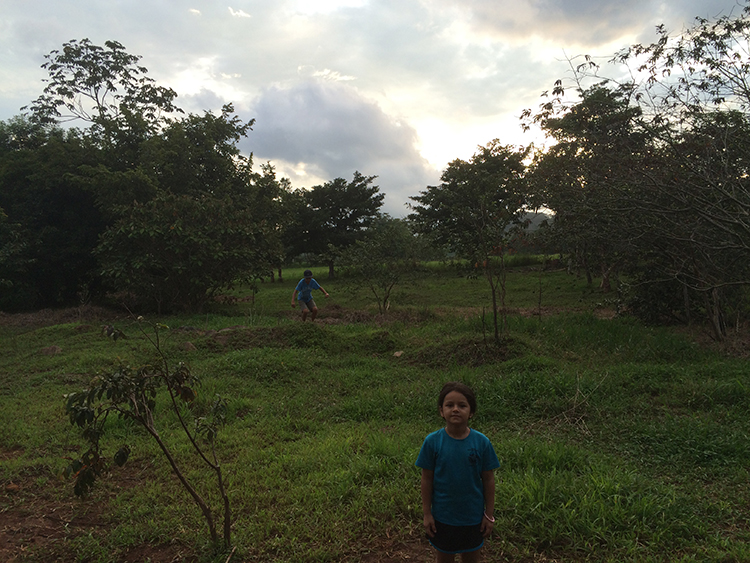
    Me and my host siblings exploring the horse pastures at the end of our street.
    Me and my host siblings exploring the horse pastures at the end of our street.

    If I had been asked in my Spanish class in the United States how old I was or how long I would be staying in a certain location, I could answer without any hesitation. Yet immersion presents language factors I had not considered prior to my departure, including local slang and the many ways in which a person can ask a single question.

    School is the force that has pushed me to initiate conversations. No one will help me buy my books or show me where my next class is unless I ask, and the time restraints in my schedule force me to act upon my questions rather than put them off until later. Even though I have to be self sufficient, other people are more than willing to help me. One of my primary fears surrounding school was that I would not have friends, as I cannot sustain a conversation, but that fear has proven to be senseless.

    It is practically impossible to not be welcomed into a group of people. Students and teachers are curious about my life in the United States of America, and they try their best to help me understand their questions. People enjoy hearing me say local phrases with my accent, and are eager to learn English vocabulary. I am surprised by how understanding teachers are about me attending a Spanish speaking school as an English speaker. They realize that I am here to learn a second language, not geometry or social studies.

    As someone who cares deeply about grades, knowing that they will not be as high as they would be in the United States has been difficult. Although I am evaluated on a pass or fail criteria based on aspects other than just test scores, it is a process training brain to prioritize learning a language over letter grades. Immersion in school introduces many hurdles that I had not anticipated before my arrival, but learning to deal with them as they come is worth the moments of frustration.

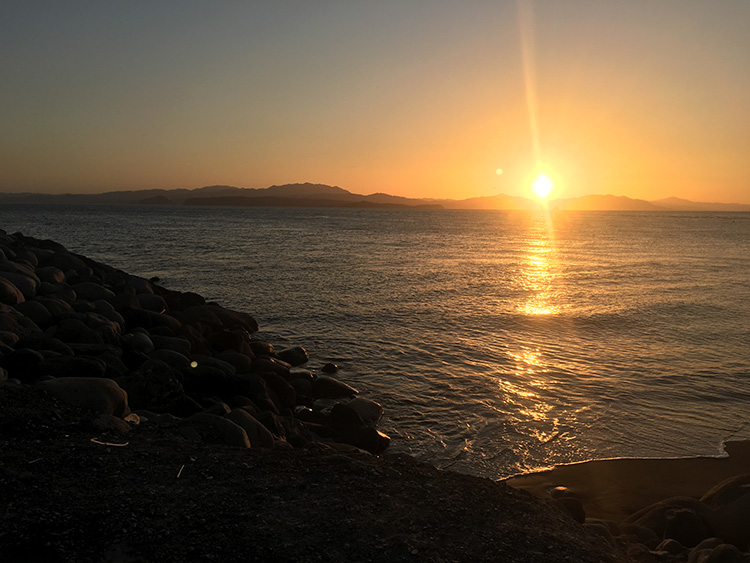
    The view from my host family’s house.
    The view from my host family’s house.

    It is hard for me to document my speaking and comprehension progress when there is still so much I do not understand. I am regularly having to remember not to be hard on myself, because it is difficult to constantly be patient. People will get annoyed with me and I will get annoyed with myself, but learning to not place blame on anyone for emotions that cannot be controlled is as advantageous, in my opinion, as speaking a new language fluently. Language is a tool that can be used to communicate and gain awareness of other cultures, but the process of learning a new dialect can be just as valuable as the language itself.

    About the Author:

    My name is Rachael Maloney, and I am a curious venturer fueled by good books and foreign food. I am currently spending my junior year of high school in Costa Rica, doing my best to absorb everything my 10 months abroad have to teach. I look forward to carrying these lessons with me for many years to come, and, in the meantime, sharing them in online articles for those who are interested. Follow Rachael on her adventure and read her stories here.