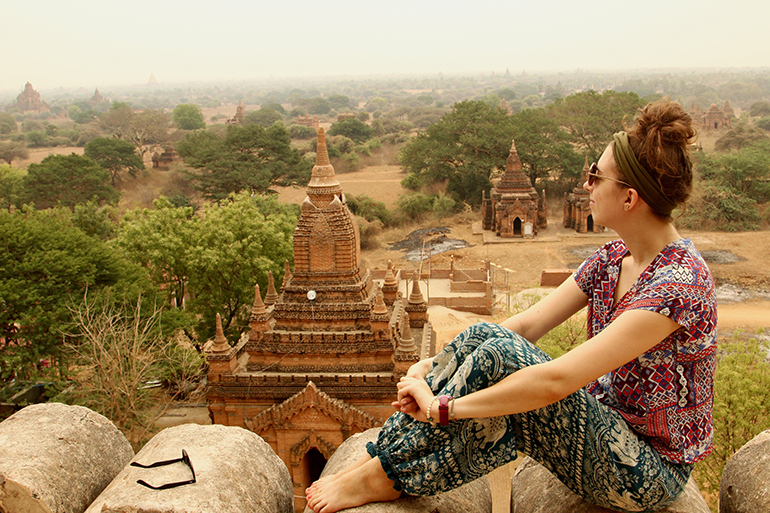
Author: Elaina Tenter

  • Photo Essay: 4 Ways to Spend 48 Hours Outside of Hanoi

    Photo Essay: 4 Ways to Spend 48 Hours Outside of Hanoi

    One of the best things about living abroad is the readily accessible travel. Taking a weekend getaway out of the city or even just a quick day trip on my day off has never been so easy and enjoyable. Since I work part-time as an English teacher, my schedule is also pretty flexible so making time for travel is relatively simple.  

    Hanoi can be a very overwhelming place at times. Getting out of the city and away from the traffic has been greatly beneficial to my general well being while living abroad. Luckily, Hanoi is perfectly situated in the north of Vietnam, very close to many weekend getaways. You can explore the beaches, the mountains, and the rice fields, most of which are no more than a 4-hour drive away.

    While there are still many places I have yet to adventure to, below are four destinations my boyfriend and I have explored since moving to live and teach in Vietnam. All of these can be done under (or at least close to) 48 hours, and I promise will leave you feeling rejuvenated and filled with an exuberance for travel!

    A pagoda in Vietnam.
    Perfume Pagoda in Vietnam. Photo by Ali Haymes.

    Perfume Pagoda: A Perfect Day Trip

    For our first time out of Hanoi, we chose to take a short day trip on our day off to the Perfume Pagoda. Located only an hour or two outside of Hanoi, this is a perfect excursion if you have less than 24 hours. We signed up for a group tour and departed at 8 am with about 10 other people. After the short van ride into the country, we took an hour long boat journey. The boats were small, similar to canoes and paddled by some very strong women. This was the first time we encountered the mountainous Vietnamese landscape and it was breathtaking.

    Even though the boat ride wasn’t the most comfortable and we were caught in the rain, the views were one of a kind. When we arrived we walked up the mountain for a bit to the first pagoda (different than the Perfume Pagoda). We had a delicious traditional Vietnamese lunch and then headed up to the top of the mountain. You can take a gondola or hike up, but the views from the gondola were pretty amazing.

    A cave near Perfume Pagoda in Vietnam.
    A cave near Perfume Pagoda in Vietnam. Photo by Ali Haymes.

    The Perfume Pagoda was tucked away into a massive cave.  I had never seen anything like it, with shrines and statues deep underground and the stalactites lit up by hundreds of candles. After exploring, we headed back down to the bottom and took the boat back. Overall, it was a really great little trip outside of the city and only took about 10 hours, perfect for anyone who has one day to spare.

    The scenery of Cat Ba, Vietnam.
    The stunning scenery of Cat Ba, Vietnam. Photo by Ali Haymes.

    Cat Ba: A Priceless Experience

    After about two months in Hanoi, we were ready for our first big trip out of the city. Cat Ba, a slightly less touristy version of Halong Bay, is about a 4-hour journey away that consists of two buses and a boat. The main attraction of Cat Ba and Halong Bay is the stunning limestone structures that fill the ocean. When you go to Cat Ba, you will still travel through Halong Bay on the boat tour, but the city is less touristy and trips from here seem to offer more (and cheaper) adventurous activities.

    The landscape around Cat Ba, Vietnam.
    The landscape surrounding Cat Ba, Vietnam. Photo by Ali Haymes.

    We set off early in the morning with Cat Ba Visions to cruise around the bay, stop for a swim, and sunbathe on the top of the boat. They prepared an excellent lunch before we embarked on a kayaking excursion through multiple caves. Even just sitting on the boat was entertaining because of the landscape that surrounded us.  

    Rock formations in a bay in Vietnam.
    A craggy look at the bays of Cat Ba and Halong in Vietnam. Photo by Ali Haymes.

    As part of the tour, we spent the night on a floating house in the middle of Lan Ha Bay, similar to the structures that many Vietnamese people live on in this area. At night, we also got to kayak to see the bioluminescent plankton. I was unable to take a picture of this but it was a priceless experience.

    Kayaking in a bay in Vietnam.
    Ali Haymes kayaking at Cat Ba, Vietnam.

    The next day, we headed back to Cat Ba and spent the rest of our afternoon cruising around on a motorbike and basking at a mountaintop pool. In total, we spent a little over 48 hours on this trip and it was the perfect amount of time. I would highly recommend traveling here for two days!

    A scenic view of Ninh Binh, Vietnam.
    The gorgeous scenery of Ninh Binh, Vietnam. Photo by Ali Haymes.

    Ninh Binh: A Taste of Nature

    For our third excursion, we traveled about three hours south of Hanoi to Ninh Binh. This is a great place to get a taste of nature not too far from the city. We only had 24 hours, but we were up for the adventure. Though you can take buses here, we chose to drive ourselves on a motorbike! It wasn’t the most comfortable way to go, to say the least, but it was a pretty pleasant drive once we got out of the city.

    Looking out over Ninh Binh, Vietnam.
    Looking out over Ninh Binh, Vietnam. Photo by Ali Haymes.

    Eventually we arrived to our homestay, a small bungalow-style accommodation, which was tucked away into the mountains with an absolutely gorgeous view. We relaxed in the hammocks admiring the peace and quiet. Next, we explored the nearby town of Tam Coc where you can find many Vietnamese restaurants and take a boat ride down a river.

    The landscape surrounding Ninh Binh, Vietnam.
    Overlooking Ninh Binh, Vietnam. Photo by Ali Haymes.

    Just before sunset, we decided to go to the Mua Caves and hike up 500 steps to the top of one of the many mountains. The stunning views made the walk totally worth it. I would recommend spending an extra day here if you have the time as there are more hikes and plenty of places to explore just driving around on a motorbike or renting a bicycle. But, it’s also doable in a shorter amount of time as we did.

    Haze in a forest in Vietnam.
    A hazy ride through forest in Ba Vi, Vietnam. Photo by Ali Haymes.

    Ba Vi: Just a Motorbike Ride Away

    Ba Vi is another possible quick trip from Hanoi.  If you’re looking for an excursion you can do in less than 24 hours, this may be a good option for you. Ba Vi is a nearby national park that takes about two hours to get to. The drive there isn’t so bad, but getting into the park can be quite confusing so I’d recommend speaking to some people before you go to get detailed directions.

    Motorbiking through Vietnam's countryside.
    Motorbiking on the way to Ba Vi, Vietnam. Photo by Ali Haymes.

    Once inside the park, there are many nature related activities to do. There are a couple nice hikes and a waterpark! We walked to the top of some of the mountains, but there is also the option to drive to some of these places and skip the hike. There isn’t an abundance of activities, so I think one day is an adequate amount of time for this trip.

    A forested path in Vietnam.
    A forest path at Ba Vi, Vietnam. Photo by Ali Haymes.

    Since four or more hours on a motorbike is a lot to drive in one day, it may be easier to spend the night as we did. There are a couple hotels around and some campsites (though they may only be open during some parts of the year). This was a nice quick trip and a great way to get into nature not that far from Hanoi.


    Vietnam is yours to explore!

  • Teaching Tips Tuesday: How to Balance Work and Play while Teaching English Abroad

    Teaching Tips Tuesday: How to Balance Work and Play while Teaching English Abroad

    Deciding to teach abroad in Myanmar eight months ago was one of the best decisions I ever made. Teaching English seemed like a fun and achievable way for me to foster my travel bug and I wasn’t wrong! Since leaving home, I’ve been able to travel around Asia, meet incredible people, and eat some delicious food. It really has been quite the adventure. 

    That being said, there have definitely been moments here when I felt frustrated with my job or uneasy being so far away from home. I’ve found that to help cope with these feelings, it’s imperative to have a fulfilling work/life balance. Teaching is of course a huge part of your journey living abroad, but it’s equally important to fill your time with adventure and things you loved to do at home.

    Below is a list of six ways to create a healthy balance of your work life and your free time so that you can make the most of your teaching abroad experience:

    Be flexible, in and out of the classroom

    One very important thing I’ve learned living between Myanmar and Vietnam for seven months is that things change all the time. Classes will get canceled, you’ll be asked to cover someone else’s class last minute, people will send you the wrong schedule, locations change, kids won’t respond well to your lesson plan… The list goes on.

    Simply put, you have to be ready to adapt.

    Ali Haymes teaching English to novice nuns in Myanmar.

    I’ve learned the hard way that trying to control all these situations just leads to more stress and anxiety. It can definitely be frustrating when things don’t go as planned or you don’t feel prepared, but this is all part of the charm of living in Asia.

    Once I learned to accept that things constantly change and that nothing is ever as organized as you may hope it will be, teaching here became much more enjoyable. If you’re flexible in your schedule and in your mindset (and always have extra games to play in class), you’ll be able to lead a much happier life abroad.

    An empty classroom in Vietnam.

    Take a break

    Being a teacher abroad you will quickly find that there is an abundance of teaching positions available. You’ll constantly be offered new jobs and cover classes. This can be a great source of additional income! But, you can always say, “No.”

    It’s great to have the option to fill your time with more classes, especially if you’re hoping to save up some money. But, I’ve found it equally as important to remember that you aren’t solely here to teach. You aren’t obligated to teach on your day off or to pick up that early morning class on Sundays. You can take a break. Giving myself this freedom has really allowed me to enjoy the time that I do teach even more.

    A scenic view of Vietnam.

    Find your spot

    One thing I think can be helpful in a positive work/life balance is finding different spaces for these two worlds. Hanoi in particular has an incredible coffee culture, there’s a cafe almost every other store front. Finding a place where you can only lesson plan and do work can be very beneficial.

    I’ve found a couple cafes where I often go and sit with my laptop for a few hours, lesson plan, blog, and get brunch. I’ve also found some cafes where I go to just enjoy being outside and have some fresh juice, maybe read a book. Having these spaces outside of home is very helpful to ease your mind and create a healthy balance of how much you work each day.

    I can go to a cafe knowing that I will work for a little bit and then I can be done and enjoy the rest of the day, or I can go to the place knowing that I’m taking a break from work. Whether I’m going for work or to relax, setting aside this time has been a great benefit to organizing my free time.

    At a cafe in Hanoi, Vietnam.

    Connect with other teachers

    Connecting with other teachers is not only a great way to ease yourself into life abroad, but it can also help you balance and blend your work and free time. While it’s great to have separate spaces for where you work and where you relax as mentioned above, in some cases, mixing the two can also help you feel more at home while living abroad. It’s quite easy to connect with other teachers in Myanmar and Vietnam, and I’m sure equally as simple on any Greenheart Travel program!

    You will be surrounded by lots of other people having very similar experiences to you and this can be used to your advantage. Fellow teachers will likely become your dear, dear friends while living abroad. These can be people you go to if you have a difficult student in your class, or people you go to if you are feeling homesick. You can talk to your fellow teachers about what games work and don’t work in your classes, or you can plan weekend trips together.

    Living and interacting with other teachers outside of work has been greatly rewarding for me in this sense. Being able to have a great connection to so many teachers has helped me through tough times at work, and also been a great emotional support while I’ve been here.

    A group of teachers exercising together in Yangon, Myanmar.

    Make time for your passions

    This is one of the most crucial things you can do while living abroad. Create a perfect balance of work and play. While teaching can be fun and it’s an excellent way to contribute to a society while also supporting yourself in another country, it may not be everyone’s passion. As such, it’s important to also fill your time with things you would enjoy doing at home.

    For example, I’ve found a yoga studio in my neighborhood that also offers aerial classes, something I did growing up in Chicago. It has been so wonderful to be able to take an aerial class in the morning before my lessons in the evening. This helps me relax before class and not get too stressed about lesson planning. It has also helped me meet more expats and teachers to connect with! If you work evenings and weekends as many people in Vietnam do, it’s especially easy to fill your days with your hobbies and then work in the evenings, creating a nice mix of working and relaxing.

    Ali doing aerial yoga in Hanoi, Vietnam.

    Get out of the city

    My last recommendation to have a full life teaching English abroad is to get out of the city you’re placed in. Living in Yangon, Hanoi, or somewhere equally as busy can get a bit overwhelming. It’s wonderful to have so many amenities around you, but the crazy traffic, crowded streets, and pollution can take a toll on your well being. And sometimes this can have a negative effect on your teaching ability and how you feel in the classroom.

    Taking a day or two to get away from it all can be rejuvenating and make you feel ready to take on teaching with a whole new attitude. Luckily, there are incredible mountains and gorgeous landscapes to explore only a few hours outside of Hanoi, and many other cities in Southeast Asia. Especially if you are feeling overwhelmed in the city, taking a short trip can be a perfect way to gain some perspective and feel ready to jump back into the classroom.

    A vibrant street view in Yangon, Myanmar.


    Greenheart Travler, Ali Haymes, taught English in Myanmar through Greenheart Travel for three months, before venturing off on her own to find a teaching position in Vietnam. Follow along on her Southeast Asian adventures!

    Looking for more advice? Head to our teaching tips page!

  • Exploring Myanmar; The Water Festival and other Holiday Travels in Photos

    Exploring Myanmar; The Water Festival and other Holiday Travels in Photos

    In April, Myanmar celebrates it’s new year in a spectacular event called Thingyan or Water Festival.  For five days (recently cut down from 10), people take to the streets with buckets of water, water guns, water balloons, and an exuberant spirit and commence in a country wide water fight.  

    I’ve been told the reason for this is to cleanse yourself from any “sins” or negativity from the previous year.  This is a wonderful sentiment, but is sometimes hard to remember when you’re completely drenched for five days straight.  To take advantage of the substantial time off from work teaching English, I traveled to Bagan, Mandalay, Ngapali, and Inle Lake during and a bit after this holiday.  

    These are four of the top destinations people visit when traveling to Myanmar.  I’d like to share my experiences and photos with you below and hope you’ll be excited to explore them yourself!

    Bagan, Myanmar

    Bagan is by far one of the most incredible places I’ve ever traveled.  Thought to have first been built in the 9th century, Bagan is a spectacular sight filled with temples and pagodas sprawled across the desert landscape (I recommend you Google immediately).  

    There are only a fraction of the temples originally thought to have existed there, but this doesn’t retract from the magic of Bagan.  We arrived early Wednesday morning, fresh off a night bus and eager to get exploring.  My boyfriend and I rented motorbikes as soon as we checked into our hostel and were on the road before 7:30 a.m. We cruised around back dirt roads as we drove past the absolutely breathtaking structures.  

    Every site we visited was completely different.  Some were very large, filled with small shops inside and too many tourists (but still completely beautiful) and some were truly off the beaten path and you couldn’t see another person in sight.  Many of the temples here are also being refurbished and appear under construction, something that is highly contested–whether it is better to maintain the dilapidated beauty or to continually upkeep the temples but lose the original charm.  

    We spent three days exploring this magical place and I’m totally taken by it.  I would go back in a heartbeat and I know there’s still so much I have to explore.  Below are just a few of my pictures, it’s quite the photogenic place.

    Mandalay, Myanmar

    Mandalay is the second biggest city in Myanmar.  We didn’t do too much exploring here as we were just celebrating the holiday, but we still had an amazing time.  We spent two full days in Mandalay during the height of Water Festival, one of which was my absolute favorite day I’ve had living abroad so far.  

    We had experienced a taste of Water Fest in Bagan, but we didn’t realize how insane it was until we got to Mandalay.  In Bagan, people would whip water at you while you rode past on motorbikes and while it was unpleasant, you eventually dried off.  In Mandalay, it was full on water insanity.  It felt like a giant street fair that you would see in the States but more ridiculous.  

    Lined up along the canal were endless stages, each one blasting dance music and equipped with powerful water guns. We were instantly soaked.  We spent the whole day running through the stages, taking over one hundred selfies with strangers who were mystified that foreigners would engage in this craziness, making friends with locals, and being a part of this special Myanmar tradition.  By the end of the day, we were completely exhausted and had definitely contracted some illnesses, but it was an unforgettable experience.

    Ngapali, Myanmar

    Ngapali is one of the gorgeous beaches in Rakhine state.  Myanmar might not be known for its beaches like Thailand, but they are definitely worth a visit.  There are many along the coast that are only a bus ride away from Yangon.  

    I traveled here with my parents and relaxed on the beach for the weekend.  We indulged in excellent, fresh seafood and rented motorbikes to explore some local fishing villages.  It was a great way to get out of Yangon and relax for a bit while also sharing Myanmar culture with my parents.

    Inle Lake, Myanmar

    The following weekend I traveled with my parents again to Inle Lake.  Similar to Bagan, there’s something undeniably special about Inle.  We began our stay here by visiting a local winery and a market, both great ways to see how people utilize local products.  

    Our hotel was quite spectacular and entirely built on stilts over the lake, as all the houses around Inle are.  To get around the lake for the following days, we cruised around in a long, wooden fishing boat.  We visited many different villages around the lake that all produced different things from silk to cigars to metal farming tools.  

    We went to a bustling floating market and also saw the floating gardens, an incredibly inventive way to make use of the watery landscape.  My favorite part of the whole trip was probably just driving around in the boat.  You can observe the fisherman and villages as the mountains roll past in the background.  It was a stunning and memorable weekend.

    These are just a few of the places you can travel to around Myanmar; they each hold something special and are entirely different from one another.  I’m so glad I’ve gotten to do this exploring so far and I hope you want to come see more of this beautiful country too!

  • What to Eat in Myanmar if You’re Vegetarian, Pescatarian or Not a Fan of Spicy Foods

    What to Eat in Myanmar if You’re Vegetarian, Pescatarian or Not a Fan of Spicy Foods

    I first arrived in Myanmar to teach English at 11pm on January 28th.  At that point, there were no restaurants open so I happily fell asleep after an exhausting day of travel.  The next morning, I woke up slightly disoriented but energized about having my first official Burmese meal.  

    All the teachers on our TESOL course, and a who who’d already settled in Myanmar, walked to a nearby restaurant that they frequented for brunch.  I had no idea what to expect, what things would taste like, or what I could actually eat as I am a pescatarian (no meat but I eat fish and seafood).  

    This was, to this day, one of the best meals we have eaten in Myanmar.  The moment you sit down the waiters pile the tables full of fresh pastries, filled with tasty fillings from coconut to mutton.  I ordered the traditional mohinga soup and paratha, an Indian style bread to go along with it.  This being my first introduction to Myanmar food, I was pretty taken with it from the start.

    An Introduction to Burmese Cuisine

    Prior to coming to Myanmar, I had never tried Burmese food (except for one dish my dad made out of curiosity before I left) but I have overall been pleasantly surprised.  Situated between India, China, and Thailand, Myanmar food takes inspiration from many different countries and creates something uniquely its own.  

    Burmese food is filled with bold, in your face, and often spicy, sour, and salty flavors that I haven’t experienced in any other cuisine. Not eating meat here (and having a depressingly low tolerance for spice), I can also confidently say that it is not that difficult to be vegetarian, pescatarian, or anti-spice here.

    No Meat, No Spice, No Problem

    Below are many options you can try if you have these dietary restrictions like me!  Though these strong flavors can take some time to grow on you, below are a few of my favorite dishes that I have come to love.

    Tea Leaf Salad

    At first, the taste did not appeal to me, but over time I’ve really grown to enjoy this dish.  Try it at lots of different places to see how you like it best!

    This is a classic dish.  You can order it at almost any restaurant and I can guarantee that it’ll be different every time.  It generally consists of tea leaves, peanuts, tomatoes, and onions. Sometimes there’ll be teeny dried shrimp as well or will be pre-mixed with rice.  Some are much more liquid while others are quite dry.  

    Tomato Salad

    On the topic of salads, most of their salads are vegetables mixed with peanuts.  Simple, but delicious.  My favorite salad to order is a tomato salad which comes with onions, sometimes chilis, and a generous dousing of peanuts.  Peanuts are used frequently in many Myanmar dishes which I think always adds a perfect salty crunch.

    Shan Noodle

    This is another great staple of Myanmar food.  Every state and every ethnic group in Myanmar has their own traditional cuisine and Shan state has, from from I’ve experienced, really stellar dishes.  

    My neighborhood is highly populated with people from Shan state so eating these noodles has become a regular indulgence for myself and the other teachers.  You can get these rice noodles with or without meat and it comes with a spicy tomato based sauce.  

    Some versions are made with broth, others are made “sticky” and others are simply a bowl of noodles.  Again, each restaurant makes their noodles differently so try them all!

    Mohinga

    Mohinga is a delicious fish based soup commonly eaten for breakfast.  In my neighborhood Myanigone, there is a great restaurant called STK that serves hot and fresh mohinga every morning.  Come early though or the pot will have run out.  At this restaurant, you can also enjoy your mohinga will coconut, mutton, or chicken pastries fresh out of the oven.  This is a must-try if visiting Myanmar.

    Barbecue restaurants

    One of our favorite local spots for when we want to get a drink and relax is Winstar.  This is a large beer station (an open air restaurant serving beer and occasionally food that also almost always has a soccer game on) that serves incredible barbecue food.  You can go up to the counter and pick your skewers, from okra or a whole cob of corn to squid or crispy pork, and they deliver them to your table.  

    It’s hard not to want to try everything when it all tastes so great!  Restaurants like these are common all over Yangon and are a great way to enjoy the local food and culture.

    “Tray” restaurants

    For lack of a better name, there are many street stands and established restaurants that work kind of like a buffet serving many pre-made dishes in trays.  You pay for each individual dish, but you can choose as many as you like to share with your friends and enjoy with a bowl of rice and complimentary soup.  Some of the best food I’ve eaten has come from these dining experiences.  

    My personal favorite dish to order is shrimp in a tomato based sauce.  I don’t know what else it consists of besides chili, but it is often an oily yet thick sauce that coats the prawns and it is heavenly. Yellow beans are also a creamy, salty, and delicious addition at these places.

    I’ve included pictures from a few different places so you can see the variety.

    Though I wouldn’t recommend trying one of these places until your stomach has adjusted to the new cuisine, there are so many different meats and vegetables to try that every one can enjoy eating here. 

    Pancakes

    My favorite dessert are these pancakes.  Watching the stall owner make them is mesmerizing.  He stretches the dough as thin as possible before frying it in a generous amount of oil and then covers it with condensed milk and sugar.  It’s quite the sweet treat.

    Though this is just an introduction to food in Myanmar, I hope you find yourself googling the closest Burmese restaurant in your town!  The blend of cuisines and different ethnic traditional food provides you with many different options from noodles to rice dishes to funky desserts from street vendors.  The overly oily and saltiness of dishes, the spiciness, and the unique flavors might take some getting used to, but I hope that you are inspired to give Burmese food a shot!

    Do you have a favorite Burmese dish we need to try? Share it in the comments below!

    About the Author:

    Ali Haymes is from Chicago, IL and recently graduated from Bates College in Maine.  During her junior year of college, she lived in Australia for 5 months and realized how much she loved traveling.  After returning home in June for a few months and interning with Greenheart Travel’s sister branch, CCI Greenheart, she decided she wanted to go abroad again.  She is currently living in Yangon teaching English and hopes to continue traveling around Asia and the world!

    Check out her ongoing adventures on her personal blog, Ali’s in Wonderland.

    Ready to teach in Myanmar and try these food dishes like a local?


  • Falling in Love with Yangon, Myanmar

    Falling in Love with Yangon, Myanmar

    One month ago, I arrived to teach English in Yangon, not knowing what to expect. I didn’t know much about the country, or a single other person going on the program. Since then, I have truly come to love Myanmar and all the people I’ve met. From the weird smells to the bustling streets, all the little quirks that make up this city are starting to feel like home.  Here are a few of the things that I’ve already come to fall in love with in Yangon.

    The People

    the people-in-myanmar

    Myanmar people are unbelievably wonderful. Everyone is eager to talk to you and excited that you’re here. Strangers on the street love to start a conversation with you. Children will run up to you yelling, “I love you!” and maybe even pose for a picture with you. The waiters at your favorite restaurant will start to recognize you, and will say “hello” when you see them wandering throughout the neighborhood. Everyone is filled with such kindness that it’s easy to feel as though you belong here.  

    The people on the Greenheart Travel/Xplore Asia programs are also fantastic. Even though some people from our group have left for different placement cities, I know we will all stay in touch and will hopefully get to explore new parts of the country while visiting each other! The staff at the center here have also graciously helped us adjust to the culture and lifestyle. They have given us Burmese lessons and have taken us to cultural festivals, making the transition to life here quite simple.  

    The Food

    the food in myanmar

    The food here is incredible. Despite a stint of food poisoning, everything we’ve eaten has been delicious. We often go to breakfast at a restaurant Anthony Bourdain has raved about that serves bean curry and mohinga—a traditional fish soup. Another favorite restaurant boasts amazing noodle dishes and salads of vegetables with peanuts. Most meals consist of either noodles or rice in many variations, and I’m not complaining.

    the food and friends in myanmar

    Shwedagon

    The Shwedagon is one of the most sacred and well known pagodas in all of Myanmar. It was originally built over 2,500 years ago, and is one of the most spectacular places of worship I’ve seen. You can spend the day circling the main structure and exploring all the different rooms, relics, and Buddhas. As the sun sets and the sky grows darker, it looks as if the whole pagoda is glowing. Having this incredible pagoda only a 15 minute walk from my apartment is amazing, and it reminds me how lucky we all are to be living in this culture. It is truly a spectacular site.

    shwedagon

    The Vibrant City Life

    vibrant city life in yangon

    I grew up in the city of Chicago, so I am used to living in a lively neighborhood. But, Yangon has an energy that I haven’t experienced anywhere else. My neighborhood here, Myaynigone, wakes up early and is already bustling by 6am. You can hear the trash collectors yelling on the streets, buses passing, and the roosters clucking (though I really don’t love the roosters).  

    The traffic here is constantly a disaster, but it’s a part of what makes this crazy city special. To cross the street, you have to weave in between the cars, dodging bikes and other street crossers. The sidewalks, if there are any, are always packed with street-food stalls, restaurants and merchants selling everything from bananas to chicken feet. At night, things tend to close much earlier than in the United States, but the people still fill the streets. Children play soccer and people blast music from lottery carts. Though over-stimulating at times, Yangon’s vibrancy in something I’m definitely falling in love with.

    The Festivals

    festivals in myanmar

    Quite often, and almost always for unknown reasons, there will be a festival happening right outside our apartment. One of the first occurrences of this happened when I was sitting on our balcony with a friend and we heard loud music from the streets below. We saw carts pulled by ox that were elaborately decorated and illuminated with colorful lights. This was followed by a truck filled with at least 12 musicians that animated the parade throughout the streets. This had to be at 11pm and went well into the night. Though the frequent festivals may cause lack of sleep, seeing the celebrations of different cultures, ethnicities, and religions of Myanmar is really special.

    This list could go on of things I’ve come to love. There’s the woman outside our apartment who makes the most delicious and greasy chickpea pancakes, and who also helps you practice your Burmese by having you repeat the names of the ingredients and prices. There’s our 5th floor balcony that I look forward to eating breakfast on every morning as I watch the city awaken.  

    There’s the hundreds of stray dogs that roam the streets, and even better are the ones that you cross paths with every day who start to recognize you. There’s the dilapidated yet stunning architecture constructed in a colonial style with a haunting beauty. And there’s the rooftop pools and high tea at The Strand we’ve discovered for when you just need a moment away from the heat and the hectic lifestyle.  

    Having only been here a month, and having not even started teaching yet, I know there is so much more to explore in this country. But so far, it’s pretty great and I can’t imagine spending my life anywhere else right now.


    About the Author:

    Ali Haymes is from Chicago, IL and recently graduated from Bates College in Maine.  During her junior year of college, she lived in Australia for 5 months and realized how much she loved traveling.  After returning home in June for a few months and interning with Greenheart Travel’s sister branch, CCI Greenheart, she decided she wanted to go abroad again.  She is currently living in Yangon teaching English and hopes to continue traveling around Asia and the world!

    Check out her ongoing adventures on her personal blog, Ali’s in Wonderland.

    Does Yangon sound like the place you’ve been craving to go?