Category: Teach Abroad – Myanmar (Burma)

  • Deadline Extended! Your Opportunity for a Free Trip!

    Deadline Extended! Your Opportunity for a Free Trip!

    If you are in Costa Rica, Thailand, South Korea, Vietnam, or Myanmar with Greenheart Travel in 2022 you’re eligible to win your trip! That’s right, your current trip could be FREE! Greenheart will award two lucky winners, one will get 100% of the program fee refunded, and the other will get 50% refunded.
    Because of a problem with our link for uploading files, we’ve extended the entry deadline to January 6, 2023.  

    What do you have to do to win?

    We want to see your life while on your trip!

    Show us the school, your home away from home, your walk to school, your food, the markets, your excursions, and all the day-to-day things that make your experience come to life for others. Tell us some stories, share your point-of-view, what made you laugh? What did you learn about yourself, your adopted country, and the world during your time abroad?

    Send us your stories, photos, and videos to tell your travel story to the Greenheart community and you could win!


    Here are the contest parameters:


    Video – Take us through your typical school day, show us what excites you in your community, your school, your travel life.

    1. ONE video that is no more than 3 minutes and filmed horizontally for a TV screen OR
    2. THREE Reels that are no more than 60 seconds each.

    Photos

    1.  7-10 high resolution photos of your school/classroom. We love colorful photos that show you in action!
    2.  7-10 high resolutions photos of your travels around your adopted country. Life looks different overseas. Show us how different!

    Written Piece

    1. 300 words about you traveling, to this location, for this reason, at this time in history.

    Social Media

    1. Follow Greenheart Travel on Instagram, Facebook, and YouTube.
    2. Tag at least 2 friends on one of our IG posts
    3. Post a GHT review on Go Overseas and Go Abroad

    Complete the above list and submit your awesome content no later than JANUARY 6, 2023 by uploading to this link.

    1. Fill in the information, then drag your files to where it says “Drag files here”
    2. When all your files are listed, hit the UPLOAD button on the bottom left.
    3. Your files will start uploading and you will see a status bar.
    4. Once the status reaches 100%, your files have been successfully uploaded and you will receive an email notification
    5. When you submit materials, please drop us a note at GH_marketing@greenheart.org with your ~300 word written piece and a bit about who you are and why you decided to Travel for a Change with Greenheart. Please include your social media handles.
    We will pick a winner and runner up in January and winners will be announced by the end of January! We can’t wait to see your content!
  • 7 Things No One Tells You About Teaching Abroad

    7 Things No One Tells You About Teaching Abroad

    Teaching abroad can be one of the best decisions you can make, and you learn so much important stuff about yourself and about the world. But! It’s important to be realistic about what your life will be like as a teacher in another country. Make sure you’re properly prepared for the experience and have the capacity to make a positive impact wherever you end up! Here are some things that no one tells you about teaching English abroad.

    You’ll spend most of your time teaching

    This one seems like a, “well duh!” but honestly, in all the daydreaming that happens about what life abroad will be like, people forget. Of course, you will have amazing experiences, meet new friends, and travel as much as you can, but the reality is that the vast majority of your time abroad will be standing in front of a classroom. That, or sitting at your desk preparing for your next classes. Or doing something relaxing after school because teaching can take it out of you some days. I don’t mean this in a negative way at all, but generally the 8 hours/day of being at school doesn’t make it into everyone’s daydreaming. Although it doesn’t sound great on paper, there are so many positives to spending all those hours at schools. You’ll make friends with your local co-teachers, you’ll actually get to know your students and you’ll learn to be a much more patient and organized person.

    After a while, every day will be just any other day

    Despite all the wAnDerLuSt you’ll see on Instagram in the destination you plan to teach, that’s not what the average day looks like.  Once you get settled into your new apartment and job, you’ll start to establish a routine that you’ll follow in the same way you follow your routine at home now. You’ll pop in your headphones in the morning and commute to work without thinking about it, you’ll teach the same classes at the same times, you’ll have your favorite dinner spots to stop at after school, and you’ll binge the same shows on Netflix you watch every night before bed. Some days you might even be a little *GASP* bored. But that’s okay! Life can’t be exciting at all times – that would be exhausting.

    It’ll hit you every once in a while, especially at first, and you’ll be in awe for a split second thinking, “Whoa! This is my life! It’s, like, my life at home except I’m in Thailand/Italy/Colombia. Hm weird. Okay time for class.” But honestly, it’s one of the best things about living abroad. In those moments, you realize that you have the grit and tenacity to be successful, even in a new place, even with a new job and likely with a previously unknown language.

    Good intentions don’t automatically mean good results

    Despite your best intentions, you can still negatively affect your host community, colleagues and or students if you’re not conscious of the role you play in their lives. Oftentimes within the teaching abroad world, a lot of people go into the experience incredibly naïve about the job. It’s such a common path for people to take, after college or as a career break, that it’s easy to fall into thinking, “Teaching can’t be that hard if everyone is doing it!” Teaching may come easy to some people, but for most, it takes time and practice to become a good teacher and if you go into a job unprepared, that’s a disservice to the students and the local teachers who work with you.

    Get quality training for the job you’ll be doing, educate yourself on the culture as much as possible, and give yourself the room to adjust to your new environment (i.e. don’t travel every weekend). Culture shock is real, and you need more downtime in the beginning while you’re adjusting to your new surroundings. You don’t want to be that teacher who comes to class every day mentally/physically exhausted and cranky.

    Understand that it’s totally fine to have personal reasons for wanting to move abroad, but you need to keep your host community in mind too and how you can best serve them. If that seems like too big of a responsibility, reconsider going on an extended holiday instead and circle back to teaching abroad at a future time.

    Your own English will get worse

    A common problem that many English-speaking teachers don’t realize before they start teaching, is that they talk very quickly. For teachers working with young or beginner-level students, slowing waayyyyy down is necessary to increase student’s comprehension of your lessons.  You’ll also discover the survival tactic of matching the level of English of the person you’re talking to, adding in as many words in the local language as you can and using lots of miming and pointing. It’s a tiring way to communicate, but it usually makes for some laughs and it’s a great way to learn new vocabulary! After a while, that’s just how you’ll talk, all the time – slower and shorter sentences. You and your foreigner friends will also start to speak in an English-hybrid language, sticking in random local words to everyday conversations, which further adds to your new way of communicating. It definitely becomes a funny habit to break when you return to your home country!


    Your students are likely learning in a very different environment than you did, and you need to learn about them

    This varies from country to country, and even from school to school. In most Western schools, falling asleep in class is a generally not allowed and if a teacher catches you taking a snooze, there’s usually some consequence. Although kids will be kids no matter where you are in the world, there may be a legitimate reason a student is sleeping in your class. In places like Thailand, your students may be getting up very early in the morning to help with the family business, whether that’s a restaurant, farm or store, and may have worked late the night before as well. In places like Korea, it’s not uncommon for students to attend public school all day, private school at night, with some private tutoring in between and homework for all three at the end. Sometimes, the foreigner’s English class is the time to get some rest, and that shouldn’t be punished. When you start teaching, make an effort to learn about your students. You can do this inside and outside the classroom: create lessons on interests and hobbies, make yourself available in between classes, or join extracurricular activities.

    Teaching may not be the best fit for you, but that’s totally okay!

    Teaching is not an easy job and it’s not for everyone. Some people thrive as teachers and spend years abroad doing it; some even return home to pursue a graduate degree in education and change the whole course of their career. However, others find that the role as a teacher doesn’t play to their strengths and they don’t enjoy the job as much as they had anticipated. If you find yourself halfway into your contract and not loving the profession, don’t beat yourself up over it. The best thing you can do is commit yourself to your students and finish your contract, be the best teacher you can be for that time and move on to another field when you’re finished. Anyone who has taught abroad has met at least one teacher who doesn’t necessarily like teaching but wants to stay abroad, so they continue teaching as a means to an end, AKA a paycheck and a visa.  They usually aren’t super committed to their jobs or improving themselves to be a better teacher, and their students are the ones who are affected the most.

    It’s not up to you to make changes in how things are done

    As a foreigner in a different country, you’re going to learn quickly that most things are done very differently than you’re used to, whether that’s how people line up to get on the train, how an office is organized, how to deal with conflict or how you’re supposed to manage your classrooms.  At some point, you may find yourself thinking, “Wow, this would be way more efficient if we did x,y, or z instead.” Whether or not your solution is right, it’s not up to you to make any changes, especially if you’re only there for a short time. Think about if your job hired one new employee from another country who came in hot trying to correct the way you and your coworkers had done things for years? You probably wouldn’t like them too much.

    There’s a variety of reasons to go with the flow in this matter, but there are two main ones. Cultural nuances you may not yet recognize are at play, and a foreigner stepping on those nuances may offend some of your coworkers. The other reason is that you’re likely going through culture shock, which means you’re hyper aware of everything that is different, and you may not realize that you’re just reaching for something to control. This always serves as a lesson in patience and cooperation as you’ll learn to adapt – a very useful skill that will follow you after you leave.

  • How Alvaro Taught in Vietnam AND Myanmar with Greenheart Travel

    How Alvaro Taught in Vietnam AND Myanmar with Greenheart Travel

    In an alternate reality, this would be my last blog post.  I would be writing it from the comforts of my own bedroom back in Pennsylvania, I would be reflecting on my experience in Vietnam, and I would be documenting on how the ‘readjustment back to normal life’ in the United States is going.  However, this reality is much different: I am writing to you from a very empty apartment in Yangon, Myanmar, and I am a couple of days away from starting my new teaching placement opportunity.

    You’re teaching in Myanmar now, following Vietnam! What was the process like for getting a new contract in Myanmar through the program?

    Honestly, it was way easier than I was expecting it to be.  But, as with most things, a fair amount of advance notice is both important and necessary.  About 2 weeks before my teaching contract in Vietnam came to an end, I reached out and inquired about where I could go to teach next.  I originally wanted to do Thailand, however I would have to wait until October.  Since I didn’t want to wait that long before teaching again, I asked if there was anything available sooner.  Myanmar was the answer.  Once I confirmed that I would be interested in pursuing an opportunity in Yangon, Myanmar, the staff worked towards finding me a place of employment, and they even had an office with accommodations in Yangon that I would able to stay in while I found an apartment.  Best of all, I didn’t have to pay another fee for a new job placement in a new country.

    I was so excited to find out that the fee for the Vietnam program was a 1-time cost and I didn’t have to pay anything again to move to Myanmar for another placement.

    This meant that I would have the ability to jump around all over SouthEast Asia, where Greenheart Travel has programs, and they would help me find employment at no extra charge!

    Passing Shwedagon Pagoda on my new commute!

    Tell us more about the transition; where are you living and teaching?

    I am currently living in a neighborhood called San Chaung in Yangon.  It is about 2 kilometers (approximately 1.2 miles) from the famous Shwedagon Pagoda.  The apartment that I am living in didn’t come furnished, but I have all the bare necessities to get by.  It is a very densely populated residential neighborhood, it is very safe, and everything that I need is within walking distance.  Aside from the occasional howling of the street dogs, who don’t bother anyone and generally shy away from people, the neighborhood is quiet.  I am extremely excited about my new teaching opportunity here; in Vietnam I was teaching 7 -10 year old learners, and now I will be teaching an IELTS level course to young adults and military administration personnel.  Don’t get me wrong, I loved teaching the young learners, and it was extremely rewarding, but the fact that I have been given the opportunity to teach something so different, and to a class that has a different level of intrinsic motivation is fascinating to me.  I cannot wait to start!

    Park near my new neighborhood of San Chaung, Yangon, Myanmar

    How are Myanmar and Vietnam different so far?

    I think that the obvious thing that will stick out to any visitor is that Vietnam is definitely ahead of the curve in regards to business, financial, and infrastructure development.  However, I feel like Myanmar is richer in culture; you will definitely see a bigger range of cultural diversity here, and the religious presence is very palpable.  With that being said, I think it’s important to take into consideration that, as I write this, I have only been here 2 weeks and my observations are basically limited to what can be seen on the surface.  But I know that as more time passes by, and once I start my job, there will be other differences that will be evident.

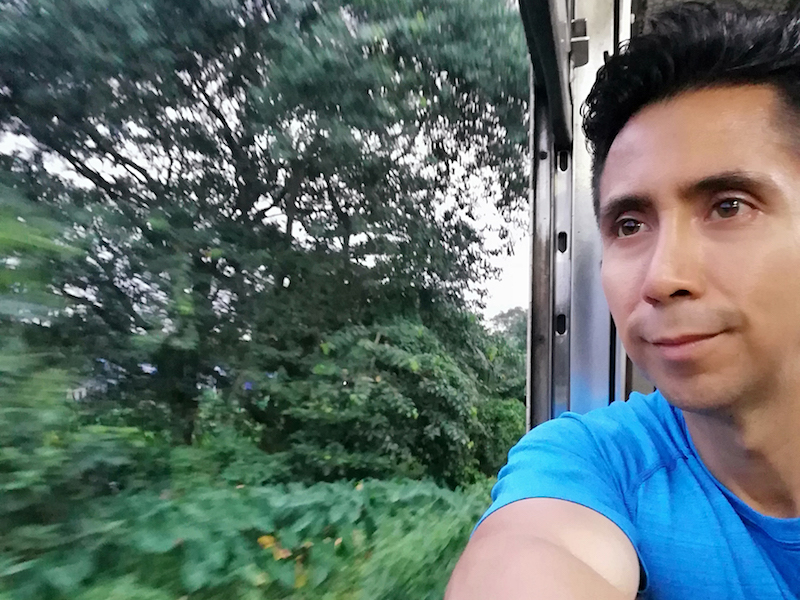
    Opted for a non-traditional seat on the train.

    What is your favorite thing about Myanmar?

    So far, my favorite thing has to be the people.  They are so genuinely friendly and have this sense of calm to them – I always feel safe.  The next thing would be the food; since there is a big mixing of cultures, you can definitely spot the Thai and Indian influences.  I would also say that I like the sense of discovery one can have by wandering the streets and by talking to people.  Let me elaborate: you won’t find everything you’re looking for on Google maps because most things are not listed.  This makes for a great experience for those that like wander, explore, and accidentally discover hidden gems.

    So far, I’m loving the experience in Myanmar.  I’ve talked to many expats around me, and I feel like I’ve made the adjustment in a fraction of the time that it usually takes others (I’ve gathered this from several conversations that I’ve had).  I’m not anything/anyone special.  I am just a regular person, who has a sense of adventure, and who can appreciate the small blessings in life.  Yes, it helps that I don’t form any expectations in my mind, that I actively seek out social events, and that I re-frame everything in the best positive light, but all these characteristics require zero talent, and only a small bit of effort on a daily basis.  After all, when I think back to my original goal of being able to help people, I couldn’t be happier doing what I’m doing, and I have Greenheart to thank for presenting me with my past, present, and future opportunities here in Southeast Asia.  The road ahead is not 100% clear, but with their help and support, it is definitely bright!


    Alvaro Zumaran, from White Plains, New York,  is a Greenheart Travel First Time Traveler Scholarship recipientLearn more about Greenheart Travel’s scholarship opportunities to help you travel for a change!


    Interested in moving around SE Asia and teaching in multiple countries? We can help with that AND you only have to pay a program fee once! Learn more here:

  • How to Respond When People Say It’s Too Dangerous to Travel Abroad

    How to Respond When People Say It’s Too Dangerous to Travel Abroad

    Deciding to live and work abroad can be life-changing, and sometimes scary, but the excitement of an adventure usually outweighs the fear of the unknowns of life in a new country. For your family and friends, though, your decision to travel abroad can leave them confused and concerned, fretting over all the possible things that could go wrong. Despite their best intentions, this response can often deflate your confidence and make you question if you really are making the right decision.

    When I decided to move to South Korea to teach English, I encountered many naysayers. I was constantly asked about the safety in Korea, why I wanted to put my life at risk, and how I planned to handle the looming threat of North Korea.

    No matter where you decide to move abroad, there will be people who find your decision crazy or dangerous. Maybe you even think you’re a little crazy. But that’s okay. Here are some ways to respond to any concerns your family and friends might have about your decision to move abroad. 

    There is a bit of danger no matter where you are in the world.

    No place is immune to a possibility of conflict and danger. Even in our own home countries and cities, we can be bombarded by horrific hurricanes and unexpected horrors. Think of how many people consistently visit New York City despite 9/11, because it is a city worth visiting. Just because a country has scary stuff in their past doesn’t mean it isn’t worth traveling to in the future. The unfortunate truth is that there is no place in the world that is 100% safe.

    Regardless of where you are in the world, there will always be unforeseen circumstances. It is, of course, natural to feel safer in your familiar home even though we know it is not void of danger. It’s always important to remember this – just because the world can sometimes be a scary place does not mean it isn’t also a beautiful one that’s worth exploring!

    Bad news sells better than good news.

    We live in the age of media. Any and everything that happens is broadcasted – we hear and read about terrorist attacks, bomb threats, and natural disasters daily. It would be impossible not to be affected by this. But statistically, you are no more likely to be caught up in these events just because you leave the country.

    While living in South Korea, I rarely heard media coverage discussing North Korea as a threat. But in America, North Korea is what comes to mind immediately after mentioning moving to South Korea. Despite the two countries having little to no interaction, the media has painted a very violent relationship between the two.

    Media outlets focus on the negative and tragic because it draws an audience, but that doesn’t mean an entire country should be represented by one incident, or that “over there” is a scarier and more dangerous place than our current home. It is every travelers’ responsibility to do their research and have a clear understanding of the potential risks of where they will be living and working, without overgeneralizing an entire country (or even city) based on stereotypes or a few news stories.

    Life doesn’t stop because you are afraid.

    Tragedies happen. Natural disasters tear apart towns. Terrorists attack cities. These are all things that could happen anywhere at any given time. Life does not stop or slow down when something awful does happen. The best we can do is live our lives to the fullest despite these things.

    There are too many amazing people to meet, delicious foods to try, and sights to enjoy to let fear keep you from traveling.

    Preparing for a feast in South Korea.

    No matter where you have chosen to live or travel abroad, there will be people who do not understand. You will have to learn to deflect this negativity and embrace your decision. Traveling isn’t something that should be feared, but something we should all encourage and applaud. Be proud of your decision and excited for your adventure!

    Ready to live abroad and looking for a supportive community?!

    Let’s chat about your travel opportunities!

  • Teaching in Myanmar as a Woman; Observations, Insights and How to Handle Nay-Sayers

    Teaching in Myanmar as a Woman; Observations, Insights and How to Handle Nay-Sayers

    It’s 8:00 am on a Wednesday. It’s the new moon. There will be no ferry truck waiting for me at the corner; it’s a holiday and I have the day off from teaching English here in Yangon, Myanmar.

    I could stay home and drink tea and read, I could catch a cab somewhere new, see some of the sights that are on my list. But instead, I climb/trot down my five flights of stairs and pop out at the bottom with a cheerful, “mingalabar!” to the woman who runs a food stand outside my building and turn right.

    Life and color in the market near where I live in Yangon.

    There’s a morning market on the street not far from my building. At least once every weekend—and often on my mornings off as well—you will find me there, even if I have bigger plans for later in the day. I love to get out to the market. I’ll be strolling through the kaleidoscope of fruit, the umbrellas, and the people. I love to surround myself with color and life, and that market is the place to do it. It’s honestly one of my favorite places to be.

    There are two women who I usually buy bananas from. Every time I walk past, they call out “Hello!” and I answer back with “Mingalabar,” at which they usually laugh. Most people are like that on my street; friendly and kind, ready to laugh. I feel safe with them.

    A tip from a friend of mine who was in my orientation group, though: if you ever do stroll through the market and encounter those women, wear pants. Or a long skirt.

    The women I buy bananas from aren’t shy; if they think your shorts are too short, they will tell you.

    In Myanmar, Learning Unwritten Rules and Restrictions

    For the most part though, I don’t feel constricted here; I, at least, feel free. Don’t get me wrong, this is a fairly conservative country, and what is socially acceptable for men to do is often not something that women are permitted to do. The more obvious things come with temples where women are not allowed in certain places, or to touch certain things, and those rules apply to me.

    There are places that I cannot go. A quick look around will reveal there are also unwritten and unofficial social divisions between men and women here that are quite palpable. To name a few examples, I have seen countless men and boys playing chinlone, but no women. Every bar I’ve ever gone into, you can count the women on one hand—that is, if you can count any at all. Bars in Myanmar, it would appear, belong to men. It can be disconcerting, especially at first, before you start to see the patterns of these rules.

    the people-in-myanmar
    photo by Ali Haymes

    Many of these social and cultural laws do not apply to me. This is because I have the privilege of being quite visibly foreign, and a lot of rules for how women should behave in Myanmar are not applied to foreigners. This is the regrettable, but convenient, reality for me and other western women traveling and teaching English here. In Myanmar, women have one set of rules, foreigners have another.

    Even when it comes to clothing—with the exception of the ladies who sell me bananas—I have never heard any comment on the inappropriateness of attire on myself or any of my traveling companions. You might even spot short skirts and shorts here and there among young women of Myanmar. Going to bars, playing chinlone, wearing shorts or even going for a run, you might illicit some strange looks, some staring, or even some laughter, but none of it ever feels malicious or creepy. Just surprised, like the way you might start if a man in a dinosaur costume strolled down the street walking a cat on a leash. A stare will turn into a smile in an instant if only you bother to offer up a smile of your own.

    Embracing a Feeling of Safety and Security As a Solo, Female Traveler

    Despite these divisions, I would say that women are largely respected here. Not once have I seen an instance of cat calling in the month that I’ve been here, which sadly I cannot say about spending a week in a major city in the U.S. There are, as with all things, exceptions: Yangon is not with out it’s dark sides and it’s share of cruel people.

    However, I have yet to run into a situation where I felt unsafe, and the most uncomfortable I have felt this whole time was when I heard an outdated and racist nursery rhyme from the U.S. being sung by so local school children. Overall, I trust my gut; if I feel uncomfortable, I leave. It’s a rather easy thing.

    Even after dark, I am pretty confident in my safety here. I’ve never stayed out past 11 p.m., mind you, because I’m a pretty hard-core morning person and like to be asleep by 10 p.m., but the sun sets fairly early and it’s usually pretty dark by 6:30 p.m. Yet, I still feel safe strolling along my streets in the evening to see the city at night, especially during a festival, when the streets are all decked out with lights and lanterns. Not once have I ever felt fear for my safety. In fact, I feel safer here than I do on the streets of any major city in the U.S.

    festivals in myanmar
    photo by Ali Haymes

    How to Empower Yourself as a Traveler

    To any woman whose family is reluctant to let her travel or teach alone in Myanmar because “it isn’t safe,” I would say firstly, that it is regrettable. It’s unfortunate that so many people—some of my own friends and family included—who form these preconceptions about what a country will be like based less on actual facts and statists or even personal experience, and more on stereotypes about geographic locations and places in the world where the population is not predominantly of European decent.

    Do your research. Don’t just read this article, find out whatever it is that your friends and family will find out if they look into Myanmar, and learn it. Have an answer for the questions that will most likely come up, and back up that answer with quantitative or qualitative data.

    Family members and friends that are more set in their dispositions are trickier. Still do your research and have your answers ready. That really is the best way. If you need to, you can refer them to websites where you got your information. I would recommend sending them Greenheart Travel’s website, if you’re teaching English through Greenheart Travel or their partner, Xplore Asia’s website, is also a good option, especially if your family members are of the belief that a non-U.S. or non-European source cannot be trusted.

    If you are fortunate enough to have understanding and open-minded family members, you should be able to bring them around if you are able to present facts and information that will put their minds at easy in a polite manner. Ultimately, don’t let anyone stand in the way of your dreams for traveling and teaching abroad, whether it is in Myanmar or beyond. Do your research, follow your heart and embrace a sense of adventure.

  • Expectations Vs. Reality of Living in Yangon as an English Teacher

    Expectations Vs. Reality of Living in Yangon as an English Teacher

    I’ve just wrapped up my TESOL certification program here in Yangon, and although I have yet to arrive in Tacheleik, the town where I will be teaching for at least the next three months, this feels like a good time to reflect on my experiences so far here in Myanmar.

    I previously spent a year working as a teaching assistant in Madrid, Spain, so I’m no stranger to the ESL world. Although I loved my time in Spain, once my year was up, I felt I was ready for a more challenging cultural experience. One thing led to another, and seven months after returning home from Europe I found myself boarding a plane for Myanmar.

    Prior to leaving, when I first told friends and family I had chosen Myanmar as my next destination, I was met with a resounding chorus of “Where’s that?” with the occasional, “Be careful!” thrown in for good measure.

    Myanmar is, unfortunately, not really a country that has much of a place in the western collective consciousness. What little knowledge the average person does have tends to be hazy and (regretfully) negative, but beyond that pretty light on the details. While I’d like to think I had a slightly more nuanced and informed view before arriving, I can’t deny that I really didn’t know fully what I was getting myself into.

    Hindu Procession

    Experiencing Yangon as a Cultural Melting Pot

    Yangon is magnificently dysfunctional and wonderfully addicting. The neighborhood that I’ve been living in for the last month is a total cultural melting pot, with a wide variety of ethnicities and religions (notably Buddhist, Muslim, and Hindu) represented. I don’t think that I fully expected the level of diversity seen in Yangon. Myanmar shares borders with India, Bangladesh, China, Laos, and Thailand, and in many ways the country feels like a crossroads between these different cultures.

    I actually expected to have to give up far more western comforts here than I have so far. While the streets aren’t exactly lined with McDonald’s and Starbucks, it’s quite easy to find an assortment of western food throughout Yangon. While I’m a strong proponent for living (and eating) as the locals do, I can’t deny it’s quite nice to have pizza once and awhile, which fortunately is in no short supply in the city. I fully expect this to be a completely different story outside of Yangon, but for now, it certainly has made the transition easier.

    shwedagon pagoda

    Finding it Difficult to Adjust to Yangon’s Traffic

    Truly one of the most difficult things to adjust to so far has been the absolutely mind-boggling traffic. Constant, never-ending seas of traffic. I knew it was going to be somewhat bonkers, but nothing fully prepares you for the utter insanity that is driving in Yangon.

    There are seemingly no rules of the road to speak of, and although the country drives on the right side, most cars have been imported from Japan, and are meant to be driven on the left. Like elsewhere in this part of the world, you really are taking your life into your own hands each time you cross the street. Simply put, it pulsates without interruption. That is, unless you find yourself caught in one of the very few traffic lights scattered throughout the city, which can literally take a five or ten minutes to change. Crazy.

    Happily Met with Indifference

    Because Myanmar has been closed off for so long, and has yet to see the waves and waves of western tourists that make their way to neighboring Thailand each year (it really is only a matter of time), I was expecting to be seen as more of a curiosity than has been my experience so far. I’m very aware that in much of the world being tall, blonde, and awkward makes me an absolute curiosity. At best it provokes stares ranging from cautious to inquisitive, and at worst can incite a furry of photo shoots from overly curious locals.

    But happily, I’ve mostly been met with indifference. People are friendly to be sure, and absolutely welcoming, but other than a few kids excited to speak with a foreigner, I feel surprisingly invisible (in a good way). Maybe that will change the farther away I get from Yangon, but for now it has been a pleasant surprise.

    Getting the Support Needed to Easily Adjust and Settle in

    Admittedly, I wasn’t expecting too much from the TESOL course, or even general support with housing or other practical needs once I arrived in Myanmar. This was likely colored by my experience going through the Language and Culture Assistant program in Spain, which offered virtually no assistance with obtaining my visa and ID card, finding a place to live, getting a SIM card, or anything else of that nature.

    I could not have been happier to be proven wrong. Greenheart Travel and their partner company NELC-Xplore have provided literally everything from transportation from the airport to a place to live (which is much nicer than I was expecting). They’ve been crazily helpful with any and all questions I’ve had about Myanmar and the course itself. If anything, I didn’t think it would be this easy to adjust and settle in.

    First Month in Yangon a Resounding Success

    So far, the reality of being here in Myanmar hasn’t varied wildly from what I had expected. I knew it would be a vastly different experience from anything that I’d done before, and I tried my best to arrive without any concrete expectations. What hardships I had anticipated to encounter have so far actually been overblown. Again, I feel that this could all change once I arrive in Tacheleik to begin teaching, but I feel that my first month here in Yangon has been a resounding success.


    Do you want to experience the wonderfully addicting city of Yangon for yourself?

  • Exploring Myanmar; The Water Festival and other Holiday Travels in Photos

    Exploring Myanmar; The Water Festival and other Holiday Travels in Photos

    In April, Myanmar celebrates it’s new year in a spectacular event called Thingyan or Water Festival.  For five days (recently cut down from 10), people take to the streets with buckets of water, water guns, water balloons, and an exuberant spirit and commence in a country wide water fight.  

    I’ve been told the reason for this is to cleanse yourself from any “sins” or negativity from the previous year.  This is a wonderful sentiment, but is sometimes hard to remember when you’re completely drenched for five days straight.  To take advantage of the substantial time off from work teaching English, I traveled to Bagan, Mandalay, Ngapali, and Inle Lake during and a bit after this holiday.  

    These are four of the top destinations people visit when traveling to Myanmar.  I’d like to share my experiences and photos with you below and hope you’ll be excited to explore them yourself!

    Bagan, Myanmar

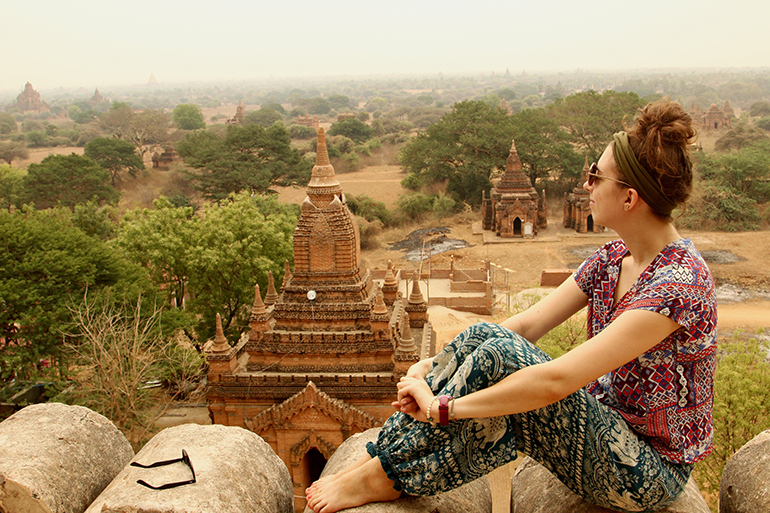
    Bagan is by far one of the most incredible places I’ve ever traveled.  Thought to have first been built in the 9th century, Bagan is a spectacular sight filled with temples and pagodas sprawled across the desert landscape (I recommend you Google immediately).  

    There are only a fraction of the temples originally thought to have existed there, but this doesn’t retract from the magic of Bagan.  We arrived early Wednesday morning, fresh off a night bus and eager to get exploring.  My boyfriend and I rented motorbikes as soon as we checked into our hostel and were on the road before 7:30 a.m. We cruised around back dirt roads as we drove past the absolutely breathtaking structures.  

    Every site we visited was completely different.  Some were very large, filled with small shops inside and too many tourists (but still completely beautiful) and some were truly off the beaten path and you couldn’t see another person in sight.  Many of the temples here are also being refurbished and appear under construction, something that is highly contested–whether it is better to maintain the dilapidated beauty or to continually upkeep the temples but lose the original charm.  

    We spent three days exploring this magical place and I’m totally taken by it.  I would go back in a heartbeat and I know there’s still so much I have to explore.  Below are just a few of my pictures, it’s quite the photogenic place.

    Mandalay, Myanmar

    Mandalay is the second biggest city in Myanmar.  We didn’t do too much exploring here as we were just celebrating the holiday, but we still had an amazing time.  We spent two full days in Mandalay during the height of Water Festival, one of which was my absolute favorite day I’ve had living abroad so far.  

    We had experienced a taste of Water Fest in Bagan, but we didn’t realize how insane it was until we got to Mandalay.  In Bagan, people would whip water at you while you rode past on motorbikes and while it was unpleasant, you eventually dried off.  In Mandalay, it was full on water insanity.  It felt like a giant street fair that you would see in the States but more ridiculous.  

    Lined up along the canal were endless stages, each one blasting dance music and equipped with powerful water guns. We were instantly soaked.  We spent the whole day running through the stages, taking over one hundred selfies with strangers who were mystified that foreigners would engage in this craziness, making friends with locals, and being a part of this special Myanmar tradition.  By the end of the day, we were completely exhausted and had definitely contracted some illnesses, but it was an unforgettable experience.

    Ngapali, Myanmar

    Ngapali is one of the gorgeous beaches in Rakhine state.  Myanmar might not be known for its beaches like Thailand, but they are definitely worth a visit.  There are many along the coast that are only a bus ride away from Yangon.  

    I traveled here with my parents and relaxed on the beach for the weekend.  We indulged in excellent, fresh seafood and rented motorbikes to explore some local fishing villages.  It was a great way to get out of Yangon and relax for a bit while also sharing Myanmar culture with my parents.

    Inle Lake, Myanmar

    The following weekend I traveled with my parents again to Inle Lake.  Similar to Bagan, there’s something undeniably special about Inle.  We began our stay here by visiting a local winery and a market, both great ways to see how people utilize local products.  

    Our hotel was quite spectacular and entirely built on stilts over the lake, as all the houses around Inle are.  To get around the lake for the following days, we cruised around in a long, wooden fishing boat.  We visited many different villages around the lake that all produced different things from silk to cigars to metal farming tools.  

    We went to a bustling floating market and also saw the floating gardens, an incredibly inventive way to make use of the watery landscape.  My favorite part of the whole trip was probably just driving around in the boat.  You can observe the fisherman and villages as the mountains roll past in the background.  It was a stunning and memorable weekend.

    These are just a few of the places you can travel to around Myanmar; they each hold something special and are entirely different from one another.  I’m so glad I’ve gotten to do this exploring so far and I hope you want to come see more of this beautiful country too!

  • What to Eat in Myanmar if You’re Vegetarian, Pescatarian or Not a Fan of Spicy Foods

    What to Eat in Myanmar if You’re Vegetarian, Pescatarian or Not a Fan of Spicy Foods

    I first arrived in Myanmar to teach English at 11pm on January 28th.  At that point, there were no restaurants open so I happily fell asleep after an exhausting day of travel.  The next morning, I woke up slightly disoriented but energized about having my first official Burmese meal.  

    All the teachers on our TESOL course, and a who who’d already settled in Myanmar, walked to a nearby restaurant that they frequented for brunch.  I had no idea what to expect, what things would taste like, or what I could actually eat as I am a pescatarian (no meat but I eat fish and seafood).  

    This was, to this day, one of the best meals we have eaten in Myanmar.  The moment you sit down the waiters pile the tables full of fresh pastries, filled with tasty fillings from coconut to mutton.  I ordered the traditional mohinga soup and paratha, an Indian style bread to go along with it.  This being my first introduction to Myanmar food, I was pretty taken with it from the start.

    An Introduction to Burmese Cuisine

    Prior to coming to Myanmar, I had never tried Burmese food (except for one dish my dad made out of curiosity before I left) but I have overall been pleasantly surprised.  Situated between India, China, and Thailand, Myanmar food takes inspiration from many different countries and creates something uniquely its own.  

    Burmese food is filled with bold, in your face, and often spicy, sour, and salty flavors that I haven’t experienced in any other cuisine. Not eating meat here (and having a depressingly low tolerance for spice), I can also confidently say that it is not that difficult to be vegetarian, pescatarian, or anti-spice here.

    No Meat, No Spice, No Problem

    Below are many options you can try if you have these dietary restrictions like me!  Though these strong flavors can take some time to grow on you, below are a few of my favorite dishes that I have come to love.

    Tea Leaf Salad

    At first, the taste did not appeal to me, but over time I’ve really grown to enjoy this dish.  Try it at lots of different places to see how you like it best!

    This is a classic dish.  You can order it at almost any restaurant and I can guarantee that it’ll be different every time.  It generally consists of tea leaves, peanuts, tomatoes, and onions. Sometimes there’ll be teeny dried shrimp as well or will be pre-mixed with rice.  Some are much more liquid while others are quite dry.  

    Tomato Salad

    On the topic of salads, most of their salads are vegetables mixed with peanuts.  Simple, but delicious.  My favorite salad to order is a tomato salad which comes with onions, sometimes chilis, and a generous dousing of peanuts.  Peanuts are used frequently in many Myanmar dishes which I think always adds a perfect salty crunch.

    Shan Noodle

    This is another great staple of Myanmar food.  Every state and every ethnic group in Myanmar has their own traditional cuisine and Shan state has, from from I’ve experienced, really stellar dishes.  

    My neighborhood is highly populated with people from Shan state so eating these noodles has become a regular indulgence for myself and the other teachers.  You can get these rice noodles with or without meat and it comes with a spicy tomato based sauce.  

    Some versions are made with broth, others are made “sticky” and others are simply a bowl of noodles.  Again, each restaurant makes their noodles differently so try them all!

    Mohinga

    Mohinga is a delicious fish based soup commonly eaten for breakfast.  In my neighborhood Myanigone, there is a great restaurant called STK that serves hot and fresh mohinga every morning.  Come early though or the pot will have run out.  At this restaurant, you can also enjoy your mohinga will coconut, mutton, or chicken pastries fresh out of the oven.  This is a must-try if visiting Myanmar.

    Barbecue restaurants

    One of our favorite local spots for when we want to get a drink and relax is Winstar.  This is a large beer station (an open air restaurant serving beer and occasionally food that also almost always has a soccer game on) that serves incredible barbecue food.  You can go up to the counter and pick your skewers, from okra or a whole cob of corn to squid or crispy pork, and they deliver them to your table.  

    It’s hard not to want to try everything when it all tastes so great!  Restaurants like these are common all over Yangon and are a great way to enjoy the local food and culture.

    “Tray” restaurants

    For lack of a better name, there are many street stands and established restaurants that work kind of like a buffet serving many pre-made dishes in trays.  You pay for each individual dish, but you can choose as many as you like to share with your friends and enjoy with a bowl of rice and complimentary soup.  Some of the best food I’ve eaten has come from these dining experiences.  

    My personal favorite dish to order is shrimp in a tomato based sauce.  I don’t know what else it consists of besides chili, but it is often an oily yet thick sauce that coats the prawns and it is heavenly. Yellow beans are also a creamy, salty, and delicious addition at these places.

    I’ve included pictures from a few different places so you can see the variety.

    Though I wouldn’t recommend trying one of these places until your stomach has adjusted to the new cuisine, there are so many different meats and vegetables to try that every one can enjoy eating here. 

    Pancakes

    My favorite dessert are these pancakes.  Watching the stall owner make them is mesmerizing.  He stretches the dough as thin as possible before frying it in a generous amount of oil and then covers it with condensed milk and sugar.  It’s quite the sweet treat.

    Though this is just an introduction to food in Myanmar, I hope you find yourself googling the closest Burmese restaurant in your town!  The blend of cuisines and different ethnic traditional food provides you with many different options from noodles to rice dishes to funky desserts from street vendors.  The overly oily and saltiness of dishes, the spiciness, and the unique flavors might take some getting used to, but I hope that you are inspired to give Burmese food a shot!

    Do you have a favorite Burmese dish we need to try? Share it in the comments below!

    About the Author:

    Ali Haymes is from Chicago, IL and recently graduated from Bates College in Maine.  During her junior year of college, she lived in Australia for 5 months and realized how much she loved traveling.  After returning home in June for a few months and interning with Greenheart Travel’s sister branch, CCI Greenheart, she decided she wanted to go abroad again.  She is currently living in Yangon teaching English and hopes to continue traveling around Asia and the world!

    Check out her ongoing adventures on her personal blog, Ali’s in Wonderland.

    Ready to teach in Myanmar and try these food dishes like a local?


  • Falling in Love with Yangon, Myanmar

    Falling in Love with Yangon, Myanmar

    One month ago, I arrived to teach English in Yangon, not knowing what to expect. I didn’t know much about the country, or a single other person going on the program. Since then, I have truly come to love Myanmar and all the people I’ve met. From the weird smells to the bustling streets, all the little quirks that make up this city are starting to feel like home.  Here are a few of the things that I’ve already come to fall in love with in Yangon.

    The People

    the people-in-myanmar

    Myanmar people are unbelievably wonderful. Everyone is eager to talk to you and excited that you’re here. Strangers on the street love to start a conversation with you. Children will run up to you yelling, “I love you!” and maybe even pose for a picture with you. The waiters at your favorite restaurant will start to recognize you, and will say “hello” when you see them wandering throughout the neighborhood. Everyone is filled with such kindness that it’s easy to feel as though you belong here.  

    The people on the Greenheart Travel/Xplore Asia programs are also fantastic. Even though some people from our group have left for different placement cities, I know we will all stay in touch and will hopefully get to explore new parts of the country while visiting each other! The staff at the center here have also graciously helped us adjust to the culture and lifestyle. They have given us Burmese lessons and have taken us to cultural festivals, making the transition to life here quite simple.  

    The Food

    the food in myanmar

    The food here is incredible. Despite a stint of food poisoning, everything we’ve eaten has been delicious. We often go to breakfast at a restaurant Anthony Bourdain has raved about that serves bean curry and mohinga—a traditional fish soup. Another favorite restaurant boasts amazing noodle dishes and salads of vegetables with peanuts. Most meals consist of either noodles or rice in many variations, and I’m not complaining.

    the food and friends in myanmar

    Shwedagon

    The Shwedagon is one of the most sacred and well known pagodas in all of Myanmar. It was originally built over 2,500 years ago, and is one of the most spectacular places of worship I’ve seen. You can spend the day circling the main structure and exploring all the different rooms, relics, and Buddhas. As the sun sets and the sky grows darker, it looks as if the whole pagoda is glowing. Having this incredible pagoda only a 15 minute walk from my apartment is amazing, and it reminds me how lucky we all are to be living in this culture. It is truly a spectacular site.

    shwedagon

    The Vibrant City Life

    vibrant city life in yangon

    I grew up in the city of Chicago, so I am used to living in a lively neighborhood. But, Yangon has an energy that I haven’t experienced anywhere else. My neighborhood here, Myaynigone, wakes up early and is already bustling by 6am. You can hear the trash collectors yelling on the streets, buses passing, and the roosters clucking (though I really don’t love the roosters).  

    The traffic here is constantly a disaster, but it’s a part of what makes this crazy city special. To cross the street, you have to weave in between the cars, dodging bikes and other street crossers. The sidewalks, if there are any, are always packed with street-food stalls, restaurants and merchants selling everything from bananas to chicken feet. At night, things tend to close much earlier than in the United States, but the people still fill the streets. Children play soccer and people blast music from lottery carts. Though over-stimulating at times, Yangon’s vibrancy in something I’m definitely falling in love with.

    The Festivals

    festivals in myanmar

    Quite often, and almost always for unknown reasons, there will be a festival happening right outside our apartment. One of the first occurrences of this happened when I was sitting on our balcony with a friend and we heard loud music from the streets below. We saw carts pulled by ox that were elaborately decorated and illuminated with colorful lights. This was followed by a truck filled with at least 12 musicians that animated the parade throughout the streets. This had to be at 11pm and went well into the night. Though the frequent festivals may cause lack of sleep, seeing the celebrations of different cultures, ethnicities, and religions of Myanmar is really special.

    This list could go on of things I’ve come to love. There’s the woman outside our apartment who makes the most delicious and greasy chickpea pancakes, and who also helps you practice your Burmese by having you repeat the names of the ingredients and prices. There’s our 5th floor balcony that I look forward to eating breakfast on every morning as I watch the city awaken.  

    There’s the hundreds of stray dogs that roam the streets, and even better are the ones that you cross paths with every day who start to recognize you. There’s the dilapidated yet stunning architecture constructed in a colonial style with a haunting beauty. And there’s the rooftop pools and high tea at The Strand we’ve discovered for when you just need a moment away from the heat and the hectic lifestyle.  

    Having only been here a month, and having not even started teaching yet, I know there is so much more to explore in this country. But so far, it’s pretty great and I can’t imagine spending my life anywhere else right now.


    About the Author:

    Ali Haymes is from Chicago, IL and recently graduated from Bates College in Maine.  During her junior year of college, she lived in Australia for 5 months and realized how much she loved traveling.  After returning home in June for a few months and interning with Greenheart Travel’s sister branch, CCI Greenheart, she decided she wanted to go abroad again.  She is currently living in Yangon teaching English and hopes to continue traveling around Asia and the world!

    Check out her ongoing adventures on her personal blog, Ali’s in Wonderland.

    Does Yangon sound like the place you’ve been craving to go?