Author: Tabitha Frahm

  • To Be a Traveler

    To Be a Traveler

    (EDIT: I wrote this post about two weeks ago but never got around to posting it. If anyone’s looking for me, I’m currently in the Beijing airport on a five-hour layer before I hop on a plane back to Boston (!!!). I’ll be sure to include my thoughts and feelings on that in my next post.)

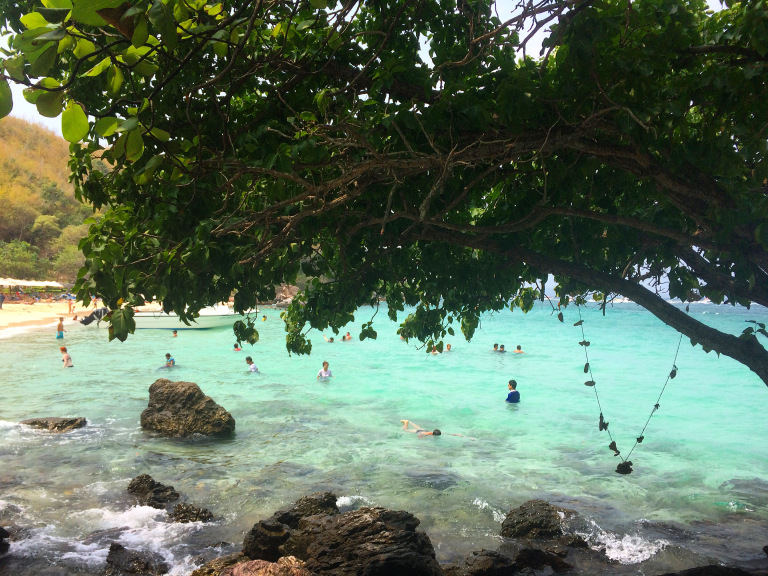
    As I write this post, I sit in the Krabi Airport, approximately five hours early for my flight to Bangkok (and then onwards to Bali), exhausted and mostly just thankful to be away from Railay Beach. Don’t get me wrong, the beach and the towering limestone cliffs were awesome (in the original sense of the word). I marveled at the white sand and spent many hours floating in the turquoise sea. I splurged (in the backpacker’s sense of the word), and spent $30 a night on an adorable bungalow tucked away from civilization. In theory, Railay should have been just the getaway I had imagined, and in fact, if this had been one of my earlier Thailand experiences, or if I had just been visiting Thailand for a month-long holiday, I suspect I would be walking away with an entirely different mindset.

    Here’s the truth of the situation, however (or my truth if you will): Railay was an overpriced and overcrowded experience. NOT ONE SINGLE PERSON I encountered in the service industry appeared to be willing to help (exhausted by the monotony of tourists???), the “island” was pockmarked with scars of fast-growing and uncontrollable tourism (excessive trash, low-hanging wires), and the food was mediocre at best. To add fuel to the fire, I suffered from a rather nasty bout of food poisoning after eating a kebab (shocking, I know), and spent an entire day hallucinating with my face pressed to the cool tiles on the bathroom floor. (As I later learned from the (completely disengaged) concierge, “oh yes, Railay is known for its tummy problems…”) I’m certain my experience in Railay was tainted by said food poisoning and the fact that I had just experienced the most idyllic long weekend on Koh Lanta (in addition to the fact that I know Thailand has so much more to offer), but I suppose that’s just the way life works. You experience enough things, you play witness to enough places and you learn what you like. You learn what you don’t like. You move on. You stay. Maybe you try again in a few years. Nothing is as permanent as we make it seem. In any case, it will be a long, loooooong time before I decide to make the trip back to Railay.

    In a mere twelve hours, I will have landed in Bali—the penultimate leg of my travels around Southeast Asia. I will spend one week there before heading back to Bangkok to celebrate Songkran, and then I will be homeward bound. As I sit here in this airport still rather queasy and shell-shocked (even the slightest smell of food makes me feel nauseous) (I did find ginger ale!!), it’s easy to feel ready to be home. It’s easy to crave comfort and a home-base. It’s easy to feel frustrated and annoyed by everything around me (re: man who decided to sit right next to me when there are SO MANY OPEN SEATS), and it would be easy to wish the next week and a half away.

    But here’s my reality, yet again: I know I’m going to miss this. I can’t claim the last six months have been easy, but I’m going to miss being able to jet-set to a new location anytime my heart desires. I might not believe it now, but I’ll miss the inescapable heat of the sun warming me to my very essence (the sweating… perhaps notsomuch). I’ll miss pad ga pao for $1.50 and fresh coconut water. I’ll miss the laidback lifestyle and the kindness and openness exemplified by just about everyone around me. I’ll miss not going a single day without feeling entirely challenged—making daily mistakes and coming away with an unmatched sense of humility and patience. I’ll miss living the life of a traveler.

    To travel or to be a traveler means different things to different people. There’s no one way to be a traveler, just like there’s no one way to be human—if nothing else, that’s exactly what the past several months have taught me. But as the past six months have unraveled themselves, first slowly, slowly and then seemingly all at once, I’ve come to a few realizations about what it means to be a traveler, why I identify as a traveler, and why I value that identity so much.

    To be a traveler means embracing impermanence. It means living out of a suitcase for months at a time and being okay with it. It means watching as people come and go and watching as people stay (perhaps when you least expect it). It means creating relationships with others who value what you value, and it means skipping over the small talk. It means falling madly in love with a city or a town or an entire country and having to leave the next day. It means dreaming about when you can come back while recognizing you can never experience the same country in the same way ever again.

    To be a traveler means embracing everything and everyone around you. It means reaching out to someone for the sake of company and coming away with at least one thought-provoking and eye-opening conversation. It means surrounding yourself with fun and intelligent and like-minded people. It means a turn away from connecting with others through superficial lenses. To be a traveler means stripping yourself down to your very essence. It means letting your guard down in ways you never would have imagined. It means letting people in: letting people help you and hold you, carry you and lean on you. It means baring your naked soul, and it means being open to hurt.

    To be a traveler means being respectful and open—to new cultures and languages and humans. It means following local rules and regulations (if they even exist *cough, cough*), and it means putting aside your assumptions and prejudices. It means trying every new thing that comes your way, and it means keeping your eyes open literally and figuratively. It means never being closed off to how you’re feeling or what you’re seeing or who you’re meeting.

    To be a traveler means allowing yourself to marvel at one thing a day. It means believing in the magic of coming to know the unknown. It means allowing yourself to cry when you feel upset, and it means allowing yourself to laugh until you cry when you’ve never felt so happy. To be a traveler means listening to others’ stories and telling your own. It means speaking about your experiences and questioning the way they’ve made you feel. It means knowing what you want while still being flexible enough to learn. To be a traveler is to grow.

    To be a traveler means living on $800 a month and traveling back to your home country dead broke. It means waking up at 5am to watch the sunrise over Angkor Wat when your idea of “morning” is 11am. It means coming to Thailand without knowing anyone and leaving with a #squad. It means being alone for extended periods of time and making the most of it. It means thriving in new and unexpected situations. It means daring yourself to go off the beaten path.

    To be a traveler means instilling a vote of confidence in yourself and your capabilities: your capabilities to adjust and adapt and create a new home; to grow and to learn and to fall madly in love (in more ways than one). It means renewing your passions and cultivating your interests, and it means being open to the wonders of this great big (big, big) world.

    As my travels throughout SE Asia come to an end, I recognize and value the fact that this is not the end of my being a traveler. Rather, I recognize that this is just the beginning, and I now understand (more-so than I ever have before) that I will always identify as a traveler. Travel affords me ideas and values and perspectives that I could never find remaining at home, and as I head home in a few weeks to pursue another hot, New England summer (with a new job and in a new place), I’m already looking forward to what my future holds (plenty of adventures, I promise you).

    Stay tuned! xx

  • On Being Alone in Thailand

    On Being Alone in Thailand

    Hello my friends! It’s been a long and hectic three weeks since I last posted—filled with a multitude of endings and perhaps just as many beginnings. Final exams wrapped up at the end of February, I spent the first two weeks of March submitting grades, and I officially moved out of my apartment in Bangkaeo two weeks ago. I’ve been on the road ever since, and I am currently posted up in a café in Chiang Mai after an early morning flight from Bangkok. Man, does it feel good to be back here with nothing planned or scheduled—no TESOL classes to rush off to and no people to meet: I am being guided solely by my desire to experience this amazing city in my own time and on my own terms. It felt great to step off the plane and feel nothing but excitement (and dare I say confidence)—contrasted with the extreme sense of anxiety and unknowing that I experienced the first time around. I’ll only be here for the next four days before I head south, but being back here is monumental for more reasons than one. This week marks five and a half months since I moved to Thailand (don’t ask me how that happened), I’m back in the place where my journey began, and I’m doing it on my own.

    Now this may not seem very monumental because, as most of you know, I moved to Thailand alone. In fact, I spent the majority of the last five months alone living and teaching in Bangkaeo—I woke up every morning in a studio apartment with one bed, one set of hangers and one toothbrush; I walked to school alone, I shopped in 7/11 alone, and—more times than not—I ate breakfast and lunch alone. Furthermore, I would be lying to say I never traveled on my own before moving to Thailand.

    But here’s the difference: I’ve always had someone waiting for me on the other side (friends, family, my students, coworkers, a TESOL group), and this time… I didn’t. There was no one waiting to greet me when I stepped off the plane, there was no one calling my name as I searched for the airport shuttle, and there were no familiar faces at my hostel. This time, I decided to travel to Chiang Mai just because I wanted to and the fact that my friends weren’t available wasn’t going to be the thing that stopped me. As someone who excels at being independent and free, it feels wonderful to do whatever I want…eat whatever I want (and whenever I want)… wander aimlessly for as long as I want (or, ya know, sip at a cup of coffee for three hours at a time)… and just generally have no responsibilities to anything or anyone. As I sit here in this café after spending the better half of the day wandering Chiang Mai’s old city and exploring a seemingly-endless number of temples, I feel strong and courageous and empowered—perhaps more-so than I have the entire time I’ve been here. The past five and a half months have taught me just how capable I am, and I feel as if I am finally able to put my capability and abilities to use. What an amazing thing that is.

    That’s not to say I don’t enjoy company and companionship while traveling, however. When I initially began this post just before moving out of my apartment two weeks ago, I had come to the realization that, while I had moved to Thailand on my own, I was no longer alone. Thailand, while initially the most foreign of places, quickly (in the bigger picture) became home. From my peers in my TESOL course to my coworkers, from my Thai family to the people I met while traveling this beautiful country, I have never met so many like-minded, welcoming and all-around friendly people. I was able to surround myself with an abundance of people who were fun and kind-hearted and comforting, and I’ve created a multitude of relationships that promise to last a lifetime. Rarely did I go a day without an invitation to go out to dinner or to go shopping, and the weekends I spent on my own were slim to none. Similarly, I spent my weeks surrounded by smiling, good-natured students, and my coworkers paid me plenty of attention while I created lesson plans at my desk. There were certain days when I felt lonelier than others, sure—particularly when I struggled with the language barrier or when I had an especially rough day in the classroom—but never (bar the first week in Bangkaeo) did I feel as if I was so devastatingly alone. Never did I have a day where I couldn’t turn to someone to vent (whether they were in Thailand or at home), and never did I feel as if I needed to pack up and go home for the sake of feeling lonesome. For that, I have a lot of people to thank:

    To Ellen and Tiff—thanks for being the first people I met in Thailand (!!!) and for sticking by my side the entire time—always a Facebook message or LINE chat away. (Ellen, thanks for being the roommate of a lifetime… especially during the initial jetlag stage.) Love, love, love.

    To Stef, Cait and Dana—THANK YOU for taking me in after I spent my first week in Bangkaeo crying. I love you all and never would have made it without you.

    To Amelia, Serene and Apple—thanks for being my (outrageously fun) Bangkok family. Love you guys.

    To Ajarn Jiya and PK—you have the most wonderful family. Thank you for adopting me. Come visit me in America, please!

    To each of my coworkers—thank goodness for you people. I wouldn’t have been half the teacher I was without your help.

    To my students—thank you for all of your smiles and giggles and your ability to grow and learn. You’ve taught me more than I ever thought possible.

    To the Thai teachers and gardeners who greeted me every single morning with a smile and a wai—THANK YOU for that.

    To the cashiers at the 7/11 in Bangkaeo—thanks for not judging my snack addiction (at least not openly). (How wonderful it is to go from being greeted as farang in a muttered breath to being acknowledged with Hello, teacher.)

    To everyone in my TESOL course—thank you for being wonderful, like-minded humans. I learned so much from each of you.

    To my friends and family back home—Thank you for standing by my side, supporting me, offering tips and advice and for loving me through all of the ups and downs. Each of you allows me to push myself, to challenge myself and to grow in ways I never would have imagined, and I am so thankful for that. I have so much love in my heart for all of you.

    Five and a half months ago, I moved to Thailand alone, and in three weeks, I will leave Thailand alone. I suppose in the end, we only really, truly have ourselves… but we also owe it to ourselves to cultivate relationships and enrich our lives with friends and love and once-in-a-lifetime experiences. We owe it to ourselves to strike out alone, but we also owe it to ourselves to be alone in a healthy and balanced way. We owe it to ourselves to be alone, but we should never have to be devastatingly lonely. We owe it to ourselves to take risks, and we owe it to ourselves to have people to lean on.

    I look forward to the next three weeks, filled (primarily) with solo travels, and I also look forward to those I connect with along the way. In three weeks, I’ll leave Thailand alone (and broke), but I will be all the richer. Thank you, Thailand, and everyone I’ve met along the way, for that.

    xx

  • A (Ridiculously Biased) Ranking of Transportation in Thailand

    A (Ridiculously Biased) Ranking of Transportation in Thailand

    View from a songthaew in Kanchanaburi

    Once you’re on the ground in Thailand, your transportation options abound (yes, I’m a poet and I didn’t even know it). I’ll just preface this post by saying each of these modes of transport have gotten me from Point A to Point B safely and in one piece, and I hope that trend continues. No hard feelings, Thai minivans (ok maybe a little).

    1. Tuk tuks- Perhaps rather outdated, perhaps rather impractical, but the most FUN. Not the safest, won’t save you any money, but you tell me the next time you’ll recline in a cart attached to a motorbike as you speed around the city. Be sure to take in the 180 degree views, and don’t be surprised if your driver starts bumping tunes. Tuk tuks are the ultimate Thai transport.

    Rating: ⋆⋆⋆⋆⋆

    1. BTS- They don’t list the BTS as #2 on TripAdvisor’s list of “Top ten things to do in Bangkok” for nothin’. Transportation while checking something off the must-do list? What could be better? Safe, clean, (relatively) affordable, and you’ll beat the traffic.

    Rating: ⋆⋆⋆⋆⋆

    1. VIP buses- You may think I’m crazy, but these VIP buses rock my socks off. I’m convinced there’s no better way to travel overnight for 10+ hours: there’s enough leg room, the seats recline expertly (and come equipped with pillows and blankets), and best of all, the bus stops almost every hour to feed you. Limitless (albeit questionable), buffet-style Thai food in hourly doses? Sign me up.

    Rating: ⋆⋆⋆⋆

    1. Public buses- I’ve become quite the bus expert over the past four months. This is your most affordable option by far (we’re talking nine baht for an hour ride). Don’t be too worried if the driver decides to kick everyone off unexpectedly in the middle of the highway—these suckers run almost as frequently as your marathon-training aunt and another one will be along shortly. Do be prepared for at least one smoke-filled breakdown.

    Rating: ⋆⋆⋆⋆

    1. Motorbike taxis- These might just belong higher on the list as they get you to where you need to go, and they get you there in record time (cue swerving in and out of Bangkok traffic). Don’t mind the fact that the drivers tend to have no regard for your life. Accept a helmet and hold on tight.

    Rating: ⋆⋆⋆⋆

    1. Taxis- Taxis are boring, and mostly I can’t afford them (#teacherproblems). BUT when I share a taxi with five of my friends (yes, this is too many people in one taxi), it’s hard to go wrong. The drivers (typically) know where they’re going, the A.C. (typically) works, and if there’s no traffic, you’ll get to where you need to be in no time at all. Expect to pay around 100 baht for a ten minute drive. Traffic? Forgaddaboutit. Take a motorbike instead.

    Rating: ⋆⋆⋆

    1. Water taxis- Even the name of these things sound fun. 14 baht and you can get from Saphan Taksin BTS to just about anywhere along the river. If you take a river taxi on the weekend, be prepared for mass amounts of people (and potentially having to stand), but enjoy the fresh air and the views of Bangkok from the river.

    Rating: ⋆⋆⋆

    1. Songthaews- Does anyone even understand how these work? They run on set routes but what are these so-called “routes?” How do I know if I’m headed in the correct direction? Two rows of benches in the back of a pickup truck make up this eclectic, yet entirely unsafe mode of transport. Pay minimal amounts of money, suffer maximum bouts of stop-and-go induced nausea.

    Rating: ⋆⋆

    1. Minivans- These vans shouldn’t be as horrible as they are, but alas. Pretend you’ve been smashed into the tightest corner possible, and not only that, but your corner smells bad, you can’t breathe, and you definitely can’t escape… that’s a Thai minivan. These things could make anyone cry. They’re a breeding ground for mosquitoes, the A.C. rarely works, and they always smell like farts. They have a knack for finding the largest traffic jams, and they induce horrible nausea. Trust me when I say: Take a bus.

    Rating: ⋆

    Transport in Thailand is far-from-standardized and entirely chaotic, but that sure makes navigating a whole lotta fun. When you can, negotiate your fares up-front, and always make sure those taxis turn on their meters.

    Stay safe out there, friends! xx

  • My Perspective on Perspectives

    My Perspective on Perspectives

    As a follow-up to my last post: What It’s Like to be an ESL Teacher in Thailand

    Like most people wanting to live abroad post-graduation, I turned to Google to help me. I was looking for a position that would a) pay me (these are important things here, people), b) allow me to move and live abroad without too much hassle, c) inspire me and challenge me, and d) offer me the flexibility that would allow me to travel. Welp, here I am… currently working as an ESL teacher in Thailand, in a position that offers me all of the above. And while I would be amiss to tell you working as an ESL teacher allows tons of flexibility to travel during the semester, I currently sit here daydreaming about my upcoming trip to Bali (one that will occur during the summer break). I can’t say I have too much to complain about.

    And yet, while working as an ESL teacher may sound like a dream come true (you may be thinking: Teaching abroad is a joke, right? Anyone can do it!), it can often be a position that is frustrating and exasperating. While working as an ESL teacher, it’s easy to feel inconsequential and irrelevant. Disrespected and disregarded. Sometimes you feel as if your time would be better spent pulling out each. and. every. hair. on. your. head. rather than watching as one more student blatantly disregards your directions to complete a worksheet, and sometimes you can’t help but to roll your eyes as you are forced to explain yourself five more times. …Don’t even get me started on the students who remain completely indifferent to your presence.

    Here’s the thing, though: it’s a natural human response to feel frustrated when things don’t go the way you expect them to (yes, this tends to be magnified by a language barrier), and each of us has our preconceptions and idealizations and even prejudices. When reality refuses to match those entities, it’s not surprising we feel a little disoriented—exemplifying itself in our frustrated rants… in our angry sighs… in our baffled tears. Perhaps one of the most wonderful things in being an ESL teacher, then, is that it does a damn good job at making you question everything.

    When I first arrived at RWB, I was afforded minimal guidance. The interim head of the English Department handed me a schedule with the names of the four courses I was to take over, and then she shooed me out of her office. There were no course outlines and no curriculums. No past tests or papers or worksheets. “Good luck!” she told me cheerfully.

    At the end of the week, I received the following input: “Your teaching style is too relaxed. You play too many games. You need more worksheets. Midterm exams are due on Monday.” I felt as if I had been sucker-punched—thrown off the deep end and left for dead. It felt like a personal attack. I distinctly remember going home to my empty apartment and crying—messy tears that left me short of breath and gasping for air. I felt frustrated and angry and upset. I remember thinking: what have I gotten myself into?

    As if the past week of getting to know my students and their proficiencies hadn’t been stressful enough, I now had a long list of things to fix. Coming into a full-time teaching position with solely the hands-on experience gained during my TESOL course, I was at a loss, and I had no idea how to remedy the situation rather than to put my nose to the grindstone and create more worksheets. So I did.

    One month into teaching, I was in the midst of one of my M1 classes. The school-day was almost over (cue crazy behavior from all of my students), and I had just finished presenting on the importance of social media. “Ok,” I told the class in a slow, measured voice. “Use this worksheet (#worksheetgamestrong) to survey your classmates about how they use social media. A survey is used to collect information from different people.” After a decent amount of cajoling, all of my M1s were up out of their seats asking their classmates: What is your favorite type of social media?

    All of them… except M.

    M—a seventh grader who towers over me—had decided that “survey your classmates” meant “duct tape your friend to the wall.” As I glanced over, M was in the process of taping his friend’s (who was now beginning to resemble a starfish) second wrist to the whitewashed wall. “Boys!” I said sharply. “M, no! Take your friend down now!” I was waving my arms around like a madwoman trying to get my point across. “This is NOT OK. Hallway NOW.” M smiled as if this was the best news he had heard all day.

    As he unstuck his friend from the wall, he gestured to the rest of the boys in the class, and they all proceeded to follow him into the hallway. I now had twelve boys in the hallway, filming each other with someone’s GoPro, and all the while, the rest of my students were up out of their desks attempting to survey each other about social media, often screaming over each other to be heard, or screaming “Teacher! Teacher!” if they needed guidance. Put softly, it was utter chaos.

    It was at this exact moment when the new head of the department decided to make an appearance. “Hello,” she greeted me, taking in the classroom in front of her. “Please explain what you’re doing.” As I began to explain: “They are surveying their classmates…”, M and his crew burst through the door, the GoPro duct-taped to M’s hands, his friends laughing like hyenas. “M, no,” I said again, shaking my head forcefully. “NOT OK.” The head of the department grimaced at me before excusing herself.

    At the end of the day, I received another message. “The head of the department thinks you need better worksheets,” the coordinator told me (better worksheets, I assume, being code for getting my act together). Luckily, at this point, I was much more comfortable and confident in my teaching abilities, and I recognized that she had walked into a situation that was not the norm. A suggestion for “more” or “better” worksheets was no longer taken as a personal attack, but, inevitably, the frustration was still there. How do I control a room of unruly boys who have no interest in learning English? Who have no interest in even attempting to understand me? Who would rather be anywhere but in the classroom? Who would rather be doing anything other than filling in a worksheet? These are all tough questions, and even three months later, I’m still trying to answer them. In my case, mastering classroom management, as well as gaining students’ respect, has been something that takes a considerable amount of time and patience.

    As most of you already know, there is so much more to being a teacher than creating, distributing, and grading worksheets. As I’ve come to find over the past four months, however, being a teacher, in fact, is about creating and nourishing relationships and connections. It’s about creating a safe and nontoxic environment where everyone can feel welcome and accepted, and it’s about fostering a love of learning through smiles and laughs. It’s about helping students in one-on-one situations even when there are thirty other students in the room. It’s about sharing and expressing a common interest in seemingly-menial things such as Snapchat filters, and it’s about using Snapchat filters to teach about social media. Being a teacher is about asking the important questions like what do you like to do? and tell me what’s important to you and what do you want to do in the future? It’s about offering advice and telling stories about your travels and your life at home in another country. It’s about listening to your students’ stories about their lives here in this country. It’s about being relatable and kind.

    And while I can’t lay claim to being an excellent educator, I have witnessed my fair share of them,  and I truly believe being a “good” teacher and providing a “good” education means offering students a multitude of perspectives and opinions. It means allowing students to formulate their own ideas and opinions, while simultaneously pressuring those ideas and opinions. It means arguing that the “British way” and the “American way” are both the correct way. It means teaching beauty is so much more than outward appearance—especially when they compare their darker skin to yours or when they ask to touch your lightened hair. Being a good teacher means presenting on the importance of social media before making your students create a list of reasons as to why social media should be used less. It means teaching about Thanksgiving and Christmas and Valentine’s Day, and it means listening to students speak about Loy Krathong and the King’s birthday and Songkhran. It means instilling an interest in “whatever else is out there.”

    Being a good teacher means practicing kindness and respect in every situation—inside or outside of the classroom. It means being receptive to those around you. Being a good teacher means being open-minded and tolerant and progressive. It means witnessing as many opinions and perspectives and ideas as possible so that you are able to share the greatest perspective possible. In fact, being a “good” teacher is a lot like being a student…

    In working as an ESL teacher, your students will never fail to surprise you. Those who appeared to not be listening during the last class will answer your questions with conviction the next time you see them. Your M3s (while mimicking you far more than they should), will finally understand how to give a presentation: Good morning, everyone. My name is __________, and today I will speak about __________… Please let me know if you have any questions. They will understand the difference between an introduction and a conclusion, and they will understand how the two entities work together. Your M1s, while insisting on duct-taping each other to the wall, will greet you in the hallway like you’re their favorite celebrity (and in English nonetheless!).

    Perhaps the most rewarding thing of all, however, is just how much your students will teach you. Your students will defy you and challenge you and inspire you. They will impress you, and they will astonish you. They will coach you in how to order delicious food in Thai, and they will teach you how to properly use LINE (communication through stickers ONLY). Your students will make you think (and think and think), and, I promise you, they will offer you a previously-unseen perspective. They will teach you kindness and acceptance, and they will teach you just how easy it is to fall in love.

    This world is home to 7.3 billion people (and infinite opinions and ideas) and oftentimes, its challenges feel huge and insurmountable. You look at people like Donald Trump and listen to racist, sexist, homophobic commentaries, and it’s easy to feel discouraged and disgusted. It’s easy to look at the news and the media and feel pain and horror at the thousands of violent tragedies that occur against people around the world every day. All of this, and it’s still so easy to feel guarded and sharp-edged about people who look different than you do or who do things even the slightest bit differently. It’s easy to remain dedicated to your ways just because that’s all you’ve ever known, and perhaps no one has ever encouraged you to think differently.

    And yet, all 7.3 billion of us have the capacity to learn. In fact, we are always growing and learning from those around us (whether we know it or not), and it’s for that very reason that everyone deserves equal access to a “good” education—no matter your skin tone or your location on a map. Not matter your history or your culture… no matter your gender or your socioeconomic background. A good education, in fact—whether you are the student or the teacher (although aren’t we all just students of the world?)—introduces you to all of these geographies and cultures and ideologies. A good education allows you to see that there is no one right way and that we are all just human. A good education is about perspective.

    While I can’t say I’ll be creating worksheets for the rest of my life, I am ecstatic that I decided to move to Thailand to work as an ESL teacher. I’ve come a looooong way since those first few days at RWB, and I strongly encourage anyone who’s even thinking about teaching abroad to take the leap.

    Feel free to reach out or let me know if you have any questions! xx

  • What It’s Like to be an ESL Teacher in Thailand

    What It’s Like to be an ESL Teacher in Thailand

    As I type this post, it is 10:30am on Sunday morning in Bangkaeo, and we are currently in the midst of yet another power outage. While I have a feeling this power outage was premeditated (there are trucks driving up and down the street touting men screaming into bullhorns), I still don’t speak enough Thai to understand what is going on (and I’m not sure I ever will). As a side-note, bullhorn seems to be the ideal method for conveying a message to the entire town of Bangkaeo. I’ve been awakened by these bullhorns on multiple occasions (perhaps this is a testament to the bullhorns’ effectiveness), and many times the bullhorn-users seem to be selling food or electronics. I guess fliers in the Sunday morning newspaper haven’t quite caught on yet…

    Anyway, I was lucky enough to be able to boil some water before the power went out, and as I sit here now, I munch on instant-chok (a rice-based porridge), a cup of Dunkin coffee brewed in my lovely French press (S/O to Anna Jay for that amazing care package), and peanut butter and banana toast. I’ve opened the door to my balcony to allow some fresh air and natural light in, and the breeze is a welcome relief as my fan is no longer in contention for cooling my shoebox of an apartment. Amazingly, I was able to sleep in today and yesterday (that never happens), and I’m currently belting out Hinder’s “Lips of an Angel” (yes, this is 2005). Basically, I’m feeling pretty good right now.

    This is my first weekend in Bangkaeo in close to two months (thanks to an abundance of weekend trips), and it’s also one of my last. I officially move out of my apartment on March 15th, my huge suitcase will be lugged to Bangkok where I can store it for a month, and then I will embark on my travels around more of Southeast Asia. Suffice to say, I am thrilled to be moving on, but I also feel sadness and fear at leaving behind this place that has become home to me. I’m not sure where I might end up at the end of April, and as often as I arrive at these crossroads, I can’t say it gets any easier (but I promise I’m exploring all of my options).

    As my time at RWB comes to an end, however, I thought I would share with you a typical day in the life of Teacher Erin. If any of you are like me, you will have had preconceptions about the ESL classroom, and I’m here to tell you: throw those preconceptions out the window. I certainly had an idea of my classroom being filled with thirty well-behaved, angelic, intently-listening students who were engaged and committed to learning English. Unfortunately, that’s not exactly how the past four months went down…

    6:30am: Roll over and hit snooze at least twice. Force myself out of bed by 6:45. Brush teeth, get dressed (shoulders and knees covered!), pack my bag. Listen to the traffic cops blow their whistles incessantly. Two swipes of mascara and I’m out the door.

    7:20am: Walk to school. The campus entrance is a three minute walk from my apartment, but the back of campus (where I need to sign-in everyday) takes about ten minutes. Greet students and teachers. Wai and smile until my cheeks hurt.

    7:40-8:20am: Morning assembly aka slight death to my soul. Students stand and sing the national anthem (as I’ve learned from experience, there is no walking or talking allowed during the anthem…), and spend the next half hour praying and listening to announcements in Thai. This takes place in the covered gymnasium, and lends itself to my staring off into space and sweating relentlessly. Head to the office. Eat a banana and drink a cup of coffee.

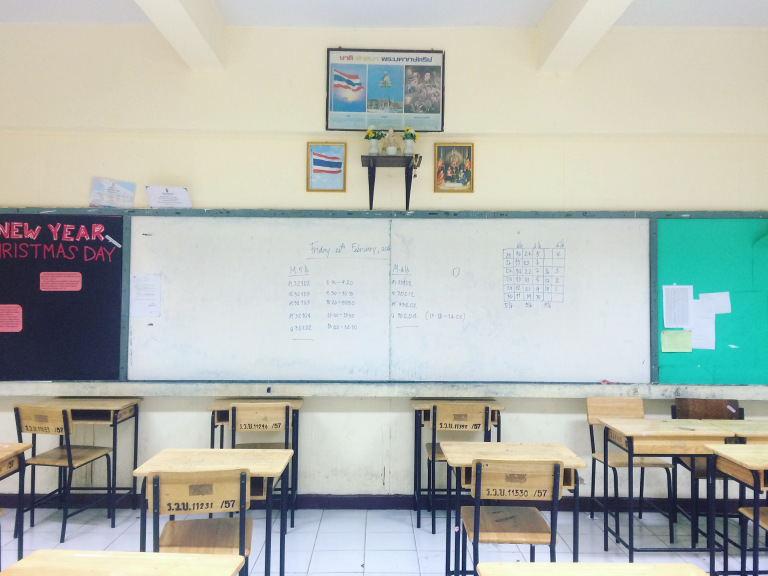
    8:30-11am: The first class of the day is at 8:30am, but as I only teach four, fifty-minute classes a day, I am usually able to spend this period preparing lessons and grading papers and projects. I typically have one or two classes before 11am.

    11am-noon: Lunch break. Either I pack fruit, snacks, and a peanut butter sandwich and eat lunch in the office, or I head across the street to one of my favorite coffee shops. RWB also has a huge canteen, where many students and teachers eat.

    Noon-4pm: The majority of my lessons take place after lunch. I teach M1-M4 (7th grade- 10th grade), and I see each class two or three times a week. Currently, I am teaching: Fundamental English, Listening and Speaking, English for Presentation, and English Around You.

    Typically, I spend the first 15-20 minutes of class explaining new concepts and vocabulary (using the whiteboard or a PowerPoint), and the last 30 minutes are spent completing worksheets, projects, and presentations. One of my favorite projects I had each of my classes work on this semester was having them come up with a detailed travel itinerary to an English-speaking country. Rather shockingly, a lot of my students seem to have a burning desire to go to New Zealand…

    4-4:30pm: I am always out of my office by 4:30, and oftentimes, I am able to leave right after my last class ends. The only time I have to “bring work home with me” is when I am creating midterm or final exams, or when I have a particularly large number of projects to grade. At the end of the day, I usually head to 7/11 to stock up on snacks (shocker) or to one of my favorite restaurants to eat an early dinner. Lately, I’ve been invited to dinner by a lot of my Thai friends right after school, so I’ve been able to experience a more authentic Thai experience (and delicious Thai food I didn’t even know existed). After showering, doing some laundry, and blogging or binge-watching Netflix, I’m typically in bed by 10:30, ready to start all over again the next day.

    Unfortunately (and contrary to my previously-held beliefs), many of my students do not understand why they should be learning English. Many of them (especially my older students), view my class as a time to get work done for their other classes or to take a snooze (no matter how fun or engaging my English activities might seem). Many of them view my class as an opportunity to misbehave or to play their guitars (yes, this has happened on multiple occasions). Some even think English class is a time to duct tape their friends to the wall (fyi: it’s not). Many of them like to see how far they can push me until I snap (luckily, it takes a lot for me to snap), and far too many of them use their phones constantly.

    While my M4s are much better behaved than, say, my M1s, all of my classes have their days. Classroom management is one thing I struggle with on a daily basis, but anytime someone is out of their seat or misbehaving (cough, cough all of the boys in my M1 classes), I’m the first to send them into the hallway. Each class has their strengths (and weaknesses) and their specific interests, and so it is important for me to tailor my lessons around those characteristics. As you can probably guess, relevant and interesting lessons are essential. Another thing I’ve learned during my time as an ESL teacher is that explaining something to the entire classroom while trying to keep their attention does. not. work. Rather, I’ve learned to break the class down into smaller groups and slowly and carefully explain what I want them to do. Instructing the class in small groups is much more effective, as otherwise I’m greeted by a sea of faces covered in blank stares.

    As my first gig as an ESL teacher comes to a close, I’ll be the first to tell you: I have infinitely more respect for teachers (especially as I’ve been graced with so many amazing educators) and all of the hard work (and stress) that goes into lesson planning and classroom management. How amazing that people are willing to wake up every morning and dedicate their lives to making a difference in so many young minds—and in such a tangible way.

    Tomorrow is the final day of exams, and then I will have two weeks of submitting grades and preparing for my upcoming travels. As the end creeps ever closer and ever closer, I am doing my best to reflect on my time here and to consider what the best “next-step” will be for me. I will be sure to keep you all updated.

    xx

  • Life As I Know It

    Life As I Know It

    As the semester begins to wind down (where have the past three and a half months gone?), I’ve decided to write a post about a typical day in the ESL classroom: what time I start, what time I end, what my responsibilities are, etc., etc.. As I begin to write that post, however, I thought I would share with you (in no specific order) some tidbits from my life over the past few weeks.

    – It’s currently final exam week here at Ratwinit Bangkaeo School, and while I love exam week for the fact that I tend to get out of school around 2pm, I don’t exactly love sitting in silence in the back corner of a classroom (one that averages around 93 degrees) for about five hours a day. To give y’all an indication of how fun proctoring exams is, I’ve taken to writing blog posts on napkins and counting how many ants crawl over my desk. The last exam week took place during Christmas, and man, does that feel like a long time ago.

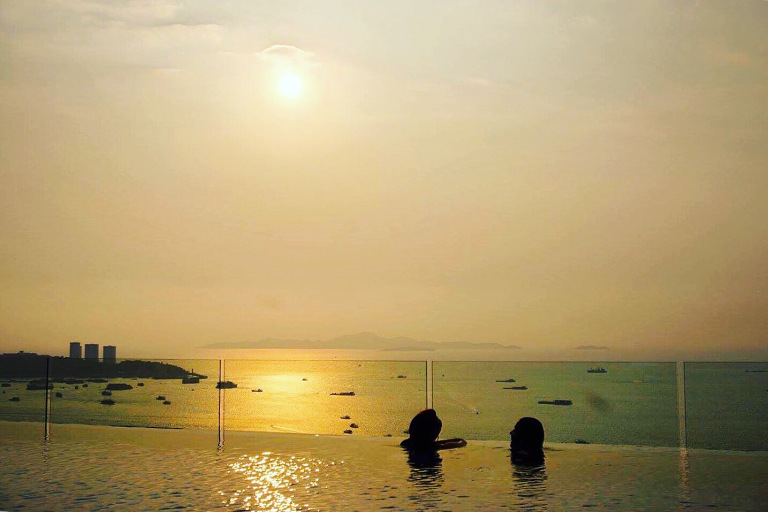
    – This past weekend was a long weekend thanks to Makha Bucha (or as the locals tell me: Buddha Day), and I made a trip to Pattaya which is a shoreline city about two hours south of Bangkaeo. SO, here’s the thing about Pattaya: If you live in or around Bangkok, it’s worth it to make a trip to Pattaya to visit the neighboring islands (we visited Koh Larn in particular and it was BEAUTIFUL). Otherwise, I don’t recommend staying in the city as it’s basically a giant RLD, and the entire city seems to smell like s**t. Maybe we stayed in the wrong area, but my consensus is that there are too many beautiful places in Thailand to make a stop here.

    – I also had my first (and perhaps last) visitor in Bangkaeo this past weekend, which was super exciting (S/O to Stef). We have officially planned trips for March and April to Malaysia, Vietnam, southern Thailand and Bali!

    – I accidentally bought “salt” flavored toothpaste from 7/11 the other day, and I can’t say I hate it.

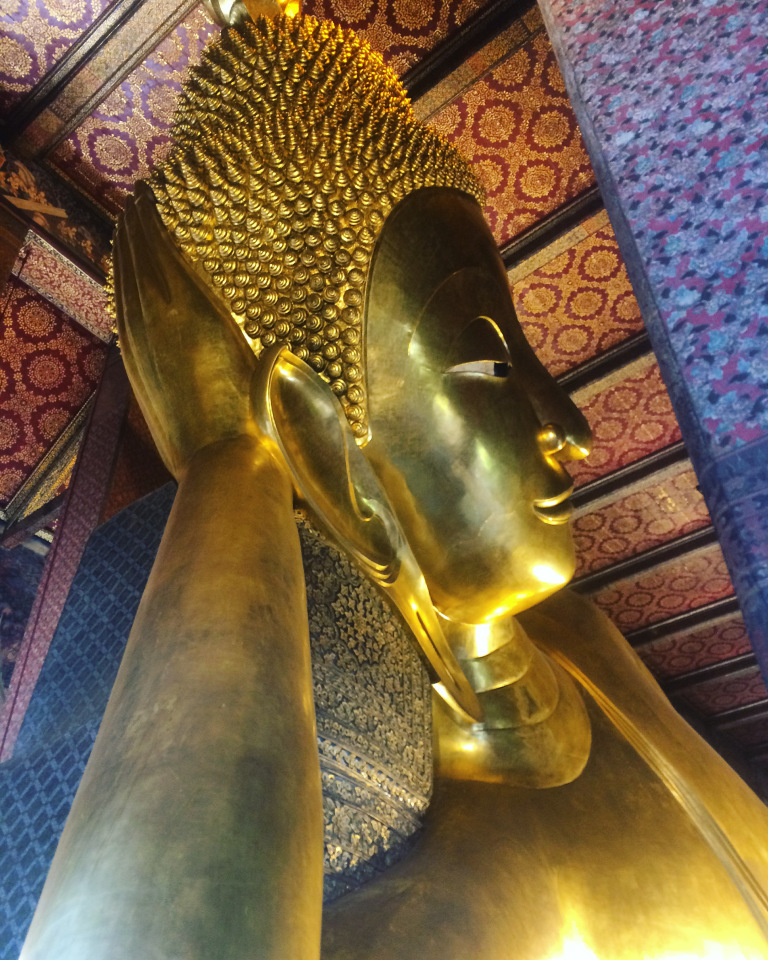
    – Two weekends ago, I visited Wat Pho and the Grand Palace, two of the most elaborate and well-known temples in Bangkok. Here’s my two cents: Go, and prepare to marvel at some of the most magnificent sights you will ever see. Perhaps don’t go on a Saturday afternoon (although I’m not sure if the crowds ever subside), and be prepared to pay upwards of 700 baht for entrance to both of these temples. ALSO, make sure you are wearing pants/skirts that cover your knees, and make sure to wear a shirt that covers your chest and shoulders. They claimed a scarf (which completely covered my chest and shoulders) wasn’t appropriate, and so of course I was forced to “rent a shirt” for a 200 baht deposit.

    – I recently celebrated my Thai friend’s birthday, and we went to an all-you-can-eat buffet, where you choose from an endless selection of raw meats and seafood and vegetables (no, I had no clue what anything was), and cook it yourself—in oil—directly on your table. Apparently this is a fairly common option for Thai families when they go out to eat, but I thought it was the greatest thing since sliced bread (for the novelty factor, but also for the delicious food).

    – Check out Iron Fairies in Bangkok. You won’t be disappointed.

    – Same goes for Rocket CoffeeBar.

    – I finally got my first Thai pedicure, and while I can’t say it was the most hygienic thing I’ve ever done, it was sorely needed thanks to all of the walking I’ve done lately—and I only paid 200 baht (about 5 USD) for it!

    – Speaking of pampering myself, I got two Thai massages in the span of two weekends. The first was in Hua Hin (more about that city later), and the second was in Bangkok. Both were about 250 baht and left me feeling relaxed and rejuvenated. A lot of people compare Thai massages to assisted yoga, as they involve a lot of stretching and awkward positioning of the body. At one point, I was lying on my stomach and the masseuse had my toes touching my ears, and at another, she proceeded to crack each of my toes, not once, but twice. To add to the ridiculousness, they have you wear these hilarious outfits of baggy shirts and high-waisted pants in shockingly-bright colors. At multiple points during both massages, I looked down at myself and burst out laughing. Whether you’re looking for relaxation or entertainment, Thai massages come highly recommended!

    – I spent the first weekend of February in Hua Hin, a city about three and half hours southwest of Bangkok. While I was in Pattaya, I was reminded a lot of Hua Hin, as both are beachy cities that attract a multitude of visitors on the weekends, and both populations seem to be a retirement community of sorts for older Westerners. If I had to choose one to re-visit, however, I would choose Hua Hin in a heartbeat. The nightlife was fun (in contrast to downright skeevy), the city had more of a “beach town vibe,” and while it was windy and stormy the entire time we were there, the beaches were a great escape from city-life.

    – There are a lot of things that tug at your heartstrings while living in a developing country. In particular, the treatment of animals here is something that would never be accepted at home. I’ve seen everything from horses panting and foaming at the mouth in Hua Hin for the sake of giving tourists rides on the beach, to elephants being marched around in front of the temples in Ayutthaya, to dogs being kicked as if it were nothing. I’ve seen ten birds shoved in a small cage to be sold to “let them go.” I’ve seen multiple kittens being carried in plastic bags. I’ve also heard horror stories about people snapping dogs’ tails because they “didn’t behave.” Perhaps most shockingly of all, you can read about the speed-breeding and abuse of the tigers at the Tiger Temple in Kanchanaburi (a popular tourist spot) here. With the proper education and resources, these issues can subside substantially, and so I beg that you do your research and boycott many of these animal institutions. I implore that you treat all animals kindly and with respect (yes, all living things deserve respect), and perhaps even check out Rescue Paws or similar organizations to see how you can help (even if it’s just a monetary donation).

    – One of my friends recently asked what I’ve learned about myself while in Thailand, and I responded: “Weeeellllll in stressful travel situations I tend to shut down and I get kinda…” I couldn’t even finish my sentence before two of my friends jumped in: “Cranky!” they shouted. So there’s that…

    – I’ve also learned that I need to be equal parts challenged and inspired to be successful. I’ve learned that I need my own space and crave independence, and I’ve learned that I will pursue opportunities that allow me to live abroad for as long as I possibly can.

    Until next time,

    xx

  • Jai Yen

    Jai Yen

    I know you’re about to be very confused, but I have changed locations on you. Rather than typing away from the back corner of the Coffee Garden, I have moved next door to the Noodle Garden (yes, this is actually the name). I just ordered chicken with rice aka “gai” and “khao” and agreed “chai, chai” to a fried egg on the side—“kai dow.” This is about the extent of my Thai, by the way, but I’ll be the first to tell you… it’s come a long way since I first moved to Bangkaeo.

    The women who work here are always excited to see me, and definitely not because they like to practice their English. In fact, they seem to be convinced I speak Thai, and my guess is that they might just be excited to have customers at all (I’m typically the only one in here), but alas… I usually just exchange a small greeting of “sawa dee ka… sabai dee mai ka” and then grin from cheek to cheek every time I make eye contact. As explained during my TESOL course, a smile goes a long way here in Thailand (doesn’t it everywhere?), but as much as I thought I might be constantly forcing a smile, there’s no need to force anything. Whether it’s my students mimicking me (oh my goodness) or the woman at the local noodle shop squeezing my hand and being genuinely glad to see me, I have no reason not to smile. There’s no reason not to feel happy. When I look back on my time in Thailand, that’s going to be the thing I remember most.

    Similarly, I’ve been thinking a lot about a Thai phrase I learned during my TESOL course in Chiang Mai: jai yen. This literally translates to “cool heart,” but in a deeper sense, this phrase might be similar to staying cool, calm, and collected—maintaining a heart and mindset characterized by patience. While the idea of staying calm and patient is something I have always related to, this way of life has slowly but surely etched itself deeper and deeper into my existence. In a country that has been slowed by the hot sun and the values of Buddhism, a calm and patient heart has allowed me to forgive what I once might have viewed as hideous offenses. I no longer feel the need to huff past everyone walking at a snail’s pace on the sidewalk. I no longer feel the need to ask for something and have it be presented to me immediately. I no longer expect those in the food industry to be overly-efficient. I no longer feel as if my students should understand what I am saying, the first time I say it. I no longer expect to adjust to a new place in an accelerated manner just because I feel like I should.

    But adjust I have. I’ve adjusted to this new way of life (in large due to the values of “jai yen”), and as the pages in the calendar quickly flip by, I grow more and more accustomed to Bangkaeo and Thailand in general. In fact, I’ve been feeling slightly sharp-edged about going “home” in a couple of months. I feel upset that I booked a plane ticket home so far in advance (shocker), and I wonder what I should do. Should I stay or should I go? Should I extend my time here for a few more months? Should I head home to make more money in preparation for my next adventure? Should I remain somewhere for the sake of the relationships that I’ve built? For the sake of a minimal-responsibility lifestyle? For the sake of slowly falling in love with my surroundings and the people around me?

    To be honest, my head is spinning in circles. Like I expressed over a month ago, I’m not sure there is a right or correct decision. Can you ever really know until you commit to something and then—maybe years down the road—gain some perspective? Couldn’t just about anything be labeled as the “correct” decision—the correct decision for you in that moment, at that exact time—whether it feels correct or not? Won’t I and can’t I make it work either way? Similarly, I understand that a plane ticket can be changed. But staying means finding a new job and a new apartment, as I will no longer be in Bangkaeo. It means surviving for two months without an income. It means giving up a lot of what I’ve become adjusted to over the past few months. Staying means giving up the opportunity to go home and make enough money to travel more extensively. Staying also means pursuing and building upon the multitude of amazing relationships I’ve created here. It means seeing more of Thailand and Southeast Asia, and it means continuing this experience that I fear might be cut short if I leave in April. I feel like I need to stay, and I feel like I need to go. Where is the middle-ground?

    To make matters even worse, nothing seems to be falling into place for this summer—although I have applied to a number of different jobs (is this just another sign to stay?). I’m afraid of taking even the smallest step backwards, especially after such a monumental and life-changing experience such as this one. I want to keep moving forward, and I want to keep moving forward at the same, seemingly-life-threatening speed. It’s terrifying and exhilarating and addicting. And while it’s certainly not sustainable, it is always pursuable.

    Does anyone want to make this decision for me?

    In addition, I’m even more confused by the fact that the school year is about to end (at the end of February no less), all of my students have an end-of-the-year mentality, I’m finally getting adjusted to teaching, and the weather is getting colder and colder. Tell me how to wrap my brain around that!

    As “summer break” approaches, we’ve officially stumbled upon another cold spell here in Bangkaeo, and I can’t say I’m complaining. Walking to school in the morning, the temperature averages around 60 degrees, and when I walk home in the afternoon, the highs are typically around 80 degrees. Amazingly enough, a cardigan and light scarf have officially become part of my uniform, and I no longer arrive to school (after a ten minute walk) looking as if I had just run five miles. On my daily walk to school last week, I ran into the head of the Foreign Languages department, and she paid me (what I consider to be) one of the highest compliments: Thank you for your kindness and sweetness to our students, she said. They love you! You are- what do they say- beautiful on the outside and the inside. Immediately, I could feel myself start to tear up (is anyone surprised that I’m being sappy again?), and in a place where so much emphasis is placed on appearances and external beauty, it felt (put eloquently) freakin’ awesome to be validated for exactly what I came here to do— to make any sort of difference in a positive, meaningful and kind way. Similarly, my M3s (who graduate from the MEP after this year) expressed that they were hoping I would be teaching their M4 class next year… no such luck, but it put a smile on my face all the same. How will I leave this behind?

    As I push away my (now-cleared) plate of rice and chicken, I feel sedentary and more than content. I feel satisfied and happy. At this very second, there’s no need to make any rash or hot-headed decisions… there’s only the need to be right here, right now. And the need to pay my bill… Jai yen.

    xx

  • Life from My Balcony

    Life from My Balcony

    A balcony, while often viewed as a luxury, is an entity that is entirely commonplace in Thailand. And while I do see how balconies might just be the most useful thing ever, I can’t say I make very good use of mine. I rarely venture onto my dusty balcony, and I can’t say the view is very good—although I often open my door to let in the fresh air and the chaos of the busy road below (as well as plenty of miscellaneous creatures). Unlike my neighbors, I don’t string my laundry across my balcony for the world to see (although I would if I didn’t hand-wash a single piece at a time), and the only piece of furniture out there is a rickety plastic chair with a broken leg (honestly, I’m not sure how it hasn’t blown away yet…). In fact, I could even say my neighbor (a high school student who is prone to locking himself out of his apartment) has used my balcony more than I have, as on multiple occasions, I have let him in through my front door and out through the balcony door where I (anxiously) watch him maneuver himself onto the roof and then onto his balcony next door.

    Last night, however, after arriving home from Hua Hin, Bangkaeo lost power for close to an hour. The sun had set a few hours earlier, and so I was left to my own devices with no light, no fan, and no way to charge my phone. While power outages are something my town has struggled with before, I’d never lost power for so long, and I began to panic: Did I pay my electricity bill for February? Am I the only one without power right now? Should I call the landlord? Cue my brilliant idea to venture onto the balcony.

    Amazingly, as soon as I unlocked and pulled back the heavy wooden door, I felt like I had entered another world. The entire street was quiet and dark, and the only light came from the occasional purring car or motorbike. A boy rode past on a bicycle using the light of his phone to guide him, and I watched as flashlights clicked on and off in the homes across the street. In the distance, the street lamps on the highway glittered, and in the other direction, the neon green and orange 7/11 sign glowed hazily (tg for generators). While the stars were few and far between, the moon shone brightly, and I watched the silhouettes of stray dogs meandering across the street sniffing at every possible food source. I was mesmerized.

    Over the last few months, Bangkaeo has become my home, and I was intrigued to witness it at a standstill, as that’s only happened a handful of times before. Typically, Bangkaeo, while not the most exciting town, is home to one of the largest high schools in the region, and so when I head to school in the morning, and when I head home for the day, the street is jam-packed with traffic and students. After a certain hour, the pace slows considerably, but there are always plenty of cars on the street, and as I can barely keep my eyes open past 10pm these days, experiencing a moment of peace is rather rare.

    The last time I stood on my balcony, in fact, was about a month earlier in the middle of a rainstorm. I had hoped and hoped fervently for rain that afternoon, and when I woke up at 3am to the sound of thunder and rain pounding the pavement, I couldn’t get back to sleep, and I knew I had to witness the storm for myself. I stepped onto my balcony and watched as the wind blew the rain in every direction and lightning lit up the houses around me. I stood there for at least an hour wrapped in an oversized sweater and allowed the torrential downpour to soothe my heart, my thoughts, and my desire for rain.

    As clichéd as it sounds, it’s in these moments of dark, quiet reflection—gifted to me without a choice—in which I am able to truly appreciate where I am and what I’m doing. A bizarre question, but: how often do you stand outside of your home and take in your surroundings for an extended period of time? (How easy it is to take our everyday surrounding for granted). How often are you able to do so in your small town in Thailand? In the midst of a power outage? In the midst of a rainstorm? For me, these times are (obviously) few and far between, and so it is inevitable that I will embrace and remember them. While the school days continue to blur into each other, and the weekends race by, these are two distinct moments in which I have been able to observe and reflect without a single distraction. These are two moments in which I have come to understand the significance of what I am doing here—living and teaching in a foreign country. These are two moments in which I have recognized myself as the merely ant-sized figure I am in relation to the bigger picture.

    After my time here in Bangkaeo is done, I will quickly and easily fade into a distant memory for the people surrounding me, and yet, Bangkaeo—and teaching here in Thailand—will remain one of the most significant times in my life. It will remain a time of me living entirely on my own. It will remain a time of feeling entirely powerless and the most powerful I’ve ever felt. It will remain a time of warmth and love and laughter. It will remain a time of growth. Of acceptance. It will remain a time that is mine.

    In the bigger picture, six months in one, anonymous woman’s life is nothing at all. In the bigger picture, people come and go—sometimes before their time is up—and sometimes, people stay. In the bigger picture, it’s easy to feel insignificant and worthless. Meaningless and useless. It’s easy to question what am I doing here? But in these moments of quiet reflection, I understand that this entire experience is worth it all—all of the hardships, all of the questioning, all of doubts. I understand it’s worth it to myself, to my students, to the people who come and go, and to the people who stay. Up off the ground, a sole, shadowy figure on a dusty balcony, I understand that I have gained a greater perspective.

  • The Perks of Being a Sunflower

    The Perks of Being a Sunflower

    January 26th, 2016. The weather is the nicest it’s been since I’ve arrived in Thailand: 70 degrees with a slight breeze. I walk home from school in a mid-length skirt, a short-sleeved, cotton blouse and a lightweight, beautifully-patterned scarf picked up during my time in Barcelona two years prior. Students wave to me as I meander down the street. “Goodbye, Teacher Erin! Goodbye!” they shout as they sprint past me. I wave back and smile broadly: “Goodbye! See you tomorrow!” I shout the words for the sake of shouting.

    Today, the weather strikes a chord with me, and as I wait to cross the busy road, I pause to reflect on it. Today, the weather has accomplished a sort of balance: I am not greeted by a chilling rain, as I have been for the past few days, and I don’t feel as if I might suffocate in the still and stifling heat, as I have for the past few months. It feels like an early fall afternoon at home, and I couldn’t be more content. I turn my face up to the sun.

    Currently, it’s 6:12pm, and the sun has begun its daily descent. I sit at the makeshift desk in my apartment staring out of the door that leads to my dusty balcony and the busy road below. I’m letting the bugs in, but I don’t care because the fresh air is worth fifty flies and two gigantic spiders. I trust the lizard I’ve been rooming with for the past few weeks will take care of them.

    I’m ruminating on moments—small moments in particular—and how they can affect you so monumentally. Of course, my move to Thailand as a whole has been monumental, but it’s the little moments—moments that perhaps could just as easily happen at home—that feel the most monumental to me: small, lacy moments that glue themselves onto my heart and influence me in ways I cannot express.

    This weekend, I took a trip to Lopburi and Ayutthaya with three of my friends. Both cities make for excellent daytrips from Bangkok, or if you’re like us and want to get away for an entire weekend, you can easily combine the two.

    Saturday morning, we decided to take the 8:30am express (air-conditioned) train from Hua Lamphong Railway Station in Bangkok for 374 baht each. We couldn’t believe the excessive jump from the standard train’s fare—a mere 20 baht for no air-conditioning—but we weren’t in the mood to wait for another hour or shoulder the burden of potential heatstroke. Three stop-and-go hours later, we arrived in Lopburi and wandered across the street to Wat Phra Si Rattana Mahathat, where we ran into a group of Matthayom 4 (10th grade) girls who wanted to interview us and give us a tour of the temple as part of a class project. We readily accepted, and I almost died from laughter when she told us: “This temple was built… a long time ago.”

    After wandering through the impressive ruins for close to an hour (with the impending threat of heatstroke fast approaching), we made a detour to 7/11 before heading to Prang Sam Yot—a temple known for its wild monkeys (yes, monkeys). When we arrived at Prang Sam Yot (aka The Monkey Temple), a kind, weather-beaten man took us under his wing and showed us how to feed the monkeys with the corn we had bought at the entrance of the ruins. The monkeys had no qualms about leaping onto us and pulling at our earrings and hair clips, and one monkey was particularly enthralled by the buttons on my cardigan. Thankfully, our impromptu tour guide carried a large stick and shooed the monkeys away before they could cause any physical or monetary damage.

    As I sat on the train from Lopburi to Ayutthaya, I leaned my head back and, through tired eyes, watched the rural landscape blur past. I felt the incessant sun beat down on my bare legs, and I listened as men and women wandered down the aisles selling mangos and sticky rice. I imagined my legs were melting into the plastic seat. After a short nap, I was re-welcomed into the world around me, and my mouth felt like I had swallowed forty Q-Tips. My eyelids still drooped heavily, and as I shifted my legs to reposition myself, the seat gave out and sank three inches towards the floor. Stef and I stared wide-eyed at each other before I broke out into a magnificent grin.

    When we got off at the Ayutthaya train station, we immediately hopped into a miniature songthaew to take us to our hostel. After a much-needed shower, we headed to the Street Lamp bar and restaurant in search of live music. I chowed on delicious green curry and consumed a few glasses of wine, but unfortunately, the music wasn’t exactly up-to-par. Don’t worry though (!!!), we quickly moved on to the Jazz Bar a few doors down.

    After spending the majority of my weekends in Bangkok, it was strange to see everything begin to shut down around midnight, but we were eager to call it an early night anyway in order to be refreshed for temple-touring in the morning. We wandered into the closest 7/11 (#snackpot), and then stared at the deserted street wondering how we were going to make it home. Thankfully, we stumbled upon four motorbike taxis and agreed they were our best bet in getting home.

    The wind whipped at my cheeks, drying out my mouth, and tangled my hair into unruly knots. I was laughing so hard, my head and lungs felt as if they might explode. The four of us—each attached to the back of separate motorbike taxis— looked like parasitic leeches latched on to unsuspecting taxi drivers, and I couldn’t help but to laugh at the absurdity of our situation. The darkened world sped past us as we made our way back to our hostel, but as I felt the motorbike rattle beneath me and listened to my friends’ contagious laughter, I felt entirely consumed in this brief but significant moment.

    The next morning, over instant coffee and toast smeared with butter and orange marmalade, my friends and I laughed at our mode of transportation home the night before. “Call me crazy,” I said, “but I was totally reminded of that scene… in that movie… the one with the kids…” I was getting nowhere fast. “And in that moment… we were infinite,” I quoted. Immediately, one of my (anonymous) friends shouted: “The Perks of Being a Sunflower!” (#nailedit).

    What a rarity it is to feel so entirely aware and present in a single moment… what magic.

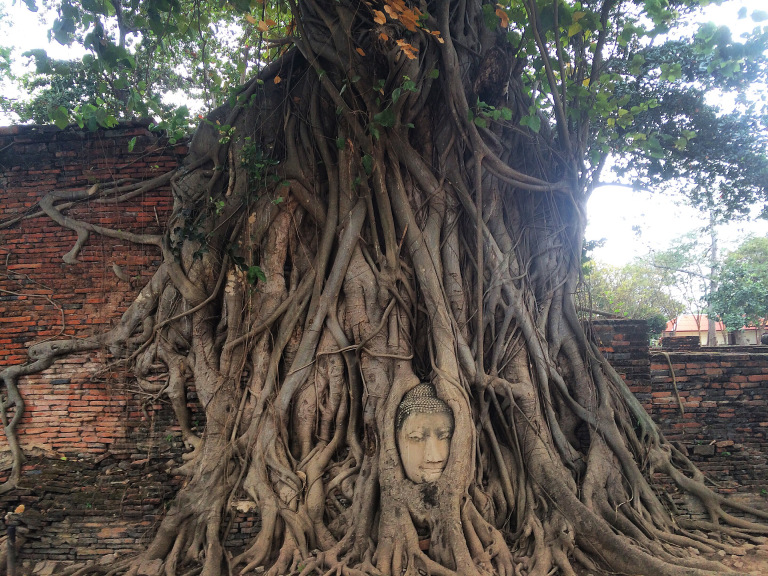
    The city of Ayutthaya and its ruins were awe-inspiring. We rented a tuk-tuk for 300 baht each, and we were able to see five of the most well-known ruins, including Wat Yai Chaimongkon, Wat Phra Mahathat, and Wat Phra Si Sanphet before heading home to Bangkok. The day was slightly rainy, but it’s hard not to appreciate the immensity and history of temple ruins—particularly in Southeast Asia—no matter the weather.

    By now, it is 7:04pm, the sun has set completely, and I must rise to shut and lock my balcony door. A cool wind sweeps in through the cracks and chills my toes, and I wrap myself in an oversized blanket. Checking the weather app on my phone, I can rest assured Bang Kaeo will be back to a blistering 85 degrees tomorrow… but we will just have to wait and see what the future really holds.

    I’m afraid of looking too far ahead; I’m afraid of letting another day rush past me without truly experiencing it. Sure, tomorrow will be just another day, but it will also be another day in Thailand. Another day to teach and to learn. To know myself better. To know my students better. To know Bang Kaeo better. Tomorrow, whether I know it or not, will be monumental. At the very least, it will be full of monumental moments… there’s no escaping them. Tomorrow, I will lose myself in the little, joyful moments, and I will stand strong and still during the moments requiring excessive patience. I will soak everything in. Tomorrow, I will turn my head to the blistering sun and continue to grow.

  • Life Amidst the Ruin(s)

    Life Amidst the Ruin(s)

    My reason for going to Cambodia was simple enough. What I came away with, however, was so far from simple that I’m still having difficulty processing it.

    This week marks three months since I’ve been in Thailand, and (reasonably enough, I suppose) foreigners are expected to check-in with Thai immigration officials every ninety days. As I had already purchased a multiple-entry visa before leaving the U.S., the check-in process was fairly straight-forward: leave the country for a short period of time… and come back (bounce over the border and bounce back, ya dig?). Get another stamp in your passport, and you’re good to go. (Once you’ve been working long enough, there’s also the option of a work permit and check-ins at the local immigration offices within Thailand, but—long story short—a work permit doesn’t seem to be in the cards for me).

    My friend Stef and I decided to travel to Cambodia to accomplish this (seemingly) straight-forward process, as it is the closest border to Bangkok, we could travel overland as compared to an expensive flight, and we could spend a day exploring the Angkor temples. From Bangkok, we took a taxi to Mo Chit bus terminal and then a 5am bus to Poipet (the border between Thailand and Cambodia), where we were gruffly shoved off the bus and aggressively told to hand your passports over right now by three Cambodian men. Thankfully, I had read about the abundance of scams the night before and shook my head no with raised eyebrows. For anyone traveling across a border (and for countries with visas on-arrival), you must get stamped out of your current country before you buy an official visa for the next country. If you do fall for the scam artists, however, the visas are still valid (albeit more expensive and you run the risk of losing your passport).

    Here’s how it ultimately went down: we stumbled exhaustedly through the line to get stamped out of Thailand, bought a Cambodian tourist visa (valid for thirty days) for $20 in the next unassuming building, and then waited in line (in yet another building) for a hot twenty minutes until we could get stamped into Cambodia. Overall, the process took about half an hour, and you are basically left up to your own devices. There are no officials telling you where to go, and signs are few and far between. Safe to say, I was thankful I had someone with me for my first overland border crossing.

    All the while, as you walk from building to building, your eyes are greeted with some of the most painful sights. Every few feet, mothers and families sit in the oppressive heat holding small bowls begging for one dollar, please… just one dollar. Children, who are obviously trained to do so, run up to you and cling onto your arm, staring up at you with their beautiful, longing brown eyes that you fear have seen far more pain and destruction than you ever will. They can’t be shaken off, but you don’t try very hard. You just shake your head no—sorry I don’t have a dollar—afraid to even open your purse for fear of your passport being stolen, all the while feeling their grip tighten just a little bit harder before they finally let go.

    Never have I seen so many people in one place so blatantly in need. In need of money, in need of clothing. In need of food. In need of shelter from the hot sun, in need of a job that doesn’t involve selling bamboo bracelets from a basket. In need of clean, fresh water. In need of things that no one person—no one outsider—can even hope to understand or afford.

    As I walked down the street, my heart cracked wide open, and I let the tears stream down my face, running in hot trails down my dusty cheeks. I couldn’t believe my naivety. I’ve read about extreme poverty, and I’ve watched documentaries on extreme poverty, but—until this point—I had never witnessed extreme poverty in a developing country. Not once during my three months in Thailand have I been greeted by a street full of people so direly in need, and yet, I’ve still been affected by the way many of my Thai neighbors live. My first glimpse at this street, lined with uncountable, beautiful, in-need humans searching for something that feels and appears so unattainable to me, will be an image that stays with me (and haunts me) forever.

    From there, Stef and I took the free shuttle bus from Poipet to the tourist center. There, we split a taxi to Siem Reap with a couple from Malaysia we had just met; the taxi cost $12 (the most expensive taxi I’ve taken thus far in Asia), and it took two hours. We drove through some of the most rural areas I’ve ever seen (as in cows roaming everywhere with no fences to be found), on a one-lane highway that would rival some of the back roads in my hometown. Every ten minutes or so, we would pass through another small village, and each time, I was struck by the lack of solid-looking infrastructure. I was strongly reminded of the more rural neighborhoods around Chiang Mai, and in comparison to my neighborhood in Bangkaeo, these villages appeared to be about twenty or thirty years behind. Around noon, we passed numerous children riding on bicycles away from dilapidated schools in their identical uniforms, and more than once, we drove past large fires in the brush and litter lining the highway.

    Although the taxi driver promised (multiple times) to take us all the way to our hostel, he decided instead to drop us off about three miles away with a large group of tuk-tuk drivers (with whom the taxi driver was very clearly in cahoots with). The tuk-tuk drivers promised to bring us to our hostel for free that day as long as we agreed to hire them to take us around the temples the next day for $20 between the two of us. This was also something I had read about (and was warned against), but at that point, we were ready to be done traveling, and so we agreed to a ride to our hostel for $10 and scheduled a pick-up for 5am the next day in order to see the sunrise at Angkor Wat.

    After arriving at our hostel, it was still too early to check-in, and so Stef and I dropped our backpacks and wandered through the streets of Siem Reap. In comparison to the towns we had just driven through, Siem Reap was much more developed: full of hostels and resorts, restaurants with air conditioning, massage parlors and bars. There was an evident European twist on much of the architecture and the layout of the streets, and many restaurants boasted of French and Khmer fusion cuisine. We wandered through the Old Market (where I bought a few postcards) and ate lunch before wandering back to our hostel for a quick nap. That night, we explored the night market and Pub Street and ate dinner at a local restaurant (where frog was promoted as the specialty—don’t worry, I stayed far away from that) before calling it an early night in preparation for our 4:30am wake-up call the next morning.

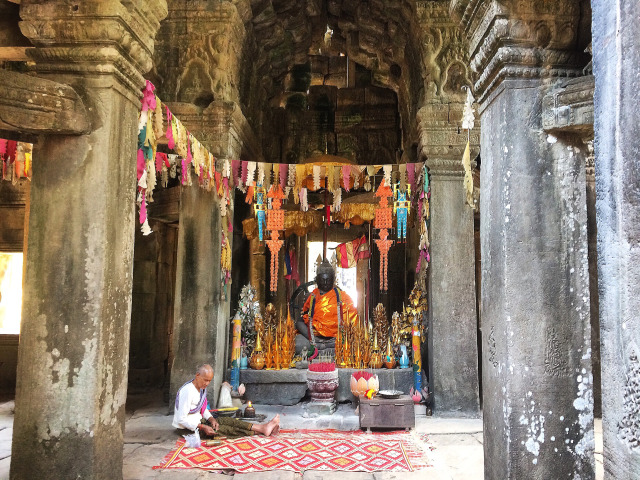
    (Not shockingly) 4:30am came much too quickly, and we met our tuk-tuk driver from the day before outside of our hostel at 5:15am (fifteen anxiety-filled minutes late, thank you very much). We began our day at Angkor Wat, where we watched the sunrise with hundreds of other people. It was one of the most serene and spiritual things I have ever witnessed (aside from the abundance of selfie-sticks and iPhones), and the temple ruins were just as incredible and extravagant as promised. We spent a solid four hours exploring Angkor Wat before we moved on to Bayon, Takeao, Ta Prohm and Banteay Kdei. If you have more time in Siem Reap than one day, I strongly recommend buying a three day pass, as there are thousands of temples, and each one is intriguing and unique in its own ways.

    That night, as we explored more of Siem Reap, I was approached yet again by a young boy (probably ten or twelve years old) asking for milk. The night before, I had turned him down as he had snuck up on me and growled, turning his eyelids inside out, attempting to scare me into action. Please, he had said (in very coherent English) after I had jumped back startled. I just want milk. I didn’t mean to scare you. I was just playing. I told him I didn’t appreciate the way he had treated me (and I didn’t trust going into the grocery store he was trying to drag me into), and so when I said no, he responded with a (very lovely) f*ck you. Clearly, this was an interaction he was accustomed to. Following our interaction, however, I couldn’t stop thinking about this boy and his desire for something as simple as milk. I would be lying if I said I didn’t replay our interaction over and over and over. As scary as he was, I had lain in my bed at the hostel and couldn’t believe that I had turned him down.

    When he approached me this time, however, I was prepared, and he clearly remembered me from the night before. Hello, he said, I promise I didn’t mean to scare you last night. I just want milk. Please come with me to the grocery store. When I attempted to hand him a few dollars and some riel, he tilted his head and stared at me. Please, he said again. I do not have any shoes, and they will not let me buy milk. For whatever reason, I took a deep breath and put my faith in this boy and his need for something that I could provide, and walked across the busy street with him (as he proceeded to hold up his hand in the middle of the road and halt traffic). I proceeded to buy him a container of $7 powdered milk and he graciously thanked me before running off.

    The next day (after waking up much too early yet again to catch a bus back to Bangkok), I met a woman and we began talking about our experiences in Cambodia. We spoke of all of the children on the streets, and she mentioned how she had bought a canister of milk for a young mother and her baby on her streets. As soon as she said the words “canister of milk,” alarms went off in my head, and I immediately googled powdered milk Siem Reap. Scam. Don’t buy anyone powdered milk. Scam. Huge scam. As it turns out, this is a fairly well-documented scam that occurs often in developing areas. Children or young mothers often ask tourists to buy them powdered milk as they have cut a deal with the local grocers. They can return the canisters of milk and both they and the supermarket will turn a profit. This, however, is not the worst part, as the children and young mothers appear to be part of a larger, mafia-type organization who control the proceeds. As I read this, I didn’t feel an ounce of anger or regret. Rather, I felt my heart crack open just a little bit wider.

    Corruption. Scams. Greed. Convolution. Desperation. Pain. Hunger. Violence. Manipulation. Three days in Cambodia, and each of these had become entirely apparent to me, while basic essentials like healthcare, education, and proper waste management appeared to be entirely lacking. As I continue reading about Cambodia post-travels, I read Angkor Wat is at risk due to under-regulated tourism; I read Cambodia ranked 99th out of 102 countries in regards to its law enforcement (or lack thereof). Don’t buy anything from children on the street… that only keeps them on the street. The people I witnessed this weekend are stuck in their ways. They don’t know any other way, and (as a huge proponent of education), I believe education is the only path forward. Can one girl teaching English make any sort of difference? How can outsiders make a worthwhile contribution?

    We live in a world of such abundance and excess, and yet there are so many people who starve. How is anyone expected or even able to move forward under the oppressive thumb of such a corrupted government? I tell everyone: everything happens for a reason, but what is the reason for people suffering inconsolably day in and day out? Is the magic of the world only applicable to those who are privileged and educated enough to access it? I read the negatives, I reflect on the negatives, and I tend to lose sight of the positives. Sure, Angkor Wat at sunrise at 22 years old was a once-in-a-lifetime experience, but I can’t seem to care about it right now. Instead, all I see are big brown eyes staring up at me and dirty, barefoot toes at the threshold of a grocery store.