Category: Teach in a Homestay – Thailand

  • Want to Live Abroad for a Few Months? Here’s How…

    Want to Live Abroad for a Few Months? Here’s How…

    Living abroad is not just for high school or university students taking advantage of a gap year. There are numerous opportunities to experience life in another country, work on your foreign language skills, and enjoy the newness of a culture that fits into a working schedule.

    Greenheart Travel’s Teach in a Homestay programs give globetrotters a chance to live like a local without having to commit to a year away from a job or school. Plus, teaching in a homestay is an amazing way to boost your resume and immerse yourself in another language and culture for 1-3 months at a time. Still not sure if this program is a good fit?

    Mikaela on a gondola ride in Venice during Carnivale.

    Here are a few more reasons to consider this unique opportunity to travel for a change:

    1. You can choose your start date.

    You can choose to go any time of year that works best for you. Are you a teacher with a summer break or a recent high school or college graduate looking for real-world experience before jumping into the next chapter of your life? Customize your program to fit your schedule with year-round start dates. Just be sure to apply at least 8 weeks before you would like to go, and we will have a host family ready to greet you.

    2. Build your resume without a long term commitment: 1-3 month contracts.

    Many people would love to have the experience of teaching abroad but don’t have the time to take a semester or year away from their lives at home. Being a homestay teacher abroad is great for students and teachers on summer break or anyone just wanting to take some time off of work. Build your resume with teaching experience, improve your foreign language skills, show off examples of being able to adapt to new environments and of course, gain international perspective in an increasingly connected world.

    3. Experience life as a local by living with a host family.

    Host families love to teach their homestay teachers about their country, show them around and introduce them to their family and friends. You will become a part of the community, which is way more exciting than being a tourist!

    4. Flexible schedule with lots of free time to travel.

    When you are a homestay teacher, you only teach English for 15 hours per week. The rest of the time is yours to explore the area, travel and make friends from around the world. Lots of our teachers get involved in the community by volunteering, taking language classes, or joining local social groups that match their interests.

    5. It won’t break the bank!

    You can do a 3 month program for around $20 per day! Living in Europe for 3 months can get expensive when you add up the cost of meals and hotels or apartments and utilities. But when you live with a host family, you don’t have to worry about any of this. Your host family provides your accommodations and three meals per day, and you are better able to budget and save for your unforgettable time abroad.

  • 5 Ways Thailand Will Surprise You While Teaching and Living Abroad

    5 Ways Thailand Will Surprise You While Teaching and Living Abroad

    When I moved to Thailand to teach English, I knew that I would try new food, visit some amazing beaches, and explore ancient temples. I knew that I would be surprised and challenged at school and by trying new things, but living here has brought many surprises.

    Here are five ways that Thailand will surprise you:

    1. Thailand is More than Just the Land of Smiles

    My thai student and host sister and I visiting the local aquarium.

    Thailand is known as the land of smiles, but Thai people are hospitable beyond belief. Within minutes of knowing someone I have been invited to dinner with their family, offered rides, been boating and rafting, and taken care of as if I were a family member.

    When I came down with a fever and virus, my Thai friend (and conveniently, doctor) sent her husband to bring me to the hospital and pharmacy. They then insisted that I stay at their house with them so that they could take care of me. After that they made sure I had enough food before taking me home and checking on me the following days. I was amazed at how quickly they welcomed me into their home and family.

    2. A Scooter Serves Multiple Purposes in Thailand

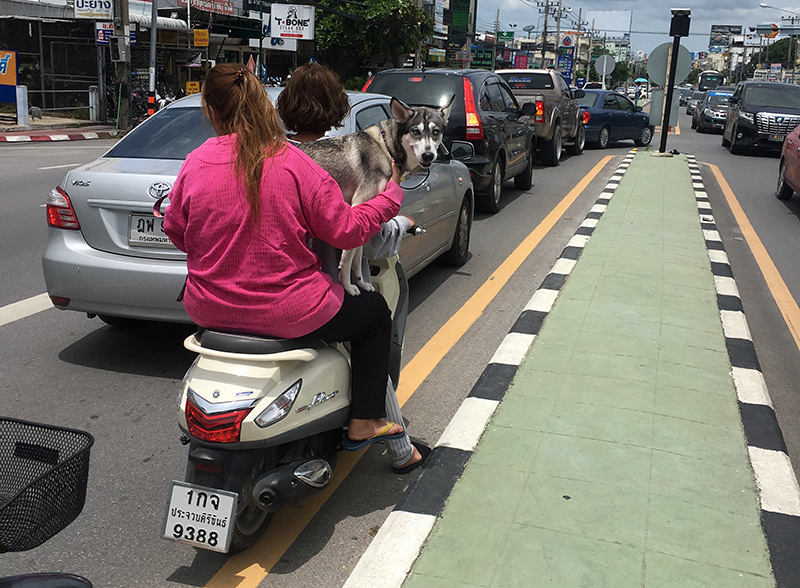
    It is common knowledge that scooters are widely used throughout Asia, but I was surprised with just how resourceful Thai people are with their scooters. They serve so many purposes!

    It is the family car, made with a special child seat in the front. It can fit one person, or 5 with a dog, in the front basket. It can be used to carry anything including ladders and couches. Scooters also function as mobile food and ice cream carts (and in this case an ice cream scooter and local taxi/playground).

    I was also surprised that you can get a motorbike taxi to just about anywhere for significantly cheaper (and faster) than a car.

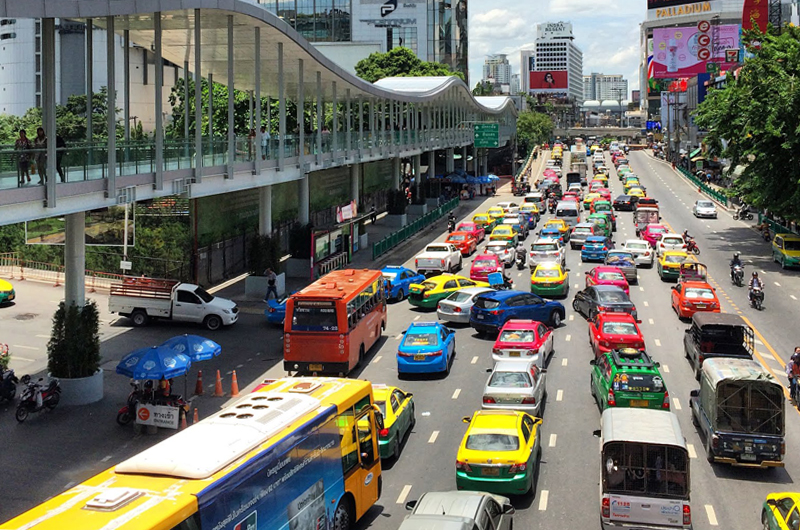
    3. Not Only is Traffic in Thailand Organized Chaos, Life is as Well

    Everything in Thailand seems to move at a different pace and work differently than back home, but in the best way possible. Even though I normally don’t understand the methods, I have learned to trust the process because in the end things work out (whether it be transportation, maintenance in my apartment, or in everyday interactions).

    I have come to realize that my school also uses the “organized chaos method.” Sometimes we find out about things months in advance, other times moments before (I guess it just depends on the day).

    Similarly, I was recently on a motor bike taxi when the driver just pulled over, turned off the bike, and walked into 7/11. I just sat and waited a few minutes, he came back, popped his cigarette in his mouth and off we went. In most situations, I have no idea what’s going on, but I trust that the organized chaos will get me to where I need to go.

    4. The Sunsets and Sunrises are Incredible

    Whether you’re in the mountains or at the beach, you are almost always treated to a colorful sunset. On one of my first nights in Trang I noticed the sun starting to set and decided to head to the roof of my building to watch the sunset. Not expecting anything spectacular, I was shocked by just how beautiful the sunset was.

    Another time while visiting Koh Kradan, the sun began to set while we were still in the water. It was incredible to watch the sun go down while floating in the ocean. Whether you are at the beach, in the mountains, or in Bangkok, you will most definitely be treated to some remarkable sunsets in Thailand.

    5. Thailand Quickly Becomes Home

    As cliché as it sounds, I was shocked how quickly I settled into life here in Trang. I arrived, decorated my apartment, and quickly fell into a routine, just like back home. And it feels normal. I have my routine, friends, and life here. It’s comfortable and that’s something I never expected.

    But one of the most surprising things for me about living in Thailand is how it feels like a second home. Despite the language and cultural barriers, and even though I am still a foreigner living in a relatively small town, I feel like I fit in.

    I know that I found my small piece of this puzzle that is life in Trang and life in Thailand. I found my place, and I could not be more surprised and happy finally feeling like I belong.

    My thai host family in Trang, Thailand.

    About the Author:

    Hi! My name is Kelsey, I’m 23 years old, and I am a Colorado Native. I’m a sucker for cute dogs, margaritas, and anything outdoors. I am currently living in Hua Hin, Thailand and sharing my adventures from South East Asia!

    Follow Kelsey’s blog “The Life of Kelsey Barlow” for more insights into teaching English in Thailand! 

    Want to be surprised by all Thailand has to offer?

  • 6 Tips to Learning Thai, and Other Languages, While Teaching Abroad

    6 Tips to Learning Thai, and Other Languages, While Teaching Abroad

    So you have been teaching in Thailand, and have picked up enough phrases to order that delicious pad Thai up the street, find a bathroom easily by asking, and haggle your way through any tuk tuk/taxi conversation. But the moment someone asks you a question that doesn’t illicit a ‘yes’ or ‘no’ answer, you fumble with your words. Your brain freezes up, and you can’t think of what to say. What do you do now?

    The answer is simple: Study more and study hard.

    A statue of Buddha in Thailand.
    A statue of Buddha in Thailand.

    A Plateau in Language Learning

    You have tried so hard to learn what you have, yet you feel like studying isn’t taking you anywhere. What can you do?

    Don’t worry, I have been where you are before, and I have struggled with learning Thai. I am nowhere near fluent yet, but I have passed the beginner stages. This “brain freeze” you are experiencing isn’t a headache from a Slurpee at 7-Eleven, but a plateau.

    A plateau in language learning, or any skill in life for that matter, is the glass ceiling you get to after putting in so many hours of practice and work into learning a skill, such as learning Thai, and you suddenly find yourself not progressing at the expedient rate at which you were before.

    This article will hopefully provide you with the tools (more specifically a sledgehammer) to help you break through that glass ceiling, and to keep progressing in your language learning. Are you ready?

    People visiting a temple in Thailand.
    People visiting a temple in Thailand.

    Here are six tips to help you learn Thai, or another language, while teaching and traveling abroad:

    1. Speak as much as you can, and make mistakes.

    This is number one for a reason. If you want to get better at a skill, then you need to practice it as much as possible. Not only that, but you cannot be afraid to make mistakes. Once you have a fear of making mistakes, your confidence will diminish, along with your motivation for learning the language.

    Remember that motto you heard all your life: Learn from your mistakes.

    If you don’t make mistakes, then you will not learn. So go out there, start talking, and find out the hard way. Get your elbows dirty and your tongue twisted. If you find yourself struggling and making mistakes, or finding it difficult to locate a phrase or word in your lexicon, then laugh it off. Odds are, the Thai person already is.

    Thai salad on a table.
    Thai food on a table.

    2. Learn relevant language for everyday use.

    What do I mean by this, you ask?

    Well, it is simple. Start by learning phrases that you can use everyday. Granted at this point you’ve already learned phrases like, “How much is this?” and “Is this spicy?”

    • Now’s the time to learn the words for places you frequent like ‘restaurant’, ‘train station’, ‘bank’, ‘school’.
    • Learn simple descriptive words such as colors and common adjectives.
    • Work on your numbers past the hundreds.
    • Learn how to ask where someone has been, and where they are going.
    • Figure out how to say expressions such as, “How was your day?” and “What food do you like?”

    If you are struggling to think of what to learn at first, think of simple phrases you say in English daily, and then make a list out of them. Odds are it will be extensive.

    The back of a truck that says Thailand.
    The back of a truck in Thailand.

    3. Learn in sentences (phrases).

    There was a famous linguist that said words by themselves have no meaning. Try it. What does ‘couch’ mean? You can tell me it is something you sit on, sure, but the only reason this word has that meaning is from the context of other words describing what it does.

    What I am getting at is that if you focus on learning individual words all time, you won’t understand the context, and you won’t commit them to memory. For example, if you know how to ask, “Where is the bathroom?”, you can now ask, “Where is the bank?”

    If you know how to say the phrase, and use it daily, it will be much easier to learn and remember the new vocabulary you are studying. This strategy is called sentence mining; literally mining a sentence for new vocabulary. Google it, it is extremely effective.

    Thai long boats on a beach.
    Long boats on a beach in Thailand.

    4. Do not let grammar rules and translations in your native tongue influence your target language.

    I learned from a hyperpolyglot named Stuart J. Raj (Google him too, he will blow your mind), about how to think in meanings. I can’t say I do this all the time, but I try to whenever I speak Thai.

    For example, take the word“ไป” (pronounced ‘bpai’) in Thai. It means “to go” in English. But, think about what ‘to go’ actually means. For a Thai person, ‘bpai’ is more along the lines of to move away from the point in space where you are right now, while the word “มา” (pronounced ‘ma’) means coming towards where you are now from a point where you were before.

    So, instead of attaching a single word, such as “go” or “come” to a Thai word’s translation, try to think on a deeper level. It will help you in the long run. It sounds difficult, but so is learning a foreign language.

    5. Create an immersion environment that will stimulate your learning.

    This one is important. What I mean by this is even though you live in Thailand and are surrounded by spoken Thai everyday, you can do so much more to learn.

    For starters:

    • Listen to Thai talk radio
    • Learn some Thai music
    • Read Thai children’s books
    • Watch T.V. shows in Thai
    • Speak out loud when you are alone in Thai

    Pretty much what I am saying here is that anytime you think of doing something in English, do it in Thai. You will thank me later.

    Young students in a classroom in Thailand.
    Young students in a classroom in Thailand.

    6. Don’t Speak English unless you absolutely have to, or don’t use it at all.

    This is the Mother of all the tips, and also the most difficult. If you are reading this you are most likely an English Teacher in a Thai school, just like me, so you speak English for a living. But, when you are not teaching, challenge yourself to speak only in Thai.

    • When you go to the market, speak in Thai.
    • When you talk to your Thai friends, even if they speak English fluently, respond in Thai.
    • Try to use the language as much as possible, or even promise yourself not to use your mother tongue.

    Not falling back on your mother tongue does a lot for your learning process. It allows you to work around words you don’t know when you hear them. If you fall back on English when you are in a conversation, you are limiting your ability to listen, hear, and speak the language. Also, if you fall back on English frequently, you aren’t really trying anymore. I know it’s not possible to do it at a beginners level all the time, but maybe set aside 30 minutes to an hour a day where you pledge to only speak Thai, and increase the amount of time the better you get.

    Thai culture books on a shelf.
    Thai culture books on a shelf.

    Try, and Try Hard

    I know what you are thinking: “But, Max, this is so much to do!”

    Guess what, it is.

    Learning a foreign language is no simple task, and not for the faint of heart. Plus, it takes hours of time, effort, and requires intense dedication. Trust me, if you don’t put in the time and effort to actually sit down and study an hour or two a day, you will not become fluent. You will also likely not “pick up” the language just by living in Thailand. If you want to learn Thai, or any foreign language for that matter, you have to try, and try hard.

    Ask anyone you know who speaks a foreign language that isn’t a native speaker. They will tell you they studied; I guarantee it. I am not trying to sound mean, that is just how it is.

    Hopefully my tips point you in the right direction to further your language learning process! Remember, learning languages is fun and a wonderful experience, so embrace it head on!


    Do you have any language learning tips? Share them below!

  • 10 Thai Dishes to Experience While Traveling in Thailand

    10 Thai Dishes to Experience While Traveling in Thailand

    When most foreigners think of Thai food, Pad Thai and spring rolls jump to mind. If you spend some time teaching or living in Thailand; however, you might be surprised at the immense diversity of the food. Not only is the food an artful balance of sweet-spicy-sour-salty (often in the same bowl), but cultural exchange has shaped much of the cuisine.

    There are the rustic and earthy flavors of Esan, the seasonal dishes of the north and the spices of the south. Noodle dishes abound, many of Chinese origin. Chinese communities also helped inspire the annual vegetarian festival that is celebrated during the rainy season. You can find Muslim influence in everything from street stall roti to peanut-based satay.  

    So, the culinary culture of Thailand is far from homogenous. That being said, most meals are paired with rice. In fact, rice is so ubiquitous that an everyday greeting translates to, “Have you eaten rice yet?” Thais are seriously passionate about their eating. It’s reflected in their language, and of course in their cuisine.

    Here are ten dishes worth tasting, although it could easily be a list of fifty:

    Oodles of Noodles

    Some Thai friends invited me to their restaurant, where we sampled bowl after bowl of noodles. With each new dish they asked me for the English name. My answer was always “noodles”. They would laugh because their naming depended on the size of the noodle, how it was made, the color, and what was in it. I guess it’s similar to telling an Italian that risotto and gnocchi are both “pasta.”

    Here are three of my favorite noodle dishes:   

    1. Pad See Ew (Stir-Fried Noodles)

    Hold up on the Pad Thai and order yourself the lesser-known Pad See Ew! Characterized by wide, flat noodles (sen yai) fried with Chinese broccoli, soy sauce and egg, this dish can be found all over Thailand. It’s typically served with thinly sliced meat, but can easily be adapted to the vegetarian palate.    

    2. Kow Soi (Curry Noodles)

    Chiang Mai’s signature dish is soft egg noodles, pickled vegetables, and a so-tender-it-falls-off-the-bone leg of chicken swirl in fragrant, curry-like soup. Topped off with deep-fried noodles for an incredibly satisfying crunch.

    3. Bamee Moo Daeng (Yellow Noodles and Red Pork)

    A dish with electric colors, adapted from China that is simple but oh-so-satisfying. If you’re craving comfort, delve into a hot bowl of thin yellow noodles, fried garlic, fishballs, blanched greens and crispy red pork.

    Thai Cuisine Beyond Noodles…

    Gaeng Hang Lay Moo Curry (Pork Belly Curry)  

    When I asked a friend from Chiang Kham to recommend a northern dish, this was his immediate suggestion, and for good reason. It’s decadent and sweet and savory and wonderful. Soft pork belly swims in an ocean of hot red curry.

    What makes the dish, though, is the seasoning. The flavor is distinctly Thai, but hints Indian due to the slew of spices blended into the curry—cardamom, turmeric, fennel and masala to name a few. The dish actually descended from Indian down to Myanmar, and from there made its way to Thailand. It’s an excellent example of how intercultural Thai cuisine truly is.   

    Kai Med Ma Muang (Chicken and Cashew Nuts)

    Cashew and chicken stir fry! Dried chilies add smoke and spice. Delicious over jasmine rice.  

    Panang Curry

    A kind of thick curry with many variations. Coconut lends it a rich creaminess, and the consistency, in combination with nutty undertones, differentiate it from soupier red curry. It typically contains some kind of meat, like shrimp or chicken.

    Som Tam (Green Papaya Salad)

    It tastes a bit different anywhere you order it, but it’s always a tastebud explosion— crisp, unripe papaya is pounded into a mortar with a tantalizing mixture of sour citrus, salty fish sauce, sweet palm sugar and spicy chilis. It’s popularly combined with grilled chicken and sticky rice. If you’re feeling traditional, use your hands by first taking a pinch of sticky rice and then reaching into the papaya salad

    Tom Kha Kai (Chicken Coconut Soup)

    A mouthwatering and surprisingly refreshing soup that’s great for sharing. It’s not quite creamy—silky is a more apt descriptor. Lemongrass, kaffir and lime juice add a punch.   

    Larb (Minced Meat Salad)

    Although it varies from region to region, larb is basically som tam for carnivores. Minced meat (or mushroom) is mixed with spices and toasted rice. It’s often served with vegetables, and is typically dressed with either lime juice, fish sauce or some combination thereof. In the north it’s heavily spiced, and sometimes served raw. Be careful with this, for obvious reasons—it’s best to opt for the stir-fried version.

    Thom Kao (Rice soup)

    The chicken-noodle-soup-of-Thailand, and apparently a popular breakfast entrée among locals. The rice is cooked until thick and soft, sensationally flavored with garlic, lemongrass, scallions and fresh cilantro. 

    BONUS: Fruit.

    Unless you come from someplace tropical you’ll likely encounter fruits you’ve never heard of like:

    • lychee-like longan
    • dragonfruit from cactus
    • sweet-and-sour pomelo
    • adorably fuzzy rambutan
    • crunchy rose apple
    • waxy jackfruit
    • nearly two dozen different kinds of bananas

    Some of the fruits are entirely alien-looking. If you’re in a city, look for small stalls that have a selection on ice. They’re typically 10-20 baht for a serving, and many are paired with a little bag of seasoning—the classic chili, sugar, salt.


    About the Author:

    Greenheart Travel English teacher, Chiara Burns, is a wanderer, wonderer, insomniac and a firm believer in the powers of serendipity and human kindness. Chiara likes traveling, fantasy literature, deadlifting, and photoshopping Tom Hanks’ face onto photos of the family dogs. You can read more about her adventures in Thailand on her blog, The Road to Everwhere.


    Teach in Thailand to taste all the “Land of Smiles” has to offer.

  • Alumni Spotlight on Dawn McGowen; Two-Time Homestay Teacher in Spain & Thailand

    Alumni Spotlight on Dawn McGowen; Two-Time Homestay Teacher in Spain & Thailand

    After doing a homestay program in 2015, what inspired you to enroll again for 2016?

    I had an unforgettable and phenomenal time teaching English in Spain. My eyes were opened to the joy of traveling, and just getting lost in a new city. Getting to completely immerse myself into a new culture was the greatest experience, and I was desperate to do that all over again. As a teacher, I knew I would have time to go abroad in the summertime, so I decided to make the leap again. As soon as I started reading about the opportunity to teach in a homestay in Thailand, and the experiences that alumni have had there, I had a strong gut feeling that it was the next place I needed to experience for myself.

    temple-under-construction

    Can you describe the two different families you lived with?

    I am very fortunate to have been hosted by two generous and kind families. Each homestay experience was amazing and unique in its own way. My family in Spain was very social, as most Spaniards are, and very family oriented. As soon as homework was complete, the kids went outside to play until called in for dinner. Each night we gathered around the table snacking on olives and potato chips while my host mom finished up with dinner. Then we lingered over cookies and fruit when dinner was over just talking about our day.

    Weekends were almost always spent away from the house. There are too many places to see and people to visit to just spend the weekend at home. In fact, my host family thought it was odd if I wanted to spend a few hours just relaxing at the house. The Spaniards like to get out as often as they can, and that’s definitely what my family did. I loved spending time with my host family and sometimes just observing them interact together. They really prioritized spending time with family and friends over anything else.

    dawn-mcgowen-at-airport-in-bangkok

    In Thailand, my host family was consumed by work and school. Their lives are preoccupied with a desire to better the lives of the kids and to be prepared for the future. My host dad worked extra hours/jobs whenever given the opportunity, and my host mom assisted him when she could. My two host sisters spent their every extra minute studying for school and taking extra classes and lessons to get ahead. Their weekends were filled with lessons at the language school or study sessions with tutors. The time for socializing was minimum. One weekend, the entire family and I spent a day at the beach in Pattaya. We all had a blast, but the kids were very concerned about the learning time they missed. They had extra tutorial sessions during the week after school to help make up for that.

    While each family member was always busy with school or work, that’s not to say they didn’t spend any time together. They just did it differently. Since homes contain air-conditioning units in individual rooms, my family would often all gather in one room to do their work separately. My host parents would be on the computer while my host sisters sat at the table to complete homework. Occasionally they would all break at the same time to have a snack before resuming work. If everyone was home, we ate together. Every now and then, we all sat outside with extended family members snacking on fruits and treats bought at the market.While their lives were very much filled with work, my host family found time to be together whenever they could.

    alhambra-palace-in-granada

    Do you have a favorite memory from your time abroad?

    One of my favorite memories is when I took the metro into the city of Madrid for the first time. I remember stressing out at the possibility of getting lost and not being able to find my way home. After getting directions from another Greenheart Travel participant, I hopped on the metro and made my way into the city. I was skeptical that I had actually made it to my destination, so I just followed the crowd through the tunnels and up the stairs to street level. It was at that exact moment that I realized what I had done. I was in Spain! I had traveled abroad to a country I had always wanted to see, but never thought I would, and I couldn’t believe it.

    Taking my first steps into the city, I took it all in: the crowded sidewalks, the architecture, people lounging in cafe terraces, bits of Spanish conversations, and the smell of freshly baked bread. I was hit with a sense of accomplishment that I wasn’t expecting. Never had I once thought I’d actually travel to another country. My life before that had been preoccupied with doing my best in school and then doing my best to pay off my school loans. At that moment though, I stood there in awe of the city of Madrid, and then I stood in awe of myself. I felt brave, my heart was happy, and my confidence skyrocketed. For the first time, I truly believed that I could do whatever I set out to do. Standing there in the middle of Madrid was proof of that.

    With a huge smile on my face, I walked off in one direction to do some exploring, and then I continued to explore for the next two months. That one huge burst of confidence has done wonders for my self-esteem and personal development. I’ll never forget it, and I strive to bring that feeling back to the surface every chance I get.

    dawn-mcgowen-at-beach

    What are some of the major lessons you’ll take away from these homestay experiences?

    Keep an open mind. Be willing to learn. Be kind. Take chances. And be grateful for all you have. I fear I’ll ramble on for pages if I elaborate, so I’ll just keep it at that.

    Have you caught the travel bug yet? Where is your next adventure?

    Saying that I’ve caught the travel bug is a huge understatement. Traveling is like dying of thirst, and then only getting a single sip of water. You’re grateful for that one sip, but you really want the whole bottle. Maybe that’s a bit of an exaggeration, but I think it gets my point across. Going abroad once or twice is not enough. I could circle the globe twice, and it wouldn’t be enough. I want to see everything and experience new things as often as I can. To quote Susan Sontag, “I haven’t been everywhere, but I’m planning on it.”

    malagueta-bean-spain

    Do you feel like your experience in Spain prepared you for Thailand?

    I thought I would be more prepared for Thailand after going abroad the previous summer to Spain. Between my new carefree attitude, and all my learned travel hacks, I thought I was ready for Thailand. I was wrong. Short of being able to read/speak Thai, nothing could have prepared me for Thailand. That was a good thing and sometimes a frustrating thing. In Spain, I knew a moderate amount of the Spanish language. I could read it, speak it, understand a bit of it, and in the worst case, I could easily translate with an app. It was a breeze making my way around that country.

    That was not the case in Thailand. Never had I felt such confusion in my life. I found myself confused about the language, what food I was eating, how to get around, etc. There wasn’t a day that went by that I didn’t find myself confused (and sometimes frustrated) about something. After a while, I learned to embrace that feeling of confusion and look at those moments as learning experiences. In the first few weeks though, I easily became frustrated with simple tasks. In Spain, I experienced culture shock for about a split second, and then I just fell in love with the country. In Thailand, I experienced culture shock every day, and that’s not a bad thing! I learned a lot about not just the culture, but myself as well.

    dawn-mcgowen-at-temple-ruins-in-thailand

    For more on Dawn’s experience of teaching English in our homestay programs visit her Greenheart Travel author page, or check out her personal blogs about Thailand and Spain!

    Ready for a sip of what it feels like to travel abroad, or for the whole bottle? 

  • Final Thoughts on Traveling: People are People and Always be Grateful

    Final Thoughts on Traveling: People are People and Always be Grateful

    Upon successful completion of her experience teaching English in a homestay in Thailand, Dawn McGowen expresses two important lessons she’s learned from her travels in her last blog post. She believes people are people everywhere – regardless of perceived differences – and a little dose of perspective is necessary when it comes to being grateful.

    If you ever get the opportunity to experience and learn about a culture different from your own, keep an open mind and remember that we aren’t all that different from one another…

    There are a lot of things I think a person can learn through travel. I still consider myself an amateur traveler, even though I’ve been fortunate enough to visit and live in two foreign countries now. I could go on forever talking about the many lessons that are learned, but there are just two things I want to share that stand out to me the most.

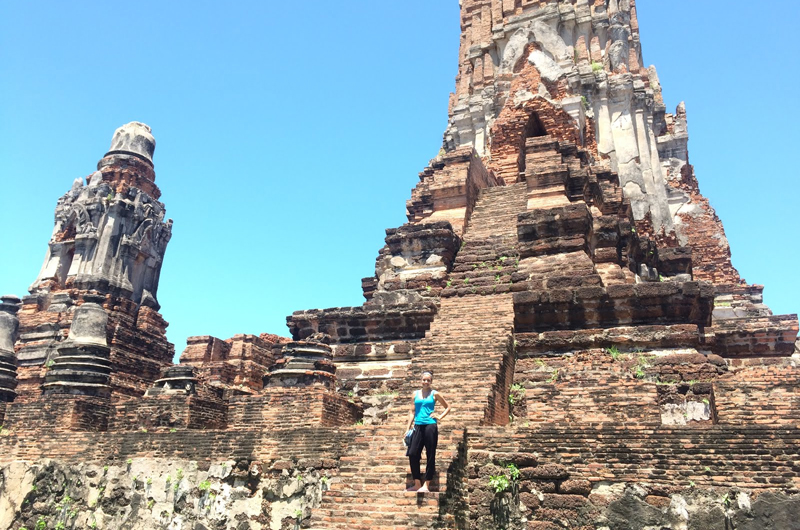
    Temple ruins in Thailand.
    Temple ruins in Thailand.

    Traveling has allowed me the opportunity to view the world from a unique perspective. And while I cannot say that I have loved every single moment, I can say that every second has been educational, which is the most important thing

    Read more of Dawn’s reflections and valuable lessons she shared right before she hopped on a plane back to Texas from Thailand.

  • Pork… and More Pork in Thailand

    Pork… and More Pork in Thailand

    In this blog post, Dawn McGowen talks Thai food – what seems like an overabundance of pork in Thai cuisine, eating dinner foods for breakfast, and her overall experience with meals she’s had while teaching English in a homestay in Bangkok.

    A major cultural difference between Thailand and home is food. I’ve tried many foods since first arriving, and I have a lot of thoughts. I’m not sure what I was expecting the food here to be like. If you look on social media accounts of people who have been to Thailand, you’ll see pictures of coconuts, colorful fruits, and ice cream. Ha! There’s more to it than that…

    Many people told me that I was going to love the food here. There are some foods here that I have really enjoyed, but I would be lying if I said I love, or even like, all the food I eat on a daily basis…

    Bowl_of_Thai_Noodles

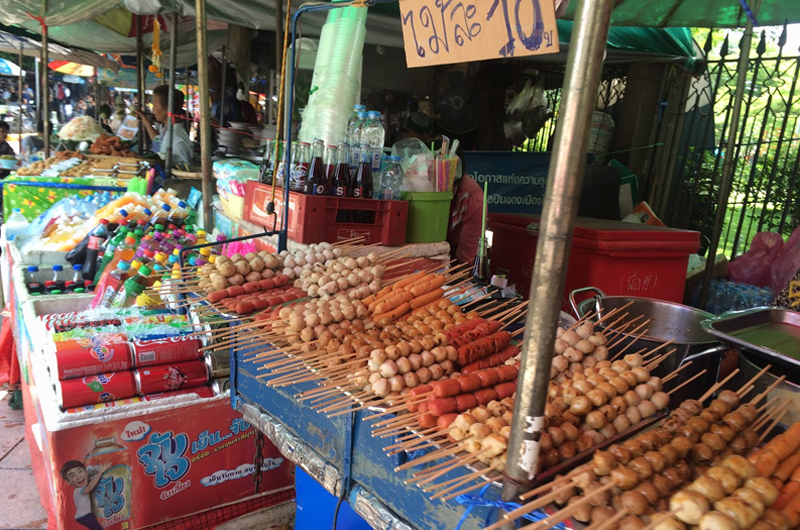
    Perhaps the biggest food shock I’ve experienced here is the amount of pork they eat. There are pork meatballs, pork and rice, pork and noodles, pork on a stick, pork rinds, fried pork, roasted pork, pork threads. I’ve got pork coming out of my ears!

    It’s not all about pork. Read more of Dawn’s foodie adventures in Thailand through her blog, “From Texas to Thailand.” Mango sticky rice makes an appearance, and honestly who doesn’t love mango sticky rice?

  • Bangkok Bewilderment

    Bangkok Bewilderment

    Dawn McGowen, who’s been teaching English in a homestay in Thailand, candidly shares about some of the more perplexing differences she’s experiencing in Bangkok in her blog post titled, “Bangkok Bewilderment”. Her observations of driving in Thailand, parking lot etiquette, and common fixtures in Thai bathrooms are sure to both amuse and inform you.

    Everything is so drastically different from what I know that I experience a rainbow of emotions every time I walk out the door of my host family’s home…

    Squatter in Thailand

    I’ve come across these… squatters.

    Yes, it’s exactly what it sounds like. You can see in the picture that there’s a section with water and a bucket next to the “toilet”. Using my excellent deduction skills, I’ve determined that the water is to clean yourself with as there isn’t a little hose. You also can’t find toilet paper in a squatter stall…

    Read more about Dawn’s observations of cultural differences in Thailand through her blog, “From Texas to Thailand.” 

  • A Photo Essay of Carolyn’s Thailand Homestay

    A Photo Essay of Carolyn’s Thailand Homestay

    Carolyn Gladd is currently working as a Greenheart Travel Homestay teacher in Thailand, and from exploring south Thailand’s beaches to wandering the streets of Bangkok, she has been living life to the fullest with her time in the land of smiles! As a yoga lover and vegetarian foodie, Carolyn is learning lots from her host family and sharing her own culture with them:

    My favorite experience happened when I was at an outdoor temple with my family in the upcountry. All of the children circled around me and were trying to speak to me and giggling with each other. They were staring at me and smiling. It was so cute! They thought I was hot so a couple of them took ice cubes and were rubbing my arms with them, while other kids were drying me off with paper towels! It was bizarre but they really made me feel like home! That’s cultural exchange is all about, right?

    She says that “The family is so sweet. Shopping at the markets are my favorite weekly ritual – everything is super cheap and there’s delicious food and fresh juices everywhere! The hardest part is communicating with my host parents, but we figure it out after lots of pantomiming!”

    Carolyn has been capturing beautiful photos of her experience in Bangkok, and we share a few of our favorites in a photo essay of Thailand. 

    I woke up like this.. ?

    A photo posted by ?Thailand (@carolynfaith_) on

    Yummmmmm ?

    A photo posted by ?Thailand (@carolynfaith_) on

    One of the best parts about yoga on the beach? Savasana in the water ? #yoga

    A photo posted by ?Thailand (@carolynfaith_) on

    Good night ?

    A photo posted by ?Thailand (@carolynfaith_) on

    Thai pancakes are the bomb ?

    A photo posted by ?Thailand (@carolynfaith_) on

    I’m siiinnkiingggg ? #yoga #yogaeverydamnday #yogi

    A photo posted by ?Thailand (@carolynfaith_) on

    Fresh coconut milk ice cream = the way to my heart

    A photo posted by ?Thailand (@carolynfaith_) on

    It’s a water taxi!!! #bangkok #sunset

    A photo posted by ?Thailand (@carolynfaith_) on

    Madness

    A photo posted by ?Thailand (@carolynfaith_) on

    Typical Thai feast ?

    A photo posted by ?Thailand (@carolynfaith_) on

    ?

    A photo posted by ?Thailand (@carolynfaith_) on

    ?

    A photo posted by ?Thailand (@carolynfaith_) on

    A photo posted by ?Thailand (@carolynfaith_) on

    Just being a tourist ?

    A photo posted by ?Thailand (@carolynfaith_) on

    Dried fish in China Town……well maybe.. The language barrier is real!!!

    A photo posted by ?Thailand (@carolynfaith_) on

    A photo posted by ?Thailand (@carolynfaith_) on


    Are you ready to have your own version of Carolyn’s Thailand adventure? Click below to learn more about our homestay program.