Tag: Host Family

  • What You Might See at Orientation in Torino, Italy

    What You Might See at Orientation in Torino, Italy

    So you’re going to teach English in Italy, congratulations! You’ve probably done your research, but no matter how much you prepare, your first few days in a new country will be pretty overwhelming. Thankfully, there will be a two-day orientation upon your arrival!

    Here are some pictures from orientation in Torino that will help you visualize what it’s going to be like when you arrive. Let’s begin the photo tour!

    All of the new teachers will arrive the same day and will be greeted by program staff at the airport. Then, you will be taken to the hostel to settle in before exploring the city, followed by a group dinner!

    Piedmont is bursting with stunning landscapes, castles, cuisine fit for foodies, and fabulous wines. The Piedmont region shares a border with Southern France, and is surrounded by the Alps on three sides. Often overlooked, Torino is described as Tuscany without tourists. Fun Fact: You might recall that it hosted the Winter Olympics in 2006!

    During orientation, staff will prepare you for what to expect in the classroom, and you’ll get to meet your host family. Meals and accommodation in a Torino hostel are included.

    Look exciting? You can teach English abroad in Italy by clicking the link below!

  • Tips for Writing the Perfect “Dear Family Letter”

    Tips for Writing the Perfect “Dear Family Letter”

    Because Greenheart Travel programs focus on language and cultural immersion, many programs – like our Teen Summer Language Camps, Teach English in a Homestay, and High School Abroad programs – travelers stay with host families.

    Whether you teach in a homestay in Thailand, study Italian in Florence or go to high school in Spain, living with a host family is one of the best parts. They may be strangers at first, but sooner than you know you’ll be eating breakfast in your pajamas, going to the supermarket and watching movies with them.

    Living with a new family is often an adjustment, but every day you’ll learn more about each other’s quirks and personalities. Even before you arrive, you’ll show them a taste of your personality  through a “Dear Family Letter.” If you’re not sure what this means or what to write – don’t worry!

    Here’s everything you wanted to know but didn’t want to ask about writing a letter to your host family:

    Greenheart Traveler abroad with host family.
    A Greenheart Traveler spending quality time with his host family in Spain.

    What’s a ‘Dear Family Letter’?

    A ‘Dear Family Letter’ is a short introduction to who you are and why you want to live abroad. When you are matched with a family, they’ll receive this letter just as you’ll receive a letter from them. This is the first way they learn about you and it’s your chance to show them you’re ready to be part of their family.

    Kathy Clancy, Teach in a Homestay in Italy, France, and Argentina alum, says one of the most important things for her to demonstrate in the letter is her desire to be make the family a priority and develop strong bonds with them.

    The families I stayed with wanted a ‘friend’ and someone they believed would follow the flow of the family (make them a priority), and not someone who was in the program just for their own experience.

    Pro-tips:

    • Make it original! Avoid copying and pasting from a previous homestay letter or other applications.
    • Letters usually run about a page in length.
    • Write them as best you can in the language of the host country. If you’re linguistic skills are a bit rusty, no worries! You can always provide an English version to accompany your letter.
    A Greenheart Traveler exploring Russia with his host family.
    A Greenheart Traveler sightseeing with his host family in Russia.

    There are four main parts to the host family letter:

    1. Background on You

    Think of this section as an elevator pitch about your life.

    Some ideas:

    • Where did you study?
    • What did you study?
    • Where are you from?
    • What’s your family like, and how do you spend your free time?
    • What is your personality like?
    • What do you like about other people?
    • What are you most passionate about?
    • How do you incorporate that in your life?
    • What’s something amazing you’ve done in your life?
    • What do you hope to do in the future?

    Pro-tips:

    • Write things that would make great conversation starters. For example, Clancy loves to cook, so she wrote about it. “This made it easy to talk about the types of cuisines the host family would serve and American foods they would like me to make,” she says.
    • Keep it positive unless you’re discussing a negative situation you overcame.

    2. Why You Want to Go Abroad

    Have you traveled before? Did you have a great host family experience before, and that’s why you’d like to do it again? What inspired you? What about their country intrigues you?

    Pro-tip:

    • If you’ve read, watched movies or listened to music from their country, let them know! They’ll be happy you’ve already taken an interest in their culture.

    A Greenheart Traveler ice skating in Germany.
    A Greenheart Traveler ice skating with her host mother in Germany.

    3. What You Hope to Gain During Your Program

    Maybe you hope to share your love of the English language. Maybe you’re a history buff who wants to learn about Argentina or you’d like to climb mountains in Chile. Perhaps you’d also love to become conversational in French, train for a marathon or learn photography. Whatever it is, let them know!

    Pro-tips:

    • The more specific, the better! It’s good to say, “I’m interested in learning about the culture,” but it’s even better to explain that you’ve loved French cooking ever since you first watched Julia Child, or you’re an avid exerciser and want to see what group fitness classes are like in a different country.
    • Include an activity you’d enjoy doing with them, or a favorite hobby you’d like to share with the family.

    4. Show You’re Excited to Meet Them

    Let them know how much it means that they want to welcome you into their family! Remember that it will be just as much an adjustment for them as it is for you. Showing your appreciation and excitement early will set the tone for your stay.

    Pro-tip:

    • If you’re doing the Teach English in a Homestay program, tell them some fun ideas you’d like to incorporate into a lesson.
    A Greenheart Traveler getting picked up at the airport by her host family.
    A Greenheart Traveler meets her host family for the first time in Sweden.

    Why is a ‘Dear Family Letter’ Important?

    Through your letter, your family gets a better sense of why you’re a great fit for their home. It gives them a way to plan for your visit. For example, if you mention you love to play violin, they might have a family friend who also plays the instrument and they’ll connect you with a local (and you can make friends while on your program).

    Plus, it’s a great ice breaker! You’ll Skype with your family before you depart. Already having that letter helps the family dive right into getting to know you.

    The host families are thrilled to meet and get to know Greenheart Travelers, so a ‘Dear Family Letter’ is a great opportunity to make a good first impression and get them excited for you to join their home.

  • What to Expect Your First Few Weeks Studying Abroad in the Netherlands

    What to Expect Your First Few Weeks Studying Abroad in the Netherlands

    The prospect of going to a foreign country to live a different life can be very daunting when you don’t know what to expect out of it.

    • What will the schools be like?
    • What will your new host family be like?
    • Will you be able to make any friends?

    I had all these worries and more when I thought about what my exchange program would be like in the Netherlands. However, the process of settling in turned out to come much more naturally than I thought it would.

    Meeting a New Host Family

    Of course, when my host parents and I met for the first time, there was some initial awkwardness. We all had to figure each other out and were more polite to each other than strictly necessary. At home I felt awkward about getting snacks from the fridge, or pouring myself something to drink whenever I wanted, because the house did not yet feel like home.

    After unpacking all of my things and spending some more time around the house, however, it became much easier to act the same as I would at my home in the U.S. Spending time watching T.V. on the couch with my host sister, or otherwise relaxing at home, also helped to speed up this process.

    My new host family was very sweet and wanted to get to know me just as much as I wanted to get to know them. They even got me a welcoming gift!

    The fluffiest welcoming gift I’ve ever had!

    While trying to settle into a new routine, I tried to work out some time each day to spend some time with members of my host family. Every day I walk the family dog with my host mother, for example.

    Here is a picture of my host mom and our dog Mijke on our daily walk!

    Trying Traditional Dutch Cuisine

    Developing a new routine also has come with doing some traditional Dutch things that at first were a little out of my comfort zone. The meals in particular are different than I had had in the U.S.

    For breakfast we usually eat bread with butter, and hagelslag, a sort of sprinkles for your toast. While delicious, it was odd for me to be eating something so sweet for breakfast instead of dessert.

    In this dinner, my host family encouraged me to try pasta with “pindasaus,” or peanut sauce. At first I thought it looked gross, but as soon as I tried it it became one of my favorite dishes.

    Dinners are also usually interesting, very often being a sort of food I have never tried before, or have never tried in the same manner. On one memorable night, my host mom served us omelettes- an omelette per person- for dinner! I was surprised to be eating what I considered a breakfast food for dinner, but with a little bit of curry sauce (recommended by my host sister), I found it tasted fantastic.

    One of the main differences I first noticed about the food was how much bread people eat. I was used to eating bread occasionally for breakfast or lunch a few times a week. By comparison my host family is used to eating bread for breakfast every morning, and every lunch. At school during lunchtime, most of the students bring open faced sandwiches to eat, with an apple as a snack.

    Here is a picture of some friends at lunch eating their sandwiches.

    Settling into School and Classes in the Netherlands

    School is also very different than my expectations of it. I thought that I would have more or less the same type of schedule that I had in the U.S. with the same start time and end time to the school day each day. Instead, each student has a special schedule with a different combination of classes each day.

    There are also many free hours in my schedule, hours where I don’t have any classes and can go to school later or leave school early. And for every class there are books, books, books! Instead of the teacher giving you a paper of the exercises you need to work on, the teacher gives a lecture on the topic and you work out of the workbook you have to take to school with you.

    Lots of books for lots of classes!

    You also do not get a grade for homework completion, and are encouraged to study more independent of the teacher’s help. If you have a question, don’t be afraid to ask it!

    At first I was embarrassed to ask my teachers for help in class, because the Dutch students would understand a subject and I felt I was the only one who didn’t. However, my teachers were very understanding about me not being able to understand all my lessons, and did their best to help me. Some teachers try to give me less homework, and others try and explain the lesson in English after the class is over.

    This is the “fiets kelder” where many students store their bikes during the school day.

    Almost all of the students also bike to school. There are bike racks around the school and a basement underneath the school as well, with rows and rows of bikes.

    Balancing a Social Life Without Getting Overwhelmed as an Exchange Student

    At school many of the students were friendly and curious about life in America. There were so many questions! Some of the most common ones were “how do you like it here so far?” and “how long are you staying for?”

    My first day of school I was lucky enough to have a group of girls give me a tour of the school and help me feel welcome. We’ve since become better friends, and I have found the best way to make friends is to talk to them, even if you are afraid you won’t quite know what to say.

    Although many of the teachers and adults speak good English, most of the students my age are still in the process of learning English, and I’m very thankful to have studied some Dutch before going on my exchange. Having to think in another language constantly, however, makes you incredibly tired. Taking some time to myself to sleep and relax is very important, even though I love spending time with my new family and friends.

    My room is my favorite place to relax and sleep when I need to take a breather.

    Learning About Dutch Culture and Traditions

    Doing activities and going out with my host family and new friends has been very interesting and rewarding. My host family is very enthusiastic about showing me Dutch traditions and things they find fun, and because of this I have been able to see some very unique Dutch traditions.

    One really interesting tradition is putting a sign shaped like a cartoon character outside of the door of the house where a new baby has been born, with the baby’s name on it. My host mother made sure to take me on a bike ride around town so I could see the signs and take some pictures.

    This new baby’s name is Teun.

    Another interesting cultural thing I’ve noticed while living in the Netherlands is that many people are environmentally conscious and place keeping the environment clean at a high priority. My host family has separate compost, plastic, and paper trash cans, and saves old soda bottles for recycling. They also have chickens and organic eggs, and we mostly use the train or bike for transportation.

    Here are some of the chickens- and a peacock!- that my host family has in the backyard.

    Since the Netherlands is mostly flat and there are plenty of bike paths and areas to go for a bike ride, I really enjoy biking around my new town and looking through the towns and farms with my host mother. I enjoy the exercise, and spending time with my new family.

    My host mom and me, taking a bike ride.

    Overall so far every day has brought a new surprise and adventure, and I’m excited to see what the rest of my exchange program will bring. There’s less to worry about than you think, and having a positive attitude is what has helped me the most in the past few weeks.

    Remember, it’s not better, not worse, only different!

  • Tips for Tutoring English and Getting Settled in Your Homestay Abroad

    Tips for Tutoring English and Getting Settled in Your Homestay Abroad

    I first fell in love with the Spanish language and culture when I was student in high school. I can remember my Spanish teacher, Mrs. Moyer, showing us photos of her experience living abroad in Seville, Spain. I instantly felt the excitement of what it might be like to have a similar experience somewhere in the world, even though I had never stepped foot outside of my small hometown.

    I continued taking Spanish classes, and had yet another amazing Spanish teacher, Mrs. Soha, who helped me realize my potential as a language learner. Together, these two teachers encouraged and pushed me to be a better student and to appreciate everything the Spanish language and culture has to offer.

    Fast forward to today, and I am entering into my 13th year as a high school Spanish teacher, and I’m able to be both a student and educator during my teach in a homestay program in Spain. This travel experience offers the perfect combination of culture and language learning that I had been searching for. Not only am I able to learn more Spanish, I am also teaching English and creating relationships that will last a lifetime! Oh, and the scenery of Mallorca is not so bad, either!

    The following tips will focus on how to get started tutoring English once you arrive to your new host family home and prepare to teach your first lesson, along with how to establish your role within the family.

    Establish goals for both yourself and the host family

    One of the first things I did was talk to my host family about what their expectations were in learning the English language. It was important to me that they knew that after only one month of daily lessons, they would not be fluent in English. I was direct when asking what they wanted to learn, and they very much appreciated this.

    Set up a weekly schedule and plan your lessons

    The first night, I gave myself the time to adjust and get acclimated with the family. The second day, I asked them to sit with me and create a weekly schedule. We decided on 2 hours every morning, but if there was something else going on with myself or the family, we would make the proper adjustments to make up for lost time.

    I do spend some time planning my lessons beforehand. I bought a book that we did not end up using too much, but it was a good ice breaker because it gave me an idea of the level of English they already knew. I am always sure to ask myself, “How can I improve my next lesson to make it more meaningful?”

    I would also recommend bringing a dictionary in both English and the language to be studied. It is very helpful for vocabulary. Two of my favorite phone apps to help with this are Duolingo and Word Reference. Check them out! They are both free.

    Make time for yourself

    Traveling abroad and living with a host family is a big adjustment for most people.  You will most likely feel tired in the beginning, especially if you are not accustomed to the language. Your brain will be on overdrive! Be sure to take the time you need to rest so you do not get burnt out in the beginning. In addition, it is okay if you want to spend time alone exploring or meeting up with new friends.

    Accept that something embarrassing will happen

    You are living with a family in a shared space. Make sure to be respectful of this, but also understanding that sometimes awkward moments happen, and that’s completely normal and okay. My advice is to laugh it off and move on with the day!

    Speak up and communicate with your host family

    When the family asks you what you prefer, or how you want to spend your time, be honest! If there is something that you are uncomfortable with and it is effecting your daily life during your homestay, say something! The last thing you family wants is for you to be uncomfortable.

    Be flexible and open minded

    Choosing to have the Greenheart experience is choosing to embrace a way of life that is most likely very different from yours. While it is important to speak up if there is something making you uncomfortable, it is equally as important to be open minded and willing to try new things.

    Spend time with family and help out with chores

    Bevin with her host family’s daughter in Spain.

    I spend most of my time with the family. I have grown very close to them, and we have created a bond that we will have forever. They are now planning a trip to come stay with me in my home, and I cannot wait to have them!

    One way to help create this relationship is to always offer to help out around the house. At first, the family would not let me, but be persistent. Now that they are more comfortable with me, they are more comfortable asking me to help out. I am also more comfortable just taking care of certain things like the dishes or sweeping because I know the routine of the family. They are always very thankful for the help, and I am happy to contribute and be a helpful part of the family.

    Take the initiative to plan activities with your host family

    The family doesn’t have to do all of the planning, and they might really appreciate it if you take the reins for a day/night! It does not have to be anything big or expensive, but here are a couple ideas:

    • The youngest daughter and I put on a play in English for the family
    • I brought a puzzle of the United Stated to work on together
    • I offered to cook dinner for a night
    • If I see a place I want to check out, I ask them if they want to go.

    This takes some of the pressure off of them and helps them relax a bit, as well.

    These are just a few tips to help make your homestay tutoring experience successful and comfortable. Do you have any additional tips? Share them below in the comments!

  • A Typical Day Living with a Host Family and Volunteering at the Animal Rescue Center in Costa Rica

    A Typical Day Living with a Host Family and Volunteering at the Animal Rescue Center in Costa Rica

    I am finally here in the greenest place in the world, Costa Rica!  I’m a week into my volunteer program at the Animal Rescue Center and I have already gained many things.

    I have gained knowledge of the animals I have worked with and their stories of why they are at the Animal Rescue project. What foods are appropriate for the different animals and why.

    Costa Rica’s beautiful environment.


    I have also gained weight, because there is no way you can say no to the delicious Costa Rican food. But you need to remember if you don’t like the food, or you think eating rice and bread is too much, you have to tell your host family. Trust me when I say that it will be easier for you and your host mom when you are honest from the start on the foods you eat and don’t eat, also on the amount you eat. Portions are very different in Costa Rica, and if you eat more or less than the amount they give you, make sure to let them know how much you eat.

    My host mom is Vita and my host dad is Walter, both work in Proyecto Asis. They have a son Alex who is currently on winter break which took me a while to understand since our summer is their winter.

    What to Expect in a Typical Day as a Volunteer in Costa Rica

    My typical day as a volunteer involves waking up at 7:30 a.m., eating breakfast and changing to my work clothes. Between 8:05 – 8:15 a.m. I wait until the van to pick me up from Vita’s house. Once everyone is picked up they take us to the volunteer project where you will be given a job.

    A few of the jobs I have done so far:

    • Cleaned cages for rehabilitation areas
    • Painted fences that will become new cages
    • Fed the animals
    • Made new toys for the animals which can involve cutting down a tree to make something
    • Paint tires for the monkeys
    • Use power tools to drill holes

    We then have a coffee break at 11 a.m., eat lunch at 12 p.m., and the work day will end at 3:45 p.m. You will then be able to hang out with your friends at the park or nap.

    Advice for Getting to Know Your Host Family

    The first few days I napped because working in Proyecto Asis is a bit tiring, but when you’re tired and want to nap just let your host mom know “me voy a dormir un rato” (I’m going to sleep for a bit). Try to engage with your host family too, when you’re eating make some small conversation just like you would with your real family.

    My host family home in Costa Rica.

    Don’t stay in your room all day on your phone, ask your host family if they could take you on a walk, see the trees and animals all around you. But if you want to stay in your room, which is okay after a hard day at Proyecto Asis just let your host mom know you need some time alone and give her the reason why.

    Make sure to spend some time outside of your bedroom during your volunteer project.

    Now, if you leave to hang out with your friends always let your host mom know where you’re going and what time you’ll be coming back. Just in case of any emergency, exchange numbers to make it easier to contact each other.

    Remember to smile too! Give small compliments about their house or their food, really engage yourself with their family.  

    For my first weekend I wanted to do some shopping and went to La Fortuna with a friend (always have someone with you) and bought some stuff for my family and friends. I saw an entirely different culture and it was amazing.

    To see Costa Rica’s city life was amazing and overwhelming. Be prepared to see a beautiful corner of the world!  


    About the Author:

    Citlalli Gonzalez, is 16-years old and our 2017 Greenheart Travel Global Explorer scholarship winner from Chicago, Illinois. Citlalli is traveling abroad as a volunteer in Costa Rica and is most excited about being able to stand in one of the greenest place on earth, being able to get out of her comfort zone, and experience a new culture. Follow her adventures here!

  • Kayla’s 6 Tips for Finding the Perfect Host Family Gift

    Kayla’s 6 Tips for Finding the Perfect Host Family Gift

    It’s common knowledge (let alone courtesy!) to give your host family a gift upon arriving at their home. While this step seems simple enough, when you get to thinking about what to purchase, you might suddenly find yourself stuck. You could bring them chocolate– but what if they don’t like chocolate? You could bring them a magnet shaped like your home state– but what if they don’t have a refrigerator? It might seem fine to bring a bottle of wine, but what if your family doesn’t drink alcohol/has really expensive tastes/shuns anything the color red (ok, perhaps the last one is a stretch)?

    Host gifts are an important aspect of your homestay, as they contribute to the first impression your new family has of you. While you shouldn’t worry too much about what to get, you should nevertheless put a bit of thought and effort into it.

    Here are some tips that helped me pick out a good (family approved!) gift:

    1.) Know your family. This may seem obvious, but it needs to be mentioned because it is the most important aspect. Speak or email with your hosts before arrival so you get to know them better. You can find out if their children love fruit-flavored candy, that they like hiking on the weekends, that they have a weakness for vanilla puff-pastries. I found out that my family loved baking, so I got them a Southern-themed dessert cookbook. I also discovered that they collected magnets (they do happen to have a ‘fridge), so I got them a magnet shaped like North Carolina, where I live. Knowing little facts about your hosts can make your gifts much more meaningful.

    southern-cooking

    2.) Don’t give them anything that could be offensive. Read up on the host culture. You don’t want to find yourself wincing over giving your host something with an even number of contents, only to realize they consider even numbers bad luck. Check to make sure that the colors, numbers, and even shape of the things you’re giving them don’t have negative connotations in their society.

    3.) Gift food sparingly. It could easily spoil or spill on the plane, or you may even be prevented by customs by bringing it into the country. Instead, come prepared with recipes and a list of ingredients (that can be found in-country) of some typical dishes, and go shopping for and make the food there. That way, you can spend time bonding with your hosts while you cook the food with them. I brought just one box of the flour used to make peach cobbler, a traditional dessert of the South. Bring the bare minimum, and buy the rest upon arrival. Your hosts will appreciate the fresher food and the learning experience.

    4.) Bring a few smaller items, rather than just one big gift. That way, your hosts can get a broader feel of your home culture. Along with the magnet, cookbook, and cobbler flour, I brought a mixed bag of hard (read: unmeltable) candies for the kids, postcards of my city, and little tubes of honey made in my hometown. In showing them the many different aspects of my home, I gave them a better perspective of what my life in the American South is like.

    5.) Pictures and postcards are always a great option. Your hosts will love seeing your family and where you come from. Plus, pictures are light, small, and easy to carry.

    6.) Don’t go overboard. You don’t have to bring a suitcase full of stuff, nor do you have to break the bank. A few thoughtful items is perfect.

    And there you have it! Along with my tips, you can also ask friends or family who have gone abroad before you, or look up tips on the Internet (I admit I did my fair share of that before leaving!).

    As always, Happy Travels!

    Kayla

    If you have any tips you’d like to add, please share them in the comments.

  • Celebrating Host Moms Around the World on Mother’s Day

    Celebrating Host Moms Around the World on Mother’s Day

    In honor of Mother’s Day, we wanted to thank not just the incredible women that have done so much to love, support and encourage all of us in the Greenheart Travel community, but to also highlight the special bond our host moms form with our participants.

    While traveling to a new place, the compassion and care from a host mom is invaluable and a few of our alumni share why they appreciated their host mother’s during their time abroad.

    Jacob Pence, High School Student in Spain Alum, 2016

    Jacob and host mom in spain

    My mother is the most cariñosa (loving)  person. She is always up early to make my brother and I a delicious breakfast and up late to make sure we get home safe on weekends.

    Nia Karriem, Teach English in a Homestay France Alumna, 2016 

    nia karriem with french host mom

    I appreciate how warm and welcoming my host mom was; she immediately made me feel like a member of the family. She has the most infectious laugh, and has a heart of gold. Some of my favorite memories with her are when we baked breads and pies together, our lazy afternoon watching Bridget Jones’ Diary, and daily “Tea Times,” where the two of us had a chance to get to know each other and eventually form a bond! Best host mom, ever!

    Jennifer Sirois, Teach English in Italy Alumna, 2016

    Jenn and her host mom in italy

    With four of her own children to take care of, my host mom always had something going on! But throughout my entire three months in Italy she went above and beyond to make sure I was well taken care of. My stay in Italy was so much better because she truly welcomed me in as one of her own! She even taught me their family tiramisù recipe!! I am excited to go back and visit again one day!

    Anna Cutler, High School Student in France Alumna, 2016

    Anna and host mom in france

    Your host mom isn’t your real mom, but she treats you like one of her own and having a host mom like that makes the whole experience more personal and delightful.


    Julie Kypta, Teach English in a Homestay France Alumna, 2015

    julie kypta with her host mom

    Nadege, the host mom in my wonderful French family is the best! So welcoming that I felt like family right away. She’s a truly unique person, generous, brave, humorous, a fabulous cook, and, of course, a wonderful mom!! Happy Mothers Day Nadege!!


    Angelica Green, Teach English in a Homestay Spain Alumna, 2015

    angelica green with host mom

    While living in the Basque Country on the program, I was lucky enough to have many great women who supported me and always made me welcome. However my ‘host mums’ who I lived with, Katrin and Maia, really became family. They both shared stories from their lives and culture, which deepened my understanding of the importance of family and being their for each other. We had so many great chats, laughs and hikes through the green, fresh mountains. Katrin and Maia are so generous, hard working and always there to help!


    Johadane Pierre, Teach English in a Homestay Brazil Alumna, 2015

    johadane pierre host mother photo

    My host mother Marta was so eager to learn. She loves having a good time and I loved our little outings. We really had a cultural exchange especially when it came to food. She was always cooking and sharing delicious food with me!


    Varisa Lertburapa, Costa Rica Volunteer Abroad Alumna, 2015

    IMG_0248

    My program would definitely not be what it was if it weren’t for my host mom Kely and her mother, Doña Esther. These women have so much love and positive energy emanating from both of them that you can’t help but to feel like you are right at home. Even though I was only there for a mere week, the care and attentiveness that they showed has brought me a lifetime of gratitude. Kely and I formed a wonderful relationship over the exchange of conversation in both English and Spanish. As for Doña Esther, she definitely was like my own dear grandma. Like my own grandma, she fed me until I was completely stuffed! I must say, my lunches were definitely the best! Fresh squeezed fruit juices and delicious authentic Tico meals… I was in heaven! My fondest memory I have about Kely is when she found my fellow Greenheart volunteers roaming around at the local market after volunteer hours and got them to come over for an impromptu pizza party! I never felt so lucky to be in the presence of a beautiful and loving family.


    Alexa Ball, Teach in Italy Alumna, 2016

    alexa and host mom italy

    Anna was everything and more than I could have hoped for in a host mom!  From the beginning she was consistently supportive and instantly made me feel at home and included in her family. Anna is so incredibly giving and constantly doing things for others. She’s a hardworking and accomplished woman who I greatly look up to and am so thankful to be able to call her a friend. Anna was the best Italian host mom complete with the best tiramisu recipe around!

    Tara Henry-Miltenberger, Teach in Italy Alumna, 2016

    Tara and host mom italy

    Lara Ferrari. She is more of my sister than a mother to me. She is my Italian counterpart and one of the strongest women I know. I’m so lucky to have spent 3 months learning and living with her family. She is a pioneer and always looking to be better for her students and her family. She is an amazing teacher, full of love and light.

    Did you have an awesome host mom from a program abroad? Share below!

  • Ferias and Flamenco Dresses in Spanish Culture

    Ferias and Flamenco Dresses in Spanish Culture

    In most of the towns all throughout Spain there is a fair, or feria in Spanish,  that lasts anywhere from 2 to 7 days. There are small little attractions, rides, and the link of games that we associate with fairs. But, here in Spain, there are also tents set up with music and everyone dances flamenco!

    People go to the fairs dressed in their everyday clothes, but some wear flamenco dresses that cost anywhere from $100 to $1000! People that live in big cities like Seville or Cordoba have a different dress for every day.

    The feria I went to was the feria of Rota. All of the dresses were so pretty and unique! There also were horses pulling carts full of people dressed to a T! The party never stopped there and usually, the people don’t leave the fair until about 7 or 8 in the morning! I learned how to dance flamenco a little bit, and I am very bad. My sisters took lessons when they were younger so they are going to teach me so that I’m ready for the feria of Cordoba in three weeks, which is even bigger than Rota. Hopefully, I won’t embarrass myself too bad! imageimageimageimage

  • Meeting My Host Family in China and First English Lessons

    Meeting My Host Family in China and First English Lessons

    by Afia Yeboah, Greenheart Travel Homestay Teacher in China

    Day 3第三天 Dì sān tiān

    你好.

    Nǐmen hǎo! Hello, Everyone.

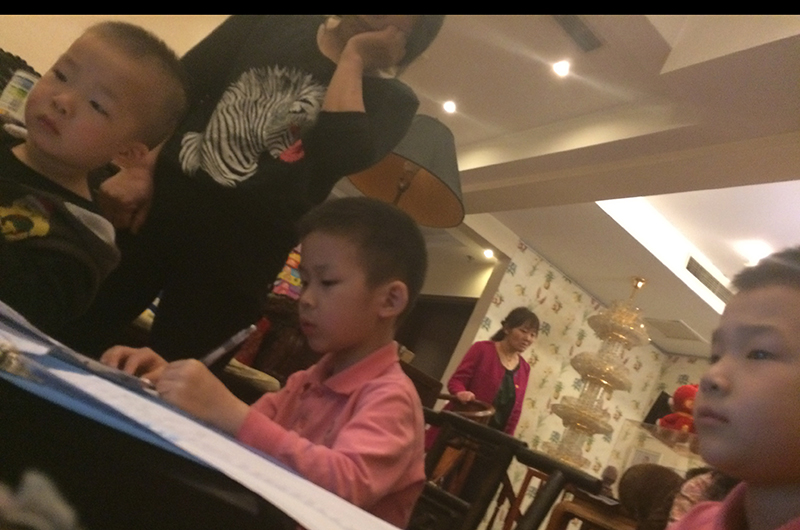
    It’s Day 3 in Beijing, China, and I finally get to meet my lovely host family of five.
    Meet My Host Family:

    My host dad, Mr. Gao, is a businessman here in China. My host mom is Ms. Gao Lin. In China, the last name is placed before the first name in introductions, so in America she would be known as Lin Gao; first name Lin, last name Gao.

    Ms. Gao is an attorney here in China. She passed the Bar in New York, USA and also received her LLM degree.  She shared with me that her eldest two sons, William and David, ages 6 and 5 respectively, were born in Orange County, Los Angeles, California. Her youngest, Vincent, age 2, was born in Vancouver, Canada.

    Learning this information lead me to asking, “what were the boy’s nationalities, technically speaking?” Ms. Gao explained and this is what I gathered:

    According to American law, if you are born in the United States, you are a United States Citizen. William and David have an American passport. They can declare their nationality when they are older. According to Chinese law, if you are born to parents who are Chinese, then you are Chinese. Vincent was born in Vancouver, Canada. I’m not so familiar with Canadian law, but I believe he is Canadian through birth and will also have the ability to declare when he is older.

    The eldest sons, William and David attend primary public school, which is free, and according to Ms. Gao, very good education. Besides kindergarten, the boys take many classes such as fencing, horsing, swimming, chess, piano, drums and sports. Ms. Gao shared that they have 3 ½ music lessons on Saturdays. And after kindergarten the boys excitedly ask: “ So what kind of class do we have today mom?!” I told Ms. Gao that she has “busy little men,” and laughing, she agreed.

    These 6, 5, and 2 year-old boys are precious. They are smart, cute, talented and quite a bit of fun.

    china-english-lessons

    William’s strength with English is his writing. His writing is very neat and he knows a wide range of subjects. I met with his English teacher who is from England, and he shared that William knows about school, feelings, restaurants, his things, numbers, personal needs, etc.

    David’s strength is in his speaking; He can speak small sentences and string words together very well. He is a little younger than William, so obviously his writing ability is a little less than William’s, who has had more exposure to the English language.

    Vincent’s strength is in food. This two year old can EAT. I’ve never seen Vincent without food in his hand. He loves to eat. He also knows words like “hi”, “hello”, “mama”, and “baby”, which is really cute. He’s adorable.

    vincent-china-host-brother

    The boys also have two nannies, which are known as “āyí” in Chinese and translated to aunt in English. The āyí’s are responsible for the cooking and cleaning around the house.

    I went grocery shopping with Vincent, the 2 year old, and one of the āyí’s today. She doesn’t speak English at all, which made for an interesting trip. The grocery store was called “METRO” and it was within walking distance from our fenced and guarded apartment complex. Mr. and Mrs. Gao both suggested that I visit “Metro” with the nanny to get the items I like most.

    So we get to the market and of course I’m excited to see American brands that are easily recognizable, such as Sprite, Ocean Spray Cranberry Juice, Cheerios, Frosted Flakes, Pringles, etc. and I happily load my cart. I also grabbed other basics like sandwich bread, cheese, tortillas, and fruit.

    shopping in china

    Later, I speak to Chao, my B.E.I.T. rep, and she tells me that American foods are imported and more expensive. Basically, I could have gone to a less expensive local grocery store to get some of the same items. Oops! I had no idea because of the language barrier between the nanny and I. But no big deal, of course, because I now know for next time, and the food items I purchased will last for a couple weeks.

    When we return to my host home, we all have fish and rice for dinner. I give the boys their first English lesson, and at the end of the lesson I show them the movie “Mulan,” which is a great animated Disney movie based in China. The boy’s loved it so much that they asked me to show them Mulan 2 as well!

    food in china - 1

    Today was a great day, I love my new family, and tomorrow I look forward to meeting up with a former colleague of mine from the University of Maryland, who is currently teaching English in Beijing for a year! The adventure continues!

    Signing off for now. Until next time my friends,

    飞飞Yèfēifēi

    Program-blog-button

  • What I Will Miss Most About Studying in Germany

    What I Will Miss Most About Studying in Germany

    by Rachel Anderson, Greenheart Travel High School Student in Germany

    This is my last week in Bremen, Germany studying abroad. I will miss this place so much. There are little things which I cannot imagine living without. Such as the tram, the amazing bread, the park I run in, the car rides with my friends, etc.

    Then there are the big things I will miss, which seem to be impossible to live without. Such as my friends, my city, my host-family, and hearing German every day. Over the past three months, I have learned so much about Germany as well as other countries which I am now extremely excited to visit as well.

    Rachel-friends-germany

    My good friend here asked me the other day when I would be coming back. Without hesitation I thought, well why do I have to leave? Honestly, I feel like I have known this place and these people my entire life, and it’s only been three months. There are so many little things which make me so happy here, like eating really good potatoes, or speaking somewhat understandable German. These small things wouldn’t usually bring me so much joy, but now they have so much more meaning to me.

    locks

    I have met three girls here, who I can honestly say are some of the best friends I have ever had. Two of them are German and have these incredible families with their own traditions and lifestyles. We are barely ever separated and we have promised to each other that we will see each other very soon. The other girl is not in my class, she is another exchange student attending my school, and we are also always together because we help each other with different situations since both of us understand what the other is going through with exchange. These three people I feel so lucky to have met because I know that they will always have my back even from across the world.

    cathedral in germany

    I am extremely excited for the next couple of days because I get to be with the people and the city which I love so much.

    Program-blog-button