

Tag: Culture Shock

  • Reverse Culture Shock: Reintegrating into American Society while Holding on to Thai Traditions

    Reverse Culture Shock: Reintegrating into American Society while Holding on to Thai Traditions

    Just when you’ve finally hit your stride and feel confident and happy with the new country you’ve moved to, it’s time to head back to your home country.

    By now you’ve probably heard about culture shock, but if you’re planning on traveling abroad, you’ll also need to prepare for reverse culture shock as well. Reverse culture shock is an entirely separate issue from culture shock, sometimes requiring different tools and techniques to help get you through.

    Reverse culture shock will rear its ugly head quicker than you would expect, especially if you’ve been in a completely different culture from the culture you grew up in. In my case, I was returning to America, a highly individualistic society, after spending 3 months in Thailand, a collectivist society.

    I thought I would have at least a few weeks before I started experiencing reverse culture shock, and thought the phases would be similar to the culture shock phases I went through in Thailand. I was so looking forward to the honeymoon phase where everything seemed perfect and nothing could go wrong.

    To my dismay, I felt the effects of reverse culture shock as soon as I landed and went through airport security in the US. I had been fooling myself up until then, thinking that since I was only away for 3 months, the transition would be easy and the negative side effects wouldn’t hit me quite as hard. I couldn’t have been more wrong. I found myself frantically trying to hold on to the lessons and traditions I learned in Thailand, afraid that if I succumbed to my surroundings I would lose all of the progress I made abroad. But it was the aspects of Thai culture that I took with me that helped me reacclimate to American culture. 

    First things first, let’s talk about what reverse culture shock actually is. Reverse culture shock is the psychological and emotional distress people feel when re-entering their home country after spending time abroad. Many definitions out there will only discuss the effects of reverse culture shock for people who have been away from their home country for a year or more, but anyone who has spent more than a few weeks in another country can experience reverse culture shock. The more differences there are between the two cultures, the more intense the effects will be.

    Like culture shock, reverse culture shock affects people in different ways, depending on a number of different factors, such as the length of time they spent abroad, how comfortable they became with the foreign culture, and whether they’ve experienced reverse culture shock before. Despite these differences, there are some practices that have been proven to help reduce the stressors of reverse culture shock.

    Here are some tips and tricks that helped me reintegrate into American society while keeping aspects of Thai culture I’ve come to know and love.  

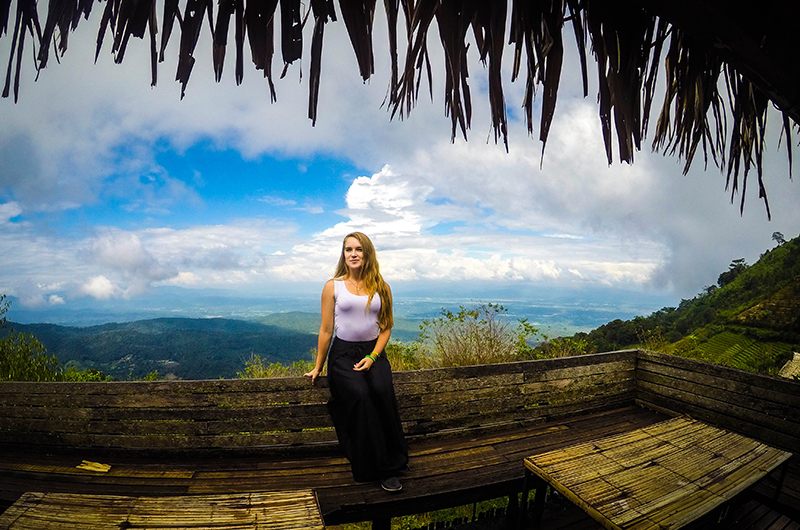
    Hanging out at Art in Paradise, a 3D art museum in Chiang Mai!

    Start preparing and educating yourself on reverse culture shock before you get home.

    Just because you grew up in your home culture and are “familiar” with it doesn’t mean you are exempt from experiencing reverse culture shock. Unfortunately, reverse culture shock is not as recognized as culture shock, making it difficult for those returning home to get the resources they need to feel comfortable.

    Luckily for me, Greenheart provides resources to help with reverse culture shock and makes these resources available at any time. Treat going back home the same way you did going to a new country; do your research! You wouldn’t leave for a foreign country for 3 months without doing a little research, would you? Make sure you do some research about the country you’re going back home to; a lot of things can change in just 3 months, and you’ll want to prepare yourself as best as you can. Trust me, there’s nothing worse than being incredibly jetlagged and having reverse culture shock hit you in the airport when you have 40 minutes in between connecting flights. Imagine if you had to go through all that AND didn’t have the resources you needed? 

    Remember the “mai bpen rai” no worries attitude you learned about and acquired in Thailand? Take that with you. If you make the decision to work or volunteer in Thailand (and you should!) you’ll hear the words “mai bpen rai” quite a lot. This phrase means “no worries” in Thai, and really encapsulates the energy in Thailand.

    In Thailand, you don’t experience the same stress and feeling of having to rush everywhere like you do in the US. When the hustle and bustle of life gets to be too much, just say “mai bpen rai” until you really do have no worries. 

    Just because it’s different, doesn’t mean it’s wrong.

    If you read my other blog about experiencing culture shock, then you’re familiar with this phrase. This saying is something that helped me immensely when I was going through culture shock in Thailand, and it shouldn’t have come as a surprise that it would help me when I encountered American culture for the first time in 3 months.

    Priorities, values, traditions, and ways of doing things are going to be different from your host country and will seem strange. When adjusting to a new culture, whether it’s a foreign culture or the culture you’ve grown up in, it’s important to remember that just because something is different doesn’t mean it’s wrong. Try not to compare everything to the country you were just in and assign negative values to your home country’s culture. Keep in mind that at one point, everything about your home culture seemed normal, and even “right”, and that feeling of normalcy will start to come back eventually. 

    My first ever authentic Chicago dog! Just an example of how many new things I can experience in my home country.

    Keep developing your curious mind, and never stop learning.

    Even though you are going back to the culture that you grew up in, you don’t know everything about it, and there are always going to be new things to learn and experience.

    To keep yourself from feeling like you’re in a rut, be open to trying new things and immerse yourself in the local culture, just as you did when you arrived in the new country. 

    Use your puak!

    In Thailand, the network of people you can rely on is called your puak, and after 3 months, your puak will (hopefully) be pretty big.

    Just like every other difficult transition in life, it’s better with support than going it alone. You will meet people abroad that will have to return to their home country as well, so talk to those people about what you’re going through and ask about what they are doing to get through reverse culture shock. It’s nice to know that you aren’t alone, and by talking to people you met while abroad, you’ll keep the memories you made there alive! 

    A few of the fantastic people that make up my puak. 

    Above all else, keep a smile on your face.

    If there’s one thing I learned during my time in the Land of Smiles, it’s how to keep a positive attitude and keep a smile on despite negative circumstances. Try not to let the stress of reverse culture shock overwhelm you and ruin your positive outlook on things. There’s a cliche saying about having to fake it till you make it, and it actually works in this case.

    Even if you aren’t happy or feeling positive, smile through it anyway. At first, it’ll feel ridiculous, and sure people may look at you like you’re crazy because you have a smile plastered on your face at 6 in the morning in the midst of the mayhem that is airport security. But that smile will center you and bring your energy up, that fake feeling will go away, and the smile will start to feel genuine. Then before you know it, you’ll have other people smiling back at you, and you’ll have brought a little piece of Thai culture home. 

    One of the best ways to honor the country and the culture you just spent 3 months living in is to take a piece of it with you home and integrate it into your everyday life. Educate those around you about your experience and the things you learned. You don’t need to fall into the trap of completely abandoning everything about the other culture you experienced. So when you find yourself worrying about having to go back home after being abroad, stop, take a deep breath, put a smile on your face, and know that everything is going to be just fine. 

    Amanda Voyles, from Tallahassee, Florida, is a Greenheart Travel First Time Traveler Scholarship recipientLearn more about Greenheart Travel’s scholarship opportunities to help you travel for a change!

  • A First Time Traveler’s Guide to Culture Shock 

    A First Time Traveler’s Guide to Culture Shock 

    Hey y’all! My name is Amanda Voyles, and I am currently completing a marketing internship in beautiful Khao Tao Thailand! I am a first time traveler, and thanks to Greenheart’s First Time Traveler Scholarship, I get to live out my dreams of traveling the world, all while getting real work experience. Whether you have already booked your trip or are considering taking the leap, if you are a first-time traveler, this post is for you!

    When you are planning on traveling abroad, one phrase you will hear a lot is “culture shock.” No matter how seasoned the traveler, everyone goes through some degree of culture shock when traveling for long periods of time. For first time traveler’s though, the effects of culture shock can be stronger, and the “typical timeline” is usually different than for those who have traveled before. While it may take someone else a few weeks to start experiencing culture shock, a first time traveler might go through a few different stages of shock all within the span of a week. 

    Let’s get to the question on everyone’s mind. What exactly is culture shock? 

    To me, the phases of culture shock kind of felt like the phases of dating, and experiencing a new culture felt similar to starting a new relationship. First, there’s the honeymoon phase, where everything is new, exciting, and wonderful. You want to be with this culture forever, nothing could ever go wrong, and you never want to go back home. The food is amazing, everyone is always smiling, and things move at a slower and more leisurely pace.

    As we all know, the honeymoon phase doesn’t last forever, and the stage that quickly follows it is frustration. Everything that you used to love is now the source of your anger and sadness. You can’t find the food you want on the menu because it’s all in another language, you feel like you are always running late, and no one ever seems to express how they are really feeling. The smallest thing could trigger you, and all you want to do is go home to where not being able to find your sunglasses doesn’t ruin your entire day.

    Luckily this stage doesn’t last forever either, and things start looking up in the adjustment phase. You start to feel more familiar with your surroundings, and you begin to establish friends and feel part of a community. You start getting used to the things that made you frustrated or uncomfortable and learn new ways to cope with your emotions.

    The final phase is acceptance, where you feel like you can thrive and survive. This phase doesn’t mean that you completely understand and love everything about the culture, but you stop questioning or trying to change things, and you have the necessary resources to face challenges. 

    This can be a confusing and highly emotional process, so to help you cope, I compiled a list of tips, tricks, and mantras to help you through! 

    This was taken my first day in Bangkok as I roamed the streets in search of food. I quickly realized that most things were written in Thai, and little shops and markets lined the streets everywhere. This used to overwhelm me, but now I love it!

    Tip #1: Repeat this phrase over and over. “Just because it’s different, doesn’t mean it’s wrong.”

    This is something that a fellow intern told me my first day at Rescue P.A.W.S., the amazing nonprofit I work for. You are going to experience and see a lot of things that are very different from your culture. My best advice is to embrace it; purposefully put yourself in situations where you experience the things that are frustrating you. The easiest way to get trapped in the frustration stage of culture shock is to pass judgment and assign right or wrong values to things that are different. If you repeat this phrase enough, not only will you believe it, but you will start celebrating the differences instead of dreading them. 

    Tip #2: Your support system is there for a reason. Use it! 

    If you are anything like me, you are stubborn to accept help from people, even when you really need it. You don’t want to feel like a burden or as though you’re complaining about things, and you think you can handle everything on your own.

    Take it from someone who has been there, culture shock is not something you can get through alone. If I didn’t have my support system to vent to and get advice from, I would have booked the next flight home. Your coworkers, friends, and other people you meet during this experience have all gone through or are going through culture shock as well. They will be your sounding board, your voice of reason, and the people who will help you get through the tough phases of culture shock. Developing friendships and getting out in the community is the main way you get out of the frustration stage and into the adjustment period. 

    Tip #3: Give yourself a break! 

    You decided to leave everything you know behind and embark on an incredible adventure. You are challenging yourself in a way that most people never dare to. Don’t expect to be perfect the entire time you are traveling.

    Try not to set impossible expectations for yourself; you are allowed to have days where you contemplate why you travelled in the first place and want to go home. Travelling to another country, especially one with a completely different culture, is a huge undertaking and requires a lot of courage. Remember to be kind to yourself. The only way you will grow and learn from this experience is if you allow yourself to.  

    A few of my friends and I at the Grand Palace in Bangkok. A great way to get through culture shock is to experience the history and culture with friends!

    Tip #4: Don’t compare yourself to others. Just don’t. 

    All too often we find ourselves comparing every aspect of our lives to others. Whether you’re comparing yourself to someone you follow on social media, or someone you know in real life, this practice is dangerous. I’m guilty of it too. During this experience, I compared how I was handling culture shock to how others were. I asked myself things like “why can’t you be as positive as this person?” or “that person has gone through more than you and they aren’t struggling, so why are you?”

    I started to think of myself as a lesser person because I wasn’t handling things as well as other people, but instead of motivating me to do better, it only made me bitter and want to give up. I only started making progress when I accepted my feelings as normal and focused on how I could make myself better than I already was, and not better than anyone else. This experience made me realize that comparison to others is the enemy of growth. 

    The most important tip I can give you as a first time traveler is to continue to challenge yourself while traveling. We all need days to relax in bed and watch Netflix, but don’t let this become a normal day for you. You didn’t come all this way to give up now, so don’t let culture shock get the best of you. 

    Amanda Voyles, from Tallahassee, Florida, is a Greenheart Travel First Time Traveler Scholarship recipientLearn more about Greenheart Travel’s scholarship opportunities to help you travel for a change!

  • Understanding Culture Shock and How to Get Through It

    Understanding Culture Shock and How to Get Through It

    It’s hard to avoid setting expectations for yourself when you’re planning to live abroad. You’ve probably found yourself daydreaming about what your life is going to be like, who you’ll meet, and how free you’ll feel. But no matter how excited you are or how much you want to travel, culture shock will inevitably hit, and it may impact you in ways you never expected.

    Culture shock is a “sense of confusion and uncertainty sometimes with feelings of anxiety that affects people exposed to a foreign culture or environment without adequate preparation.”

    Now, you might be thinking, “That’s not me! I did everything I could to prepare. I read books, talked to people, and researched everything. I’m going to be fine.”  That may be true, but nothing really compares to physically being in a new country. Isn’t that the point of traveling?

    Most people don’t anticipate culture shock, and yet it’s something every traveler goes through when moving to a new country. That’s because culture shock rarely feels like you would expect, which is why many people have a hard time identifying it within themselves. 

    It’s important to be able to recognize the signs of culture shock in order to take the necessary steps to get through it.  

    You Might Be Experiencing Culture Shock If You: 

    • Are easily irritated by people around you  
    • Are defensive regarding your own culture and how you were raised 
    • Have lost interest in interacting with others
    • Experience extreme homesickness 
    • Withdrawal from social activities 
    • Have unexplained physical pain 
    • Engage in self-destructive behavior 
    • Have lost all motivation 

    Here’s what you can do:

    Understand That It Will Pass 

    Although you might feel completely overwhelmed, remind yourself that these feelings are temporary and very common. To put it into perspective, one week is a relatively short amount of time if your program lasts six months.

    Don’t Romanticize Home 

    It’s normal to miss home, but if you start thinking that everything in your culture is superior, this can send you into a terrible headspace really fast.

    Take some time to remember why you wanted to travel in the first place. You made this decision for a reason, so you owe it to yourself to follow through.  

    Take Some Time for Yourself, But Not Too Much 

    For some people, a great way of dealing with culture shock is through reflection and downtime. For others, culture shock can worsen during isolation. Pick a relaxing activity like a walk to get coffee or journaling in a park, then make a point to assess where you’re at mentally.

    Sleeping in your room or scrolling through social media might be the only thing you want to do, but chances are that it will only make you feel worse.  

    Make a Schedule and Follow Through 

    Give yourself a sense of control by planning out your week. You may already have a schedule set for you, but find where you have free time and figure out how you’re going to spend it. This will keep you focused on the short-term future, and not the following months that might seem daunting. 

    Cut Ties Temporarily 

    Missing your family and friends is normal, but if you’re finding that you feel worse after talking to them, we suggest cutting back on the communication to a simple check-in once in a while until things get better.

    Cutting ties also means putting a pause on social media. People joke about FOMO, but seeing pictures of your friends having fun without you can make you feel even lonelier if you’re already in a bad place. If you want to post your own images, that’s fine, but keeps your eyes on your profile only.  

    Communicate with the People Around You

    We cannot stress this enough but talk to your host family or local staff if something is wrong.

    A common symptom of culture shock is becoming closed off and quiet, so when something inevitably gets on your nerves, you bottle it up instead of expressing how you feel. This can lead to messy confrontations with your those around you where it’s the first time they are hearing your concerns. We urge you to push yourself to communicate effectively, even if it’s difficult.

    Have tips for coping with culture shock? Leave them in the comments!

  • 4 Tips on Overcoming Culture Shock While Teaching in Thailand (and Beyond)

    4 Tips on Overcoming Culture Shock While Teaching in Thailand (and Beyond)

    The morning I left for my placement to teach in Thailand, I quite literally had ants in my pants. As I moved across the parking lot, my skirt swept through a pile of the large, angry bugs and after trying to sit in the driver’s seat (the wheel is on the right here in Thailand, whoops) I spent the next fifteen minutes crying out and flailing madly in the backseat that I’d been resigned to.

    The taxi driver didn’t speak English, had no idea that I was being assaulted by giant ants, and was likely afraid for her safety. No wonder farang have a reputation for being hard to please. Don’t let them drive and they have a seizure in the back of your car.  

    When I got to the bus station I was lost, I didn’t know where to wait, I couldn’t read the signs, I dropped things and tripped over my too-long skirt. The clumsiness was exacerbated by the fact that everywhere I looked, people were staring—I understood that blonde hair and light eyes is an unusual sight in Thailand, but I was irritated at the obvious gawking.

    Culture shock didn’t feel like I expected it to. I expected to be sad. Lonely. Homesick. It wasn’t the case.

    Have you ever spent so much time around another person that everything they do starts to irritate you? You hear them inhale and you want to tear out their jugular? That was my flavor of culture shock. I was pissed and had no one to blame it on. And I realized that this was my first bout with the inevitable phenomenon we teachers-in-training had all been warned about.

    It’s important to recognize that culture shock affects people differently; some people cry; some people lose their tempers; some people mutter curse-words for the duration of the five-hour bus ride to their placements. Between obscenities, I thought about how I would handle the coming weeks.

    They’re panning out well, and here’s what I’ve learned:  

    school-in-thailand-photo-by-chiara-burns
    Chiara’s school in Thailand.

    1. Take Control Where You Can

    Many events are going to be out of your control. Important details will be shared an hour (or maybe even just five minutes) before they play out. You might end up giving an impromptu speech in front of a few thousand students. A flight might be booked on your behalf without you knowing. Oh, and by the way, class is canceled today.

    My advice is to take control where you can. Exercising your decision-making capabilities and giving yourself choices can help you establish a sense of stability. And when you have that, it’s easier to handle the many surprises with calm and grace. So make time for yourself.

    • Carve a few hours out of every workday to do what fulfills you.
    • Practice your crafts, whatever they are.
    • Consume the media that brings you joy.
    • Go hiking or find a gym.
    • Make lists: cross items off. Set goals: crush them. Have a plan: stick to it.

    It’s never a bad idea to invest in yourself, and asserting personal control where it’s appropriate to do so can have a truly positive impact on your well-being.

    chiara-burns-with-thai-woman
    Chiara investing in relationships with members of her community.

    2. Be Part of the Community

    You are here, in this foreign place, for a reason. Hopefully, that reason has something to do with learning more about the local community and way of life. In the short time I have been here, I have learned that Thai people value harmony, and this prioritization leads them to take such excellent care of each other. In a small, quiet town like Chiang Kham, there are many opportunities to experience this kindness firsthand.

    For instance, I made friends with a lovely woman who owns a restaurant across the street from my school. She hardly speaks English and I currently speak even less Thai, but it doesn’t matter. Most days I get my lunch there. I say hello, I smile, I ask how she is and then I say “mun deum”—same same. At which point she gets to work on my usual lunch. Sometimes she sits with me and shares warm corn scraped from the cob, or sugar-coated nuts. We trade Thai and English words for objects around the room. We smile.  

    The first day I arrived at my placement, I signed up for Muay Thai with a local on his little farm-looking property. Although I was not able to continue my training there, the connections I made with the fighters there are something I cherish. Having my ass kicked by a six year old was both humbling and heartwarming, and it was something we could all laugh about.

    By spending time in the community, I learned something valuable: you don’t need to speak the same language to connect, to share, and to reach a kind of understanding.  

    This is nowhere more obvious than in your own classroom. One of the greatest resources available to you are your own students.

    Do your job to the best of your ability and the result is life-changing. Few things are more fulfilling than walking into a room full of kids who cheer at the sight of you. Let those interactions with your students remind you why you’ve come to this place. I encourage you to embrace the role of “teachuh” (which most people will call you, regardless of whether they’re your student or not) because when you invest your time and energy into the community, it has a beautiful way of reciprocating.  

    students-in-thailand-photo-by-chiara-burns
    A group of Chiara’s students in Thailand.

    3. Seek Laughter

    Cultural blunders, regular discomfort and routine confusion are part of the learning experience. Whenever you can, laugh it off. There will be heat rash and language barriers and bugs in places you don’t want them. Often, you’ll be the butt of the joke. Don’t take it too seriously.

    As a foreigner in a foreign land, it’s inevitable. A lot of what happens is easy to laugh about after the fact, but if you can learn to find humor as the mishaps occur, you’ll be better off for it. It’s something I’ve learned from my students. Thai kids are happy, lighthearted. They smile, they’re engaged with one another and humor is a constant companion. Be like Thai kids. Choose laughter.

    meditation-photo-by-chiara-burns

    4. Loving-Kindness Meditation

    It was a long bus ride to my placement… Compounded by my own negative feelings which, at that point, were spiraling wildly out of control. Everyone hated me. I didn’t belong. Nothing made sense. I was angry, I was scared. I needed to shift my mindset. So I turned to a loving-kindness meditation.

    This is a strategy for a little bit of direct, immediate relief. There are a wide variety of meditations, and loving-kindness meditations are traditionally called metta. It’s originally a Buddhist practice meant to cultivate compassion and goodwill. Even within this particular form of meditation, there are many, many variations. Typically, it involves a mantra directed at some combination of people; yourself, someone you revere, someone you love, someone you’re indifferent toward, and someone you strongly dislike.

    Here’s my version:

    • Sit comfortably, close your eyes, and breathe deeply.
    • Focus your attention on your chest area, on your heartbeat, and the rising-falling sensation of your breath.
    • Repeat the following mantra, or your own variation.

    May I be joyous, safe, and at peace. May I be filled with love and kindness. May I be illuminated, unburdened.

    • When feelings of warmth arise, bring to mind the image of someone you deeply love and respect.
    • Repeat the mantra for them “May he/she be joyous, safe…”
    • Then, move onto an acquaintance.
    • Finally move onto someone you are struggling with.

    At this point I turned my attention to the boy sitting next to me. I felt like there was an insurmountable gap between me and the people I was going to live and work with. The meditation faltered and I lost the feeling. So I switched devices and instead I visualized all the things this boy had ever done for his mother. It was random, I made it up as I went, but it worked.

    The ironic part is that his mother turned out to be sitting behind us and when we arrived in Chiang Kham, they struck up a conversation with me, took me to lunch and went out of their way to ensure I was safely settled in the new town. The universe has a delightful way of bringing events full circle.

    The Best of Times, The Worst of Times…

    Sabai sabai. That is the Thai way. A state of comfort, relaxation and tranquility. It can be yours so long as you’re willing to endure the initial challenges. If you’re struggling with culture shock please remember that the beauty of your experience abroad lies just beyond these trials—or, perhaps, within them.

    Do you have advice for handling culture shock while living abroad? Share your tips in the comments below!


    About the Author:

    Greenheart Travel English teacher, Chiara Burns, is a wanderer, wonderer, insomniac and a firm believer in the powers of serendipity and human kindness. Chiara likes traveling, fantasy literature, deadlifting, and photoshopping Tom Hanks’ face onto photos of the family dogs. You can read more about her adventures in Thailand on her blog, The Road to Everwhere.

    Are you ready to put these tips into practice by teaching abroad in Thailand?

  • Culture Shock; The Invisible Cloak’s Shadow

    Culture Shock; The Invisible Cloak’s Shadow

    I was staring blankly at the empty notebook pages I was to fill up with notes in a language I did not understand, when suddenly, out of the corner of my eye, I saw a dark shadow move towards me. ¨This is what the end feels like,¨ I thought. I had left home barely two weeks ago, and I was already kicking myself for thinking this was a good idea.

    The shadow moved closer. ¨I am not an adventurer. I am a sixteen year old girl who let her ego send her part-way across the world for ten months.¨ The shadow stood before me, and before I could decipher what was going on, the notebook in my hand transformed into a college rejection letter. ¨How am I supposed to pass my classes if I can’t even speak the language they are taught in?¨

    My mind was reeling over all negative possibilities; being kicked out by my program for having bad grades, needing to retake my junior year of high school, slaughtering my GPA and being turned down by colleges. The shadow churned these thoughts around and around in my head.

    The Many Disguises of Culture Shock

    This culprit goes by the name of Culture Shock. Its mastery of disguise puts even the invisible cloak from Harry Potter to shame. It appears in its many forms, including stress surrounding school, cultural assumptions or generalizations, trouble focusing, and homesickness, and attacks when least expected. There are many temporary remedies to dull its effect, but the only forces that can truly defeat it are time and courage.

    The idea of going through Culture Shock is often rejected by many people, especially in the first few days of extended travel. Prior to your departure from home, you conjure this image of yourself leaving your comfort zone to see the world, and in the first few days this is usually what it feels like. Everything is new and exciting, and curiosity has become your new best friend.

    butterfly

    When asked about Culture Shock, you brush it off as something other people experience or a side effect that will come later, and this is usually because your are in its first phase: ‘The Honeymoon.’ You are in love with your new home, and adventure is everything you had anticipated it to be. You have built this skyscraper of expectations, and all that is currently around you matches it perfectly.

    Then, as time progresses, this tower begins to falter. The skyscraper gets shorter and the shadow gets larger, until all that is left is crumbling plaster and a nagging shadow that has replaced what once was curiosity. This is the gateway to the ‘What am I doing here?’ phase.

    At around this time, Culture Shock whips out persuasion, one of its most hostile skills. It convinces its victim that it will never leave, and that whatever they came to gain or achieve is not worth the effort. It also enjoys leaving reminders throughout your daily life. That dog that is usually sleeping on the corner, that was once so cute, now brings to mind the cat you have at home. It does not matter if you were actually fond of the cat in the first place; Culture Shock just likes to make is apparent that the cat is missing from your current life. The flowers outside the window now remind you of your garden in your home country, and that makes you recall playing with your siblings in the yard, which reminds you of how much you miss your family. Culture Shock makes it difficult to see things as they are – flowers as flowers and dogs as dogs, not as broken pieces of a shattered life you will never return to.

    This is when you must face the challenge of not turning away. If you turn away, Culture Shock has succeeded in defeating your will to achieve your goal, whatever that may be.

    Stay Strong Through the Shadows

    Having the courage to not run will allow time to work its magic. This is crucial, as time is the only thing that will bring you to the ‘Where’s the party at?’ phase. At this point, you begin to feel more at home in your host country. Language barriers have typically been lessened (if they existed in the beginning), and you are starting to develop a familiar schedule. You are likely adapted to life with your host family, and thoughts of missing home occur less often or it has become easier to manage those thoughts. Studies at Columbia University find that majority of students hit this phase around 3-4 months, but that, since everyone and their experiences abroad are different, it is hard to identify a consistent time.

    host sister in costa rica

    As I am just now entering my second month abroad, I am still sorting through the remains of a demolished skyscraper, trying to find curiosity hiding among the ruins. I accept that all I can do is wait, and that eventually, my state of mind will be altered because that is what happens with time. Notice how every stage of Culture Shock is a ‘phase.’ It is not a permanent reality, but a string of moments that will pass quicker than you expect them to. As long as you have the courage to wait, you can find hope in the fact that you, and everything that drove you to leave your home country, will overcome Culture Shock. Shadows can be intimidating, but they cannot hurt you.

    Here are a few photographs of the small things, and moments that make me smile:

    crepe friends in costa rica


    About the Author:

    My name is Rachael Maloney, and I am a curious venturer fueled by good books and foreign food. I am currently spending my junior year of high school in Costa Rica, doing my best to absorb everything my 10 months abroad have to teach. I look forward to carrying these lessons with me for many years to come, and, in the meantime, sharing them in online articles for those who are interested. Follow Rachael on her adventure and read her stories here.


  • From Thailand to Colombia; How Shakira Keller Found a Passion for Teaching English

    From Thailand to Colombia; How Shakira Keller Found a Passion for Teaching English

    Why did you first decide to teach English abroad?

    Wanderlust. As overused and seeped in privilege as that word is, it was immensely popular the year I graduated university – 2013. I had already had a longing for exploring the world beyond the borders of the United States, but seeing other people doing it by way of Instagram, especially seeing other black people who have historically not crossed the globe under their own terms,  travel – shoutout to @browngirls_travel and @travelnoire – really pushed me to say “Yes, I can do this.”

    parrots on my shoulder

    With that said, teaching English abroad was at first a selfish decision. I, like many others, had graduated university, worked a plethora of crappy jobs over the course of one summer, and decided I needed to do SOMETHING, anything to get me out of LA. I remember the moment I googled teaching abroad, saw the Greenheart Travel program for Thailand, and called up my friends and family to say I was applying. I was the first person I knew to do this, but found it to be a reasonable way to fund the adventure I wanted for my life.

    How has your experience Teaching in Thailand impacted your experience Teaching in Colombia?

    Thailand was a gigantic learning curve for me. I went with my fresh degree in hand, and little life experience besides knowing the best tips to pull all-nighters and skate my way through part-time jobs. Then suddenly I was handling visas, paperwork and phone plans in a different language.

    I was also experiencing a culture (and weather) so different from my own, and I fell in love with it. I made wonderful, long-term friends, was in charge of over 150 adopted children for days at a time, and I was adulting in a way I never had before. Thailand set the bar high. So when I arrived in Colombia, I was very anxious to get out of an orientation I found repetitive and was instead ready to throw myself into a new culture the way I had the first time.

    living in thailand

    Because of Thailand, I had high expectations for Colombia, and found myself experiencing culture shock right away. Surprisingly, the shock came not from comparing Colombia to home, but from comparing Colombia to Thailand. I was in a country that was technically more similar to my native one, and I could actually speak and understand some of the language here –  but I missed the wais, I missed the spicy food and the open air markets.. It wasn’t until just a few months ago that I realized I needed to actively allow myself to embrace this new place. And I haven’t looked back since.

    Now all I can see is how Thailand readied me to lead a classroom and to learn local dialect. Being placed in a small Thai town made me more open to any sort of placement in Colombia. I am less fearful to explore and more confident in my skills as a teacher. It’s lovely.

    12832512_10207163332534465_3197330260838082433_n

    Why did you decide to teach English again, for the second time on a completely different continent?

    The simple truth is: I love teaching! Being in a large un-airconditioned classroom in a small town in Thailand helped me uncover an unexpected passion. I have more confidence in my work and desire to go to the office each day than in any past job. After Thailand, I knew I would teach again. However, I thought I would go back to LA and save up for a year before venturing out again.

    Fast-forward a few months into LA, and I couldn’t stay away from EFL jobs. I spent the summer with students from Norway, France, and Spain; I spent my down time online with students in South Korea. I knew this was something I needed to be doing full-time again. Luckily Greenheart Travel has a seemingly endless number of programs for just this, so I went back on the website and found Colombia. The program was free – that helped. I was also pulled to Colombia because I wanted to brush up on my Spanish skills and blend in more in a country where people with Afro-roots existed.

    manizales colombia

     What are the biggest differences you’ve noticed between Thailand and Colombia?

    My placement in Phangnga, Thailand was so very different than my current home in Manizales, Colombia. The first was a really small town; the latter, a small-sized city. With that said, there’s much more entertainment. Other differences that I’ve observed include a lot more people relying on public transportation in Colombia rather than the motorbikes even 12-year-olds drive in Thailand. Also, in Thailand the food everywhere is ridiculously spicy, and, after you get past the burn, delicious. In Colombia, you know to bring your own hot sauce. In both places, people are eager to get to know you and help foreign people like myself, but in Thailand you have to be much more careful to exude politeness in your speech. Though they are different, they are both incredible places.

    10710960_10203749636714203_2612023284634243907_n

     If you had to spend the rest of your life in one city in either Thailand or Colombia, which would you choose?

    What a question! I’ve done a good amount of traveling in both countries and enjoyed them all for different reasons. But if I had to pick just one… it would have to be Phangnga, Thailand. I know if I returned, some of my best friends would be waiting for me. I’d get to see my very first students grow up into impressive teenagers and even more impressive adults. I’d purchase a shiny new motorbike and ride it to the beach just 40 minutes away for the rest of my life.

     What would you say to someone who was on the fence about teaching English abroad?

    One of the ideas I’ve struggled with most about teaching English abroad is the thought that I’d be adding to a global system that elevated the English language over other languages native to the area. Then I did it. And I saw how excited my students were about not only learning English so they can apply to jobs ranging from flight attendants to global business people, but also just showing someone foreign the beauty of their own culture. And delighting in the fact that you are totally struggling with cultural customs and butchering the local tongue. Traveling in itself helps make the globe feel a little smaller, but interacting on a teacher-student level makes the world a little more accessible for everyone involved.

    10574451_10203231579483096_3133920602548241662_n

    So my advice, especially to the people of color, to those that belong to the LGBTQ+ alphabet, to the women worried about traveling alone and reading this (or those like me, a combination of all three): This is for you, too. Inevitably there will be moments where you’ll find the cultural differences or the job overwhelming, but if you do your research and find the right place and program for you, you will look back on your time teaching abroad as time well-spent, for both you and your future students.

    jumping picture colombia

    Shakira Keller is from California, USA and has been teaching her way around the world, teaching English first in Phangnga, Thailand and currently in Manizales, Colombia. Read on to learn about her experiences and why she thinks you should teach English abroad!