Our Orientation Week has been redesigned! We are so excited to share our brand-new, Sydney-specific itinerary! Spend your first week in Sydney, enjoying 7 days of completely unique activities and excursions! You’ll get to know fellow travelers and enjoy your introduction to this gorgeous country!
Monday: Arrive in Sydney and Welcome Dinner
Check in, chill out, and relax in preparation for the big week ahead! You will meet your group leader and the rest of your group, plus familiarize yourself with the team. You will also get a brief overview of what’s going to happen for the week ahead. Later you will visit a party bar for your Welcome Dinner!
Tuesday: Welcome Orientation and Exploring Sydney (Day and Evening City Tour)
After a good night’s sleep, join the comprehensive info / welcome orientation session where you’ll learn everything you need to know about working and travelling around Australia. Our team in Australia are all experienced travelers and have started where you are now. After the welcome orientation session, you’ll head to the city tour which kicks off at 11am.
You will see the Sydney Harbor Bridge & the Opera House and take a trip down to the Botanical Gardens. At the same time, you’ll be getting to know your new mates in Australia and taking some awesome photos to make your mates back home jealous!
Later, you will experience a different side of Sydney! During the evening the group will go for a relaxed walk through the historical suburbs of Sydney. On this walk, you’ll see some of the Indigenous and early European history of Sydney, one of the most multicultural parts of Australia.
Wednesday: Job Search Seminar and Sydney Harbor Cruise
You’ll start off the day attending a job search seminar to learn lots of tips and tricks about job search in Australia, then you’ll go for a cruise on Sydney Harbor. Spend the rest of the day cruising, swimming, and chilling on Sydney Harbor! You’ll also get to enjoy your first Aussie BBQ on deck!
Thursday: Blue Mountains Day Trip
You can’t come to Sydney and not visit the Blue Mountains! This morning, you’ll escape the city and travel to the Blue Mountains National Park, a short drive from Sydney. Enjoy hiking, visit waterfalls, spot wild kangaroos, and take in some of the Bluey’s spectacular views!
Friday:Coogee to Bondi Coastal Walk and Beach Day
Happy Friday! You will visit Sydney’s famous cliff-top coastline and walk from Coogee to Bondi beach. You’ll explore six beaches along the way! It’s the perfect way to take multiple swims or work on your tan before taking in the sights of Bondi!
Saturday: Surf Lesson and Sydney Party Night
Immerse yourself in the true-blue Aussie tradition that is ‘catching a wave’ at our half day group surf lessons. Our qualified and local surf guide will teach you the ins and outs of surfing with ocean safety, surfing techniques, warm-up, and time in the water. You’ll be gliding along a wave in no time. After a day at the beach, you’ll get dressed up for a fun night on the town! Meet the group at one of our favorite party bars before starting our Sydney Pub Crawl.
Sunday:Checkout Day and Onward Travel
Your first week down under comes to an end. The itinerary is over, but your adventure continues – on Sunday our team will assist you with any remaining questions you’ve got and also onward travel planning.
How many times do you think, “Blah. My routine is just blah.”
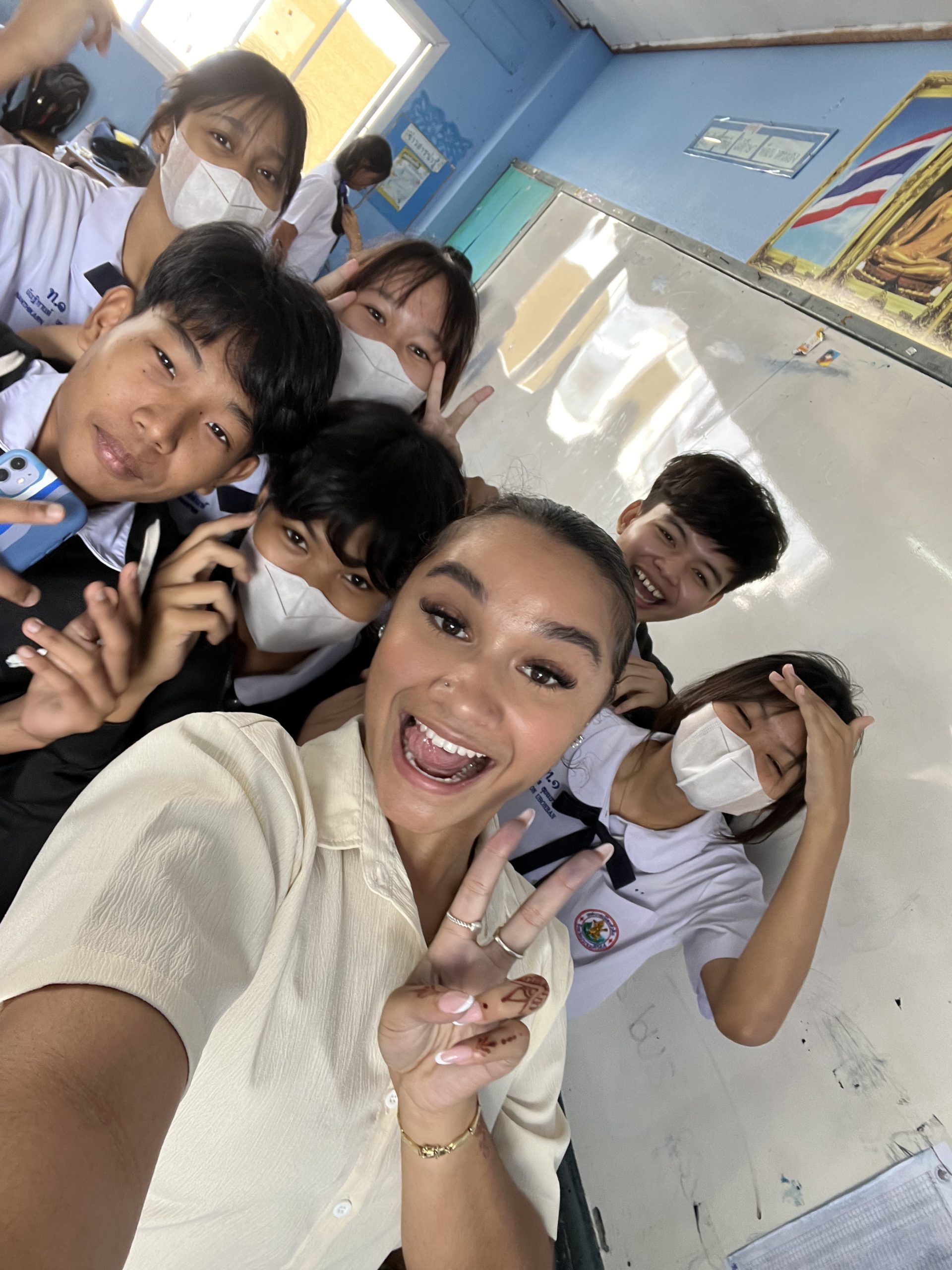
If it’s more often than you’d like, consider doing what Lauren did. She challenged herself to do something completely different and headed to Thailand to teach kindergarteners! Here’s her story:
***
My name is Lauren, I am 22 years old and from Houston, Texas. I decided to move to Thailand by the end of 2022.
I graduated from Texas State University with my bachelor’s degree in business management and a focus in entrepreneurial studies because I had the desire to start a business once a graduated. I had experience with running my own nail tech business throughout college and it went hand-and-hand with my post-grad plans. However, once I graduated and got into the groove of real life, my passion and light for my dream business started to fade. I started to feel very stagnate and everyday became a constant routine. I noticed myself getting really burnt out with everyday tasks and that’s when I first started researching traveling and teaching abroad.
I looked up reviews and videos on YouTube of other people sharing their experience of what it was like living in a completely different country. I became really consumed in watching teachers abroad and getting to know more about their experiences and how different each culture is. I never met anyone I knew personally to do something like this so I knew I would have to do my research and go through an agency to assist me with the process. While doing research I found Thailand and Costa Rica were my top places that I would be interested to teach English and Greenheart Travel happened to offer both. Being that I had already traveled to Costa Rica before, I figured I should go somewhere completely new and halfway across the world (lol)! I was itching for the challenge and became really infatuated with the culture and pictures of all the geographics that the country had to offer.
Now that I have finally made it here, I can say that I’ve truly loved every moment. I teach Kindergarten in Bangkok and absolutely find so much fulfillment in brightening up my student’s day. I find myself being in such a better space than I was at home and I learn something new every day. My whole experience through Greenheart Travel and XploreAsia exceeded my expectations, and I am truly grateful for that!
***
Thank you Lauren for taking the leap with Greenheart Travel!
If you are ready to travel for a change, check out all the Teach Abroad and Work Abroad programs that Greenheart Travel offers. The world awaits!
Just when you’ve finally hit your stride and feel confident and happy with the new country you’ve moved to, it’s time to head back to your home country.
By now you’ve probably heard about culture shock, but if you’re planning on traveling abroad, you’ll also need to prepare for reverse culture shock as well. Reverse culture shock is an entirely separate issue from culture shock, sometimes requiring different tools and techniques to help get you through.
Reverse culture shock will rear its ugly head quicker than you would expect, especially if you’ve been in a completely different culture from the culture you grew up in. In my case, I was returning to America, a highly individualistic society, after spending 3 months in Thailand, a collectivist society.
I thought I would have at least a few weeks before I started experiencing reverse culture shock, and thought the phases would be similar to the culture shock phases I went through in Thailand. I was so looking forward to the honeymoon phase where everything seemed perfect and nothing could go wrong.
To my dismay, I felt the effects of reverse culture shock as soon as I landed and went through airport security in the US. I had been fooling myself up until then, thinking that since I was only away for 3 months, the transition would be easy and the negative side effects wouldn’t hit me quite as hard. I couldn’t have been more wrong. I found myself frantically trying to hold on to the lessons and traditions I learned in Thailand, afraid that if I succumbed to my surroundings I would lose all of the progress I made abroad. But it was the aspects of Thai culture that I took with me that helped me reacclimate to American culture.
First things first, let’s talk about what reverse culture shock actually is. Reverse culture shock is the psychological and emotional distress people feel when re-entering their home country after spending time abroad. Many definitions out there will only discuss the effects of reverse culture shock for people who have been away from their home country for a year or more, but anyone who has spent more than a few weeks in another country can experience reverse culture shock. The more differences there are between the two cultures, the more intense the effects will be.
Like culture shock, reverse culture shock affects people in different ways, depending on a number of different factors, such as the length of time they spent abroad, how comfortable they became with the foreign culture, and whether they’ve experienced reverse culture shock before. Despite these differences, there are some practices that have been proven to help reduce the stressors of reverse culture shock.
Here are some tips and tricks that helped me reintegrate into American society while keeping aspects of Thai culture I’ve come to know and love.
Hanging out at Art in Paradise, a 3D art museum in Chiang Mai!
Start preparing and educating yourself on reverse culture shock before you get home.
Just because you grew up in your home culture and are “familiar” with it doesn’t mean you are exempt from experiencing reverse culture shock. Unfortunately, reverse culture shock is not as recognized as culture shock, making it difficult for those returning home to get the resources they need to feel comfortable.
Luckily for me, Greenheart provides resources to help with reverse culture shock and makes these resources available at any time. Treat going back home the same way you did going to a new country; do your research! You wouldn’t leave for a foreign country for 3 months without doing a little research, would you? Make sure you do some research about the country you’re going back home to; a lot of things can change in just 3 months, and you’ll want to prepare yourself as best as you can. Trust me, there’s nothing worse than being incredibly jetlagged and having reverse culture shock hit you in the airport when you have 40 minutes in between connecting flights. Imagine if you had to go through all that AND didn’t have the resources you needed?
Remember the “mai bpen rai” no worries attitude you learned about and acquired in Thailand? Take that with you. If you make the decision to work or volunteer in Thailand (and you should!) you’ll hear the words “mai bpen rai” quite a lot. This phrase means “no worries” in Thai, and really encapsulates the energy in Thailand.
In Thailand, you don’t experience the same stress and feeling of having to rush everywhere like you do in the US. When the hustle and bustle of life gets to be too much, just say “mai bpen rai” until you really do have no worries.
Just because it’s different, doesn’t mean it’s wrong.
If you read my other blog about experiencing culture shock, then you’re familiar with this phrase. This saying is something that helped me immensely when I was going through culture shock in Thailand, and it shouldn’t have come as a surprise that it would help me when I encountered American culture for the first time in 3 months.
Priorities, values, traditions, and ways of doing things are going to be different from your host country and will seem strange. When adjusting to a new culture, whether it’s a foreign culture or the culture you’ve grown up in, it’s important to remember that just because something is different doesn’t mean it’s wrong. Try not to compare everything to the country you were just in and assign negative values to your home country’s culture. Keep in mind that at one point, everything about your home culture seemed normal, and even “right”, and that feeling of normalcy will start to come back eventually.
My first ever authentic Chicago dog! Just an example of how many new things I can experience in my home country.
Keep developing your curious mind, and never stop learning.
Even though you are going back to the culture that you grew up in, you don’t know everything about it, and there are always going to be new things to learn and experience.
To keep yourself from feeling like you’re in a rut, be open to trying new things and immerse yourself in the local culture, just as you did when you arrived in the new country.
Use your puak!
In Thailand, the network of people you can rely on is called your puak, and after 3 months, your puak will (hopefully) be pretty big.
Just like every other difficult transition in life, it’s better with support than going it alone. You will meet people abroad that will have to return to their home country as well, so talk to those people about what you’re going through and ask about what they are doing to get through reverse culture shock. It’s nice to know that you aren’t alone, and by talking to people you met while abroad, you’ll keep the memories you made there alive!
A few of the fantastic people that make up my puak.
Above all else, keep a smile on your face.
If there’s one thing I learned during my time in the Land of Smiles, it’s how to keep a positive attitude and keep a smile on despite negative circumstances. Try not to let the stress of reverse culture shock overwhelm you and ruin your positive outlook on things. There’s a cliche saying about having to fake it till you make it, and it actually works in this case.
Even if you aren’t happy or feeling positive, smile through it anyway. At first, it’ll feel ridiculous, and sure people may look at you like you’re crazy because you have a smile plastered on your face at 6 in the morning in the midst of the mayhem that is airport security. But that smile will center you and bring your energy up, that fake feeling will go away, and the smile will start to feel genuine. Then before you know it, you’ll have other people smiling back at you, and you’ll have brought a little piece of Thai culture home.
One of the best ways to honor the country and the culture you just spent 3 months living in is to take a piece of it with you home and integrate it into your everyday life. Educate those around you about your experience and the things you learned. You don’t need to fall into the trap of completely abandoning everything about the other culture you experienced. So when you find yourself worrying about having to go back home after being abroad, stop, take a deep breath, put a smile on your face, and know that everything is going to be just fine.
Australia and New Zealand may seem similar on the surface. Both countries have stunning beaches, beautiful natural landscapes, and a laid-back attitude. We promise these destinations are not the same, although we admit their flags are very similar. Here are some key differences that you might want to consider when choosing between the lands down under.
Size
Australia is physically huge (about the same size as the United States) but the population is 24.6 million. To put that in perspective, there are more people living in the state of Texas. Most Ozzies live on the coast, making traveling between cities a bit of a trek. For example, if you wanted to go from Brisbane to Perth, it would either be a 5-hour flight or a 46-hour drive. Traveling within the country is doable as long as you don’t mind long road trips or dropping some cash of flights.
New Zealand is significantly smaller both in size and population. There are only about 4.8 million residents, which is less than the number of people living in Alabama. Because of its size, New Zealand is a bit more accessible, but that shouldn’t leave you to believe that there’s less to do.
Activities & Nature
Activities and nature go hand and hand in these countries. You’re going to have to be an outdoorsy person to really experience all that Australia and New Zealand have to offer.
Australia is dryer with more red dirt, making activities like hiking popular. Travelers often visit the Daintree Rainforest, a UNESCO World Heritage site where people can hike and take tours. People also tend to live near the beach, so water activities are going to be plentiful.
If you’re looking for something indoors, Australia also has a thriving nightlife scene. The Sydney Opera house is one of the most famous tourist attractions, but there’s much more to do beyond that.
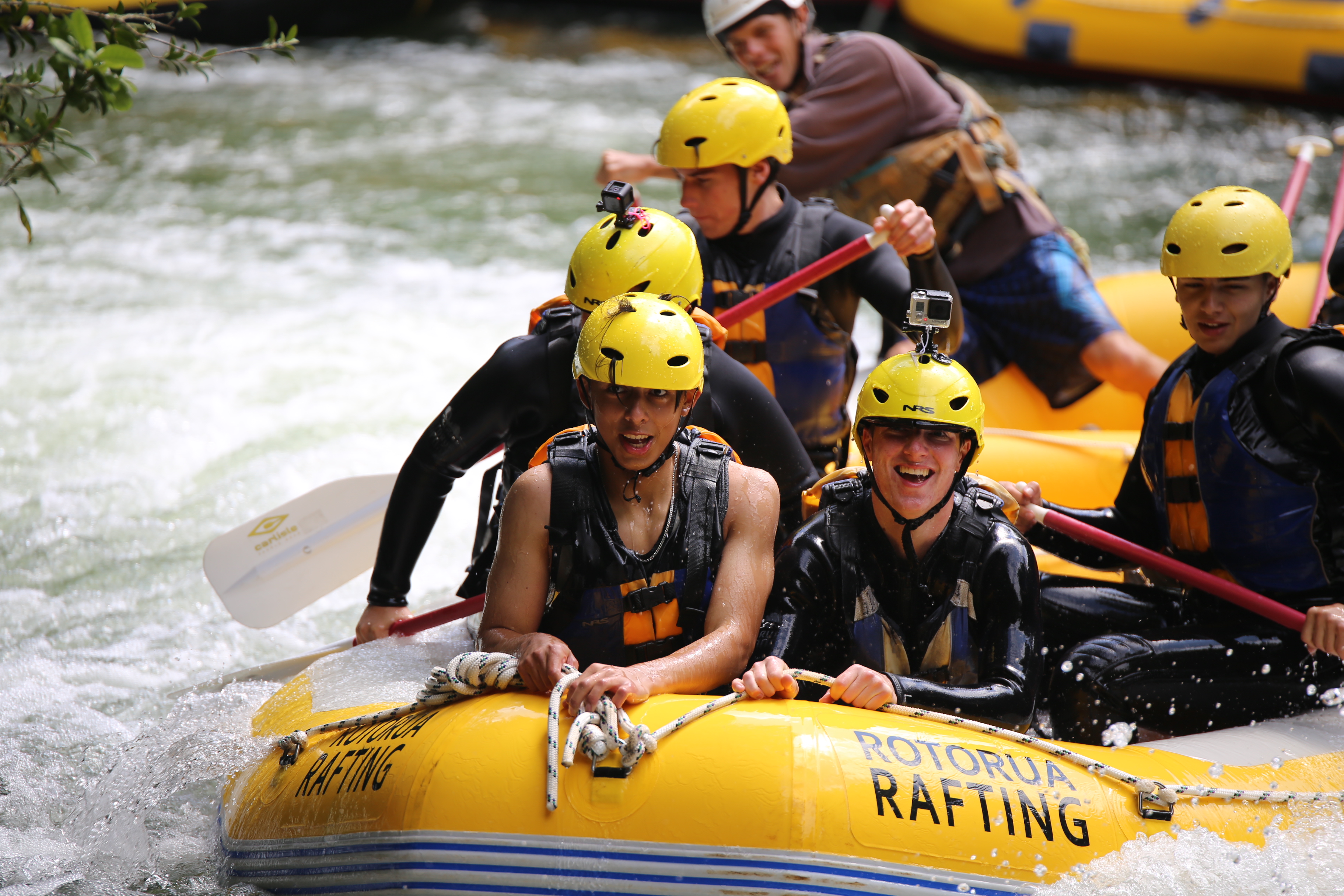
New Zealand is a very lush green country that will definitely push you out of your comfort zone. Kayaking, rafting, and diving are just a few prominent adventurous activities.
Something very unique to New Zealand is Hobbiton. You don’t have to be a fan of the Lord of the Rings franchise to be in awe of the remaining pieces from the movie set in “Middle Earth,” aka Matamata.
Wildlife
Kangaroos (or “roos” as they are called) are abundant in Australia. They are to Australia as deer are in the United States. You may also see koalas, quokkas, wombats, and emus.
The most recognized animal in New Zealand is the kiwi, the bird in which term for locals refers to. But they are not as common as you might think. In fact, kiwis are an endangered species. What you probably WILL see are sheep- lots and lots of sheep! It’s said that the sheep population outweighs the human population.
Cost of Living
Australia and New Zealand both fall on the pricier side when it comes to the cost of living. Australia tends to be more expensive but jobs pay higher wages to accommodate.
Each country has its own currency. $1.00m USD is $1.46 AUD and $1.58 NZD, to put it into perspective.
History & Culture
Australia and New Zealand were both invaded by the British government, but originally they were each inhibited by Māori (New Zealand ) and Aboriginals (Australia).
Maori culture in New Zealand is still present. For example, “kiaora” is a common greeting that means “hello” in Māori You will also find Māori names for places.
Aboriginal culture in Australia is less apparent as it’s been largely wiped out through colonization. In the 20th century, Aboriginals could be jailed for speaking their native language, Wiradjuri. It is a sensitive topic in Australia, as extensive damage that has been done. If you’re interested in learning more, there are Aboriginal communities living in Northern Territory and Western Australia.
Food
Both countries eat a lot of fresh fish and fruit, so there is quite a bit of crossover when it comes to cuisine. You will find dishes like prawns, fish n’ chips, and meat pies in both places.
Remember when we said kangaroos are to Australia like deer are to the United States? Do you see where we’re going with this? Yes, people DO eat kangaroo meat, so don’t be surprised if you see it in the grocery store.
You probably won’t find familiar packaged brand products in Australia, but local favorites are TimTams, Violet Crumble, and of course, Vegemite.
In New Zealand, crayfish, sea urchin, and hokey pokey ice cream (honeycomb) are uniquely popular. Jaffas are the candy of choice. If you want to try a something extra special, Hangi is a Maori dish consisting of meat and vegetables cooked in an underground oven.
Jimmy Gongola is a Greenheart Travel alum who is currently on the Work & Travel New Zealand program. We asked him to share in his own words what he does, where he lives, and what he does for fun on his program.
I’m having the time of my life in New Zealand! I’m fortunate enough to get to work and LIVE in Mt. Cook National Park, aka “glacier country”. I work at The Hermitage Hotel (first picture) as a front of house employee working front desk, porter, shuttle driver, room service, pretty much doing anything that needs to be done for the guests. There is only a population of about 180 people living in the national park because you need to work in the park in order to get housing. So it’s a pretty tight-knit community where we all hang out in our staff lounge and share meals in the dining center together.
My accommodation (second picture) is a lodge that is less than a one minute walk to my workspace. There are six people living in the building each with our own bedrooms that have our own televisions and refrigerators, and we share two bathrooms. I have a perfect view of Mt Cook, the tallest mountain in New Zealand from my bedroom window.
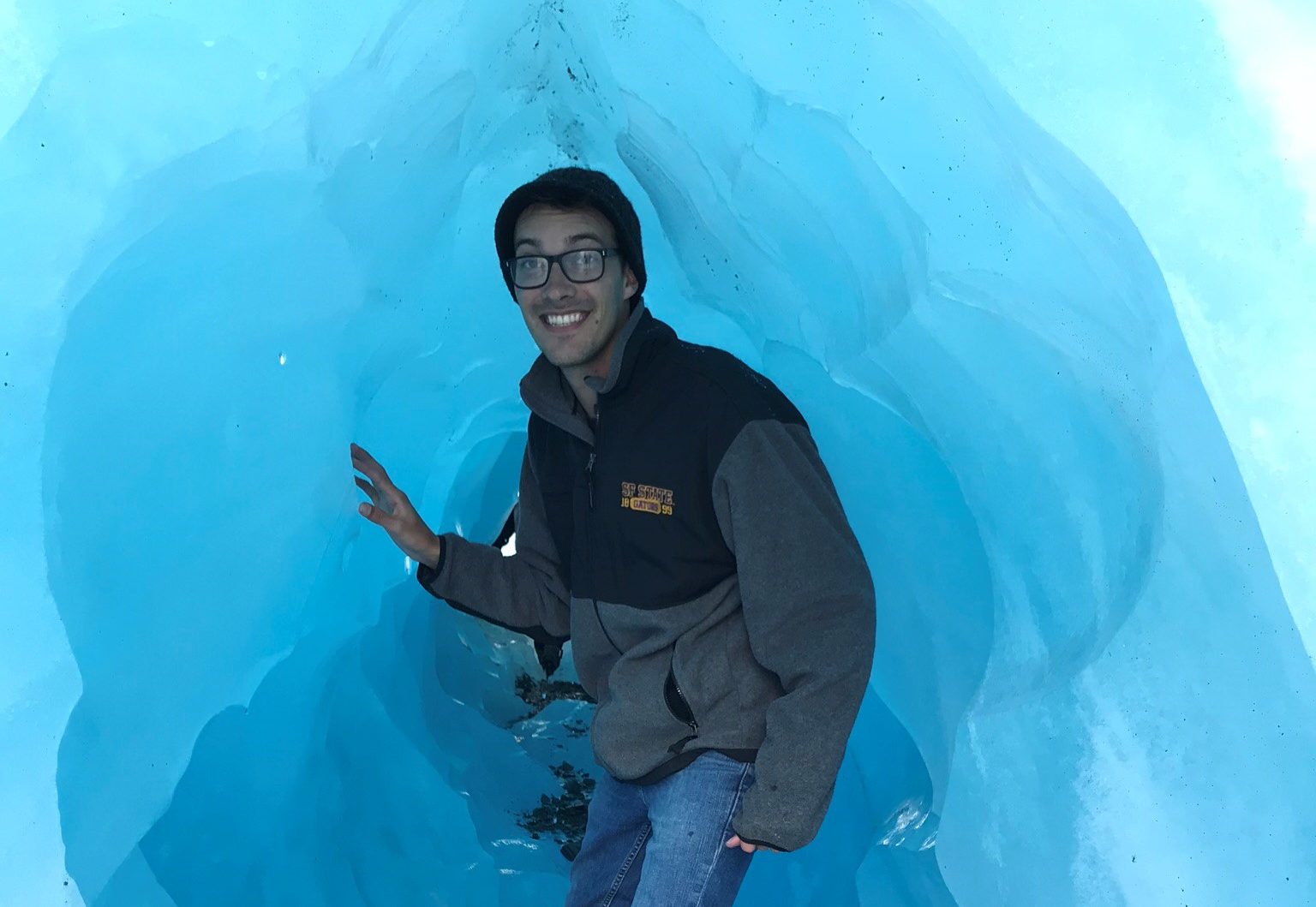
The park is a bit isolated from the busy city life so for fun we often find ourselves on one of the many hikes around the park to see the glaciers and waterfalls, we have a village basketball and tennis court, a staff gym, and you’re bound to see someone you know at the one and only bar and grill. When there is availability a job perk allows staff to go on any of the tours provided as well free of charge. These tours include off-road four-wheel drive adventures, taking a boat out on the lake to see the icebergs that have broken off of the glacier up close (third picture), helicopter rides that land on the glacier and allow you to hike on the ice and explore the ice caves (me, in the fourth picture)! The guided stargazing tour is also incredible as Mt. Cook National Park is the largest dark sky reserve in the Southern Hemisphere, you can see three different galaxies with the naked eye and if you’re lucky you can sometimes spot the southern lights.
At least, it isn’t for me. In November of 2018, I travelled to Thailand with the help of Greenheart Travel and their Marketing Internship in Thailand program. I currently work five days a week at Rescue P.A.W.S., an amazing animal welfare organization based right outside of Hua Hin, Thailand.
It goes without saying that I came to Thailand to travel and explore a part of the world that I had never seen before. However, I think that I am one among many who underestimated the amount of work that comes along with an experience such as this one. I have met quite a few people who’ve come to Thailand to work, expecting their time working here to be significantly different from their time working back home. Truthfully, it isn’t. Working full-time in a different country is still working full-time. Some people don’t fully understand this until they get settled into their jobs abroad – I’ve come across a number of expats who quickly became disappointed with this reality and left their positions abroad soon after acquiring them.
Paige, the other Rescue P.A.W.S. intern, and I with some of our dogs on the temple grounds where we work – this was on Hawaiian Shirt Thursday!
That being said, I am absolutely in love with my life in Thailand and I have zero regrets about travelling here to work! I love my job so much that I’ve even chosen to stay a few months longer than I had originally planned. The idea of going back home breaks my heart and it remains months away.
What my days at Rescue P.A.W.S. look like.
My days at Rescue P.A.W.S. are never monotonous or repetitive. Everyone who comes here as an intern gets the advantage of being able to employ their skills however they choose, which isn’t all that common when starting a new job. I get to use my experience as a photographer and artist almost constantly, taking photos for Rescue P.A.W.S.’ social media and website and getting to design new merchandise. On day one, the first questions I was asked were, “What ideas do you have? What do YOU want to do at Rescue P.A.W.S.?” I shared my ideas and I was told to roll with them.
Although I spend much of my time working, I do make an effort to see what I can of Thailand on the weekends and to take a few days off every month to do some travelling. This routine is one that I love: getting to explore the country on my time off but still having a home in Thailand to go back to once I’m done. I’ve visited the gorgeous multi-tiered Erawan waterfalls, walked through Bangkok’s busy streets, and gotten my Advanced Diving Certification on the island of Koh Tao. Closer to home, I’ve seen wild elephants at Kui Buri National Park, explored the otherworldly Cave Temple at Sam Roi Yot National Park, and gone camping by the ocean at Pran Buri National Park.
The Cave Temple at Sam Roi Yot National Park.
When I’m not working, I have incredible opportunities to see what I can of this beautiful country. However, I work a lot. If you come here to work, don’t expect your time working here to be ultimately different than your time working back home. If you come to Thailand to escape, your problems will follow. If you come here to heal, I promise you will. I’ve heard it many times and if you come to this awe-inspiring country you probably will too: Thailand doesn’t give you what you want, it gives you what you need. I can say with a full heart that I’ve gotten both.
Upon obtaining her first penpal from Germany at age 12, Zoe instantly fell in love with learning about diverse cultures. From that moment on, Zoe began searching for any opportunity to visit distant countries. She attended North Central College solely to enroll in their great study abroad programs. As a sophomore in college, she spent a term living with a host family in Costa Rica where she took four hours of intensive Spanish every day and interned for a tourism company.
During her last year of college, Zoe spent a transformative term in Spain studying Spanish translation and phonetics. While completing her B.A. in Spanish and International Business, she explored Panama, Italy, Portugal, and the Netherlands.
High on her must-see destination list are Colombia, Mexico, and Ireland. When she isn’t planning her next getaway, Zoe enjoys singing to her favorite Spanish songs, practicing Latin social dances, watching dramatic novelas, disappearing into a good book, and making new friends.
Read on to discover Zoe’s hidden talent and favorite travel “aha moment”.
Q: Where did you grow up?
I’ve moved around quite a lot, but I’ve spent most of my life in the south suburbs of Chicago. Sauk Village, Illinois is where I spent most of my childhood.
Q: What is your favorite international city?
I instantly felt connected to Seville when I visited Spain back in 2015. The architecture alone speaks volumes about the history of southern Spain. Andalusians are so warm and personable. Plus, I had fun trying to learn the Andalusian dialect.
Q: What is your secret talent?
I practiced Taekwondo for about five years. What I learned is that I’m scary good with nunchucks.
Q: If you could eat only one country’s style of food for the rest of your life, which would it be?
Spanish food, hands down! While living with my host family in Seville, I was never tired of the cuisine. There were so many great soups and tortilla española galore. I was impressed with how many dishes my host family could make with eggs and rice. Today, I still find myself eating eggs with dinner.
Q: Complete the sentence: When I grow up I want to ______.
Own a house in Spain.
Q: What is your spirit animal?
Well, if my mother was answering this question she would say a giraffe, but I think that has more to do with my stature than anything. Is it weird to say I think that my spirit animal is a hamster? I know it isn’t exotic or anything, but we have similar tendencies. I forage and hide my food from others too. Evidently, sharing food is not my strong suit.
Q: What is your favorite travel “AHA! moment” or memory?
I lived in Costa Rica during the rainy season, so it literally rained every day around 4:00 pm. I have this crazy curly hair, and at that point in my life, I worked super hard to keep it dry and tamed. Whenever my hair touched water it turned into a lion’s mane. But, as it was the rainy season, it was impossible not to get wet at some point.
One day I was walking home, and sure enough, I had forgotten to bring my umbrella. Well, you can guess the rest of the story. But, it wasn’t all for naught. At that moment, I realized that I spent so many years thinking that I hated the rain, and now one of my favorite memories was getting caught in it. I thought about how often we say we hate things that we never even tried.
Q: What is your favorite thing about working for Greenheart Travel?
Working at Greenheart Travel has a way of feeding my curiosity and my desire to learn. Everyone at Greenheart Travel has experienced their own share of adventures and hardships abroad, and those experiences have shaped each person in various ways. Hearing these stories has been super rewarding.