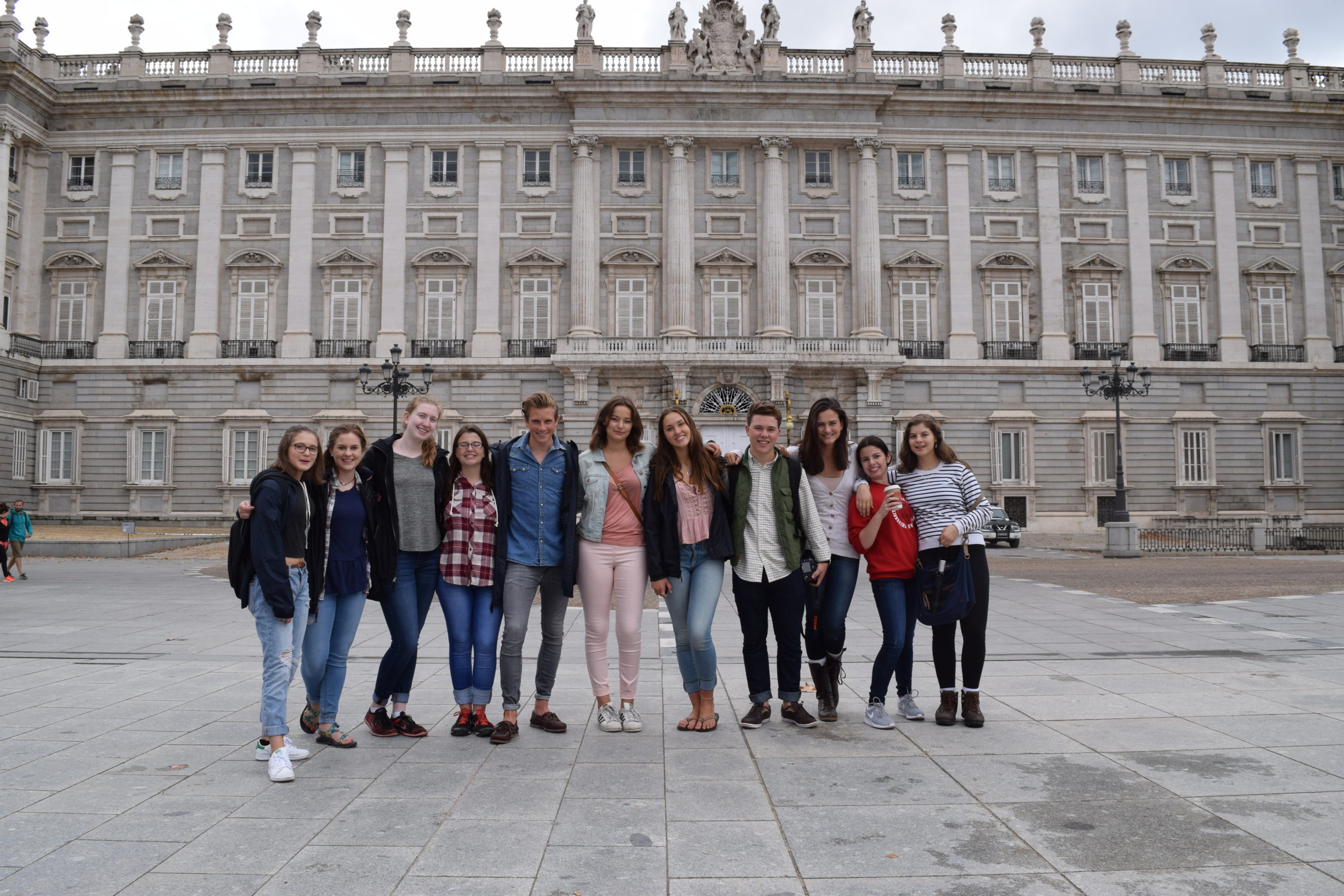
You’ve soaked up the program description, admired the photos, and you are ready to start packing your bags! But you haven’t applied yet. That application process! It seems daunting! And you procrastinate. But why put off the trip of a lifetime?
Did you know that you can do the application in quick, easy stages?
That’s right. It’s only 6 steps and the whole thing takes about 30 minutes! Go to the Greenheart Travel program you are interested in and we’ll walk you through it!
Select the APPLY NOW button on the right side of the program page. Fill out the form with some general information about you, and click submit.
Once you complete step 1, you will be emailed a link to Greenheart Travel’s application portal. Sometimes the email will go into your spam box, so keep an eye out! If you do not receive an application within 5-7 minutes of clicking submit, send an email to travelapplications@greenheart.org
Click the link in that email to the application portal where you will complete a second application form that includes more detailed information about your background (education, experience, medical history, host family preferences, etc).
Next, hold your position in the program by paying a $300 deposit. It is very rare that applications are declined, but if you are rejected from the program, you will be refunded the $300.
Schedule your 15-20 minute interview via Microsoft Teams with the program manager.
Review your application and submit 😊
During step 3, please have these documents ready to upload:
1 letter of recommendation (can be personal or professional)
Copy of your passport
A completed background check. If you are a U.S. citizen, Greenheart Travel provides you an online background check service which you can access during the application process. If you are not a U.S. citizen, you are required to submit your own background check from your local police station.
And that’s it!
After that, we will work with our partners to make sure you are placed in the right school, job, and/or family and before you know it, you’ll be on your way! Go ahead, give it a go and travel for a change with Greenheart Travel!
How many times do you think, “Blah. My routine is just blah.”
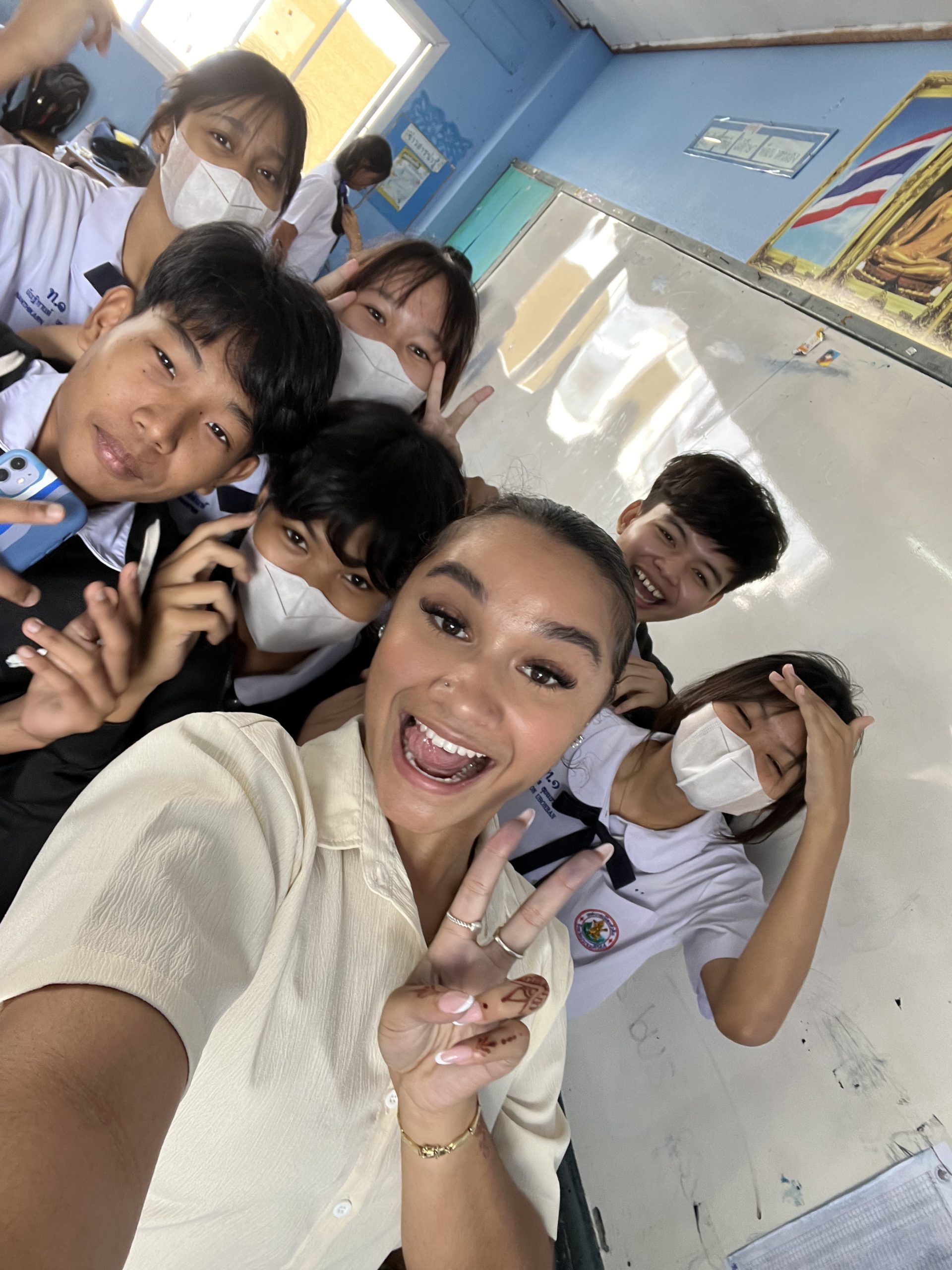
If it’s more often than you’d like, consider doing what Lauren did. She challenged herself to do something completely different and headed to Thailand to teach kindergarteners! Here’s her story:
***
My name is Lauren, I am 22 years old and from Houston, Texas. I decided to move to Thailand by the end of 2022.
I graduated from Texas State University with my bachelor’s degree in business management and a focus in entrepreneurial studies because I had the desire to start a business once a graduated. I had experience with running my own nail tech business throughout college and it went hand-and-hand with my post-grad plans. However, once I graduated and got into the groove of real life, my passion and light for my dream business started to fade. I started to feel very stagnate and everyday became a constant routine. I noticed myself getting really burnt out with everyday tasks and that’s when I first started researching traveling and teaching abroad.
I looked up reviews and videos on YouTube of other people sharing their experience of what it was like living in a completely different country. I became really consumed in watching teachers abroad and getting to know more about their experiences and how different each culture is. I never met anyone I knew personally to do something like this so I knew I would have to do my research and go through an agency to assist me with the process. While doing research I found Thailand and Costa Rica were my top places that I would be interested to teach English and Greenheart Travel happened to offer both. Being that I had already traveled to Costa Rica before, I figured I should go somewhere completely new and halfway across the world (lol)! I was itching for the challenge and became really infatuated with the culture and pictures of all the geographics that the country had to offer.
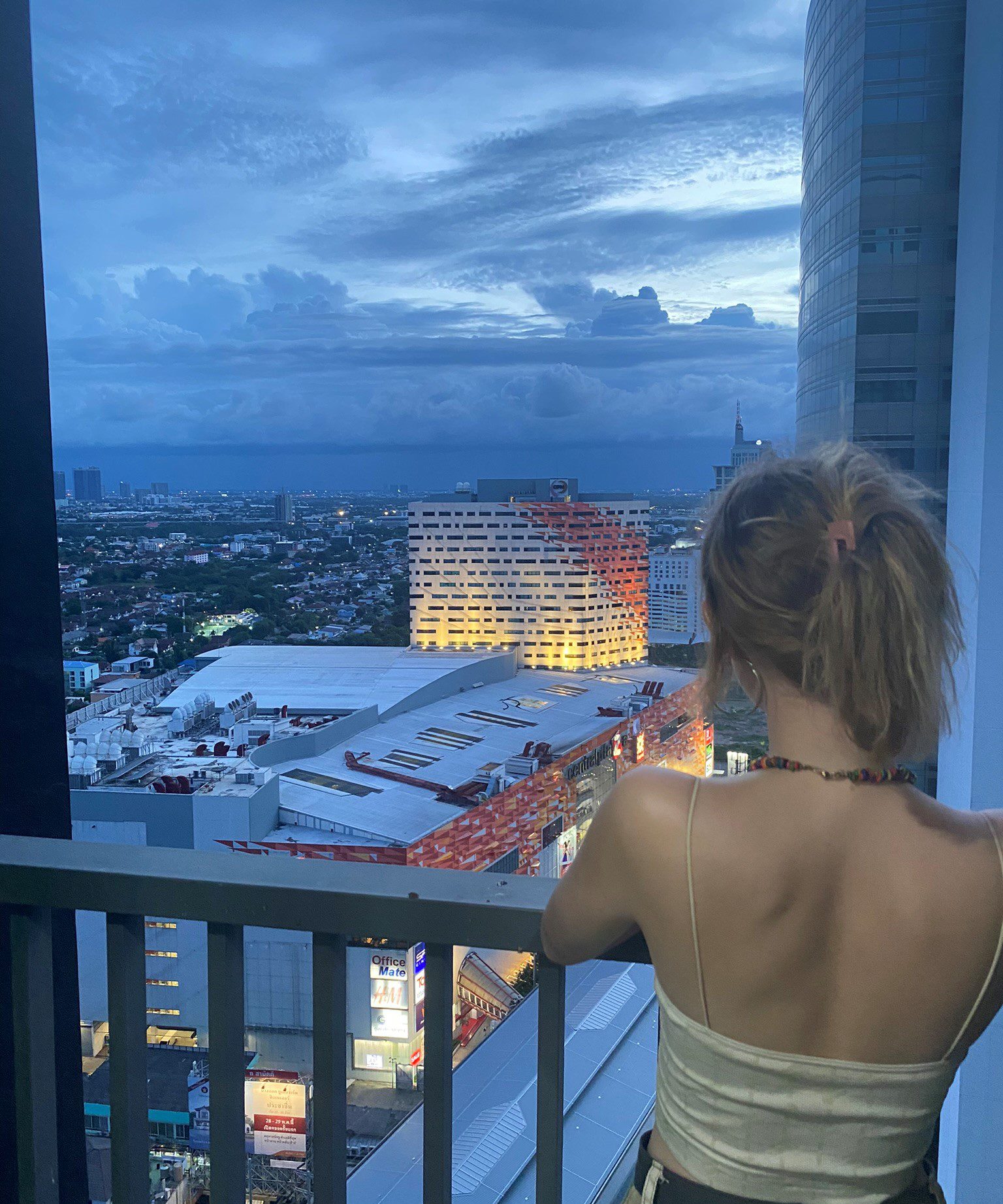
Now that I have finally made it here, I can say that I’ve truly loved every moment. I teach Kindergarten in Bangkok and absolutely find so much fulfillment in brightening up my student’s day. I find myself being in such a better space than I was at home and I learn something new every day. My whole experience through Greenheart Travel and XploreAsia exceeded my expectations, and I am truly grateful for that!
***
Thank you Lauren for taking the leap with Greenheart Travel!
If you are ready to travel for a change, check out all the Teach Abroad and Work Abroad programs that Greenheart Travel offers. The world awaits!
One of the things we are asked the most is: What will my day-to-day be like when I teach abroad? Well, here is Lucy-Louise to give us a glimpse into her life as a Greenheart Travel Teach Abroad in Thailand traveler…
The day starts early as it does at most schools across Thailand, at 7:30am, which makes living close to school invaluable! Your first job of the day is usually gate duty where you greet students and parents and welcome the students into school. This is a great opportunity to get to know your student’s family. Throughout the day, most of my time is spent in the classroom, but if I am not teaching, I spend time with the other English teachers, lesson planning, marking and preparing resources. The day is also made up of regular trips to 7/11 for much needed coffee!
After school, around 4pm, can be made up of a range of activities; in Bangkok most accommodation has a gym or a pool, which is one way to relax. Or evenings can be spent meeting people and exploring the local area. Next to my condo is a small local market where I go with my teacher friends to eat dinner. Living in Bangkok means running out of ways to spend the evening or socialise is unlikely! For example, heading into central Bangkok for food or drinks is also a regular for any Bangkok teacher.
The weekends and long weekends are unsurprisingly the best opportunities to travel and see other parts of Thailand. Living in Bangkok is great because it’s so convenient for travel, for example Chaing Mai is only an hour away and so are a number of national parks!
Overall, daily life as a teacher in Bangkok (and Thailand) is exciting, it’s full of opportunities to meet people, explore new areas, work, learn and socialise.
We are often asked by High School students who are considering a semester or two abroad, “How hard is it to go to school far away from your friends? What will I miss back home? Will I be homesick? Will I make friends?”
Vismaya attended High School Abroad in Spain and has shared a few stories with us about her time there. This one is about homesickness, proms, birthdays, and making good friends when you are far from home.
The Distance from Home
Nothing could ever equal the excitingness of spending a semester in Spain, and I certainly never felt as though this opportunity was detracting from any other. As I engulfed myself further into the Spanish world, it only made the distance grow larger with life back home. Every so often, as I checked to see what was happening back home, I would see pictures and Instagram stories that made me wish I were back in California (even if it was just for a second). My friend in Spain saw me looking at some Prom posts sometime in late March, and I remember a group of girls huddled around me to marvel at the grandeur of the dresses. They told me that they had all seen so many Proms in many American movies, but they had never experienced something like that (although they all really wanted to!).
As the occasional pangs of homesickness hit me, I would tell my classmate Lucia. It so happened that in one of these conversations, she learnt my birthday was coming up in a month (it was my first birthday away from my parents!). And my friends’ Prom back home was the very week of my birthday! I’m not sure how things progressed so quickly, but the two were put together and soon enough, there was a group chat for “Prom Night/Cumple de Vis” (cumple is “birthday” in Spanish). The whole class was added to the group chat, and they kept me off it (as a surprise, of course). Lucia and Elena (two of my closest friends in Spain) took care of all the RSVPs and the guest list.
A Special Prom Español
We decided to make it a Prom Español. Everyone agreed the dress code would be formal, and the weeks leading up to the event, many of my girlfriends would send me pictures of dresses asking me if the attire was okay for such a party. The day of the party, a few of my friends and I gathered at the locale to blow up balloons and build a huge Prom balloon banner decked in gold, silver, and black balloons. There was also a huge cumpleaños sign with the number 17 on it (for my 17th birthday). One of my other friends and I took the bus to a local market and stocked up on all the food for the event!
I was surprised by the turnout. We were unable to get a group picture of every single person who arrived, but there were many individual pictures. Here are some of the many pictures I took with some of the sweetest classmates I’ve ever had. They even secretly bought me some very cool firecracker candles. Everyone loudly sang me Cumpleaños Feliz as I cut the cake with some of the coolest firecracker candles I’ve ever seen. The sweetest part was the gift I received.
Gifting a Memory
I came to Spain wearing a necklace gifted to me before I left. My classmates here know how much I appreciate jewelry given with the intention of keeping associated with the person/people who gifted it to me. As friendship dynamics have shifted over time, I’ve found myself growing apart from most of my friends back home. Although there are those who have continued talking to me and we are maintaining our friendship, there have been a few fall-outs.
When my Spanish classmates heard about this, they decided to gift me a necklace. This necklace is so special to me because it not only has my name engraved on one side, but it also has an engraving of the day I joined my class (1 Bachillerato C) which is written like the way they write the date here (February 4, 2022 is written as 4-2-2022). I remember Lucia telling me that now I have a special jewelry piece that serves as such a beautiful memory of my birthday and my time here, but also replaces the necklace I used to wear. In addition to the necklace, my classmates wrote me a really beautiful card, and the whole class signed it.
Here is what the card said…as translated into English:
To Vismaya from all your friends in Spain.
We hope that you have liked your birthday in Spain. This is a memory you can take with you, of all of us, and you will always have us for anything you want/need. To us, our time with you has been precious, and we hope you take with you many special memories and people to remember. For us, this experience has been so unique, and you are such an unforgettable person for us who we can appreciate and from whom we can learn. We hope you remember us fondly and that we have made this period of your life beautiful. A memory of the class — we will never forget you.
– 1° Bachillerato C
Feeling Thankful
I cannot believe how lucky I got when it came to being a foreign exchange student, and I cannot believe how quickly the weeks have flown by with these people. I think about how I have only 6-7 more weeks in the classroom with them, and then it will end. It wasn’t that long ago when my teacher Juan first introduced me and told the class to take care of me. And they couldn’t have done a better job. I am going to miss the family we have built so much.
I am so thankful for all the memories. I entered my 17th birthday party in a dull mood because of the distance I had between me and my friends and family back home. The distance changed dynamics and I missed receiving messages from some people back home. But by the time I left this party, my heart was full. Thank you, thank you, thank you for this experience I’ll never forget.
To my parents back home, thank you for letting me have the night of my dreams as a new 17 year old. And to my parents here in Spain, thank you for being cool when you crashed the party 🙂
Greenheart Travel loves to hear from our travelers. Recently, Vismaya returned from a High School Abroad semester in Spain and volunteered to share her experiences with us.
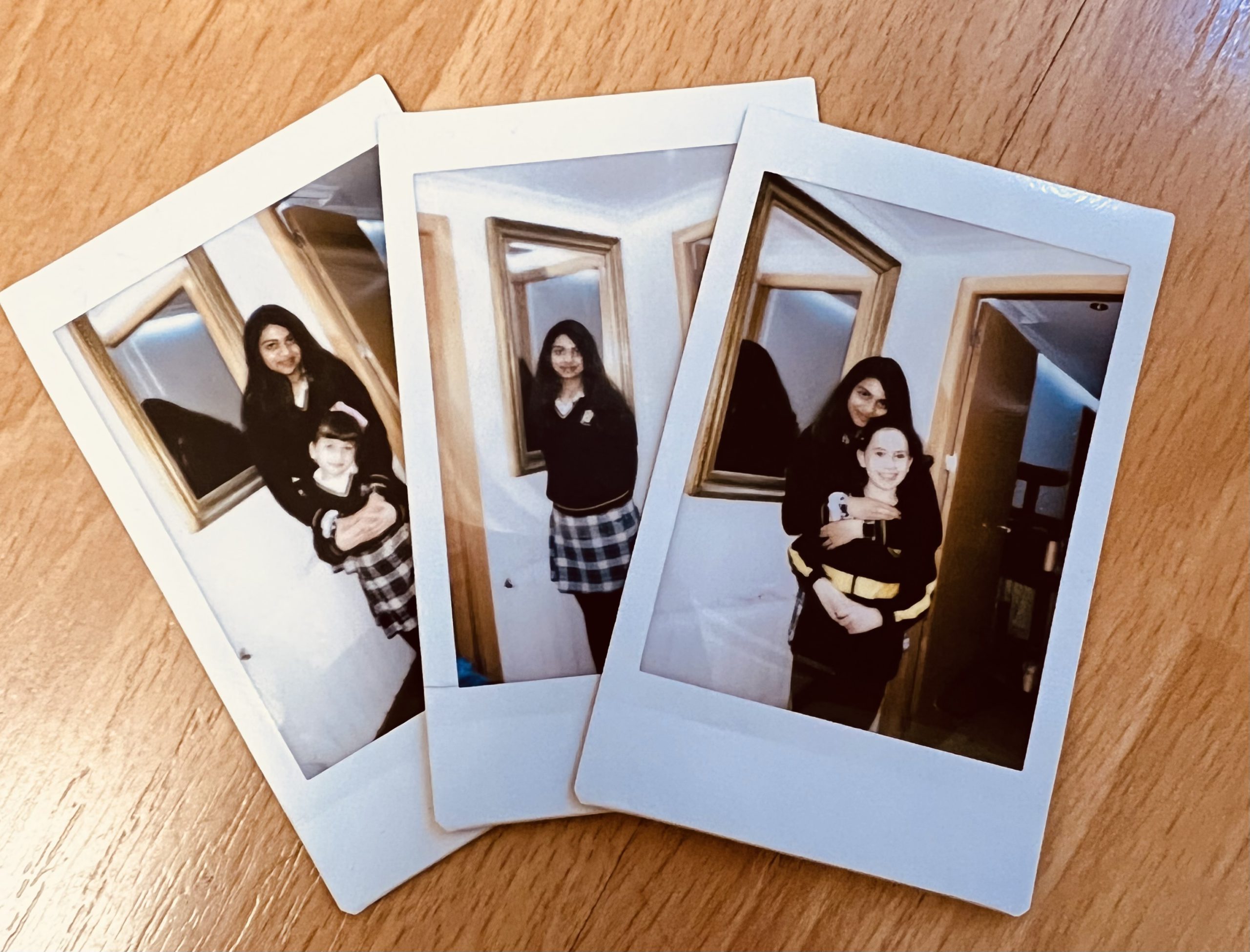
Vismaya, who lives in California, decided to study a semester in Spain because she wanted to learn more Spanish and immerse herself in the culture. She arrived in Badajoz, met her host family, and started school the very next day—still jet lagged. Her little host sisters, Catalina and Carmen, were very excited to welcome their big sister into town, and they captured a couple of polaroid shots right before school started. Through the day, Vismaya recorded her observations and feelings about being the new exchange student in her local high school–the culture shock, the nerves, the tiredness, the language challenges, and the excitement and newness of it all.
Starting My First Day of High School in Badajoz
Yesterday was my first day of school here in Spain, and the experience as a whole was both nerve-wrecking and wholesome all at once. My day started rather early, as I could barely sleep due to the jet lag — I’m living 9 hours away from home! One of my kind neighbors showed up exactly at 8 a.m. to walk me to school. School days in Spain are typically shorter; for the Bachillerato years (11th and 12th grade in the US), school starts at 8:20 a.m. and goes till 2:20 p.m. (only 6 hours).
At school, I met the director, and he took me to my class to meet my tutor. A tutor in Spain is a class counselor who helps handle student problems, gives advice, and fosters class bonding. My tutor happened to be my English teacher, Juan, who also proved to be a very helpful translator for me around the school. After a brief campus tour, he took me to class to meet my classmates.
First Impressions
Oddly enough, I didn’t feel shy entering the classroom, but I certainly was intimidated. My English teacher told me to introduce myself to the class, and fortunately, I was able to do so in English because it was their English period. I remember I didn’t say much but the class applauded loudly when I finished; they were all fascinated by my American accent. The teacher then asked each of them to introduce themselves to me in very slow Spanish; he stressed the severity of the accent in Extremadura (people speak very fast and often swallow the letters at the end of the word). The students went around the classroom one-by-one introducing themselves, although we only got halfway through the class by the time the bell rang. Class ended with Juan telling the class to take care of me, to which the class enthusiastically responded. I remember being pleasantly surprised by the bond of the classmates in the Spanish classroom and feeling safe when I heard Juan say, “Teneis que cuidarla, ¿vale?” (“You have to take care of her, okay?”). As soon as English ended, the class crowded around my desk trying to ask me questions and introduce themselves. Most of them simply observed me, as the language barrier was rather evident. They managed to communicate with me in simple English and even asked for my phone number to add me to a group chat for things related to school.
In the Spanish bachillerato program, students have three classes in the morning following by a recreo. The recreo is like the recess period of school. Bachillerato students are allowed to venture outside campus and my friends decided to take me out to a candy store. They asked me questions during the break, like the music I listened to, and we discovered that we had a lot in common–listening to many of the same artists. Walking back to school took more time than expected, as so many people tried to speak to me in English. We barely made it back by the time the bell rang.
My friends were impressed by the iPhone camera that I had because most students here have Android phones. This is the only picture they took during the school day (and it was during the recreo) because taking photos in schools in prohibited in Spain by law.
Getting Through Day One
Philosophy followed el recreo and that was when I experienced my first wave of culture shock. Until philosophy, everyone tried to speak to me slowly and say things in English. I remember feeling so lost as they reviewed the assignments. They read so fast! I vividly remember a moment when one of my classmates read out her correct answers and the whole class applauded her. Being caught up in translating the last of her words in my head (her rate of speech was too fast for me), I forgot to applaud and the teacher gestured me to clap anyway to show my support; I remember some of my classmates laughing and sympathizing because they saw I did not understand anything but I applauded anyway.
The initial excitement of the day had passed and I was feeling more confused and jet lagged for my last two classes. The biology teacher introduced himself, telling me that he was just as embarrassed to speak in English as I was to speak in Spanish. Biology was a group project and a couple of my classmates invited me into their group. The final class was Spanish literature, and again, I found myself feeling lost. The class was reading Don Quijote in its original form and they were learning the historical context and studying the complexity of the characters. I was extremely sleepy, but the next thing I knew, the bell rang.
I left school that first day not knowing how to feel. People had been so friendly yet, I felt so lost in my new world. The intensity of subjects combined with the heavy accent in Extremadura made comprehension more difficult. I was nervous to go back to class! But I knew this stage would pass—and it did! Everyone was so much more helpful than I could have ever imagined, and I will always be grateful.
Vismaya’s first day at a High School in Spain.
Thank you Vismaya for sharing your story! You can find Vismaya’s blog here. Check back soon for another of her stories about her time in Spain.
A note from Greenheart Travel: Eva Levin is a high school student from Maine who studied in Finland during the Spring 2021 semester.
By Eva Levin
School life all across the world leaves a very bold mark on the culture of every nation’s youth. The way that we learn in our communities affects our relationships, our free time, and our overall outlook on life. I was lucky enough to get to experience a semester abroad in Tampere, Finland, to conclude the final five months of my freshman year. Having lived in a relatively small town in Maine for the past five and a half years (excluding my time abroad), I was very used to the Northern climate, and a lifestyle with certain aspects influenced by Nordic culture, due to my previous fascination with the region. Because of this, prior to travelling to Finland I faced some concern that the social environment would be similar to that of my own region, just like the physical environment is. However, this notion was far from the truth, which I soon realized upon entering Finland and it’s school system, and getting the chance to become acquainted with Finnish school culture and their communities.
Oftentimes, schools in Finland will have different classes that specialize in different subjects, and take extra classes in their group’s subjects. When I attended Linnainmaan koulu (Linnainmaa’s school) in Tampere, Finland, I was lucky enough to be placed in a music class, (where we’d have more music lessons each week than the average group of students as every student in the class was a musician prior to joining the class), where we’d play a variety of different songs on different instruments. My school would hold events where the students who played music would perform songs in both English and Finnish (many students in Finland are interested in American or English music and pop culture).
Photo courtesy of Eva Levin
In terms of physical education, gym teachers in schools in Finland will utilize the advantage of the cold winter and sometimes excessive amounts of snow. On my first day in Finnish “liikunta” class, or “exercise” class, we got to go out and do cross country skiing across the paths in the back area of the neighborhood that my school was located in. Other activities that students get to do together in the winter time that may not be very common for schools in the U.S., specifically in the southern U.S. where snow can be rare, are outdoor skating and ice hockey with chairs (one person skates and pushes someone in the chair who is holding an ice hockey stick to play against the other sitting students and their partners.) As an exchange student who didn’t know the language well, I particularly enjoyed playing ice hockey, as I got to learn a lot of new words in Finnish about speed and turning, so it was a fun opportunity to communicate in Finnish to use teamwork with a classmate.
Photo courtesy of Eva Levi
Depending on what time of year you choose to travel, you’ll get to experience different strangely lengthened days during your life in Finland. As most of the states in the US (minus parts of Alaska) are too far South to experience the elongated days in the summer and the elongated nights in the winter, going to Finland and seeing daylight for nearly 24 hours (depending on your city) in the summer, or walking to and from school in the dark in the winter may seem like the strangest thing. At the very beginning of my trip in mid-January, I would walk to school in the dark, and by the time I left school, the sun would already have begun setting. By the very end, in mid-June, the sun would officially set around 11:30 at night, but the sky would never truly get dark as it would in the wintertime. Though this aspect to Finnish life may seem very strange to most Americans, or most people from any part of the world, it’s also a really amazing thing to experience. To a foreigner from any country that’s further south, the long nights and long days depending on the season make the days feel special and unique.
There are many small and large aspects to Finnish lifestyle and school culture that will differ from your life as a student in your own country. However, the close communities and well trained, friendly school teachers will make you feel at home in your future community and town. Most students and teachers will likely be accommodating to your language requests in terms of how much Finnish you use or how much English you use, as many people in Finland are proficient in English. However, if it is your goal to learn the Finnish language, don’t be afraid to push yourself to practice Finnish and ask those around you in your host community to speak Finnish with you, as with such a difficult language, the best way to learn it is to speak it as often as possible. Hopefully you’ll be able to recognize some of these fun cultural differences and aspects to Finnish school culture and life on your trip, and discover many more with meaning to you.
A note from Greenheart Travel: Eva Levin is a high school student from Maine who studied in Finland during the Spring 2021 semester.
Eight Things You Should Know: A Guide of Information and Recommendations for American Students Travelling to Finland
By Eva Levin
If you’re an American student who plans on travelling to someplace in Finland, whether it be for a short or a long amount of time, you’re definitely in for some experiences with unexpected differences to life in the U.S.. (Or to your past experiences travelling the world.) These aren’t necessarily bad things, so long as you keep an open mind to the lifestyles and practices of those around you and prepare yourself for a few funny or awkward moments of cultural misunderstanding, you’re going to have a great time learning about Finland and it’s wonderful, unique culture. Below is a list I’ve made of a few key differences between American and Finnish culture, along with a few recommendations or just things to think about. Bear with me, as the list is a bit scattered between the three categories, but you’ll see once you’ve taken your time abroad that organizing all your interesting and funny memories might be a bit chaotic too.
Eva in Finland. Courtesy of Eva Levin.
Recognizing your own familiar pop culture thousands of miles from home
Though there are many distinct films, songs, and shows that come from Finland that are popular amongst Finnish youth, nowadays, it’s very common for Finnish kids and teenagers to take an interest in American pop culture. This includes, but is not limited to, American movies, shows, and music. When I got to Finland, I immediately saw posters and advertisements for either American movies and shows, or their covers with a Finnish translation. (Note that it wasn’t just American pop culture, but also British, Australian, and some from higher populated Western European countries such as France or Germany.) As most Finnish films or songs don’t reach an international crowd, a lot of the pop culture that they enjoy comes from America or England. When I first realized this, I felt a bit of disappointment at first, as I feared it meant I wouldn’t get to absorb true Finnish culture as much as I’d hoped, however, if you ask around and talk to friends or your host family, you’ll be able to find some really great Finnish movies, shows, and music. It just depends on where you look. It was also a very strange feeling to be able to relate to people who live in a different country than me about the same films and songs that I grew up with. It was a really nice feeling a lot of the time, because it led to experiences like teaching my friends the meanings of English lyrics to songs, or talking about the slight differences in the plots of American films vs. their Finnish translations that were released in Finland.
Removing your shoes before you enter the house, and changing them at school
I’m aware from prior international experience that the practice of removing your shoes at the door before entering a house is definitely not something unique to Finnish culture. In fact, many countries around the world (for various reasons) do this before they go inside. However, I’ve found that in the U.S., it’s a lot more common, especially when you’re a guest at somebody’s house, to leave your shoes on when you go inside, and simply wipe your feet at the door so as to not get dirt on the floors. Of course, this somewhat strict rule in Finnish households may seem natural to some Americans, as I do know people in the U.S. who follow this practice almost religiously. Regardless, I believe that to some students who are used to being in too much of a hurry to take their shoes off and put them back on when running in and out of a house, this may seem strange at first. You likely won’t find yourself in trouble for forgetting to take your shoes off, however many times you will be reminded by those around you. No worries though, they recognize that where you’re from things like that might be different, it’ll just be a funny change you might have to get used to.
The English language… everywhere
Even when it’s a conversation between two Finnish people, you could hear English being spoken. Now, I’m sure if you’re interested in travelling to Finland, you might know that nordic countries generally speak very good English these days. All students are required to learn it from a young age (the age differs but it’s generally 3rd-5th grade), and so, naturally, many of them are able to speak it very well by the time they’re in high school. I’m going to go ahead and make the assumption that if you’re interested in being an exchange student you must have at least a little interest in different languages, and maybe you even know a few yourself. If this is the case, then you know how exciting it is to use a second or third language, and you probably enjoy using it whenever you get the chance to speak with a native speaker. For Finns, it’s the same way. Especially the teenagers, who, as I previously stated, have been exposed to a lot of media published in the English language. I rarely got the chance to pick up on English conversations between just Finns with no background or relation to a conversation with myself, however, if I spoke in conversation (in English) to certain friends, some of them would continue the conversation in English even after I’ve walked away. Many jokes, references, and quotes beyond the realm of Finnish origin are often made or quoted in English (sometimes even if the person saying it doesn’t know what all the words mean!). You’ll find that, as an American, Finnish students will be eager to speak to you in English about a whole ocean of topics, but a lot of people I met were better at speaking the language and forming their own sentences than understanding the language (especially when it’s being spoken quickly). Because of this, if you’re interested in helping out a friend in Finland with their English, or just having a conversation in your native language, try to speak slowly, so that the conversation flows better, and there are less questioning faces and confused responses.
A less than satisfactory amount of Finnish language resources, even in Finland
Though I enjoyed speaking in English with my Finnish friends and helping them to grow their vocabulary, I myself was (and still am) very fascinated by the Finnish language, and I really wanted to learn it before, during, and after my trip. Unfortunately, seeing as though the Finnish language is only really spoken in Finland, it’s really hard to find resources to learn the language, especially if you’re not in Finland. Thankfully, if you’re an exchange student, you have all the resources you need living around you if you really put your mind to it. Now, I’m not saying just being in the country will teach you the language, nor am I saying that you’ll be able to achieve fluency in your trip (I certainly didn’t) However, pushing yourself to use the language as much as possible sets a really good foundation in your head for future studies of the language. I know that in the last paragraph I talked about how much fun it can be to talk in English with your friends, however, if it is truly your goal to learn the Finnish language, I’d say it’s best to force yourself to only speak Finnish (perhaps at designated times), so that you can burn as much of the language and it’s insane grammar system into your head. However, it can be overwhelming to constantly speak a second language, especially if those around you speak your language and you know it’s an available option. This doesn’t mean you’ll never learn the language, seeing as though the options for personal studies are limited, there are some very good courses and books. I’ll put a list here of the ones I think helped me to learn the most Finnish during and after my trip, and a link so you can find them.
Duolingo Finnish course – this is a new course, so the lessons are very limited, however, I’d recommend completing this course sometime during your time abroad, as once you know the basics of the language, this can be helpful to teach you some new vocabulary.
FSI Finnish course – the Foreign Service Institute (FSI) offers an incredible amount of free courses and resources for all the languages you can imagine, Finnish included. Unfortunately for me, I didn’t discover this until the end of my trip, but if you read through the book (downloadable as a PDF and printable) then you can gain a really, really useful amount of information about the pronunciation, grammar, and vocabulary of the Finnish language.
Survival Finnish for Travelers: Lumi Bear’s Basic Travel Finnish – this one is a book that I was given for my birthday about a month before my departure from my parents, and it’s full of really helpful phrases and words that you can use when you’re travelling and you don’t have a translator at hand.
Suomen Mestari 1 – when you get to Finland, you’ll probably have organized with your program a course with which you’ll be learning Finnish for a portion or all of your trip. The Suomen Mestari 1 book is the book which I bought for my class. The whole book is written in Finnish, as it’s made for people from any country to learn Finnish, not specifically English speakers. You’ll likely end up buying a book for the class you attend, but on the off chance that you want to buy this book anyways (assuming you don’t automatically buy the same one for your course), I’d recommend getting this after you already have obtained a basic understanding of the Finnish language with a source made for English speakers.
I must confess, of all four sources listed above, I’ve only completely finished the work in the Duolingo course. However, I’ve completed or reviewed a lot of the work in the other sources, and I can see at this point that they really helped with my growth in the Finnish language.
The ultra-hot saunas, and feeling like a chump in them compared to the Finns
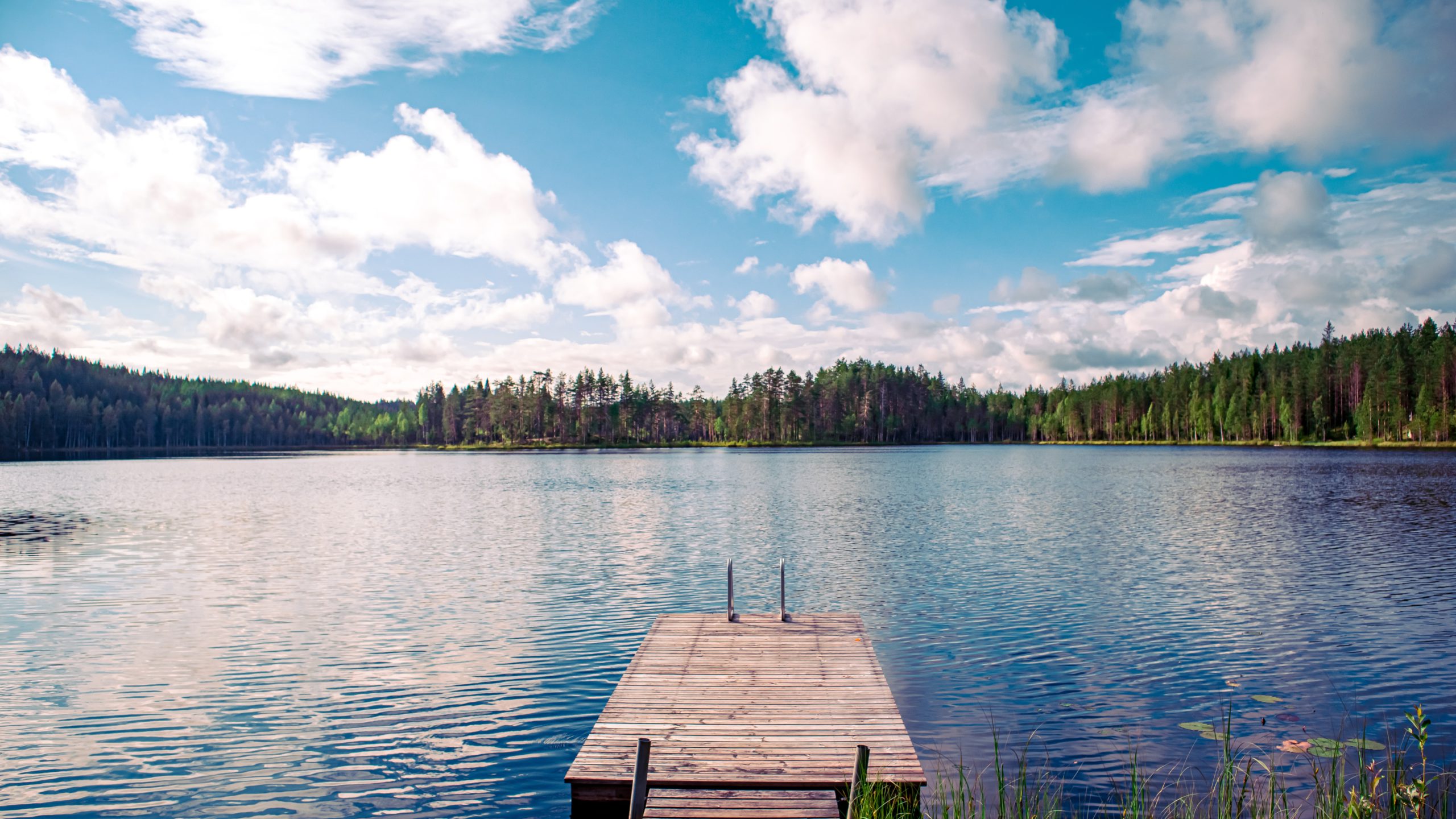
Okay, if you’ve been in an American sauna before, you’ve probably noticed that they’re really hot, but at least tolerable (hopefully). At least, in my experience that’s about how I’d describe them. However, if you end up going to a Finnish sauna during your trip (which you definity will, they’re unavoidable), I recommend you prepare yourself for a level of heat that is unmatched by saunas outside of Finland. There’s a reason why they’re known all around the world for their saunas and how they use them, and that is because they will not stop throwing water on the rocks, even if to you it feels like you’re sitting in an oven. My first time going in my host family’s sauna, it got so hot that when they told me we were going to jump into a hole in the frozen over lake, I didn’t have to debate it in my head, I got in the water as soon as I could. You’ll likely hear a few jokes by your Finnish colleagues who have travelled to America about how ‘cold’ our saunas are, but don’t worry, because the more trips you take to the sauna in Finland, alone or in a group, the stronger resistance you’ll build up to the heat. In fact, if you go enough, by the end of your trip you may be able to make it through a whole sauna session with some Finnish peers without flinching when they add more steam.
Tipping- don’t do it
This one you may have heard before, either about Finland or about another country. This is another thing like taking off shoes, one that depends on where you go, as many places have it one way while others have it the other way. In Finland, it isn’t offensive to tip your waiter or someone helping you with service in a store, however, it is unusual. It’s one of those things that you might want to avoid doing if it’s your goal to fit in better in your community.
Day and night
As far as the daylight goes in Finland, you’ll generally get elongated days in the summer and elongated nights in the winter. Depending on what time of the year you travel and how far north you go, you’ll likely get to experience something unlike what you see in the US, even in the heart of summer or winter. In the summertime, when the days are long, oftentimes people in Finland will go swimming in the lakes late at night, as they can still see with the sun up or barely set. In the wintertime, the sun will be set by the time school is out, or it will begin to set soon after. As tough as this might sound, it’s actually quite nice as Christmas decorations are very common late in the winter there as they are in the US, so even though it’s dark out for so long, you get to see the fun lights and decor in the long nights. This aspect of the Finnish environment might be particularly special for students from states further south in the US, as day and night for them remains fairly consistent throughout the year.
Candy and Salt
This last one I’d consider a recommendation not to be taken lightly. In America, our idea of candy is usually things like gummies or chocolate or hard candies. Seldom in my life in the U.S. have I eaten a candy that was completely salty, not making an exception for things like “salted caramel” which are nearly always sweet in whole with just a bit of salt. However, at times in Finland, finding candy that did not contain salt was a challenge. Finns really love their candy a lot, they have a ton of selections of chocolate and other mixed types of candies like pastels or gummies. However, what I believe they are best known for (or should be if they aren’t), is their ‘Salmiakki.’ Now, if you don’t know what this is, you can look it up. It’s like liquorice, but it’s more salty than it is sweet. Like, that’s not my opinion, that’s just the catch. This isn’t to say it’s a bad thing, as a ton of people (including myself at times) like the salty liquorice. However, there are types that (in my opinion) are way too salty, or that are just surprising to find. What I mean by this is that you can go into a store at the beginning of your trip without knowing how to look out for salty liquorice (they have a specific type of package and key words on the cover that you’ll eventually grow accustomed to), and you could buy what you think is a chocolate bar, only to find that the inside is full of a black goo. That’s a liquid form of salmiakki (and a real candy that they have in most stores). There’s chocolate covered salmiakki, there’s fruit candy mixed with salmiakki in bags, there’s pastels, there’s gum, I even bought a licorice flavoured shampoo towards the end of my trip. They have managed to package one of the most controversial candies in virtually every form. So my recommendation to you is simply, beware. If you don’t like liquorice, salty candy, or both mixed together, or if you just aren’t accustomed to it yet (as most Americans aren’t), just be careful when purchasing candies there. Now, obviously this isn’t a matter of life and death, but there were times there when I would pick up a piece of chocolate, and bite into it only to find that it was just double-salted liquorice disguised as chocolate. So again, just beware.
I’m going to leave some of the other things you’ll learn about while in Finland up to you to discover, as this was simply a list of what affected me most. Throughout your time abroad, you’re going to run into things that seem different from the way life goes for you normally, in a multitude of ways. All I can say is you have to view these surprises as positive, and let the changes be good things. Even if they seem hard to adjust to at first, you’ll ultimately learn to love a lot of aspects of your host country, it just requires time and patience. So be sure to always prepare for new experiences, keep an open mind, and good luck on your adventure abroad!
You’ve heard us say it a thousand times: cultural exchange is lifechanging. We say it a lot because it’s true. Whether your cultural exchange program inspires you to become a chef instead of an accountant or changes your outlook on community, there’s no shortage of ways that living abroad impacts your life. In this Q&A, Greenheart Travel Associate Director of High School Abroad and Short Term Programs Allison asks High School Abroad Spain alum Meredith all about her best memories of studying abroad and how it’s changed her life.
Photo courtesy of Meredith.
Q: What made you decide on studying in Spain?
A: Originally applied to study abroad in English speaking countries. Prior to my time in Spain I was one of those monolingual Americans who didn’t see the value in learning another language when English was so globalized. I was told that there weren’t any spots left in any English speaking countries but that there was a spot in Spain and Austria. I still wanted to study abroad and I had taken two years of high school Spanish so I chose Spain. That year completely changed my whole life and my whole perspective on language education. It even changed my career path. Beforehand I wanted to be a Speech Pathologist. Now I want to go to law school to study international and comparative law.
Q: What was your life like when you studied in Spain?
A: I went to IES Pedro de Valdivia in Badajoz and completed Primero Bachillerato. I was a part of the town’s track club and I competed in cross country and track. I participated in a charity race (Carrera de la Mujer) that strived to bring awareness to domestic violence against women in Spain as well as raise money for women’s shelters. I placed in the top ten in the race (and so did a couple of my teammates) so we qualified to run in the international race in Lisbon, Portugal.
Q: Wow, it sounds like you did a lot of extracurriculars. What else did you do?
A: Throughout the school year I worked with my English teachers to help my school qualify to compete in an international economics competition (Erasmus). My town’s English program wasn’t as great as schools in the cities so I would spend free periods going through their presentations with them and correcting grammar/pronunciation etc. They ended up presenting their project in Poland! I participated in a play (entirely in Spanish) for my literature class where I played a supporting role. I had about 12 lines and my classmates were so encouraging as I was learning them (the Spanish was very old, like Shakespeare level old English). Preparation for the play was about two weeks so we practiced every day during class or during free periods.
Photo courtesy of Meredith.
Q: If you had a to pick a really fun memory of your time in Spain, what would it be?
A: Segundo Bachillerato did a baking competition and my friends in Segundo Bachillerato convinced the teachers to let me participate with them. We spent a week planning and a whole day cooking only to lose to someone who admitted that they just used Chips Ahoy that they snuck back from America! The irony of an American losing to an American cookie had us laughing all afternoon and this experience was the first time I had to bake without using US measurements. Using a food scale to bake blew my mind.
Q: Overall, how do you think your year in Spain changed you?
A: This is my favorite story to tell to when I explain how much Spain changed me: My sophomore year of high school we had an exchange student from Barcelona named Ana. The day she was leaving she was helping me with my Spanish homework. I remember sitting at our kitchen table and crying about how stupid and useless Spanish was out of pure frustration. Two years later I met up with Ana in Barcelona after my year in Spain and we didn’t speak in English the entire week I stayed with her family. She brought up the story of me crying about Spanish the day she left and we could not stop laughing about it.
Photo courtesy of Meredith
Q: What are your plans now?
A: I am currently applying to Peace Corps. My year abroad in Spain played a huge part in my decision to apply to the Peace Corps.
Early in my travels, Europe was always the place I dreamt about. If you were to give me one of those “which city are you?” BuzzFeed quizzes that are utterly addicting, I would almost always be the whimsical romantic in the group, receiving Paris as my city time and time again.
There’s no denying it; that continent has incomparable allure.
It can also be mind-numbing, especially for anyone like me who is predisposed to obsess over maps and “must-see” lists. However, learn to avoid a few common pitfalls, and your 90 days could be full of unforgettable experiences.
Fly by the seat of your pants…not your pocketbook
When I planned my trip, I figured that I could always do it better and cheaper on my own. I only knew about travel agents. I didn’t know about cultural exchange programs, and I certainly didn’t think anything like that would end up saving me money.
Traveling in Europe or moving there for an extended period comes with all the same costs as living in the U.S. You have to pay for housing, utilities, food, transportation – everything just as you would back home. Even if you stay in hostels your whole trip, you’ll end up paying the same or more than rent each month. And that is one of many reasons why homestay programs are a beautiful thing.
Find the right fit
First and foremost, you have to be invested in the cultural exchange experience to commit to a homestay. If you’re genuinely interested in experiencing the day-to-day life of your host family, sharing your customs with them and learning about their own, as well as having a lot of independence and personal time to explore, then a homestay might be the right fit for you.
What’s more, it will cost you far less than trying to live in Europe on your own, whether you’re planning to stay in one place or travel around, and your travel insurance, logistics, vetting of your homestay family, and so much more will be handled for you. Most importantly, you’ll have a unique, quality experience living and learning abroad, like a local.
Making the most ≠ seeing the most
A common mistake that travelers make is to try and fit in as many cities as humanly possible. When I planned my five-week trip, I knew that I wanted cushion days where I could just sit in cafes and people watch. Sightseeing is a blast, but it’s also exhausting, and it doesn’t continue to be a blast if you do it day after day after day.
The key to travel, as with most things in life, is quality over quantity. Give yourself time to absorb each place you visit. You’ll have such a better chance to learn about the culture and history, rather than just memorize the tourist sites, and you’ll return home refreshed and ready to plan your next trip!
So, ask yourself why you want to go to Europe so badly? Is your goal to tour the country, or to teach? Is it to learn a new language or experience the culture? Or is it all of the above? Whatever combination you’re looking for, it’s possible. The following two options are just a few of the ways to fit it all in!
1. Teach English in a Homestay
If you’re highly independent and itching to spend a chunk of time gallivanting wherever you please, Teach in a Homestay is a good option for you. Greenheart Travel has placements in countries such as France and Spain with one to three-month program options as well as rolling start dates! It’s a highly flexible and cost-effective program to incorporate into your European adventure.
You’ll spend 15 hours a week teaching your homestay family, allowing you to try out teaching English in a more relaxed setting and see if it’s something you want to pursue. The rest of your time is yours to explore your new home.
If you’re looking to get a little bit of everything on your Euro-trip – professional development, cultural immersion, language practice – this is an excellent program to pair with any independent plans you want to make.
2. Teach English in a Local School
If you would like more structure to your 90 days and prefer to try teaching English in a school setting as a teacher’s assistant, Teaching English in Italy or France could be your jam. You’ll also gain the experience of a homestay, but you’ll get to go abroad with other Greenheart Travel teachers at the same time (with the same start date!), have the support and community of your school, and the opportunity to travel to destinations all over Europe on the weekends.
No matter how you decide to spend your days experiencing a new culture, you’ll come back having had a life-changing, one of a kind experience that taught you more about yourself and what you want in life.
There are a lot of challenges you’ll face when doing experiential learning abroad – and they require a very open mind and desire to experience (and we mean truly experience!) a new culture. This means getting used to different standards of living and forgoing many of the luxuries you might be used to at home.
Of course, like any developing nation, Costa Rica has its fair share of growing pains, but it is also has an amazingly welcoming andsafe culture, plus one of the world’s top environmental protection structures. Its eco-friendly tour opportunities combined with its small size and accessible infrastructure mean that in just two weeks, students will experience lowland jungle, rainforest, a volcano, the beach, an island, enormous waterfalls, indigenous communities and a tropical wildlife rescue center.
All of this in addition to studying Spanish and completing our Positive Leadership Workshop series, which includes the following:
Opening circle to meet participants, share reflections, examine expectations & perceptions, and contemplate personal goals for intercultural understanding and social action
Practices in Empathy: Participants will be asked to share and actively participate in a series of learning exercises designed to provoke awareness of “the other”, and develop strategies for how to engage constructively through the practice of empathy.
Social Responsibility: This is a common theme in many academic and professional circles, and we believe all global citizens have a duty to participate in and lead initiatives conceived with the objective of ensuring sustainable development, fair labor practices and environmental protection.
Mindfulness Sharing Circle: reflections on the courses of the first week; reflecting on changes in perception of culture and people, individual experience and more.
Empowered communication: direct, constructive and respectful communication is vital to every part of our lives, personal, professional and academic. In this workshop we learn to identify patterns, techniques for enhanced communication skills and how to effectively and positively communicate our message.
Social Media for Social Change: Instagram, Tiktok, Facebook, Snapchat… these and many more platforms are how a huge part of our populations gets its news and communicates about people, products, ideas and more. Students will learn how to effectively craft their message, prioritize objectivity and start to think about WHAT they can do to make a difference and HOW they want the world to hear about it.
Global Citizen Closing Workshop: Teens will reflect on their whole experience and share stories of things that inspired, changed and challenged them. We will all set further goals for personal development and to implement some of our new skills into socially responsible projects. We recognize that though our contributions may be small, they are all part of a global tapestry, and that working together we really can change the world!
“If you think you are too small to make a difference, try sleeping with a mosquito”
– African proverb quoted by the Dalai Lama
In short, this camp will boost your language skills, intercultural intelligence AND give you the confidence and skills you need to positively influence and navigate the quickly changing culture of our world.