Category: Language Camp – Costa Rica

  • What is Teen Summer Language Camp in Costa Rica like?

    What is Teen Summer Language Camp in Costa Rica like?

    Going abroad is always exciting — experiencing new sights, new foods, new ways of looking at things.  And while the surprises of travel are exhilarating, we all appreciate a little “what are my days really going to be like” kind of reality.  Here are some journal emails to parents from this summer’s camp in Costa Rica:


    MONDAY – Hello Parents!

    I trust everyone had a nice start to the week 🙂  Today, the complete group for the last week is with us, and we are now ready to enjoy the last week in tropical paradise!

    Today in the morning we picked up the group early for their surf class, we went to Manuel Antonio Beach, but the tide was really strong, so we had to relocate to our trusted location in Quepos. There was a good amount of rain during classes, but Elsa, Adelyn, Austin, Christian, and Nicolae got to catch a few nice waves. The rest of the campers opted against surfing in the rain.

    At noon, we went for lunch at a local restaurant, everyone got settled in their new groups and with their new teachers. In the last hour of class, the entire group got together again, for a game of forming sentences.

    After class, we took everyone to the host families for dinner and a good night’s rest.

    TUESDAY – Hello Parents!

    Today, here was sunny and we got to go to the beach for a couple of hours. The group got to spend some time together in a safe and beautiful place and they played ball, body surfed, and swam for a few hours in the morning.

    After the beach, we took the people doing Scuba for a quick lunch and the pool day, and the rest of the group went for a longer more relaxed lunch at my favorite burger place (Santa Plancha) before Spanish classes.

    At the end of the Spanish Class, they played charades with verbs in Spanish, where someone had to guess the word they had behind them.

    After Spanish Classes, we went for dinner at a food truck by the ocean, they went in for a quick splash, they got to see a baby sloth with its mom, and then we had a delicious dinner.

    WEDNESDAY – Hello Parents! Saludos from Tropical Paradise!

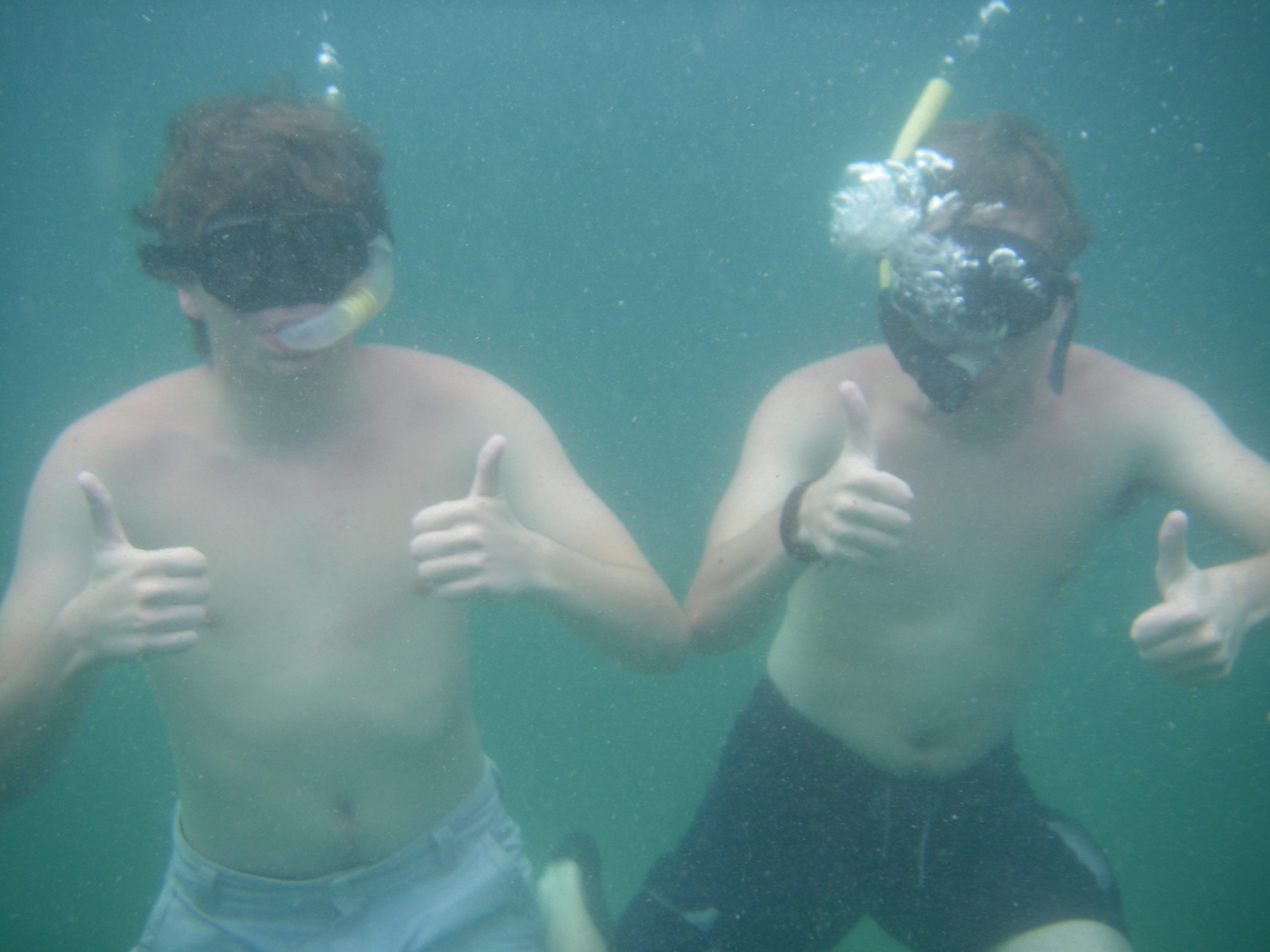
    Today we picked up everyone in the morning to go on the Catamaran Tour. We went to the Marina to register and board our boat and spent the next couple of hours dancing, sailing through the coast of Manuel Antonio, and then swimming and jumping off the boat’s platforms and slides.

    We had lunch and plenty of fruit juices on the boat, and then they drove us to Maximo Nivel For Spanish Classes. The teachers started their Spanish classes with a few games, to help everyone get active in the class, and after Spanish Classes, we went to the Marina for a nice group dinner before going back home.

    Hello Parents! – I hope everyone is having a great THURSDAY!

    Today we divided the group in two for the last time… Five people went to Ocean Day for Scuba, we took a boat from the Marina with all the gear, and went for a 20-minute dive. There was a second Dive Scheduled after a break, but the group decided not to join it, so we picked up the rest of the divers on our group and returned to the Marina.

    The rest of the 10 people in the group, went surfing with our chaperone Kembly to Manuel Antonio Beach. A couple of people preferred to just hang out at the beach, and the rest of them got to try their hand at surfing again!

    After a busy morning, we went back to the Maximo Nivel Institute, while everyone was changing into dry clothes for class, they had lunch and then they were ready for class. The first couple of hours of the class they watched the movie Soul in Spanish, with some popcorn to keep them awake 🙂

    After class, we took them to their last dinner with the host family in the house.

    Greenheart Travel has a variety of Teen Summer Language Camps in many great places

    If you’d like to be part of a future Costa Rica program, you can read more about this Teen Language Camp here, or High School Abroad in Costa Rica here.

    Or if you are an adult looking for an adventure, check out Greenheart Travel’s Teach Abroad program in Costa Rica.   


  • Travel for a Change This Summer on the Teen Leadership & Language Costa Rica Program

    Travel for a Change This Summer on the Teen Leadership & Language Costa Rica Program

    With so many great program options for teens in Costa Rica, how do you know which is right for you? Well, the facilitators of the Teen Language & Leadership Camp in Costa Rica, Laura and Amy, might be biased, but they want you to know they believe this one of the best options you’ll encounter!

    Here’s why they say this program is so impactful. 

    There are a lot of challenges you’ll face when doing experiential learning abroad – and they require a very open mind and desire to experience (and we mean truly experience!) a new culture. This means getting used to different standards of living and forgoing many of the luxuries you might be used to at home.

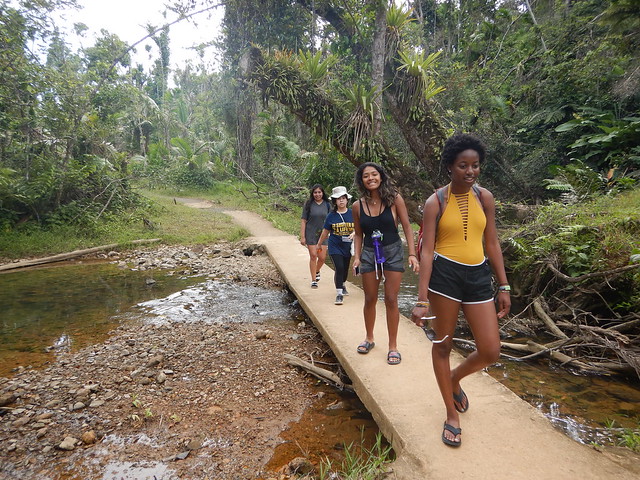
    Of course, like any developing nation, Costa Rica has its fair share of growing pains, but it is also has an amazingly welcoming and safe culture, plus one of the world’s top environmental protection structures. Its eco-friendly tour opportunities combined with its small size and accessible infrastructure mean that in just two weeks, students will experience lowland jungle, rainforest, a volcano, the beach, an island, enormous waterfalls, indigenous communities and a tropical wildlife rescue center.

    All of this in addition to studying Spanish and completing our Positive Leadership Workshop series, which includes the following:

    • Opening circle to meet participants, share reflections, examine expectations & perceptions, and contemplate personal goals for intercultural understanding and social action
    • Practices in Empathy: Participants will be asked to share and actively participate in a series of learning exercises designed to provoke awareness of “the other”, and develop strategies for how to engage constructively through the practice of empathy.
    • Social Responsibility: This is a common theme in many academic and professional circles, and we believe all global citizens have a duty to participate in and lead initiatives conceived with the objective of ensuring sustainable development, fair labor practices and environmental protection.
    • Mindfulness Sharing Circle: reflections on the courses of the first week; reflecting on changes in perception of culture and people, individual experience and more.
    • Empowered communication: direct, constructive and respectful communication is vital to every part of our lives, personal, professional and academic. In this workshop we learn to identify patterns, techniques for enhanced communication skills and how to effectively and positively communicate our message.
    • Social Media for Social Change: Instagram, Tiktok, Facebook, Snapchat… these and many more platforms are how a huge part of our populations gets its news and communicates about people, products, ideas and more. Students will learn how to effectively craft their message, prioritize objectivity and start to think about WHAT they can do to make a difference and HOW they want the world to hear about it.
    • Global Citizen Closing Workshop: Teens will reflect on their whole experience and share stories of things that inspired, changed and challenged them. We will all set further goals for personal development and to implement some of our new skills into socially responsible projects. We recognize that though our contributions may be small, they are all part of a global tapestry, and that working together we really can change the world!

    If you think you are too small to make a difference, try sleeping with a mosquito
    – African proverb quoted by the Dalai Lama

    In short, this camp will boost your language skills, intercultural intelligence AND give you the confidence and skills you need to positively influence and navigate the quickly changing culture of our world.

  • 3 Ways to Spend Summer Break in Costa Rica

    3 Ways to Spend Summer Break in Costa Rica

    A note from Greenheart Travel: Since November 2020, Costa Rica has allowed residents of all 50 U.S. states to enter the country. We will be still continue to monitor the health and wellness and entry requirements for Costa Rica, but we have successfully ran all programs in Costa Rica since then. Please refer to our COVID-19 blog for the most up-to-date information on current programming.

    If you’re a teen looking for a fun and meaningful way to spend your summer, you need to get yourself to Costa Rica. Greenheart Travel offers three incredible programs ranging in focus, length, and cost.

    No matter if you want to live like a Costa Rican teen or and simply snorkel some of the most beautiful beaches in the world, there is an option for you.

    Teen Language & Culture Camp

    Alternating between weeks in the capital San Jose and beachy Manuel Antonio, our teen summer language camp is a combination of Spanish courses and daily activities like cooking classes, surfing, walking tours and even karaoke. Spend evenings and weekends with your host family as you experience the tico way of life. This is a great way to pack in a ton of Costa Rican activities in a short period of time while practicing your language skills.

    • Length: Choose between 1-4 weeks
    • Accommodation: Host families
    • Cost:  ~ $2,500 – $7,000

    Ideal for:

    • Spanish learners
    • Meeting friends from around the world
    • Getting to experience beach + city
    • Short time frames

    Leadership & Adventure Spanish Camp in Costa Rica

    This program is designed for teens who want the rigor of language courses while also partaking in workshops, talks and informational sessions about social change, leadership, and sustainability. Located in both Heredia and Samaria, you’ll experience both an urban and beach setting. You’ll take back skills, global awareness, and tools when you join a small but diverse group of teens in this transformative program.

    • Length: 2 weeks
    • Accommodation: Host Family
    • Cost: ~$3,500

    Ideal for:

    • Spanish learners
    • Gaining global leadership skills
    • Harnessing tools for social change
    • Learning from Costa Rican experts

    Summer High School Study Abroad

    If you love the idea of being an exchange student but can’t miss part of your school year, don’t miss this opportunity. On our Costa Rica summer study abroad, you’ll live with a host family and be enrolled in a local high school in areas like San Ramon, Palmares, or Zarcero. You’ll leave speaking like a local and make lasting bonds with classmates and your host family. You’re also guaranteed to have a host sibling your age!

    • Length: 1 month or two months, dates will be released by December 2020
    • Accommodation: Host family
    • Cost: ~$6,000-7,000

    Ideal for:

    • Full language and cultural immersion
    • Experiencing a different education system
    • Those unable to study abroad during the school year

  • Ready to Learn a Language This Summer? What You Need to Know About COVID-19 and Our Teen Language Camps

    Ready to Learn a Language This Summer? What You Need to Know About COVID-19 and Our Teen Language Camps

    Yes, 2020 has been a year. So just like you, we can’t wait for a great Summer 2021. And as much as you’re ready to jump on a plane now and experience a Japanese tea ceremony in Fukuoka or watch gelato melt from your cone in Florence, we bet you and your parents have lots of questions before you apply for our Teen Language Camp programs. (Wondering what a Teen Language Camp is? Here’s a brief explainer.)

    You can always find the latest COVID-19 programming information here.

    So, here’s what you need to know about applying for a Teen Language Camp and traveling abroad in Summer 2021.

    We’re still planning to run Summer 2021 Teen Language Camp programs. 

    Currently, with the exception of Costa Rica, U.S. tourists are not yet permitted to enter our Teen Language Camp destinations. (Our Teen Language Camp students don’t apply for student visas and are granted 90-day tourist permissions upon arrival – this won’t be a piece of paper. It’s just a stamp in your passport!) At the time of this writing, we’re hopeful that entry restrictions will change soon. We’ll keep you updated every step of the way.

    Our applications will open on November 15, 2020, and the final deadline to secure your spot for Summer 2021 is on March 15, 2021. Ready to apply? Hit this button to receive a link to the application.

    But like the rest of the world, we sadly can’t predict the future, and we don’t know what 2021 will hold. If we’re unable to run your program due to health and safety or entry restrictions or requirements like mandatory government quarantines, we’ll cancel your start date six weeks prior. You’d then have options to defer, switch to a new program, or request a partial refund. Read the full COVID-19 Cancellation and Refund Policy here.

    We’ll keep you updated with any and all COVID-19-related health and safety guidelines for your destination. 

    Closer to your start date, you will participate in an online pre-departure training with a Greenheart Travel staff member. The details will be provided to  you upon acceptance onto the program. During this online training, the Greenheart Travel staff member will provide any specific COVID-19 guidelines or entry requirements (such as getting a COVID-19 test 72 hours prior to departure). All students will be required to adhere to any local or federal government guidelines while on program, such as wearing a mask and maintaining six feet of distance with anyone outside of this program. These will be discussed with students during the online pre-departure as well as upon arrival. Guidelines, requirements, and restrictions change frequently, so we will give you the most accurate information as possible as close to your start date as possible.

    If you get COVID-19 while abroad, we have protocols in place. 

    The protocols will vary by country,  but we’ll give you the most up-to-date information during your online pre-departure training. (For example, if you get COVID-19, you’d be expected to quarantine with your host family until you’re COVID-19 free.) And remember, all students have 24/7 emergency number to call in case of any concerns, and you’ll be counting on support from both the local in-country staff and long-distance from our Chicago offices, as well as your host family. Another great piece of news? Part of your program fee goes towards comprehensive medical and accident insurance that covers COVID-19.

    At Greenheart Travel, we’re committed to safely running Summer 2021 Teen Language Camps. The world has brought many twists and turns this year, but you can always count on our support of your cultural exchange experience.

    Are you more interested in high school abroad? Here’s what you need to know about being an exchange student during the COVID-19 pandemic.


  • Next Step After Teen Summer Language Camp: High School Abroad

    Next Step After Teen Summer Language Camp: High School Abroad

    So you just finished your Teen Summer Language Camp. You’ve embraced life with a host family, sampled your new favorite foods, accelerated your language skills and met other teens from all over the world. But the summer is coming to a close, and you wish you could do it all over again, or at least stay abroad a little longer. 

    And you can! By being an exchange student on a High School Abroad program

    Now, let’s not get confused. Teen Summer Language Camp is NOT just a short version of High School Abroad. The two programs are totally different but go hand in hand. 

    Here are some of the similarities and differences broken down:


    High School Abroad 

    Teen Summer Language Camp 

    School   Local high school  Language school  
    Accommodation         Host family  Host family or residence hall 
    Length Summer (1-2 months), trimester, semester, or academic year  2-6 weeks  
    When  Summer, Fall, Spring  Summer  

    Both Teen Summer Language Camp and High School abroad offer full language and cultural immersion, but the lengths and experiences are vastly different.  

    After successfully completing a Teen Summer Language Camp, you’re ready for the new experiences, joys and challenges that come with studying abroad in a local high school for a longer period.  

    Greenheart Traveler Alexander Obenchain always knew he wanted to study abroad in high school in Japan. In Summer 2018, a Teen Summer Language Camp in Tokyo was the first step to help him prepare for his academic year high school study abroad in 2019. Easing into the language and culture of Japan in Summer 2018 allowed Alexander to hit the ground running when he landed in Japan for his high school program.  

    “Coming for a smaller amount of time helped me prepare for the difference in atmosphere between here and the states,” he explains. “It was certainly a good thing to have studied the language a little bit more in-depth beforehand. I can also compare my skills from now to then.”  

    And navigating the Japanese train system? He figured that out a long time ago!  

    But you don’t have to return to the same country you went to for your Language Camp. Maybe you went to Salamanca, Spain in the summer, and now that you know you can handle being far from home, want to explore Sweden!

    So is studying abroad in a local high school right for you? With improved language skills, you’ll be ready to learn subjects like math, science, and drama in another language. After living with a host family for a few weeks, you can anticipate how much you can learn about a country and its culture through observing (and living) day-to-day life abroad. You’ve proven to your parents that you’re independent, capable and problem-solving.  

    You’ve gotten a taste, now it’s time to thrive.  

  • 8 Ways to Support Your Child While Abroad

    8 Ways to Support Your Child While Abroad

    When you’re a parent sending your child abroad, you know there’s a lot they must prepare for: culture shock, homesickness, and language barriers. But your children aren’t the only ones experiencing a life change 

    “This was definitely a learning experience for the parents as well!” says Lisa Hall, mother of high school in Sweden alum Matilda. “It was very hard to not be there to help when things were tough.” 

    So what can you do? Miles away from your children, how can you still support them? We asked parents of Greenheart Travel alumni share their insight on how you can best support your child while they’re abroad. Here are their tips.  

    Before they go abroad, talk about life when they return  

    “Prior to him leaving for the 6 months, we did discuss what he wanted to do at his school in the US during his junior year.  He decided he would try to run for student council office while he was overseas.  And unbeknownst to his dad and I – he did run, campaigned via Instagram and won the vice president spot for the upcoming junior class here in the US.  The lesson to learn…. make goals with your child and then let your child be the captain of that ship while he is away.” -Bonnie Green, mother of high school in New Zealand alum Graham.

    Agree on a weekly time to talk – and stick with it  

    Schedule a time and way to communicate in advance, that way you are both on the same page. For example, decide that they need to check-in on Sundays around 7:00 pm their time via WhatsApp. This way, you don’t need to send them texts throughout the day because you’ll already have a set time to catch up. 

    Mary Scott, mother of language camp in Spain alum Emmy, explains why it’s so important to give space. “While she was abroad, we made sure we weren’t constantly bombarding her with texts and skype calls which at first was difficult. However, we knew she would have a more enriching experience if she wasn’t having to think about us back in Michigan the whole time. We wanted her to be able to completely devote herself to speaking Spanish and learning about her new environment.”

    For Hall, being far from her daughter was “hard in a different way when she was having so much fun, there was hardly any contact! But that was the best kind of growth for us all.” 

    Olivia McCollum at her high school while studying abroad in Japan

    Recognize that YOUR life is going to change  

    Your life at home is undoubtedly going to change. For Bonnie Green, she and her husband experienced being empty nesters for the first time.

    Her advice? Take this opportunity and focus on you.  

    “Make a list of things YOU want to do while your child is away. My husband and I took dance lessons, had adult only (no children) dinner parties, accomplished house updates, traveled to visit our children who were away at college, visited aging parents, put in extra time at work and started hiking more.”  

    And that leads us to our next point… 

    Don’t say how much you miss them or how much you want them home

    Your child will most likely be homesick at some point, and it can be really hard to go through that while hearing pleads to come home. Being asked to come back and hearing about what they are missing at home can make a hard day so much worse. 

    Instead, tell them that you are so excited to hear about their adventures when they are back.   

    Jacob Dane Chilton with host family in Spain

    Encourage them to reach out to local staff and take initiative  

    Part of why going abroad builds confidence and leadership skills is because travelers are expected to speak up and handle themselves. Instead of telling your teen what to do, or doing things on their behalf, allow them the opportunity to be independent. This is especially important when handling the pre-departure logistics so that they don’t feel totally lost when stepping foot in the airport. “When a problem comes up, discuss the different ways it can be solved instead of jumping in and telling them what to do.” says Scott.

    The best thing you can do for your teen is to let them practice communicating with adults and learning how to manage themselves. It can be hard to trust your child to do everything right but giving them that space to grow will make them better prepared for their program (and life).  

    I think it is vital that while your child is aboard that he/she become a part of their new community,” says Green. “While he did stay in touch with friends in the states, he made friends in NZ.  The small town even had a send-off for him and took him to the airport.” 

    Read about their country and take interest when they share new knowledge 

    A great way to get involved in their experience is by learning more about the culture in the country in which they’re going. As  you learn about your child’s new home, take note of what your child is excited about. “I was sure to listen to all the positive details, no matter how small!” says Hall. 

    You could practice making a tortilla española or start listening to the music of traditional Austrian brass band and surprise them with your newfound knowledge.  

    Greenheart staff member Allison Yates’s mom started learning Spanish when she studied abroad in Argentina. “She knew that Spanish was a huge part of my life, so it meant so much that she wanted to learn it too! It helped her feel like she understood my experience more,” says Yates.  

    Students attending high school abroad in the Netherlands

    Educate yourself on what they might be feeling – and how you can help from afar

    A great way to get a sense of the mental and emotional experience of studying abroad is by completing the Greenheart Travel Atlas along with your child. This is tool for before, during, and after the cultural exchange experience that includes personal and professional development, cultural understanding and environmental awareness. 

    For example, if your normally independent child calls you multiple times a day when they first arrive in the country, you’ll remember it’s likely initial culture shock.  You can remind them to follow the Greenheart Travel Atlas tools to overcome this stage and focus on meeting new people and spending time with their host family.  

    Halls says she supported Matilda by “making sure she knew I was there to talk about things, whether they were positive or negative. I tried to give her as much time as I could, but not to have it be open-ended or all the time.”  

    While your first instinct might be to check in more frequently, increased contact with friends and family back home only exacerbates culture shock. 

    Rest easy – they’re in good hands 

    We had to give up our control and trust in the goodness and professionalism of others. We did our research, chose a great partner in Greenheart, and raised a strong daughter,” says Laura Foster, mother of high school abroad Costa Rica alum, Eleanor.  

    As parents and former exchange students, Greenheart and our in-country partners know what it’s like to be far from your family, and we work to equip students with the tools they need to succeed.  

  • 4 Ways Studying Abroad in High School Can Impact Getting Into College

    4 Ways Studying Abroad in High School Can Impact Getting Into College

    At Greenheart Travel, we’re huge fans of studying abroad as a teen. Studying abroad in high school has enormous benefits for your confidence, language skills and personal growth.

    But the truth is, high school study abroad isn’t only about emotional and personal growth. It also positively impacts your college applications, including how you explain why you’re choosing your major, applying for specialized scholarships, and proving you’re the right candidate for the school.

    Students snorkeling in Ningaloo Marine Park, near Coral Bay in Australia.
    Snorkeling in Ningaloo Marine Park, Australia.

    I know what you’re thinking: but what about the gaps on my transcript, or if I don’t get credit for the classes I take abroad?! (pro-tip: read this blog post if you’re worried about transferring credits!) Well I’ve got news for you! It’s okay. And those gaps are easily explained in essays and open-ended questions on the application.

    Here are the top 4 ways studying abroad in high school positively impacts your college application.

    1. You’ll Make Your College Application Stand Out

    When I spoke to Kyle, an admissions officer at the University of Chicago, he said, “Anything that makes your application stand out is a good thing.”

    Student triumphantly riding a wave in Australia.
    Student surfing the Australian coast.

    Study abroad in high school takes guts – and that’s a good thing. We’re not afraid to tell you it’s going to be hard sometimes, especially when it comes to facing language barriers, making new friends, and navigating a whole new culture and host family. But what do struggles mean? Growth.

    When life gets hard and we learn to solve problems and overcome challenges, we reap the benefits across the board, but we also have a great story to tell – a story that is sure to help you write a heartfelt, powerful admissions essay.

    Student on a bridge in Malmo, Sweden on a sunny day.
    Student on a bridge in Malmo, Sweden.

    Plus, your high school study abroad shows you have the maturity, independence and adaptability to hit the ground running when you get to college, and there’s nothing that pleases an admissions officer more than feeling confident you’ll make their school shine.

    “A lot of schools are looking for a diverse perspective, and international experiences lend themselves to that,” Kyle said.

    2. Scholarship Applications and Interviews Will be A Breeze

    After studying abroad, you’ll have some specialized and specific knowledge – and probably language skills – that will allow you to find specific scholarships for what you’re looking to study.

    Two study abroad students hugging each other in Salzburg, Austria with mountains in the background.
    Two students in Salzburg, Austria.

    For example, Sierra Winters, a current full-ride Robertson Scholar at Duke University, found her passion for food systems and refugees while studying abroad with Greenheart Travel in Austria, and came back to the U.S. to fundraise for the Syrian Refugee Crisis efforts. “It was a challenging experience, and  it was one that I was passionate about, and it lent me the genuineness for which colleges and scholarship programs are looking,” she says.

    Plus, after you’ve spent a semester studying abroad in a high school where you don’t know the language and have had to make presentations in front of tons of students…. Speaking about your experience to an interviewer will be a breeze!

    A student has dinner with her homestay parents in Spain.
    Student with homestay parents in Spain.

    3. You’ll Know What You Want to Study

    Studying abroad in high school opens you to a world of possibilities that you’ve probably never thought of. Seeing what’s out there will help you hone in your skills and passions before you start college. The average college student changes their major several times before graduation and, while we love exploration, it’s better for your pocket and time to already have a clear sense of what you want to study.

    Students posing in front of the snowcapped mountains in Argentina.
    Students in the mountains in Argentina.

    Greenheart Travel High School Abroad in Argentina alum Erin Clark went to Argentina in 2013 thinking she wanted to study business. Once she got to Argentina, she realized she was far more interested in the travel industry. She decided she wanted to study hospitality and tourism, and “that changed what universities I was looking at, and that’s how I found Niagara University,” she explains.

    Imagine how different her life would be now if she hadn’t studied abroad!

    4. You’ll Have the Confidence to Say Yes to New Opportunities

    You might have already heard the phrase “travel bug.” It means that once you get a taste, you want to eat the whole cake! All of us at Greenheart Travel have the travel bug, and we see that as a good thing.

    A latern festival lining the street in Japan at night.
    Latern festival on a street in Japan.

    Once  you see the life-changing experience of studying abroad in high school, you’ll be inspired to seek out more new and different experiences, like volunteer trips, internships, discovering new places and meeting new people.

    Two students climbing the waterfalls in New Zealand.
    Climbing the waterfalls in New Zealand.

    “[Study Abroad] put my foot in the door for any job I want – I’m always the first to apply for jobs and I’m very driven, and I go out and get things done,” says Clark.

    That’s an attitude that will positively affect every aspect of your life!

  • Can You Get High School or College Credit for Teen Summer Language Camp?

    Can You Get High School or College Credit for Teen Summer Language Camp?

    Our Teen Summer Language Camps are perfect for students driven to improve their language skills (and change their lives in the process). Many alumni continue to study the language long after the program ends, often choosing it as a major in college.

    After putting in the 15-20 hours of full classroom immersion, plus activities and dinners with your host family, you might be wondering, will I get high school language credit from this?

    Well, that all depends. Similar to getting credit for our high school abroad programs, neither Greenheart Travel nor the language school you’ll be attending abroad will not give you credit. Your U.S. high school can only give you credit.

    To determine if you’ll get high school credit, you should talk to your guidance counselor.

    Explain what the teen summer language camp program is. Remind them that Greenheart Travel is approved by CSIET, the governing body of cultural exchange. Our Teen Summer Language Camp courses are intensive, full immersion programs taught by native speakers. We consider a two-week program to be on par with one college semester. They may also ask for a curriculum, which we will be happy to provide.

    For college credit, our Teen Summer Language Camp in Japan has agreements with certain universities that will accept the teen summer language camp for college credit. However, you will have to be accepted and enrolled in these universities to receive the credit. These include Carnegie Mellon University, James Madison University, University of Arizona, Trinity University, University of Wisconsin–Milwaukee and others. Please contact your program manager for a complete list of U.S. universities.

    Remember, it’s not guaranteed you will receive high school or college credit from the courses you take abroad. You must speak to your school or university’s study abroad office once enrolled.

    Also, keep in mind that a Teen Summer Language Camp is an intensive language program; even if you don’t receive direct college credit for your program, you could be able to test out of some language levels at university, thus putting you way ahead of the game!

    Ready to go abroad? Here’s how.

  • Returning to Costa Rica for the Summer

    Returning to Costa Rica for the Summer

    In the summer of 2015, I decided to take a risk, one that would turn out to be one of the best decisions I’ve made. I went on my first international trip alone, and spent a week volunteering in San Jose, Costa Rica. Spanish had been one of my weaker classes, and after only taking two years, I wasn’t entirely sure that I would be ready for such an immersive program. Within my first day there, I noticed something: I was managing to have conversations in Spanish, and for the most part, get my message across. When I returned to the United States, I realized I was speaking more proficiently and smoothly in my school Spanish class.

    As for the social aspect, my first experience was much more in my comfort zone. Most of my time was spent in a group of other (mostly American) high school students. I had time to speak English, and it was nice to be able to reflect on my experience with them while I was there. At first I had felt a little out of place, staying in a completely foreign country, but the program was always there to guide me through it.

    neel-and-friend-waterall-costa-rica

    As soon as I got back to the United States, I knew I had to do something more. My first time in Costa Rica felt like a test run, a preparation course, for a real homestay in Costa Rica. I was ready to be immersed in a program like Proyecto Asis. I was looking for a program that was run by “ticos”, with less structure and more independent time.

    As soon as I landed in Costa Rica for my second trip, I was grateful for my first experience. I realized how different real world Spanish skills are from a classroom environment. But, because I had been to the area before, it came quickly to me and I started to recognize the local dialect. I was picking up new vocabulary, learning new patterns of speech, and developing an accent in an entirely unique way. Had I been in a traditional classroom setting, I would have missed out on this opportunity to truly involve myself in a new language.

    neel-on-a-kayak-costa-rica

    Although just studying language on my first trip had served a worthwhile purpose, the familiarity of the setting reduced the amount of time I had to actually practice. For the most part, I had the convenience of talking to an American program coordinator throughout the trip, and they clarified and translated for the students. On top of that, we were in San Jose, and many of the activities we did revolved around urban life–not too different from home. However, it did offer an interesting perspective into what cities are like in Latin America, while remaining in a safe environment.

    Learning about Costa Rican culture was one of the most important additions I received on my second trip, when my entire time was spent in a true Costa Rican environment. After having been worried about traveling alone, I can only feel grateful that I took my opportunities to visit this country, because they both created memories to last a lifetime.

  • Takeaways from My Time in Costa Rica

    Takeaways from My Time in Costa Rica

    I returned from my time abroad in Costa Rica a few weeks ago and during my time back in the States, I’ve had time to reflect on my overall experience. Most trips are exciting and maybe even adventurous, but the trips that are set apart are those that leave a lasting impact on your life. The ones that help instill a deeper sense of self, broaden your perspective, and develop skills that will last a lifetime. These are the trips that 20 years down the road you’ll still reflect upon and share about.

    My time abroad in Costa Rica was definitely one of these trips. I’ll never forget the things I learned while I was there, and I’ll share these takeaways with you so that you can have an idea of what you may learn in your time abroad! I’ll share some of the experiences I had in my last week abroad!

    Takeaway #1: Language Skills

    Since my study abroad program was a language camp, my whole trip was centered around learning Spanish. Every morning I had a three-hour class in which I learned grammar and vocab in a conversational method, but I think I learned the most in the times outside of class. In the times at my host home when I’d be describing my life back in the States, in a restaurant when I’m trying to order my food, and in all the moments when I simply needed to communicate in daily life outside the classroom. These moments challenged me the most, and where there is the greatest challenge there is often the greatest reward.

    While I was in Costa Rica, I could tell that my lingual abilities had improved a little. I was more confident in speaking and I could say a lot more. By the end of my time abroad, I could communicate much quicker and I could understand more of what was being said to me. My last day of classes I was even able to completely improv my presentation about my time in Manuel Antonio, a feat I wouldn’t have been able to do before my trip. However, it wasn’t until I arrived back home that I realized how much I had improved.

    owen-presentation-costa-rica

    I realized that my vocab was a lot more expansive than it had been, and I could communicate more readily than I had ever been able to. I think this is an important lesson to learn: since learning is often a progressive action, the progress that’s been made isn’t apparent until it’s viewed from an outside perspective. This is like when a child is progressively growing and they don’t quite realize how expansive that growth is until their grandparents, with an outside perspective, comment on how much taller they’ve become. This is the same with learning, so in those times when you get frustrated because you don’t think you’re learning a language fast enough, or anything else for that matter, take a step back and you’ll find that many steps forward have been taken.

    The language skills I acquired in Costa Rica were one of the biggest takeaways for me, as that is the what my program was founded upon. This takeaway has helped me to make major advancements in learning Spanish, and I am certain that this trip will always be a significant step in my Spanish language acquisition.

    Takeaway #2: Broadened Horizons

    My time in Costa Rica also drastically opened my eyes to the vast opportunities in the world. I feel like too often people from the United States have a one-tracked mindset, or perhaps everyone does, but I think it imperative to look at many different paths of life before choosing the one you want to follow. I know that going to Costa Rica allowed me to see a lot of different opportunities that I could take after high school, that I would never have been exposed to had I not ventured outside of my little world in Missouri.

    Not only were my eyes opened to more opportunities for myself, but I also was able to see many different ways of life. I think having this wider perspective allows you to connect to more people and to understand them more deeply than you could have before. This is a vital experience for everyone, and it really helps to know yourself better as you begin to find out what makes you unique when you are with people that live completely different lives and are from a different culture.

    Takeaway #3: Meaningful Relationships

    During my time in Costa Rica, I got to know some awesome people. People with stories that are so much different than mine, and who have so much to offer to the world. We got to share a little bit of our lives together, and during that time we built friendships that will last long after I left Costa Rica. I’m so thankful for the time I got to spend for those great people and also for the opportunity to virtually meet some pretty awesome people at Greenheart Travel.

    owen-costa-rica-friends

    I’d like to especially thank Megan and Jill for making my trip possible and being a blast to work with! I think meeting people is one of the best parts of traveling. You may forget the scenery or what you did, but you’ll never forget the moments you spent with friends you’ve met abroad.

    My trip to Costa Rica was awesome, and I know I’ll never forget the moments I had there.

    Owen Arnall is 17 years old and lives in Springfield, Missouri. His goal during his language program in San Jose, Costa Rica is to “embrace the pura vida of life so that I can be completely submerged into the culture and build meaningful relationships with the Ticos!” Follow Owen’s adventure in Costa Rica on his weekly blog post updates.