Category: Work Abroad

  • 3 Steps to Fundraising for Your Travel Adventure

    3 Steps to Fundraising for Your Travel Adventure

    So you want to embark on the travel experience of a lifetime, but don’t have a stockpile of cash lying around? No worries! We will give you tips and tools to mobilize your personal network and help make your overseas adventure a reality. 

    While daydreaming about your travel destination is a helpful motivator, to really achieve your travel goals requires a plan. Below is an outline of how to get started in your fundraising efforts. 

    Step 1: Setting Your Fundraising Goal and Plan

    The first step to starting your fundraising journey is setting a fundraising goal. This goal is determined by how much money you will need to fundraise in order to make your trip a reality. Before establishing your goal, you will need to begin by assessing the amount of funding you personally can contribute to your program. Once you know the cost of the program and your personal contribution, you can calculate your fundraising goal. Don’t forget to consider the price of a flight and any additional costs like food to make sure you are financially secure during our time abroad.

    ICost of Greenheart Travel Program + Additional Expenses )- Funding You Already Have = Fundraising Goal

    After you have established your fundraising goal it is time to create a timeline of when you will need your travel funds. Work backwards on a timeline to achieve your fundraising goals that meet your ideal departure date.

    Consider Supportive Communities in Your Network

    With your timeline and goal in mind, you can start to assess what communities you can reach out to for support. It is important to remember that fundraising takes time and you will likely need to reach out to various groups at different times to meet the full fundraising amount.

    A few questions you can use to discover what networks you belong to outside of friends and family are:

    • Do you attend a school that will allow you to fundraise for personal needs?
    • Are you part of a sports team or extracurricular group?
    • Are you part of a religious community?
    • Do your parents have friends or colleagues who are interested in supporting you?

    Write down the groups of people you can reach out and the contact information for individuals within those groups. Start thinking about the best time to host an event, or speak to these communities. 

    Step 2: Making the Most of Local Resources

    Now that you have outlined your fundraising goal, timeline, and supportive communities, it is time to start determining how you will raise the money needed for your travels. There are two main ways for you to have your networks support you in meeting your fundraising goal: direct solicitation and events.

    Asking your communities for financial support can seem daunting, but by using the tips below it can be both a great learning experience and an opportunity to share your story and possibly inspire future travelers to meet their personal goals as well. 

    First Approach: Straight Up Asking For Financial Support

    This fundraising approach is often called direct solicitation, and requires reaching out to people who are part of your community via email, letter, recorded video, phone call, or face-to-face interactions and asking them directly to make a donation. This approach might be more nerve-wracking than an event, and is best used for individuals that you feel especially connected to such as family members and friends.

    In your individual appeal letter or conversation you will need to including the following information:

    • A little bit about yourself and why you are reaching out to this person
    • What travel program you have chosen and why you think it is impactful on your future
    • Your fundraising goal (be specific! If you need $2,000 by August say it!)
    • How the funds will be used
    • A direct ask of them to contribute to your goal
    • How they can donate to you (cash, check, GoFundMe website)
    • A thank you to them for being part of your community and supporting you through your life journey

    You can use this sample letter to tailor your own direct solicitation.

    Second Approach: Hosting a Fundraising Event

    Having a fundraising event is a fun way to raise money for your Greenheart Travel program abroad. Generally, these events are informal, provide some service or good in exchange for a donation, and can involve many community members at the same time.

    A few ways to easily mobilize your community are through the following events:

    • Car Wash
    • Bake Sale
    • Yard Sale
    • Community fundraising at a restaurant
    • Create a community cookbook and sell it
    • Host a field day or game night and charge a fee for people to participate

    Consider thinking about what events your community would be most likely to get involved in. In addition, it is important to think about your overall goal when choosing which event to have.

    For instance, if you need to raise $4,000 but are having a bake sale with 50 items at $2.00 a piece, plus additional donations, you are likely to make only $300.00. It is also important to consider the costs of hosting these events. A yard sale would require your family and friends giving up items to be sold for your cause, a car wash requires time from people willing to help you wash the cars, and a bake sale requires money to buy the baking materials.

    An event doesn’t necessarily have to be in a physical location. If you have a large network spread out across the country, it might also be helpful to create an online fundraising campaign that you promote through word of mouth and social media.

    The following platforms make raising money via a social media campaign easy, but be aware of the fees they charge:

    The best approach to raising your funds will likely be a combination of direct solicitation, events and online outreach. Consider directly reaching out to those in your life who you know are willing to donate and have a close relationship with you, while using the events to engage the broader community in your network.

    Appreciate Various Forms of Support

    Keep in mind that there are many reasons people might not donate to your cause, and don’t take it personally or negatively. If someone isn’t able to support your fundraising efforts financially, perhaps they can help spread the word about your online campaign or event. 

    Sometimes, it is a matter of following up, especially with online fundraising. With so many emails and social media feeds that compete for our attention, a friendly reminder or check-in might be all that is needed to start seeing your fundraising efforts succeed. No matter what, always thank your community for their support of your journey, regardless of if they can provide money to finance it.

    Part 3: How to Thank Your Supporters

    It is very important that you thank everyone who gave money to provide you with the experience of a lifetime! In addition to saying “thank you” immediately to anyone who made a contribution to your program, it is a good idea to follow up with an additional thank you once you return from your travels as well.

    Here are some creative ways to show your community you appreciate their support:

    • Send a postcard or an e-card with a personalized message and photo from your travels
    • Make a video while on your program and include a thank you at the end of it to those who donated
    • Give a social media shout out to those who impacted your trip
    • Post a group picture of fundraising events and tag those who attended
    • Take a photo series while abroad with a “Thank You” sign and make a gratitude collage

    In an age where everything seems to be online, never underestimate the power of a hand-written thank you note. While photos, videos and travel montages are exciting, being able to say a personal and genuine “thanks” to show your appreciation is priceless.

    Get Organized in How You Will Say “Thanks” Before You Leave

    Plan ahead for your thank you ideas so you can be sure to get the footage or photos you need while abroad. However you choose to show gratitude, remember the impact that this experience had on you and the generous friends and family that used their time and resources to make it a reality.

    Alongside personal thank you notes and gratitude collages, it is also worth considering giving a presentation once you return. By sharing what you have learned about a culture, language and yourself, you can inspire and educate your community. You can also use this opportunity to say thank you to groups or local organizations that helped you fundraise or your travels.

    Showing gratitude for all the support you’ve had in reaching your goal is important, but don’t forget to give yourself a high-five as well. You are on your way to a life-changing travel adventure through your hard work and fundraising efforts!

  • Meet the Greenheart Travel Team: Zoe Coulter

    Meet the Greenheart Travel Team: Zoe Coulter

    Meet Zoe Coulter, Greenheart Travel’s Work Abroad Program Manager!

    Upon obtaining her first penpal from Germany at age 12, Zoe instantly fell in love with learning about diverse cultures. From that moment on, Zoe began searching for any opportunity to visit distant countries. She attended North Central College solely to enroll in their great study abroad programs. As a sophomore in college, she spent a term living with a host family in Costa Rica where she took four hours of intensive Spanish every day and interned for a tourism company.

    During her last year of college, Zoe spent a transformative term in Spain studying Spanish translation and phonetics. While completing her B.A. in Spanish and International Business, she explored Panama, Italy, Portugal, and the Netherlands.

    High on her must-see destination list are Colombia, Mexico, and Ireland. When she isn’t planning her next getaway, Zoe enjoys singing to her favorite Spanish songs, practicing Latin social dances, watching dramatic novelas, disappearing into a good book, and making new friends.

    Read on to discover Zoe’s hidden talent and favorite travel “aha moment”.

    Q: Where did you grow up?

    I’ve moved around quite a lot, but I’ve spent most of my life in the south suburbs of Chicago. Sauk Village, Illinois is where I spent most of my childhood.

    Q: What is your favorite international city?

    I instantly felt connected to Seville when I visited Spain back in 2015. The architecture alone speaks volumes about the history of southern Spain. Andalusians are so warm and personable. Plus, I had fun trying to learn the Andalusian dialect.

    Q: What is your secret talent?

    I practiced Taekwondo for about five years. What I learned is that I’m scary good with nunchucks.

    Q: If you could eat only one country’s style of food for the rest of your life, which would it be?

    Spanish food, hands down! While living with my host family in Seville, I was never tired of the cuisine. There were so many great soups and tortilla española galore.  I was impressed with how many dishes my host family could make with eggs and rice. Today, I still find myself eating eggs with dinner.

    Q: Complete the sentence: When I grow up I want to ______.

    Own a house in Spain.

    Q: What is your spirit animal?

    Well, if my mother was answering this question she would say a giraffe, but I think that has more to do with my stature than anything. Is it weird to say I think that my spirit animal is a hamster? I know it isn’t exotic or anything, but we have similar tendencies. I forage and hide my food from others too. Evidently, sharing food is not my strong suit.

    Q: What is your favorite travel “AHA! moment” or memory?

    I lived in Costa Rica during the rainy season, so it literally rained every day around 4:00 pm. I have this crazy curly hair, and at that point in my life, I worked super hard to keep it dry and tamed.  Whenever my hair touched water it turned into a lion’s mane. But, as it was the rainy season, it was impossible not to get wet at some point.

    One day I was walking home, and sure enough, I had forgotten to bring my umbrella. Well, you can guess the rest of the story. But, it wasn’t all for naught. At that moment, I realized that I spent so many years thinking that I hated the rain, and now one of my favorite memories was getting caught in it. I thought about how often we say we hate things that we never even tried.

    Q: What is your favorite thing about working for Greenheart Travel?

    Working at Greenheart Travel has a way of feeding my curiosity and my desire to learn. Everyone at Greenheart Travel has experienced their own share of adventures and hardships abroad, and those experiences have shaped each person in various ways. Hearing these stories has been super rewarding.

  • How to Respond When People Say It’s Too Dangerous to Travel Abroad

    How to Respond When People Say It’s Too Dangerous to Travel Abroad

    Deciding to live and work abroad can be life-changing, and sometimes scary, but the excitement of an adventure usually outweighs the fear of the unknowns of life in a new country. For your family and friends, though, your decision to travel abroad can leave them confused and concerned, fretting over all the possible things that could go wrong. Despite their best intentions, this response can often deflate your confidence and make you question if you really are making the right decision.

    When I decided to move to South Korea to teach English, I encountered many naysayers. I was constantly asked about the safety in Korea, why I wanted to put my life at risk, and how I planned to handle the looming threat of North Korea.

    No matter where you decide to move abroad, there will be people who find your decision crazy or dangerous. Maybe you even think you’re a little crazy. But that’s okay. Here are some ways to respond to any concerns your family and friends might have about your decision to move abroad. 

    There is a bit of danger no matter where you are in the world.

    No place is immune to a possibility of conflict and danger. Even in our own home countries and cities, we can be bombarded by horrific hurricanes and unexpected horrors. Think of how many people consistently visit New York City despite 9/11, because it is a city worth visiting. Just because a country has scary stuff in their past doesn’t mean it isn’t worth traveling to in the future. The unfortunate truth is that there is no place in the world that is 100% safe.

    Regardless of where you are in the world, there will always be unforeseen circumstances. It is, of course, natural to feel safer in your familiar home even though we know it is not void of danger. It’s always important to remember this – just because the world can sometimes be a scary place does not mean it isn’t also a beautiful one that’s worth exploring!

    Bad news sells better than good news.

    We live in the age of media. Any and everything that happens is broadcasted – we hear and read about terrorist attacks, bomb threats, and natural disasters daily. It would be impossible not to be affected by this. But statistically, you are no more likely to be caught up in these events just because you leave the country.

    While living in South Korea, I rarely heard media coverage discussing North Korea as a threat. But in America, North Korea is what comes to mind immediately after mentioning moving to South Korea. Despite the two countries having little to no interaction, the media has painted a very violent relationship between the two.

    Media outlets focus on the negative and tragic because it draws an audience, but that doesn’t mean an entire country should be represented by one incident, or that “over there” is a scarier and more dangerous place than our current home. It is every travelers’ responsibility to do their research and have a clear understanding of the potential risks of where they will be living and working, without overgeneralizing an entire country (or even city) based on stereotypes or a few news stories.

    Life doesn’t stop because you are afraid.

    Tragedies happen. Natural disasters tear apart towns. Terrorists attack cities. These are all things that could happen anywhere at any given time. Life does not stop or slow down when something awful does happen. The best we can do is live our lives to the fullest despite these things.

    There are too many amazing people to meet, delicious foods to try, and sights to enjoy to let fear keep you from traveling.

    Preparing for a feast in South Korea.

    No matter where you have chosen to live or travel abroad, there will be people who do not understand. You will have to learn to deflect this negativity and embrace your decision. Traveling isn’t something that should be feared, but something we should all encourage and applaud. Be proud of your decision and excited for your adventure!

    Ready to live abroad and looking for a supportive community?!

    Let’s chat about your travel opportunities!

  • 5 Ways to Meet New People and Make Lifelong Friends Abroad

    5 Ways to Meet New People and Make Lifelong Friends Abroad

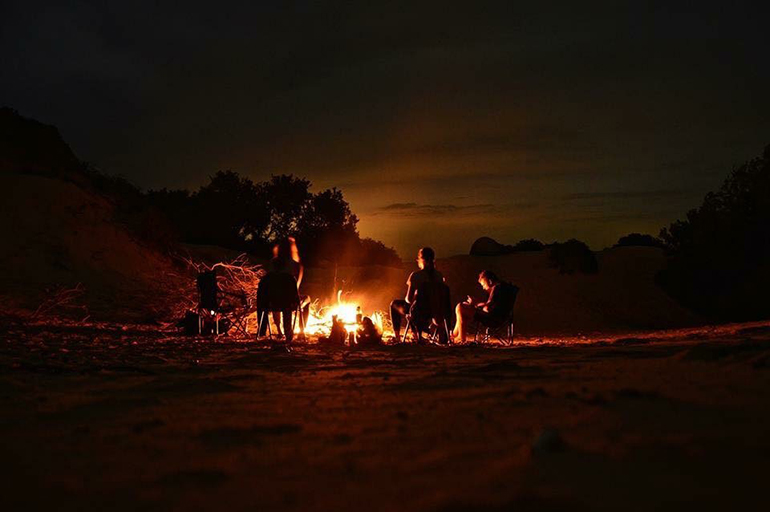
    Feature Image: Allison and her friends hang out around a fire in Australia. Photo by Ryan Hubbard.

    On my early morning walks in Buenos Aires, I loved watching the rising sun crawl over buildings. While working in Melbourne, I watched for ever-changing graffiti. Every day in Spain, I looked forward to my mid-morning snack of café con leche and chorizo sandwich.

    These are pieces of my life abroad I wish I could still experience. But beyond missing my new routines, what I miss the most are the human connections I made in those places. There’s nothing like a good laugh over a cup of coffee, or learning about a country’s troubled past through a local’s explanation of a mural that give simple things – like a latte or street art – more meaning.

    From chatting with local classmates to making friends through shared interests, meeting locals during your Greenheart Travel program can help you learn the language, culture and history of the country. (Plus, making friends is a lot of fun.)

    Couchsurfing
    Allison with friends she met through Couchsurfing.

    If it weren’t for locals, I wouldn’t have learned what Australians mean when they say esky, why Argentines walk around sipping tea from a gourd (mate!) or the reason why people say molt be instead of muy bien in some parts of Spain.

    So, how do you make connections when you’re in a new country and speaking a new language? At first, putting yourself out there might seem challenging. But, taking the initiative to make local connections has the potential to make any program – whether it’s a few weeks or a few months – more memorable.

    Here are a few of our favorite ways to meet people abroad:

    Language Exchanges

    Language exchanges are a great way to meet locals while improving your skills and helping them hone theirs! A language exchange is an event where language learners typically spend half the allotted time in one language and the other in another. Sounds perfect, right?

    Check social media sites like Facebook or ask your host family if they know of one near you. Linda Correll, a teach in Colombia alum, says she went twice a week to an exchange in her area called “Let’s Talk Pereira”. This event had an informal, conversational atmosphere and “ended up being a large part of my social life during my two years there,” she says.

    Even if you can’t find a language exchange in your area, try asking a coworker or neighbor for language help. For example, Kirt Smith, a teach in Thailand alum, says after he learned basic Thai he asked co-teachers for help reading and writing. “It’s a great ice-breaker and I gained a lot of Thai friends doing this,” he continues, “I found out that taking the time to learn more about the language is a fast-track method to earning a lot of respect among Thai people.”

    Use a Networking Application or Website

    Besides traditional social media outlets like Facebook and Instagram, there are many networking sites to help meet locals. For example, while living in Melbourne, I attended an event through the Welcome Dinner Project, an organization that connects establish Australians with newcomers. I met people of all social backgrounds and tried homemade dishes from each part of the world represented at the dinner.

    If you’re not in Australia, check for similar organizations in your destination and try the following websites:

    Couchsurfing is best known for connecting travelers with free places to stay around the world, but many people don’t realize it’s also a great social tool. Just as some use the site to find locals to stay with, you can reach out to locals that you have common interests with. Many “hosts” (locals) often plan social events for locals and travelers to meet. I connected with a Japanese man in Tokyo, and we spent an afternoon exploring the Akihabara area.

    Meetup.com is a site that connects people based on shared interests. Around the world, people host “meet ups” to practice capoeira, learn to cook, discuss literature with a book club – or anything else you could think of! This is a great way to continue a hobby while you’re abroad, or even start a new one.

    Cambodia
    Allison participated in a cooking class while in Siem Reap, Cambodia.

    For foodies, there are two sites – Eatwith.com and Bonappetour.com – that give you the opportunity to have chefs cook for you – right from their home! Because other people join the events, you’ll meet lots of folks as interested in trying new cuisines as you.

    Join Sports Teams

    No matter where you are in the world, sports are an important part of life. They may differ – though soccer seems to have a stronghold throughout the globe – but people love to be active. Marissa Ruxin, a teach in Colombia alum, joined ultimate Frisbee teams in both places she taught in Colombia. She had a blast, and made friends!

    Teach in Colombia
    Marissa Ruxin and her frisbee team in Colombia.

    Besides practicing his Thai, Smith also learned the game of takraw (ตะกร้อ) by asking local men in the park to teach him. “The men were extremely welcoming and thought it was cool having a foreigner want to learn how to play. It quickly became a regular activity and we would often end up eating dinner together at the night market afterwards,” he says.

    Ask Co-workers, Teachers and Host Families for Recommendations

    One of the best ways to meet people is through your established networks. With Greenheart Travel programs, you’ll be with host families (and in some cases also have networks at schools) to ask for recommendations.

    They will have a much more in-depth knowledge of the city and its surroundings, so whatever activity you might be interested in doing use them as a resource.

    Buenos Aires
    Some of Allison’s friends at Buenos Aires’s Gay Pride parade.

    While I was studying in Buenos Aires, I asked my classmates if they knew anything about a conference I had heard about – the Encuentro Nacional de Mujeres, an annual women’s rights conference. As it turned out, one of my classmate’s sisters was going, and he connected me with her. Two weeks later I was on a 30-hour bus ride from Buenos Aires to Posadas, Misiones with 40 other woman. As I’m sure you can guess, I learned a lot of new Spanish and made many lasting friendships.

    It never hurts to ask for connections – you never know where it might lead.

    Lastly, Remember to Get out of Your Comfort Zone

    Speaking with locals can be intimidating. You might be nervous about your shaky French or suddenly blank on the Japanese word for restaurant when you’re asking a classmate for a recommendation. Maybe you’d rather sleep in on a Saturday than go on a rigorous morning hike, or perhaps you’re not in the mood to try the local delicacy in your town in Myanmar with your co-teacher.

    Uluru Australia
    Allison traveled through the Australia outback with new friends.

    Remember that starting a conversation or going to a new place for the first time might seem like a lot of effort, but the payoff of great experiences and good friends makes it worth it. I’ve had some of biggest laughs and greatest memories at events I almost didn’t attend.


    Ready to put your fears aside and see what happens when you get out of your comfort zone? Contact us!

  • How to Live Overseas

    How to Live Overseas

    You’ve spent your entire life in your home country, and as great as it is, you can’t help but wonder what else is out there in the world. In our increasingly globalized society, exploring foreign lands is easier than ever. You don’t have to just take a vacation–you can immerse yourself in a new culture for weeks, months, or even years.

    Teach English in a School

    Greenheart Travel teacher Lisa Crabbe working with students in Thailand
    Greenheart Travel teacher Lisa Crabbe working with students in Thailand

    Native English speakers have an incredible advantage in the world. If you were born in the US, Canada, South Africa, the British Isles or down under, you learned the world’s most important language without even trying. English is the language of global travel, commerce, and education. With mastery of the English language, people in non-English speaking countries get a huge leg up in the work force. That’s where you come in! You don’t have to be a certified teacher back home, and you don’t have to want to be a career teacher. With your native speaking skills and the proper training, you can make a positive impact on the lives of your students, while earning a living and experiencing life in a foreign country. You can teach abroad for 3 months, a semester, a school year, or 15 months!

    Teach English in a Homestay

    Homestay Teacher Ashley Bornancin (fourth from left) with her whole Italian host family
    Homestay Teacher Ashley Bornancin (fourth from left) with her whole Italian host family

    If you’re not ready to stand in front of a classroom, or you’re looking for an even more immersive experience, teaching in a homestay is a great option. You’ll move in with locals and become a part of their family, learning about their culture, language, and customs. For 15 hours each week, you’ll work with them to improve their English skills, and in exchange, they’ll give you a room in their home and homecooked meals. In your free time, you’ll travel and explore your host country! These programs are shorter-term (1-3 months) and are a great way to try out teaching English!

    Volunteer Abroad

    Program Manager Megan Arzbaecher at the Sri Lanka Elephant Conservation Project
    Program Manager Megan Arzbaecher at the Sri Lanka Elephant Conservation Project

    Teaching not your thing? You still have options to experience a foreign culture and get a taste of life abroad, while contributing to your host community. Whatever cause you’re passionate about, there is a volunteer abroad program for you. Love animals? You could volunteer at a dog rescue project in Thailand, or a bird habitat restoration in France. Interested in community development work? Spend some time working with a community in rural Kenya. Environmentalist? Lend a hand at a sustainable development project in the Peruvian Amazon. All of these programs offer an enriching experience abroad, and will help you develop skills to carry back to your workplace in your home country. You can volunteer for as little as a week or as long as 3 months, and there are year round start dates to suit your schedule.

     Work Abroad

    Greenheart Travel Alumni enjoying the view in New Zealand
    Greenheart Travel Alumni enjoying the view in New Zealand

    Don’t want to teach but looking for some income to fund your travels? Working abroad in Australia and New Zealand offers young people a chance to experience life in a far-away society, without the language barrier of English teaching destinations. You’ll work for up to a year, usually in tourism or bars and restaurants, and travel this beautiful continent as a local, not a tourist.

    It’s a big world, and now’s the time to see it. Contact us to get started on your adventure abroad!