Hi! My name is Madison and I am a part of the teen summer language camp to Fukuoka, Japan. I am 17 years old and staying in Japan for two weeks. My experience here, so far, has been truly amazing and I have seen some amazing things.
When I first arrived on Sunday I was quite worried for Monday because it was my first day of school. I had to take the subway to get there and the thought of traveling alone terrified me. Taking a subway period was new to me, taking a subway in Japan was super scary, by myself … I was facing a challenge. My host family showed me the way on Sunday and tried to make sure I was comfortable. When I was still nervous on Monday, they escorted me. I paid attention and, now, I’m definitely a pro at taking the subway.
Waiting for the subway
Once I had mastered that impressive hurdle. It was time to face school. I was going to be the new kid, but I also realized there would be a bunch of other new kids. When I first walked in, I was extremely nervous. I didn’t know what to expect and my imagination had gone rather wild with its own ideas. I watched what the others did and took my shoes off, revealing bright pink socks and sat down at a small table. Some of the other kids were already in groups, so I worried a bit that I wouldn’t fit in or find a friend, but … that’s when someone sat next to me. And then another, and viola! We started talking and I had my first friends.
I am very shy naturally and felt pretty awkward at the beginning, but rather soon I found it easier and easier to introduce myself. Everyone else was just as nervous and the feeling didn’t last long. All I had to do was say hi. Before any of us knew it, it was time for class to begin.
My very first class was a bit crazy. I am still considered a beginner in Japanese, so it was a bit startling when I walked in and discovered there was no English in the classrooms. My teacher who spoke Japanese quite quickly did speak a bit faster than my brain could process. At first, I considered moving down a level, but then thought, “No. I am here for a challenge. I’ve got this.” I’m glad I did. It didn’t take long before things started clicking. My brain rewired and the teacher began making sense. My classmates are amazing and my teachers are absolutely wonderful. All of them are very patient with us and understanding when we don’t know something. They are happy to help us work through our challenges together. We do have homework every day but my host family helps me with it and makes it fun.
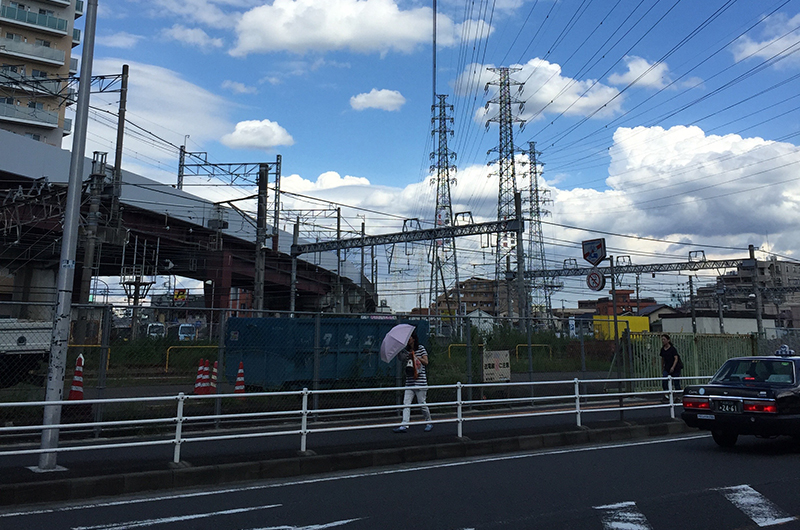
Walking to school on Monday
The subway is fun, my host family is spectacular, and my phone memory is running low from all the pictures. I look forward to classes every day and enjoy meeting with my new friends from all over the world. If you’re undecided about traveling to Fukuoka, Japan, I encourage you to take that big step. This is truly amazing!
Curious to know what studying abroad in Japan is like as a high schooler? Click to listen to the first episode of the Greenheart Travel Podcast! This recording was taken from a live Q&A moderated by Allison Yates, Associate Director of High School and Short Term Programs. Our guests include High School Abroad in Japan alum, Maddy, and future exchange student, Jasmine.
Read an excerpt from the recording below:
Jasmine: One of my questions for Maddy is, did you have a phone while you were in Japan. If so, did you have a phone plan for while you were in Japan so you could contact your host family while you were in Japan?
Maddy: Most phones come locked in America, but I had had an iPhone 6 for 3 years, which meant my phone was no longer locked so I could buy a sim card and buy a plan in Japan. Or what I did was I found a place, If I can find where I bought it they sold plans that were specific for people who were going to study or teacher. Especially if you were a student you got a discount. So, I think it was only 25 a month and you got unlimited data. I was like 7GB of 4G. I never used 7 GB and I was completely fine. And then in Japan, they use Line and lot which is a texting app.
I had texting and phone just for emergencies. I could receive a phone call or a text for free, but if I sent a text or started a phone call I would have to pay.
Jasmine: How much were you able to contact your family when you were in Japan? How many times in a week or a month?
Maddy: So I’m not really the type that needs to contact their family. I don’t think I was homesick at all, which is kind of terrible. I had a group chat online with my family, so we would text. Money, I would talk about, or something specific. I have a twin brother, so we would text insults to each other. And then you know on my birthday and stuff, I was able to call. I don’t think I ever called unless I had a specific purpose like I needed to talk about money or it was Christmas, or around my birthday. I think Thanksgiving I called.
Jasmine: So on like major holidays you were able to contact them.
Maddy: Yeah, so for me, on the East Coast, there is a 13 hour time difference. So when it’s night here it’s morning there and vice versa. So you have to consider that difference, but it’s not hard to call. I mean you can like wake up Sunday morning and like call your family but it will be Saturday night there.
Allison: What recommendations would you have for her to like right away feel comfortable wherever she’s at?
Maddy: For me, food was kind of an issue when I first got there. Of course, I was actually sick so I was actively vomiting like all the time when I first got there. So that was kind of terrible. If you’re just okay with eating literally anything it’s easier to get used to. If you use chopsticks it’s easier to get used to.
And then, I guess with your host family, it really depends on what your host family is like. And I think it’s like actually like how comfortable you feel immediately depends on your host family. If they’re treating you special, like, it might be harder to adjust. But if they are treating you like a member of their family like taking you under. My family picked me up, brought me over, and then immediately sent me up to my room to get my stuff together and my host sister came with me. Then they immediately started watching TV and through dinner, they watch TV too. They encouraged me to sit on the couch and stuff. They weren’t making me take the first bath or anything.
Maybe even ask your host family if you see them treating you special, you know, ask them maybe not to.
Allison: That’s a really interesting thing you bring up. Because I think sometimes people are like, ‘well I’m just here and it should be a big deal that I’m here.’ I mean I had that perception when I went abroad, I remember. But it’s a really good point you bring up that it’s actually better for you if you’re just like one of the other members of the family.
Jasmine: How much money did you spend while you were in Japan per month and did you have a credit card or did you just use cash? What type of system did you have?
Maddy: So I had a hard time keeping track of how much money I spent. I probably spent between like $150 and 300. Now granted, my host family was very nice and when we went out to eat they’d pay for me. So for some reasons I spent a bit less. And then if I ever went on trips you have to cover hotel costs and food costs so I would pay extra money for that. But in general, I probably spent $200.
I’d actually advise against buying too much stuff while you’re there. I ended up buying too much stuff and I had to ship stuff back and one of my boxes was robbed from and I lost like $800 worth of stuff I had bought.
Allison: Oh no!
Maddy: Yeah, yeah. I have insurance for it, I haven’t gotten my insurance money back. But I would warn against that, just be aware. Especially US Customs will search everything you sent. If you have something really packed neatly, like I had a box full of books and they opened it and I got it in a different box, just everything thrown in there haphazardly. So I would just say to pay attention to how much you’re buying because there is that risk.
Hi! My name is Madison and I am a part of the teen language camp for Fukuoka Japan. I am currently sitting in Shanghai after a long flight. I thought this was a perfect time to let others know what it was like getting here.
My mom and I started out in Denver. An airport I am quite familiar with. This went smoothly and I quickly arrived in LA. My experience was different from the moment I stepped off the place because I was now alone.
I had never navigated an airport by myself until this point. I was extremely nervous and a bit uncomfortable. Already I wish I had relaxed a bit. It wasn’t as bad as I had expected. Everyone helped me out when I asked questions and I made it to my gate in plenty of time
The next flight was very long, reaching about 13 hours. It was definitely the longest I’d spent on a plane at one time. I mainly slept on the flight but enjoyed the food and drinks that were given.
When the plane landed I was in Shanghai! I definitely panicked a bit because I was not able to call my mom at first due to being in a different country. I didn’t really know what to do so I just followed the signs. First I was fingerprinted, then I made my way towards international transfer. I was in the wrong line at first but they directed me to the correct stop and suddenly I was at security after scanning my passport and boarding pass. Once I made it through security my gate was very easy to find. There was English all over and everyone I spoke to was able to talk to me very well. I had a four hour layover so I walked around, seeing as much of Shanghai from the airport as I could before my last flight to Fukuoka.
For my final flight of the day everyone has to take a bus over to the airplane with a set of stairs leading to the door. We all scanned our board passes again made our way to the plane. It was a quick flight compared to the others.
Finally, I am in Japan! I had to fill out an entry card and go through customs. There my host family was waiting for me!
I know it’s scary and nerve-wracking flying by yourself but it was worth it and not as bad as I was expecting. My time getting to Fukuoka was 26 hours total but I enjoyed the experience. Now I am eating ramen and walking around in Fukuoka.
Hope this helps give everyone an understanding of what it was like traveling to Japan.
Meet Christina Ling, a Greenheart Traveler who went on a Teen Summer Language Camp in Japan! She filled us in on her experience with school, friends, and traveling as a teenager.
1. When is the first time you feel like you made a friend?
On the very first day of school! When I arrived at my school in Japan, I stumbled upon a group of kids wearing shirts with the names of cities in my area. It was pretty easy from here to strike up a conversation with two of them. We became fast friends and soon I found we were doing everything together. We would go shopping, eat lunch together, watch movies, and go do karaoke. We had so much fun every day and I definitely won’t forget all the laughter we shared and also the problems we worked through together.
2. Best mentor(s) abroad?
While in Fukuoka, Japan, I had many great teachers and mentors at my school. They all had different teaching styles and were fun and entertaining. However, my favorite teacher was one by the name of Junichi. He took the time to slowly work through speaking practice with me. We often had conversations after class about what I thought about Japan and I was delighted that he had an interest in getting to know about my life. He taught me a lot while I was in Japan and would recommend restaurants for me to visit, or tell me the optimal time to visit parks, or just let me slowly recite how my day had gone.
3. Favorite Japanese Song?
My favorite Japanese song was one from one of my favorite anime. It was one of the ending themes and it was called 7!! – Orange. It is a softer sounding song, maybe even a little sad. I sang it in karaoke while I was in Japan and it was really fun.
4. Japanese aspect you wish US Americans would adopt?
Japanese people are very clean. I hardly ever found litter lying on the streets, and I constantly saw people cleaning up after themselves. During the school’s lunch break, the teachers would go outside to clean the trash with their own hands and even rake leaves during their breaks. I was amazed at the effort that I constantly saw citizens putting in. I wish America had such respect for cleanliness that we could go the extra mile to try and clean up a little more.
5. Advice for others going abroad?
Do you best to get out and try new things! Some of my most fond experiences of my trip were when I went out to try something. Often, I was nervous about my ability to communicate and it almost stopped me from going out to try an activity, but once I got over my fear, it was so much fun. Even if you can barely speak the language, try your best to communicate with others so you can have some fun on your trip. I encountered a few times where I was barely able to communicate what I wanted to employees, but with time and effort, I was able to get them to understand me. Trying new things in a foreign country is exciting and even a little scary, but in the end, you will have no regrets if you get out and make some new experiences and memories.
Do you want to learn Japanese? Click the link below to find out about our Teen Summer Language Camp!
When you visit a Japanese restaurant in the United States, it probably predominantly serves sushi (specifically maki or specialty rolls) with names like, “California” or “Rainbow” roll.
However, the general knowledge of Japanese food pretty much ends there. You may have never heard of natto, sukemono, or takoyaki. How about a persimmon or a Japanese plum?
Beyond food itself, the dining experience in Japan is simply different; from place settings and table manners to the how food is viewed within the culture. We cannot possibly even scratch the surface of Japanese food and its significance in a blog post, but let’s highlight a few aspects, shall we?
You probably know a few key ingredients. Rice, seaweed, and fish are big elements. Soy sauce and soba noodles are also common. And who could forget ramen!?
However, Japanese people do not usually eat sushi and sashimi every day. As in America, sushi is an expensive dish to be eaten on special occasions, such as going out or entertaining guests. Squid and octopus are also eaten, but they don’t usually enter into home cooking. If you live in a homestay, you may have curry rice, a popular Japanese dish, far more often than sushi.
Seaweed is common. So common, in fact, that there is not one general word for it in Japanese, but rather different names for each type. Konbu (sea kelp), and nori (seaweed) are completely different things, like the way one would talk about corn dogs and sandwiches as separate entities.
There are also a number of unrecognizable vegetables and fruits. In Japan. vegetables are not seen as inherently more distasteful than meat. Many vegetables are sold pickled.
Umeboshi (Japanese plum) and kaki (persimmon) are common fruits as well. Kaki is delicious, but umeboshi is very sour. They often lurk inside onigiri (rice balls) waiting to surprise the unwary person. Fruit is also a common thing to give as a gift in Japan, so when businessmen or houseguests want to bring a gift alongside an important meeting or for someone hosting them, they tend to bring fruit. When you go to a Japanese department store, the aisles are lined with fancy gift boxes proclaiming to have the sweetest and most delicious fruit gift baskets. Things like melons, strawberries, and other “high end” fruits can be sold in gift boxes for over $100 each!
Japanese food also highlights noodles and some favorites are ramen, udon, and soba. The tradition of making soba noodles dates back thousands of years. Soba noodles are made of buckwheat and are traditionally dipped in soy sauce and served with tempura vegetables. Slurping your noodles is not considered rude, so slurp as loudly as you’d like!
High school can be a difficult time, but attending a high school in a country that speaks another language and embraces unfamiliar cultures and traditions is an adventure few can boast to their friends and family. Jes Stayton, study abroad in Japan alumni offers some advice to a prospective exchange student on making the most of this amazing experience.
Packing a suitcase for a Greenheart Travel program.
Packing Tips for Japan
One of the things I regret most about my pre-exchange program preparation is that I brought too much stuff to Japan. Bring everything you need, of course, but don’t pack with the mindset of ‘I’m going to be there 10 months, 5 months etc.’ Also, try to leave space in your bag for the things you will buy in Japan. Remember that you can buy toothpaste, shampoo and other necessities in Japan. I would bring what you need for the first month, and then buy everything else after that.
I think it might be a good idea to bring some bath towels. In Japan, everyone has their own bath towel, slippers, chopsticks, plates, etc. I doubt that your host family will require you to buy your own plates, but they might want you to use your own towel(s). This differs from family to family. My first two host families lent me a towel, but my current host family asked me to buy my own.
As for clothes, it is important to remember that you will be living here, not just on a trip. Don’t pack only your most fashionable things. Bring the clothes you wear for hanging around the house; the sweaters you wear when you are cold. Most Japanese houses don’t have central heating, so this is important. If you own long underwear, you should bring it. Most Japanese people wear long underwear during the winter. In fact, I think it is a good idea to bring enough underwear and bras for a week. Some families wear different underwear and bras everyday.
Lastly, if you use a digital camera, it might be a good idea to bring an extra memory card. I was planning to delete pictures taken in America, but once I got to Japan, I found I didn’t want to.
A Japanese host family on a picnic.
Etiquette for Staying with a Japanese Host Family
The home stay is one of the most important parts of going on an exchange program. In my opinion, an exchange student’s relationship with his/her host family is most important. Before coming to Japan, I thought that most of my struggles would be at school, and didn’t think about the home stay much at all. However, after coming to Japan, I found that it was actually the opposite. The vast majority of my mistakes were made at home. Teachers and students at school also tend to be more understanding than the host family.
Remember that your host family is not your real family no matter how nice they are, so offer to help your host family with chores, and if you can, do chores that relate to you. This means that unless your host family says otherwise, wash your own laundry, clean your own room, etc.
Aisatsu (greetings) are very important in Japan. Always say, ‘Arigatou gozaimasu, ‘Ohayo gozaimasu’, ‘Oyasuminasai’, ‘Tadaima’, and other greetings. It took me a long time to realize that not saying ‘Ohayo gozaimasu’ to everyone, every morning, was rude. Also, if your host family bothers to correct your Japanese or teach you Japanese manners—study it. They are helping you out of kindness, so if you make the same mistake again and again, it looks like you don’t care.
Don’t worry too much about your mistakes, though. Always apologize, and remember the mistake so you don’t make it again, but try not to stress about it. I tend to make myself miserable that way. Your host family knows that as an exchange student you will make mistakes. They won’t hate you because of it. Try your hardest, and make sure your host family knows that you are trying, and you will be okay.
Architecture in Japan.
Studying Abroad in Japan
If you study Japanese at school, I would recommend asking your teacher what phrases, or words she/he thinks you should study. If your teacher, knowing that you will be going on an exchange program, goes out of his/her way to teach you something, I would make sure to study it. When I looked at my Japanese notes a month into the exchange program, I realized that many of the things I had trouble with in the first month were things I had already studied during my last few lessons before leaving. Also, don’t slack off during the summer.
Once you get to Japan, I recommend you try to write down the words you don’t understand, and study them later.
You likely won’t be able to write down all the words you hear, but anything you can write down is a step toward understanding Japanese. In class, you may not understand anything at first. I could understand my English classes, but not my history or religion class (I asked to take history, so don’t worry about that). Try to pay attention, even if you don’t understand. Listen for words you do understand, and watch the teacher.
Some teachers gesture while they speak, making the class easier to understand. If you take notes, try to notice the separate radicals (parts) of kanji. Knowing radicals will make it easier to write and remember kanji later. For example: the kanji used for “time” is made of the kanjis for “day” and for “temple.” I already know how to write these kanji, so remembering the kanji for “time” is easy.
People wearing traditional Japanese attire.
General Advice for Japan
One thing I think all exchange students should do is talk to people. No one will think you are stupid or laugh at you for not having perfect Japanese. At the very beginning of your exchange program, when you are still a novelty, the other students in your class and at your school will be fascinated by you. Complete strangers said ‘konnichiwa‘ to me in the hallway, and asked me questions about America. This period of time is a golden opportunity. Talk to your fellow students, and try to make friends. If someone invites you to go out together or eat lunch together at school, accept if you can. Later, it will be much harder to make friends, and meet people.
Try to focus on Japan while you are there. Don’t spend all your time thinking about your own family and your own country.
Concentrate on the good points of being in Japan. If you are homesick, distract yourself from it. This is difficult to do, but if you can do it, you will enjoy your time much more. Also, always try new things, because if you don’t you will regret it later. Join the bukatsu that you have always had an interest in, not just what sport you did at home. I joined the orchestra club because I play the violin, but I wish I had joined the kendo bukatsu instead. An exchange program is an opportunity to expand the bounds of who you are, so don’t worry about what you have always done, or what other people will think.
Throughout my homestay in Japan I have remained mostly in Okayama prefecture. Besides my short orientation in Tokyo at the beginning of my stay and my previous trip to Universal Studios which was located in Osaka, I have not traveled outside of Okayama. Both my time in Tokyo and Osaka was rather short and set with a rigid schedule for the day(s).
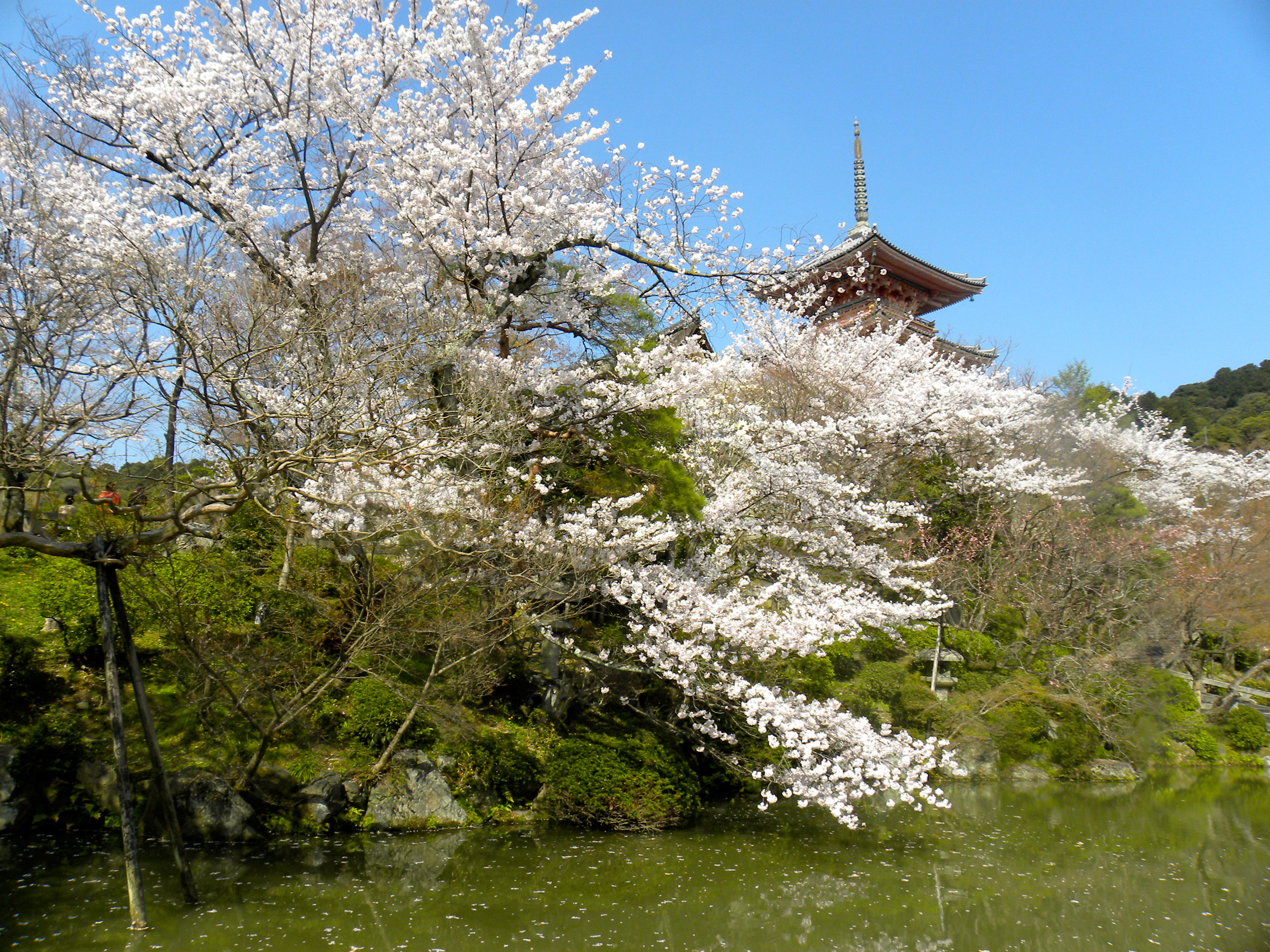
While in Osaka, I didn’t even have the chance to leave the amusement park, so I didn’t get to experience the rest of the prefecture. But finally, on April sixth, I had the opportunity to leave Okayama and explore a different prefecture for the day. Well known outside of Japan for its beautiful spring cherry blossoms, Kyoto was the ideal place to spend an April day.
At first the plan was that I would go to Kyoto with my host sister and that we would join a bus tour group. But we soon remembered that my exchange counselor lived in Kyoto, and she was kind enough to offer to be our personal guide for the day. My host sister and I took the 8:16 bullet train to Kyoto, arriving there just one hour later. We met with my counselor and three of her other students before setting out.
I’m a transgender man, and I lived in Japan for a year studying abroad in high school, and so can you.
I’ve been home for a few months now after a long study abroad in the Kanagawa prefecture of Japan. I have so many wonderful and unique memories from my time there that I don’t think I can ever forget, so when I did my follow up chat with Greenheart Travel and was asked to give my take on the experience I leapt at the chance.
Finding My Community
When I was first starting to do research into going to Japan I felt like I was running into the same type of people giving advice. It felt like I saw video after video, and blog after blog of straight, cisgender people wondering “how to get a Japanese boyfriend/girlfriend.”
Much to my surprise, when I arrived in Japan, I met many LGBTA+ identifying exchange students just like me.
I was in a group of anywhere from 30-40 people from 5-6 different countries and so many young LGBTA+ kids! I was shocked and delighted during our orientation and sad to part ways when the time came. So, if you go to Japan thinking you’re alone: Prepare to be pleasantly surprised.
Coping with Challenges Abroad
Transgender and questioning people have every right to go to Japan, and just about anywhere they like, but Japan is no more hospitable or welcoming than many countries. Of course, cultures differ depending on the region and I come from the American south, but Japan didn’t seem to care who I was. I think I might have felt this regardless of my gender, but really Japan was a dizzying place.
I only felt comfortable and able to come out to a few people. In Japan I, a transgender boy, was still treated and stereotyped as a girl. I was asked what kind of boys I liked and when I wanted to get married.
My clothes were called “boy style” and the “style” part of the phrase was very much enforced.
It wasn’t as if I saw no other gender nonconforming kids or met no other trans people while I was abroad, just everything felt like a very hush hush secret. Because of my own unique situation I tried to take solace in my anonymity, and the set end date.
I knew that if I was suffering now being “one of the girls,” it would all be over soon in a matter of months, and besides, I was seeing so many cool things.
Actually funny enough I think I indulged in a little retail therapy (a lot of retail therapy) to help soothe me. I got very involved with what I bought and ate, but that could have just been where I was. Being alone with my music and mind helped too.
Staying True to Yourself
If I were to give advice to any of the trans kids out there looking to go to Japan or study abroad in general, I’d say: stay true to why you’re there in the first place. Is it to see a new place and learn new things? Do it. You are valid, you are strong, and you are awesome, no matter what anyone says or implies.
Also a lot of people don’t know or understand what you’re going through. Representation in Japan and in their media is so limited when it comes to gender and sexuality. When I was in Japan I felt like everyone was thinking in extremely stuck terms of “male” and “female” rather than “boys” and “girls.” Japan felt very in your face with the sex essentialism.
Setting Realistic Expectations Abroad
Would I recommend other transgender or questioning youth to study abroad? Absolutely. However, be prepared to have to explain and be prepared to feel uncomfortable. Social interaction in Japan could be difficult but the cleanliness and the serene landscapes you will be encountering is really soothing and healing.
I feel like Japan, just like any other place, has its pros and cons for trans and questioning folks. You just have to decide which of those things you can handle and which you cannot. There are so many things you will only know through lived experience, and if I serve as any example… I survived Japan.
How to Prepare For a Program
I was closeted during my program, but if you do plan to be living out or end up coming out, try to have a support system in place. A friend of mine came out in a school with a uniform. He was wearing a uniform he didn’t like, and didn’t feel aligned with how he wanted to present his gender.
Changing this in his everyday life took the support of a particularly open and forward thinking teacher in his school. So.. if you feel like this is a challenge you would face, face it as you should lots of other situations you will encounter while abroad – with a team.
In closing, I want to reaffirm that no matter where you go, you will find people like you or who support you. Love and acceptance can be found in the strangest of places and you can learn a lot about yourself in those very places. I encourage everyone who takes a trip to Japan to search every corner, climb every step, and talk to everyone you can.
Your mindset and your goals will shape and mold your experience more than you will even realize at the time. Stay positive, and have fun. Prepare to be pleasantly surprised.
The end of the school year is always a bitter-sweet time. While both students and teachers are looking forward to the quickly approaching break, everyone must say farewell to those graduating. Moving on to this next chapter in one’s life can be both exciting and scary, but either way the memories from high school will not be forgotten.
Graduation is indeed a difficult but exhilarating time for all….although I suppose everyone back in The United States is not thinking about the end of the school year just yet. You may be wondering why I am bringing it up now, when there are still at least three whole months of the school year left. Well that may be so in The United States, but it is not so here in Japan.
In Japan, the school year ends with the winter and starts with the spring. There are many parts of the Japanese end of the school year that are similar to the American one, but not everything.
Read on to learn more about high school graduation in Japan on Eve’s blog post.
During my study abroad program in Japan, I found the main difference between Christmas in The United States and in Japan is the food. My real family back in the States were kind enough to send me packages with various Christmas sweets inside, much to my delight. But I was surprised when sharing these sweets with my friends and host family in Japan.
Mint is not a commonly-liked flavor here, and it is certainly not considered a Christmassy one. Although I was a little shocked, I was not complaining, because that leave more candy for me. The big difference between Christmas food in The U.S.A and in Japan is the main course.
In The United States it is typical for a family to have a main course of ham, or beef, or turkey. But in Japan it is usually chicken. Kentucky Fried Chicken, to be exact. Kentucky Fried Chicken has managed to convince the entire country of Japan that their food is what westerners eat on Christmas.
I am not joking.
Although it is certainly a lie, I was more than happy to eat fried chicken on Christmas, even if it isn’t what I was used to. It most definitely helped that my family’s Christmas fried chicken was homemade, and therefore extremely delicious.
Read more of Eve’s experience celebrating Christmas in Japan in her latest article.