Category: TEFL

  • Using a TEFL Certification and Travel Experience to Further Your Career

    Using a TEFL Certification and Travel Experience to Further Your Career

    As part of our mission-based blog series on how travel helps advance careers and creates leaders, we reached out to TEFL-certified, world traveler, Brian Thacker. In our latest interview, Brian shares his first-hand experience on how he used his experiences abroad to help land his most recent job.

    Q: You have an MBA, a great job and you have taught abroad. How did you make it work to travel and still land your dream job?

    I left to work abroad when I was 22. I had been working in an office environment for a few months but, as many college grads discover of their first job out of school, it was pretty boring.

    I wasn’t ready to just dig in and start “climbing the ladder.” What I really wanted to do was travel. Specifically, I wanted to live in a big city in Latin America and eventually I decided on Buenos Aires, because I’d heard a lot of good things about it and I knew there would be plenty of opportunities to teach.

    When I look back on the whole experience and think about how it helped me get to where I am now, the key is that I have a story to tell. A lot of people can talk about what they do, but far fewer people are able to form a compelling story around why they do it. Teaching abroad wasn’t the “safe” thing for me to do, but it helped me grow and differentiate myself in ways that more traditional career choices can’t match.

    Patagonia, Argentina | © Lauren Thacker

    Q: What advice do you have for students and graduates who are focused on their career goals but want to travel?

    I’ve never really had anyone tell me: “Oh, that time I spent abroad after college was such a waste,” or “Yeah, I’m really glad I decided to not to travel after school.” It’s always the opposite. Taking time away from your career is a difficult decision primarily because nothing is guaranteed when (or if) you come back.

    But if it is something that truly interests you, I can all but guarantee that you’ll seriously regret not doing it a few years down the line. Be honest with yourself and with your manager(s) and DON’T burn bridges.

    Brian-traveling-in-india
    Brian traveling in India during business school | © Brian Thacker

    Q: When you were a student, what made you decide to take the time to travel abroad and how did that affect your career goals?

    Curiosity was probably the biggest factor. Also Urbana, Illinois was starting to get kind of boring after two years.  My decision to study abroad in Ecuador, specifically, was made with the help of my advisor at the study abroad office who had studied there a few years earlier. I remember him telling me how nearly everyone looking to study Spanish abroad will default to Spain, but that Latin America offered lots of great opportunities as well.

    In terms of how that experience impacted my career goals, it made me want to go back to South America after school (to teach) and then that kind of snowballed into wanting to join a company (General Electric) that had a big presence in that region so I could go back again!

    Q: How do you feel your travel experiences abroad have helped you stand out on job interviews?

    Job interviews are all about differentiation. The basic question a potential employer is looking for you to answer is: “Why should I hire you over the 15-20 other people I’ve interviewed?”

    Having international work experience (as an American citizen) is something companies love because it shows that you can adapt to different cultures and can bring a fresh perspective to their company.

    In my case, it also helped me become fluent in Spanish. With this type of experience, there’s a much better chance that your interviewer will at least be able to make a positive association with your name. The rest really comes down to how well you can tell your story.

    Brian-traveling-and-graduating
    Graduating with an MBA | © Brian Thacker

    Q: What travel experiences did you feel made the greatest impact on you leading up to your current career opportunity?

    Working as a freelance teacher in Buenos Aires. I moved there with a few thousand dollars I’d saved and a TEFL certificate I’d earned, but didn’t have a job lined up because no one would interview me until I was actually there (I came to learn that’s typical of the way they do business in much of Latin America).

    So the reason I take so much pride in that whole experience is that I had to hustle for everything. I was in a totally unfamiliar environment, but I had worked so hard just to get to that point and I felt so excited to be making it all happen.

    Q: Do you have advice for anyone who has defined career goals but still wants to travel after graduation?

    Try not to worry so much about what you think you should do and focus more on what you want to do. Also, be as honest as you can with yourself about why you’re making the decisions that you are. If you’re not comfortable with those answers, it might be time to reevaluate your goals. Finally, I’ll say it once again: Don’t burn bridges!


    Get your TEFL Certification and your dream career!

  • How to Respond When People Say It’s Too Dangerous to Travel Abroad

    How to Respond When People Say It’s Too Dangerous to Travel Abroad

    Deciding to live and work abroad can be life-changing, and sometimes scary, but the excitement of an adventure usually outweighs the fear of the unknowns of life in a new country. For your family and friends, though, your decision to travel abroad can leave them confused and concerned, fretting over all the possible things that could go wrong. Despite their best intentions, this response can often deflate your confidence and make you question if you really are making the right decision.

    When I decided to move to South Korea to teach English, I encountered many naysayers. I was constantly asked about the safety in Korea, why I wanted to put my life at risk, and how I planned to handle the looming threat of North Korea.

    No matter where you decide to move abroad, there will be people who find your decision crazy or dangerous. Maybe you even think you’re a little crazy. But that’s okay. Here are some ways to respond to any concerns your family and friends might have about your decision to move abroad. 

    There is a bit of danger no matter where you are in the world.

    No place is immune to a possibility of conflict and danger. Even in our own home countries and cities, we can be bombarded by horrific hurricanes and unexpected horrors. Think of how many people consistently visit New York City despite 9/11, because it is a city worth visiting. Just because a country has scary stuff in their past doesn’t mean it isn’t worth traveling to in the future. The unfortunate truth is that there is no place in the world that is 100% safe.

    Regardless of where you are in the world, there will always be unforeseen circumstances. It is, of course, natural to feel safer in your familiar home even though we know it is not void of danger. It’s always important to remember this – just because the world can sometimes be a scary place does not mean it isn’t also a beautiful one that’s worth exploring!

    Bad news sells better than good news.

    We live in the age of media. Any and everything that happens is broadcasted – we hear and read about terrorist attacks, bomb threats, and natural disasters daily. It would be impossible not to be affected by this. But statistically, you are no more likely to be caught up in these events just because you leave the country.

    While living in South Korea, I rarely heard media coverage discussing North Korea as a threat. But in America, North Korea is what comes to mind immediately after mentioning moving to South Korea. Despite the two countries having little to no interaction, the media has painted a very violent relationship between the two.

    Media outlets focus on the negative and tragic because it draws an audience, but that doesn’t mean an entire country should be represented by one incident, or that “over there” is a scarier and more dangerous place than our current home. It is every travelers’ responsibility to do their research and have a clear understanding of the potential risks of where they will be living and working, without overgeneralizing an entire country (or even city) based on stereotypes or a few news stories.

    Life doesn’t stop because you are afraid.

    Tragedies happen. Natural disasters tear apart towns. Terrorists attack cities. These are all things that could happen anywhere at any given time. Life does not stop or slow down when something awful does happen. The best we can do is live our lives to the fullest despite these things.

    There are too many amazing people to meet, delicious foods to try, and sights to enjoy to let fear keep you from traveling.

    Preparing for a feast in South Korea.

    No matter where you have chosen to live or travel abroad, there will be people who do not understand. You will have to learn to deflect this negativity and embrace your decision. Traveling isn’t something that should be feared, but something we should all encourage and applaud. Be proud of your decision and excited for your adventure!

    Ready to live abroad and looking for a supportive community?!

    Let’s chat about your travel opportunities!

  • 5 Ways to Meet New People and Make Lifelong Friends Abroad

    5 Ways to Meet New People and Make Lifelong Friends Abroad

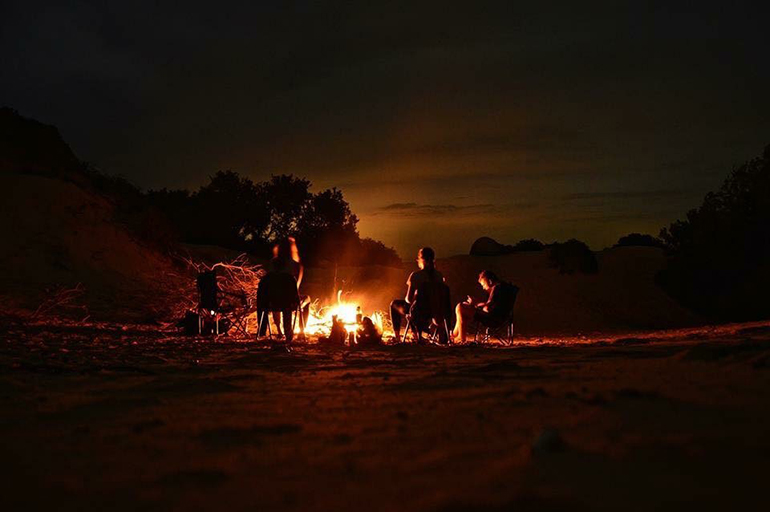
    Feature Image: Allison and her friends hang out around a fire in Australia. Photo by Ryan Hubbard.

    On my early morning walks in Buenos Aires, I loved watching the rising sun crawl over buildings. While working in Melbourne, I watched for ever-changing graffiti. Every day in Spain, I looked forward to my mid-morning snack of café con leche and chorizo sandwich.

    These are pieces of my life abroad I wish I could still experience. But beyond missing my new routines, what I miss the most are the human connections I made in those places. There’s nothing like a good laugh over a cup of coffee, or learning about a country’s troubled past through a local’s explanation of a mural that give simple things – like a latte or street art – more meaning.

    From chatting with local classmates to making friends through shared interests, meeting locals during your Greenheart Travel program can help you learn the language, culture and history of the country. (Plus, making friends is a lot of fun.)

    Couchsurfing
    Allison with friends she met through Couchsurfing.

    If it weren’t for locals, I wouldn’t have learned what Australians mean when they say esky, why Argentines walk around sipping tea from a gourd (mate!) or the reason why people say molt be instead of muy bien in some parts of Spain.

    So, how do you make connections when you’re in a new country and speaking a new language? At first, putting yourself out there might seem challenging. But, taking the initiative to make local connections has the potential to make any program – whether it’s a few weeks or a few months – more memorable.

    Here are a few of our favorite ways to meet people abroad:

    Language Exchanges

    Language exchanges are a great way to meet locals while improving your skills and helping them hone theirs! A language exchange is an event where language learners typically spend half the allotted time in one language and the other in another. Sounds perfect, right?

    Check social media sites like Facebook or ask your host family if they know of one near you. Linda Correll, a teach in Colombia alum, says she went twice a week to an exchange in her area called “Let’s Talk Pereira”. This event had an informal, conversational atmosphere and “ended up being a large part of my social life during my two years there,” she says.

    Even if you can’t find a language exchange in your area, try asking a coworker or neighbor for language help. For example, Kirt Smith, a teach in Thailand alum, says after he learned basic Thai he asked co-teachers for help reading and writing. “It’s a great ice-breaker and I gained a lot of Thai friends doing this,” he continues, “I found out that taking the time to learn more about the language is a fast-track method to earning a lot of respect among Thai people.”

    Use a Networking Application or Website

    Besides traditional social media outlets like Facebook and Instagram, there are many networking sites to help meet locals. For example, while living in Melbourne, I attended an event through the Welcome Dinner Project, an organization that connects establish Australians with newcomers. I met people of all social backgrounds and tried homemade dishes from each part of the world represented at the dinner.

    If you’re not in Australia, check for similar organizations in your destination and try the following websites:

    Couchsurfing is best known for connecting travelers with free places to stay around the world, but many people don’t realize it’s also a great social tool. Just as some use the site to find locals to stay with, you can reach out to locals that you have common interests with. Many “hosts” (locals) often plan social events for locals and travelers to meet. I connected with a Japanese man in Tokyo, and we spent an afternoon exploring the Akihabara area.

    Meetup.com is a site that connects people based on shared interests. Around the world, people host “meet ups” to practice capoeira, learn to cook, discuss literature with a book club – or anything else you could think of! This is a great way to continue a hobby while you’re abroad, or even start a new one.

    Cambodia
    Allison participated in a cooking class while in Siem Reap, Cambodia.

    For foodies, there are two sites – Eatwith.com and Bonappetour.com – that give you the opportunity to have chefs cook for you – right from their home! Because other people join the events, you’ll meet lots of folks as interested in trying new cuisines as you.

    Join Sports Teams

    No matter where you are in the world, sports are an important part of life. They may differ – though soccer seems to have a stronghold throughout the globe – but people love to be active. Marissa Ruxin, a teach in Colombia alum, joined ultimate Frisbee teams in both places she taught in Colombia. She had a blast, and made friends!

    Teach in Colombia
    Marissa Ruxin and her frisbee team in Colombia.

    Besides practicing his Thai, Smith also learned the game of takraw (ตะกร้อ) by asking local men in the park to teach him. “The men were extremely welcoming and thought it was cool having a foreigner want to learn how to play. It quickly became a regular activity and we would often end up eating dinner together at the night market afterwards,” he says.

    Ask Co-workers, Teachers and Host Families for Recommendations

    One of the best ways to meet people is through your established networks. With Greenheart Travel programs, you’ll be with host families (and in some cases also have networks at schools) to ask for recommendations.

    They will have a much more in-depth knowledge of the city and its surroundings, so whatever activity you might be interested in doing use them as a resource.

    Buenos Aires
    Some of Allison’s friends at Buenos Aires’s Gay Pride parade.

    While I was studying in Buenos Aires, I asked my classmates if they knew anything about a conference I had heard about – the Encuentro Nacional de Mujeres, an annual women’s rights conference. As it turned out, one of my classmate’s sisters was going, and he connected me with her. Two weeks later I was on a 30-hour bus ride from Buenos Aires to Posadas, Misiones with 40 other woman. As I’m sure you can guess, I learned a lot of new Spanish and made many lasting friendships.

    It never hurts to ask for connections – you never know where it might lead.

    Lastly, Remember to Get out of Your Comfort Zone

    Speaking with locals can be intimidating. You might be nervous about your shaky French or suddenly blank on the Japanese word for restaurant when you’re asking a classmate for a recommendation. Maybe you’d rather sleep in on a Saturday than go on a rigorous morning hike, or perhaps you’re not in the mood to try the local delicacy in your town in Myanmar with your co-teacher.

    Uluru Australia
    Allison traveled through the Australia outback with new friends.

    Remember that starting a conversation or going to a new place for the first time might seem like a lot of effort, but the payoff of great experiences and good friends makes it worth it. I’ve had some of biggest laughs and greatest memories at events I almost didn’t attend.


    Ready to put your fears aside and see what happens when you get out of your comfort zone? Contact us!

  • Meet the Greenheart Travel Team: Kara Menini

    Meet the Greenheart Travel Team: Kara Menini

    Meet Kara Menini, Greenheart Travel’s Teach, TEFL and Work Programs Manager!

    Kara’s first trip abroad was a 10-day trip to France with her high school French class, and ever since then has had an insatiable desire to see the world. Kara graduated from the University of Illinois at Chicago in 2011 with a Bachelor’s in English non-fiction writing and a minor in French.

    In November of 2013, Kara got on a plane bound for Thailand to teach English on Greenheart’s Teach in Thailand program. There, she taught at an all-boys boarding school in the Nakhon Pathom province, learned how to ride side-saddle on a motorbike, and discovered the ever delicious khao mun gai. When Kara is not daydreaming about Thailand, she enjoys cooking, binge-watching Netflix, rock climbing and dabbling in photography.

    Read on to learn a bit more about Kara’s favorite international city, a special travel “aha” moment and why she loves working at Greenheart Travel.

    A foreign English teacher with students in Thailand.
    Kara with some of her students in Thailand.

    Q: Where did you grow up?

    I grew up in Naperville which is a suburb of Chicago. I had a pretty typical suburban upbringing – I played volleyball in school, went on a cruise to Mexico once, did a school trip to France in high school, my first apartment was a less than a mile from my parents’ house – nothing exciting. You know, the usual.

    Q: What is your favorite international city?

    I haven’t spent too much time there, but right now I would have to say Mexico City. I had only been to touristy areas of Mexico so I had written it off as an interesting destination until I had the opportunity to go there for our retreat last year. Mexico City was a very pleasant surprise – it’s absolutely massive, the food is amazing and it’s so diverse and vibrant. It reminds me a lot of Chicago and I think that’s why I loved it so much.

    Q: What is your secret talent?

    I can lace my toes like most people can lace their fingers together. I didn’t realize it was weird until my friend and I were watching TV in 7th grade and I started doing it without thinking. Her reaction of “AHH what are you doing that’s weird and gross” made me realize that 1. not everyone can do this and 2. it is really weird.

    Q: If you could eat only one country’s style of food for the rest of your life, which would it be?

    Thai food, definitely! The food is a delicious balance of sweet, spicy, sour and salty and the different regions all have their own specialties so I feel like there’s enough variety to keep me happy for the next few decades.

    Q: Complete the sentence: When I grow up I want to __________.

    Travel forever, all the time and get paid to do it but don’t actually do any work.

    TEFL-certification-in-Leon,-Nicaragua

    Q: What is your favorite travel “AHA! moment” or memory?

    It was the morning after I arrived in Hua Hin for my orientation in Thailand. I ended up not sharing a room at the hostel and woke up promptly at 5am thanks to jetlag and felt too restless to just lie in bed and watch a movie until everyone else woke up. I initially opened the door to the small balcony in my room to check how hot it was already, but the hazy early morning horizon drew me to the edge of the patio. I leaned on the thick concrete ledge; forearms laid flat, one in front of the other, gazed at the seemingly limitless number of palm trees with homes and streets sprinkled in between and fully realized I had actually moved literally half-way across the world. It was a moment of tranquility, awe and pride – an emotion I’ve been chasing ever since.

    An English teacher with students in Thailand.
    Kara with some of her students in Thailand.

    Q: What is your favorite thing about working for Greenheart Travel?

    I had the opportunity to have an amazing, life changing experience teaching in Thailand and I get to help others do the same every day. I love that I get to work for an organization whose mission I believe in and have the opportunity to spread.

  • You’re TEFL Certified – Now What?! Six Steps to Help You Get Started on Finding Your First Teaching Job

    You’re TEFL Certified – Now What?! Six Steps to Help You Get Started on Finding Your First Teaching Job

    You did it! You’re done with 11 weeks of TEFL certification coursework and you have logged over 20 hours of student teaching. Over the last few weeks of the course, you’ve caught yourself daydreaming more and more about where you could teach, who your students will be and how much your life is going to change once you get on that first plane. But first, you need to send out some applications – where do you start?

    Step #1. Get Familiar with Your Job Search Guidance Manual!

    The lifetime job placement assistance is a great place to start for alumni of the Greenheart Travel Online TEFL Certification Course. You receive your job search guidance manual after you’ve started the course and it’s a good idea to read through some of the important information like: how to format your resume and cover letter for ESL jobs, how to contact prospective employers, and what to expect for an interview. But, by far the most useful section of the manual is the country by country job profile.

    Stencils spelling teach over a world map.

    The job profile separates the global teaching market into four section overviews:

    • Europe
    • Latin America
    • The Caribbean
    • Asia, The Middle East and Northern Africa

    Each one of those sections offers an array of information about each individual country’s teaching market. From general information about the country and what you can expect to make, to advice on obtaining a visa and a list of preferred programs and job websites – these country profiles are ideal whether you’re unsure about where you want to teach or if you’ve already settled on where you want to go.

    Step #2. Talk to your advisor.

    Graduating TESOL class in Hua Hin, Thailand.

    The job search manual can be a bit overwhelming with all the information it offers, and sometimes it’s easier to have someone walk you through your questions. Your advisor has taught or lived abroad themselves, and is available to talk over the phone, Skype or email to help you decide which country will be the best fit for what you want to accomplish abroad.

    Or, if you know where’d you’d like to end up, your advisor is a great resource to talk through the little details; the pros and cons of public and private school positions, salary versus cost of living, as well as the culture and what challenges you can expect to run into as you adjust to life in that country.

    Step #3. Join all the Facebook groups.

    All Greenheart Travel TEFL alumni are able (and encouraged) to join as many country-specific Facebook groups as they’d like. Each Facebook group is filled with hundreds of alumni who are currently teaching English and are more than willing to offer advice about living and working abroad, or let prospective teachers like you know about job openings at their schools. Once you’ve accepted a job, the Facebook group will be a great way to connect with teachers before you arrive and arrange some meet-ups!

    Some of Greenheart Travel’s most popular Facebook groups are as follows:

    Step #4. Apply for those jobs.

    You’ve finished your resume, talked to your advisor, narrowed down your job search to one or two countries, joined the necessary Facebook groups, and had a few private message conversations with alumni who are already teaching where you’d like to be. You have a strong grasp on the job markets of these countries, and you have a solid idea of how much you should expect to get paid. So, now you can start filling out those applications!

    Depending on whether you apply for jobs directly or with a structured program, the application process could take anywhere between a few weeks to a few months. But, with some persistence and some patience, you’ll soon have multiple opportunities to chose from.

    Step #5. Figure out the logistics.

    Packing a suitcase for a Greenheart Travel program.

    Depending on where you’re going, your arrival logistics and housing may already be set up for you. But, if they’re not, you’ll need to plan for your arrival.

    How will you get from the airport into town? Can you find an apartment ahead of time, or will you need to book a hostel first and then hunt for apartments in person? Is there an orientation to help you get acclimated to the country, or do you start working right away? Google can only get you so far, so don’t forget to reach out to your advisor and the Facebook groups again for more tips and advice.

    Step #6. Get on that plane!

    Buy a ticket, throw yourself a going-away party, and pack your bags because you’re only a plane ride away from your new life as an English teacher abroad! There may be some bumps in the road when you first arrive, but once you get the hang of your school and your new job, you’ll find that this was one of the best decisions you’ve ever made.

    Oh, wait. You still need your TEFL certification? Don’t worry! We’ve got you covered!

  • How to Find a Quality TEFL Certification Course to Teach Abroad

    How to Find a Quality TEFL Certification Course to Teach Abroad

    Anyone who has made the big decision to pick up and move abroad to teach English has also had to decide what TEFL certification they should get to prepare for their new job.

    With a deluge of options in your face the second you hit “search” on Google, it’s hard to differentiate which one will be the best choice. It’s like not knowing the answer on a multiple-choice question: sometimes the best bet is to close your eyes and pick a random one because it’s better than not picking one at all, right?

    Not when it comes to picking a TEFL course.

    As program manager for Greenheart Travel’s TEFL courses, a question I hear again and again is:

    “I was interested in Greenheart Travel’s course but I did some research and found courses for half the price. Why would I spend more money for the same certification?”

    It’s a valid question. In short, it’s because although the certification you get at the end of any course may look the same, the quality of the course is definitely not. Not all TEFL courses are created equal.

    I know this to be true because I chose my TEFL course based on price alone before teaching abroad in Thailand.

    Reading About Teaching Does Not Actually Prepare You for the Classroom

    My cheap online TEFL course was $150 and I was sent 13 units. I basically read about teaching, emailed the company when I was done reading and they sent me a “final test” which I had 8 hours to complete. I had the 13 units on hand and pretty much copied and pasted my answers for the entire thing and then I got my certificate in the mail a few weeks later.

    Fast forward 6 months to my first week in the classroom in Thailand where I was an unprepared, unqualified and a frightened teacher. I had no idea how to manage my class, how to interact with 40+ students at once or how to deal with a lesson that was completely over my students’ heads. I cried and contemplated leaving constantly.

    A foreign English teacher with students in Thailand.
    Kara with some of her students in Thailand.

    Did this discount TEFL course get me the certification I needed to get a job overseas? Yea.

    Did it actually give me the resources and knowledge to step into a classroom and be a successful teacher? Not even a little.

    One of the worst feelings I had while teaching abroad was not homesickness, but the sense that I was failing my students because I didn’t feel like I knew what I was doing.

    Teaching is really hard, and just because you are an expert at speaking English doesn’t mean you know diddly squat about teaching it. A lot of people look at a TEFL certification as an inconvenience more than anything.

    The first step is to look at a TEFL certificate in a different light: not as a hindrance to your timeline or bank account but as a necessity to be a successful teacher. You owe it to yourself and, more importantly, your future students deserve to have a competent English teacher in their classroom.

    Here are a few things to keep in mind when evaluating a TEFL course:

    Greenheart Travel alumni graduating from their TEFL course in Costa Rica.

    Make sure the course meets international accreditation standards. 

    These standards ensure the course is legitimate and come from accrediting bodies like:

    • TQUK
    • ACCET
    • ALTE
    • English Profile
    • University of Cambridge
    • Trinity College

    Be wary of courses that state they are “internationally recognized” or “independently accredited” as opposed to internationally accredited by one of the aforementioned accrediting bodies.

    Research how the course is taught.

    Adult students in a classroom in Argentina.
    Students taking the TEFL course in Argentina.

    Cheaper online courses often do not come with any instruction or they offer “tutors” to grade your work. A quality online course will actually be taught by an actual educator.

    For in-country TEFL certification programs it is important to make sure it is accredited, has class sizes that offer personal attention and gives you a chance for practicum experience.

    Confirm that the course meets the requirements for the country or program where you will be teaching.

    Some countries don’t require teachers to have any sort of certification, and some countries (like South Korea) require at least a 120-hour class as well as 20 hours of practicum. Most online courses do not offer any practicum.

    However, Greenheart Travel’s courses exceed the above standards and they are fully accredited. As an added bonus, the online TEFL course is taught by a professor who you get to interact with (virtually) and offers 20 hours of practicum that will set you apart from other teachers applying to teach abroad.

    Check if the company offers alumni support and job search support.

    Greenheart Travel classmates in Nicaragua
    TEFL students hang out during their course in Leon, Nicaragua.

    Does the company have the resources or knowledge of how to get a teaching position in different countries? Will they offer resume-building resources or a network for you to use?


    There is a TON of information out there and, while it might seem easier to play TEFL-roulette and buy the next course that comes up at the cheapest price, resist this urge to commit to anything without doing your research. Investing your time and finding the right course will make your transition into teaching English a lot smoother in the long run. Not to mention, help you make a greater impact in the global classroom.

  • How Trial and Error, Pep Talks and My Online TEFL Course Helped Me Become a Confident English Teacher

    How Trial and Error, Pep Talks and My Online TEFL Course Helped Me Become a Confident English Teacher

    Like a cliché movie scene, I walked into my first class wringing my hands and trying to keep myself from hyperventilating. My heart was pumping at what seemed like maximum capacity, and I started pacing back and forth in front of the whiteboard as I waited to meet the first of many Thai students I would slowly get to know throughout my time teaching English in Thailand at King’s College.

    There wasn’t an air conditioner in the room, it was 8:00 AM and already 90 degrees, and I was dressed conservatively (read; covered head to toe), so my nerves were really starting to show in my sweaty, crinkled, cotton clothes. Before arriving to teach English, I had taken a cheap TEFL course that taught me next to nothing—which became glaringly clear at this moment in my life.

    An empty classroom in Thailand.
    An empty classroom of Kara’s school in Thailand.

    Fast-forward three years later…

    Despite my experience teaching in a classroom halfway around the world, those same nerves struck again as I prepared for my first tutoring lesson back home in Chicago.

    Unlike the first TEFL course I took prior to teaching in Thailand, the online TEFL certification course I’m currently taking requires that I log 20 hours of teaching, tutoring and/or observing real ESL students in order to receive my completed certification.

    The student affairs department provided me with a list of organizations past students had volunteered with in my city, and I reached out to a local community center. I was soon matched with a middle-aged, Chinese woman who was at about a pre-beginner level of English proficiency.

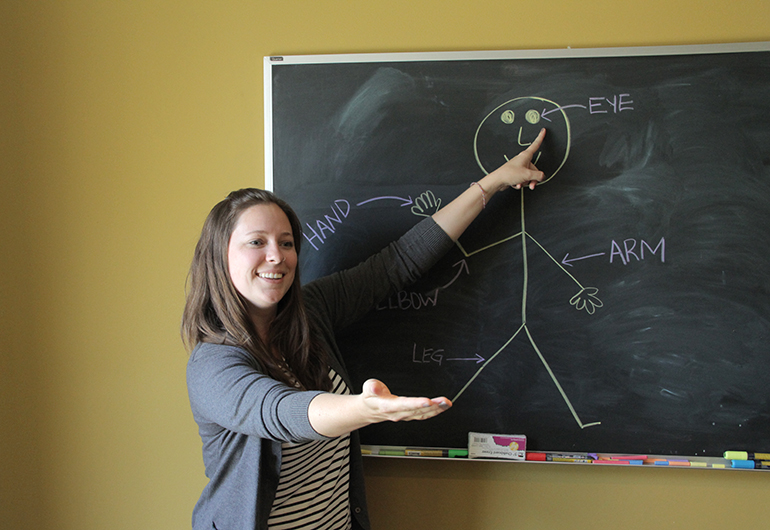
    A teacher writing on a chalkboard.
    Kara writing on a chalkboard to prepare for an English lesson.

    The night before my first session with her, I sat and stared at my computer screen, Googling lesson plans and looking over my course materials trying to come up with an intro lesson. Anxiety and doubt came rushing back in flashbacks of my first day of teaching in Thailand.

    • How much did she study with the other tutor?
    • What if I don’t do a good job?
    • What if I just call in sick tomorrow and then blow off practicum forever and never get my certification?  

    But, then I realized how silly I was beingI had submitted no less than five full lesson plans already as part of my Online TEFL course homework, and the feedback from my instructor was always positive and encouraging.

    I also realized that although my first memories of teaching in Thailand weren’t necessarily my favorite, I remembered that it got easier. And the first day of trying anything new is always scary.

    A teacher holding up English flashcards.
    Kara holding up flashcards she made for her student.

    Putting My TEFL Lessons into Practice

    I decided against calling in sick, and the next day I met my student, Qixia. The first two hours we had together flew by. I had Qixia teach me some Chinese words, and we had a few miscommunication issues as well as a few laughs.

    Because of the TEFL course work, I was 100% more prepared for my time with Qixia than I was for my Thai students, and I’m actually looking forward to more lessons with her. Taking a quality TEFL certification course with a student teaching practicum is one of the best things you can do to prepare yourself as a teacher abroad.

    No matter how much preparation you’ve had, going into a new class is intimidating. You don’t know the students’ learning style, you likely won’t even know their level of English, the students won’t know you, and the first couple of lessons might be a little awkward. But, any new job comes with it’s first day jitters. The good news is that they will eventually go away.

    Along with the day-to-day teaching experience, and trial and error, pep talks always help.

    A hallway of a school in Thailand.
    A hallway of a school in Thailand.

    Here are 5 mantras to give you confidence in the classroom:

    1. You can do it!

    You’ve done the research, you’ve taken the TEFL course, you’ve done everything you can do to prepare for this experience, and you are going to be an amazing teacher! The first couple of weeks will be challenging, and you probably won’t give the best lessons. But, you have to start somewhere, and what better place to start than right where you are?

    2. Fake it ‘til you make it!

    Seriously, if I’ve learned one thing from teaching abroad and working in the professional world back home, it’s that no one knows what they’re doing at first, no matter how confident they may seem. Stop comparing yourself to other people. Put that energy into figuring out what the heck you should do for your English classes instead!

    3. It WILL get easier!

    Piggy-backing on the second mantra, you will start to get the hang of teaching. As you get to know your students, your co-teachers and what’s expected of you, your job will start to feel more comfortable and familiar. You’ll become more efficient with lesson planning and therefore spend less time doing it. You’ll become more familiar with your town and where things are, and you’ll start to make a routine of your life abroad.

    4. You won’t regret it!

    But, I guarantee what you will regret is not doing it. Sometimes your nerves get the best of you, and you find yourself deciding between quitting and not quitting. Sure, quitting is usually easier, but you will probably find yourself wondering “what if?” eventually, and that’s a harder weight to bear than stumbling awkwardly through a couple of lessons.

    A foreign English teacher with students in Thailand.
    Kara with some of her students in Thailand.

    One of the reasons you probably decided to get TEFL certified and teach English abroad was to get out of your comfort zone and grow as a person, and neither of those goals will be attained without some struggle.

    The struggle will be real, but it will be worth it—please see mantra three and then re-read mantra one. You got this!

  • Getting TEFL Certified, a Second Time Around

    Getting TEFL Certified, a Second Time Around

    When I think of my semester teaching English in Thailand a few years ago, there are a few solid memories that come to mind: literally pinching myself while looking out the window of my hostel the first morning I woke up in Thailand, sleeping on the street for 12 hours to get a glimpse of the King, traveling cross-country on a rickety overnight train, and all the wonderful people I met throughout those five months. Unfortunately, the other memory that always sticks out was my complete lack of preparedness to properly teach my students.

    Lost in My Search for a TEFL Course the First Time Around

    I was a little lost in my search of a TEFL certification course when I was applying to teach abroad, and didn’t have the resource of an experienced expat friend to ask for advice. After being overwhelmed by the sheer amount of courses available online, and being confused by the drastically different fees, I settled on a $200 online course. It wasn’t the cheapest option I had found, and it certainly wasn’t the most expensive. So, I thought it would be as good as any other course I could find.

    The course gave me a year to take the test. Eight months later, after reading all 13 units, I regurgitated that information on the test and BOOM! I was TEFL certified.

    Except that I wasn’t, really.

    I had the piece of paper I needed to get the job, but I definitely didn’t have the skills I needed to be an effective teacher. It was like I read “Law for Dummies” and thought I could waltz into a courtroom and win a criminal case.

    English teachers in Thailand.
    Kara and some of her co-teachers in Thailand.

    The Challenges I Faced as an English Teacher in Thailand

    Throughout my semester as a teacher in Thailand, the list of things I wish I knew kept getting longer, and the list of things I thought I knew was shrinking a little every day.

    My biggest challenge was not knowing how to handle my students in most capacities, but specifically I had troubles with:

    I’ve come to realize that these challenges all stemmed from the fact that I didn’t have any previous hands-on training or practice prior to my first day of teaching.

    The other challenge I hadn’t anticipated was dealing with burnout and not taking good care of myself mentally. For the first two months, I was bringing work home almost every night and traveling most weekends, so I never really gave myself a break or time to relax. I had expected to work a full-time job but in reality, I was probably working more like 50+ hours a week which resulted in a chronically tired, frustrated and cranky teacher most mornings.

    English teachers with a group of students
    Kara with a group of students in Thailand.

    Why I Decided to Get TEFL Certified, Again

    1. I decided to take Greenheart Travel’s 170-Hour Online TEFL Course with 20 in-class hours for a few different reasons. First, I would love to know all of Greenheart Travel’s programs like the Teach in Thailand program. We make a conscious effort to be as transparent as possible for teachers, volunteers and students about what they can expect from the program they apply to. Not every challenge can be anticipated ahead of time, but having gone through the application process and lived in Thailand for six months, I have the opportunity to be open and honest with teachers about my experience – I want to do the same for this course and my future TEFL students.

    2. Second, because I took such a basic TEFL course in the past, I am very curious to compare the two courses as they will undoubtedly be vastly different experiences. One of the decisions for many teachers who need to take a TEFL certification course is to discern between 20 different options as there are so many courses available online. Due to the sheer amount of options and overwhelming information, that decision usually comes down to the simplest difference – price. Price is an important factor in the decision, but because of the gap in quality, it shouldn’t hold the most weight.

    3. Third, I want to walk the walk. Factually, I know this course is designed for those who work or go to school full-time, and I also know it’s fairly intensive for an online course, so what does that weekly schedule actually look and feel like? I will be doing all of my work outside of my time at Greenheart Travel’s office as, presumably, my students don’t have the luxury of doing outside work at their jobs or during their other classes.

    An English teacher with students in Thailand.
    Kara with some of her students in Thailand.

    The Perks of Greenheart Travel’s Online TEFL Course

    Since the course offered by Greenheart Travel is much more thorough than the course I took three years ago, there are quite a few differences between the two. The main differences with this course are:

    • It’s not self-guided. Even though this course is fully online, I still have weekly reading, weekly group discussions to participate in, and weekly homework assignments. Each of these assignments is due on a specific date and my grade will be docked each day it’s late.
    • It includes live practice teaching. I haven’t started the practicum portion yet, but I have reached out to a few non-profit organization and neighborhood community centers asking if I could volunteer. In order to receive my completed certificate, I will need to observe an ESL teacher in a classroom for six hours, and the remaining 14 hours I will need to actively teach real students learning English.
    • It’s a community. I have an instructor and 19 peers in my course. My instructor will be providing me with personal feedback on my weekly assignments, and is available by email and weekly “office hours” to ask questions or ask for feedback on certain assignments I may not understand. My peers are active in the discussion boards, and I’ve already gotten to know a few of them, where they hope to teach and why they decided to take the plunge and get TEFL certified as well.
    An English teacher at a desk in Thailand.
    Kara working at her school in Thailand.

    The course I took before I taught in Thailand wasn’t all bad; it gave me some insight into parts of speech and general grammar along with some lesson planning ideas. But, I didn’t gain any of the practical experience that’s so important for a new teacher. Even though I don’t have any plans to teach abroad again, I do still hope to learn the skills I was missing in Thailand by taking a TEFL certification course a second time around. And, I’m genuinely excited to start the practicum at a local organization here in Chicago!

    Teaching is not something that’s only done in a classroom, and I think what I learn during this more robust online course will be useful in both my professional life as a program manager working with teachers from all walks of life, as well as in my personal life.

    Here’s to the next 11 weeks!


    Are you busy trying to balance work, classes or both? Greenheart Travel’s online TEFL course fits with your schedule. 

  • Where to Make Money Teaching Abroad

    Where to Make Money Teaching Abroad

    Teaching abroad is a life-changing, transformative experience. It provides the opportunity to travel, learn a foreign language, and immerse yourself in an unfamiliar culture. However, it can often be a break-even sort of deal: you’ll make enough money to cover your living expenses, but not enough to send money back home. Does this mean it’s impossible if you have student loans or are looking to save some money while overseas? Absolutely not! Here are some of the best destinations to experience life overseas while making good money.

    South Korea

    Sightseeing in lovely South Korea!
    Sightseeing in lovely South Korea!

    The English teaching market in South Korea is currently the strongest is the world, and in this stable, wealthy country, foreign English teachers are very well-paid. In the national public school program, your flights are reimbursed, and your furnished housing is paid for, so you monthly salary of $1,600 to $2,200 USD (tax-deferred) is pretty much all gravy. Frugal teachers on this program have managed to save up to $15,000 during the course of their one-year contract. You’ll also get about 30 days of paid vacation time, so you won’t miss out on exploring South Korea!

    China

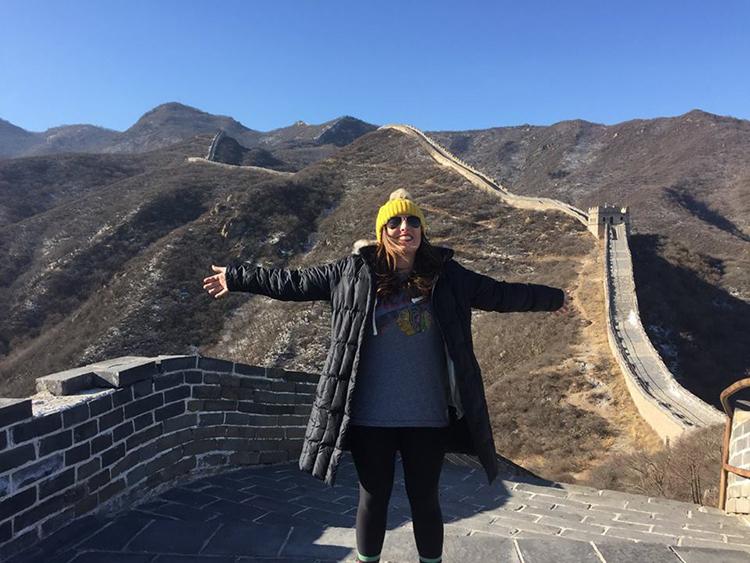
    Greenheart International VP Daniel Ebert on the Great Wall
    Greenheart International VP Daniel Ebert on the Great Wall

    With a population of over a billion and an ever-increasing presence on the world economic stage, China’s ESL market is exploding. In the Teach English in China program, teachers get flight reimbursements, free housing, and a monthly salary of $1,100-$1,570, plus contract completion bonuses.

    Japan

    Torii gate at the Hakone Shrine
    Torii gate at the Hakone Shrine

    Legendarily beautiful Japan has the wealth to support a thriving and high-paying ESL market. Teachers in both public and private schools are able to save hundreds of dollars a month. However, due to its high popularity as a destination for foreign teachers, it’s one of the most competitive markets in the world. In order to set yourself apart from the crowd, it’s important to have a high-quality TEFL certification.

    Vietnam

    sara vietnam
    Program Manager Sara Dorsey in Ho Chi Minh City

    Still fairly new on the ESL scene, Vietnam is a great destination for people looking for something slightly off the beaten path. In the Teach in Vietnam program, teachers earn $1,000 – $1,500 USD per month, while enjoying a very low cost of living. Placements are in public schools, so in addition to making a great salary, you’ll be opening doors for kids whose parents can’t afford to send them to expensive language schools. It’s a great opportunity to make money while feeling like you’re doing some good in the world.

    Your student loans don’t have to keep you home! Contact us to start your profitable and enriching adventure abroad!

  • Why I Wish I Took a TEFL Course

    Why I Wish I Took a TEFL Course

    In short: teaching is hard. Yes, you know English really, really well. But do you know how to teach the conjugations of irregular past tense verbs? Do you know how to explain the difference between “I will go” and “I’m going to go”? Do you know how to control a group of 35 (or, in my case, 55) children who don’t speak a word of English and think your class is an excuse to goof off?

    I did not.

    Trial and Error under Pre-teen Scrutiny

    On my first day at my teaching job in Spain, I walked in to a class of Spanish 7th graders, most of whom had never met a foreigner before. They had next to no English skills and had never had an English teacher who really spoke English. They were shocked enough by the color of my hair and my super-weird clothes, and then I opened my mouth.

    I introduced myself, told them about where I was from and how I would be working with them over the course of the school year. They stared blankly at me. One kid pulled out a cell phone. A couple in the back started whispering to each other. They didn’t understand a word I was saying, and I was losing them.

    I tried to shift gears. I explained the game I had planned.

    Blank stares.

    The teacher tried to help me, explaining the game in Spanish and trying to motivate the kids to participate. But it basically failed, because I had never done it before. I had no experience with kids, or with leading a class, and I didn’t foresee all of the little problems that would arise. I couldn’t have, because I had absolutely no training.

    Think they look sweet and innocent? Try getting them to sit still and study present tense.

    High-Level Grammar Woes

    Working with the older kids at that high school, I realized that I didn’t really know why English sentences are structured the way they are. They were studying for their college entrance exams, and I was not nearly as helpful as I could have been. I didn’t know how to describe the various uses of the word “get,” and while I understand how to use the future perfect in everyday speech, I had no clue how to explain it.

    Having never been taught how to make a lesson plan, I spent most of my free time scouring the internet for ideas. I didn’t know how to structure a class effectively, or how to deal with multiple levels in one group, or how to manage rowdy students. I would be awake late at night, landing on the same websites I’d ruled out hours ago, desperately looking for ideas. It was stressful and demoralizing.

    For most of my first year, I was just not a truly effective teacher. It took a long time (and a lot of frustration, tears, and stress) to get good at it.

    Classroom Management aka Organizing Anarchy

    After two years in Spain, I took a contract in Thailand. I thought I had been trained on the job, that I would breeze through the new position. Then I found out that my kids were second graders, and that there were 55 of them in a class. FIFTY-FIVE. They spoke almost no English, and because I looked different and wasn’t dressed in the rigid uniform of their regular teachers, they didn’t take me seriously at all. Teacher Savannah’s class was party time. Two boys on opposite sides of the class would hurl erasers at each other. One kid in the back would occasionally stand up and just start doing gymnastics. One of them tried to stab his neighbor with a pencil.

    thai kids
    This was actually one of their calmer days.

    It was utter madness, and I didn’t know how to handle it. My classes in Spain, for all their problems, had been small, and I had been able to yell and them in Spanish if things really got rough. But 55 kids who only speak Thai? I was helpless.

    Luckily, my school had a great training program, and the veteran teachers were extremely helpful. By the end of my first semester, I had those kids behaving themselves and learning a lot. But the first few weeks were very, very hard. I spent my time feeling stressed, confused, and inept. My lack of knowledge and training made my introduction to Thailand much less happy than it could have been.

    When you move abroad to teach, you’ve got a lot going on in addition to teaching. You’re trying to learn a new language. You’re experiencing culture shock. You’re homesick. You’re making new friends and have new coworkers and a new house. You’re eager to explore this new country and don’t want to spend hours outside of work planning for work.

    The quieting magic of Goodnight Moon
    The quieting magic of Goodnight Moon

    All of this is manageable, but it can start to feel pretty crushing if you’re spending your days feeling unsuccessful at your job. It’s just an extra layer of stress that can color the whole experience. Preparing yourself with a TEFL course makes that transition so much smoother. You’ll know how to manage a class, and already have had some practice and feedback on it. You’ll understand English grammar from a learner’s perspective, and know how to explain this complicated language to a newcomer. You’ll have learned how to plan an effective lesson and how to cope if a lesson plan fails. Trust me when I say that these are things you do not want to learn while 55 Thai children throw paper airplanes at you. Here are 5 more reasons you should get TEFL certified, even when it’s not required.

    A TEFL certification course can be fit into your school or work life through online training, or it can be another leg of your adventure. Greenheart Travel offers a course online that includes the in-class, hands on student teaching that is so important in learning how to become an effective teacher. There are also in-person courses in ChicagoCosta RicaNicaragua, and Spain. With a TEFL under your belt, you won’t find yourself before a class of blankly staring Spanish teenagers, or a hoard of truly anarchic Thai kids. Do it for your sanity.