Author: Samuel Tew

  • How One Teen Language Camp Alum Relocated to Japan

    How One Teen Language Camp Alum Relocated to Japan

    UK native and Greenheart Travel alum Tabby traveled to Japan on our teen language camp in Fukuoka in Summer 2018 and again in Summer 2019. Getting to know Fukuoka during her program was a great way to prepare for her current role, being a gap year student in Japan! We asked Tabby about her daily life in Japan, how her language camps impacted her, what she plans on doing next, and any advice she has for future students.

    Making Takoyaki during the culture class on Saturdays during language camp. Courtesy of Tabby.

    Is there any particular experience or something you learned on your language programs that inspired you to continue learning Japanese? What did you learn in those programs that you took with you?

    I always knew I was going to carry on studying Japanese beyond the language camps, but going to these language camps gave me an awesome insight into what it is like to study at a Japanese Language School in Japan. It taught me about Japan in the way I needed before I moved here, about making friends, homework load, how the lessons work etc. Obviously living in Japan is different from being in Japan for a month or less for tourism. Due to this reason I am so glad I was able to experience Japan beforehand, I got to know the stores to go for certain things in preparation for when I hoped to move here, I also had an excuse to spend way too much money on restaurant food and various trinkets which isn’t something that I can do now that I live here and still need a job. The area of Fukuoka had everything I needed in a small and convenient city and it was a great starting point for getting to know Japan since it is a very foreigner friendly city and easy to navigate while having all the modern part of Japan and relevant stores like Yodabashi Camera and Daiso it also had several traditional parts like the beautiful temples and shrines and izakaya along the river. It is such a wonderful starting place. So, since I need to learn Japanese fluently in order to enter and study at  Bunka Gakuen, I decided to save up and spend my gap year in Japan learning a language I love in order to enter the university I want to go to. I don’t usually love languages, I’ve tried French, German, Mandarin and Latin but I seemed to detest all of them but I found an unexpected love for the Japanese language which I am grateful for to this day. The camps definitely set me up very well for the future and I appreciate them being available.

    Sanmon, part of a Temple in Gion. Courtesy of Tabby.

    So you are doing a gap year in Japan to study at a Japanese language school? What inspired you to do that?

    I had a friend who joined my school when I was 10 who was half Japanese, she introduced me to Japan through her personal possessions and the snacks she ate. Over time I became intrigued by this whole new world of different things and from there I had always wanted to visit Japan. I’ve also wanted to study fashion design beyond school for a while now, maybe 4 years or more, and after doing a lifetime worth of research I found out about Bunka Gakuen (a fashion design college in Tokyo) about 3 years ago and I’ve had my mind set ever since. When I turned 16, not long after realising my dream for the future, I found out about Greenheart and a Japanese summer camp they offered. I was very close to the closing date for applications but we managed to get everything in on time and soon it was time to go. I had initially wanted to be with a host family but since I was late in applying I had to go with the dorms which was one of the best decisions I made. It was surreal, I was finally in Japan after 6 years of wishing to go. At first I was disappointed that I couldn’t go to Tokyo because of my Japanese level but Fukuoka was perfect and ever since I arrived there it has always been a special place.

    Could you walk us through a typical “day in the life” for you right now?

    A typical day in my life would consist of waking up at 5:00am, putting my rice in the rice cooker in order to cook for breakfast. While the rice cooks I usually go to for a morning walk and buy any food that is needed or that I am running out of, since food in Japan isn’t packed with preservatives I have to go grocery shopping several times a week. Then I come back and cook and eat breakfast followed by hours of studying or drawing art. I then have lunch just before Japanese Language classes start before 1:40pm. After 4 hours of classes finish at 5:30pm I cook supper, do more studying or drawing then wash my dishes and prepare for the next day. I usually make sure I only go out on weekends to make sure I am 100% focused on my studies and making sure I have all my homework done and I usually pre-prepare for the lesson so that I fully understand the grammar. I don’t have a part time job because my Japanese isn’t good enough yet but luckily I had saved up enough to last a whole year without earning any money.

    Tell us about the application process to Bunka Gakuen? What have  you learned about the process of applying to a university in Japan?

    I am not completely sure of the application process for Bunka Gakuen but I know that there is a lot of paperwork like there always is in Japan. It is the same application process for Japanese Nationals and Foreign Nationals except we have to present an in date visa, passport and residence card and we also need to qualify for N2 level fluency in Japanese. After that it’s just paperwork about sponsors and education level. There will be an interview held completely in Japanese and is usually held with 1-2 other people hoping to enter.


    Natsu Matsuri summer Festival Lanterns. Courtesy of Tabby.

    What do you hope to study and why?

    As I said before, Bunka Gakuen is a fashion design university so I hope to study fashion design, mainly garment pattern design and garment construction in order to make new and interesting shapes and patterns in clothes. I hope to carry on in Japan beyond university and work in the fashion industry in Japan. I don’t plan on returning to England because Japan makes me a lot happier and unless anything bad happens, I want to stay here as long as possible.

    Any advice for future students who hope to study or live in Japan once they graduate high school?

    One piece of advice I have is you need to save at least double the amount of money you think you need. Moving in fees and getting to know places and shops is a lot more expensive than I expected. Especially if your Japanese level is low and you’re unable to get a part time job, you need money. I also suggest looking at starting in a sharehouse before moving to an apartment since sharehouses are usually furnished and cheaper, you also get to meet and talk to Japanese people which will help improve Japanese dramatically before going to bars and trying to find friends that way, it can be hard when your Japanese level isn’t great.


  • Greenheart Travel Celebrates Inspirational Women with a Sense of Adventure

    Greenheart Travel Celebrates Inspirational Women with a Sense of Adventure

    In honor of International Women’s Day, a global celebration highlighting the achievements of women and calling for gender parity, Greenheart Travel is showcasing a few of our solo women traveler alumni who inspire us to travel for a change.

    From stories of not letting expectations hold them back to taking chances, these women prove that it’s never too late to go after what you want.

    So in celebration of this holiday, we thank our Greenheart Travel women for their strength and sense of adventure.

    Varshini Kumar, Teach English in Thailand

    Teach English in Thailand alum Varshini Kumar had only one previous travel experience before taking the 9,000-mile journey from Chicago to Bangkok. Though she had the pestering worry she’d be lonely in her new home base, she knew not traveling would be worse. Lucky for her, she made it to Thailand and thrived.

    I’ve realized being a female solo traveler isn’t about proving to the world you can do it, but it’s about proving it to yourself. When I look back at the past six months and reflect on what I’ve accomplished, it gives me the assurance I can tackle any future obstacle that comes my way.

    Greenheart Traveler, Varshini Kumar, in a boat surrounded by lotuses.
    Varshini Kumar in a boat surrounded by lotuses.

    Susan LacCanne, Teach English in a Homestay Italy

    Susan LacCanne has “always had the desire to see the world.” So this year, she ditched the typical vacation and started a journey to experience Italian culture in-depth with Greenheart Travel’s Teach English in a Homestay in Italy program.

    The journey has just begun, but it’s already proved meaningful. She’s experienced things that “bring tears to your eyes,” like the Colosseum in Rome, and challenged herself. “As a woman, and an infrequent traveler, it is challenging to plan a day of touring in a foreign country alone. It is also very empowering, to know that you have navigated a new city on your own, figured out the train system, and ordered a coffee in Italian.”

    She’s also inspiring future travelers.

    I also feel this experience has set a wonderful example for my children. They know the world is much bigger than themselves, and they only need to be brave enough and open enough to go see it.

    Rome's Colosseum on a bright, sunny day. Photo by Greenheart Traveler Susan LacCanne.
    Rome’s Colosseum on a bright, sunny day. Photo by Susan LacCanne.

    Krystal Rogers, Teach English in Italy

    Teach English in Italy alum Krystal Rogers had one goal in 2016: travel more.

    And that year, she traveled. She flew to Turks and Caicos, Cancun and Vancouver – all by herself. Doing so gave her the confidence to try new activities, meet new people and even at times, “reinvent or find myself.” Fueled by her newfound gusto for solo travel, she took a chance to open a new boutique fitness studio in Dubai prior to teaching abroad in Italy, despite the fact her “gut instinct was to refuse the offer as it was very far, an unfamiliar culture, and a big risk.”

    Rogers is a great example of how pushing your limits just once can unravel future opportunities of growth and learning.

    I hope my travels have broken down stereotypes for some people. Women are capable of travelling safely by themselves, the Middle East can be a very welcoming place, and being solo is sometimes anything but lonely.

    Greenheart Traveler, Krystal Rogers, traveling solo in a desert.
    Krystal Rogers traveling solo in a desert.

    Dawn McGowen, Teach English in a Homestay Spain

    Dawn McGowen’s decision to quit her job and teach English in a homestay in Spain was a confusing one for friends and family. They couldn’t understand why she would choose to live with strangers in a foreign country.

    Yet, she followed her gut feeling and took the plunge because she knew “life is about more than just making money.” As it turns out, it was the right decision. Sometimes, while “sampling tapas along Las Ramblas in Spain or “climbing ancient temple ruins in Thailand” she wonders if she’s dreaming and hopes to “never wake up.”

    Nothing has impacted my life more positively than my solo traveling experiences, and I can only hope that there are many more to come.

    A photo of a castle in Spain by Greenheart Traveler, Dawn McGowen.
    A castle in Spain. Photo by Dawn McGowen.

    Everlecia Taylor, Teach English in a Homestay Spain

    Future Teach English in a Homestay in Spain alumna, Everlecia Taylor, has a birthday tradition: each year, she travels to a new country to celebrate. Last year, she took her first solo trip to Guatemala.

    Traveling for her brings unexpected friendships.

    I traveled to countries where I met people I may never see again, but the memories we created and recorded will last forever.

    People may say solo women travel is lonely, but Taylor proves it’s anything but.

    Greenheart Traveler, Everlecia Taylor, in front of a camera while traveling.
    Everlecia Taylor in front of a camera while traveling.

    What are you waiting for? You could be the next woman traveler to inspire us.

  • Black History Month: A Tribute to Black Travelers Past & Present

    Black History Month: A Tribute to Black Travelers Past & Present

    As February comes to a close, we finish another Black History Month in the United States – a celebration focusing on the history and achievements of African Americans. International travel, though not widely focused as focused on Black history, has been an important part of the journeys of many Black civil rights leaders and intellectuals throughout the last century. Though it was often out of refuge from racism (and in some cases, also homophobia) in their home country, their experiences abroad made great impacts on their work.

    For example, Martin Luther King Jr. traveled to India in 1959 (four years before his “I have a Dream” speech) for five weeks to meet with government officials, university students, Mahatma Gandhi’s family and friends and others in an exploration of non-violent resistance and advocacy. Renowned American thinker and writer James Baldwin spent time living in Paris, France while working on several books. The U.S.’s first Black Rhodes Scholar and writer Alain Locke wrote during the intellectual and cultural movement called the Harlem Renaissance in the 1920s and 1930s. He also spent time in Berlin, Germany, at various points in the 1910s in the 1920s during this city’s own cultural renaissance.

    Throughout the rest of the 20th century, other Black travelers like Victor Hugo Green (author of The Green Book), Betty Reid Soskin (the oldest active ranger in the National Park Service), Sophia Danenberg (the first Black woman to climb Everest in 2006), William Pinkney (the first Black man to sail around the world in 1992), and many others continued to travel domestically and internationally, overcoming discrimination and other barriers, and inspiring generations to come.

    In today’s globally-connected, social-media driven world, we get to watch travelers experience life abroad in real time. Harkening the phrase “Black History is Now,” we’d like to share just a few of our favorite contemporary Black travelers.

    This is by no means an exhaustive list, so we encourage you to continue researching on your own!

    Zim Flores

    An American traveler and entrepreneur founded the site Travel Noire in 2013 as a place for resource and inspiration for Black travelers.


    View this post on Instagram


    A post shared by Zim Flores (@zimism)

    Lola (Akinmade) Åkerström

    Though she isn’t from the U.S., we believe she still deserves a huge shoutout! Swedish Author, Travel Photographer and Speaker Lola (Akinmade) Åkerström won the 2018 Travel Photographer of the Year and wrote the international bestselling book LAGOM: The Swedish Secret of Living Well. She works frequently for National Geographic, BBC, CNN, The New York Times, and others.

    Evita Robinson

    Avid globetrotter Evita Robinson founded of Nomadness Travel Tribe in 2011. This online community is considered the “New Age, internationally based, digital Green Book.” Watch her TedTalk “Reclaiming the globe” here. “Black people do travel everywhere and we’re not a monolith,” she says in her talk.

    Jessica Nabongo

    In 2019, Detroit native Jessica Nabongo became the known first Black Woman of African descent to visit all 195 countries in the world.

    Further Reading, Resources, and Inspiration for Black travelers 

    As a non-profit organization whose mission is “Travel for a Change,” we admire these travelers for their advocacy, visibility, and enthusiasm for building bridges. We hope during this Black History Month you take time to research inspiring black travelers past and present.

  • An Exchange Student’s Tips for Things to Watch for on Busses in Sweden (Especially for Americans!)

    An Exchange Student’s Tips for Things to Watch for on Busses in Sweden (Especially for Americans!)

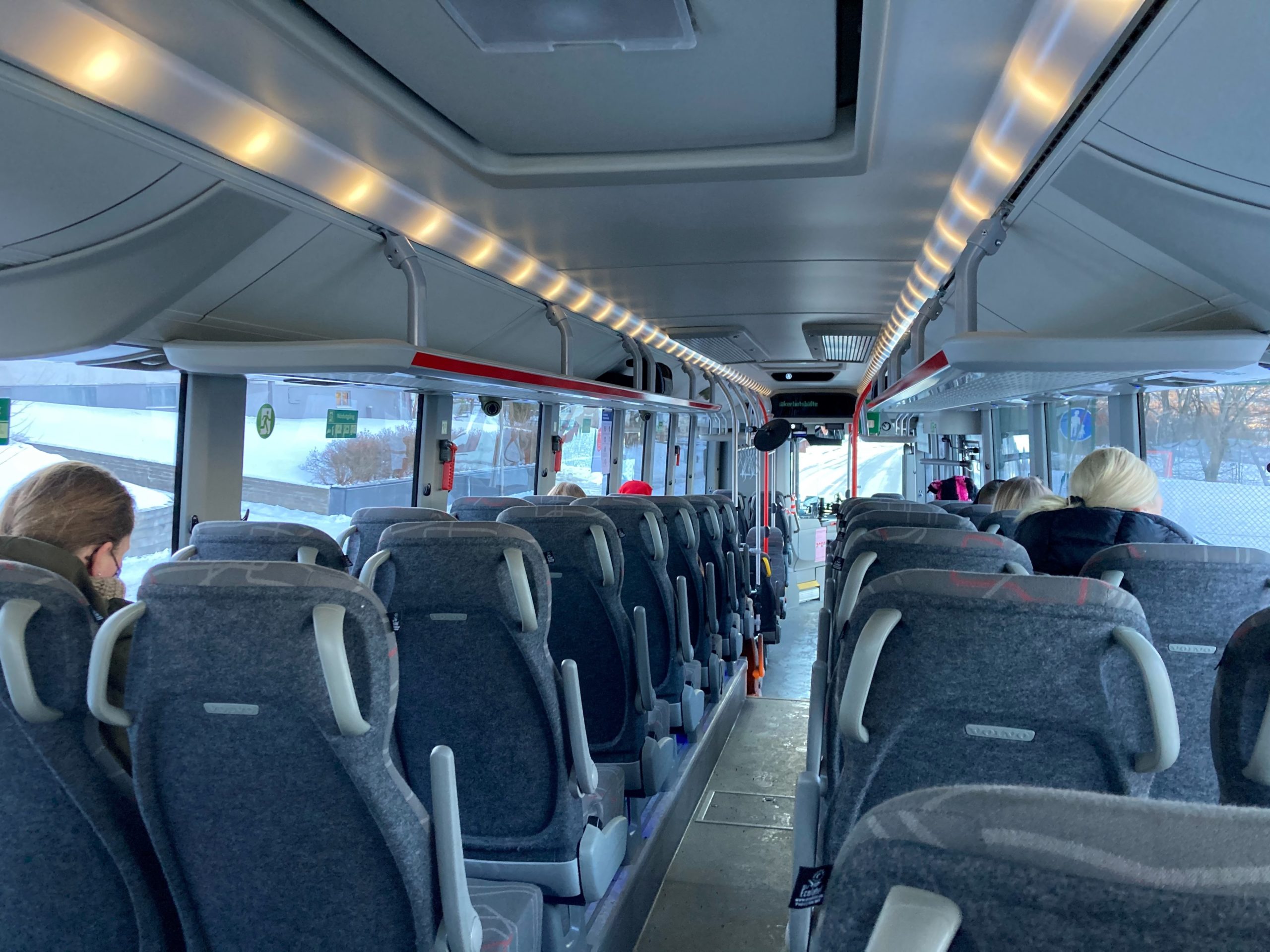
    Public transportation isn’t a very common mode of transportation for many U.S. students, but it is in most other countries! High School Abroad Sweden student Catherine had never taken public transportation before studying abroad in Sweden. Now on program, she takes anywhere from 1-2 busses and 1-2 trains, with commutes lasting 1-2 hours every day! On the weekends, she often uses public transportation to visit friends in various locations. Here’s her advice for any student headed to Sweden who plans to use public transport (in other words, every student!).  Catherine goes to school in Nässjö, but travels to other areas near her quite frequently. 

    By Catherine Daniel

    • Starting Your Journey
      • A must have for coming to Sweden is definingly the “Buss App” aka “journey Planner” it is a constantly updating Buss and Train monitor that can tell you all the future routes from the closest Bus stop or train station to wherever you wish to go. Other than on extreme occasions, the busses will arrive at the allotted time give-or-take 3 minutes. When you get on your buss you pay by scanning your refillable month buss pass, this is only about 20 dollars for minors.
      • The first big mistake I ever made was on my first week of school. Making the assumption that the bus station in the town I went to school in was the only bus station in all existence and the mother ship of all busses ever to roam the world. So I got on a totally random bus and simply waited for it to arrive at the bus station. However… I was soon to realize that there is a bus station in every sizable town and the buss I was on wasn’t even coming close to my town at all. The driver realizing I was a total Morton called some of his bus friends and brought me to the first bus station that had a bus going to my home town.
    • Changing busses
      • This was one of the hardest parts for me because you will often find yourself at bus stations with several stops all with the same names, you can get confused like myself as to where you should wait. Your host family probably won’t see the point in explaining the bus system because they lived with it their entire lives, so make sure to either ask questions or learn fast. In the beginning always double or triple check the stop you are waiting at and the time you should be there.
        • On my first trip to school form my new host family in a city far from the one in which I go to school, I got terribly messed up in a bus station. Usually I would take a longer bus to the nearby big city and take the train, but today was different. I got on the bus from my house and got off at a circular bus station with several stops. I knew the bus I was waiting from, but I had no idea where to wait. After about an hour I’d had three whole busses leave me as I was running after them. One of my problems being I hadn’t gotten a SIM card yet so I had no wifi to check the Buss App. Eventually I realized I would have to catch the first bus home and start all over. However! I realized that instead I could take the first buss to Jönköping and from there I would take the train like usual. I succeeded in my endeavor and will forever remember it as a win for me! … even though I got to class a hour late.
      • The Buss (and train) Police.
        • Now these guys are the real trouble… built like a cross between The Incredible Hulk and a literal Bolder, these guys com on to busses randomly, in uniform, in groups and check that everyone has paid and are following all of the rules. For an American student this means the following:
          • They approach me and ask for my Buss Card
          • Upon scanning my card they will realize I have a minors card (I don’t look 16)
          • Now they want my ID to prove I am 16…
          • Upon looking at my Drivers License they will see I am American
          • NOW I have to give them my Residency permit card to prove I’m not an illegal alien and then finally they will leave me to be.
    Catherine in front of her bus stop.

    I dramatize this of course, but I can’t stress enough how important it is to have all three cards on you at all times. Another problem that can occur with The Buss Police is refilling you bus card. This story is a rather humorous one for me, so much so that I almost forget sweating bullets during it.

    Every month your buss card will run out one day before it was purchased the previous month, so if I bought my card on the 1st (like I do) then on the 31st it will run out. But if I keep refilling it the same day it runs out then the day will keep moving back and I just like a little more structure than that. So I use my expired buss card every month on the first to go to the buss station and refill it. This is possible because (especially with COVID-19) the bus drivers don’t require you to scan every time, usually simply reaching for your card will work and they will wave you on. One day however, it occurred to me that if The Buss Police were to come on the 1st then I would kind of be in trouble. My argument “that’s ridiculous I’m sure everyone refills their card on the 1st so why would they check? Aaaaaand I’ve only ever seen The Buss Police three times since being here, it’s terribly unlikely, terribly indeed…

    Long story short — The Buss Police totally came that day but after I promised I was on my way to refill it right now they let me go!

    The front of the buss is the number and end destination, this is also the name of the buss on the buss app


    The back of the bus shows just the number .

    Watch this video below to see how Catherine books her bus ticket:


  • Camden’s Experience on a One-Month Study Abroad in Argentina

    Camden’s Experience on a One-Month Study Abroad in Argentina

    Greenheart Travel alum Camden studied in Argentina on our High School Summer Abroad Argentina program in Summer 2019. Since then, he’s continued learning Spanish, visited Argentina again, and kept in touch with his host family and friends abroad.

    Next year, Camden plans to attend Harvard University and study either Economics or Linguistics. We asked Camden about his experience in Argentina and his advice for future students.

    Camden with host brothers in Mendoza. Photo courtesy of Camden.

    Thanks so much for speaking with us, Camden. First, what were your overall thoughts about the high school abroad summer program in Argentina?

    I felt like a month was quite short and I regret not staying longer – when I started getting into the swing of things I had to go. I’m still really glad I had the opportunity to go. I still talk to my host family and friends I made there almost every week, if not more. Since my exchange I even went to visit my host family and friends a second time during my winter break from school, February 2020.

    Downtown Mendoza. Photo courtesy of Camden.

    What recommendations do you have for future students to make the most of a one-month program?

    What helped me to prepare was looking up different Argentine shows and familiarizing myself with the
    accent. Other people who were on the exchange had difficulties adapting to the accent and vocab, but I was already used to hearing it at that point. That was something that definitely gave me an advantage.

    How can students learn as much Spanish as possible in one month?

    You have to jump right in! When I first got there I was nervous and felt awkward and out of place. But then everyone gave me so much attention because I was the new kid. Everyone would come up to me and ask me questions about my interests, hobbies, and my life in the US, which in turn allowed me to practice my Spanish from the start. As I kept talking to everyone I met, I kept practicing and it gave me more confidence to have deeper and more complex conversations.

    What classes did you take in Argentina? Which were your favorites? Least favorites?

    I was in the same class as my host brother – there was biology, literature in Spanish, English, finance, math, physics, art, PE, and sometimes even yoga. My favorites were biology and English. Biology, because I knew a lot going into it so I could understand whatever we were talking about and contribute in the class discussions. English, because my teacher would allow me to talk freely on pretty much every topic and I enjoyed helping people with their English. I dreaded math, even though I am quite good at it. I didn’t understand what we were doing and the math teacher was a substitute who kept calling on me. At times, I also felt that physics and literature were challenging as I was not too familiar with the complex technical words needed for those subjects.

    What did you notice between your high school and your host school in Argentina?

    At my high school in New York we usually get 2-3 hours of homework a night, whereas at my host school in Argentina there was around 30-60 minutes of homework per day. At my high school that would be a really easy day or maybe a Friday. In the U.S., on certain days I do homework from as soon as I get out of school until night. Also, since I was an exchange student most teachers didn’t require me to do assignments, but I’d participate if I found the topic interesting.

    The court yard at school. Photo courtesy of Camden.

    What did a typical day in your life look like while you were on program, in terms of school and host family? 

    School started at 8am, so I got up at 7:20. We didn’t have breakfast (maybe milk and cereal), and went to school. In the mornings, everyone hangs out in classrooms and someone might even play music, and then we had our classes. On certain days we would line up in the courtyard for the raising of the Argentine flag. High School in Argentina is quite different than school in the U.S., where we switch classrooms, but in Argentina you stay in one classroom and the teachers rotate in and out. At school there was a “kiosco” so during free periods you could go with friends and buy snacks and we often congregated around the field where we played sports.

    I went to school until 1:30 Monday through Thursday and on those days didn’t eat lunch at school, but then on Friday I stayed for lunch at school and then had English class until 3:30pm.

    Camdens host school Colegio Rainbow. Photo courtesy of Camden.

    What were some of the foods you tried from the “kiosco”?

    I liked dulce de leche and they had ​alfajores​. The Oreo-flavored ​alfajor​ was one of my favorite snacks.

    Why did you decide to go in the summer instead of during the school year?

    I wanted to do the summer so I could have the ability to fulfill my course prerequisites and graduate on time with my class. My high school is pretty competitive and has a lot of course requirements, so studying abroad would have made it hard to catch up. Most people don’t do exchanges at my school, so that’s why I decided I’d either do a summer program or not at all.

    What was your favorite slang word from Argentina?

    Boludo​. It’s a good thing and a bad thing. It can be someone who’s an idiot or cocky, or like “bro!”

    What did you do in your free time?

    I went to the movies, malls, and soccer fields a lot. I wasn’t good at soccer but I played anyway. When I hung out with my friends we talked about people, music, and a lot of people wanted to know what life was like in the U.S., like what we do here, and how it’s different from Argentina.

    Rosario, where Camden’s on-site orientation took place. Photo courtesy of Camden.

    Was there anything you learned that surprised you?

    I learned that a lot of things in Argentina are tied to the U.S. dollar, like when our USD goes up and down things in Argentina get more expensive. They were rooting for the downfall of the USD! Lol! I also didn’t know that a lot of American brands aren’t in Argentina, like Apple products for example. To get an iPhone in Argentina it is even pricier than buying one in the US because the supply is so low. People there thought it was interesting that I had several apple products as you don’t see them in Argentina very often because of the prices. The people there who had them usually bought them when they went on vacations to the United States.

    So you’re going to Harvard – did you include this experience on your college application essays?

    Yes, on my Harvard application I wrote one essay about my program to Argentina! I wrote about my experience of being a bit nervous at first, but how I bonded with people with a shared sense of humor and how I was able to relate with the people and explore the culture. That was a strong essay that definitely gave me an edge for my application.

    Anything else you think that would be helpful for others to know before deciding to go to Argentina for one month?

    Before you go on your program, it’s a good idea to get to know your host family first. That’s something I didn’t do and I should have. We didn’t have any video call before I left, so when I got there I was kind of like, “Who are you?” But it worked out for the best and we got along well, but I felt nervous for the first couple of days. If I had done a video call I would have been able to have a good relationship from the beginning.

    It’s also good to try your best to be outgoing. I’m in the middle – somewhat introverted but also extroverted, but at the end of the day I enjoy talking to different people and above all including
    everyone in conversation. I noticed that some exchange students were a bit reserved, and many locals noticed that and assumed they were not nice when that wasn’t the case. In order to avoid that, try your best to speak Spanish all the time. If you spend your time only speaking English with other exchange students or a few Argentines who happen to speak English the majority of Argentines that you meet will feel left out.

    It is also important to expand your social circle as your host family may have plans of their own at times. My host brother played soccer almost every day, but I didn’t play soccer and at times I found watching the practices boring. Since I made other friends, I was able to hang out with them while my host-brother was at practice. So it may be ideal to have your friends or plans, like going to the gym, so say your host brother or sister has plans that don’t interest you, you have other plans you can participate in.

    Camden at a horse ranch in Argentina. Photo courtesy of Camden.
  • Ready to Study Abroad? Here’s What You Need to Know About Being an Exchange Student During a Global Pandemic

    Ready to Study Abroad? Here’s What You Need to Know About Being an Exchange Student During a Global Pandemic

    Now more than one year into the COVID-19 pandemic, and countries around the world have been embracing the “new normal” and seeing a way forward.

    Greenheart Travel and our in-country partners have been continuously monitoring the health situations in our destination countries, and finding ways for our students to stay safe while also learning a new language, living with a host family, and attending high school abroad.

    Travel might look different this year – and for the foreseeable future – but the desire to connect with other cultures remains strong. And Greenheart Travel is still working responsibly to provide fun, successful and positive experiences abroad for all our high school exchange students.

    If you’re eager to study abroad this Fall 2021 or Spring 2022, here are a few things you should know.

    You may have heard about the “travel ban” for U.S. citizens entering the European Union

    Luckily, this does not apply to U.S. high school abroad students applying for student visas or residency permits. At the time of this blog post, students studying for a semester or academic year can apply for student visas and enter the E.U.

    While some of our other destinations still have entry restrictions for foreigners – including students – we are monitoring government regulations and we hope they are lifted shortly.

    Here’s what happens if you can’t get a visa or enter your destination country

    While we’re confident future study-abroad programs will run without entry restrictions, COVID-19 has taught us to prepare for unexpected changes. If you apply and your program start date is cancelled due to COVID-19 or its effects, Greenheart Travel has a COVID-19 Refund and Cancellation Policy with several options for students to either defer to a new start date or switch to a different Greenheart Travel program.

    When you travel, you’ll most likely be required to quarantine upon arrival

    Yes, you’ll arrive in country and may be required to stay at home with your host family for 10-14 days before heading to school. (Note: many countries will decrease the quarantine period if you arrive with a negative COVID-19 test result and/or get another COVID-19 test upon arrival.) But it doesn’t have to be boring! In that time, you’ll be able to overcome jetlag, practice your language skills, bond with your host family, eat some great meals, and set yourself up for success for when you can experience the outside world. (Imagine how many household vocabulary words you will have mastered!)

    Each country has frequently changing requirements, so you’ll likely not know your exact arrival process or quarantine experience until just prior to departing for your destination country. Don’t worry – we’ll keep you updated throughout the whole planning process.

    Just like life at home, life abroad will be different than pre-COVID-19

    The COVID-19 pandemic has altered everything–events, activities, and ways in which we used to gather and socialize. We’ve heard many people refer to study abroad as a way to “escape” the shelter-in-place orders in their hometowns or ensure they have full, in-person classroom experiences.

    However, just like at home, each country, region, and local community abroad is coping with COVID-19. In many cases, we are unable to run group arrival orientations in person, so high school students will have individual orientations with their local coordinator, either online upon arrival or in person after the quarantine period. Students may not go to school full time in person as they did pre-COVID-19. Staggered scheduling, hybrid models, or fully online learning are still common, and may be for a while. Many of the optional weekend excursions with other exchange students have been put on hold until we determine it’s safe for students and staff to travel during the program.

    No matter where you go in the world, you won’t avoid the effects of this global pandemic, but that doesn’t have to stop you from embracing life abroad, whatever that looks like! Even with a mask on, you’ll still be making new friends and discovering daily life abroad–like experimenting with different routes for cycling to school in the Netherlands, or picking up on new slang words in Italy, or taking long forest walks near your host family’s house in Norway. If it were up to us, we’d also taste each of the over 365 types of cheese in France—while demasked of course!

    And by now you’ve probably guessed: You must be an adventurous, curious, and flexible traveler to have a successful experience during COVID-19

    You’re likely an adventurous person by nature, or you wouldn’t be here reading this. But COVID-19 has added a completely different element.  There’s a lot we don’t know. There are a lot of entry requirements that change. Government health measures and restrictions change. And the way your host school runs things might change. Your start date could be pushed back or a consulate might take longer than normal to process your visa. That’s life in the time of COVID-19.

    The one thing that hasn’t changed? Studying abroad requires you to be courageous, determined, and non-plussed. When so many factors are out of your control, you’ll learn to be patient, flexible, and savvy when confronting obstacles. We’re committed to continuing meaningful cultural exchanges and we’ll work with you every step of the way. All we ask is that you buckle up for an unpredictable ride!

    Are you up for the challenge?

  • Where are Greenheart Travelers Going in 2021?

    Where are Greenheart Travelers Going in 2021?

    Welcome to 2021, everyone! Even though we’ve made it through 2020, travel still looks a bit different in this COVID-19 world (hello, self-quarantines upon arrival!).  Luckily, we get to work with some brave Greenheart Travelers who are still fulfilling their dreams of living abroad, learning a language and immersing themselves in a new culture.

    So, where are Greenheart Travelers headed in 2021? Well, the answer to that question is constantly changing (we’ll keep you as updated as possible), but here’s what’s planned so far.

    High School Abroad Programs in Europe

    Although U.S. tourists are not currently permitted to enter the E.U., high school abroad students applying for student visas (applicable to semester and academic year programs) are eligible for entry! From plans of strengthening language skills, to being a bridge between cultures in a time when our world needs it the most, Greenheart Travel students will be traveling to destinations across Europe in 2021.

    Sabine, a high school student planning to travel to the Netherlands starting in August can’t wait to go on program and understand what impact it will have on her: “Travel is a wonderful adventure,” she says. “The outcome of which you don’t really know until it’s over.”

    Sabine at
    Delft University of Technology.

    Even though any student going abroad in this pandemic world knows there will be a lot of changes and new situations beyond what a pre-COVID exchange student might have encountered, Sabine knows this means “travel will simply become a more unpredictable adventure.”

    “I visited the Netherlands once, and the Dutch language and culture have a beauty that I believe even a pandemic couldn’t change. I am eager to understand the Dutch way of life on a more personal level, and I believe that a year of truly immersing myself into the culture will allow me to achieve that,” says Sabine.

    While Sabine plans to immerse herself in the Netherlands, another student, Claire, will spend a semester in Spain solidifying her Spanish skills as well as her self confidence and individuality, she explains. And COVID-19 isn’t going to get in the way of that!

    “My goal is to truly make the most out of every single moment during those four and a half months that I am abroad. In hindsight, that time is really not that much, but with the right intentions and actions, it can feel like an entire life has been lived, which all again depends on what you make of it. In regards to that, another goal I have is to create authentic and genuine connections with those around me, as well as my surroundings and atmosphere, and even further, traveling as much as I can in light of COVID-19,” says Claire.

    Another student, Piper, plans to travel to Norway to study for a year starting in August 2021. The pandemic didn’t incite fear in this adventure seeker but instead gave her more motivation.

    Piper on a recent yurt trip in Colorado.

    “I’m super exited to go on exchange in 2021 because covid-19 has made me eager to go on adventures and try new things. While on exchange, I hope to gain more cultural understanding, learn more about Norway’s history, and form international relationships,” she says.

    We can’t wait to see what these incredible students accomplish on their programs!

    Costa Rica

    As a high school student, you can study in Costa Rica for a trimester, semester, or academic year, and you’ve even got three ways you can spend your summer in this tropical Central American country. Costa Rica opened for tourists in November 2020 and is ready to welcome you!

    Our in person TEFL Certificate course in Heredia has resumed courses since January 2021. Therefore, if you are planning to get TEFL certified and have been waiting for the in-person course options, this is your time! We have a start date almost every month.

    Teach Abroad in Thailand, South Korea, and Vietnam

    Meghan is our teacher in Thailand who is exploring when she is not busy teaching at her school!

    We are happy to report that currently we have three destinations who are open for Teach Abroad travelers. For all these programs we are able to offer TESOL/TEFL certification plus guaranteed placement program option as well as placement only program option for teachers that are already certified.

    Thailand has remained open throughout 2020 and is staying open for teachers in 2021 as well. The country has maintained a safe environment for travelers by imposing a 14-day mandatory quarantine for anyone entering Thailand. The earliest intake for Thailand available now if March 29, 2021.

    South Korea also remains open for teachers. We are able to guarantee private school placement for qualified candidates. Similarly to Thailand, South Korea is also asking travelers to quarantine for 14 days upon arrival. The earliest program intake for South Korea is April 26, 2021.

    Vietnam currently has no COVID-19  cases and is one of the safest countries in the world in that regard. To ensure their safe environment, they are asking travelers to go though a 14 day-mandatory quarantine upon arrival. The earliest intake date is May 3, 2021.

    Bonus destination: ONLINE!

    Some Greenheart Travelers are simply excited to continue their cultural exchange experience online.

    Greenheart Travel offers online Japanese courses for complete beginners with start dates every week. One Teen Language Camp Spain alum wanted to take advantage.

    “I had been learning Japanese on my own since the beginning of quarantine, so I was excited to further my learning with the online classes,” says Eli, one of the 2019 First Time Traveler Scholarship winners.

    Eli learns Japanese online.

    “I really liked how my classes were taught in Spain, so I immediately took up the opportunity to learn Japanese in a similar way. I hope to travel to Japan in the future, but for now I am so grateful for the chance to be learning from a teacher all the way in Japan while I am here in the US,” says Eli.

    If language teaching, rather than language learning is more your thing, the Online TEFL certification is a way for you to hone your instructing skills before teaching abroad.

  • How Greenheart Travel High School Abroad Students Celebrated the Holidays

    How Greenheart Travel High School Abroad Students Celebrated the Holidays

    One of the coolest parts of being an exchange student is having the firsthand experience of how other cultures celebrate birthdays, holidays, and other traditions.

    When it comes to winter holidays, there are so many different ways to celebrate. Whether it’s sitting under a Christmas tree in tropical Costa Rica or learning about Mary and Joseph for the first time in Austria, students find a lot of differences (plus a lot of similarities) and tons of opportunity to make memories.

    Here’s what our a few of our high school abroad students did in their host countries.

    Sweden

    Have you ever heard of the Swedish holiday St. Lucia’s Day? High School Abroad Sweden student Catherine got to celebrate and make lussykatter with her family. These are saffron-spiced pastries in the form of curled up cat eaten on St. Lucia’s Day. Sounds both adorable and delicious!

    “I love making these because they remind me of the family cooking I did back home ,” she says. Here’s a video of Catherine’s creations:

    Norway

    Okay, keep bringing on the sweets! High School Abroad Norway student Daphne made traditional Christmas marzipan with her host family, which is filled with many things, including raisins and dried apricots, then covered in chocolate. Yummy!

    Daphne making marizpan at her host family’s house.

    But that’s not all! Daphne even got a chance to visit a Christmas market in Bærems where you can buy some traditional Norwegian gifts.

    Daphne visits a Christmas market in Bærems, Norway.

    Austria

    High School Abroad Austria student Mollie Block normally celebrates Hanukkah back in the U.S., but this year she celebrated a bit of both Hanukkah and Christmas with her host family, the first year she’s done both! Each year her host family participates in Advent singing for the four Advent Sundays before Christmas, and normally they’d also sing Christmas songs with her host grandma, which was moved to Zoom due to COVID-19. Coincidentally, this year the third Advent Sunday happened to fall on the fourth  night of Hanukkah. “It was such a really nice  experience to not only join in on my host families holidays and traditions but also share some of my own,” Mollie explains. That’s what cultural exchange is all about!

    Mollie and her host family celebrating Hanukkah and the third Advent Sunday in Austria.
    Mollie’s host sister and host dad celebrating Hanukkah with Mollie.

    Italy

    One of our High School Abroad Italy students Jessica is placed in a small town in the Pavia Province in the Lombardy region of Northwestern Italy. Though she found many similarities between how her host family and her family back in the U.S. celebrate Christmas, she found a slight difference in the Italian version of the nativity scene, called a presepe.  Jessica and her host sibling sat under the stairs and made this presepe pictured below.

    Exchange student pro tip: Since Jessica is still learning Italian, she realized that a hands-on project such as this is great to work on communication with her host family. She says “between hand gestures and intuition, humans are easy at understanding one another when it comes down to it.” We couldn’t agree more, Jessica!

    A photo of the presepe Jessica made with her host family!
    A photo of the presepe Jessica made with her host family!


  • How to Spend Your Summer in Korea as a Teen

    How to Spend Your Summer in Korea as a Teen

    With its strong global influence, South Korea has become an increasingly popular country to visit. Everyone has hopped on the k beauty trend in the past few years, and we’re all well aware of the K-pop phenomenon. But for those who want to have a deeper understanding of Korean culture and language, it’s time to travel this summer.

    We are launching a 2-week Teen Summer Language Camp in South Korea. This program is exclusive for those between 16-19 years old that have anywhere from a beginner to an advanced level of the Korean language.

    This isn’t a camp in the traditional sense. You will live with a host family in Incheon while attending a Korean school specifically to learn the language. There are activities throughout the week, and Fridays are dedicated to a full-day excursion, with optional weekend activities. This includes attending a K-pop concert, Taekwondo lessons, and a visit to the Gyeongbok Palace.

    This is perfect for teens who want to:

    • Have an authentic cultural immersion experience
    • Meet others from around the world and locals from Korea
    • Live with a host family

    This is also great for students who want to study abroad but can’t travel for a long period of time. You even have the opportunity to gain academic credit for this course!

    This summer our program will run from July 11, 2021 – July 25, 2021.

    Do you identify as LGBTQ+? Wondering if this program will welcome you? Read our LGBTQ+ FAQs to see how we are committed to offering a safe and inclusive experience for everyone.

    Okay, you’re sold. So how much is it?

    The course is $2,840 and includes:

    • 12 hours of language classes per week
    • Airport pickup and drop-off upon arrival and departure from the Incheon International Airport (ICN)
    • Host family accommodation
    • 2 meals per day (Breakfast & Dinner)
    • Comprehensive medical/accident insurance
    • Track-specific cultural excursions & activities
    • Weekend excursions to beach or nearby cities
    • 24-hour in-country and emergency support
    • More!

    Apply ASAP

    This is a program is in high demand and is filling quickly. Because there are limit spots, once the program is full we cannot take any more people. The best way to secure a spot is to apply and get your documents in order before someone else.

    How to Apply

    Fill out this initial form (don’t worry, it takes 5 minutes), then you’ll be send an email with further instructions for applying in our application portal. Once you start your application, you’ll be asked for a $300 application fee. This is part of the overall fee, not an additional sum. This is so we know you’re serious and will reserve your spot!

    Finish up the rest of the application (the longer part) where you will be asked to write about yourself and why you want to go abroad.

    After you submit your application, your program manager will reach out about your acceptance. This is where the second $300 commitment payment is due (again, subtracted from the overall fee). This is where you are confirmed! You can expect to receive your host family placement 1-2 weeks prior to your start date.

    Do not hesitate to reach out throughout this process. That’s what we’re here for! Click here to schedule a call.

  • 3 Simple Steps to Going on a Teen Summer Language Camp

    3 Simple Steps to Going on a Teen Summer Language Camp

    Concerned about COVID-19? Please refer to this blog post about what you should know about participating in a Teen Language Program during the COVID-19 pandemic. 

    So, you’ve been dreaming of snacking on macaroons below the Eiffel Tower or snorkeling in Costa Rica this summer and you’re ready to make it a reality?

    Go abroad with Greenheart’s Teen Summer Language Camp.

    But first, what is a teen summer language camp? (No, you won’t be living in a tent!)

    Greenheart Travel’s Teen Summer Language Camps send students 14-19 (check requirements on each program’s page).

    The main components are:

    • Language classes
    • Cultural activities in your chosen city
    • Host family accomodation

    Students live like locals while also sharing the experience with other teens from all over the world!

    Sound perfect?

    Here’s what you need to do to get there:

    1. Make sure you meet the eligibility! Ensure you’re the right age range (typically 14-18) and you meet the language requirements (Tokyo requires at least 1 year of prior Japanese).
    2. Talk to your parents. Explain the value of cultural immersion – and its benefits for college applications. Point them to the FAQs and show them the blogs.
    3. APPLY! The online application is straightforward and can be completed within about an hour. First you’ll fill some basic details, then you’ll receive an email with a link to our application portal, where you’ll create a log in and submit your application.

    You’ll need to:

      1. Fill out your basic information
      2. Have you and your parents sign the terms and conditions
      3. Make your first payment – a $300 non-refundable application fee (don’t worry, this goes towards the total fee!)
      4. Fill out the rest of the application, includes host family preferences

    And then….

    Acceptance

    After you’re accepted, your program manager will accept you and you’ll be able to access your comprehensive program handbook, which includes detailed instructions for your next steps including arrival and departure signing up for your online pre-departure training, plus everything you need to know about life in the country!

    Don’t forget about…..

    Fundraising!

    Greenheart Travel offers scholarships or research online for others. Plenty of students have had success fundraising with the guides on our website and our 3-Part Fundraising Series. And here’s a very “FUN” webinar with Greenheart Travel’s favorite FUNdraising tips you can’t miss.

    Still have more questions? You can also schedule a call with a program manager here.