Category: Greenheart Travel

  • New Adventures in Thailand – a First Time Traveler’s 1st weeks Abroad

    New Adventures in Thailand – a First Time Traveler’s 1st weeks Abroad

    Skylar is one of our First Time Traveler Scholarship winners. She’s arrived in Thailand for her Teach Abroad program and writes to us about her first few weeks there.

    Settling down in Thailand

    Under Thailand’s Test-and-Go COVID policy, as soon as my COVID test came back negative, I was able to walk around Bangkok as I desired (I still would have to take an at home test on the fifth day). However, I have to admit, I did not take full advantage of this. While I know of friends who explored Bangkok well, I spent my first few days severely jetlagged by my +11 hour time difference. Instead, I chose to spend most of my days lounging by the pool, getting Thai massages, and eating all of the fresh mango, and dragon fruit I could get my hands on. This ended up working out, because my next week of orientation would consist of Muay Thai boxing, cooking classes, an excursion to a Thailand National Park, multiple trips to the beach, and hiking up a local mountain to watch the sunrise: aka, I was EXHAUSTED by the end of it.

    On to Hua Hin and Orientation

    At the beginning of the last week of March, I made my way to Bangkok’s airport to be picked up by a large coach bus with the rest of my group to make our way to Hua Hin. The drive went smoothly, and before long we were at our accommodation. I took in the view of my apartment, and felt ready to take my week on!

    Orientation was A LOT of sitting through classes, although, I did learn some useful cultural tidbits. One thing that came in handy later in the week as we took a night to attend the movies, is that there is a montage dedicated to the Monarchy of Thailand, and you have to stand to pay your respects, even being a foreigner. We also learned about the West’s influence on Thailand, largely due to Thailand never being colonized by another country. However, without a doubt, my favorite parts of the week were some of the excursions we took.

    Learning The Thai Culture

    Have you ever heard of Muay Thai? It is Thailand’s version of boxing, and involves a mixture of martial arts and combat to invoke serious damage. Although I didn’t get in the ring myself, the punching bag definitely felt my wrath. It was so much to train with local Muay Thai trainers, and it even inspired me to want to look into Muay Thai gyms in my placement city to learn proper self defense, while also blowing off steam.

    We also took some time to attend a cooking class where we made Papaya salad, one of my favorite dishes since being here. Papaya salad (called Som Tum) includes papaya, long beans, tomatoes, peanuts, garlic, dried shrimp, and fish sauce all mashed with a pestle to combine. Traditionally, it includes chilies as well, but my palette has not yet adjusted to the level of spiciness here! I’m working on it!

    Most nights were filled with walking to the beach, or attending many of the night markets around the city. I had a chance to try crickets, mango sticky rice, coconut pancakes, fresh coconut juice, butterfly pea juice, fish cakes, and fresh spring rolls. The food here is too flavorful to not try everything, and with portion sizes being relatively small, it is easy to do just that!


    My favorite thing I’ve done in Thailand thus far I did the first weekend in Hua Hin. It involved going to The Phraya Nakhon Cave. This cave was quite a hike, over and back down a set of mountain steps, across a beach, and then steps up again, before descending down steps into another cave. It also was slightly misting the whole time, making the rock steps a little slippery. But the magnificence of walking through the cave entrance into the large cave itself– which had a temple inside –was something I will never forget. The awe I had could never be put into words.

    New Adventures are Still on the Way

    Although my orientation week is over, and I am now in my city where my school placement is, I know that new adventures are still on their way. As I am beginning to adjust slowly to Thai Culture, build a support group, and find what I define as ‘home’, I feel myself settling in. But with all of the things I’ve done, and all I have to look forward to, it is hard not to be excited about each and every day.

    by Skylar S – Teach Abroad Thailand


    Thank you Skylar for sharing your experiences so far in beautiful Thailand!  Teaching Abroad is a fun way to learn about another culture, and to immerse yourself in it.  You can see all the countries Greenheart Travel offers for Teaching Abroad here and for Working Abroad here.  


  • The Life of a Student in Spain

    The Life of a Student in Spain

    By: Amanda M.

    Amanda is a First Time Traveler 2021 Scholarship winner. She is doing our High School Abroad program in Spain for an academic year.

    Arriving in Spain

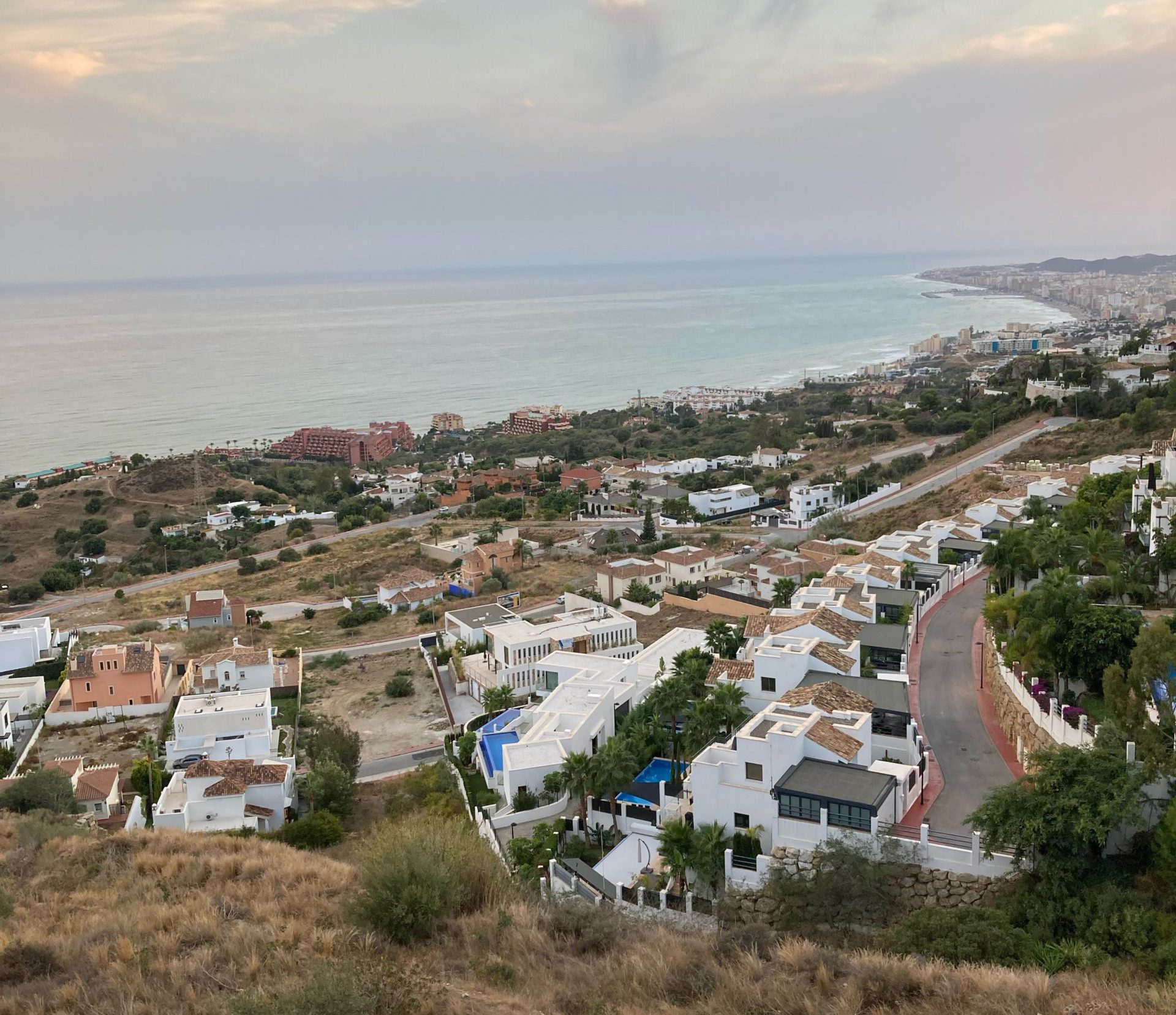
    It all started on Sunday, September 19 when I embarked on the journey of my life. I was extremely terrified but excited at the same time to see what my future life in Spain would bring. I arrived in Málaga fo1r my orientation on September 20, 2021. I had gone over 18 hours in flights, and I was extremely jet lagged but extremely happy that I had finally arrived in Málaga. Soon after my arrival the program was constantly picking up more students from the airport. I was amazed to meet students from all over the world! It was so exciting to meet such amazing people and create such international connections when we’re all here to do the same thing. We all travelled from abroad to spend a year or semester in a country that is not our homeland to learn a language and experience a new culture. We were choosing to live our lives and grow into different people. As time went by I became a little homesick, and I knew that missing my family would be normal. However, I was excited to start the new journey in Spain!

    Host Family Life

    At first I was a bit timid with my host family. I was extremely grateful that they had given me this opportunity to stay in this beautiful town with such wonderful people. After a few months the culture shock slowly went away and I became more comfortable with my family. I have three host brothers which was a bit shocking at the beginning. In my family back home there are more girls than boys. It was an adjustment, but they are all very sweet and I consider them all like a second family to me. I also baked my mom’s chocolate cake for them, which I made with one of my host brothers.

    Almost every Sunday we go to the campo where you can find a wide variety of fruit and vegetables grown there. We have big family lunches and stay there usually the whole afternoon. If it’s a bit cold we go inside where we are able to enjoy their warm and cozy fireplace.

    During the holidays the whole family gathers together and we usually sing karaoke or play fun games. I got a little homesick around Christmas and New Years’ since I was missing my natural family. I was reminded that this is completely normal, and I was able to be grateful for the opportunity to celebrate this years’ holidays with my host family in Spain.

    School Life

    School was extremely hard at first because I was still adjusting to both a new home and city. Especially in the beginning I had to push through jet lag to go to school every day. Sometimes school is extremely hard, such as engaging in a classics course where I struggle to understand what the teacher is saying in Spanish. I’m in humanities so along with Latin and Greek I also have history and some other classes such as Philosophy, Lengua, Aleman Touristico, French, and Ampliación de Inglés. My school starts around 8:30 and ends around 3, it is a little shorter than in the U.S which makes it seem like the time goes by faster here, though!

    Unfortunately the schools in Spain do not offer school-sponsored clubs. but you can enroll in activities out of school such as a hobby or a sport. Many students love playing sports like futbol (soccer!) on community teams.

    Cultural Differences

    One cultural difference I’ve noticed is transportation. At home I wouldn’t even think about going on a bus to the nearest city. Here, though, I can just take the bus and I arrive in a city without any issues. I was able to explore a lot of places such as Granada. While there I got to see their famous architecture and Christmas spirit for the Reyes Magos. I also visited Málaga; they have a rich and diverse culture. I was able to visit some really cool vintage stores there, and some other small cities. I can’t wait to explore more places!

    Another difference is in food – it is absolutely divine! Along with the famous paella, Spain has another dish extremely popular here called migas. It is like a Tex-Mex breakfast dish. It is so popular here that there is even a festiva in December where people make huge batches of migas and people visit from all over the world to eat it. The best part is that it’s free!

    When I visited Mijas (a small town outside of Marbella), we ate at an Argentinian restaurant and I was able to try a famous Argentinian burger which was extremely delicious. If you ever visit Nerja. you can also try the best ice cream I’ve ever had! The town has a stunning seaside view that is only made better when you get some ice cream. Unfortunately, I have not learned how to cook any Spanish food yet. However, I hope to learn before I leave!

    Another thing that shocked me was learning that in Spain they eat dinner around 9 P.M.; in the U.S I would normally eat dinner around 5 or 6 in the afternoon. It’s definitely been an adjustment!

    What I’m looking forward to the rest of my stay here!

    I’m looking forward to getting to explore new places and become more fluent in my Spanish. I also plan to spend quality time with my friends and family before I leave. With the first few months I was still acclimating to all the changes in experiencing a new culture. Now is the prime time to truly dive deeper into the Spanish culture and language since I’ve worked through some of the harder parts of culture shock.

    Over time, I began to make a lot of friends and I was able to do things more independently. Things are still hard sometimes but, I know that I can’t give up, because I’m here for a year and I want to make this experience worthwhile. I’ve already made a lot of lifelong friends, and I know that even when I leave I will remain in contact with them no matter what! I still have 4 months left with a lot to learn. I’m extremely grateful for this opportunity and hope you, too, take this journey since it’s a once in a lifetime chance!

    If you’re interested in studying abroad in Spain for a Trimester, Semester, or Academic Year, check out our program page HERE. We also offer a teen summer language camp in Salamanca, Spain for those students who can’t accommodate a program during the school year. If you have other questions or comments about studying abroad in Spain, feel free to drop a comment below, too!

  • The Leap of Faith: Adapting to Life in Another Country

    The Leap of Faith: Adapting to Life in Another Country

    The Leap of Faith: Adapting to Life in Another Country

    by Vinicius Storck – Teach in Colombia 


    When I first heard the news of my acceptance to Greenheart’s Teach in Colombia program, I was excited to be getting the chance to work abroad. I had a desire to see more of the world, and to have the kind of experiences only possible through intercultural exchange, so I was eager to finally chase that dream.

    It was only a few days before departure that the reality of what this meant dawned on me–and anxiety started to flood my mind. I was actually going to be moving to a whole new country, living in a city I didn’t know, speaking a language I had hardly used outside of school!

    How would I deal with so many changes in my day-to-day life? What about Colombia’s reputation for being unsafe? Would I be able to make friends and connections in such a different culture?

    Luckily, there are things you can do to ease the transition to a whole new life. Many people have been in those shoes before; if they were able to get through it, so can me or you. If you’re willing to make this leap too, and prepare yourself for it, you’ll grow so much through your experiences abroad!

    Center of Cali

    Learn About the Country You’re Traveling To

    Doing some research beforehand did wonders to put me at ease. During the past twenty years the Colombian government has worked hard to tackle issues of crime, violence, and drug trafficking, and as a result most urban centers are pretty safe to be in. You should still take the same precautions you’d take when traveling to any other tourist hotspot: things like being vigilant if you need to take your phone out, avoiding poorly lit areas at night, and watching your bags when out and about. Colombians even have an expression for these self-protective measures: no dar papaya.

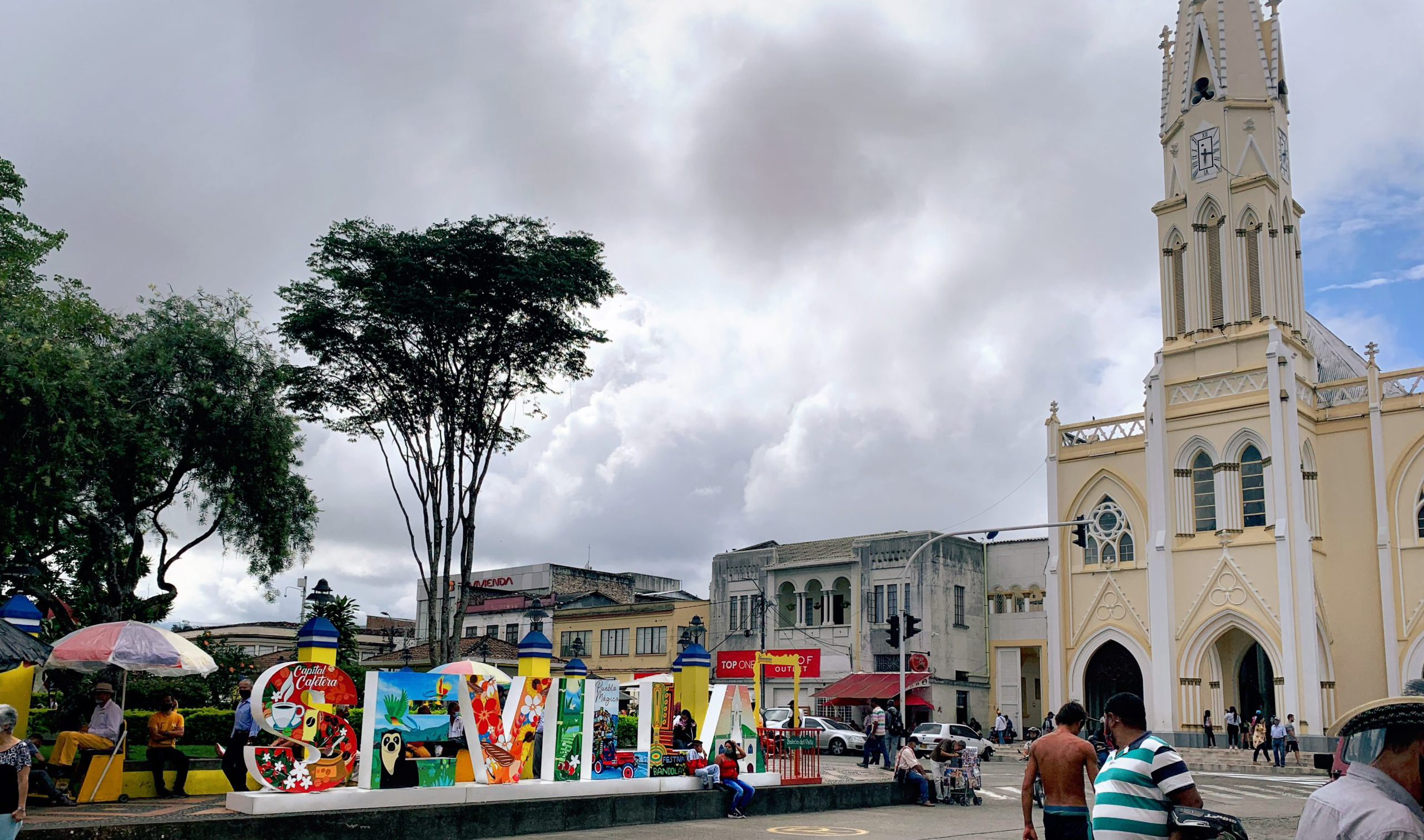
    Odds are you’ll be able to rest even easier if you’re staying in one of the small rural towns of the Valle del Cauca department. I felt safer in Sevilla, my placement city, then I did in Boston or New York.

    It also helps to look up interesting places to visit before you go. Colombia is an enchanting country, rich in history, biodiversity, and culture; and imagining all the places I could see lessened any fears I had left. Personally, I was smitten when I found out about the Lost City, ancient indigenous ruins hidden deep in Colombia’s forests, and which can only be reached through a three-day hike. It gave me something to look forward to at the end of the program, and turned anxiety into anticipation.

    Canastao


    Take Things One Step at a Time        

    Once I arrived in Cali, it proved useful to take things slowly, one day at a time. At the hotel where I spent my first week in the country, I would practice Spanish using mobile apps (Duolingo and Lingodeer) and watch TV to provide more immersion into the language. During that time most of my daily interactions were limited to ordering food and explaining directions to cabs. The program coordinators inside Colombia also provided enormous support in those first few days: they helped me open a bank account, figure out transportation to my placement city, and provided me with local contacts to assist in the search for housing.

    Teaching entire classrooms was a new experience for me too, but taking baby steps also helped in that area. For the week in Cali, I just focused on learning as much as possible during orientation. In Sevilla, I concentrated first on understanding the way my co-teacher taught English to her students, and then on coming up with lesson plans or activities that could best support it.

    People in Colombia are very welcoming, so neighbors and coworkers often introduced me to new people or informed me of special events happening around town. Eventually I reached a point where I could shop for my own groceries, have conversations with other teachers at my school in Spanish, make some friends, and even direct a couple of classes of my own.

    Sevilla

    Have Fun!

    Once I had become more comfortable with getting by in Sevilla, it was really time to experience full-on cultural immersion. I find that if you keep your mind open, and are always willing to try new things, then you’ll absolutely love your time abroad.

    For example, whenever eating out I’d look for genuine local food, whether it’d be the arepa or the coffee that are famous for being Colombian staples; or dishes unique to Sevilla, like the canastao and the plato montañero. These last two were common plates made by the settlers of this mountainous region, hefty enough to support their vigorous lifestyle.

    When possible, I’d also go to special events held for schoolteachers, from chess competitions to a hands-on workshop on planting coffee. And even though I have no rhythm, I just had to try dancing when heading back to Cali, the capital of Salsa! I did make sure to visit the Lost City too before I left, and it was just as gorgeous as I expected it to be.

    Parque del Café (Coffee Park)

    Life is a Highway

    Sometimes life can be like driving a car in the night. We might not be able to see what the entire highway looks like, but our headlights illuminate the next few hundred meters in front of us, and that’s more than enough for us to navigate safely to our destination.

    It’s my belief that traveling abroad is like this too. Even if things seem overwhelming at first, and we can’t tell what the whole path ahead of us will look like, we can gather the knowledge and skills to deal with each obstacle as they arise. And before we know it, we’ll have gone so far and seen so much!

    So if you’re aching to travel somewhere new, and are still hesitant about the challenges that may come, I encourage you to take a leap of faith. You have what it takes to make the most of this journey!

    Lost City

    ***

    Thank you Vinicius for sharing your story!  If you are interested in taking your own leap of faith, visit GreenheartTravel.org for a big menu of travel options.  Hope to see you out there!

  • Preparing to go to Italy? Here are 5 Language & Culture Resources!

    Preparing to go to Italy? Here are 5 Language & Culture Resources!

    Students who choose to go to Italy for High School Abroad get the full immersive experience into the Italian language and culture. From the host families to the Italian high school classes, students get the opportunity to learn and practice Italian first-hand.  

    Italy is one of the few high school abroad locations that does NOT require any previous language experience – complete beginners welcome! But of course, you’re going to want to learn Italian! 

    Apps for learning Italian 

    Recently, one of our current students in Italy, Dawson, provided this helpful list of mobile apps for students to learn and practice Italian before departing and while on-program.  

    1. Learn Italian for Beginners  

    This app has detailed explanations, including for verbs and pronunciation. It also has quizzes and mobile flashcards. 

    1. Learn Italian Quick Phrases
      This app is great for learning common Italian phrases and also includes quizzes and conversational help. 

    1. Learn Italian Beginners
      This simple app is helpful for learning verbs and objects. It also has some quizzes for listening and spelling. 
    1. edX: Courses by Harvard & MIT
      Learn Italian through free courses offered by renowned universities.  
    1. Europe Quiz: Flags & Capitals
      Although it doesn’t offer a language component, this app is helpful for you to learn about the countries surrounding you while in Italy! As part of a cultural exchange, it’s helpful to know not just about Italy but other European countries.  

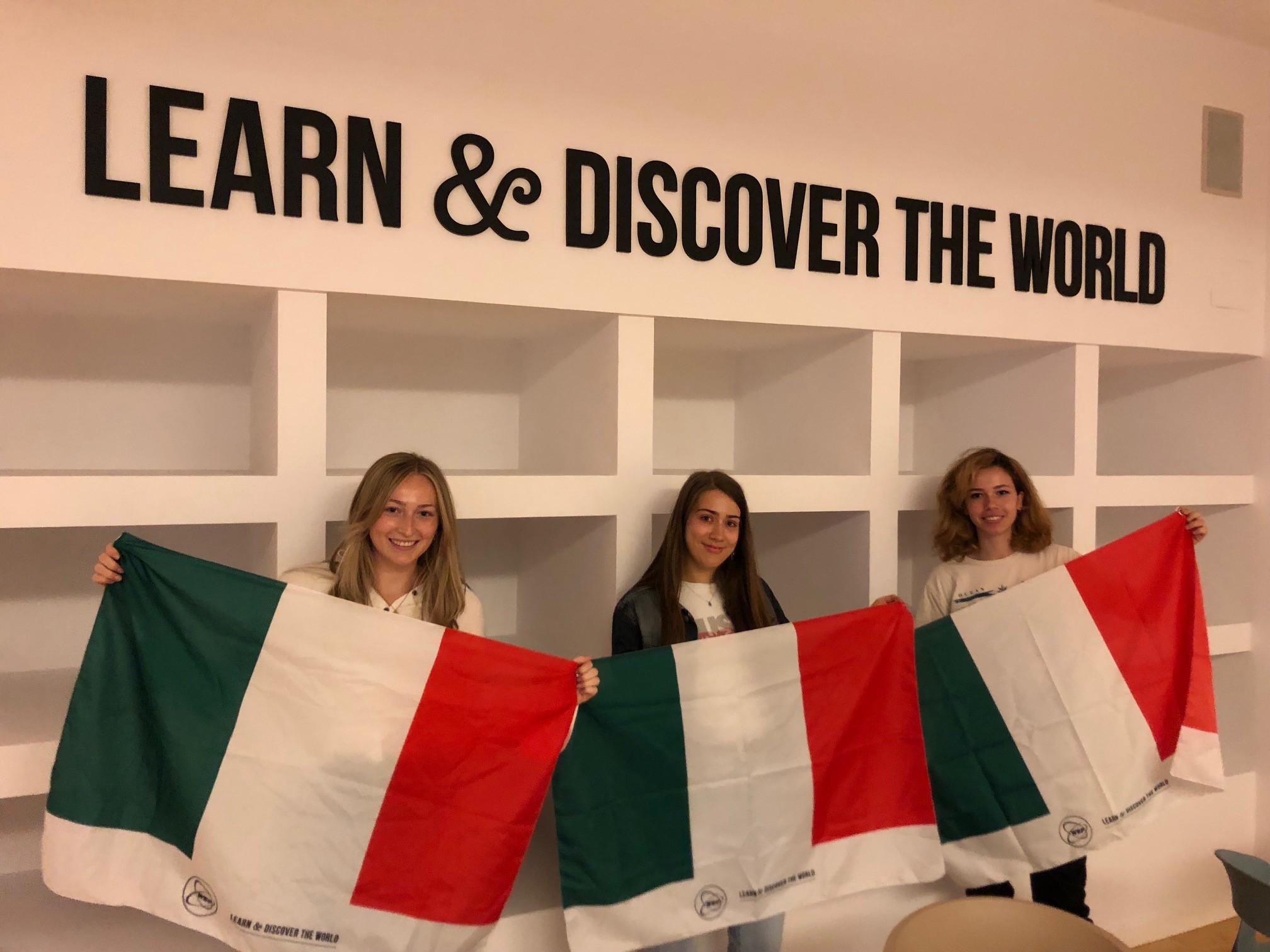
    woman sits in front of a lookout in Italy with the italian flag behind her

    We encourage all of our students to take initiative in their own learning, and these apps are a great place to start. Of course, this list isn’t exhaustive, but we hope it will be helpful for you to start your Italian language journey. If you have any other recommendations to practice your Italian, feel free to drop them in the comments! 

    Not ready for a full year abroad?  Try a 1-4 week Language Camp in Italy 

    If you’re not ready to do the full high school abroad experience yet, or just want a taste of Italy (literally and figuratively!), you can also check out Greenheart Travel’s Teen Summer Language Camp in Italy! This is a great opportunity to live with a host family and study Italian for 1-4 weeks in Florence, Italy.  

    a group of students stand in front of a church in italy

  • Tips for Taking Excursions as a High School Exchange Student

    Tips for Taking Excursions as a High School Exchange Student

    A note from Greenheart Travel: Amelia is a high school student who studied abroad during the 2020-2021 school year. 

    Hi, my name is Amelia and I am an exchange student in Belgium.

    I’ve had the chance to travel around the country a little bit on my own and it’s been an interesting experience. The first time I tried to travel by myself, I planned to visit a small town not too far from where I lived. I figured out the bus schedule and I was all ready to go. I was successful in getting myself to the town. Getting home was a different story.

    I was unprepared for the amount of bus stops you can fit in a 1 kilometer radius. I knew which bus I was looking for; however I was less sure of which stop I needed to be at. I was soon confused and ran around all the bus stops trying to decipher the timetables. In the end I took the correct bus route…in the wrong direction and ended up in the wrong town. I did eventually get home, although I had to wait around for an hour and a half for the next bus to arrive. This first trip was an outlier, all of my other solo excursions went off without a hitch with the exception of minor travel adjustments due to construction, etc.

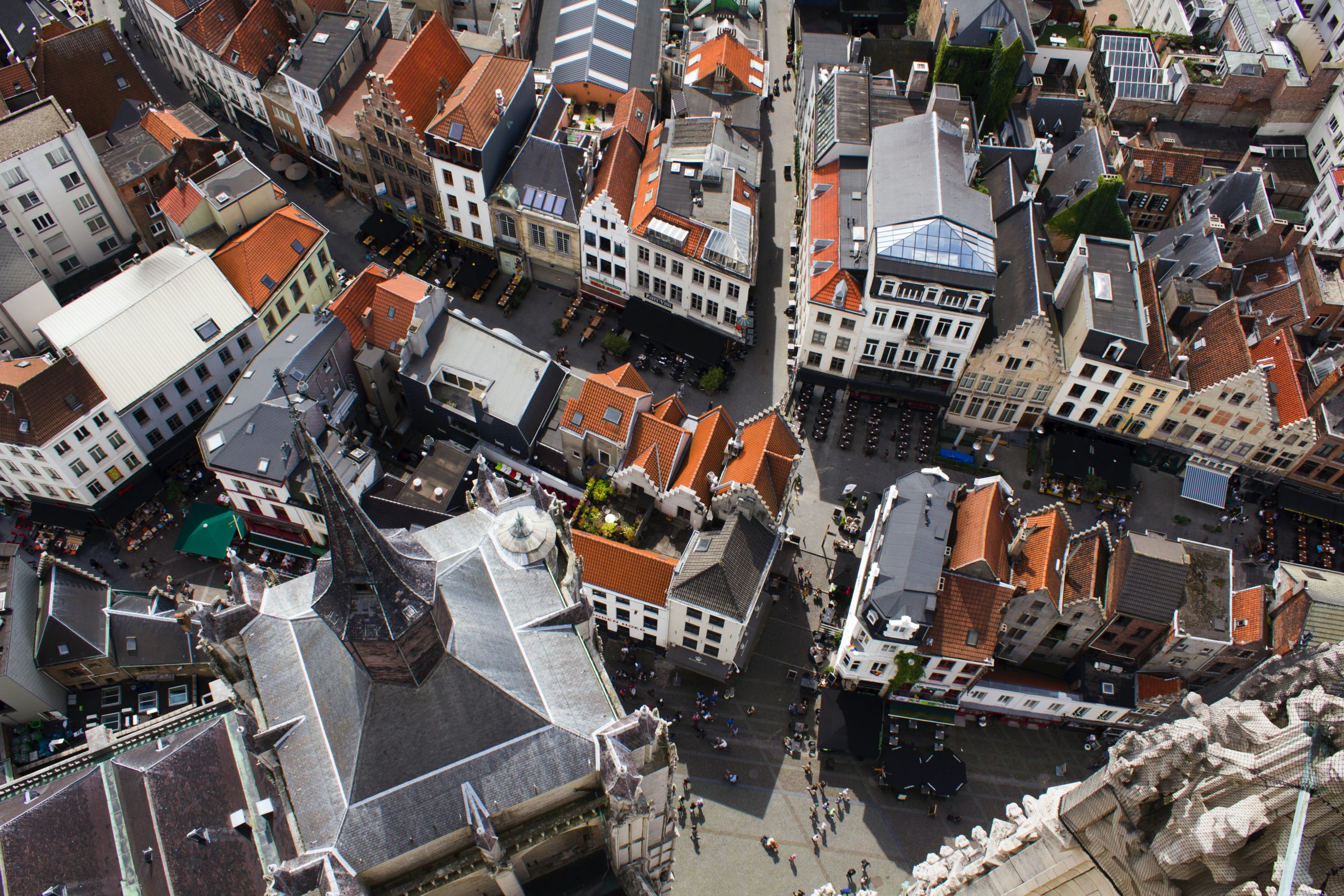
    One of my favorite trips was to the city of Namur. I went on a Saturday so I got to see the Saturday market set up in the main street of the city. The most popular stands are the fruit and vegetable seller and the flower vendors. In the heart of the city is the Citadel. It dates back to medieval times when the city was under siege. While the interior of the citadel was closed due to COVID all the outdoor areas were open. So I spent a few hours exploring the paths and passageways and lookouts. The day I was there, the city was hosting a 5K run around the citadel so that was fun to watch. But the two best things I saw all day were the giant golden turtle, and the bagpiper. The golden turtle is on the lowest ring of the citadel. I’m not sure why it was there. There was no information about it but it was still pretty cool. At the very top of the citadel is an amphitheater. This is where I found a man practicing his bagpipes right next to a pair of people practicing their kickboxing. It was truly a sight to behold, definitely not a combination I would have expected. It was a wonderful day in a beautiful city. So when you travel in a forgiven country, remember to explore, because sometimes the best things are the little things that just make you smile. Wandering around can lead you to the prettiest views and best memories.

    Photo by
    Olga Subach

    My tips for taking day trips are:

    1. Make a general plan; in Belgium a lot of the scenic towns have a town website that will give you a general idea of the things you can see there (example: https://www.namurtourisme.be/en/ ). There will probably be things that you have to register for in advance so that you can get a time slot. I liked planning a few things to go see, and then leaving myself some extra time to explore a little and check out other things that caught my eye.
    2. Make sure your family knows where you are; this is just kind of common sense, especially if you are going by yourself like I did. Also if you don’t know where you want to go, ask your host family for recommendations. They know the country better than you do so they should be able to give you some pointers.
    3. Know you public transport; the bus and train system in Belgium is pretty good…as long as you know how to read the schedules. So learn to read the schedules before your trip, not during. And make sure you have a ticket (if you are on a bus and don’t have a ticket they sometimes kick you off and if you are on a train they will fine you).
    4. Use a map; once again common sense, try to keep a general idea of where you are.
    5. Be aware of your person and your belongings; I tried to stay in areas where I knew there would be bystanders, such as churches, schools, shopping districts, parks. If you aren’t familiar with the area don’t just meander off with no idea of where you are or what kind of things are around you. Also try not to get stuck out at night, it is a lot harder to get home at night since the buses stop, so be aware of your time constraints.
    6. Be polite to people around you
    7. Public transportation workers will help you, just ask. They will let you know about delays, they will tell you which train stops where, if a train is canceled they will let you know which replacement train you can take. 
    8. Have some spare change; a lot of public restrooms will change you between .5 and 1 euros. So be prepared to pay to use the bathroom.
    9. Bring other people; it’s not always necessary, but it can be more fun and less stressful if you bring a family member or friend along with you.

    So really most of this just comes down to be smart and be aware.

  • From Studying in Spain to Peace Corps: Q& A with Alum Meredith McHugh

    From Studying in Spain to Peace Corps: Q& A with Alum Meredith McHugh

    You’ve heard us say it a thousand times: cultural exchange is lifechanging. We say it a lot because it’s true. Whether your cultural exchange program inspires you to become a chef instead of an accountant or changes your outlook on community, there’s no shortage of ways that living abroad impacts your life. In this Q&A, Greenheart Travel Associate Director of High School Abroad and Short Term Programs Allison asks High School Abroad Spain alum Meredith all about her best memories of studying abroad and how it’s changed her life.

    Photo courtesy of Meredith.

    Q: What made you decide on studying in Spain?

    A: Originally applied to study abroad in English speaking countries. Prior to my time in Spain I was one of those monolingual Americans who didn’t see the value in learning another language when English was so globalized. I was told that there weren’t any spots left in any English speaking countries but that there was a spot in Spain and Austria. I still wanted to study abroad and I had taken two years of high school Spanish so I chose Spain. That year completely changed my whole life and my whole perspective on language education. It even changed my career path. Beforehand I wanted to be a Speech Pathologist. Now I want to go to law school to study international and comparative law.

    Q: What was your life like when you studied in Spain?

    A: I went to IES Pedro de Valdivia in Badajoz and completed Primero Bachillerato. I was a part of the town’s track club and I competed in cross country and track. I participated in a charity race (Carrera de la Mujer) that strived to bring awareness to domestic violence against women in Spain as well as raise money for women’s shelters. I placed in the top ten in the race (and so did a couple of my teammates) so we qualified to run in the international race in Lisbon, Portugal.

    Q: Wow, it sounds like you did a lot of extracurriculars. What else did you do?

    A: Throughout the school year I worked with my English teachers to help my school qualify to compete in an international economics competition (Erasmus). My town’s English program wasn’t as great as schools in the cities so I would spend free periods going through their presentations with them and correcting grammar/pronunciation etc. They ended up presenting their project in Poland! I participated in a play (entirely in Spanish) for my literature class where I played a supporting role. I had about 12 lines and my classmates were so encouraging as I was learning them (the Spanish was very old, like Shakespeare level old English). Preparation for the play was about two weeks so we practiced every day during class or during free periods.

    Photo courtesy of Meredith.

    Q: If you had a to pick a really fun memory of your time in Spain, what would it be?

    A: Segundo Bachillerato did a baking competition and my friends in Segundo Bachillerato convinced the teachers to let me participate with them. We spent a week planning and a whole day cooking only to lose to someone who admitted that they just used Chips Ahoy that they snuck back from America! The irony of an American losing to an American cookie had us laughing all afternoon and this experience was the first time I had to bake without using US measurements. Using a food scale to bake blew my mind.

    Q: Overall, how do you think your year in Spain changed you?

    A:  This is my favorite story to tell to when I explain how much Spain changed me: My sophomore year of high school we had an exchange student from Barcelona named Ana. The day she was leaving she was helping me with my Spanish homework. I remember sitting at our kitchen table and crying about how stupid and useless Spanish was out of pure frustration. Two years later I met up with Ana in Barcelona after my year in Spain and we didn’t speak in English the entire week I stayed with her family. She brought up the story of me crying about Spanish the day she left and we could not stop laughing about it.

    Photo courtesy of Meredith

    Q: What are your plans now?

    A: I am currently applying to Peace Corps. My year abroad in Spain played a huge part in my decision to apply to the Peace Corps.

  • Congratulations to our 2021 First Time Travel Scholarship winners

    Congratulations to our 2021 First Time Travel Scholarship winners

    After taking a year break due to COVID, we are excited to announce our 2021 First Time Traveler Scholarship winners!

    First Time Traveler Scholarships are given to those who have never had the chance to leave their home country on their own. COVID-19 took the ability to travel away from everyone, but as things are opening up, we are so excited to support these travelers as they embark on their exciting study or teach abroad experiences!

    Learn more about this year’s group of First Time Traveler Scholarship recipients as they introduce themselves in their own words, and be sure to watch out for their videos and blog posts.

    Tatiana AlejoTeach in Thailand

    As a recipient of the First Time Travelers Scholarship, I’m very excited for my upcoming journey to Thailand. Throughout my childhood, I was able to make many friends from different cultures who have exposed me to foods, traditions, and languages that were very different from my own. This piqued my curiosity in traveling abroad and I’m excited to live and experience the places from which the people I love come from. Also, I’ve noticed that my peers often find it very difficult to take the time to travel back to their home countries or simply book a vacation abroad. Therefore, I’m excited to be able to document my journey with Greenheart Travel so that it can inspire or encourage others to take the risk and do the same. Lastly, we are living in a world where international travel has become less common and more difficult. With this upcoming trip to Thailand, I’m excited to be able to support local communities that rely on tourism and view it’s beautiful attractions while they are at its least populated state.


    Amanda MirandaHigh school Abroad in Spain

    Hello my name is Amanda Miranda and I am 16 years old. I’ll be going to Spain for an academic year! I’m most excited to try the Spanish cuisine and become fluent in Spanish. One thing about traveling that is exciting to me is going to different places and learning about different cultures and ways of life.


    Skylar SteffesTeach in Thailand

    As the months go by, I find myself growing more and more excited with the realization that I will be traveling to Thailand, and that this is actually happening. I have never been given the opportunity to travel much, and with the chance to travel and learn and grow through this program, I am endlessly grateful!


    If you are a first time traveler, don’t forget to watch some tips we have here: https://youtu.be/_nH3DQcbQDQ

  • Best Free Apps To Have When You’re Living Abroad

    Best Free Apps To Have When You’re Living Abroad

    There are so many different apps available to assist you in your travels, but many of them are geared towards short-term vacationers to help put together an itinerary or find the cheapest flight. While those apps will be useful when you have some time to plan a vacation, you’ll want to add a few apps to your phone that will make your day-to-day life a little easier. Below are a few of our favorite (free!) apps:

    General

    Maps

    • Downloaded Google Maps
    • Maps.me
    • City Maps 2Go

    Even if you do decide to get a data plan for your phone while you’re abroad, it’s still a good idea to limit your use of it as much as possible. Downloading maps before you leave home or a wifi hotspot helps you not get lost and save some data! Everyone has their preference, but these are the three most used map apps.

    Communication

    • Whatsapp
    • Facebook Messenger
    • Kakao Talk
    • Line

    Another way to save on your phone plan is to find out which free messaging app is popular in your host country. WhatsApp is the most common in general, Kakao is most popular in Korea and Line is prevalent in Thailand and Japan.

    Learning the Local Language

    • Duolingo
    • Memrise

    Duolingo and Memrise are the two most popular language learning apps. They are free and structured so that you only have to study for 10 minutes a day. They offer a wide range of languages but aren’t 100% inclusive so you may need to seek out a language-specific app for some countries, like Thailand.

    Language On the Fly

    • TripLingo
    • Scan & Translate
    • Google Translate

    Duolingo is good for the continuation of learning a language, but sometimes you need quick translation or an easy way to lookup a word/phrase. TripLingo is truly amazing. With over 100 destinations available, the app offers basic phrases and slang terms to help you sound more like a native. There is also a live translator option that actually works well, a dictionary and a culture guide for each destination. Google Translate is a good guide if you’re stuck on a certain word, but gets messy (i.e. wrong) when you start asking for full sentences. Scan&Translate allows you to take a picture of text and translate it which comes in handy when the local language doesn’t use the Roman alphabet.

    For the Classroom

    • Kahoot
    • FluentU
    • Words With Friends
    • Heads Up

    Phones are generally not allowed in the classroom, but you know the kids have them anyway and are trying to sneak glances when your back is turned, so why not turn a negative into a positive? Kahoot is an app where students use their phones to answer questions in a quiz that you made which can either be taken in teams or individually. FluentU is normally used as a language learning app (like Duolingo) but they have a ton of authentic English-speaking video clips to supplement your lessons. Games that are traditionally not educational like Words with Friends and Heads Up can still be used as a fun way to incorporate English in your classroom.

    VPN

    • NordVPN ($40/year)
    • PureVPN ($40/year)
    • Safer VPN ($6/month)

    A VPN (Virtual Private Network) is an app on your phone (or software on your computer) that protects your device with less secure networks, like public wifi, by encrypting the connection and using a different IP address. VPN’s are not free, but they’re on this list for their usefulness – travelers benefit from a VPN mostly for streaming services that are unavailable outside of their home countries, like Netflix for example. The VPN is most useful for those living in China where most apps are blocked (Facebook, Instagram, Gmail, Google) but Netflix and Spotify aren’t always available in other countries and they’re nice to have, too.

    Transportation

    • Uber
    • Moovit

    Uber isn’t always available in every country, but most places will have their own version of Uber to make up for it. Moovit works on desktop and has an app to help you find the fastest way from Point A – Point B with whatever public transit is available. There is a wide range of countries and cities available with Moovit so it’s great to use when you’re traveling for vacation too!

    Miscellaneous

    • Money – XE Currency
      • Easy way to convert multiple currencies
    • Safety – Smart Traveler (US Citizens)
      • Sign up for the STEP program before you leave home and stay up to date with safety in your host country with this app
    • Food – Happy Cow
      • Use this app to find vegetarian-friendly restaurants or dishes in your area


    Country-Specific Apps

    Korea

    • Kakao Talk
    • Kakao Metro
    • Kakao Bus
    • Kakao Taxi
    • Kakao Maps

    Kakao everything!

    Thailand

    • Learn Thai, Thai Pod 101
      • Language learning apps specifically for Thai that offer short, manageable lessons
    • Grabcab
      • Especially on the islands or Bangkok, this app really gives you an idea of what you should actually be paying even if you don’t use it to hail a cab
    • Next Station
      • Map of the all the Bangkok public train stops including the BTS, MRT and Airport line
    • Food Panda
      • Food delivery app similar to Seamless that can be used in big cities like Bangkok and Chiang Mai


    Europe

    • Flixbus
      • Find bus routes, schedules and buy tickets around Europe
    • CityMapper
      • Navigation tool that displays public transit info, such as cost and live departure times of buses and trains. It will even tell you the best section of the train to find a seat! CityMapper mostly has European cities, but there are a few other destinations like Seoul, Istanbul and Hong Kong.
    • Trenitalia
      • Mobile ticketing for Italy

    China

    • WeChat
      • Similar to Kakao, WeChat is a savior in China. You use it to text, as a social media platform, to order food for delivery and even to pay your bills or a cab fare!
    • VPN
      • Everyone has their preferred VPN, but if you want to continue using your favorite social media platforms, you’ll need to shell out the money each year for a VPN on your phone and laptop

    New Zealand

    • Grabaseat
      • Find super cheap domestic flights
    • First Table
      • Discounts for participating restaurants
    • Grabone
      • Similar to Groupon


    Have you used an app that was a life-saver during your time abroad? Comment the name below!

  • Black History Month: A Tribute to Black Travelers Past & Present

    Black History Month: A Tribute to Black Travelers Past & Present

    As February comes to a close, we finish another Black History Month in the United States – a celebration focusing on the history and achievements of African Americans. International travel, though not widely focused as focused on Black history, has been an important part of the journeys of many Black civil rights leaders and intellectuals throughout the last century. Though it was often out of refuge from racism (and in some cases, also homophobia) in their home country, their experiences abroad made great impacts on their work.

    For example, Martin Luther King Jr. traveled to India in 1959 (four years before his “I have a Dream” speech) for five weeks to meet with government officials, university students, Mahatma Gandhi’s family and friends and others in an exploration of non-violent resistance and advocacy. Renowned American thinker and writer James Baldwin spent time living in Paris, France while working on several books. The U.S.’s first Black Rhodes Scholar and writer Alain Locke wrote during the intellectual and cultural movement called the Harlem Renaissance in the 1920s and 1930s. He also spent time in Berlin, Germany, at various points in the 1910s in the 1920s during this city’s own cultural renaissance.

    Throughout the rest of the 20th century, other Black travelers like Victor Hugo Green (author of The Green Book), Betty Reid Soskin (the oldest active ranger in the National Park Service), Sophia Danenberg (the first Black woman to climb Everest in 2006), William Pinkney (the first Black man to sail around the world in 1992), and many others continued to travel domestically and internationally, overcoming discrimination and other barriers, and inspiring generations to come.

    In today’s globally-connected, social-media driven world, we get to watch travelers experience life abroad in real time. Harkening the phrase “Black History is Now,” we’d like to share just a few of our favorite contemporary Black travelers.

    This is by no means an exhaustive list, so we encourage you to continue researching on your own!

    Zim Flores

    An American traveler and entrepreneur founded the site Travel Noire in 2013 as a place for resource and inspiration for Black travelers.


    View this post on Instagram


    A post shared by Zim Flores (@zimism)

    Lola (Akinmade) Åkerström

    Though she isn’t from the U.S., we believe she still deserves a huge shoutout! Swedish Author, Travel Photographer and Speaker Lola (Akinmade) Åkerström won the 2018 Travel Photographer of the Year and wrote the international bestselling book LAGOM: The Swedish Secret of Living Well. She works frequently for National Geographic, BBC, CNN, The New York Times, and others.

    Evita Robinson

    Avid globetrotter Evita Robinson founded of Nomadness Travel Tribe in 2011. This online community is considered the “New Age, internationally based, digital Green Book.” Watch her TedTalk “Reclaiming the globe” here. “Black people do travel everywhere and we’re not a monolith,” she says in her talk.

    Jessica Nabongo

    In 2019, Detroit native Jessica Nabongo became the known first Black Woman of African descent to visit all 195 countries in the world.

    Further Reading, Resources, and Inspiration for Black travelers 

    As a non-profit organization whose mission is “Travel for a Change,” we admire these travelers for their advocacy, visibility, and enthusiasm for building bridges. We hope during this Black History Month you take time to research inspiring black travelers past and present.

  • Ready to Study Abroad? Here’s What You Need to Know About Being an Exchange Student During a Global Pandemic

    Ready to Study Abroad? Here’s What You Need to Know About Being an Exchange Student During a Global Pandemic

    Now more than one year into the COVID-19 pandemic, and countries around the world have been embracing the “new normal” and seeing a way forward.

    Greenheart Travel and our in-country partners have been continuously monitoring the health situations in our destination countries, and finding ways for our students to stay safe while also learning a new language, living with a host family, and attending high school abroad.

    Travel might look different this year – and for the foreseeable future – but the desire to connect with other cultures remains strong. And Greenheart Travel is still working responsibly to provide fun, successful and positive experiences abroad for all our high school exchange students.

    If you’re eager to study abroad this Fall 2021 or Spring 2022, here are a few things you should know.

    You may have heard about the “travel ban” for U.S. citizens entering the European Union

    Luckily, this does not apply to U.S. high school abroad students applying for student visas or residency permits. At the time of this blog post, students studying for a semester or academic year can apply for student visas and enter the E.U.

    While some of our other destinations still have entry restrictions for foreigners – including students – we are monitoring government regulations and we hope they are lifted shortly.

    Here’s what happens if you can’t get a visa or enter your destination country

    While we’re confident future study-abroad programs will run without entry restrictions, COVID-19 has taught us to prepare for unexpected changes. If you apply and your program start date is cancelled due to COVID-19 or its effects, Greenheart Travel has a COVID-19 Refund and Cancellation Policy with several options for students to either defer to a new start date or switch to a different Greenheart Travel program.

    When you travel, you’ll most likely be required to quarantine upon arrival

    Yes, you’ll arrive in country and may be required to stay at home with your host family for 10-14 days before heading to school. (Note: many countries will decrease the quarantine period if you arrive with a negative COVID-19 test result and/or get another COVID-19 test upon arrival.) But it doesn’t have to be boring! In that time, you’ll be able to overcome jetlag, practice your language skills, bond with your host family, eat some great meals, and set yourself up for success for when you can experience the outside world. (Imagine how many household vocabulary words you will have mastered!)

    Each country has frequently changing requirements, so you’ll likely not know your exact arrival process or quarantine experience until just prior to departing for your destination country. Don’t worry – we’ll keep you updated throughout the whole planning process.

    Just like life at home, life abroad will be different than pre-COVID-19

    The COVID-19 pandemic has altered everything–events, activities, and ways in which we used to gather and socialize. We’ve heard many people refer to study abroad as a way to “escape” the shelter-in-place orders in their hometowns or ensure they have full, in-person classroom experiences.

    However, just like at home, each country, region, and local community abroad is coping with COVID-19. In many cases, we are unable to run group arrival orientations in person, so high school students will have individual orientations with their local coordinator, either online upon arrival or in person after the quarantine period. Students may not go to school full time in person as they did pre-COVID-19. Staggered scheduling, hybrid models, or fully online learning are still common, and may be for a while. Many of the optional weekend excursions with other exchange students have been put on hold until we determine it’s safe for students and staff to travel during the program.

    No matter where you go in the world, you won’t avoid the effects of this global pandemic, but that doesn’t have to stop you from embracing life abroad, whatever that looks like! Even with a mask on, you’ll still be making new friends and discovering daily life abroad–like experimenting with different routes for cycling to school in the Netherlands, or picking up on new slang words in Italy, or taking long forest walks near your host family’s house in Norway. If it were up to us, we’d also taste each of the over 365 types of cheese in France—while demasked of course!

    And by now you’ve probably guessed: You must be an adventurous, curious, and flexible traveler to have a successful experience during COVID-19

    You’re likely an adventurous person by nature, or you wouldn’t be here reading this. But COVID-19 has added a completely different element.  There’s a lot we don’t know. There are a lot of entry requirements that change. Government health measures and restrictions change. And the way your host school runs things might change. Your start date could be pushed back or a consulate might take longer than normal to process your visa. That’s life in the time of COVID-19.

    The one thing that hasn’t changed? Studying abroad requires you to be courageous, determined, and non-plussed. When so many factors are out of your control, you’ll learn to be patient, flexible, and savvy when confronting obstacles. We’re committed to continuing meaningful cultural exchanges and we’ll work with you every step of the way. All we ask is that you buckle up for an unpredictable ride!

    Are you up for the challenge?