Category: High School Abroad

  • 5 Reasons Studying Abroad in High School Will Change Your Life

    5 Reasons Studying Abroad in High School Will Change Your Life

    You are googling high school abroad. You are scrolling through Instagram to see all the inspiring travel photos. You are preparing a powerpoint to easily present this crazy idea to your parents – they may even have said “Yes!!”. You’ve watched all the Youtubers you can and you are ready to go!!  What is stopping you?  In case you need even more inspiration to take that leap – here is a helpful list of the ways you will be forever changed if you do decide to go on a high school abroad program.

    Be part of a select group.

    Did you know only about 1,200 students go on a high school abroad program every year? That is for the entire United States! You will be one of the select few students who actually becomes an exchange student in high school.

    Develop practical language skills.

    There is NO better way to gain fluency in another language. I get asked all the time if it would be better to study abroad in college and don’t get me wrong that is wonderful BUT the problem is you don’t usually get the same level of language and cultural immersion. How you can settle in and learn about the daily life of your host country and how can you have any hope of gaining fluency in the language if you are with international students and speaking English all day.

    Have roots on the other side of the world

    The host family you stay with will be your family for your whole life! How beautiful is that? You essentially become their son/daughter, you do life with them and that is a bond that lasts. Ask anyone who was an exchange student in high school and they will tell you that even into adulthood, they stay in touch with and visit their Host family. Don’t miss out on this opportunity for a sincere connection with a family abroad. Not to mention your local friends.

    Experience being independent

    If you study abroad in High school, there is nothing that will intimidate you. If you can leave your comfort zone and spend three months, a semester, or (eek!) a year of high school abroad. You will become SO much more confident, independent, and mature. It’s amazing and you are learning a million things that you could never learn if you stay home.

    Prepare for the future

    You’ll get much more out of your college years if you study abroad in high school. So many students go to college and have no idea what they want to do. I sure didn’t! Living in another country and seeing another part of the world really helps you understand yourself better and move into your college years with more confidence and clarity.

    I hope this list was helpful. If you are still unsure, I’d be happy to talk discuss the options with you or your parents or you can reach out to past and current participants in our Facebook group. Here is my calendar, find a time that works for you and we’ll talk soon!

  • Next Step After Teen Summer Language Camp: High School Abroad

    Next Step After Teen Summer Language Camp: High School Abroad

    So you just finished your Teen Summer Language Camp. You’ve embraced life with a host family, sampled your new favorite foods, accelerated your language skills and met other teens from all over the world. But the summer is coming to a close, and you wish you could do it all over again, or at least stay abroad a little longer. 

    And you can! By being an exchange student on a High School Abroad program

    Now, let’s not get confused. Teen Summer Language Camp is NOT just a short version of High School Abroad. The two programs are totally different but go hand in hand. 

    Here are some of the similarities and differences broken down:


    High School Abroad 

    Teen Summer Language Camp 

    School   Local high school  Language school  
    Accommodation         Host family  Host family or residence hall 
    Length Summer (1-2 months), trimester, semester, or academic year  2-6 weeks  
    When  Summer, Fall, Spring  Summer  

    Both Teen Summer Language Camp and High School abroad offer full language and cultural immersion, but the lengths and experiences are vastly different.  

    After successfully completing a Teen Summer Language Camp, you’re ready for the new experiences, joys and challenges that come with studying abroad in a local high school for a longer period.  

    Greenheart Traveler Alexander Obenchain always knew he wanted to study abroad in high school in Japan. In Summer 2018, a Teen Summer Language Camp in Tokyo was the first step to help him prepare for his academic year high school study abroad in 2019. Easing into the language and culture of Japan in Summer 2018 allowed Alexander to hit the ground running when he landed in Japan for his high school program.  

    “Coming for a smaller amount of time helped me prepare for the difference in atmosphere between here and the states,” he explains. “It was certainly a good thing to have studied the language a little bit more in-depth beforehand. I can also compare my skills from now to then.”  

    And navigating the Japanese train system? He figured that out a long time ago!  

    But you don’t have to return to the same country you went to for your Language Camp. Maybe you went to Salamanca, Spain in the summer, and now that you know you can handle being far from home, want to explore Sweden!

    So is studying abroad in a local high school right for you? With improved language skills, you’ll be ready to learn subjects like math, science, and drama in another language. After living with a host family for a few weeks, you can anticipate how much you can learn about a country and its culture through observing (and living) day-to-day life abroad. You’ve proven to your parents that you’re independent, capable and problem-solving.  

    You’ve gotten a taste, now it’s time to thrive.  

  • 8 Ways to Support Your Child While Abroad

    8 Ways to Support Your Child While Abroad

    When you’re a parent sending your child abroad, you know there’s a lot they must prepare for: culture shock, homesickness, and language barriers. But your children aren’t the only ones experiencing a life change 

    “This was definitely a learning experience for the parents as well!” says Lisa Hall, mother of high school in Sweden alum Matilda. “It was very hard to not be there to help when things were tough.” 

    So what can you do? Miles away from your children, how can you still support them? We asked parents of Greenheart Travel alumni share their insight on how you can best support your child while they’re abroad. Here are their tips.  

    Before they go abroad, talk about life when they return  

    “Prior to him leaving for the 6 months, we did discuss what he wanted to do at his school in the US during his junior year.  He decided he would try to run for student council office while he was overseas.  And unbeknownst to his dad and I – he did run, campaigned via Instagram and won the vice president spot for the upcoming junior class here in the US.  The lesson to learn…. make goals with your child and then let your child be the captain of that ship while he is away.” -Bonnie Green, mother of high school in New Zealand alum Graham.

    Agree on a weekly time to talk – and stick with it  

    Schedule a time and way to communicate in advance, that way you are both on the same page. For example, decide that they need to check-in on Sundays around 7:00 pm their time via WhatsApp. This way, you don’t need to send them texts throughout the day because you’ll already have a set time to catch up. 

    Mary Scott, mother of language camp in Spain alum Emmy, explains why it’s so important to give space. “While she was abroad, we made sure we weren’t constantly bombarding her with texts and skype calls which at first was difficult. However, we knew she would have a more enriching experience if she wasn’t having to think about us back in Michigan the whole time. We wanted her to be able to completely devote herself to speaking Spanish and learning about her new environment.”

    For Hall, being far from her daughter was “hard in a different way when she was having so much fun, there was hardly any contact! But that was the best kind of growth for us all.” 

    Olivia McCollum at her high school while studying abroad in Japan

    Recognize that YOUR life is going to change  

    Your life at home is undoubtedly going to change. For Bonnie Green, she and her husband experienced being empty nesters for the first time.

    Her advice? Take this opportunity and focus on you.  

    “Make a list of things YOU want to do while your child is away. My husband and I took dance lessons, had adult only (no children) dinner parties, accomplished house updates, traveled to visit our children who were away at college, visited aging parents, put in extra time at work and started hiking more.”  

    And that leads us to our next point… 

    Don’t say how much you miss them or how much you want them home

    Your child will most likely be homesick at some point, and it can be really hard to go through that while hearing pleads to come home. Being asked to come back and hearing about what they are missing at home can make a hard day so much worse. 

    Instead, tell them that you are so excited to hear about their adventures when they are back.   

    Jacob Dane Chilton with host family in Spain

    Encourage them to reach out to local staff and take initiative  

    Part of why going abroad builds confidence and leadership skills is because travelers are expected to speak up and handle themselves. Instead of telling your teen what to do, or doing things on their behalf, allow them the opportunity to be independent. This is especially important when handling the pre-departure logistics so that they don’t feel totally lost when stepping foot in the airport. “When a problem comes up, discuss the different ways it can be solved instead of jumping in and telling them what to do.” says Scott.

    The best thing you can do for your teen is to let them practice communicating with adults and learning how to manage themselves. It can be hard to trust your child to do everything right but giving them that space to grow will make them better prepared for their program (and life).  

    I think it is vital that while your child is aboard that he/she become a part of their new community,” says Green. “While he did stay in touch with friends in the states, he made friends in NZ.  The small town even had a send-off for him and took him to the airport.” 

    Read about their country and take interest when they share new knowledge 

    A great way to get involved in their experience is by learning more about the culture in the country in which they’re going. As  you learn about your child’s new home, take note of what your child is excited about. “I was sure to listen to all the positive details, no matter how small!” says Hall. 

    You could practice making a tortilla española or start listening to the music of traditional Austrian brass band and surprise them with your newfound knowledge.  

    Greenheart staff member Allison Yates’s mom started learning Spanish when she studied abroad in Argentina. “She knew that Spanish was a huge part of my life, so it meant so much that she wanted to learn it too! It helped her feel like she understood my experience more,” says Yates.  

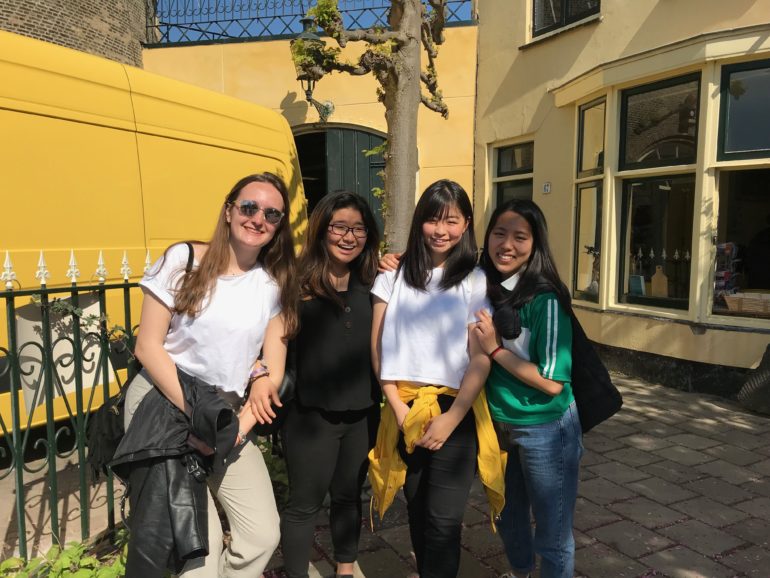
    Students attending high school abroad in the Netherlands

    Educate yourself on what they might be feeling – and how you can help from afar

    A great way to get a sense of the mental and emotional experience of studying abroad is by completing the Greenheart Travel Atlas along with your child. This is tool for before, during, and after the cultural exchange experience that includes personal and professional development, cultural understanding and environmental awareness. 

    For example, if your normally independent child calls you multiple times a day when they first arrive in the country, you’ll remember it’s likely initial culture shock.  You can remind them to follow the Greenheart Travel Atlas tools to overcome this stage and focus on meeting new people and spending time with their host family.  

    Halls says she supported Matilda by “making sure she knew I was there to talk about things, whether they were positive or negative. I tried to give her as much time as I could, but not to have it be open-ended or all the time.”  

    While your first instinct might be to check in more frequently, increased contact with friends and family back home only exacerbates culture shock. 

    Rest easy – they’re in good hands 

    We had to give up our control and trust in the goodness and professionalism of others. We did our research, chose a great partner in Greenheart, and raised a strong daughter,” says Laura Foster, mother of high school abroad Costa Rica alum, Eleanor.  

    As parents and former exchange students, Greenheart and our in-country partners know what it’s like to be far from your family, and we work to equip students with the tools they need to succeed.  

  • For Every Parent Who is Hesitant to Let Their Child Go Abroad

    For Every Parent Who is Hesitant to Let Their Child Go Abroad

    Maybe it surprised you when your teen brought up the notion of traveling on their own, or perhaps they have talked about it for years. While they are thrilled by the idea of exploring a new country, you might not share the same excitement. We get it, you want to protect your child and make the best decisions for them. However, if it is hard to imagine your child traveling without you, then that’s all the more reason they should go.

    This post will address the top concerns from parents who are hesitant to say “yes” to their child’s pleads to study or volunteer abroad.

    “I don’t understand why my teen wants to travel.”

    Like any of your child’s interests, it’s important to listen to why it’s something they enjoy. Are they passionate about reforestation in Puerto Rico? Do they love Spanish art? Fascinated by the history of pop culture influence in Japan? You do not need to share the same feelings, but taking the time to learn about why your child is interested in other cultures shows that you care about being a part of their life.

    “Traveling is expensive.”

    You’re right. And so are piano lessons, theatre camp, football equipment, and really any activity that your child gets involved in. It’s just a matter of choosing what takes a priority.

    A lot of teens who travel pay for their program themselves by getting a job or fundraising. It builds work ethic, budgeting skills, and doesn’t cost you a thing.

    Graham Green sky diving while studying abroad in New Zealand

    “But we travel as a family.”

    A family vacation can be educational, but it is not the same thing as a cultural immersion experience. Studying or volunteering abroad is not a long-term vacation. Teens learn what normal life is like in another country. A lot of things will feel a lot harder, like communicating with peers or learning cultural practices. These are the parts that feel so rewarding.

    Traveling without family allows for that room to grow. Teens are expected to adapt and figure things out for themselves, within a safe and structured environment. Traveling without people they already know is the reason why teens call their time abroad the most influential experience in their life. It’s the first time they really feel independent and capable on their own.

    It’s not safe.”

    This is probably the number one concern for parents, and rightly so. You don’t have first-hand experience of the country, and trusting other people with the most important thing in your life, your family, seems insane.

    The truth is that even the safest places in the world seem daunting if you are unfamiliar with the area.  Traveling through a program provider is so important because the locations have been specifically selected, host families have been vetted, and thousands of other people have done it before you.

    “They just saw someone else do it on social media.”

    We urge everyone to reflect on the true reasons they want to travel. If you wouldn’t travel without a camera, then maybe you should reevaluate what it is you’re trying to accomplish.

    Ask your teen what it is they are looking to get out of the experience. You may be surprised by their thoughtful response. We have found that most travelers are interested in world issues, developing communication skills, or being pushed out of their comfort zones. Our programs are designed with that in mind.

    Surf lessons at Teen Summer Language Camp in Costa Rica

    “Whatever they want to do abroad they can do here.”

    We can only speak for ourselves, but our programs offer excursions and activities that are authentic and specific to the country, like learning how to make stroopwafels in the Netherlands, anime courses in Japan, or elephant conservation research in Sri Lanka.

    Even doing the same mundane activities abroad will be a different experience because travelers are interacting locals. This is when people truly grasp the similarities and differences between cultures.

    “Going to high school abroad is too much of a time commitment. They will miss out on a lot.”

    High schools outside of the US have the same clubs and sports that exchange students are welcome to join. For example, our First Time Traveler Scholarship recipient, Fiona MacDonald joined a local hockey team in Sweden so she could continue her sport while abroad.

    Friends will still be here when they return. The time apart will allow your child to develop a sense of who they are as a person independently from their friends by developing leadership skills and core values.

    There is so much more to gain from traveling than there is to lose. If your child wants to be an exchange student abroad, then they have most likely already weighed the pros and cons and have decided that missing a trimester, semester, or year is worth it for them.

    Tess Wallace Tess with her host mom at the Albacete Half Marathon while studying abroad in Spain

    “It will hurt them getting into college.”

    This is another very common fear parents have about their child studying abroad. The college application process is more competitive than ever, so doing anything out of the ordinary might seem like it would hurt your child’s chances of getting into their dream school.

    Studying abroad makes a college application stand out; it serves as an example of how your teen is not only ready for college but that they will thrive in it. Showcasing the ability to grow in a totally new environment, being self-motivated, and passionate about learning are all things that colleges look for in their students.

    “But I will miss them.”

    They will miss you too. But they will return feeling accomplished with a newfound appreciation for the world around them. What more can you ask for as a parent?

  • What to Know Before, During, and After Your Teen Goes Abroad

    What to Know Before, During, and After Your Teen Goes Abroad

    So, your teen has asked to go abroad, huh? It can be hard to grapple with the common fears: “What if they get lost? Is it safe? What if they want to come home? What if I want them to come home?”

    And what makes everything a bit harder is not having another parent who you can talk things through, who can specifically relate to the process. The logistics and paperwork are complicated enough without having another person who knows what it’s like to have their child on the other side of the world.

    We think one of the best ways to help prepare you for your child to study abroad is to read about another parent’s perspective. In order to gather and present the first-hand experience, we asked Mary Scott some questions about how she felt before, during, and after sending her daughter, Emmy, abroad.

    What were some of your biggest worries about sending Emmy abroad? How did you overcome them?

    One of the issues I was worried about was that Emmy would have airline problems, such as a flight being delayed or canceled. This actually happened and when she called us from the airport, we just talked through it, and she figured out what to do. Greenheart’s team kept her calm and helped her schedule a new flight. My husband and I knew then that we had put her in the right hands. 

    Another worry that I had was that she would miss home too much, or rather that I would miss her not being at home too much. But I knew this was something she had been interested in for two years leading up to her applying. She wanted to have this experience for more than just being able to post pictures of it on Instagram; she wanted to improve her Spanish fluency and learn about another culture, and being immersed is the best way to do that. 

    What did you feel as a parent during each step of the process (before, during, after the program)? How did you see Emmy grow?

    As Emmy is a very motivated person and traveling abroad is something she really wanted to do, I feel like my husband Wes and I just sat back and let her do her thing. She researched Greenheart, read a lot of blogs about other students’ experiences and found out everything that she needed to do (paperwork, etc.) She basically let us know what she needed to do and when and earned money for the trip by selling our maple syrup at farm markets, redeeming cans and bottles, and her part-time job. I know this was a great experience for her as far as making sure she had all her ducks in a row. 

    While she was abroad, we made sure we weren’t constantly bombarding her with texts and skype calls which at first was difficult. However, we knew she would have a more enriching experience if she wasn’t having to think about us back in Michigan the whole time. We wanted her to be able to completely devote herself to speaking Spanish and learning about her new environment. 

    Emmy grew in more ways than we couldn’ve imagined. While she was very motivated and independent before, she grew almost tangible confidence from her program. After that summer in Salamanca, she went into her senior year of high school and signed herself up for Spanish classes at a community college nearby and received credit that she could later use for her degree when she went to university. She found a Spanish tutor as well. She did all of this not because she hadn’t learned enough in Spain, but because she found her passion there and wanted to continue her growth. 

    What was it like traveling with Emmy two years after her program in Spain? How did you see her program affect her life in a positive way?

    Oh my gosh! It was so awesome! I’d only been to England, Scotland, and Wales on a tour thirty years earlier and my husband, Wes, has never been overseas, although we’ve traveled many times throughout the U.S as a family. Spain was such a great country. With Emmy being so fluent in Spanish and knowing how to travel from one part of Spain to another, it was a great experience. I was so proud of her conversing with the locals and even being able to help other tourists when we were hiking part of El Camino de Santiago in Galicia. At one point she was able to help a sick woman on the trail find somewhere to stay for the day when she couldn’t speak to any of the hostel owners and they couldn’t speak to her. Emmy handled the situation perfectly!

    What advice would you give to other parents who haven’t traveled abroad before?

    I don’t know what advice I can give to other parents except to let your child do as much as possible in the planning of his/her cultural exchange program and when a problem comes up, discuss the different ways it can be solved instead of jumping in and telling them what to do. Make sure they have a realistic expectation of how much the trip will cost and how they can contribute to the expense. 

    What were some ways you supported Emmy while abroad?

    We kept in contact with her on Whatsapp. That worked out pretty well. She would send us pictures and small videos, also. She knew she could contact us if she had any concerns so we tried not to bother her too much! When she got homesick (which wasn’t very often) we reminded her that her feelings were valid and suggested that she take a walk or talk with her host family to see if there was anything they could do to make her more comfortable. We also sent her pictures of the dogs to cheer her up!

  • The Student Visa Process Broken Down Step-By-Step

    The Student Visa Process Broken Down Step-By-Step

    If you’ve ever gone abroad before you have most likely had to fill out some sort of international documents and paperwork. It’s a drag. Who wants to fill out what seems like form after form when you could be creating a travel itinerary of all of the places you are dreaming of going! However, this paperwork plays an important part in keeping you safe and accounted for while traveling abroad. More often than not, your duration and reason for travel determine how much paperwork and planning you have to do.

    This blog will serve as a guide to my experience with obtaining a Student Visa at the Spanish Consulate in Chicago. Currently, I am nearing the end of the process of applying for a Spanish Student Visa. I will be studying at the Universidad de Sevilla in Seville, Spain next year for nine months and couldn’t be more thrilled!

    Don’t know what a visa is? Click here.

    To be honest, I’ve never really minded filling out paperwork, especially when it came to cultural exchange; I knew it meant that I was one step closer to getting off that plane and interacting with locals. However, I’m going to be frank and say that this application was no walk in the park. Because I will be studying in Spain for over 90 days, I needed to apply for a student visa, and because I would be staying over 6 months, there were additional documents I needed to obtain. 

    Before I could even start on all of this paperwork, I needed to figure out where my closest Spanish Consulate was and make an appointment no sooner than three months before the start of my university classes. Since I live in Michigan, the closest consulate was in Chicago, a place where I luckily know quite a few people (Greenheart Travel 💚). With my appointment date set, I got to work on the long list of things I needed to acquire. 

    National Visa Application 

    I got this from off of the consulate’s website and filled it out with some help from my program coordinator. This form needs to be completed in capital letters and with DD/MM/YYYY format. Once it was filled out, I glued one of my passport photos to it and made a copy.

    Money Order

    For the Chicago Spanish Consulate, the current fee for a student visa was $160. They do not accept cash or check so I went to my post office to get a money order. I paperclipped this to my application form. 

    Prepaid/ Pre-addressed USPS Priority Express Envelope and Disclaimer Form

    This envelope is a bit pricey ($30 ish) but guarantees that your documents will be delivered quickly and safely. I put the consulate’s address on the “From” and my home address on “To.” The disclaimer form is found on the instructions form from the consulate and states that you are allowing the consulate to mail your passport with the visa back to you. 

    Original Passport and ID

    A passport was something I luckily had already so there was no extra paperwork there. Keep in mind that generally, a valid passport is one that will not expire for at least six months after the date you leave the foreign country. I photocopied my passport as well as my university student ID, and my driver’s license. Be sure to bring your actual passport and cards to the appointment as well.

    Two Passport Photos

    I got these taken at the study abroad office on my university’s campus for $3, but you can get these taken at a lot of places like the post office or Walgreens.

    Original Hardcopy Acceptance Letter, Evidence of Funds, and Proof of Health Insurance

    Since I am going through a study abroad provider, this was all taken care of and sent to me. 

    All three of these needed to be in Spanish or have a translation. The acceptance letter was to prove I was enrolled as a full-time student, the evidence of funds was to assure that I would be able to pay for my program, and the proof of health insurance was to cover any medical fees I might obtain during my stay. I made a copy of each of these forms. 

    Medical Certificate (For stays over 180 days)

    On the consulate’s website, this is one of two additional forms to print out for stays over 180 days. I just made a normal appointment for a physical and brought in the paper. This form states that you are in good physical and mental health and do not have pre-existing conditions. There was a little confusion at my appointment as the form had a Spanish translation of what it said in English that needed to be stamped and signed as well. Because there wasn’t a translator in my doctor’s office that day they wouldn’t stamp it (surprising for a town that has a significant Hispanic population), so I had to come back the next week when the translator was in. I made a copy of this form. 

    FBI Background Check with an Apostille (For stays over 180 days)

    This document was definitely the most frustrating and tiring of them all. It began by going through a service called Accurate Biometrics (there are a few to choose from) to get my fingerprints scanned and sent to the FBI to run the background check. This was relatively easy as I made an appointment online then went into a FedEx office for the scan. It cost about $40 and took just about ten minutes. My results were sent to me the next day through my email.

    This is when it became difficult. I needed to get an Apostille of the Hague Convention (this is a kind of “stamp” that makes the document internationally recognized) issued by the US Department of State in Washington DC. I hadn’t received any direction on what this was or how to get it so I emailed my program coordinator and went on the government website. Since I had a little over a month until my appointment at the consulate, I decided not to go through an expensive apostille service and just send it to the Office of Authentications myself. In my envelope, I needed to include my FBI background check, an apostille request form (called a DS-4194), a check for $8 (that was the fee for my document), and a pre-paid addressed USPS envelope for them to send me my document back.

    I had read that this would take about 10 or 12 days. When it got to be around that point, I called the office to check my document status. After waiting about 20 minutes on hold, they told me that I was not in the system and that it must be in their mail room still being sorted. I knew I should’ve gotten tracking for this envelope… I called back multiple times over the next couple days and got the same response every time. I started to panic a little as my visa appointment quickly approached. With an urge from my study abroad coordinator, I swallowed my pride and contacted an apostille service. Because I didn’t have much time left before my appointment I was forced to get the “rush” service which was about $300 altogether. 

    With $300 drained from my bank account, but a bit more peace of mind, I waited for my last document to arrive. It came by mail with 3 days before my appointment. Because this also had to be translated into Spanish, I went through the company One Hour Translation. With my FBI background check and the Apostille, it was around $45 and was sent back to me within 50 minutes. After I received these last forms, I compiled everything into an envelope and waited for my appointment. 

    But you’ll never guess what showed up in the mail the day before my appointment…

    My ORIGINAL FBI background check with Apostille. Yes, the one I DIDN’T have to pay $300 for… My only advice is – buy tracking for your envelopes. 

    The Appointment

    On the day of my appointment, I woke up pretty early to catch a train from Michigan City, IN to Chicago. I got to the consulate a bit early; because there wasn’t a sign in sheet, I sat down and waited to be called. Once called up to the window, I handed over all of my documents and passport. The official checked them all and handed back the originals (to be used while in Spain) and kept the copies. All that was left to do was give him my envelope and disclaimer form. This appointment took no more than 5 minutes. He even thanked me for being so organized and following the instructions! 

    To be honest, this process was probably one of the hardest and most mentally taxing things I’ve ever had to do. However, I know I truly am one step closer to experiencing new changes; changes that will introduce new people, insights, and ideas to my life.

    This post is an example of a student’s perspective of applying for a student visa. This is not a step-by-step guide for applying for student visas. Each country (and each consulate) has different requirements. While Greenheart cannot apply for your visa for you, we provide detailed application instructions and support during the application process.

  • VIDEO: High School Exchange Students Interview Each Other

    VIDEO: High School Exchange Students Interview Each Other

    When deciding whether or not to study abroad as a high school student your mind is likely full of questions like “Will I make friends!?” or “What if I’m lonely?” While we are here to can support you as much as possible through things like the Greenheart Travel Atlas, nothing can beat hearing first-hand from two Greenheart high school study abroad students about their experience.

    Ian is an American who studied abroad in France with Greenheart Travel. Paula is a Spaniard who studied abroad in the USA with Greenheart Exchange. How are their stories the same/similar? Watch to find out!

  • From Studying Abroad to Cultural Experiences at Home, How to Pursue Your Dream of Global Exploration

    From Studying Abroad to Cultural Experiences at Home, How to Pursue Your Dream of Global Exploration

    Before the pamphlet even touched her hands, Leah Miller’s mind was thousands of miles away, imagining life as a high school exchange student in a foreign country. 

    Leah’s inspiration to study abroad was sparked by a Greenheart Travel team member who visited her high school in rural Michigan. As a junior in school at the time, Leah was seeking adventure, challenge and ways to feed the curiosity blooming inside her while still being able to graduate with her fellow classmates. 

    Alumna Leah Miller in traditional clothing during a holiday in Costa Rica.

    Interest in Studying Abroad Increases While High Schools Slow to Show Support

    International education is nothing new. For hundreds of years, people have been traveling to foreign countries to learn new languages and observe other cultures while attending school. What is new is the changing demographic of people who go abroad and their growing amounts.

    Although less than in many other countries (fewer than 1 in 10 U.S. students study abroad), the last decade has seen a continuous increase in the amount of university students studying abroad from the U.S., with numbers more than doubling since 1998. As this number rises, high schoolers have not refrained from joining the trend.

    Unfortunately, despite an increase in high school students interested in studying abroad, high school systems are still working to catch up to offer support. Without systems in place for transferring international class credits, a lack of understanding from teachers or guidance councilors and the threat of delayed graduation, many students find they have to wait until university for their chance to live and study abroad.

    Alumna Leah Miller works on a school art project in Costa Rica.

    ¨I wanted to go for a year,¨ Leah explains, referring to her wishes to study Spanish and the local culture of Costa Rica during a high school exchange program. ¨I asked [my school counselors],  ‘If worst comes to worst, and I can’t transfer any credits I get in Costa Rica, can I still graduate?’ That was the reason I only went for five months, [ ] so that I could still graduate.¨

    Although Leah praises her teachers for their support and eagerness to help, she was only the third person in her school’s history to study abroad, and navigating academic credits between countries was uncharted territory.

    Finding Solutions to Transferring International Class Credits

    Leah is not the only student who has encountered issues transferring credits from her time abroad. Differing curriculums and school systems between countries make it hard for schools to know whether or not the classes taken abroad are the equivalent of what would be taken in the home country, and if the credits should therefore count at all.

    Schools are typically supportive of the idea of cultural exchange. When students are able to study abroad, they return with a greater sense of independence, clearer academic goals and a better understanding of the global community. All positive traits to have as a student, but the nature of transferring credits remains the main obstacle of putting ideas into action. The possibility of having to repeat a year, or, like in Leah’s case, graduating with a different class, tends to be enough to turn students away.

    My Personal Experience Studying Abroad with the Help of a Supportive School System

    Rachael speaking in front of her school, in Spanish, during her study abroad program in Costa Rica.

    Before leaving for my own ten-month high school program in Costa Rica, there was ambiguity and an abundance of questions regarding my ability to transfer credits. I was told that whether or not I would receive grades depended on my school in Costa Rica, and that I could only get answers once I arrived in the country.

    Although my Costa Rican high school’s ability to help with class credits was based off of luck, it was reassuring to know that my hometown school, Lincoln High School in Portland, Oregon, was willing to do all they could to ensure I would graduate on time. Lincoln High School has managed to make going abroad a more accessible possibility for students. By offering and accepting a larger variety of classes that meet graduation requirements, Lincoln has worked with the Portland Public School District to simplify the process of transferring credits.

    Kara Wendel, who is approaching her eighth year of teaching freshman and junior English at Lincoln High School, explains that the school views cultural exchange as ¨a way to better one’s self academically, rather than interrupting four years of high school.¨

    Rachael and classmates in Costa Rica.

    Outside of traditional exchange, she estimates that teachers, particularly in the language department, spearhead at least two to three trips abroad each year.

    This is good news, but fails to affect the thousands of students across the United States who do not live in Portland.

    It takes time for schools to change their curricular requirements, and the obstacles that interfere with smooth academic transitions after going on an exchange may seem daunting. Regardless, the benefits of engaging in other cultures are worth the challenges and frustrations. As a study abroad alum herself and having visited about 20 countries (she lost the exact count), Wendel sees the positive effects of traveling both in herself and the students she teaches.

    The Benefits of Studying Abroad in High School

    Greenheart Travel alumna, Olivia, poses with her friends during her high school abroad program in Spain.

    ¨Socially, [the students] seem to be more open to meeting people,¨ she says. ¨[They are] willing to talk to someone and not be afraid of the social risk. I also think that they are a little more in tune to world events because of the travel experience.¨ Wendel continues that students are often ¨able to see from a point of view that they couldn’t see from before.¨

    I can personally attest that my social skills have improved since my time abroad, but that the changes also go beyond what is easily noticeable to those around me. I have adapted healthier methods for stress management, and have learned to use more efficient study techniques.

    With more than one language under my belt and an enhanced interest in the world around me, I feel more compelled and prepared to explore new countries and learn from their cultures. For these reasons, and the beautiful relationships and memories created through travel, thousands of exchange students find the value in seeking what exists beyond our comfort zones each year.

    Every moment of awkward confusion, misunderstanding, homesickness, or hoop you must jump through to engage in other cultures is worth it a million times over.

    For students like Leah, who have little control over the challenges that hinder them from studying abroad, you have more options. Don’t let your first challenging obstacles or lack of support keep you from experiencing the world around you. From adjusting the length of a study abroad program, to summer exchange opportunities and local events, there are a number of ways to pursue your dreams of living and studying abroad. 

    Greenheart Travel alumni student, Danny, immerses in the culture while living with his host family.

    Embark on a Summer or Short-Term Exchange Program

    No matter the length, any time spent immersed abroad is worthwhile. Even if only for a month, the results from exposure to other cultures and languages are impossible to replicate.

    Thankfully, many organizations that specialize and offer support in studying abroad, also offer shorter length academic or summer language programs. From a few weeks to a few months, you can find exchange opportunities that fit within a workable time period to help avoid conflicts with your school.

    Greenheart Travel conducts trimester high school exchanges, as well as 1 -2 month programs for select countries during your summer break or school year. Both of these choices can be helpful if you must make up credits upon returning to your home country, as the workload will be more manageable. You can also look into taking online courses while abroad to stay on track.

    If you choose to take a shorter length trip and your school is still hesitant about transferring credits, contact the organization you plan to go abroad with and they can likely speak with your counselors to offer example school curriculums and discuss possible credit transfers. 

    If you do high school abroad programs in Argentina, Costa Rica or New Zealand in June, July or August, you won’t have to worry about transferring credit!

    Consider Attending a Language Camp

    friends-in-paris
    Students in Paris during their summer language camp.

    This option has a similar format to a traditional study abroad, with participants living with a host family and experiencing complete language and cultural immersion, but is shorter in length and focuses specifically on learning the language.

    Greenheart Travel offers summer language camps, which allow you to become immersed in another culture while taking about 15-20 hours of language classes per week. Depending on the country you choose to study in, there is often little to no prior knowledge of the language required. Those familiar with the language can prepare to perfect their skills in a fluent environment, while beginners can expect notable progress (paired with the notable discomfort of language barriers).

    When living in Germany for a month, Wendel found that her lacking comprehension of the language played into the growth she underwent. ¨Germany was good because I didn’t speak the language, but I had to learn how to try and communicate in other ways when I couldn’t [talk].¨

    Being pushed beyond your comfort zone in this manner fast-tracks your language skills, as well as your ability to connect and interact with people through ways other than just words.

    A group of students hold up Japanese writing.
    Students learning Japanese in Japan.

    Engage in International Service Learning Opportunities or Volunteer Abroad

    Volunteer trips abroad vary in length, but are often shorter and available during summer and other seasonal breaks.  Programs can be found through exchange organizations, and may be provided by local nonprofits or churches, too. Greenheart Travel offers individual teens the opportunity to volunteer in Costa Rica and Sri Lanka, and established teen groups can head together to Costa Rica, Sri Lanka, Thailand, Australia or Puerto Rico

    Volunteering is a hands-on way to not only learn about and observe another culture, but make an impact in the process. These often action-packed programs present a lot of cultural exposure in a shorter amount of time, and, like studying abroad, can open your eyes to entirely new perspectives and experiences. See here for group trip information. 

    Get Involved in a Student Union

    Leaving the country is not always an option, but, thankfully, there are many local opportunities to experience and learn about other cultures.

    ¨We are starting to have more student unions around,¨ states Wendel. She adds that MEChA (Movimiento Estudiantil Chicano de Aztlan), the Hispanic and Latino student union at Lincoln, has ¨created a lot of opportunities for people to come and learn about [the] culture.¨

    Although it is not the same as traveling abroad, sharing customs sparks cultural conversations and is a powerful way to build relationships. Student union meetings can present a variety of opportunities, including potlucks featuring traditional dishes, or, like in MEChA, sugar skull decorating parties.

    If there are no student unions at your school or within your community, contemplate creating your own. You are likely not the only one who could benefit from bringing people together to share their values and heritages.

    Greenheart Travelers in front of the Capitol Building in Washington D.C. during the GGLC 2017.
    Greenheart Travelers in front of the Capitol Building in Washington D.C. during the GGLC 2017.

    Seek Out Local Cultural Activities in Your Community

    Depending on where you live, there may be local restaurants, theaters or markets that celebrate diverse cultures through exhibitions or events. You might be surprised by what you can find on the shelves of a French market, or what you can learn about your fellow community members at a concert featuring an Argentinian band.

    Ask around or look online to see if there are any nearby showings of films in other languages or movies produced by people from other countries (this is also a great way to support international film!). You may be able to find cross-cultural restaurants, too.

    As a way of meeting my Spanish teacher’s requirement to attend a certain amount of cultural events each semester, a friend and I went to a concert by a band called Son de Madera. This son jarocho band from Veracruz, Mexico brought together an astounding array of people with varying styles and languages at the single venue. The unique form of music they performed, fusions of cultures they expressed through their art, and the melting pot of people who attended were all key parts that made the experience so impactful for me and my friend.

    These activities can not only expose you to new languages being spoken by native speakers, but also show you pieces of other cultures without leaving the country.

    Think Globally, Volunteer Locally

    Search your area to see what volunteer options pertaining to other cultures are available, and do not shy from getting creative.

    After being asked about alternative methods students use to engage in other cultures, Wendel mentions the increasing popularity in helping immigrants gain their U.S. citizenship. On top of helping people study U.S. history for the citizenship test, students are learning from others with diverse backgrounds and experiences.

    ¨That’s cultural exchange,¨ Wendel says. ¨They’re learning about where these people have immigrated from and what challenges they’re facing, so I think that’s another way that students are engaging through volunteerism.¨

    You can log your volunteer hours and connect with other volunteers on the Greenheart Club, and apply for Greeneheart service grants

    Host an Exchange Student

    Greenheart Travel alumna, Louise, with her host family in Spain.

    Cultural exchange during a study abroad trip is a two-way street, meaning that not only does the exchange student get an immersive experience in another culture, but the host family gets a taste of the student’s heritage as well.

    While studying abroad in Costa Rica, I was able to create strong connections with my host family through sharing parts of my culture with them. From cooking meals commonly eaten at my home in the U.S. to showing them pictures of my city and the state I come from, all of us were able to gain insight into other lifestyles and laugh at our comical differences in customs.

    Hosting an exchange student here in the United States is another way to learn about global communities when you aren’t able to travel abroad.

    When stripped down to its core, I believe the primary purposes of studying abroad are to share cultures and learn how to bond over our differing practices and values. Exploring other countries is the standard method of progressing towards achieving this, but travel is not the only option.

    host family in france

    No matter what stands between you and an international exchange program, be it difficulty transferring credits or other issues unique to your situation, consider how other options can help you navigate through your current roadblocks. There is no one perfect way to travel abroad, and the possibilities (even the ones less thought of) are there to be taken advantage of. From short length or summer exchanges to attending local events, restaurants or markets, engaging in other cultures does not have to be a distant aspiration, but a present reality.

    Our distinct histories and heritages do not stop at borders; they can be found in our communities and the people who build them. The eye-opening capabilities of studying in another country are impossible to replicate, but the value of celebrating cultures and finding ways to unite in them can be cherished no matter where you find yourself in the world.

    Want to learn more about your options for exploring the world? Share your questions below or connect with us here!

  • 4 Ways Studying Abroad in High School Can Impact Getting Into College

    4 Ways Studying Abroad in High School Can Impact Getting Into College

    At Greenheart Travel, we’re huge fans of studying abroad as a teen. Studying abroad in high school has enormous benefits for your confidence, language skills and personal growth.

    But the truth is, high school study abroad isn’t only about emotional and personal growth. It also positively impacts your college applications, including how you explain why you’re choosing your major, applying for specialized scholarships, and proving you’re the right candidate for the school.

    Students snorkeling in Ningaloo Marine Park, near Coral Bay in Australia.
    Snorkeling in Ningaloo Marine Park, Australia.

    I know what you’re thinking: but what about the gaps on my transcript, or if I don’t get credit for the classes I take abroad?! (pro-tip: read this blog post if you’re worried about transferring credits!) Well I’ve got news for you! It’s okay. And those gaps are easily explained in essays and open-ended questions on the application.

    Here are the top 4 ways studying abroad in high school positively impacts your college application.

    1. You’ll Make Your College Application Stand Out

    When I spoke to Kyle, an admissions officer at the University of Chicago, he said, “Anything that makes your application stand out is a good thing.”

    Student triumphantly riding a wave in Australia.
    Student surfing the Australian coast.

    Study abroad in high school takes guts – and that’s a good thing. We’re not afraid to tell you it’s going to be hard sometimes, especially when it comes to facing language barriers, making new friends, and navigating a whole new culture and host family. But what do struggles mean? Growth.

    When life gets hard and we learn to solve problems and overcome challenges, we reap the benefits across the board, but we also have a great story to tell – a story that is sure to help you write a heartfelt, powerful admissions essay.

    Student on a bridge in Malmo, Sweden on a sunny day.
    Student on a bridge in Malmo, Sweden.

    Plus, your high school study abroad shows you have the maturity, independence and adaptability to hit the ground running when you get to college, and there’s nothing that pleases an admissions officer more than feeling confident you’ll make their school shine.

    “A lot of schools are looking for a diverse perspective, and international experiences lend themselves to that,” Kyle said.

    2. Scholarship Applications and Interviews Will be A Breeze

    After studying abroad, you’ll have some specialized and specific knowledge – and probably language skills – that will allow you to find specific scholarships for what you’re looking to study.

    Two study abroad students hugging each other in Salzburg, Austria with mountains in the background.
    Two students in Salzburg, Austria.

    For example, Sierra Winters, a current full-ride Robertson Scholar at Duke University, found her passion for food systems and refugees while studying abroad with Greenheart Travel in Austria, and came back to the U.S. to fundraise for the Syrian Refugee Crisis efforts. “It was a challenging experience, and  it was one that I was passionate about, and it lent me the genuineness for which colleges and scholarship programs are looking,” she says.

    Plus, after you’ve spent a semester studying abroad in a high school where you don’t know the language and have had to make presentations in front of tons of students…. Speaking about your experience to an interviewer will be a breeze!

    A student has dinner with her homestay parents in Spain.
    Student with homestay parents in Spain.

    3. You’ll Know What You Want to Study

    Studying abroad in high school opens you to a world of possibilities that you’ve probably never thought of. Seeing what’s out there will help you hone in your skills and passions before you start college. The average college student changes their major several times before graduation and, while we love exploration, it’s better for your pocket and time to already have a clear sense of what you want to study.

    Students posing in front of the snowcapped mountains in Argentina.
    Students in the mountains in Argentina.

    Greenheart Travel High School Abroad in Argentina alum Erin Clark went to Argentina in 2013 thinking she wanted to study business. Once she got to Argentina, she realized she was far more interested in the travel industry. She decided she wanted to study hospitality and tourism, and “that changed what universities I was looking at, and that’s how I found Niagara University,” she explains.

    Imagine how different her life would be now if she hadn’t studied abroad!

    4. You’ll Have the Confidence to Say Yes to New Opportunities

    You might have already heard the phrase “travel bug.” It means that once you get a taste, you want to eat the whole cake! All of us at Greenheart Travel have the travel bug, and we see that as a good thing.

    A latern festival lining the street in Japan at night.
    Latern festival on a street in Japan.

    Once  you see the life-changing experience of studying abroad in high school, you’ll be inspired to seek out more new and different experiences, like volunteer trips, internships, discovering new places and meeting new people.

    Two students climbing the waterfalls in New Zealand.
    Climbing the waterfalls in New Zealand.

    “[Study Abroad] put my foot in the door for any job I want – I’m always the first to apply for jobs and I’m very driven, and I go out and get things done,” says Clark.

    That’s an attitude that will positively affect every aspect of your life!

  • Managing Money Abroad as a Teen

    Managing Money Abroad as a Teen

    We all make mistakes, and when you travel across the world there are even more opportunities to mess up. One of the easiest areas to mess up is in managing your money. It is a great time to learn, but a hard one as well.

    As a 17-year-old person, I am in the first years of my life where I get to have a job and my own money. Learning how much things cost and how to save your own money is one of the toughest lessons to learn. Luckily there is a grace period when you are young when you don’t have to buy as much as adults. Although this is true when you are traveling there are some differences. There is so much more to do that is new and everything costs money. When living with a host family it is often your responsibility to pay for yourself when eating out, or tickets to things or when you are out with friends.

    Before I left on my exchange my parents were constantly worried about me having enough money, telling me how expensive things were going to be. Because they were worried, I did a lot of preparing and fundraisers. I didn’t like doing them and thought it was kind of overkill but I was very glad that I did. You want to have freedom while you are traveling and that takes money. So do some fundraising, get a summer job, and look for scholarships.

    Once you are off and to your new country you have a set amount of money. To make sure your money lasts you, the best thing I found to do is find a balance. Instead of getting coffee fours days a week, make it a special thing on Monday. There will be things to do that cost money and you want to be able to do them. But there are also free things to do, like spending time walking around just enjoying your city or town, or watching a movie at home with microwave popcorn.

    Even if you think you are doing a good job and finding a good balance you could still look at your bankcard statement at the end of the month and see that you spent way more money than you thought. Before you go, learn the currency conversion from your home currency. Although I thought I had a pretty good idea, when I did the math in my head with some rounding I often found myself spending more on something than I had calculated. I recommend a currency converter app on your phone to make sure you know how much something costs. With my bankcard, there were also some international charges, which could add up. Checking with your bank to find out what the fees are is a good idea.

    There will be things that cost money that are worth doing so on your personal budget find a balance. It’s easy to rationalize buying things or spending money sometimes when you are going through a rough time. Some weeks or months you will spend too much money, but you have to be able to notice it and do better the next time.  It’s a hard part of traveling but a great lesson to bring home with you.

    Fiona MacDonald, from Cantwell, Alaska, is a Greenheart Travel First Time Traveler Scholarship recipientLearn more about Greenheart Travel’s scholarship opportunities to help you travel for a change!